

Disc herniation and fluctuating symptoms
09/11/2026
IN BRIEF Sciatica is pain related to the irritation of a nerve that goes down the leg. Staying immobile for long periods, especially sitting or lying down, can exacerbate pain and stiffness. Regularly changing position and resuming gentle movements, according to one’s tolerance, helps limit discomfort; weakness, significant numbness, or urinary problems require prompt medical advice. |
In the case of sciatica, staying in the same position for too long can worsen the pain and promote stiffness. Try to change your posture or move gently every 30 to 45 minutes, without forcing. Prolonged bed rest is generally discouraged: appropriate and gradual activity can help maintain mobility.
Remaining seated, standing, or lying down for long periods can exacerbate the pain for some people with sciatica. Immobility can stiffen the back and muscles, while regular position changes and suitable activity often help manage symptoms better. The cause of sciatica and the evolution of pain vary from person to person: a healthcare professional can guide management. Sciatica refers to pain related to the irritation or compression of a nerve root in the lower back. It can radiate into the buttock and down the leg. A prolonged maintained posture can increase discomfort, but it is not necessarily the cause of sciatica. To better understand this pain, consult the presentation on sciatalgia and its symptoms. A fixed position can increase stiffness and make the first movements uncomfortable. Prolonged sitting can also exert pressure on the lower back and buttocks. For some individuals, pain increases after a day of work or driving. Symptoms can also be more pronounced at the end of the day, as explained in this article on sciatica and end-of-day pain. The effect varies depending on the cause, posture, duration of immobility, and the individual’s sensitivity. Pain after a specific activity, such as shoveling, should also be evaluated in context: see the information on sciatic pain after shoveling. Working on a computer, long car journeys, and meetings can keep the back in the same position. It may be helpful to take regular breaks, stand up, and walk for a few moments if it remains comfortable. There is no universal duration suitable for everyone: adapt breaks to your symptoms and the advice of your healthcare professional. Remaining standing without moving can also fatigue the back and legs. Alternating support or changing position can reduce discomfort. If the pain significantly increases, do not push through and seek medical advice if it persists or worsens. Rest can be helpful during a painful flare-up, but prolonged bed rest can promote stiffness and loss of physical condition. Unless there are specific medical instructions, it is better to gradually resume daily activities, respecting pain and limits set with a professional. Change positions at regular intervals rather than waiting for the pain to become severe. At the office, adjust your seat to keep your feet supported and back supported. During a journey, plan breaks whenever possible. To get out of bed, first turn to your side before sitting up to avoid a sudden trunk movement. These measures do not replace a diagnosis. Exercises found online may not be suitable for all causes of sciatica, and some movements can worsen symptoms. Read recommendations on caution with exercises proposed on the Internet and seek advice before starting a program. Consult a healthcare professional if the pain persists, recurs often, or limits your activities. An evaluation can help clarify the cause and choose appropriate care. Pain lasting more than three months typically corresponds to chronic sciatica. To learn more, consult this guide on chronic sciatica. Symptoms can take different forms. A burning sensation in the foot, for example, may accompany nerve irritation, but by itself does not establish a diagnosis. The article on burning in the foot and possible nerve compression describes this sign. For individuals in Montreal, this resource also addresses lumbar roots and the prudent treatment choice. Depending on the situation, the professional may recommend a specific examination or management. General recommendations are presented by Medical recommendations on sciatica. You can also consult advice from ameli.fr on what actions to take and when to consult. Seek medical help quickly if you notice new or worsening weakness in a leg, significant loss of sensation, or difficulties controlling the bladder or bowels. Fever or a general state worsening with pain also warrants medical advice. For consultation guidelines, refer to advice on sciatica and signs that require medical advice. Management depends on the cause of sciatica, your symptoms, and your health status. Avoid starting treatment or exercises without verifying their suitability for your situation. In Montreal or Terrebonne, you can inquire at the TAGMED clinic about the services offered and their relevance to your case. A medical opinion remains important, especially if the pain persists or is accompanied by neurological signs. For advice on nighttime resting positions, also consult recommendations regarding sciatica at night. Medical disclaimer: The information and advice provided on this site do not replace the opinion, diagnosis, or treatment of a healthcare professional. Please note that Sylvain Desforges, B.Sc., D.O., N.D., doctor in osteopathy, is neither a medical doctor nor a physician, and is not specialized in a medical specialty as defined by the Collège des médecins du Québec. Manual medicine, functional medicine, and sports medicine as described on this site exclude any treatment or medical diagnosis made by a doctor or specialist. Always consult your physician for any medical questions. For more details, please read our full Legal Notice.Why can immobility exacerbate pain?
What periods of immobility should be monitored?
Staying seated for long periods
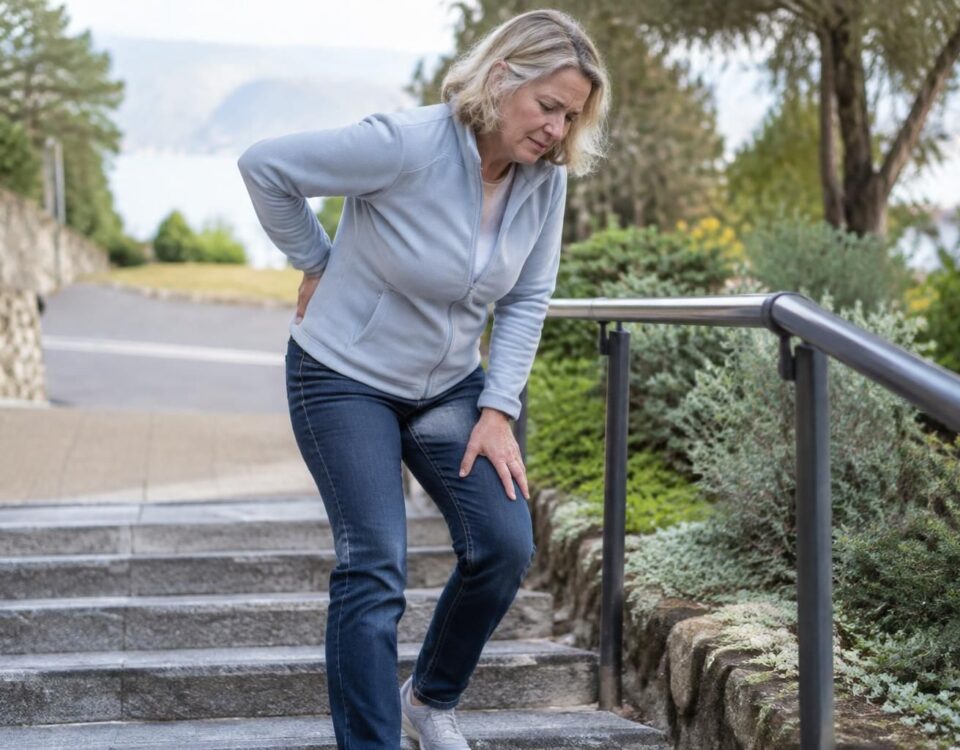
Standing still
Staying in bed too long
How to limit the effects of immobility in daily life?
When should persistent sciatica be evaluated?
What signs require urgent consultation?
An approach tailored to your situation
Possible effects
- Back and muscle stiffness
- Pain sometimes more pronounced with resuming movement
- Potentially slowed recovery if remaining bedridden for long
Helpful reflexes
- Change position regularly
- Do some gentle movements according to your tolerance
- Gradually resume walking

In case of sciatica, staying in the same position for a long time or remaining in bed all day can worsen stiffness and make movements more difficult. Without forcing or trying to “push through” the pain, prioritize regular position changes and a gradual return to movement. These recommendations can help better manage discomfort but do not replace personalized medical advice.
Why can immobility intensify pain?
A sustained posture can increase tension in the lower back and the muscles around the pelvis. Immobility also promotes stiffness: after several hours sitting or lying down, getting up and walking can become more challenging. However, the pain varies from person to person, and an uncomfortable position for one may be better tolerated by someone else.
Sitting still
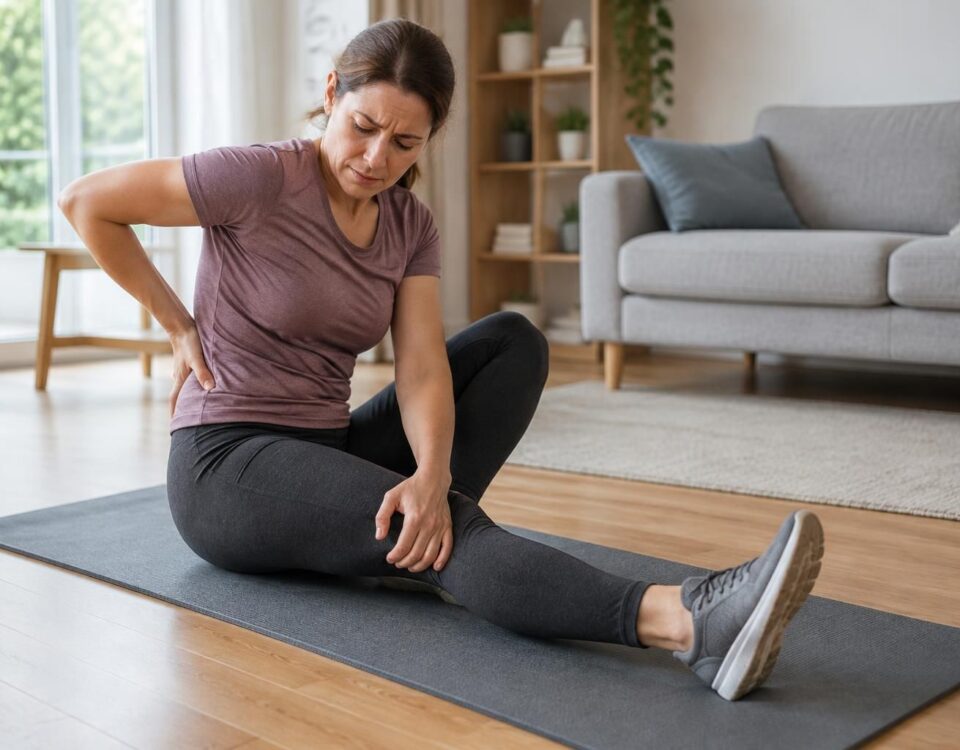
Office work, car trips, or long periods in front of a screen can maintain discomfort, especially if the back remains rounded and the pelvis immobile. Try to get up or change support every 30 to 45 minutes. A short walk or a few gentle movements are often enough to break prolonged posture. Keep your feet flat on the ground and avoid crossing your legs systematically.
Avoid prolonged bed rest
Resting can be helpful when pain is severe, but staying in bed for hours or days is generally not a strategy favorable for recovery. Inactivity can worsen stiffness and make returning to activities more difficult. If walking is tolerable, start with short movements and gradually increase according to your symptoms. Reduce effort if a movement causes sharp pain or persistent worsening.
Sciatica and bed rest: why to be cautious
IN BRIEF Sciatica is pain that radiates from the lower back down to the leg. Prolonged bed rest is generally not recommended: it can increase stiffness and delay the return to activities. It is better to remain active as tolerated,…

Sciatica and complete rest: helpful or counterproductive?
IN BRIEF Complete rest in case of sciatica consists of interrupting activities and staying in bed. It can help briefly if the pain is very intense, but prolonged rest is generally counterproductive: it is better to gradually resume movement and…
How to move without straining your back
The right goal is not to remain still but to find a level of activity that is bearable. Alternate sitting, standing, and lying down positions, without remaining for long in a posture that significantly increases pain. To pick up an object, bend your knees and bring yourself closer to it rather than bending with straight legs. When lifting a load, keep it close to your body and avoid twisting your torso while exerting effort.
Choose a comfortable resting position
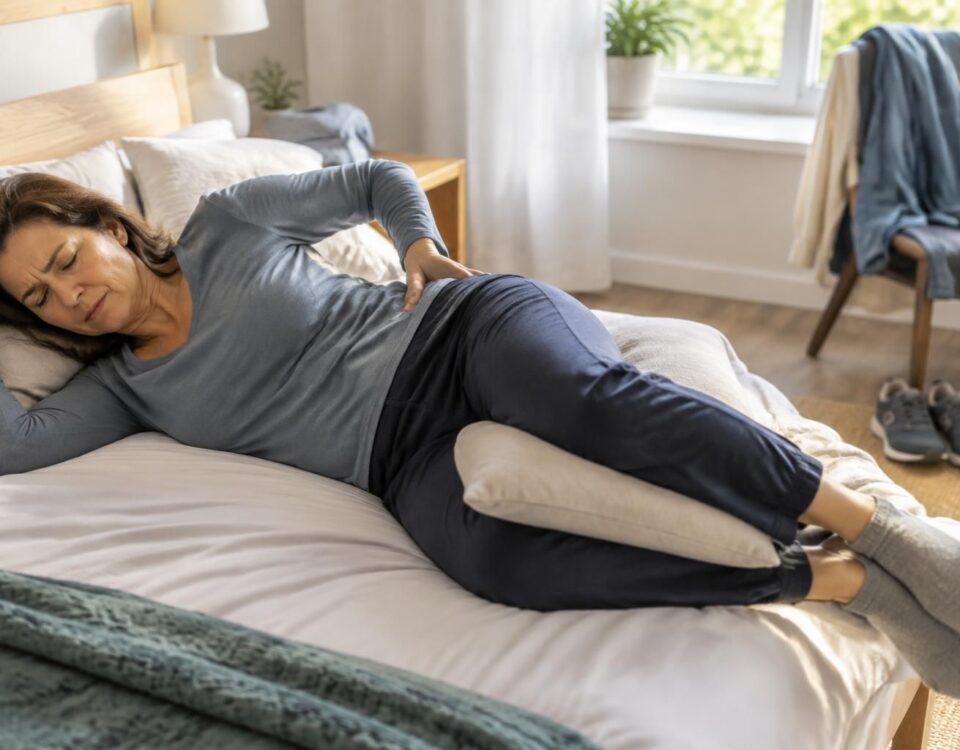
You can try lying on your back with a pillow under your knees, or on your side with a pillow between your legs to keep your pelvis more aligned. Sleeping on your stomach can be uncomfortable for some people, especially if this position increases the arching. However, there is no ideal posture for everyone: keep the one that allows you to rest without worsening your symptoms.

Sciatica and too quick a return: why the pain comes back
IN SHORT Sciatica is pain related to irritation of the sciatic nerve, which can recur when returning to activities too quickly. To limit recurrences, gradually resume movement and exertion, taking into account pain and hip and pelvic mobility. The goal:…
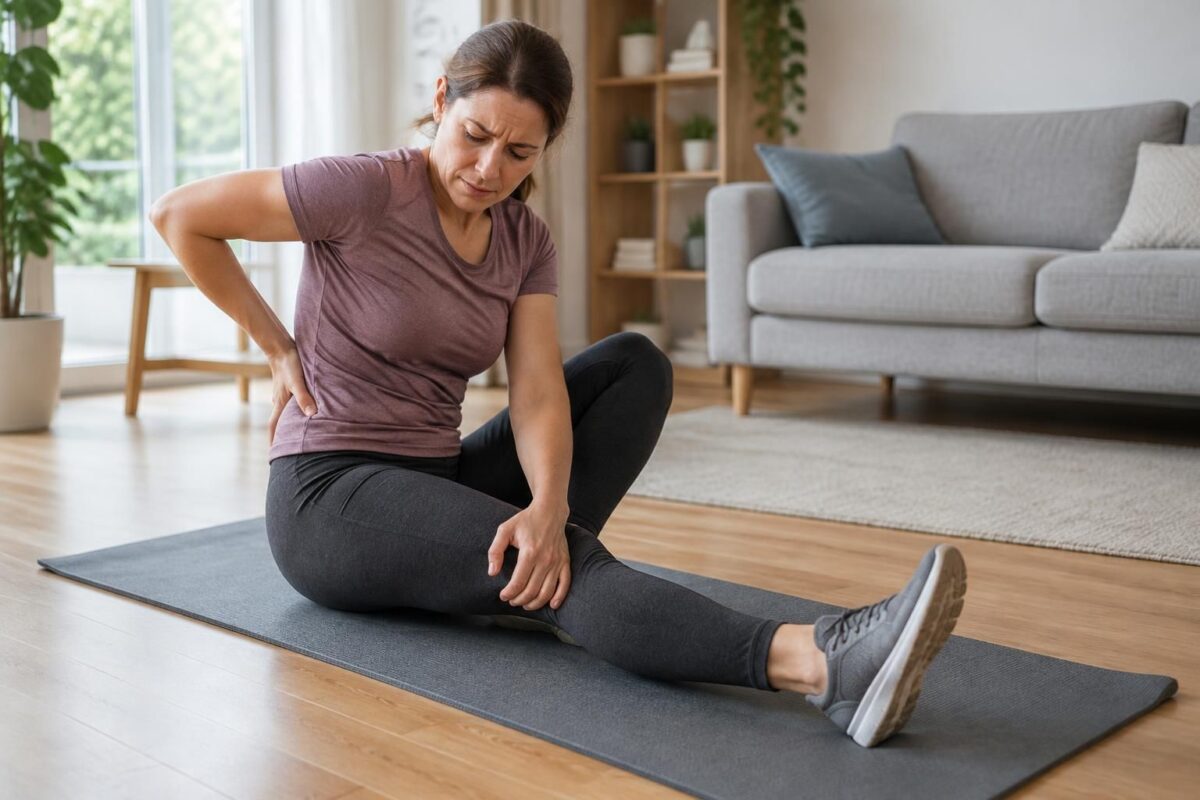
Sciatica and pain during exercise: sign to watch out for
IN BRIEF Sciatica causes pain that radiates from the lower back or buttock down the leg. During exercise, stop the movement if it worsens the pain or causes discomfort: gentle, adapted activities can help you stay active without guaranteeing recovery.…
When to seek medical advice?
Consult a healthcare professional if the pain worsens, persists, or significantly limits your activities despite adapting your movements. An opinion is also recommended in case of significant numbness or weakness in the leg. Sciatica lasting more than three months deserves evaluation to investigate factors sustaining the symptoms and adjust management.
Urinary or intestinal disturbances associated with pain, marked loss of strength, or loss of sensitivity in the perineum require urgent medical evaluation. While waiting for advice, avoid exercises that trigger intense pain and do not modify a prescribed treatment without discussing it with your doctor.
| Immobility situation | Possible effect on pain |
|---|---|
| Sitting still | May increase lumbar pressure and irritate the nerve. |
| Standing statically | May intensify pain due to lack of support change. |
| Prolonged bed rest | May promote stiffness and slow recovery. |
| Maintaining a position for more than 30 to 45 minutes | May worsen discomfort and radiation in the leg. |
| Regular position change | Helps limit stiffness and prolonged strain. |

Sciatica and pain after exercise: muscle soreness or nerve irritation?
IN BRIEF Pain after exercise can be muscle soreness or the sign of sciatic nerve irritation. Soreness primarily affects the muscles used and usually subsides within a few days; sciatica can radiate from the buttocks down the leg, sometimes with…
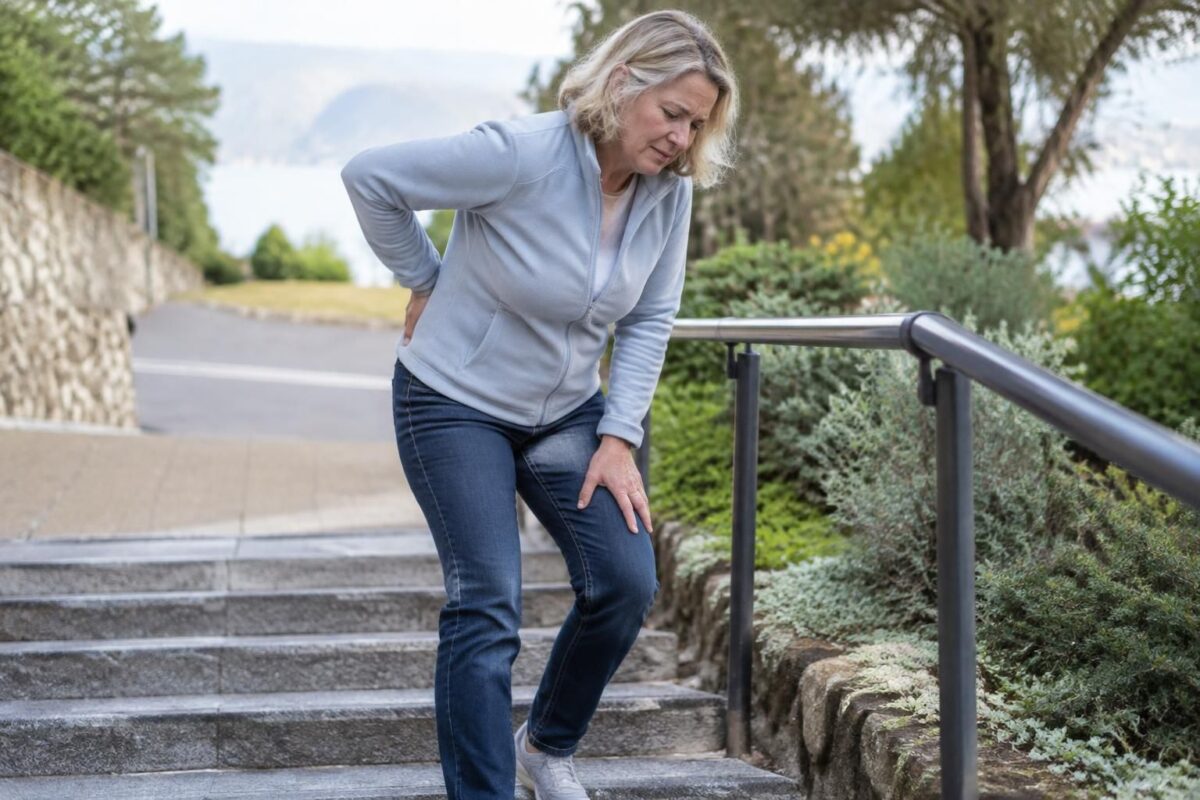
Sciatica and poorly tolerated activity: how to recognize it
IN BRIEF An activity poorly tolerated with sciatica significantly worsens the pain that radiates down the buttock and leg, or causes more tingling and discomfort. Reduce or adapt effort, without remaining bedridden, and gradually resume based on your symptoms. A…
Sciatica and prolonged immobility: testimonies on its possible effect on pain
Illustrative testimonies: these accounts are fictitious examples inspired by common situations. They do not describe real patients and do not replace medical advice.
Camille, 38 — “Long meetings eventually woke up the pain”
“When my sciatica flared up, I thought finding a comfortable chair would be enough. But after several hours of meetings, pain would appear in my buttock and sometimes radiate down my leg. I tried to get up regularly and walk for a few minutes. This didn’t make all the symptoms disappear, but staying less time still helped me manage my days better.”
Marc, 52 — “Staying in bed all day made me stiff”
“During flare-ups, I wanted to avoid any movement and would stay lying down as long as possible. After a while, I felt even stiffer when getting up. My doctor advised me to move gently according to my tolerance, without forcing or trying to push through sharp pain. I then alternated resting and short movements around the house.”
Sonia, 44 years old — “Standing still was just as difficult”
“I thought that only sitting could worsen my sciatica. However, waiting long periods while standing, without changing my support, also increased my discomfort. I started to vary my posture and take short movement breaks. This allowed me to better distribute my activities throughout the day.”
Julien, 61 years old — “I learned not to force”
“After a long time sitting, I sometimes needed to take a few quiet steps before feeling more comfortable. I also realized that overly intense exercise could awaken the pain. With the guidance of a professional, I gradually resumed movements suited to my situation.”
These experiences illustrate a possible reaction, but the effect of immobility varies from person to person. In the case of sciatica, regularly changing position and staying suitably active may help limit stiffness. Stop a movement if it causes sharp pain and seek advice from a healthcare professional, especially if symptoms persist or worsen.
A weakness in the leg, significant loss of sensitivity, or associated urinary or intestinal disorders require prompt medical evaluation.
Sylvain Desforges: sciatica pain and possible effects of prolonged immobility
Sylvain Desforges is a healthcare professional specializing in osteopathy, naturopathy, and manual medicine. His career is dedicated to innovation in care and supporting people who live with persistent pain. He is the founding president of TAGMED clinics and the ACMA association. In his approach, management aims to better understand the factors that may maintain pain and to offer care based on available data.
His expertise in chronic pain management particularly sheds light on the issues associated with sciatica. This pain, which can radiate from the lower back to the buttock and leg, is related to irritation or compression of a nerve root. Its intensity and evolution vary according to individuals and the causes at play. A posture held for a long time does not necessarily constitute the origin of the problem, but immobility can contribute to increasing discomfort in some individuals.
Prolonged sitting is common at work, in the car, or at home. When maintained without breaks, it can increase stiffness and make resuming movement more difficult. Some people then notice more pronounced pain in the lower back, buttock, or leg. Staying standing still or maintaining the same position in bed for long periods can also promote stiffness. However, these effects are not identical for everyone: a posture tolerated by one person may be uncomfortable for another.
In a management approach, the goal is not necessarily to seek a perfect posture or to stay in bed until symptoms disappear. It is often useful to alternate positions and introduce gentle movements, depending on tolerance. Getting up regularly, walking for a few minutes, or changing the setup at the office can help minimize periods of immobility. If a gesture causes sharp pain or a noticeable worsening, it is better to stop it and consult a healthcare professional.
Dr. Desforges’s work also incorporates technologies such as spinal decompression, laser, and shockwaves. These tools may be considered in certain care pathways, depending on clinical evaluation and the individual’s needs. They do not replace a diagnosis or personalized management. The choice of interventions should take into account symptoms, history, and response to treatments already tried.
For persistent sciatica, medical evaluation helps to investigate a possible cause and determine suitable options. New weakness in the leg, significant loss of sensitivity, or difficulties controlling the bladder or bowels warrant urgent consultation. The approach advocated by Dr. Desforges emphasizes individualized and evidence-based care, aiming to support health and well-being while considering the impact of pain on daily activities.
In short, prolonged immobility can maintain or exacerbate sciatica pain by promoting stiffness and making the resumption of movement more difficult. Staying progressively active, varying positions, and seeking medical advice when symptoms persist or worsen are important reflexes for better pain management.
With sciatica, staying seated for long periods, standing still, or lying down can contribute to increasing discomfort. This does not mean that every period of immobility necessarily compresses the nerve: pain depends on several factors and varies from person to person. However, regularly changing position and resuming gentle movements according to tolerance can limit stiffness. To better identify postures that may aggravate symptoms, consult this guide on the position to avoid in case of sciatica.
After prolonged sitting, pain may be more pronounced when getting up or starting to walk. This phenomenon is addressed in these resources on pain at the beginning of walking after sitting and on precautions to take in case of prolonged sitting. If you spend a lot of time driving, you can also learn about sciatica pain after driving.
Rest can be helpful during a painful flare-up, but continuous bed rest is generally not a strategy to prioritize without medical advice. The goal is rather to find a balance between recovery and activity, avoiding movements that trigger sharp pain. To delve deeper into this issue, discover advice on whether to move or rest in the face of sciatica. Nighttime positions can also influence comfort: consult information on pain during sleep and pain in a lying position on the back. Some people also notice discomfort upon waking, as explained on this page about pain radiating down the leg upon waking.
If the pain lasts more than a few weeks, comes back frequently, or limits your activities, make an appointment with a healthcare professional to assess its cause and determine appropriate management. An overview of sciatica can help understand the symptoms, but it does not replace a personalized examination. When issues persist beyond three months, management options for chronic sciatica should be discussed with a doctor or specialist.
Finally, seek consultation without delay in cases of significant weakness in a leg, progressing loss of sensation, or associated urinary or intestinal disorders. In the face of these signs, do not try to correct the situation solely by changing posture or doing exercises: prompt medical advice is necessary.

Sciatica and exercises to avoid according to the symptoms
IN BRIEF Sciatica is pain related to irritation or compression of the sciatic nerve. Exercises can help maintain mobility and reduce tension, but avoid those that intensify leg pain, as well as sudden twists, forced bends, and carrying heavy loads.…
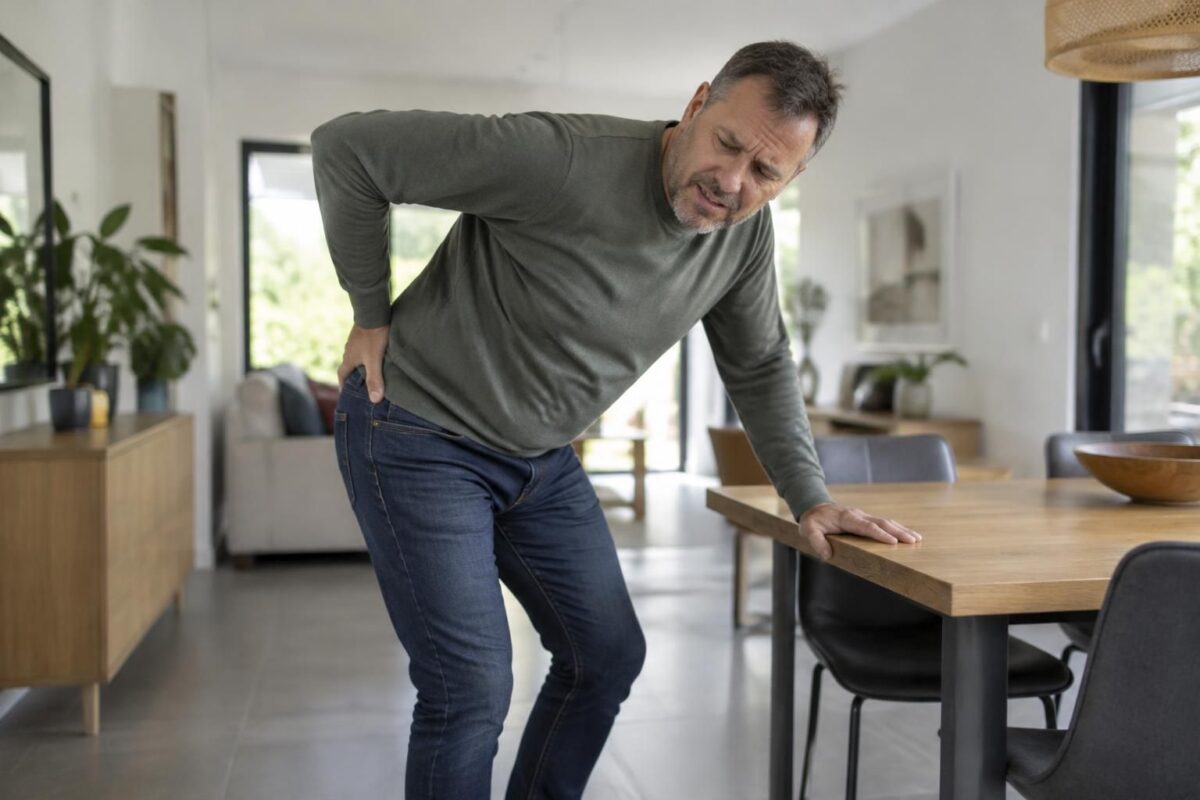
Sciatica and movement that worsens: why stop it
IN BRIEF Sciatica is a pain related to the irritation of a nerve, which can extend from the lower back to the leg. If a movement or exercise increases the radiation, tingling, or weakness, stop it: this helps to avoid…

Sylvain Desforges, B.Sc., D.O., N.D., docteur en ostéopathie
Dr Sylvain Desforges, B.Sc., D.O., N.D., osteopath, is the founding president of TAGMED and of the ACMA association. He dedicates his practice to chronic spinal pain, low back pain and symptoms compatible with sciatica, particularly when pain radiates toward the buttock, leg, calf, foot or toes.
Through SOS Sciatique, he publishes educational content on sciatica symptoms, possible causes such as disc herniation, disc narrowing, foraminal stenosis or irritation of a lumbar nerve root, as well as non-surgical approaches that may be considered according to the evaluation. At Clinique TAGMED, care may include, depending on the case, motorized neurovertebral decompression, specific osteopathic care or precision percussion.
For an evaluation related to sciatica treatment in Montreal / Mount Royal or sciatica treatment in Terrebonne, please consult the services available at Clinique TAGMED.
Medical disclaimer
The information published on SOS Sciatique is provided for educational purposes only and does not replace a consultation, diagnosis, opinion or treatment provided by a physician or another authorized healthcare professional. The author of this article is neither a medical doctor nor a specialist in a medical specialty recognized by the Collège des médecins du Québec. The osteopathic, manual medicine or functional support approaches described on this site do not constitute medical acts and are not intended to replace medical follow-up.
Consult a physician or emergency service in cases of loss of bladder or bowel control, anesthesia in the saddle area, significant or progressive weakness in the leg or foot, fever, recent trauma, severe pain or rapid worsening of symptoms. For more details, please read our Legal Notice.