Osteopathy and prevention: avoid pain related to aging
28/06/2026
Osteopathy and sports recovery: maximize physical performance
28/06/2026
In short In short, theosteopathy applied to sciatic pain is a manual and holistic approach aimed at correcting structural and functional imbalances that can irritate the root of the sciatic nerve. By practicing Gentle manipulations and targeted, it releases muscle tension, improves the circulation and restores mobility of the lower limbs. Its main advantages include a pain reduction, a better mobility and a return to an active life without invasive recourse. At Montreal, this treatment is particularly relevant for people with sciatic pain persistent and looking for a natural and personalized solution. |
theosteopathy is an approach manual which can help reduce sciatic pain By acting on the whole body and on the mechanisms that maintain pain.
- reduction of pain and symptoms thanks to Gentle techniques targeted that release muscle-skeletal tension and improve mobility.
- Improvement of the mobility lumbar and pelvic segments, which can decrease the pressure on the irritated nerves.
- Optimization of the circulation and tissue nutrition, promoting nerve and muscle recovery.
- Approach non-surgical and adapted to each patient after a personalized evaluation.
This article, written by a health professional and expert in osteopathy, presents the benefits of osteopathy to reduce sciatic pain. He explains how manual techniques can affect causes and symptoms, without resorting to invasive actions. You will discover the mechanisms, potential results and important points to discuss with your osteopath.
How osteopathy acts on sciatic pain
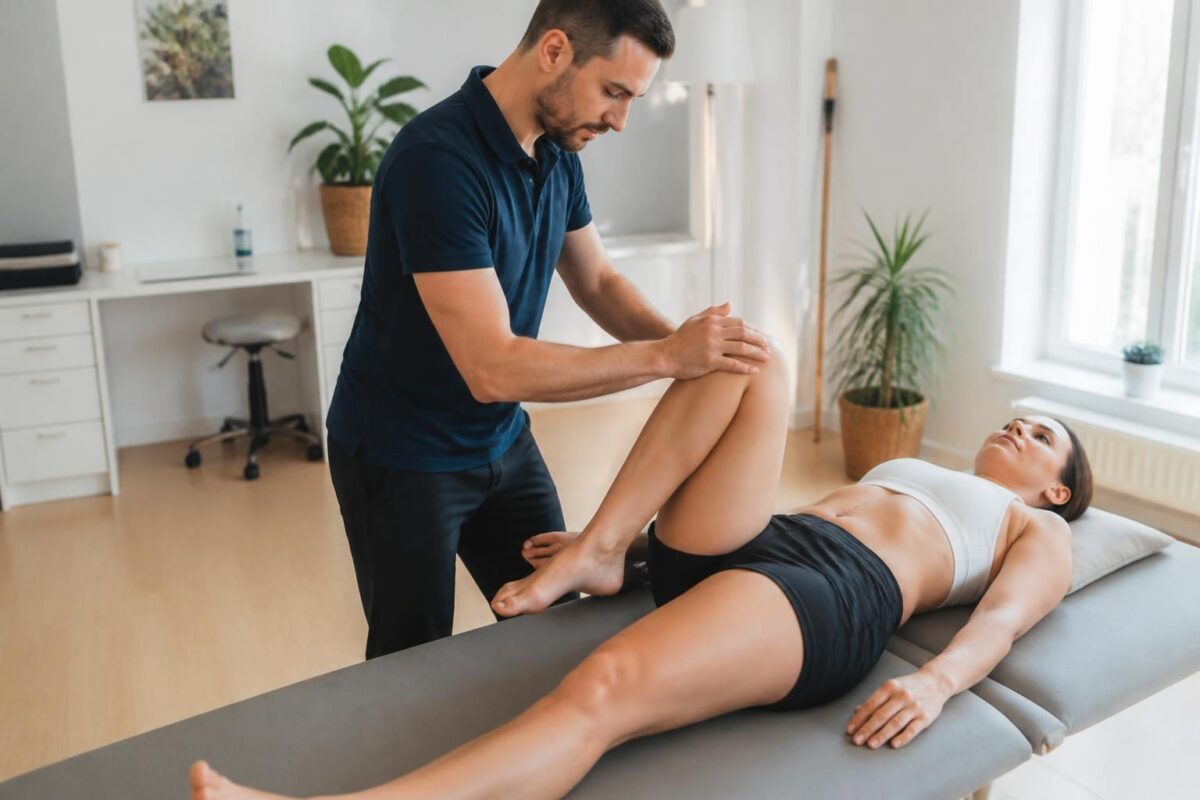
Osteopathy aims to restore the overall balance of the body. By working on soft tissues, fascias and joints around the lumbar spine and pelvis, it can decrease the tensions that contribute to pain along the path of the sciatic nerve. Manual techniques promote circulation, reduce stress on the nerves and promote better synchronization between muscles and nerves. This approach helps to reduce local inflammation and nerve irritations when the assessment shows structural or functional imbalances.
Impact on pain and mobility
The Osteopathy sessions regular can allow a gradual reduction in pain, an improvement in the mobility lower limbs and decreased muscle tension. By working on the mechanics of the body, osteopathy can also contribute to better posture and a reduction in pain related to pain. These effects often result in a resumption of daily activities and better exercise tolerance, while avoiding the frequent side effects of pharmacologic treatments.
Common osteopathic techniques
Osteopaths use different approaches adapted to each patient. Key techniques include:
- Joint manipulations To restore mobility and release blockages in the lumbar, sacroiliac and hip joints.
- Myofascial techniques To relax the tensions of the fascias and muscles around the sciatic path.
- Visceral and cranial approaches Aiming for the overall balance of the body and the improvement of circulation, when the evaluation indicates functional links between organs and musculoskeletal system.
In some cases, the assessment may offer complementary options compatible with osteopathy, including non-invasive approaches to support recovery. For more information, see the associated resources on the professional domains mentioned.
When to consult and what to expect
It is useful to consult an osteopath when sciatic pain persists, limits daily activities or evolves despite initial follow-up. During the first consultation, the practitioner performs a anamnesis Deeply and evaluates the entire musculoskeletal system, in order to determine the most suitable treatment plan. The following sessions aim to gradually restore the function and prevent recurrences, without prescribing specific exercises for the conditions discussed.
Quick Comparison Table
| Therapy | Effect on pain and mobility | Points to consider |
|---|---|---|
| osteopathy | Progressive pain reduction, improvement in mobility and circulation. | global and personalized approach. No specific exercise prescription during the intervention. |
| Physiotherapy | May offer variable results depending on the case and may include active or pass exercises. | sometimes used as a comparison in clinical contexts. May be less specific for some conditions discussed here. |
Integration in the care and resources path
To deepen the notions related to osteopathy and recovery, you can consult resources and examples of approaches available via specialized professional and clinical sites. Consider discussing your situation with a qualified osteopath registered with recognized organizations. If needed, your doctor can coordinate with an osteopath to establish a plan that fits your health.
For more general information on osteopathy and its benefits, you can consult the following resources as part of your research and discussion with your practitioner:
Osteopathy and recovery after surgery
Why osteopathy is essential for an active and painless life
Medical Disclaimer: The information and advice provided on this site does not replace the health professional’s diagnosis or treatment. Please note that Dr. Sylvain Desforges osteopath is neither a doctor of medicine nor a doctor, and is not a specialist in a medical specialty as defined by the Collège des Médecins du Québec. Manual medicine, functional medicine and sports medicine as described on this site exclude any medical treatment or diagnosis made by a doctor or specialist doctor. Always consult your doctor for any medical questions. For more details, please read our full legal notice.
- pain reduction sciaticated by targeted and gentle manipulations.
- Improving mobility Lumbar and pelvic, facilitating movements.
- Release of muscle tension and fascials that irritate the nerve.
- Better circulation blood and lymphatic in the legs.
- Neurovertebral decompression and nerve path optimization.
- Postural stabilization To reduce pressure on the sciatic nerve.
- Reduction of radicular irritations by appropriate adjustments.
- Recovery of joint mobility and muscle coordination.
- Prevention of recurrences by lasting improvement in body mechanics.
- Natural approach and not pharmacological for lasting well-being.

This summary presents the benefits ofosteopathy To reduce the sciatic pain. By acting on the Muscle tensions, by restoring the mobility lumbar structures and limbs, and improving the circulation, Osteopathy offers a natural and non-invasive approach to alleviating discomfort and promoting a return to activity. These recommendations offer practical elements to make the most of the benefits of osteopathy in the management of pain related to sciatica.
Understand the mechanisms targeted by osteopathy
In the context of sciatica, the pain often comes from irritation of a nerve root or a set of tensions that alter the lumbar mechanics. theosteopathy aims to restore thebalance body by working on blocked areas, lower back joints, glutes and lower limbs. The Joint techniques aim to improve the mobility, the Myofascial techniques release the tensions of the fascias and the Cranial approaches or visceral promote a circulation adapted and reduced nervous tension. By targeting good alignment and stimulating better blood circulation, the body can better nourish the tissues and reduce the pain referred along the path of the sciatic nerve.

How osteopathy improves the quality of life of active people
In short In short, theosteopathy is a global approach that Optimizes mobility and the function of the body of ACTIVE PEOPLE, for a better quality of life. It helps prevent injury and reduce Musculoskeletal pain While promoting the Sports recovery.…
Observable benefits and results
Osteopathy sessions can lead to Significant pain reduction, to a Improving mobility hips and back, and a decrease in burning or numbness associated with sciatica. a better one circulation in the legs and a feeling of heaviness often decrease, contributing to a quality of life found and a more active practice. In addition, osteopathy can promote better management of the stress and sleep, which contributes to lasting results when care is accompanied by simple exercises and a posture adapted to everyday life.

Osteopathy and sports recovery: prepare the body for lasting performance
In short In short, Osteopathy and Sports recovery is one Global manual approach that sustainably prepares the body for the effort by restoring mobility and circulation After the effort. It is a discipline that acts on the sinews, the joints,…
Practical recommendations to optimize results
When to consider osteopathy for sciatica
Consider osteopathy when the pain persists despite the usual care, or when the pain radiates from the buttock to the leg and is accompanied by signs of functional discomfort. The osteopathic approach offers an option non-drug and non-surgical To complete your medical follow-up and promote the return to activity.
What happens in session and objectives
In session, the osteopath performs a anamnesis detailed and a Functional diagnosis to adapt the treatment. The care plan can combine Joint techniques, of Myofascial techniques and, if necessary, cranial or visceral approaches. The goal is to restore thebalance, to improve the mobility and reduce the tensions that irritate the sciatic nerve, in order to promote a gradual resumption of daily activities.
Frequency, duration and daily integration
For solid results, focus on a progressive approach: 2 to 3 sessions over a period of 4 to 6 weeks, then re-evaluate. Osteopathy goes perfectly with exercises that are simple to practice at home, an adapted posture and regular movements that support recovery and prevention of recurrences.
Do not hesitate to discuss with your osteopath the options adapted to your situation and to plan a personalized follow-up to optimize your recovery.
| Pain and Perception | rapid and sustainable reduction in pain sciatica thanks to techniques sweet which release nervous tension. |
| Mobility and amplitude | improvement of theamplitude of movement and mobility lumbar and hips. |
| Traffic and recovery | Improvement of the circulation blood and lymphatic in painful areas, promoting recovery. |
| nervous decompression | Liberation of nervous pressures On the lumbar roots, reduction of irritations and tingling. |
| Posture and alignment | correction of imbalances posture which aggravate sciatica and support the spine. |
| Stress and sleep | reduction of stress and improvement of sleep, contributing to a better perception of pain. |
| Prevention | Prevention of recurrences by targeted evaluation and treatment plan personalized. |
| safety and non-invasive | Approach non-invasive With little or no side effects and suitable for most patients. |
| Activity and autonomy | Aid to the Resumption of activities daily and sporting with less pain and more autonomy. |
Why Osteopathy Is Essential For Recovery People
In short In short, Osteopathy in convalescence is an approach manual and holistic which helps to accelerate the recovery by restoring The balance, the mobility and a good circulation fabrics. it contributes to Reduce the pain, support the Back to…
Testimonials on the Benefits of Osteopathy to Reduce Sciatic Pain
“Before discovering osteopathy, my sciatic pain radiated from the lower back to the leg and prevented me from going about my daily activities. After only a few sessions, I felt a clear decrease in pain and better mobility, which allowed me to resume my movements without hesitation. »
“My daily life was punctuated by crises of sciatica who were constantly pulling me. The gentle and targeted approach toosteopathy Released tensions and improved traffic in the area concerned. Today, painful periods are rare and I find an amplitude of movement that I had lost. »
“As an amateur athlete, I suffered from an evil that slowed my training: the sciatic pain came back slyly after each session. After an adapted osteopathy program, I noticed a Improving mobility And a significant reduction in painful episodes, which allowed me to resume the race without fear of relapse. »
“The pain disturbed my sleep and my work, especially when I was standing for a long time. The osteopathic intervention corrected postural imbalances and improved my general posture, which reduced the intensity of the sciatic pain And gave me more serene nights. »
“I was afraid that surgery would be the only solution, because sciatic pain complicated my days. thanks to a series of sessionsosteopathy Focused on body mechanisms, I avoided the operation and regained an active quality of life, with a better mobility And less discomfort in the affected leg. »

Osteopathic manipulations to strengthen post-traumatic muscles
In short In short, Osteopathic manipulations for Strengthen post-traumatic muscles constitute a gentle manual approach aimed at restoring the mobility, reduce the pain and facilitate the Functional rehabilitation After a injury. What is Is it? A series of precise gestures…
Biography: The Benefits of Osteopathy to Reduce Sciatic Pain
In the professional career of Dr. Sylvain Desforges, Osteopathy stands out as a global and pragmatic approach, centered on the lasting relief of pain related to the sciatica. Expert in osteopathy, naturopathy and manual medicine, he is the founding president of the Tagmed clinics and the ACMA association. His career is guided by a constant culture of innovation in health and a quest for approaches evidence-based to optimize the health and well-being of its patients. Its leadership is based on the ability to combine technical know-how and integrative vision of the body, in order to provide concrete solutions to those who suffer from diffuse or ascending sciatica.
The benefits observed with theosteopathy For sciatic pain lies in an approach that targets the source of pain rather than its isolated symptoms. By working on key areas such as the lumbar spine, sacrum, pelvis and nerve structures that walk along the leg, the osteopath acts on the mechanisms of blockage, muscle tension and postural dysfunction. This gentle and precise method can help reduce nerve irritation, improve spinal mobility and restore more fluid blood and lymph circulation. Result: a decrease in pain, a resumption of walking and a better quality of life on a daily basis.
The technical gestures favored by Dr. Desforges are based on clear principles. Joint manipulations aim to restore the natural range of motion, myofascial techniques release localized tensions in muscles and fascias, and approaches aimed at the sciatic nerve neural slip and reduced pain referred. In some cases, targeted adjustments of the sacrum and ilio-sacral joints may decrease the mechanical stresses that radiate to the leg. This combination of techniques not only eases pain but also improves postural stability and muscle coordination.
Beyond manual practice, Dr. Desforges incorporates advanced technologies to enhance the effectiveness of sciatica treatment. The vertebral decompression Motorized can be used when indicated, in order to release pressure on the nerve roots and promote progressive rebalancing of the spinal segments. solutions such as laser and the Shockwave therapy Can be used in addition to reduce inflammation, stimulate circulation and accelerate recovery. This technological approach does not detract from the importance of touch and clinical observation: it accompanies them to offer personalized protocols that can be adapted to each pain profile.
Dr. Desforges’ philosophy emphasizes support personalized and progressive, centered on patient listening and ongoing evaluation. The objective is clear: to reduce pain, restore mobility of the lower limbs, improve sleep and promote regular physical activity without pain. By treating the patient as a whole, osteopathy offers a natural and non-invasive way to prevent recurrences and support an active and sustainable life. Thanks to this approach, patients with sciatica can regain harmony between body and movement, without systematically using drug treatments or surgical interventions.
Dr. Desforges is thus committed to proposing a Integrative support which combines traditional knowledge and modern technologies, in order to meet the specific needs of people with sciatica. Its objective is to allow everyone to regain control over their mobility and well-being, by finding an active, less painful and more fulfilling life.
This writing clearly presents how Osteopathy can help reduce sciatic pain, highlighting the mechanisms, techniques and results observed, while proposing practical resources to deepen the subject.

Osteopathy and prevention of work-related musculoskeletal disorders
In short theosteopathy is one Manual approach that restores body balance and prevents MSD related to work. Its advantages: reduction of tension, improvement of mobility and prevention of chronic pain. She is preventive and healing, suitable for office and trades…
Impact of osteopathy on sciatic pain
In the context of sciatic nerve pain, osteopathic approaches aim to reduce irritation and tension that can compress or irritate the nerve. thanks to Soft manual techniques and targeted, the objective is to free up the blocking zones, to improve the lumbar and lower limb mobility, and promote better nerve flow. This action can help reduce burning sensations, irradiated pain and sciatica numbness, while allowing more active and comfortable resumption of activities.

The benefits of osteopathy to treat muscle imbalances
In short theosteopathy is a manual approach to restore themuscle harmony and postural considering the body as a whole. Its main benefits include the reduction of aches and tensions, the improvement of the mobility and from the posture, and prevention…
Techniques and mechanisms involved
Osteopaths use Joint manipulations targeting the spine, pelvis and hips, as well as Myofascial techniques To relax the tensions of the fascias surrounding the muscles and nerves. At the same time, visceral approaches and posture and movement advice can help correct the imbalances that feed the pain. This set aims to restore the overall balance of the body, which can decrease the frequency and intensity of sciatic episodes and improve exercise tolerance.
Osteopathy and chronic leg pain: regaining an optimal quality of life
In short In short, Osteopathy is one Global manual approach aimed at reducing Chronic leg pain and improve the quality of life. What is it? Non-drug therapy using the hands to identify restrictions and treat lesional chains. How does it…
Observed results and benefits
Patient feedback often indicates a rapid pain reduction and a better feature legs and back after a few sessions, with significant gains in mobility and in quality of life. In the long term, the osteopathic approach can help prevent flare-ups by improving postural stability and coordination of daily movements. To deepen the benefits and mechanisms, consult dedicated resources such as those describing the impacts of osteopathy on well-being and Chronic pain.
How osteopathy supports recovery after complex surgery
In short In short, Post-operative osteopathy is an approach fresh which supports the recovery After a Complex surgery. It helps to reduce the pain and the fatigue, improves the mobility and accelerates the healing thanks to a better vascularization and…
Resources and additional readings
To expand your understanding and discover practical perspectives, you can consult guides and specialized articles that explain how osteopathy is involved in reducing pain and improving circulation and mobility. For example, discover how osteopathy can contribute to the reduction of pain on a daily basis and to the improvement of general well-being via adapted techniques: Osteopathy and well-being – Reducing pain on a daily basis. Other useful resources address the benefits for active people and athletes, as well as the impact on blood circulation and the nervous system: The benefits of osteopathy for active people, The benefits of osteopathy on chronic pain, and Osteopathy – Sustainable solution for chronic pain. For a general view and practical advice, you can also consult PassportHealth, and other resources mentioned in the guides dedicated to osteopathy and sport: Osteopathy – effective alternative for athletes, Osteopathy and blood circulation.

Dr Sylvain Desforges, B.Sc., D.O., N.D., osteopath, is the founding president of TAGMED and of the ACMA association. He dedicates his practice to chronic spinal pain, low back pain and symptoms compatible with sciatica, particularly when pain radiates toward the buttock, leg, calf, foot or toes.
Through SOS Sciatique, he publishes educational content on sciatica symptoms, possible causes such as disc herniation, disc narrowing, foraminal stenosis or irritation of a lumbar nerve root, as well as non-surgical approaches that may be considered according to the evaluation. At Clinique TAGMED, care may include, depending on the case, motorized neurovertebral decompression, specific osteopathic care or precision percussion.
For an evaluation related to sciatica treatment in Montreal / Mount Royal or sciatica treatment in Terrebonne, please consult the services available at Clinique TAGMED.
Medical disclaimer
The information published on SOS Sciatique is provided for educational purposes only and does not replace a consultation, diagnosis, opinion or treatment provided by a physician or another authorized healthcare professional. The author of this article is neither a medical doctor nor a specialist in a medical specialty recognized by the Collège des médecins du Québec. The osteopathic, manual medicine or functional support approaches described on this site do not constitute medical acts and are not intended to replace medical follow-up.
Consult a physician or emergency service in cases of loss of bladder or bowel control, anesthesia in the saddle area, significant or progressive weakness in the leg or foot, fever, recent trauma, severe pain or rapid worsening of symptoms. For more details, please read our Legal Notice.