Why osteopathy is essential for active people
28/06/2026
The benefits of osteopathy to strengthen post-injury muscles
28/06/2026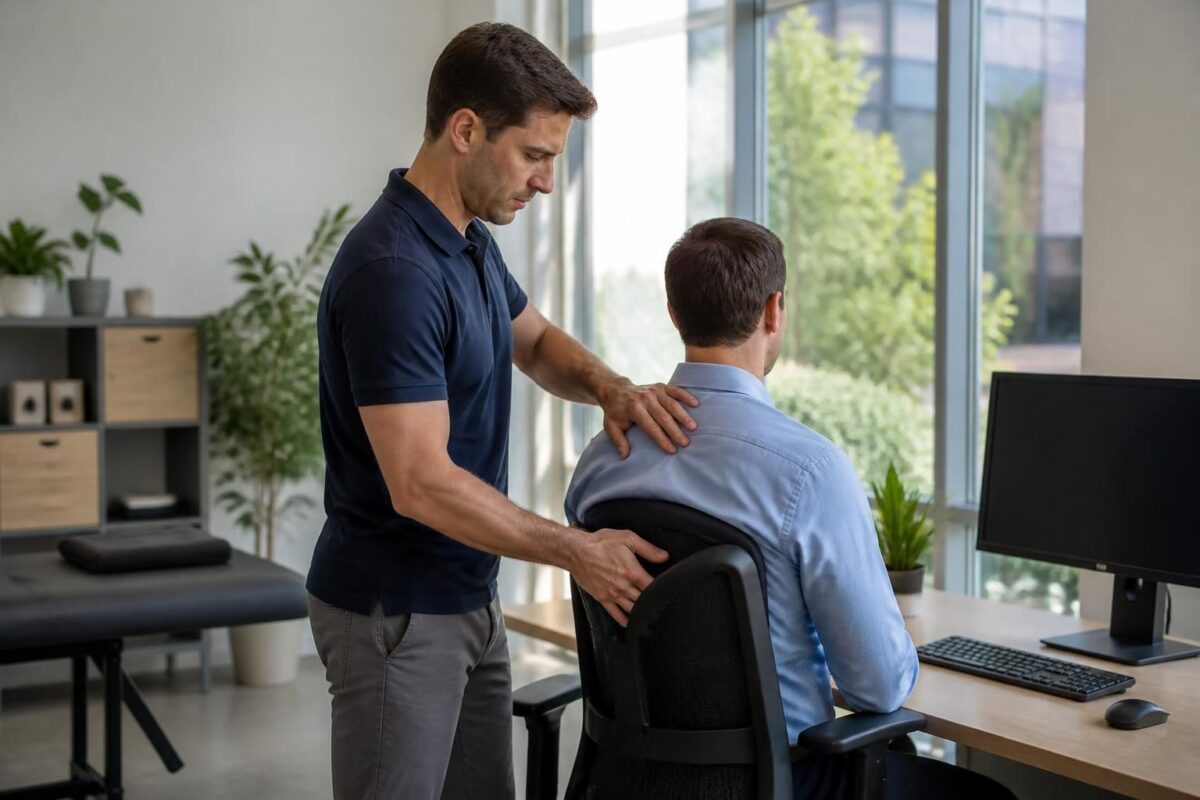
In short
| In short, Osteopathy is one Manual approach aimed at preventing work-related injuries By treating the Musculoskeletal dysfunctions and improving theergonomy and the posture. In Montreal, this service is particularly recommended for professionals exposed to prolonged postures. The benefits include the MSD reduction, reduced pain and better mobility, which translates into less stoppages and increased productivity. Its operation is based on a Job Evaluation and tensions, simple postural advice, exercises strengthening and stretch, and a Regular follow-up To adjust the recommendations according to the changes. By integrating osteopathy into the Injury prevention At work, companies protect the health of their teams and promote a healthier work environment. |
theosteopathy Proposes a preventive approach to well-being at work by evaluating theergonomy, postures and repetitive gestures, in the workplace.
using Soft manual techniques, fromTargeted exercises and of Personalized advice, it aims to correct musculoskeletal dysfunctions and restore mobility.
Regular monitoring and education of employees on good postures helps prevent MSD and reduce theabsenteeism related to pain.
integrated into the policies of occupational health, this approach can improve the performance and the well-being of employees in the long term.
This article, written by a health professional and expert, presents how theosteopathy May prevent work-related injuries. It describes a pragmatic approach that combines evaluation ergonomic, corrections of posture and manual gestures to preserve mobility and reduce tension. The text proposes a simple plan for companies to reduce absenteeism and improve performance.
Ergonomic evaluation and posture at work
theosteopathy offers a systematic evaluation of on-site workstations. It identifies factors that generate muscle and joint stress. This approach makes it possible to propose concrete adjustments to promote a ergonomy adapted. Good posture and regular breaks can decrease tension in the neck, back and shoulders. To deepen the mechanisms related to ergonomics and traffic, you can consult specialized resources on the subject and the exchanges available via the partner sites.
Training and practice are based on recognized frameworks. Osteopaths are trained in particular through schools such as Numss and Nao, or National University of Medical Sciences and National Academy of osteopathy. This ensures a clinically based approach and increased workplace safety.
Osteopathic interventions and prevention protocol
Osteopathic gestures target areas of tension, improve joint mobility and support better local circulation. The objective is to restore the functional balance of the body and to reduce the loads transferred to the lumbar and cervical structures. These techniques are useful for supporting workers exposed to repetitive postures or prolonged static loads.
In the context of prevention, osteopathy can be associated with practical advice on the organization of the workspace and strategies to manage physical stress. To enrich your understanding, discover the information available on link on physical stress, or on the mechanisms of action of osteopathy on chronic inflammation via Chronic inflammations.
For concrete examples of approach in business, we can rely on specialized resources in professional environments and feedback available on dedicated platforms, as well as on the services offered by Clinique TagMed.
Specific resources on traffic improvement and return to activity can be viewed via articles on lymphatic circulation and other recognized publications.
Training, professional and occupational safety
The professional framework of an osteopath at work is based on an initial assessment of the positions and the implementation of appropriate prevention measures. The approach focuses on the patient and his work environment. This support can be part of an occupational health policy, aimed at reducing risks and supporting employee well-being.
Relevant professional associations include ACMA, the College of Canadian Osteopaths and the College of Canadian Osteopaths. They ensure recognition and standardization of practices in the field.
Integration into occupational health policy and benefits
Integration of osteopathy into occupational health programs can contribute to better mobility, reduced posture pain and decreased sick leave. Results observed in various professional contexts show better operational efficiency and increased level of well-being among workers. To deepen perspectives and feedback, additional resources are available on the pages dedicated to osteopathy in companies and the prevention of MSDs.
Useful links and resources
To learn more about osteopathic practices in the workplace, consult the following resources:
Osteopathy and chronic shoulder pain — a natural approach
Medical Disclaimer: The information and advice provided on this site does not replace the health professional’s diagnosis or treatment. Please note that Dr. Sylvain Desforges osteopath is neither a doctor of medicine nor a doctor, and is not a specialist in a medical specialty as defined by the Collège des Médecins du Québec. Manual medicine, functional medicine and sports medicine as described on this site exclude any medical treatment or diagnosis made by a doctor or specialist doctor. Always consult your doctor for any medical questions. For more details, please read our full legal notice.
Axis: from diagnosis to proactive action
- Evaluation Ergonomic positions and repetitive gestures
- dysfunction and tensions identified early
- Blueprint Personalized action for posture
- Training on good postures and gestures
- Drill Targeted strengthening and stretching
- Monitoring Regular and proactive adjustments
- techniques soft manuals to release tension
- Ergonomy Improved by lasting adjustments
- Prevention MSDs and reduction of absenteeism
- Approach non-invasive and occupational
- Integration In occupational health policies
- Results Measurable: Mobility, Pain, Productivity

This summary provides clear recommendations for using theosteopathy In order to prevent work-related injuries. By combining a Ergonomic evaluation rigorous, advice from posture adapted, strengthening and mobility exercises, and a Regular follow-up, companies can reduce MSD, reduce absenteeism and improve daily performance.
Assessment and prevention
Ergonomic on-site assessment
The first step is to make a Ergonomic analysis from the workstation. The goal is to identify risk factors, such as repetitive postures, heavy loads, or tool spacing. This approach makes it possible to propose concrete and personalized adjustments to reduce physical constraints and prevent the appearance of pain.
Personalized action plan
From the results, establish a Action plan Personalized with measurable goals. This plan may include organizational changes, equipment adaptations and a follow-up schedule. The goal is to create a clear roadmap for the team and to track long-term progress.

How osteopathy improves the quality of life of active people
In short In short, theosteopathy is a global approach that Optimizes mobility and the function of the body of ACTIVE PEOPLE, for a better quality of life. It helps prevent injury and reduce Musculoskeletal pain While promoting the Sports recovery.…
Daily posture and ergonomics
Good postures and daily practices
Train employees to adopt good postures Both in sitting and standing position is fundamental. Simple rules, such as adequate seat height, eye-screen distance and workspace organization, reduce cervical and lumbar tension and improve comfort throughout the day.
Preventive osteopathic corrections
On the preventive level, theosteopathy Can correct musculoskeletal imbalances, restore joint mobility and promote better coordination of muscle chains. These gentle interventions aim to prevent accumulated tensions and to strengthen the body’s resilience in the face of professional demands.

Osteopathy and sports recovery: prepare the body for lasting performance
In short In short, Osteopathy and Sports recovery is one Global manual approach that sustainably prepares the body for the effort by restoring mobility and circulation After the effort. It is a discipline that acts on the sinews, the joints,…
Exercises and reinforcement
Reinforcement and mobility exercises
Integrate simple programs of strengthening trunk, back, shoulders and hips, associated with exercisesstretch and mobility. These exercises, performed regularly, improve stability and reduce the risk of injuries related to handling or prolonged postures.
Micro-breaks and daily routine
encourage Micro breaks active and quick mobility routines. Short sessions, carried out during the day, make it possible to release tension and maintain an ample range of motion to prevent Chronic pain.
Why Osteopathy Is Essential For Recovery People
In short In short, Osteopathy in convalescence is an approach manual and holistic which helps to accelerate the recovery by restoring The balance, the mobility and a good circulation fabrics. it contributes to Reduce the pain, support the Back to…
Training and awareness
Training programs
Offer workshops on lifting gestures,ergonomy, posture and breathing to better manage stress. Accessible and practical information helps employees to appropriate good practices and apply them in their work.
Education and self-monitoring
Promote theself-monitoring body and listening to body signals. Simple advice on the organization of work and recovery can prevent the appearance of pain and encourage employees to consult early in case of discomfort.

Osteopathic manipulations to strengthen post-traumatic muscles
In short In short, Osteopathic manipulations for Strengthen post-traumatic muscles constitute a gentle manual approach aimed at restoring the mobility, reduce the pain and facilitate the Functional rehabilitation After a injury. What is Is it? A series of precise gestures…
Monitoring and adaptation
Regular follow-up
Set up a Regular follow-up positions and practices. Periodic visits make it possible to adjust the advice and exercises according to the evolutions of the position, the working methods and the returns of the teams.
Continuous adaptation
Adapt the program according to returns and measurable results. This proactive approach helps to maintain robust musculoskeletal health and prevent relapses.

Osteopathy and prevention of work-related musculoskeletal disorders
In short theosteopathy is one Manual approach that restores body balance and prevents MSD related to work. Its advantages: reduction of tension, improvement of mobility and prevention of chronic pain. She is preventive and healing, suitable for office and trades…
Business integration and expected benefits
Integration into occupational health policy
Integrate thePreventive osteopathy in occupational health policies and coordinate with HR services and occupational medicine. A coordinated approach maximizes the chances of success and sustainability of the actions put in place.
Measurable profits
Expected returns include a pain reduction, a Decreased absenteeism, a Improving mobility and a better productivity. By investing in prevention, the work environment becomes healthier and more efficient.
| Aspect | concise text |
|---|---|
| Objective | Prevention Musculoskeletal disorders and postural improvement by personalized osteopathic approach. |
| Job Evaluation | On-site assessment of the post and gestures for ergonomic adjustments. |
| Postures and ergonomics | postures and ergonomy corrected to reduce tension. |
| Exercises and reinforcement | Drill appropriate stretching and reinforcement. |
| Monitoring and prevention | Monitoring Regular to adapt advice and prevent relapses. |
| stress management | stress management and relaxation to limit physical tension. |
| Results indicators | Results Expected: decreased pain, improved mobility and reduced absenteeism. |
| Implementation | Implementation In business: site visits, short sessions and quick training. |

The benefits of osteopathy to treat muscle imbalances
In short theosteopathy is a manual approach to restore themuscle harmony and postural considering the body as a whole. Its main benefits include the reduction of aches and tensions, the improvement of the mobility and from the posture, and prevention…
Testimonials on osteopathy and prevention of work-related injuries
Marie, 34, administrative assistant: “Since my first sessions ofosteopathy, my Lower back pain have decreased and my posture In front of the computer has improved significantly. The advice ofergonomy that I received reduced my fatigue at the end of the day and preserved my productivity. »
Jean, 45, construction worker: “Manual work has often caused me pain, but thanks to a program osteopathic Personalized I learned exercises from strengthening and of mobility. These recommendations reduced sickness stops and increased my safety on the site. »
Sophie, 29, nurse: “Regular sessions help me release tensions in the neck and shoulders and recover better between shifts; the stress is better managed and my performance benefits from this lifestyle. »
David, 51, project director: “An evaluation ergonomic On-site and simple adjustments to the position turned my day: less lower back pain and more efficiency. »
Claire, 41, trader: “I discovered techniques for breathing and routines of relaxation which act on my repetitive tensions; theosteopathy Acts like a prevention active against work-related pain. »
Marc, 38, delivery driver: “The sessions gave me a better mobility and an prevention effective back pain during long journeys; I can hit the road again with confidence. »
Osteopathy and chronic leg pain: regaining an optimal quality of life
In short In short, Osteopathy is one Global manual approach aimed at reducing Chronic leg pain and improve the quality of life. What is it? Non-drug therapy using the hands to identify restrictions and treat lesional chains. How does it…
Detailed biography: Osteopathy and prevention of work-related injuries
Dr. Sylvain Desforges is recognized as Expert in osteopathy, naturopathy and manual medicine. At the head of the TagMed clinics and the ACMA association, he embodies an approach toHealth Innovation Driven by in-depth clinical expertise and a strategic vision of professional well-being. His career is focused on the management of chronic pain and the integration of advanced technologies that increase the effectiveness of care, particularly in the field of the spine and musculoskeletal disorders.
His approach is based on the idea that the body is an interconnected system where mobility, circulation and stability feed each other. In terms of prevention of work-related injuries, it favors proactive and personalized action. He carries out complete ergonomic assessments and travels on site to analyze the organization of positions, posture and repeated gestures that expose workers to tensions. On the strength of these analyses, it offers practical adjustments to improve theergonomy, reduce physical constraints and prevent MSD (musculoskeletal disorders).
An essential part of his work is to train the teams to adopt good postures, to implement safe gestures during lifting and manipulations, and to integrate exercises of Strengthening and stretching in the daily routine. The program it offers combines postural advice, active micro-pauses and targeted prevention programs, in order to maintain muscle stability and joint mobility adapted to the rhythm and requirements of contemporary professions. This approach aims not only to limit pain, but also to help employees maintain their performance and concentration throughout their working day.
Dr. Desforges adopts a holistic approach to treat and prevent professional pain. In addition to gentle manipulations and joint mobilizations, he integrates elements of stress management and mental well-being into his care. This approach aims to reduce muscle tension linked to stress and promote faster recovery after intense efforts or periods of overload. By promoting a better relationship between body and mind, it helps create healthier and more efficient work environments.
His commitment to companies goes beyond individual intervention. He collaborates with human resources managers and security teams to design occupational health policies focused on prevention, continuing education and regular monitoring. By combining proven manual techniques and modern tools, his work aims to reduce absenteeism durably, improve the quality of life at work and strengthen the resilience of teams in the face of stress and professional constraints.
Dr. Desforges offers a unique perspective where osteopathic care is articulated with preventive programs and advanced technologies. Its objective is to provide evidence-based care adapted to the realities of the world of work, in order to help everyone evolve in a safer, healthier and more productive workplace. Through his leadership, he contributes to disseminating a culture of prevention that benefits both people and organizations.
This text summarizes how theosteopathy can become a powerful lever of Prevention of work-related injuries, by combining ergonomic evaluation, correction of postures, exercise programs and stress management. The approach is non-invasive, personalized and focused on overall well-being, with direct benefits on absenteeism and team performance.
In practice, osteopathy acts upstream by carrying out a Ergonomic evaluation workstations, identifying the Risk factors and by proposing concrete adjustments (head office height, position of the screens, organization of the space). This step is completed by Soft manual techniques And some Strengthening and stretching exercises targeting the muscle groups used on a daily basis. The goal is to Restore mobility, of Reduce tension and ofImprove posture, in order to sustainably prevent musculoskeletal disorders (MSD).
An essential pillar is based on the Regular follow-up and thePostural education. Osteopaths support employees throughout their professional career by adapting advice according to the evolution of working conditions and the tasks performed. This proactive approach contributes to a Sustainable prevention pain and functional limitations, while reinforcing the feeling of safety and well-being at work.
The earnings expected result in a Reduction of occupational injuries, a decrease in absenteeism and a Improved productivity. By integrating osteopathy into occupational health policies, companies benefit from concrete support to maintain their human capital and optimize economic performance. Several resources and feedback highlight the positive impact of this approach on the management of lower back pain, cervical tension and pain related to repetitive gestures.
To deepen the possibilities offered by osteopathy in the workplace, consult the following resources that present intervention methods and concrete results in the company:
Benefits of Osteopathy in Business,
Osteopathic approaches to prevent workplace injuries,
Osteopathy in business – Projects,
Osteopathy and work – Prevent pain related to occupational constraints,
Benefits of Osteopathy in Business.
These practices are part of a logic of prevention of Occupational pain and maintaining the Body functionality. They also make it possible to anticipate the risks associated with stress and fatigue, by proposing relaxation techniques and postural routines adapted to the modern work environment. To obtain personalized support, it may be relevant to exchange with an osteopath specializing in MSD prevention and ergonomics at work.
To get started, discover the resources and services dedicated to the Occupational injury prevention and at theImproved well-being at work and contact your local service provider to assess the specific needs of your teams.
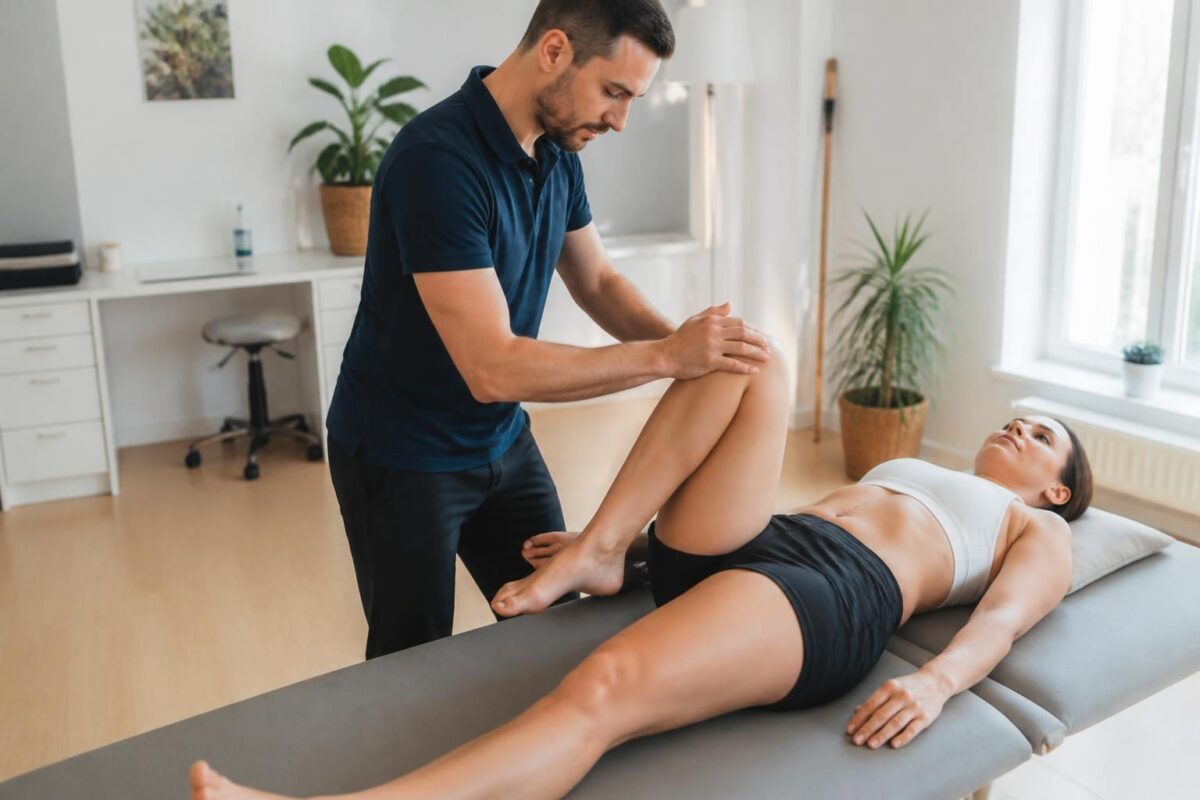
How osteopathy supports recovery after complex surgery
In short In short, Post-operative osteopathy is an approach fresh which supports the recovery After a Complex surgery. It helps to reduce the pain and the fatigue, improves the mobility and accelerates the healing thanks to a better vascularization and…

Dr Sylvain Desforges, B.Sc., D.O., N.D., osteopath, is the founding president of TAGMED and of the ACMA association. He dedicates his practice to chronic spinal pain, low back pain and symptoms compatible with sciatica, particularly when pain radiates toward the buttock, leg, calf, foot or toes.
Through SOS Sciatique, he publishes educational content on sciatica symptoms, possible causes such as disc herniation, disc narrowing, foraminal stenosis or irritation of a lumbar nerve root, as well as non-surgical approaches that may be considered according to the evaluation. At Clinique TAGMED, care may include, depending on the case, motorized neurovertebral decompression, specific osteopathic care or precision percussion.
For an evaluation related to sciatica treatment in Montreal / Mount Royal or sciatica treatment in Terrebonne, please consult the services available at Clinique TAGMED.
Medical disclaimer
The information published on SOS Sciatique is provided for educational purposes only and does not replace a consultation, diagnosis, opinion or treatment provided by a physician or another authorized healthcare professional. The author of this article is neither a medical doctor nor a specialist in a medical specialty recognized by the Collège des médecins du Québec. The osteopathic, manual medicine or functional support approaches described on this site do not constitute medical acts and are not intended to replace medical follow-up.
Consult a physician or emergency service in cases of loss of bladder or bowel control, anesthesia in the saddle area, significant or progressive weakness in the leg or foot, fever, recent trauma, severe pain or rapid worsening of symptoms. For more details, please read our Legal Notice.