Osteopathy and rehabilitation: optimize recovery after trauma
28/06/2026
Osteopathy and post-operative recovery: a natural approach
28/06/2026
In short |
In short, Osteopathy is one Manual approach which aims to restore the balance of the body and reduce pain related to physical stress By acting on the Muscle tensions, thePostural alignment and the circulation. It promotes the relaxation, improves the mobility and the welfare so non-invasive, with results often rapid. Accessible near you, this approach is particularly suitable for active people with stress in the neck, shoulders and backs associated with stress. |
discover how Osteopathy can reduce pain related to physical stress thanks to techniques sweet and personalized. By freeing the Muscle tensions, by restoring the mobility joints and improving the posture, it decreases pain and stiffness. its action on the Blood and lymphatic circulation Facilitates muscle nutrition and waste disposal, accelerating recovery. Finally, it promotes better activation of the nervous system parasympathetic, reducing theanxiety and improving the welfare general, lasting after each session.
This step is performed by a health professional and expert. Osteopathy acts against physical stress pain by targeting muscle tension, improving circulation and rebalancing the posture and the nervous system. The use of soft manual techniques can promote inner calm and mobility, without pain, for a lasting improvement in well-being.
Physical stress leads to increased muscle tone and tension in key areas such as the neck, shoulders and back. Osteopathy acts directly on these tensions to free the blocked areas and restore tissue mobility.
Muscle relaxation and tension reduction
Osteopathic techniques are aimed at relaxation of muscles and fascias. Work on these structures makes it possible to reduce the irregularity of the tone and to relax the tense areas. This muscle relaxation improves blood and lymph circulation, promoting the elimination of metabolic waste and reducing stress associated with stress. The body finds a feeling of lightness and comfort in the movements.
Areas frequently affected by stress, such as the neck and shoulders, benefit from a progressive rebalancing. This approach contributes to a decrease in symptoms and better tolerance to daily stress.
Improved circulation and drainage
Targeted manipulations stimulate blood and lymph circulation. Better circulation helps nourish the muscles and accelerate recovery after exercise or a period of prolonged stress. This dynamic promotes a reduction in pain and a general feeling of revitalization.
Better circulation can also help to better eliminate stress-related toxins. By promoting this drainage, the body finds a more harmonious rhythm and the muscles gain in flexibility and endurance.
Postural correction and nervous system balance
Stress can change postural habits. The osteopath evaluates and corrects imbalances to reduce the load on muscles and joints. A more balanced posture decreases repetitive tensions and Chronic pain related to stress.
Osteopathic techniques also act on the autonomic nervous system. By promoting relaxation and relaxation, they can reduce the stimulation of the sympathetic system and help restore a state of rest, conducive to recovery and general well-being.
Stress management and psychophysiological well-being
An osteopathic session creates an environment conducive to deep relaxation. This experience can decrease pain perception and reduce stress associated with stress. The global approach to osteopathy helps the patient to establish a more harmonious link between body and mind.
Practical integration into daily life
In addition to care, it is recommended to adopt habits that promote relaxation and stress reduction. Slow diaphragmatic breathing, active breaks at work and careful posture during daily activities reinforce the effects of osteopathic sessions. Simple advice can be shared during each consultation and adapted to the patient’s lifestyle.
Indications and support
People with repeated stress-related muscle tension, back pain or neck pain, or joint stiffness may benefit from osteopathic follow-up. The approach is based on global observation of the body and on gentle gestures, without pain, to restore balance and mobility.
For more information on mechanisms and benefits, you can consult accessible resources at Osteopathy and stress – relaxing tension and Osteopathy and recovery – Optimize muscle flexibility.
Useful links and resources
To learn more about possible approaches and outcomes, see the resources associated with Tagmed Clinic and references related to osteopathy and stress on specialized sources such as SOS SCIATIC.
Keywords: osteopathy, aches, physical stress, Muscle relaxation, circulation, posture, the nervous system.
For appropriate assessment and treatment, contact the TagMed Clinic or consult the osteopathy services in your usual care facility. A personalized approach can optimize relief and well-being.
Medical Disclaimer: The information and advice provided on this site does not replace the health professional’s diagnosis or treatment. Please note that Dr. Sylvain Desforges osteopath is neither a doctor of medicine nor a doctor, and is not a specialist in a medical specialty as defined by the Collège des Médecins du Québec. Manual medicine, functional medicine and sports medicine as described on this site exclude any medical treatment or diagnosis made by a doctor or specialist doctor. Always consult your doctor for any medical questions. For more details, please read our full legal notice.
Note: In articles dealing with neurovertebral decompression And other specific conditions, avoid suggesting exercises or stretching, and favor osteopathic approaches adapted to each situation.
Trainer and training references: Numss, NAO, National University of Medical Sciences, National Academy of osteopathy. Professional Associations mentioned: ACMA, College of Canadian Osteopaths, College of Canadian Osteopaths.
For more osteopathy and stress-related resources, see the following pages:
How osteopathy affects chronic inflammation,
Osteopathy and stress – ESO Su Posture,
Stress and osteopathy.
Medical Disclaimer: The information and advice provided on this site does not replace the health professional’s diagnosis or treatment. Please note that Dr. Sylvain Desforges osteopath is neither a doctor of medicine nor a doctor, and is not a specialist in a medical specialty as defined by the Collège des Médecins du Québec. Manual medicine, functional medicine and sports medicine as described on this site exclude any medical treatment or diagnosis made by a doctor or specialist doctor. Always consult your doctor for any medical questions. For more details, please read our full legal notice.
Intervention areas to reduce pain related to physical stress
- muscle relaxation Targeted on tense areas
- Postural correction and alignment of the spine
- Circulatory stimulation and toxin drainage
- Activation of the parasympathetic system To reduce stress
- Improved sleep and mood
- rapid pain reduction By muscle relaxation
- Anxiety management thanks to a calm and relaxing setting
- Prevention of recurrences by mobility maintenance
- Durable comfort by overall balance of the body

Osteopathy acts on pain related to the physical stress By acting on muscle tension, the posture, and the circulation, while promoting better regulation of the nervous system. This article offers you practical recommendations for understanding and implementing this approach in order to regain lasting well-being.
Understanding the link between physical stress and pain
The physical stress comes from repeated work, extended positions or unsuitable movements. The body reacts by contracting the muscles, which can generate localized or diffuse pain in the back, neck and shoulders. In osteopathy, the objective is to intervene in the areas of tension to prevent the installation of chronic pain and restore the overall balance of the body.
An approach overall Recognizes interactions between muscles, joints and the nervous system. By working on these interactions, the osteopath prepares the ground for better recovery and reduction of stress-related pain.

How osteopathy improves the quality of life of active people
In short In short, theosteopathy is a global approach that Optimizes mobility and the function of the body of ACTIVE PEOPLE, for a better quality of life. It helps prevent injury and reduce Musculoskeletal pain While promoting the Sports recovery.…
How Osteopathy Reduces Stress-related Pain
Muscle relaxation and spasm reduction
thanks to Soft manual techniques and targeted, osteopathy helps Relax tense muscles and reduce spasms that maintain pain. This relaxation promotes better blood and lymph circulation to the tissues, accelerating recovery and reducing nocturnal or exertion-related pain.
Postural correction and rebalancing
A postural assessment makes it possible to identify the imbalances that amplify the pain. By rebalancing the spine, shoulders and pelvis, osteopathy reduces tension in the most stressed areas during daily stress. A aligned posture Reduces pressure on the joints and improves everyday movements.
Improved circulation and drainage
Osteopathic work stimulates the bloodstream and lymphatic, facilitating the elimination of toxins and promoting better muscle nutrition. This improvement helps to limit muscle fatigue and speed up the recovery process after a day marked by physical stress.
Nervous system regulation and stress management
by promoting an activation of the parasympathetic system, osteopathy helps reduce cortisol and adrenaline levels. Patients often see a decrease inanxiety And a feeling of calm after the sessions. This nervous regulation supports better daily stress management and improves sleep quality.

Osteopathy and sports recovery: prepare the body for lasting performance
In short In short, Osteopathy and Sports recovery is one Global manual approach that sustainably prepares the body for the effort by restoring mobility and circulation After the effort. It is a discipline that acts on the sinews, the joints,…
Techniques and personalized approach
Stretching, mobilization and targeted relaxation
The Soft stretches and the Joint mobilizations Restore mobility, extinguish areas of tension and prevent stress-related injuries. Each session is adapted to the patient’s profile and specific needs.
Diaphragmatic work and breathing
The diaphragm plays a key role in breathing and relaxation. In osteopathy, work in this region promotes deeper and calming breathing, which supports the reduction of overall tension and improves psychological appeasement.
Personalized and continuous approach
The osteopathic protocols are adjusted according to the evolution of the patient. A personalized and regular approach makes it possible to obtain Sustainable results And to integrate practical advice in everyday life (active breaks, ergonomics, postural hygiene).
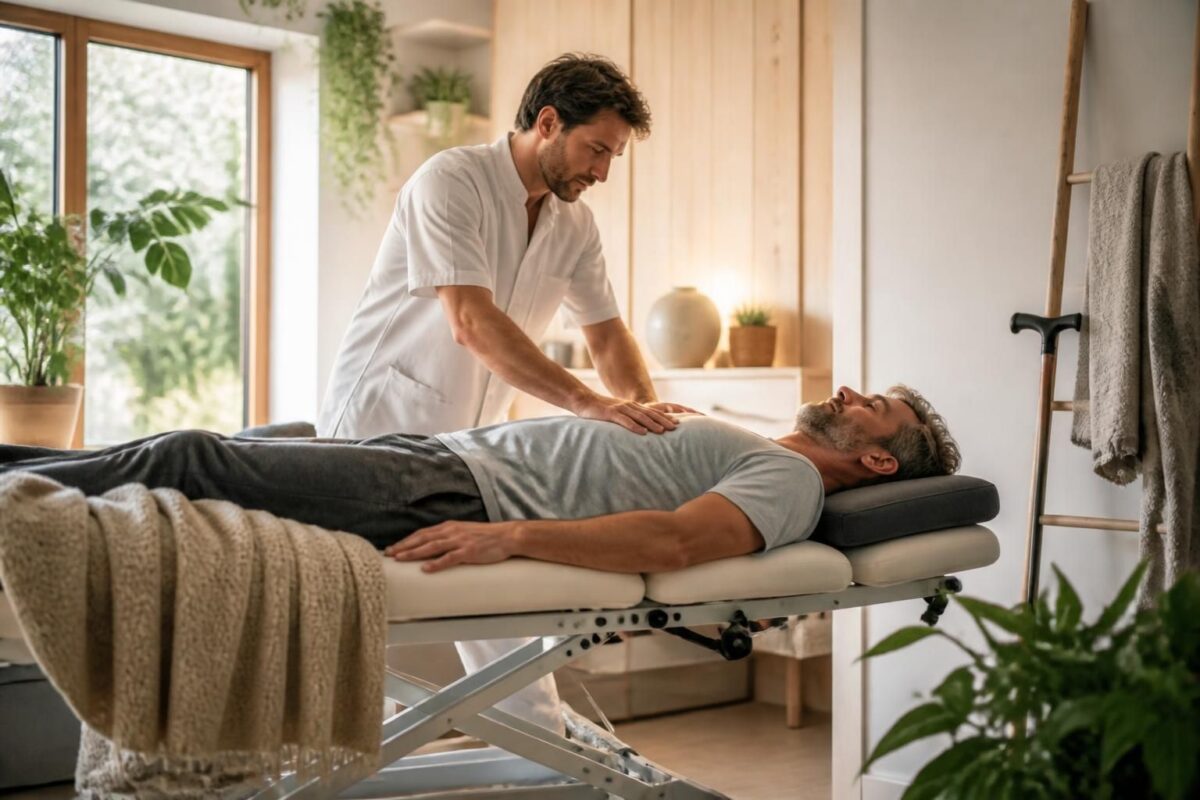
Why Osteopathy Is Essential For Recovery People
In short In short, Osteopathy in convalescence is an approach manual and holistic which helps to accelerate the recovery by restoring The balance, the mobility and a good circulation fabrics. it contributes to Reduce the pain, support the Back to…
Practical advice for sustainable efficiency
Plan Regular sessions to maintain release and rebalancing. Apart from visits, integrate simple exercises at home: Diaphragmatic breathing, postural micro-breaks and targeted stretching. Adopt a routine that combines relaxation, adapted physical activity and workplace hygiene to limit accumulated tensions.

Osteopathic manipulations to strengthen post-traumatic muscles
In short In short, Osteopathic manipulations for Strengthen post-traumatic muscles constitute a gentle manual approach aimed at restoring the mobility, reduce the pain and facilitate the Functional rehabilitation After a injury. What is Is it? A series of precise gestures…
When to consider osteopathic support
If you experience persistent pain related to physical stress, morning stiffness, or recurrent muscle fatigue, consult an osteopath for a personalized assessment. Appropriate care can provide quick relief and prevent the appearance of chronic pain.
| Aspect | Concise impact |
|---|---|
| muscle relaxation | by gentle techniques, muscle relaxation and decreased pain tension and signals. |
| Postural correction | The Postural correction Reduces loads on muscles and joints and prevents relapses. |
| Circulation | better Blood and lymphatic circulation and accelerates tissue recovery. |
| The nervous system | Action on the parasympathetic nervous system and reduction of cortisol. |
| Breathing | Work on diaphragm and breathing For better oxygenation and less voltage. |
| Pain and mobility | Relief immediate and improvement of mobility. |
| Anxiety and stress | reduction of theanxiety and of stress perceived by relaxation. |
| Prevention | Approach preventive chronic pain by correcting tension. |
| Accessibility and security | Approach non-invasive and secure without medication. |

Osteopathy and prevention of work-related musculoskeletal disorders
In short theosteopathy is one Manual approach that restores body balance and prevents MSD related to work. Its advantages: reduction of tension, improvement of mobility and prevention of chronic pain. She is preventive and healing, suitable for office and trades…
Testimonials: how osteopathy reduces pain related to physical stress
Marie, 34, project manager: “Before each day, the physical stress pulled my shoulders and gave me back pain. After a few sessions of osteopathy, the tensions have cleared up and I feel a relaxation sustainable. My breathing is calmer and my circulation Blood improves, which helps me stay focused throughout the day. »
Julien, 41, marketing manager: “My physical stress manifested itself in low back pain as soon as I sat for a long time. Thanks to targeted and gentle manipulations, my back muscles relaxed and my posture corrected. The pain decreased rapidly and I gained energy to face meetings and projects. »
Chloe, 29, Sports & Amateur Athlete: “Theosteopathy helped me better manage the physical stress related to training and competitions. By releasing the tensions of the shoulders and chest, my mobility improved, my breathing is more effective and my performance stabilized without pain. It’s a feeling of welfare which persists after each session. »
Paul, 38, teacher: “The physical stress Accumulated in front of the class gave me neck pain and headaches. After the sessions of osteopathy, the muscles of the neck have relaxed, the circulation has been optimized and my nights are more restful. I found a feeling of quiet which positively influences my professional and personal life. »
Claire, 32, developer: “My tensions were constant when I was working on screen; the physical stress turned into pain that slowed down my gestures. The gentle intervention of the osteopath has rebalanced my posture and improved my circulation. I feel less pain, more fluidity in my movements and a marked reduction in anxiety on a daily basis, which changes everything. »
In a world where the physical stress is ubiquitous, theosteopathy stands out as a global approach capable of acting on both muscle tension and functional imbalances of the body. This discipline, which is based on the interaction between structure and function, aims to relax the tissues, restore mobility and optimize circulation, in order to reduce the pain that arises when the body is subjected to repetitive loads, constraining postures or efforts Extended. The goal is to return to a lasting and lasting balance.
Dr Sylvain Desforges, osteopath, naturopath and doctor Manuel, is the founding president of the Tagmed clinics and the ACMA association. His career is dedicated to health innovation and chronic pain management. With this approach, it integrates advanced technologies and adapts its know-how to each patient, in order to offer personalized and scientifically based solutions. His work is based on careful listening and precise evaluation of the sources of stress and the resulting bodily adaptations.
At the heart of osteopathic practice, the muscle relaxation and the Postural correction play a major role in reducing stress-related pain. By working on muscle chains and fascias, the osteopath identifies areas where tensions are concentrated and applies Gentle techniques which gradually release the tense muscles. Moreover, thetraffic optimization Blood and lymphatic promotes tissue nutrition and accelerates recovery, while decreasing the feeling of heaviness and pain.
the management of the nervous system is also a key axis. By stimulating the parasympathetic component, osteopathy promotes a state of relaxation conducive to the recovery and regulation of stress hormones, such as cortisol. This mechanism contributes not only to reducing anxiety and tension, but also to improving sleep and concentration, two essential factors to cope with daily stress. The approach emphasizes a global response to the body, rather than isolated pain.
Dr Desforges favors a Personalized approach and patient-centric, combining joint manipulations, gentle stretching and myofascial release techniques. It also incorporates practical advice on diaphragmatic breathing and stress management methods, in order to amplify the benefits of the sessions beyond the practice. In its practice, osteopathy is not only a symptomatic treatment: it is an approach that restores the overall balance of the body and helps to preserve a better quality of life in the face of stress.
To complete this approach, Dr. Desforges uses complementary technologies when necessary, such as motorized spinal decompression, treatment with laser and shockwave therapies, in order to support the patients most requested by professional or physical stress. These tools are integrated into a therapeutic strategy that aims to reduce pain, improve mobility and promote a state of lasting calm. Thus, patients gradually regain freedom of movement, more fluid breathing and inner serenity.
This detailed summary explains how Osteopathy can reduce pain related to physical stress By acting on muscle tension, posture and circulation, and regulating the nervous system. By combining gentle techniques and a global approach to the body, she seeks to bring the body back to a state of quiet and ofbalance, in order to sustainably improve well-being and mobility.

The benefits of osteopathy to treat muscle imbalances
In short theosteopathy is a manual approach to restore themuscle harmony and postural considering the body as a whole. Its main benefits include the reduction of aches and tensions, the improvement of the mobility and from the posture, and prevention…
Global approach to osteopathy in the face of physical stress
Faced with physical stress, osteopathy aims to identify areas of tension, postural imbalances and mobility limitations that maintain pain. favoring techniques non-invasive and adapted to each patient, she seeks to restore the Overall functionality of the body, gently, in order to reduce the painful stimuli and the compensation mechanism that can be installed.
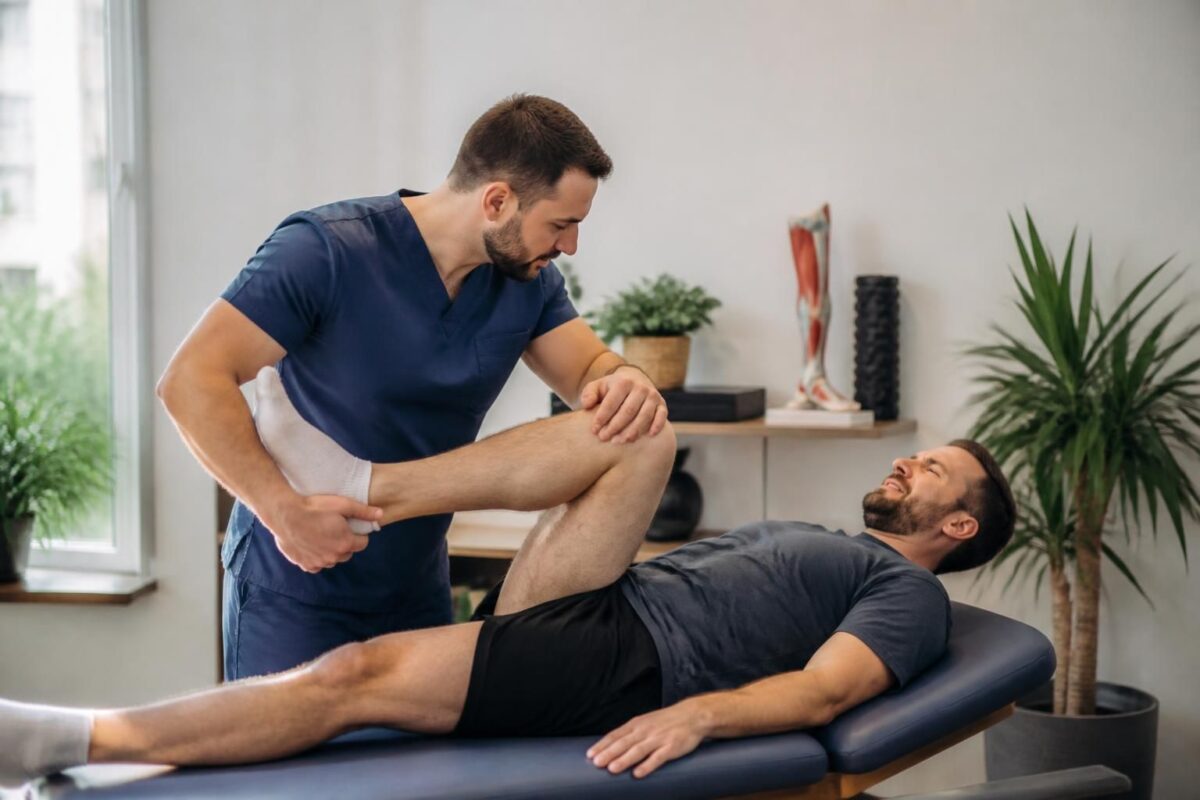
Osteopathy and chronic leg pain: regaining an optimal quality of life
In short In short, Osteopathy is one Global manual approach aimed at reducing Chronic leg pain and improve the quality of life. What is it? Non-drug therapy using the hands to identify restrictions and treat lesional chains. How does it…
Muscle relaxation and tension release
Muscle relaxation is at the heart of osteopathic action. using Gentle techniques relaxation, targeted stretching and joint mobilization, the osteopath reduces tensions» localized, to improve the bloodstream And to evacuate the accumulated local toxins. This physical relaxation often promotes an immediate reduction in pain and improved flexibility, even in the presence of chronic stress.
How osteopathy supports recovery after complex surgery
In short In short, Post-operative osteopathy is an approach fresh which supports the recovery After a Complex surgery. It helps to reduce the pain and the fatigue, improves the mobility and accelerates the healing thanks to a better vascularization and…
Improved circulation and drainage
Stress can compromise circulatory and lymphatic circuits. by reactivating the drainage and stimulating the circulation In the tissues, osteopathy facilitates the intake of nutrients and the evacuation of metabolic waste. This better infusion supports muscle recovery, reduces the feeling of swelling and contributes to a general feeling of lightness and well-being.
Postural rebalancing and motion optimization
Stress can change postural habits and cause chains of tension. The osteopath acts on the Postural balance and aligning body segments to decrease excessive pressure on muscles and joints. By correcting imbalances, it helps prevent recurrent pain and promote more fluid and less painful movements on a daily basis.
Effects on the nervous system and hormonal balance
Osteopathic manipulations can influence the autonomic nervous system, by promoting the activation of the parasympathetic mode and general relaxation. Through this regulation, the excessive production of stress hormones, such as cortisol and adrenaline, can be reduced. Result: a decrease in anxiety, improved mood and better tolerance to stress, which contributes to a lasting reduction in pain related to physical stress.
Impact on sleep and anxiety
By reducing tension and promoting deep relaxation, osteopathy can improve sleep quality and reduce anxiety symptoms. A more restorative sleep allows the body to recover more effectively, restore neuromuscular functions and strengthen resilience to daily stress.
Practical tips to optimize benefits between sessions
To prolong the beneficial effects, it is advisable to adopt simple habits between visits: favor active breaks, practice diaphragmatic breathing exercises, maintain appropriate hydration and work on ergonomic postures at work. The integration of these practices with osteopathy strengthens the therapeutic action and contributes to a progressive reduction in pain related to stress.
Resources and additional links
To learn more, you can consult the following resources that address the relationship between osteopathy and stress, the techniques used and their effects on circulation and body balance:
Osteopathy and stress — Release accumulated tensions
Osteopathy and stress — Effective techniques for relieving physical tension
How osteopathy improves circulation and reduces swelling
Osteopathy and arthritis — regain joint mobility
Osteopathy and stress — Scientific effectiveness
Healing stress with osteopathy

Dr Sylvain Desforges, B.Sc., D.O., N.D., osteopath, is the founding president of TAGMED and of the ACMA association. He dedicates his practice to chronic spinal pain, low back pain and symptoms compatible with sciatica, particularly when pain radiates toward the buttock, leg, calf, foot or toes.
Through SOS Sciatique, he publishes educational content on sciatica symptoms, possible causes such as disc herniation, disc narrowing, foraminal stenosis or irritation of a lumbar nerve root, as well as non-surgical approaches that may be considered according to the evaluation. At Clinique TAGMED, care may include, depending on the case, motorized neurovertebral decompression, specific osteopathic care or precision percussion.
For an evaluation related to sciatica treatment in Montreal / Mount Royal or sciatica treatment in Terrebonne, please consult the services available at Clinique TAGMED.
Medical disclaimer
The information published on SOS Sciatique is provided for educational purposes only and does not replace a consultation, diagnosis, opinion or treatment provided by a physician or another authorized healthcare professional. The author of this article is neither a medical doctor nor a specialist in a medical specialty recognized by the Collège des médecins du Québec. The osteopathic, manual medicine or functional support approaches described on this site do not constitute medical acts and are not intended to replace medical follow-up.
Consult a physician or emergency service in cases of loss of bladder or bowel control, anesthesia in the saddle area, significant or progressive weakness in the leg or foot, fever, recent trauma, severe pain or rapid worsening of symptoms. For more details, please read our Legal Notice.