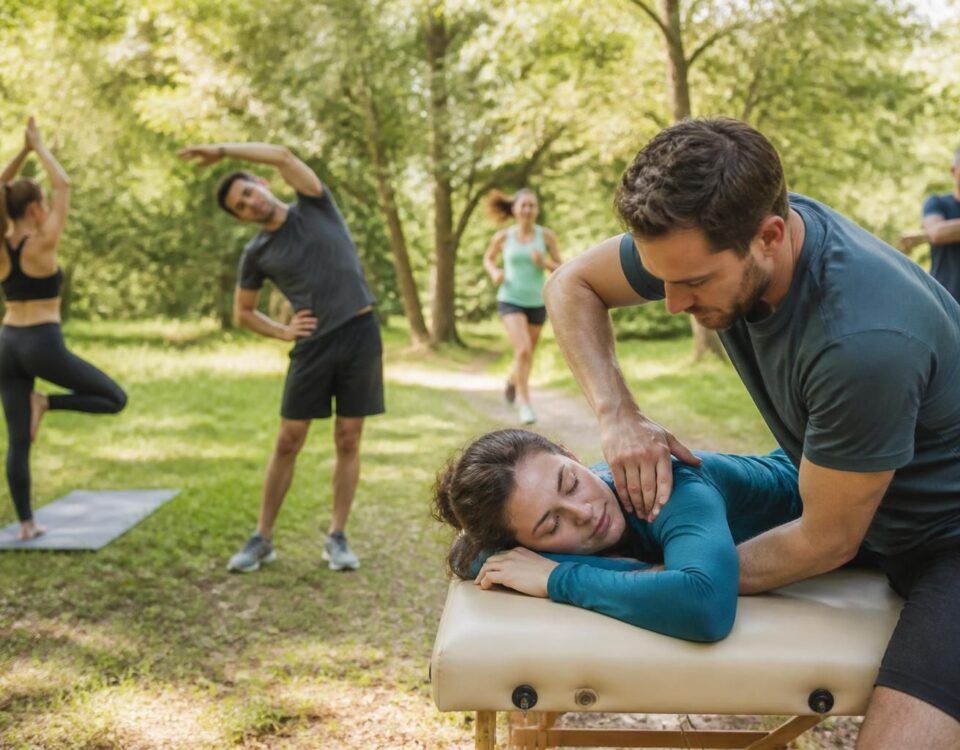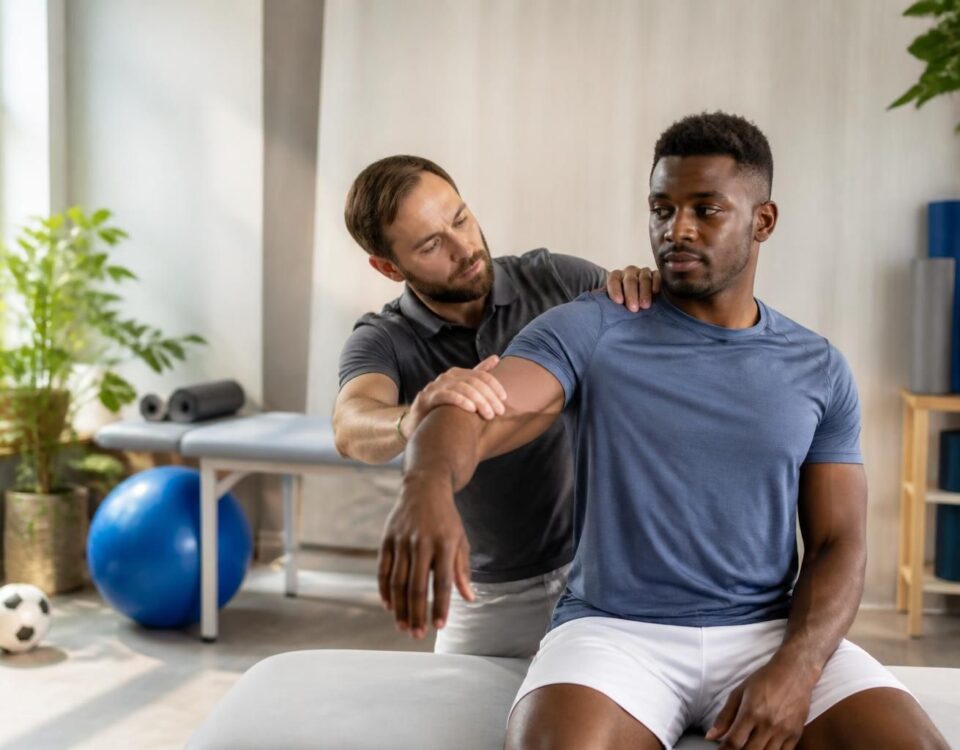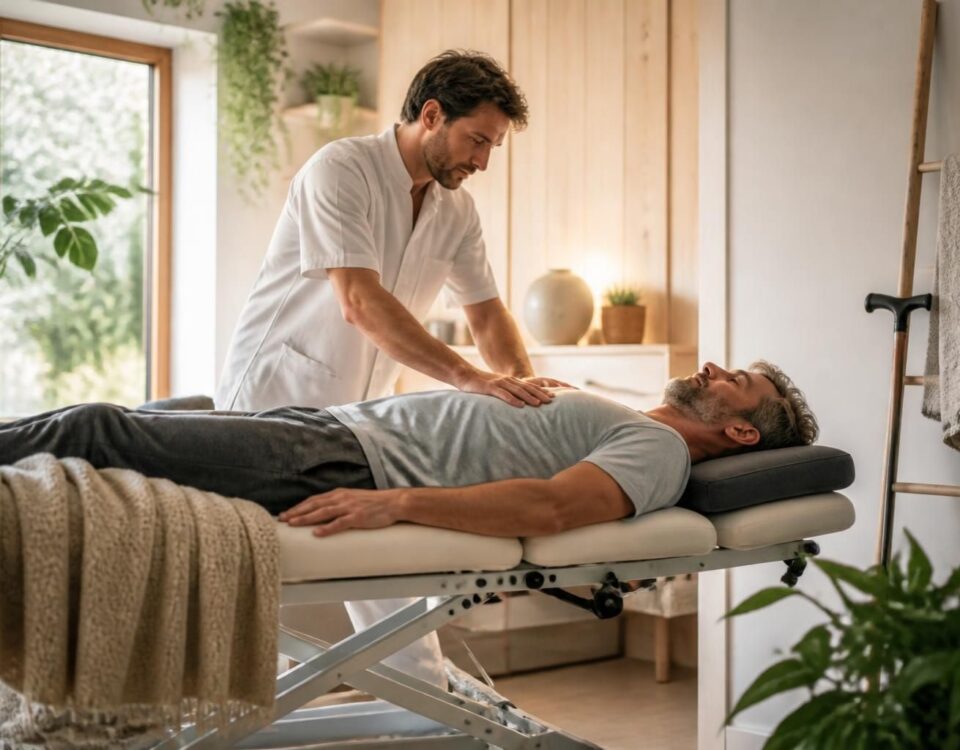
Osteopathy and stress: effective techniques to release physical tension
28/06/2026
Why osteopathy is essential for rapid recovery after trauma
28/06/2026
In short |
What are the Osteopathic manipulations for Reinforce joint flexibility ? These are manual techniques aimed at releasing restrictions and restoring therange of motion joints. Benefits include a better mobility, a reduction in aches related to stiffness, injury prevention and support for posture. How it works ? After a Personalized evaluation, the osteopath chooses techniques sweet and adapted (structural and myofascial) to restore the balance of the joint and muscular chains, without pain and without surgery. In Montreal, this service is particularly useful for active people wishing to maintain their mobility daily and prevent stiffness. |
The Osteopathic manipulations aim to strengthen the Joint flexibility By working on joints, muscles and surrounding tissues. thanks to Structural techniques And some Sweet mobilizations, associated with approaches myofasciales, they restore the range of motion and reduce tensions, thus improving the mobility overall patient. Each session is adapted to the profile of the individual, with a precise evaluation and a personalized plan for lasting gains.
This article, written by a health professional and expert in osteopathy, describes how osteopathic manipulations increase the Joint flexibility. It explains the foundations, the techniques used, the expected benefits and the principles of evaluation and safety. The objective is to offer a clear, effective and non-invasive approach to promote sustainable mobility on a daily basis.
Osteopathic manipulations are based on an overall assessment of the body and the application of manual techniques that target the joints, muscles and fascias. They aim to restore range of motion, reduce tension and restore a functional balance. This approach, when adapted to each patient, can improve overall mobility, prevent stiffness and contribute to a better quality of life.
Techniques used
The Structural techniques involve direct joint adjustments. They aim to quickly restore range of motion and reduce associated pain. These manipulations are carried out with controlled precision to optimize the joint function.
The Myofascial techniques Focus on the fascias, those membranes that surround muscles and organs. By releasing tension in these networks, they improve the circulation and mobility of the joints, while reducing muscle restrictions.
The Visceral techniques target the functioning of the internal organs and their relationship with movement. By improving mobility and visceral circulation, they promote better overall harmony of the body and support joint flexibility.
The cranial techniques Consists of gentle manipulations on the bones of the skull and their subtle mobility. This approach can contribute to the overall balance and coordination of everyday actions, while remaining non-invasive.
The Sweet mobilizations Use progressive movements to increase amplitude without causing pain. They are particularly suitable when the joints have limitations related to injuries or repetitive acts.
The Spinal adjustments Aim to restore column alignment and promote better nerve circulation. Proper alignment can amplify the mobility of adjacent joint segments and reduce muscle tension.
To deepen perspectives and methods, you can consult specialized resources on osteopathic techniques and their practical application, in particular content dedicated to the Joint mobility and pain and at the Mobility in the presence of arthritis. Other useful resources address the role of manipulation in recovery after a sports injury and improving overall posture.
For more information, see the following resources: Osteopathy and recovery, Overall well-being and posture, and Post-surgery recovery. These resources illustrate how the osteopathic approach can support mobility and well-being without using invasive interventions.
Objectives and mechanisms
The main objective of the manipulations is to Restore joint mobility and reduce muscle tension that limit movement. By evaluating posture, amplitudes and relationships between tissues, the osteopath adapts the techniques to each patient. This approach promotes not only a better range of motion, but also a general feeling of well-being and a lasting improvement in joint function.
Mechanisms of action include optimizing alignment, releasing fascial tensions, and improving local blood and lymph circulation. These combined effects contribute to a Better neuromuscular coordination and a reduction in stiffness related to inactivity or daily mechanical factors.
Theoretical and clinical resources describe the positive effects of osteopathic manipulation on mobility and joint stabilization. For a practical synthesis of mechanisms and results, see documents and studies relating to osteopathy and joint mobility.
Evaluation and security
Pre-therapeutic assessment is essential. It includes posture analysis, joint mobility and medical history, in order to identify areas of restriction and potential contraindications. The practitioner then adapts the techniques to the patient’s tolerance and profile, favoring safe and progressive manipulations.
Security is a priority. Professionals follow rigorous protocols to avoid any discomfort or aggravation. In case of acute pain, fever or significant neurological sign, it is recommended to quickly consult a health professional and adjust the treatment accordingly.
Integration with lifestyle and self-management
To maintain flexibility gains and support mobility, the osteopath advises a combining approach Adapted activities and postural hygiene advice. Self-management can include daily practices aimed at preserving joint amplitude and preventing stiffness, while remaining compatible with everyone’s needs and abilities.
Dedicated resources explain how osteopathy can fit into a care routine and how it can accompany recovery after injury or surgery without resorting to unsuitable exercises. To explore this topic, see the pages on osteopathy and injury recovery and overall wellness approaches on the sites referenced above.
For more information on osteopathic approaches and clinical results, you can refer to educational and professional resources accessible via the pages dedicated to osteopathy and joint mobility.
Medical Disclaimer: The information and advice provided on this site does not replace the health professional’s diagnosis or treatment. Please note that Dr. Sylvain Desforges osteopath is neither a doctor of medicine nor a doctor, and is not a specialist in a medical specialty as defined by the Collège des Médecins du Québec. Manual medicine, functional medicine and sports medicine as described on this site exclude any medical treatment or diagnosis made by a doctor or specialist doctor. Always consult your doctor for any medical questions. For more details, please read our full legal notice.
- Targeted evaluation: Spot restriction areas
- Structural techniques: Joint adjustments for amplitude
- Sweet mobilizations: progressive movements without pain
- Myofascial techniques: Release of the fascias for flexibility
- Spinal adjustments: Realignment for better mobility
- Visceral release: Balance organs for general mobility
- cranial techniques: Gentle manipulations for global mobility
- Muscle release: Relax tensions around the joints
- Custom Plan: adaptation and progression according to the patient
- self-management: Home exercises to maintain flexibility
- Postural integration: mobility at the service of posture
- Recommended activities: swimming, yoga, regular walking

Quick Summary: This article presents how the Osteopathic manipulations can Reinforce joint flexibility By combining direct and gentle techniques, in-depth evaluation and appropriate progression. They aim to restore the movement of the joints, to release muscle tension and to optimize mobility as part of a personalized program.
Understand the purpose of osteopathic manipulations
Osteopathic manipulations are part of a global approach to the body. They aim to Restore functional balance By improving joint mobility and decreasing restrictions that limit movement. This approach favors non-invasive gestures, adapted to each person, and accompanies the progress towards a better quality of life on a daily basis.

How osteopathy improves the quality of life of active people
In short In short, theosteopathy is a global approach that Optimizes mobility and the function of the body of ACTIVE PEOPLE, for a better quality of life. It helps prevent injury and reduce Musculoskeletal pain While promoting the Sports recovery.…

Osteopathy and sports recovery: prepare the body for lasting performance
In short In short, Osteopathy and Sports recovery is one Global manual approach that sustainably prepares the body for the effort by restoring mobility and circulation After the effort. It is a discipline that acts on the sinews, the joints,…
Key Techniques to Increase Flexibility
Structural techniques
The Structural techniques are based on joint adjustments and targeted mobilizations. They make it possible to quickly restore a more fluid range of motion, reduce blockages and alleviate pain caused by stiffness. These direct manipulations are part of a logic of returning to a normal function of the joint segments.
Myofascial techniques
The Myofascial techniques Act on the fascias that surround muscles and organs. By releasing tensions and grips, they restore better glide of fabrics and improve local circulation. The result is a Increased mobility and a reduction in limitations caused by chronic tensions.
Visceral and cranial techniques
the techniques visceral and cranial aim to optimize the functioning of internal organs and the mobility of cranial structures. By promoting better circulation and a balance of the nervous system, these approaches can favorably influence general mobility and joint flexibility, without imposing excessive constraints.
Why Osteopathy Is Essential For Recovery People
In short In short, Osteopathy in convalescence is an approach manual and holistic which helps to accelerate the recovery by restoring The balance, the mobility and a good circulation fabrics. it contributes to Reduce the pain, support the Back to…

Osteopathic manipulations to strengthen post-traumatic muscles
In short In short, Osteopathic manipulations for Strengthen post-traumatic muscles constitute a gentle manual approach aimed at restoring the mobility, reduce the pain and facilitate the Functional rehabilitation After a injury. What is Is it? A series of precise gestures…
Implementation and progress of treatment
To get a Durable flexibility, the osteopath first assesses mobility, postures and local tensions. Then he develops a progressive treatment plan, adapted to the patient’s condition and activities. A first step can focus on the most limited areas, followed by a gradual increase in amplitude and joint loads.
Recommended frequency and duration of sessions: Focus on regular and short sessions at the beginning, in order to Promote integration of mobility gains and limit the risk of tissue overdose. As mobility improves, the protocol may include gentle stretching and stabilization exercises to be performed at home to maintain profits.
Patient education is central. The osteopath explains the mechanisms behind stiffness and offers practical advice to support mobility, such as simple stretching routines, active breaks and an activity adapted to his level.

Osteopathy and prevention of work-related musculoskeletal disorders
In short theosteopathy is one Manual approach that restores body balance and prevents MSD related to work. Its advantages: reduction of tension, improvement of mobility and prevention of chronic pain. She is preventive and healing, suitable for office and trades…

The benefits of osteopathy to treat muscle imbalances
In short theosteopathy is a manual approach to restore themuscle harmony and postural considering the body as a whole. Its main benefits include the reduction of aches and tensions, the improvement of the mobility and from the posture, and prevention…
Practical recommendations for staying flexible on a daily basis
Integrate activities that promote mobility without overload: swimming, yoga or regular walk. Adopt a Adapted ergonomics at work and favor postures that avoid excessive loads on the joints. At home, practice gentle stretching and controlled joint movements to maintain the amplitude gained during the session.
Listen to your body and report any new or persistent pain. Respecting the signals makes it possible to adjust the therapeutic plan and to avoid over-tests or unsuitable gestures. The key remains a personalized, progressive and focused approach to maintaining mobility on a daily basis.
| Handling category | Impact on flexibility |
|---|---|
| Structural techniques | restore the amplitude by direct adjustments; targeted improvement in joint mobility. |
| Joint mobilizations | progressive movements that increase the amplitude Painless and enhance overall flexibility. |
| Myofascial techniques | release the fascias and tensions, facilitating the slippage of tissues and stretching of joints. |
| Visceral techniques | Optimize visceral function and circulation, supporting general mobility. |
| cranial techniques | A gentle approach that improves balance and systemic mobility without forcing the joints. |
| Myofascial release | Releases tissue tension and increases elasticity. |
| Guided stretching and stretching | extend the amplitude obtained and prevent post-treatment stiffness. |
| Spinal adjustments | Restore spinal alignment and improve mechanics, reducing joint limitations. |
| Education and personalized approach | Individual assessment and home advice enhance the sustainability of flexibility gains. |
Osteopathy and chronic leg pain: regaining an optimal quality of life
In short In short, Osteopathy is one Global manual approach aimed at reducing Chronic leg pain and improve the quality of life. What is it? Non-drug therapy using the hands to identify restrictions and treat lesional chains. How does it…
How osteopathy supports recovery after complex surgery
In short In short, Post-operative osteopathy is an approach fresh which supports the recovery After a Complex surgery. It helps to reduce the pain and the fatigue, improves the mobility and accelerates the healing thanks to a better vascularization and…
Testimonials on osteopathic manipulations to enhance joint flexibility
Testimony of Claire, 28 years old: the Osteopathic manipulations made on my shoulders and my hips woke up my Joint flexibility Lost by stress and busy schedules. After a few sessions, I found a natural range of movement, especially to raise my arms and move freely during my sports activities. It’s soft, personalized and really effective.
Testimony of Julien, 42 years old: In a professional environment, I spend long hours sitting down. Thanks to Osteopathic manipulations, my mobility improved and my lower back pain decreased, which allowed me to resume my training. I felt better flexibility in the back and a more balanced posture on a daily basis.
Testimony of Sophie, 55: over the years, the Joint flexibility From my shoulders and hips had left me. After a few sessions, I became able to do my garden and DIY activities again without stiffness. The manipulations are non-invasive And adapted to my pace, which gave me confidence in my movements.
Testimony of Hugo, 19 years old: As an athlete, I am still looking to optimize my mobility. Osteopathic manipulations helped me improve my flexibility On the key joints, which allowed me to reach deeper positions during squats and stretching. I recommend to gain amplitude and performance.
Testimony of Émilie, 33: at the office and during my journeys, my column and my shoulders had lost their flexibility. After targeted sessions, I found a better Joint flexibility and a more thoracic posture. My everyday gestures, like taking a bag or carrying a child, become more fluid.
Testimony of Marc, 62: after years of persistent stiffness, the Osteopathic manipulations have unraveled some tension in my column and my shoulders. My mobility strengthened, and I can finally reach higher floors and carry out activities that were close to my heart without limiting my movements. The result is tangible and lasting.
Dr. Sylvain Desforges, an experienced osteopath and Manual Medicine Expert, was dedicated to the development of Osteopathic manipulations as the main lever for developing the Joint flexibility. Aged 59, he forged a practice based on holistic evaluation of the body and on the idea that joint mobility is the basis of lasting well-being. Founding President of TagMed Clinics and ACMA, he emphasizes approaches non-invasive and adapted to each patient in order to optimize the function of the joints and to prevent movement limitations.
In his approach, Early and personalized assessment is essential. The doctor examines posture, joint mobility and muscle balance, and then develops a treatment plan focused on the progressive recovery of the Motor story of the patient. The objective is clear: to restore a fluid and stable range of motion, while reducing musculo-tendinous tensions that limit flexibility. This approach is based on an alliance between science and technology, guided by measurable results and a tangible improvement in everyday life.
The Structural techniques constitute a key basis, with Joint adjustments And some Targeted mobilizations that restore alignment and promote freer mobility of the vertebrae, pelvis and limbs. The Myofascial techniques strive to release tension in the fascias, these membranes that surround muscles and organs, in order to release adherence and improve blood and lymph circulation. Furthermore, the Visceral techniques consider the interaction between the internal organs and the musculoskeletal system, since proper visceral function can directly influence the mobility of the joints. Finally, the cranial techniques, often subtle, help reduce overall tension and promote synchronization of the nervous system and movement control mechanisms.
This range of techniques is aimed at Concrete benefits: one Improving mobility, a pain reduction, and a Postural reframing which allows the patient to find a more fluid gait and more spontaneous physical activity. osteopathic manipulations, when applied in a manner personalized, take into account individual imbalances and are part of a lasting joint rehabilitation course rather than a punctual resolution of symptoms.
To support progress, Dr. Desforges integrates elements of education and self-management in his practice. Advice on gentle stretching exercises and adapted activities are offered to maintain and extend mobility gains between sessions. This approach activates the patient in his recovery and promotes better tolerance to daily and sports constraints.
Throughout his career, he favored a vision of human medicine and evidence-based, where osteopathic manipulations form a central component of a broader therapeutic framework. His work highlights how joint flexibility can serve as a lever for a more active and less painful life, without resorting to invasive gestures.
This text explores the Osteopathic manipulations as an effective way to strengthen the Joint flexibility, describing the main techniques and mechanisms involved, as well as their impact on mobility, pain and well-being on a daily basis.
The Structural manipulations allow you to restore therange of motion directly targeting the joints; Accurate adjustments release restrictions and promote better mobility of the back, shoulders and hips.
The Myofascial techniques Release fascia tensions, improving circulation and reducing pain from stiffness; the Visceral techniques Optimize the functioning of the organs and the circulatory system, with positive effects on overall mobility, and cranial techniques Bring subtle adjustments that support nervous system balance and overall flexibility.
This approach is personalized and requires a preliminary assessment to adapt protocols; the Regular follow-up Allows you to adjust the techniques according to progress and to integrate exercisesself-management at home to maintain flexibility and prevent stiffness.
For those who wish to deepen, you can consult specialized resources such as Osteopathic manipulations to enhance joint flexibility, and other content on The foundations and applications of osteopathic techniques or Why osteopathy is a wise choice for chronic pain. You can also consult local guides like Selma Osteopath, or specialized resources on training and mobility, including Osteopathic Techniques: Understanding the Basics, and How osteopathy improves joint mobility and flexibility. Other useful readings address post-traumatic rehabilitation, recovery after surgery and cervical pain on SOS SCIATIC and neck pain. These resources offer concrete examples and clear explanations for integrating manipulations into a mobility approach.

Dr Sylvain Desforges, B.Sc., D.O., N.D., osteopath, is the founding president of TAGMED and of the ACMA association. He dedicates his practice to chronic spinal pain, low back pain and symptoms compatible with sciatica, particularly when pain radiates toward the buttock, leg, calf, foot or toes.
Through SOS Sciatique, he publishes educational content on sciatica symptoms, possible causes such as disc herniation, disc narrowing, foraminal stenosis or irritation of a lumbar nerve root, as well as non-surgical approaches that may be considered according to the evaluation. At Clinique TAGMED, care may include, depending on the case, motorized neurovertebral decompression, specific osteopathic care or precision percussion.
For an evaluation related to sciatica treatment in Montreal / Mount Royal or sciatica treatment in Terrebonne, please consult the services available at Clinique TAGMED.
Medical disclaimer
The information published on SOS Sciatique is provided for educational purposes only and does not replace a consultation, diagnosis, opinion or treatment provided by a physician or another authorized healthcare professional. The author of this article is neither a medical doctor nor a specialist in a medical specialty recognized by the Collège des médecins du Québec. The osteopathic, manual medicine or functional support approaches described on this site do not constitute medical acts and are not intended to replace medical follow-up.
Consult a physician or emergency service in cases of loss of bladder or bowel control, anesthesia in the saddle area, significant or progressive weakness in the leg or foot, fever, recent trauma, severe pain or rapid worsening of symptoms. For more details, please read our Legal Notice.