Osteopathy and recovery after a sprain: optimize healing
29/06/2026
Why osteopathy is effective in treating lower back pain
29/06/2026
In short In short, the Osteopathic approaches To relieve the Spine pain are based on Manual handling targeted and a holistic approach. What is osteopathy? A alternative medicine who considers the body as a whole and identifies the source of pain rather than their symptoms. What are the advantages? relief pain, Improved mobility and Prevention of recurrences, without surgery or medication. How does it work? After a global assessment, the osteopath develops a personalized plan including Gentle manipulations, stretching and postural advice to restore spinal balance and prevent relapses. In Montreal, this service is particularly suitable for low back pain and neck pain related to lifestyle and stress. |
The Osteopathic approaches To relieve the Spine pain rely on a vision overall of the body and on soft manual techniques. theosteopathy Privilege of engagement, of stretches and postural adjustments to restore the mobility and promote circulation, while seeking the cause Deep pain rather than treating only symptoms. Through an approach holistic, the assessment takes into account the whole body and lifestyle to personalize the treatment, which can provide quick and lasting relief and help prevent recurrences of low back pain and neck pain.
The Spine pain affect a large number of people. Osteopathy offers an approach overall and non-invasive which aims to reduce pain, improve mobility and prevent recurrences. This article describes the principles, evaluation and techniques used, as well as common clinical applications.
Understanding osteopathy and the holistic approach
Osteopathy considers the body as a homogeneous unit. An imbalance in one structure can influence other parts of the body. This approach holistic Guides assessment and care. The techniques used seek to restore mobility and promote blood and lymph circulation.
To understand how osteopathy can act on stress and balance, see this article on the subject Osteopathy and stress — soothe the body and mind.
Evaluation and osteopathic diagnosis
The first consultation helps to identify the possible cause of the pain. The professional collects medical history, lifestyle and postural habits. Mobility tests and observations of tissues, muscles and joints are performed to assess the condition of the spine.
This step leads to a personalized treatment plan, adapted to each patient and their daily activities.
Treatment and osteopathic techniques
The treatment is based on Soft manual techniques, of Joint mobilizations and interventions targeting soft tissue tension. The goal is to restore the mobility, to improve the posture and promote better circulation. The tools used can be adapted to each patient and to their level of tolerance.
For information on the mechanisms and effects of osteopathic techniques, see the available resources at sossciatica.com.
Clinical applications and specific conditions
Lower back pain and neck pain often benefit from global work on the column structures and the musculoskeletal system. The osteopath can act on tensions, joints and fascias to reduce pain and improve mobility.
In the presence of specific situations such as slipped disc, a bulge disc, a Foraminal stenosis, a Spinal stenosis, a disc pinch or a disc degeneration, the osteopathic approach focuses on the relief of tensions, the improvement of mobility and the support of the surrounding structures. In these cases, information on neurovertebral decompression options and associated approaches can be viewed on dedicated resources, such as neurovertebral decompression.
For issues related to sciatic pain and other associated conditions, specialized resources may be useful, while remaining aligned with the principles of safety and non-submission to unsuitable exercise or stretching in certain situations. Additional information is available on SoshernieDiscale.com and SosherniateDisc.com.
Precautions and vocational training
Osteopaths are formed through recognized curricula, such as Numss, NAO, National University of Medical Sciences and National Academy of osteopathy. These structures guarantee the ethical and technical framework necessary for a safe and effective practice.
In the professional context, relevant associations include ACMA, College of Canadian Osteopaths and College of Canadian Osteopaths.
Additional links and resources
To deepen on the links between osteopathy and back pain, you can consult resources on specialized sites and pages dedicated to decompression and non-drug treatment. For example, the following sites address relevant aspects:
Osteopathy and associated conditions
Prevent prolonged posture tensions
Medical Disclaimer: The information and advice provided on this site does not replace the health professional’s diagnosis or treatment. Please note that Dr. Sylvain Desforges osteopath is neither a doctor of medicine nor a doctor, and is not a specialist in a medical specialty as defined by the Collège des Médecins du Québec. Manual medicine, functional medicine and sports medicine as described on this site exclude any medical treatment or diagnosis made by a doctor or specialist doctor. Always consult your doctor for any medical questions. For more details, please read our full legal notice.
- holistic approach : body considered as a whole
- initial assessment : history, posture, mobility, symptoms
- Custom Plan : targeted by each patient
- therapeutic education : Tips and exercises to prevent pain
- Joint mobilizations and Gentle manipulations To release tensions
- Stretching and myofascial work To restore flexibility
- Postural rebalancing and alignment corrections
- Exercises at home and regular follow-up

Osteopathic approaches To relieve the pain of the spine are based on a global and personalized approach. By combining an accurate assessment, gentle manual techniques and practical advice, they aim to restore body balance and prevent recurrences. This article presents the essential principles and concrete actions that osteopathy can offer for low back pain, neck pain and other pain related to the spine.
Understanding osteopathy and its global approach
The heart of theosteopathy is based on the idea that the body is an interconnected system. Rather than treating pain alone, the practitioner seeks the root cause and adjusts the relationships between tissues, muscles, joints and spine.
This approach holistic Considers that imbalances in one area can influence other regions. By working on the whole body, we aim to restore mobility, release tension and stimulate natural healing mechanisms.
Mechanisms of action
osteopathic techniques aim to restore the mobility And to release tension, while improving blood and lymph circulation. By rebalancing structural and visceral relationships, they can reduce nervous irritation and promote better posture on a daily basis.

How osteopathy improves the quality of life of active people
In short In short, theosteopathy is a global approach that Optimizes mobility and the function of the body of ACTIVE PEOPLE, for a better quality of life. It helps prevent injury and reduce Musculoskeletal pain While promoting the Sports recovery.…
Evaluation and diagnosis: the key to effective treatment
During the first consultation, the goal is to understand your lifestyle, your background and your postural habits. This in-depth assessment helps identify the factors that fuel your pain and determine the most relevant action plan.
Using simple tests and observations, the osteopath assesses joint mobility, tissue tension and the role of the different areas of the column. The result is a plan personalized and progressive, adapted to your condition and your objectives.

Osteopathy and sports recovery: prepare the body for lasting performance
In short In short, Osteopathy and Sports recovery is one Global manual approach that sustainably prepares the body for the effort by restoring mobility and circulation After the effort. It is a discipline that acts on the sinews, the joints,…
Osteopathic techniques and treatments for the spine
Osteopaths use a range of gentle manual techniques: joint mobilizations, targeted stretching and light pressure. The objective is to rebalance the restricted areas, release muscle tension and improve nervous exchanges.
Depending on the context, techniques of myofascial release or working on motion amplitudes can be integrated. These non-invasive approaches favor safety and support recovery without medication or surgery.
Observable advantages
Patients generally experience rapid pain relief and better mobility. By promoting healthier posture and smoother breathing, osteopathy can also help prevent recurrences and improve overall well-being.
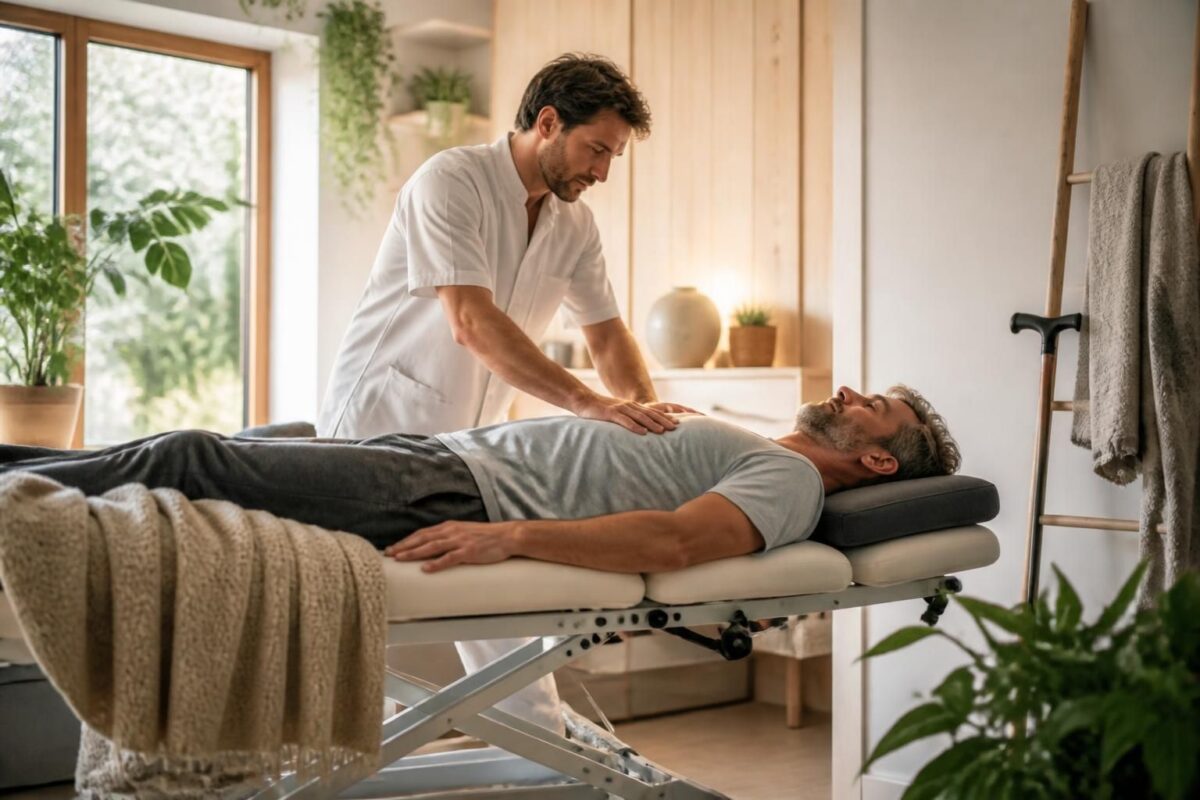
Why Osteopathy Is Essential For Recovery People
In short In short, Osteopathy in convalescence is an approach manual and holistic which helps to accelerate the recovery by restoring The balance, the mobility and a good circulation fabrics. it contributes to Reduce the pain, support the Back to…
Treatment plan and prevention of recurrences
A treatment plan is built with you: frequency of sessions, short and medium-term objectives, and appropriate progression. Simple exercises and postural advice are often integrated to extend the benefits at home.
Your osteopathy may include recommendations for appropriate physical activity, ergonomic adjustments at work and lifestyle advice to preserve mobility and limit repetitive constraints on the spine.

Osteopathic manipulations to strengthen post-traumatic muscles
In short In short, Osteopathic manipulations for Strengthen post-traumatic muscles constitute a gentle manual approach aimed at restoring the mobility, reduce the pain and facilitate the Functional rehabilitation After a injury. What is Is it? A series of precise gestures…
Examples of exercises and habits to adopt
To support the results, trunk strengthening exercises, gentle stretching and technical micro-pauses during daily activities may be prescribed. The goal is to create a strong postural base, reduce tension and improve spinal flexibility.
Adopt a progressive routine: Start slowly, increase volume and duration with caution and listen to your body. A regular and appropriate approach can make a lasting difference in your comfort and quality of life.

Osteopathy and prevention of work-related musculoskeletal disorders
In short theosteopathy is one Manual approach that restores body balance and prevents MSD related to work. Its advantages: reduction of tension, improvement of mobility and prevention of chronic pain. She is preventive and healing, suitable for office and trades…
Comparator of osteopathic approaches to relieve spinal pain
| Osteopathic approach | Impact and benefits |
|---|---|
| Soft joint mobilizations | reinstate mobility and soothes pain through gestures sweet and precise. |
| Soft tissue and fascia work | releases the tensions of fascias and muscles, improving circulation and flexibility. |
| neurovertebral decompression motorized | Decompresses the vertebral spaces and decreases the pressure on the nerves without medication. |
| Cranio-sacral and cervical release | Promotes better coordination of the nervous system and posture via gestures secure. |
| targeted myofascial techniques | Release adhesions and reduce tension, increasing the mobility. |
| Postural education and ergonomic advice | Preserve the column by teaching the good habits and gestures of everyday life. |
| Therapeutic exercises and reinforcement | strengthen the muscles of the trunk and improve the stability. |
| Personalized plan and follow-up | Individualized protocol with clear objectives and evaluation smooth. |
Testimonial 1 — Since my sessions ofosteopathy, my Lower back pain have decreased sharply and my mobility improved. the approach holistic Allows you to treat the body as a whole and identify the underlying causes, not just the symptoms.
Testimonial 2 — The cervical tension related to stress and posture evolve favorably thanks to Gentle manipulations and simple exercises. I sleep better and I have less stiffness when I wake up.
Testimonial 3 — As a sportswoman, I appreciate the personalized plan that combines engagement, stretches and advice fromwarming up. My back can move freely and I resume the competition more serenely.
Testimonial 4 – I had a Chronic back pain and a suspicion of imbalances. the complete evaluation made it possible to correct the postures and to release the spine thanks to precise techniques and non-invasive.
Testimonial 5 — With a focus on the posture and the prevention, Losteopathy Maide to maintain mobility gains and avoid recurrences. A real insurance for my daily life and my physical activities.
Dr. Sylvain Desforges, Expert in osteopathy, Naturopathy and manual medicine, is the founding president of TagMed and the ACMA association. His career is guided by a demand for innovation in health care and a strong conviction: spinal pain can be apprehended in a global and personalized way. specialized in the management of Chronic pain And in the integration of advanced technologies, he proposes an evidence-based approach to optimize the health and well-being of his patients.
In his approach, theosteopathy is based on holistic principles that consider the body as an interdependent unity. According to this philosophy, tension or imbalance in one region can influence other areas, particularly with regard to low back pain and neck pain. The objective is to identify the underlying causes of pain and restore the overall balance of the musculoskeletal system and the nervous system to promote natural healing.
During the first consultation, the evaluation is systematic and personalized. The practitioner inquires about medical history, lifestyle, postural habits and specific symptoms. Using manual tests and movements, it measures the mobility of tissues, muscles, joints and spine. This approach makes it possible to draw up a dynamic diagnosis and to establish an appropriate treatment plan, taking into account the objectives and the daily life of the patient.
The treatment is then tailor-made and can combine gentle manipulations, targeted stretching, muscle relaxation techniques and practical recommendations to improve daily posture. Among the complementary options, approaches based on validated technologies can be integrated when it benefits the patient. The objective is to restore joint mobility, release tension and promote better circulation, in order to sustainably reduce pain and improve overall function.
The benefits of osteopathic care for spinal pain are multiple. They include symptom relief through targeted interventions, improved mobility and flexibility, and treatment non-invasive which avoids surgical approaches in most cases. At the same time, osteopathy offers advice and exercises to strengthen support structures, develop a healthy posture and prevent long-term recurrences.
Beyond individual treatment, Dr. Desforges will seek to establish collaboration with other health professionals when necessary, to ensure a coordinated and effective approach. Each patient benefits from a plan based on evidence, with particular attention paid to the lasting improvement of the quality of life, the reduction of pain and the maintenance of an optimal state of health. This approach demonstrates a constant commitment to personalized and effective care for the back and spine.
This article offers a panorama of Osteopathic approaches To relieve the Spine pain, detailing their foundations, the techniques used and their role in a global care pathway. you will discover how a global and adapted approach can promote the mobility, improve the posture and sustainably reduce back and cervical pain.

The benefits of osteopathy to treat muscle imbalances
In short theosteopathy is a manual approach to restore themuscle harmony and postural considering the body as a whole. Its main benefits include the reduction of aches and tensions, the improvement of the mobility and from the posture, and prevention…
The foundations of osteopathic approaches for the spine
Osteopathic care is based on a vision of the body as an entity integrated, where an imbalance in one region can impact other structures. This approach holistic seeks to identify the underlying causes of pain and restore harmony to the musculoskeletal system without systematically using drugs. The initial assessment takes into account the whole body, postural habits and lifestyle in order to correlate local tensions and their overall repercussions.
In this logic, osteopaths favor interventions non-invasive and personalized, adapted to each patient, with particular attention paid to the prevention of recurrences and the sustainable improvement of the quality of life.
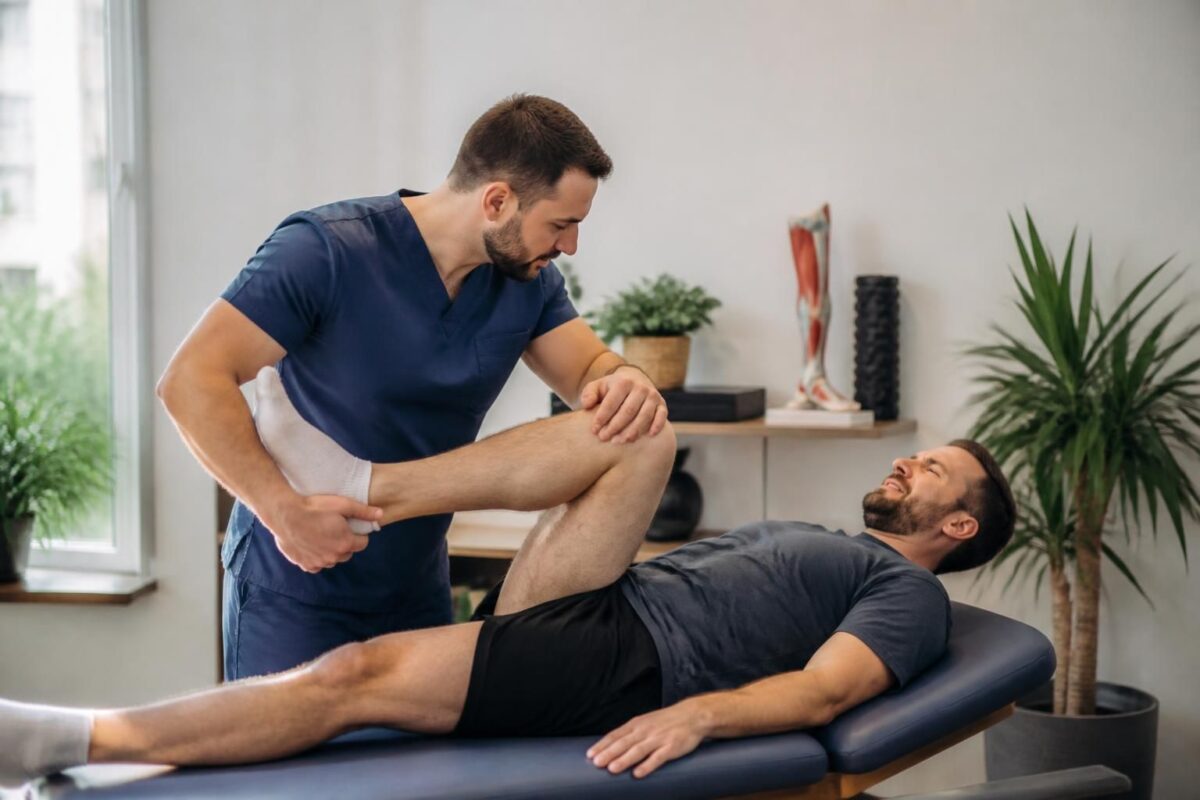
Osteopathy and chronic leg pain: regaining an optimal quality of life
In short In short, Osteopathy is one Global manual approach aimed at reducing Chronic leg pain and improve the quality of life. What is it? Non-drug therapy using the hands to identify restrictions and treat lesional chains. How does it…
Techniques and mechanisms of action
The Osteopathic techniques mobilize various manual maneuvers such as Joint mobilizations, the stretches and targeted pressures. The goal is to restore the mobility and tissue balance, release muscle tension and promote better circulation blood and lymphatic. These approaches often allow pain relief and improvement in the flexibility without the use of invasive medical procedures.
by their character overall, osteopathic manipulations and adjustments aim to restore the body’s natural healing mechanisms and support the nervous system’s ability to regulate inflammatory responses and pain, while taking into account stress and environmental factors.
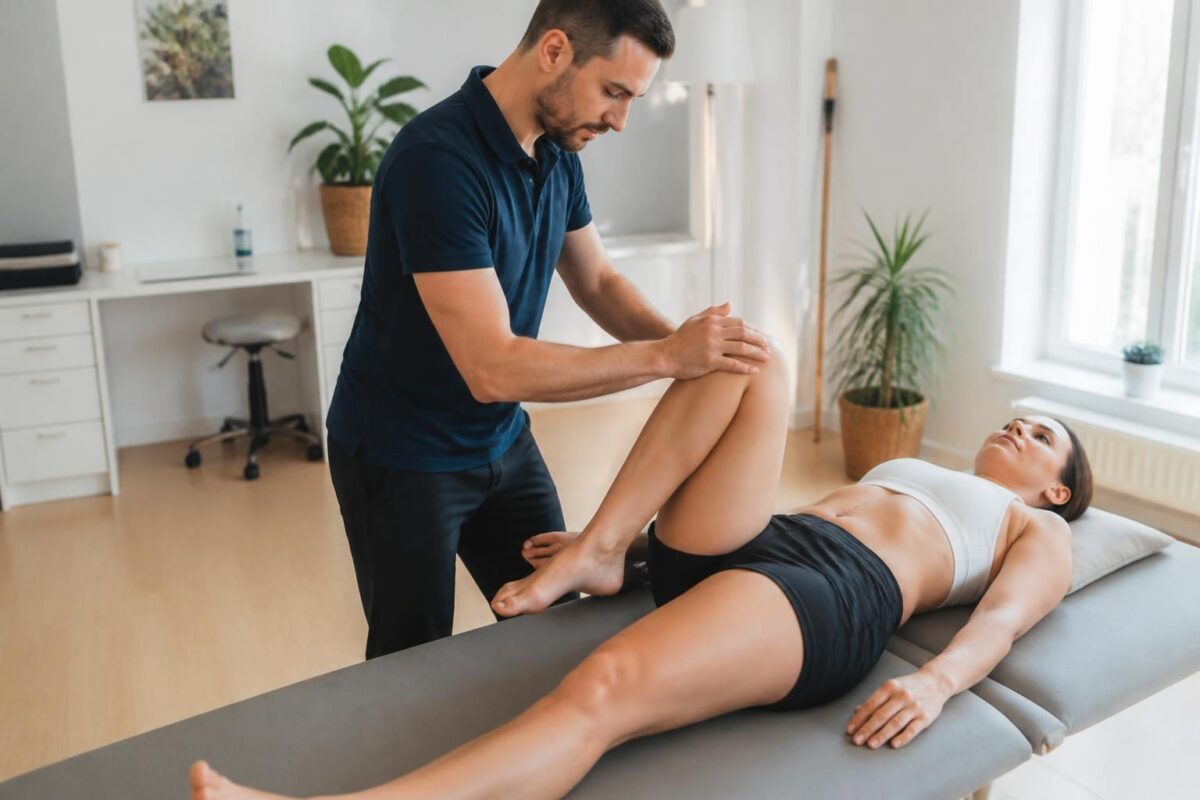
How osteopathy supports recovery after complex surgery
In short In short, Post-operative osteopathy is an approach fresh which supports the recovery After a Complex surgery. It helps to reduce the pain and the fatigue, improves the mobility and accelerates the healing thanks to a better vascularization and…
Expected benefits and results
Osteopathic care for the spine can offer a Sustainable relief pain and a Improving mobility, facilitating better posture and reduced functional limitations. By working on local dysfunctions and their interactions with other regions of the body, osteopathy continues to Prevention of recurrences and supports general well-being, including strengthening the musculoskeletal system and contributing to better management of stress and daily tension.
In addition to direct relief, this approach promotes lifestyle habits and simple exercises that promote long-lasting spinal stability and better quality of life, avoiding the risks associated with more invasive interventions.
Integration in the care and safety course
Integrating osteopathy into a care pathway involves full assessment and collaboration with other health professionals when necessary. The osteopath adapts treatments to the evolution of symptoms, history and lifestyle of the patient, while ensuring optimal safety and clear information on the objectives and limits of each approach.
To optimize the results, it is recommended to associate the sessions with targeted exercises and postural advice that help maintain the gains obtained and reduce risk factors. In some specific cases, coordination with other professionals may be necessary to ensure appropriate and effective care.
Resources and additional readings
- The #ATFP_CLOSE_TRANSLATE_SPAN# 5 Most Common Osteopathic Treatments To relieve your pain
- LES#ATFP_CLOSE_TRANSLATE_SPAN# Benefits of Osteopathy To improve joint flexibility
- Relieve#atfp_close_translate_span# low back pain : Techniques and results
- Osteopathy#ATFP_CLOSE_TRANSLATE_SPAN# and pain management – Customized approach
- osteopathy#ATFP_CLOSE_TRANSLATE_SPAN# and stress-related musculoskeletal disorders
- Osteopathy#ATFP_CLOSE_TRANSLATE_SPAN# and overall well-being – Strengthen the musculoskeletal system
- Techniques#ATFP_CLOSE_TRANSLATE_SPAN# Osteopathic used and why
- <osteopathy#ATFP_CLOSE_TRANSLATE_SPAN# and blood circulation improvement
- osteopathy#ATFP_CLOSE_TRANSLATE_SPAN# and chronic back pain – natural solution
- understand#atfp_close_translate_span# and relieve Low back pain – the osteopathic approach

Dr Sylvain Desforges, B.Sc., D.O., N.D., osteopath, is the founding president of TAGMED and of the ACMA association. He dedicates his practice to chronic spinal pain, low back pain and symptoms compatible with sciatica, particularly when pain radiates toward the buttock, leg, calf, foot or toes.
Through SOS Sciatique, he publishes educational content on sciatica symptoms, possible causes such as disc herniation, disc narrowing, foraminal stenosis or irritation of a lumbar nerve root, as well as non-surgical approaches that may be considered according to the evaluation. At Clinique TAGMED, care may include, depending on the case, motorized neurovertebral decompression, specific osteopathic care or precision percussion.
For an evaluation related to sciatica treatment in Montreal / Mount Royal or sciatica treatment in Terrebonne, please consult the services available at Clinique TAGMED.
Medical disclaimer
The information published on SOS Sciatique is provided for educational purposes only and does not replace a consultation, diagnosis, opinion or treatment provided by a physician or another authorized healthcare professional. The author of this article is neither a medical doctor nor a specialist in a medical specialty recognized by the Collège des médecins du Québec. The osteopathic, manual medicine or functional support approaches described on this site do not constitute medical acts and are not intended to replace medical follow-up.
Consult a physician or emergency service in cases of loss of bladder or bowel control, anesthesia in the saddle area, significant or progressive weakness in the leg or foot, fever, recent trauma, severe pain or rapid worsening of symptoms. For more details, please read our Legal Notice.