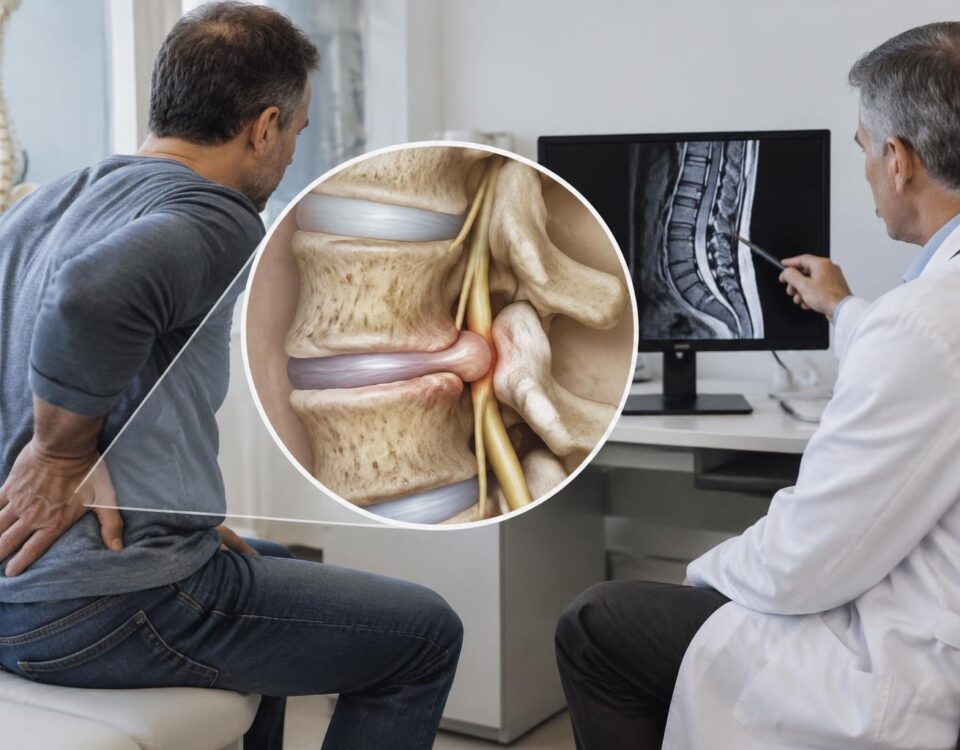
Sciatica with numbness in the toes: what should you watch out for?
11/07/2026
Sciatica and toe pain while sitting
11/07/2026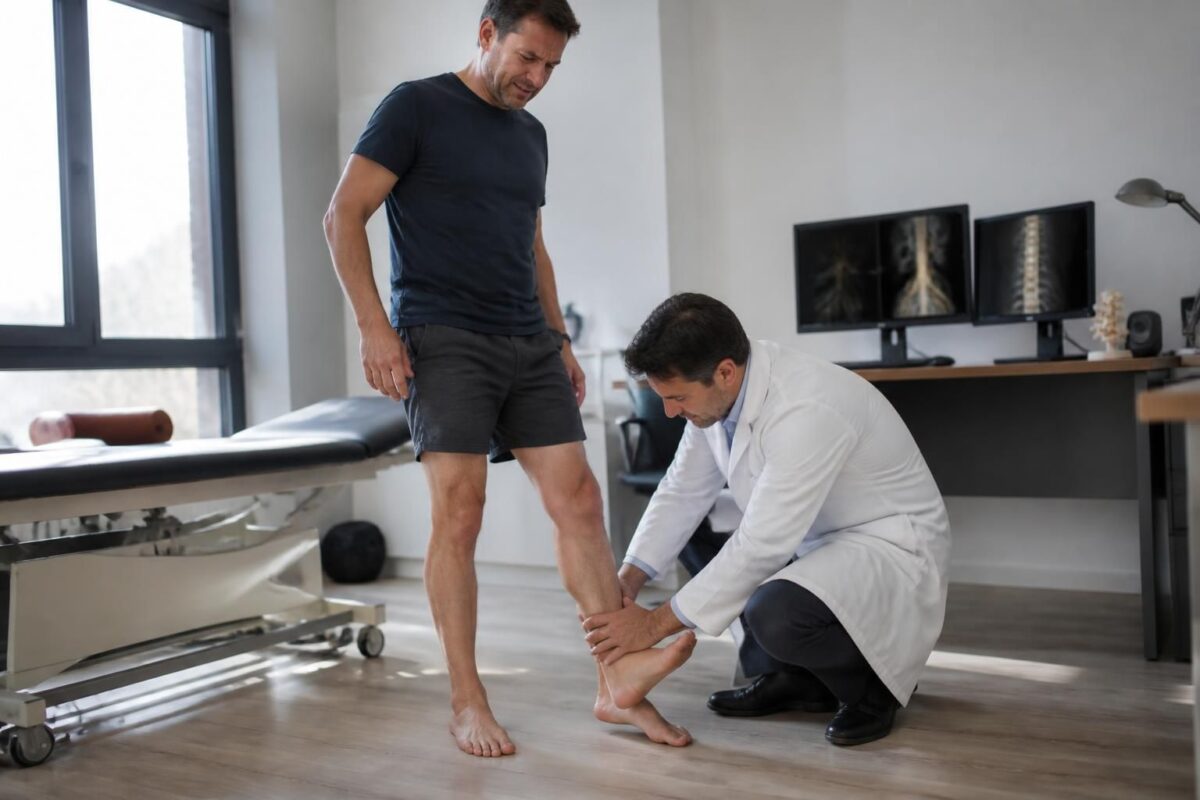
IN BRIEF
| Weakness of the foot in the context of sciatica may reveal a neurological cause due to the irritation or compression of a lumbar root (L5/S1). This weakness manifests as a foot that catches, difficulty raising the toes or pushing off the ball of the foot, and may evolve rapidly. Advantages: it allows for early detection of motor impairment and directs towards urgent medical evaluation if necessary, while enabling tailored non-invasive approaches based on the assessment. Operation: the evaluation checks the strength of the foot, calf, and leg, identifies the affected nerve territory, and determines if prompt intervention is indicated; adapted to Montreal, it aims to preserve walking and guide towards safe treatment options. |
Sciatica can cause weakness of the foot when a lumbar nerve root is irritated or compressed. This loss of strength can manifest as a catching foot, difficulties in raising the toes, or pushing off the ball of the foot. A new or progressive weakness, especially when associated with a drop foot, walking difficulties, or neurological signs, requires rapid medical evaluation. The diagnosis combines clinical examination and, if necessary, imaging and electrodiagnostic tests; treatment may include non-surgical approaches and, depending on severity and cause, invasive options.
Sciatica can lead to weakness of the foot when the nerve is irritated or compressed. This weakness may signal a neurological impairment and requires appropriate evaluation to avoid progression and guide non-surgical or surgical treatments. This article presents the mechanisms, signs, diagnosis, and management options at the TAGMED Clinic.
Understanding the Link Between Sciatic Nerve and Foot Weakness
The sciatic nerve originates from the lumbar roots and is responsible for the motor function of certain muscles in the foot and leg. When a root is irritated or compressed, pain may be accompanied by localized muscle weakness. This weakness can manifest as a catching foot, difficulty raising the toes, walking on tiptoe, or instability while walking.
The most frequently involved territories follow the L5 and S1 roots. An L5 involvement may limit the ability to raise the foot or big toe, while an S1 involvement may make walking on tiptoes or pushing with the calf more difficult. These signs warrant a precise neuro-motor evaluation and, if necessary, imaging or complementary tests.
Signs and Symptoms to Monitor
A new or progressive weakness associated with a drop foot or alterations in gait is particularly concerning. Other elements to watch for include a specific loss of strength in the foot, calf, or big toe, and sensory disturbances in the territory of the sciatic nerve. In some cases, numbness or pain may be present without a decrease in strength, but the combination of pain and weakness requires prompt attention.
Signs of urgency may include loss of bladder or bowel control, saddle anesthesia, or rapidly worsening pain. In the presence of these signs, rapid medical consultation is recommended.
Diagnosis and When to Consult
The diagnostic process combines a targeted clinical examination and, if necessary, complementary examinations to specify the affected territory and the degree of motor deficit. The evaluation focuses on the strength of the foot, big toe, and calf, the ability to walk on heels and toes, sensitivity, and the pain pattern.
For more information about the links between the sciatic nerve and the foot, see specialized resources available on dedicated sites and medical publications that explain the associations between low back pain, neuropathy, and foot weakness.
What to Do in Practice? Options and Clinical Information
In the case of foot weakness associated with sciatica, the approach is initially based on verifying the presence of true neurological weakness and its progression. If the weakness is new or progressive, rapid medical orientation may be necessary. At the TAGMED Clinic, the non-surgical options offered prioritize specialized and non-invasive approaches tailored to the individual assessment, while avoiding treatments that do not demonstrate sufficient effectiveness for the lumbar spine.
Available care may include specific osteopathic techniques and protocols for motorized neurovertebral decompression when appropriate, while staying within the framework of clinical indications. For details on the non-surgical treatments offered, consult TAGMED’s official resources and associated educational information.
Resources and Additional Readings
To deepen the links between sciatica, foot pain, and neurological mechanisms, these resources provide explanations and practical advice:
weakness of the leg or foot and sciatica,
pain that increases when sitting,
distinguishing low back pain and nerve pain in Terrebonne,
signs indicating targeted treatment in Montreal,
generic exercises for sciatica,
MSD Manual — Sciatica.
For additional information on neurological aspects and the diagnostic angle, you may consult the following resources:
Neuropathy of the sciatic nerve,
link between sciatic nerve and foot pain.
For information on comprehensive care and treatment considerations in Terrebonne and Montreal, see the dedicated pages on sciatic treatment Terrebonne and Sciatica in Montreal.
Medical disclaimer: The information and advice provided on this site do not replace the opinion, diagnosis, or treatment of a healthcare professional. Please note that Dr. Sylvain Desforges, osteopath, is neither a doctor of medicine nor a physician, and is not a specialist in a medical specialty as defined by the Collège des médecins du Québec. Manual medicine, functional medicine, and sports medicine as described on this site exclude any treatment or medical diagnosis made by a physician or medical specialist. Always consult your doctor for any medical questions. For more details, please read our complete Legal Notice.
- Foot that drags on the ground while walking (L5).
- Difficulty raising the foot or toes (L5).
- Difficulty walking on heels (L5).
- Leg giving out or unstable walking (S1).
- Difficulty pushing off on the toes (S1).
- Progressive weakness or new weakness requiring rapid assessment.
- Neuro interpretation: L5 and S1 affect the foot and toes.
- Distinction: true neurological weakness vs limitation due to pain.
- Emergency signs: dropped foot, urinary issues, saddle anesthesia.
- Quick assessment: foot and calf strength, walking on heels/toes, sensitivity.
- Recommended action: prompt medical referral if progression or warning signals occur.

The foot weakness related to sciatica may reveal an underlying neurological impairment. This article provides clear guidelines to recognize the signs, understand potential causes related to the nerve roots L5 and S1, and guide the actions to be taken quickly, with an emphasis on non-invasive options and situations requiring urgent medical consultation.
Identify signs of foot weakness and their significance
Weakness may manifest as difficulty in raising the foot or toes, a foot dragging on the ground while walking, or a decrease in stability during walking. These signs are not simple pains: they indicate a possible motor impairment related to the nerve root. A new or progressive weakness warrants a quick evaluation, especially if accompanied by a dropped foot, significant numbness, or urinary issues.
Specific signals to watch for
– Difficulty raising the foot or the big toe (possible L5 involvement).
– Difficulty pushing off on the toes (possible S1 involvement).
– Leg giving out or unstable walking.
– Pain accompanied by a loss of strength that progresses over time.
Possible neurological causes and mechanisms
Sciatica may be associated with a lumbar root impairment which transmits not only pain or sensitivity but also motor commands for the foot and leg muscles. Irritation or compression of the L5 or S1 roots can lead to a targeted weakness in specific territories, explaining why some patients present different signs depending on the root involved.
Typical territories of the roots
– L5 may be associated with difficulty in raising the foot, the big toe, or instability when walking on heels.
– S1 may present as weakness when pushing off on the toes and a decrease in calf strength.
When weakness becomes an emergency
A new and progressive weakness or signs of severe impairment require a rapid medical evaluation. Red flags to watch for: dropped foot, loss of urinary or bowel control, saddle anesthesia, rapidly worsening pain, or significant loss of sensation in the leg or foot.
What to do while awaiting evaluation
To better understand and secure your situation, prioritize a personalized assessment that distinguishes a pain-related limitation from a true neurological weakness. In the meantime, take cautious measures: avoid positions or movements that worsen the weakness, perform gentle flexibility and stretching exercises under guidance, and maintain an appropriate activity level that does not overstrain the injured leg. An appropriate non-surgical management (physical therapy, targeted strengthening, and postural corrections) may be considered after evaluation, but any rapid progression or worsening necessitates a quick re-evaluation to prevent neurological complications.
| Clinical Element | Quick Interpretation |
|---|---|
| Foot that drags — L5 possible | Signs of L5: difficulty raising the foot or big toe; rapid evaluation recommended. |
| Difficulty pushing off on toes — S1 possible | Weak calf; difficulty pushing off on toes; rapid evaluation. |
| Leg giving out — potential motor impairment | Possible root impairment; functional assessment and walking necessary. |
| Dropped foot | Possible neurological impairment; rapid evaluation and medical referral advised. |
| Pain vs weakness | Neurological weakness persists despite improvement in pain; assess strength. |
| Urinary or bowel issues | Urinary troubles or saddle anesthesia require medical urgency. |
| Rapid progression of weakness | Quick re-evaluation recommended; may involve decompression. |
| Clues L5 vs S1 | L5: raises foot/big toe; S1: pushes on toes; aids diagnostic orientation. |
| Action based on context | Mild and stable weakness: monitoring; new/progressive: prompt referral. |
Testimonials on Sciatica: foot weakness and possible neurological sign
“I had always associated my lower back pain with a simple discomfort, until the day my foot started to drag on the ground and I could no longer lift my toes. It was a foot weakness that didn’t go away with rest. The doctor mentioned a possible neurological impairment and referred me for a quick evaluation to confirm the diagnosis and adjust the treatment.”
“In addition to the sciatic pain, I was feeling a foot weakness that was getting worse: I could no longer push off on my toes and my walking became unstable. There was talk of a possible nerve root involvement, specifically L5 or S1, and I understood that this was not just pain but a situation requiring prompt attention.”
“While climbing stairs, my foot literally gave out on me and I struggled to maintain my balance while walking. This neurological weakness worried me to the point of seeking urgent care. The tests helped clarify the area involved and guide the treatment plan without delay.”
“I thought my tingling and pain would be enough, but my foot weakness became more visible: I could hardly push off on my toes and my gait had changed. The doctor insisted on a complete evaluation of the sciatic nerve and the signs to monitor, as neurological impairment may require a tailored and rapid approach.”
“After several weeks of pain, I realized that my drop foot was not merely due to the pain but to a real weakness associated with the affected nerve root. This awareness led me to follow a personalized therapeutic protocol to restore strength and stability and avoid any neurological complications.”
Sciatica: foot weakness and possible neurological causes — professional biography
I am Dr. Sylvain Desforges, osteopath and pioneer in manual and integrative approaches to chronic pain. At the helm of TAGMED clinics and the ACMA association, my practice is rooted in a holistic view of health, where the sciatic nerve plays a central role in assessing lower back pain and functional impairments of the lower limbs. In this context, I pay particular attention to foot weakness and its neurological significance to distinguish a pain-related limitation from a true loss of motor strength.
Sciatica can manifest not only as pain radiating to the buttock and leg but also through motor signs that reveal a more complex nerve injury. A foot weakness may signify damage to a lumbar root, particularly roots L5 or S1. For example, a foot that “drags” or difficulty lifting the toes may suggest L5 involvement, while discomfort when pushing off on the toes may indicate S1 and affect the calf. This relationship between the nerve root and the muscles of the foot and leg forms the basis of an important differential diagnosis in my evaluations to target the causes and most appropriate treatments.
To distinguish true neurological weakness from a purely painful limitation, I meticulously evaluate motor strength, the ability to walk on heels and toes, as well as walking stability. A progressive weakness or one associated with drop foot or urinary issues constitutes an emergency that requires prompt medical referral. The goal is not only to alleviate pain but to regain reliable muscle function and stable walking to prevent long-term complications.
Etiologically, sciatica may result from compression or irritation of a lumbar root, often related to a herniated disc, but also to factors like foraminal stenosis, piriformis syndrome, or other spinal pathologies. My approach relies on a personalized assessment that combines clinical examination, targeted neurological tests, and, when necessary, imaging or electrodiagnostic elements to precisely locate the affected area and understand the progression of signs.
In terms of management, I prefer non-surgical and non-invasive approaches when appropriate. This may include specific osteopathic techniques, rehabilitation programs focused on strengthening the foot and stabilizing muscles, as well as technological interventions like motorized neurovertebral decompression, laser, and, occasionally, shock waves, when these options align with the assessment and patient goals. The aim is to improve nerve conduction and muscle coordination while ensuring movement security and reducing aggravating factors.
My approach also aims to prevent recurrences by providing advice on posture, carrying loads, and suitable exercises to support a sustainable recovery and regained functional autonomy. As part of my activities, each patient benefits from a personalized plan that takes into account the location of weakness, the temporal evolution, and associated signs to optimize recovery chances and avoid complications related to persistent nerve damage.
About the author
Dr. Sylvain Desforges, B.Sc., D.O., N.D., osteopath, is the founding president of
TAGMED
and the ACMA association. He dedicates his practice to chronic spinal pain, lower back pain, and pain compatible with sciatica, particularly when the pain radiates towards the buttock, leg, calf, foot, or toes.
Through SOS Sciatique, he publishes educational content on the symptoms of sciatica, possible causes like herniated disc, disc pinching, foraminal stenosis, and irritation of a lumbar nerve root, as well as non-surgical approaches that may be considered based on the evaluation. At the TAGMED Clinic, care may include, as applicable, motorized neurovertebral decompression, specific osteopathy, or precision percussion.
For an evaluation related to
sciatica treatment in Montreal / Mont-Royal
or to
sciatica treatment in Terrebonne,
consult the services available at the
TAGMED Clinic.
Medical Disclaimer
The information published on SOS Sciatique is provided for educational purposes and does not replace a consultation, diagnosis, opinion, or treatment by a physician or another authorized health professional. The author of this article is neither a doctor nor a specialist in a recognized medical field. The osteopathy, manual medicine, or functional support approaches described on this site do not constitute medical acts and are not intended to replace medical follow-up.
Consult a doctor or an emergency service in case of loss of bladder or bowel control, anesthesia in the saddle area, significant or progressive weakness of the leg or foot, fever, recent trauma, severe pain, or rapid worsening. For more details, please read our
Legal notice.
Quick summary: Sciatica can be accompanied by foot weakness, a possible sign of neurological impairment of the L5 or S1 roots. A loss of strength in the foot or leg requires a quick evaluation to distinguish pain-limited movement from true motor loss and prevent potential complications while walking, balancing, and the ability to lift the foot.
Signs and obvious symptoms
Symptoms that may indicate neurological weakness of the foot or leg include:
- Foot drag and difficulty lifting the toes, suggesting L5 impairment. Learn more.
- Difficulty walking on heels that may reflect an L5 impairment.
- Difficulty pushing off the toes or weak calf, indicating S1 impairment. Signs to watch.
- Less stable leg or modified gait, with a sense of unreliability while walking.
- New or progressive weakness associated with emergency signs (see below) requiring quick evaluation.
To better understand the mechanism, you can consult specialized resources on causes and symptoms:
- Sciatica pain and foot
- Causes, symptoms, and treatments
- Neuro-sciatica pathology and foot
- Neuropathic foot pain
- Tingling after sitting
- Leg pain vs back pain
- Sign to watch – foot weakness
- Foot tingling – sciatica or neuropathy
- Sciatica or hip pain
- Sciatica decompression Montreal
Possible neurological causes and location
An L5 impairment may present as difficulty in lifting the foot, the big toe, or instability while walking, while an S1 impairment may manifest as difficulty pushing off the toes and calf weakness. Understanding the precise location helps guide evaluation and treatment choices. For more in-depth information, see the following resources and associated typologies:
- L5 impairment: L5 and corresponding symptoms
- S1 impairment: S1 and corresponding symptoms
- For an overview of causes and manifestations, see Causes and symptoms
Evaluation and warning indicators
When foot weakness is associated with sciatica pain, it is essential to evaluate:
- The progression of the weakness and its impact on walking and balance.
- The presence of emergency signs: loss of bladder control, saddle anesthesia, rapidly worsening pain, or marked weakness that progresses quickly. In these cases, urgent medical consultation is indicated.
- The pain trajectory and whether it increases or decreases depending on positions (lying down vs sitting or standing).
- Additional examinations such as MRI or electrodiagnostic tests may be considered based on clinical evaluation and persistent symptoms. For general information, consult this article.
Management options and resources
In case of sciatica associated with foot weakness, non-surgical approaches can be discussed after evaluation. Options such as targeted physiotherapy, adapted exercises, and local interventions can be explored, depending on the clinical context. Useful resources include:
- Sciatica Decompression Montreal
- Leg vs Back Pain
- Sign to watch – weakness of the foot
- Tingling foot – neuropathy
- Neuropathic foot pain
- Sciatica and foot pain
- Causes and treatments
- Sciatica or hip pain
This section is intentionally omitted in accordance with the established editorial guidelines. For more details, refer to the resources above that describe the mechanisms, warning signs, and management options related to foot weakness and neuropathy associated with sciatica.
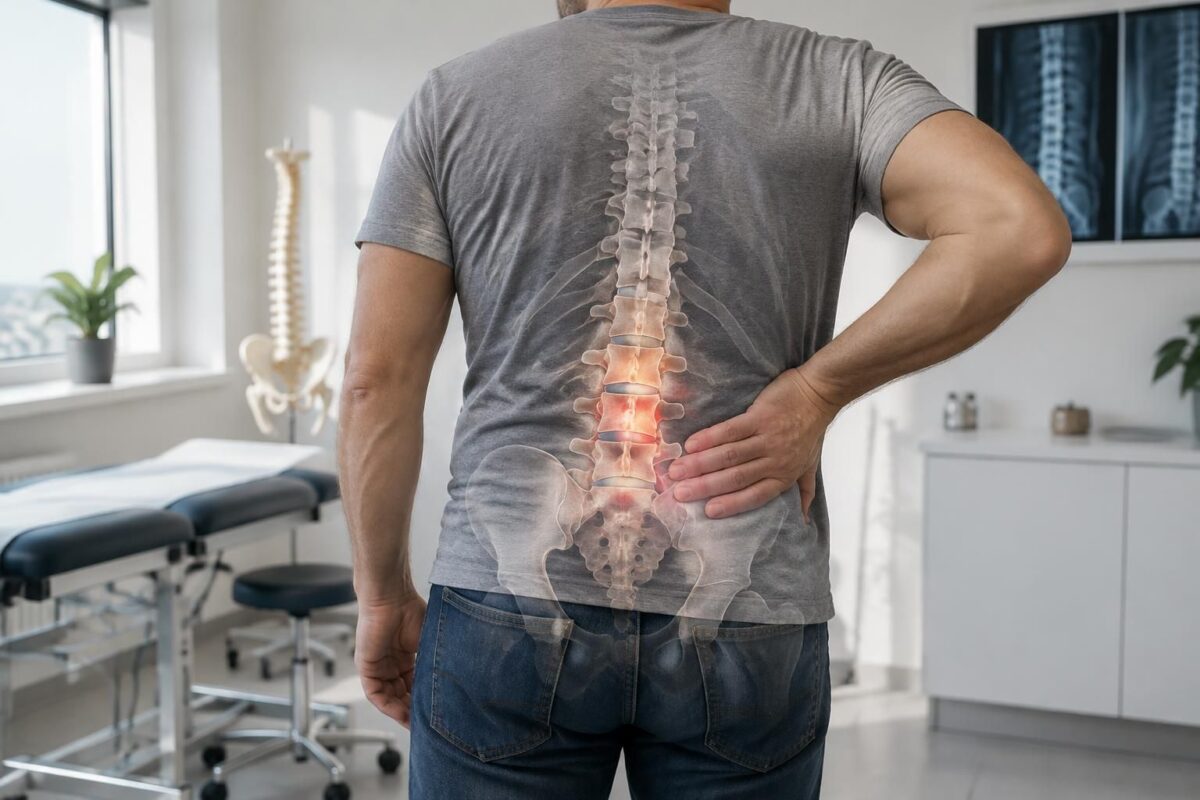
Disc herniation and lumbar degeneration
IN BRIEF A lumbar disc protrusion is a bulging of a disc often related to disc degeneration. It does not always cause symptoms but can contribute to lower back pain or pain radiating down the leg if a nerve is…
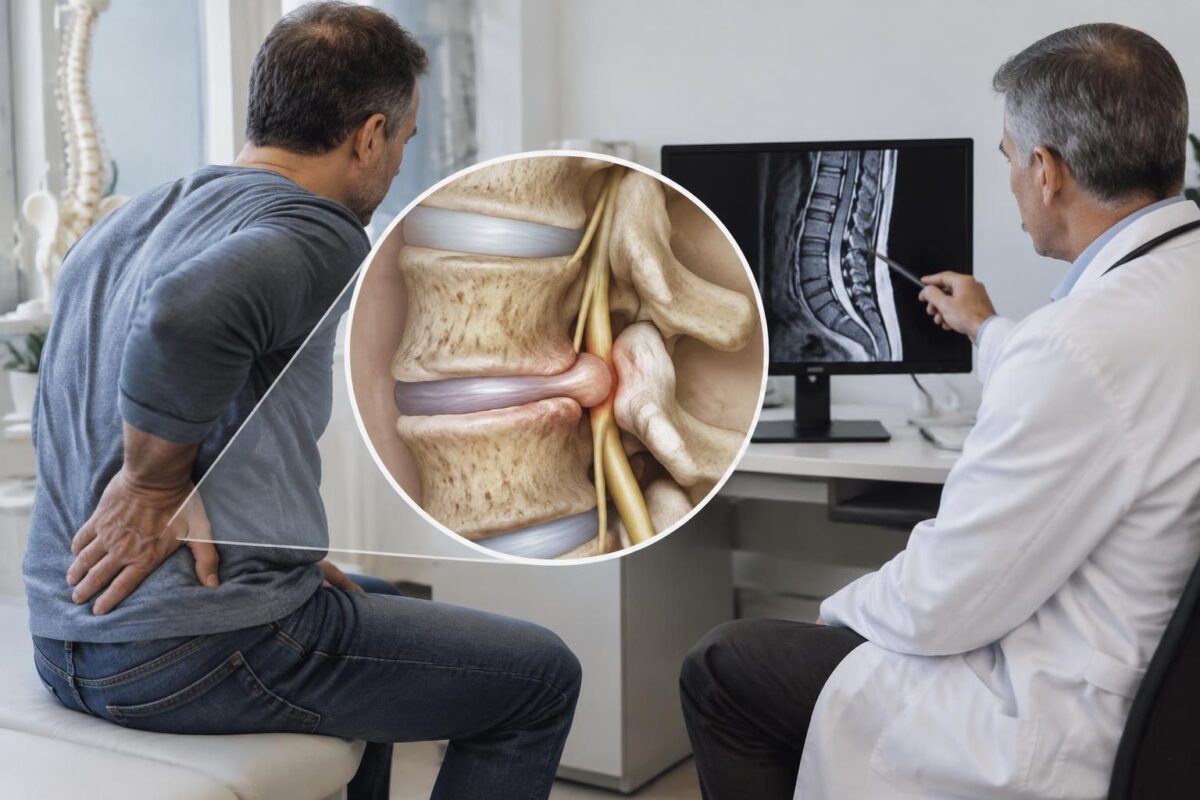
Disc protrusion and disc pinching: combined mechanisms
IN BRIEF A disc protrusion is a bulging of the disc, while a disc narrowing refers to a decrease in its height. These changes can coexist and sometimes irritate a nerve root, leading to pain or radiation, but they can…

Disc herniation and associated foraminal stenosis
IN BRIEF A disc protrusion associated with foraminal stenosis occurs when a bulging disc coexists with a narrowing of the opening through which a nerve root passes. This association can lead to lower back pain radiating into the leg, tingling,…

Spinal disc protrusion and nerve inflammation
IN BRIEF A disc protrusion is a bulging of the disc that can irritate or compress a nerve, without necessarily causing symptoms. When it leads to nerve inflammation, it can cause pain in the back or neck, sometimes accompanied by…

Disc protrusion and irritation of L5
IN SHORT A disc protrusion is a bulging of the disc that can irritate the L5 root and cause lower back pain radiating to the buttock, leg, or foot, sometimes with tingling or weakness. MRI alone is not sufficient to…

Disc protrusion and pain after twisting the back
IN BRIEF A disc protrusion is a bulging of the disc that can contribute to pain after a back twist, but it alone does not confirm the cause. The pain can remain in the lower back or radiate to the…

Disc herniation and pain after lifting
IN BRIEF A disc protrusion is a bulging of a disc between the vertebrae. Pain that appears after lifting a load does not prove that it is the cause: the MRI must be interpreted alongside the symptoms and the clinical…

Disc herniation and lumbar flexion: why caution is necessary
IN BRIEF A disc protrusion is a bulge of the intervertebral disc, which can be silent or irritate a nerve. Lumbar flexion is not necessarily dangerous but can worsen symptoms in some individuals. Adapting movements, avoiding those that aggravate pain,…

Dr Sylvain Desforges, B.Sc., D.O., N.D., osteopath, is the founding president of TAGMED and of the ACMA association. He dedicates his practice to chronic spinal pain, low back pain and symptoms compatible with sciatica, particularly when pain radiates toward the buttock, leg, calf, foot or toes.
Through SOS Sciatique, he publishes educational content on sciatica symptoms, possible causes such as disc herniation, disc narrowing, foraminal stenosis or irritation of a lumbar nerve root, as well as non-surgical approaches that may be considered according to the evaluation. At Clinique TAGMED, care may include, depending on the case, motorized neurovertebral decompression, specific osteopathic care or precision percussion.
For an evaluation related to sciatica treatment in Montreal / Mount Royal or sciatica treatment in Terrebonne, please consult the services available at Clinique TAGMED.
Medical disclaimer
The information published on SOS Sciatique is provided for educational purposes only and does not replace a consultation, diagnosis, opinion or treatment provided by a physician or another authorized healthcare professional. The author of this article is neither a medical doctor nor a specialist in a medical specialty recognized by the Collège des médecins du Québec. The osteopathic, manual medicine or functional support approaches described on this site do not constitute medical acts and are not intended to replace medical follow-up.
Consult a physician or emergency service in cases of loss of bladder or bowel control, anesthesia in the saddle area, significant or progressive weakness in the leg or foot, fever, recent trauma, severe pain or rapid worsening of symptoms. For more details, please read our Legal Notice.