Sciatica and tingling in the calf: nerve irritation?
24/08/2026
Sciatica and road vibrations: possible influence on symptoms
24/08/2026
IN BRIEF
| In brief, disc herniation and chronic sciatica refer to a lower back pain and radicular pain that persists despite possible changes in anatomy. Chronic pain is often maintained by nerve sensitivity, deconditioning, sleep, and fear of movement, explaining why it persists. Benefits: understanding these mechanisms allows for a non-surgical management approach focused on self-management and rehabilitation and adjusting normal activities according to tolerance. How it works: evaluation linking the painful pathway, function, and imaging when necessary, with a focus on activity and functional continuity rather than pain alone; imaging is used only if it can alter clinical decisions, and traction is not recommended as a standard treatment. In Montreal, this service is particularly recommended for individuals suffering from lower back pain and sciatica seeking appropriate and patient-centered care. |
The link between disc herniation and chronic sciatica is often more complex than what imaging shows. Pain that persists for several weeks or months does not necessarily mean that the hernia is enlarging; nerve sensitivity, deconditioning, sleep, fear of movement, and other factors can maintain symptoms even if the anatomy has changed.
- Centrally sensitized and biological and psychosocial factors that maintain chronicity.
- The pain pathway should be linked to neurological examination and function to guide management rather than relying solely on imaging.
- Imaging is useful only if it can modify management; a visible hernia alone does not suffice to determine the cause.
- The recommended approaches encourage self-management and maintaining normal activities, with adjustments according to capabilities, rather than systemic treatments like traction.
A specialized evaluation can help clarify the signs to monitor and the therapeutic options, even in the presence of persistent pain.
This analysis explains why a disc herniation and chronic sciatica can persist, even when imaging shows little or no progression. Pain often results from an interaction between nerve sensitivity, function, sleep, and overall context. A targeted clinical evaluation links symptoms, examination, and imaging to guide management decisions.
Understanding the link between disc herniation and pain
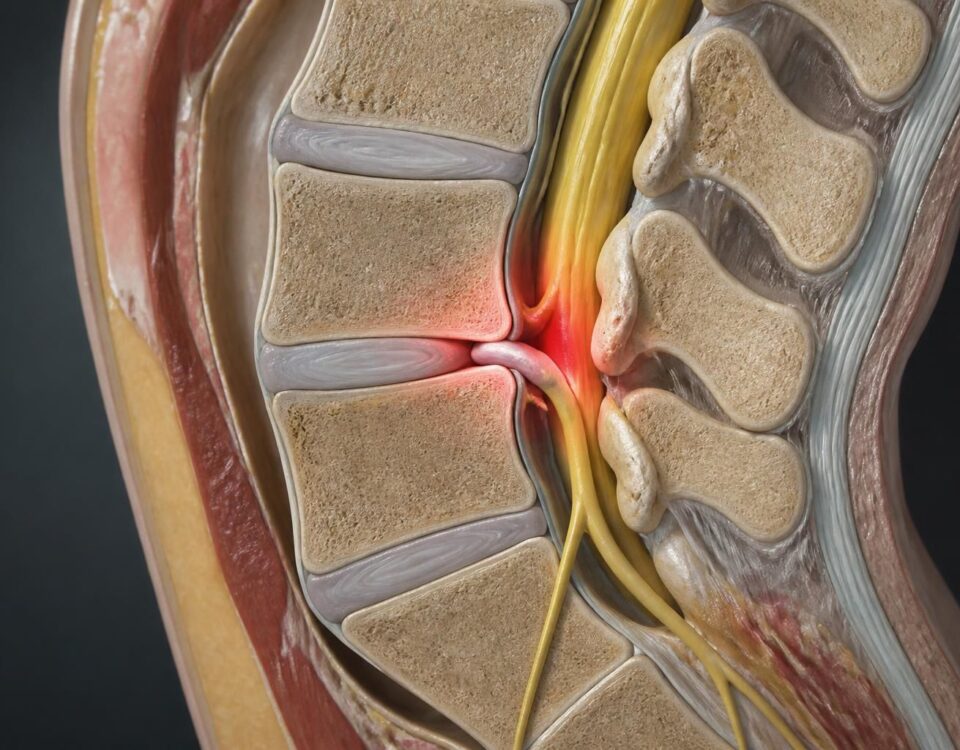
The pain pathway follows nerve roots and may be accompanied by motor and sensory signs. A visible disc herniation on imaging does not always explain the symptoms. Pain may persist due to mechanisms such as nerve sensitivity, deconditioning, sleep, and other contextual factors. The evaluation aims for consistency between clinical information and imaging.
To delve deeper into the nerve pathway and its implications, see this article.
Diagnosis and clinical approach
The diagnosis links symptoms to function and neurological examination. Imaging should be interpreted in relation to the clinical picture. A progressive weakness, a dropped foot, or signs of cauda equina change the priority for evaluation and require prompt management. For more context, see TAGMED’s resources on Disc Herniation and Chronic Sciatica.
Milestones and evolution
Milestone 1: Some hernias decrease over time, but recovery can be slow.
Milestone 2: Persistent pain merits reevaluation of diagnosis and functional goals.
Milestone 3: Chronicity does not mean that the pain is imaginary; it often reflects multiple biological, mechanical, and contextual factors.
Pain pathway and associated signs
The pain pathway is evaluated concerning strength, sensitivity, and function. Disc imaging checks the level and side but cannot explain everything alone. The examination seeks consistency and helps guide management.
For concrete examples on the link between pain and signs, see this article.
Staying active and targeted imaging
The NICE recommendations encourage self-management and maintaining normal activities as much as possible, adjusting according to needs and capability.
NICE recommends considering imaging in a specialized context only if the result is likely to modify management.
Traction and decompression
NICE does not recommend traction for low back pain with or without sciatica. Motorized decompression should not be presented as a standard treatment and requires transparent information about the uncertainty of the data.
At TAGMED Clinic, the discussed options prioritize a comprehensive and functional approach tailored to the patient, with non-surgical choices when relevant. To learn more about the services, see TAGMED Clinic.
When to seek immediate consultation
Signs requiring prompt consultation: new or significant weakness; dropped foot; urinary or bowel issues; numbness of the saddle or perineum; fever; major trauma or general deterioration.
Management options at TAGMED
Depending on the evaluation, care at TAGMED Clinic may include targeted osteopathic approaches and non-surgical methods focused on function, mobility, and reduction of aggravating factors. To learn more about the services and associated conditions, consult TAGMED Clinic.
Frequently asked questions and resources
Additional resources on sciatica, numbness, and associated pain can be found at SOS Sciatica and weakness and numbness upon waking.
For more information and clarifications, you can also consult Herniated disc and chronic sciatica on the TAGMED website and the resources associated with SOS Sciatica.
“Medical disclaimer: The information and advice provided on this site do not replace the opinion, diagnosis, or treatment of a health professional. Please note that Dr. Sylvain Desforges, osteopath, is neither a doctor of medicine nor a physician, and is not a specialist in a medical specialty as defined by the Collège des médecins du Québec. Manual therapy, functional medicine, and sports medicine as described on this site exclude any treatment or medical diagnosis made by a physician or a medical specialist. Always consult your doctor for any medical questions. For more details, please read our full Legal Disclaimer.”
- Persistent nerve sensitivity.
- Muscle deconditioning hindering recovery.
- Fear of movement and avoidance.
- Disrupted sleep amplifying pain.
- Centralization of pain signals without clear anatomical progression.
- Chronic hyperalgesia and allodynia.
- Non-diagnostic imaging without clinical correlation.
- Pain pathway and motor signs to check for guiding treatment.
- Physical activity maintained when possible to avoid inactivity.
- Functional goals prioritized over pain.
- Re-evaluation if pain persists beyond a few weeks.
- Specialist consultation useful in case of persistent deficit or treatment failure.

Herniated disc and chronic sciatica often explain why pain persists, even when the anatomical condition may evolve. This article offers clear recommendations to understand this phenomenon and focus on function and quality of life, rather than solely seeking pain reduction. The central message is that the persistence of pain is multifactorial and that active self-management is often the key to lasting improvement.
Understanding the Mechanism of Chronic Pain
The chronic pain related to a herniated disc and sciatica is not solely related to the size or location of the hernia. Centrally mediated sensitization and peripheral mechanisms can sustain pain even when anatomy has changed. Lack of movement, deconditioning, sleep disturbances, and fear of movement act as aggravating factors, altering how the brain interprets nerve signals. Understanding this dynamic helps break the pain-inactivity vicious cycle and refocus efforts on function and meaningful activities.
When Imaging Doesn’t Tell the Whole Story
A disc herniation visible on imaging is not automatically the sole cause of symptoms. The level, side, and clinical picture must match the imaging for it to have therapeutic relevance. Moreover, some hernias resolve over time, and disc abnormalities can exist in individuals without pain. Therefore, the evaluation should aim for correspondence between pain pathway, motor signs, and function, rather than relying on an isolated imaging-pain report.
Key Elements for an Effective Evaluation
Pathway and Location
Precisely locating pain, paresthesia, and numbness areas helps guide functional evaluation and management objectives.
Strength, Function, and Gait
Evaluating key movements, gait, and tasks revealing potential weakness helps adjust the rehabilitation plan and determine activities to prioritize or modify.
Imaging and Interpretation
Imaging should be interpreted in a clinical context; it should not solely dictate management. Linking the level and side to functional presentation is essential to avoid inappropriate treatments.
Trends and Goals
Measuring symptom trends and setting clear criteria that could guide towards another approach if necessary. Chronicity does not mean deadlock; improvements can occur with an adapted strategy.
Practical Strategies for Non-Surgical Management
Staying Active and Self-Management
Recommendations from many guidelines encourage maintaining normal activity as much as possible, adapting effort according to capabilities. The goal is to preserve strength, mobility, and function while avoiding pain flares that lead to inactivity.
Targeted Exercises and Posture
A progressive program of back and core muscle strengthening, complemented by gentle activities like walking and swimming, can reduce sensitization and improve activity tolerance in daily life. Posture and technique for professional or household tasks should be optimized to reduce stress on the spine.
Assessment and Adjustment
Regular re-evaluations allow for adjusting functional objectives, revising imaging choices if necessary, and discussing non-surgical options before considering other approaches.
If weakness becomes new or progressive, if walking deteriorates, or if urinary or sensory issues arise, a quick consultation is recommended to reassess the direction of follow-up and management options.
| Item | Impact and actions |
|---|---|
| Pain pathway and clinical concordance | The pain pathway and motor/sensory signs must converge with the examination; imaging alone does not determine the cause. |
| Deconditioning and strength | Lack of activity can maintain pain; prioritize a progressive strengthening and endurance program. |
| Sleep and stress | Sleep and stress modulate nerve sensitivity; targeting these factors improves recovery. |
| Fear of movement | Reassurance and gradual progression of activities reduce avoidance and accelerate recovery. |
| Imaging and decision | A visible hernia does not explain everything; the level, side, and clinical picture guide management. |
| Biological and mechanical factors | Pain results from biological and mechanical interactions; adapting the plan is essential. |
| Staying active and self-management | Maintaining appropriate activity and self-management promote improvement. |
| Traction/decompression | Traction is not a standard solution; motorized decompression is not guaranteed and requires information about uncertainties. |
| Urgency and monitoring | Signs of urgency: progressive weakness, urinary issues, or fever require quick evaluation; otherwise, monitor progress and adjust the plan. |
Testimony: I thought my pain came solely from a herniated disc that was getting bigger. In reality, the persistence was mostly due to nerve sensitivity, deconditioning, and a fear of movement that prevented me from staying active, despite anatomical changes.
Testimony: An MRI may show a hernia, but it’s not necessarily the sole cause. The doctor explained to me that the pain pathway and motor signs must match the clinical picture to guide treatment.
Testimony: After several months, the pain persists and I needed to be re-evaluated functionally. The concordance between symptoms, examination, and imaging became decisive in adjusting the care goal.
Testimony: I was reminded that chronicity is not synonymous with fiction; it often reflects a mix of biological, mechanical, and contextual factors that sustain the pain.
Testimony: Maintaining appropriate physical activity and self-management, rather than immobility, were key levers for progress. Staying active and adjusting efforts led to real improvement.
Testimony: I learned to prioritize targeted imaging only if it can truly influence management, which avoided unnecessary interventions and stress.
Testimony: Yes, you can still improve after months. Chronicity can recede when you adapt the approach and work on activity, movement, and management strategy factors.
Testimony: In case of signs of urgency such as new weakness, loss of urinary control, or significant numbness, you need to consult quickly and not wait for a routine appointment.
The coexistence of a herniated disc and chronic sciatica is not summed up by a single scene where anatomy always dictates pain. The persistence of symptoms is often the result of a set of mechanisms: increased nerve sensitivity, muscular deconditioning, sleep disturbances, and a fear of movement that can slow the resumption of activities. Even when anatomy evolves or stabilizes, these elements can maintain or reactivate pain, hindering recovery and quality of life.
In clinical practice, the link between the pain pathway and neurological signs is essential. The goal is not just to identify a visible hernia on imaging but to understand how it fits into the overall clinical picture: localized pain, strength and motor function, sensitivity, reflexes, and how the person performs daily activities. Thus, imaging can be informative when the level, side, and clinical picture match, but it alone is not sufficient to establish the main cause of the pain.
Marker 1: some hernias may decrease over time, but recovery can be slow and varied among patients. Marker 2: pain that persists beyond weeks requires a re-evaluation of the diagnosis and functional goals. Marker 3: chronicity does not mean that the pain is “imaginary”; it often reflects a complex interaction between biological, mechanical, and contextual factors that feed pain over time.
The pain pathway is analyzed in regard to motor, sensory, and functional signs. Diagnosis relies on the concordance between the pain pathway and neurological manifestations while integrating imaging data when it guides management. The aim is to avoid hasty conclusions: a herniated disc is not necessarily the sole cause of symptoms, and disc anomalies can be present in individuals without pain.
Key guideline for clinical practice: the pathway must be accurately localized, the strength and function observed in key movements and transfers, and the evaluation must contextualize imaging results with the clinical picture. Finally, the evolution of symptoms allows for rapid reorientation if necessary, rather than insisting on a single diagnostic hypothesis.
To stay active and limit the consequences of pain, current recommendations prioritize self-management and maintaining normal activities as much as possible, while adapting effort according to capabilities and bodily signals. Targeted imaging should be considered when the result could change a therapeutic decision, and non-invasive approaches, such as progressive activation, manual techniques, and proactive therapies, should be prioritized before any heavy interventional options. Traction is not recommended as a standard treatment for low back pain with or without sciatica, and motorized decompression should be presented transparently regarding the uncertainty of data and the limitations of its effectiveness.
When to consult quickly or in an emergency? A new and significant weakness, a recent foot drop, a rapidly deteriorating gait, urinary or intestinal disturbances, numbness in the saddle, marked bilateral symptoms, or the occurrence of fever or a major trauma require a medical evaluation without delay. Conversely, a lasting improvement in function is often more relevant than the simple reduction of isolated pain.
Dr. Sylvain Desforges, osteopath and expert in manual medicine and naturopathy, is committed to offering an integrated approach to chronic low back pain and sciatica. As President and founder of the TAGMED Clinics and the ACMA association, he combines innovation with clinical rigor in the service of patients suffering from persistent pain. His approach combines osteopathy, multimodal pain management, and the integration of advanced technologies such as spinal decompression, laser, and shockwave therapies. His mission is to deliver evidence-based care to optimize the health and well-being of patients. To discover his approach and the available services, contact the TAGMED Clinic and explore the possibilities offered for your situation.
This conclusion explains why a herniated disc and chronic sciatica can generate persistent pain and how an integrated approach can modify the course, rather than relying solely on imaging. It synthesizes the mechanisms, clinical benchmarks, and management options to guide better autonomy and sustainable functional improvement.
The persistence of pain in a herniated disc associated with sciatica is not only an anatomical issue. The pathway of pain, motor and sensory signs, as well as the level of deconditioning and fear of movement play a key role. A herniated disc visible on imaging is not sufficient to establish a unique causality; it is necessary to connect the level, side, and clinical picture and evaluate the evolution to guide treatment. In some cases, pain may persist even if imaging findings evolve favorably, highlighting the importance of a dynamic and contextual clinical assessment.
Chronicity is often the result of an interaction between biological, mechanical, and contextual factors. Nerve sensitivity may remain high (central sensitization), muscle deconditioning may limit functional capacity, and aspects such as sleep, stress, and movement habits can sustain pain. Understanding this complexity helps avoid an exclusive approach focused on surgery and consider strategies targeting both the nerve and function and lifestyle. Accessible resources explain these concepts and the links between symptoms and imaging, with complementary perspectives on pain and recovery. For further reading, consult resources like Doctissimo – Herniated disc and Doctissimo – Sciatica.
Contemporary clinical recommendations encourage self-management and maintaining normal activities as much as possible, with gradual adaptation according to needs and capabilities. Imaging should be used selectively and only if it is likely to change the treatment plan. This means prioritizing an active, multimodal, and personalized strategy rather than one-size-fits-all or generalized solutions. For a more technical understanding of these aspects, specialized resources discussing imaging indications and alternatives to traction, emphasizing a function- and mobility-centered approach, can be consulted. For example, analyses and specialized blogs present evaluation criteria and non-surgical options suitable for sciatica and low back pain.
In practice, an effective approach combines a faithful assessment of the pain pathway, examination of strength and function, and judicious use of imaging when it changes management. The use of conservative therapies (physiotherapy, dedicated exercises, posture and sleep work, and physical activity advice) can allow for gradual improvement of function and decreased symptoms, even after several months. When symptoms evolve unfavorably or present alarm signs, a rapid reevaluation and specialized direction become relevant. For those seeking practical readings and concrete cases, additional resources such as Lumbar herniated disc – Spine Surgery Paris and the informative pages of Chronic sciatica can be consulted.
To enhance your understanding of the manifestations and factors that explain the persistence of pain, you can also explore the following resources: Why pain may be stronger in the leg, Sciatica and foot pain in the car, Foot weakness and sciatica – when to consult quickly, Burning pain in the leg, and Sciatica and long-distance driving. Additional resources on chronic pain and lumbar understanding are also available via PostureA.
For those wanting a synthetic and practical perspective, it is helpful to keep in mind that the primary goal is a sustainable improvement in function rather than a one-time reduction in pain. A specialized consultation can help clarify the alignment between symptoms and imaging, identify signs to monitor, and choose suitable management options, especially when chronic sciatica is considered or confirmed. Additional resources such as Doctissimo – Herniated disc and Doctissimo – Sciatica provide complementary insights for those wishing to contextualize the information.
Herniated disc and annular tear: possible pain
IN BRIEF In short, Herniated disc and annular tear refer to issues with the intervertebral disc that can cause lower back pain and, at times, pain radiating down the leg. Symptoms vary and can mimic sciatic pain. Treatment favors conservative…
Herniated disc and chemical irritation of the nerve root
IN BRIEF In brief, Herniated disc and chemical irritation of the nerve root describe pain and dysfunction due to compression and inflammatory chemical exchanges affecting a spinal nerve root. This association explains radiating pain, abnormal sensations, and sometimes muscle weakness…
Herniated disc and mechanical compression of the nerve
IN BRIEF In brief, a herniated disc is a prolapse of the intervertebral disc that can lead to mechanical compression of the nerve root, causing pain and numbness that often radiate down the leg. This compression explains radiculopathy and sensations…
Herniated disc and nerve root inflammation
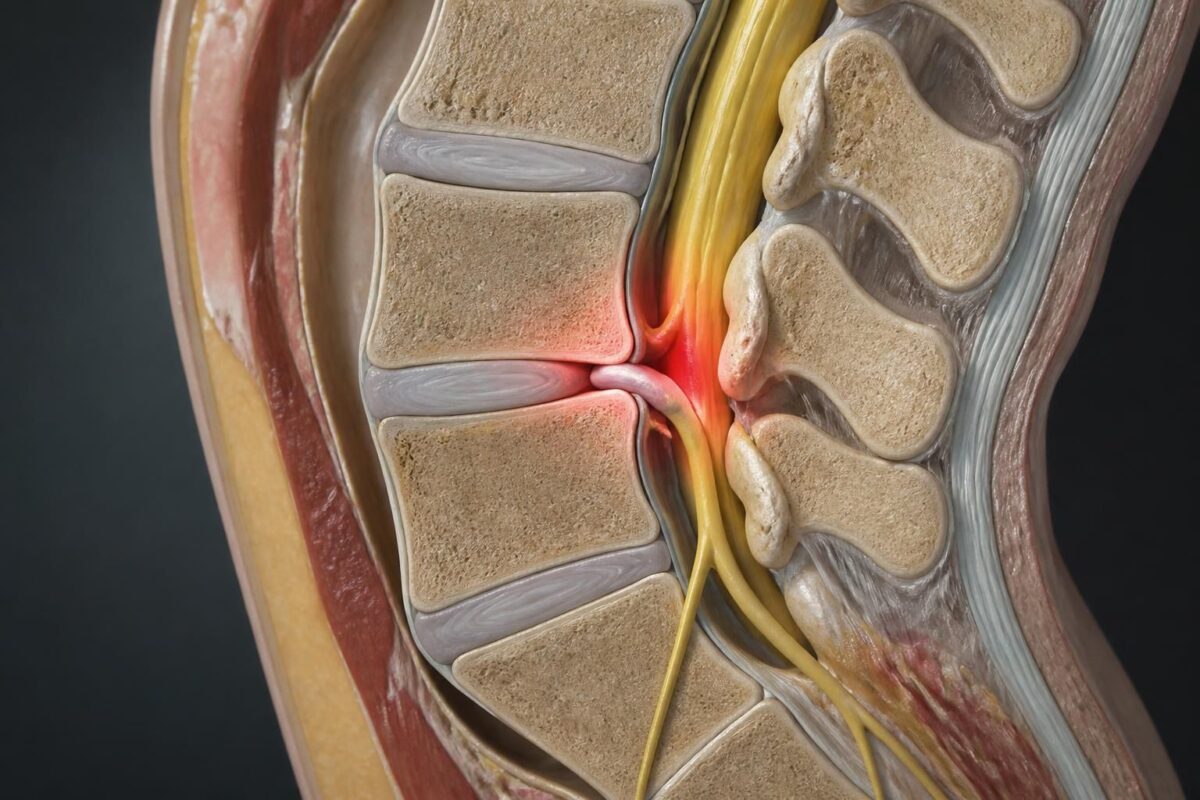
IN BRIEF In brief, lumbar disc herniation and nerve root inflammation refer to compression and irritation of a spinal root causing radiating pain, paresthesias, and sometimes muscle weakness. The mechanism combines disc protrusion and radicular inflammation, hence the importance of…
Herniated disc and peripheral pain: sign to watch out for
IN BRIEF In brief, Herniated disc is the partial protrusion of the gelatinous nucleus of an intervertebral disc through the fibrous ring, which can compress a nerve root and trigger radiating pain in the limb. The key benefits of rapid…

Herniated disc and centralizing pain: sign to interpret
IN BRIEF In brief, a herniated disc is a protrusion of the intervertebral disc that can compress a nerve root, causing centralized pain and signs such as radiating pain, numbness, and weakness. The treatment is mostly conservative: guided activity, physical…
Herniated disc and pain that travels lower after movement
IN BRIEF The Herniated Disc is a protrusion of the intervertebral disc that can compress a nerve root, leading to a pain that radiates down after a movement. The benefits include better guidance for non-surgical treatment and a gradual reduction…

Herniated disc and generic exercises: risk of poor choices
IN BRIEF In brief, the herniated disc and generic exercises can worsen the pressure on the discs and the pain if the movements are inappropriate. The advantage of personalized approaches lies in tailored exercises, controlled progression, and better recovery, while…

Dr Sylvain Desforges, B.Sc., D.O., N.D., osteopath, is the founding president of TAGMED and of the ACMA association. He dedicates his practice to chronic spinal pain, low back pain and symptoms compatible with sciatica, particularly when pain radiates toward the buttock, leg, calf, foot or toes.
Through SOS Sciatique, he publishes educational content on sciatica symptoms, possible causes such as disc herniation, disc narrowing, foraminal stenosis or irritation of a lumbar nerve root, as well as non-surgical approaches that may be considered according to the evaluation. At Clinique TAGMED, care may include, depending on the case, motorized neurovertebral decompression, specific osteopathic care or precision percussion.
For an evaluation related to sciatica treatment in Montreal / Mount Royal or sciatica treatment in Terrebonne, please consult the services available at Clinique TAGMED.
Medical disclaimer
The information published on SOS Sciatique is provided for educational purposes only and does not replace a consultation, diagnosis, opinion or treatment provided by a physician or another authorized healthcare professional. The author of this article is neither a medical doctor nor a specialist in a medical specialty recognized by the Collège des médecins du Québec. The osteopathic, manual medicine or functional support approaches described on this site do not constitute medical acts and are not intended to replace medical follow-up.
Consult a physician or emergency service in cases of loss of bladder or bowel control, anesthesia in the saddle area, significant or progressive weakness in the leg or foot, fever, recent trauma, severe pain or rapid worsening of symptoms. For more details, please read our Legal Notice.