


Sciatica and travel: how to recognize a worsening
04/09/2026
Sciatica in Terrebonne: pain towards the little toe and S1 root
05/09/2026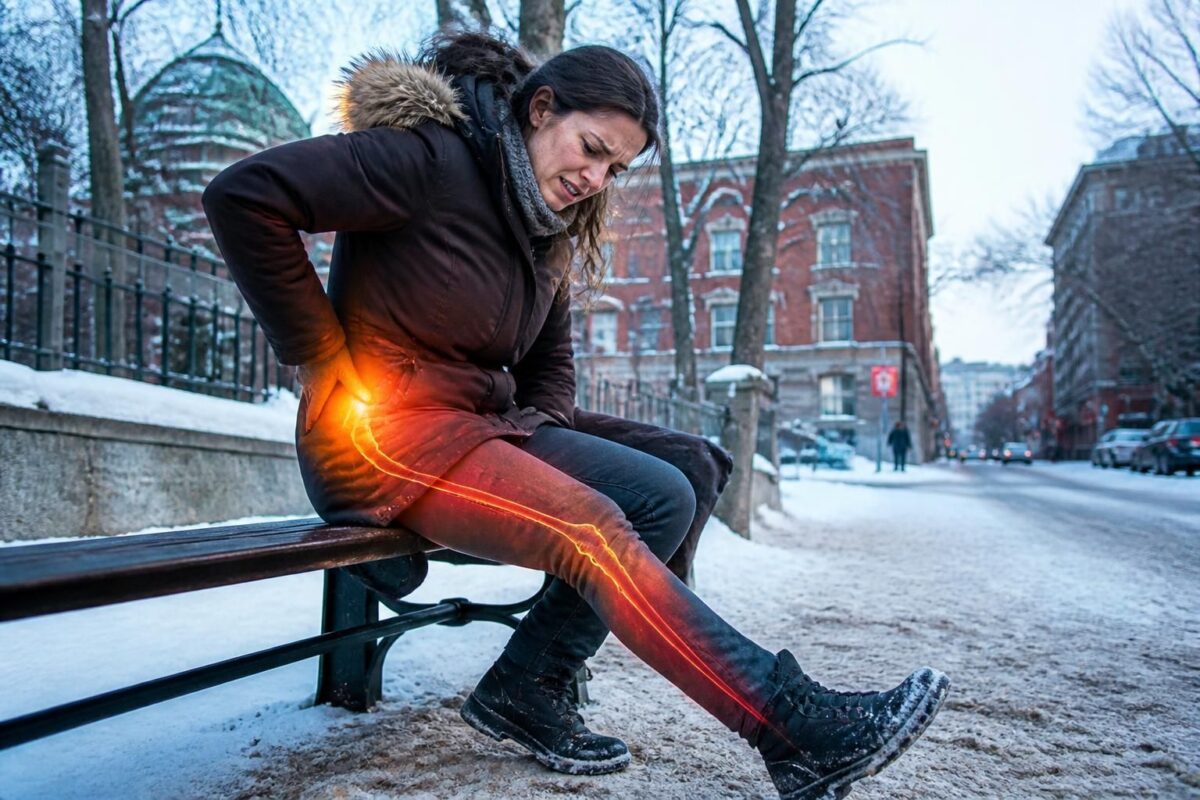
IN BRIEF Sciatica is pain radiating along the path of the sciatic nerve, typically from the lower back to the leg and down to the little toe when the S1 root is irritated or compressed. In Montreal, this phenomenon is quickly addressed with non-surgical and personalized approaches. Benefits: quick and minimally invasive approach focused on rehabilitation and posture, with tailored options such as physiotherapy, osteopathy, and decompression based on the evaluation. How does it work? After a clinical assessment, the plan combines targeted exercises, manual techniques, and postural advice, and may include a motorized neurovertebral decompression when indicated. |
In Montreal, sciatica can manifest as pain starting from the lower back and radiating to the little toe via the S1 root. The path follows the sciatic nerve and may be accompanied by tingling, numbness, and weakness of the foot. The diagnosis is based on clinical examination; imaging may be requested if necessary. Non-surgical treatments, such as physiotherapy and osteopathy, are preferred, with motorized neurovertebral decompression considered depending on the case. Warning signs: significant loss of strength or sphincter problems requiring urgent attention.
This article brings together the essential points regarding sciatica in Montreal when the pain targets the little toe and may involve the S1 root. It explains possible mechanisms, typical symptoms, consultation criteria, and the non-surgical options favored in local clinics, particularly at TAGMED Clinic. The content focuses on a clear and progressive management, tailored to the path of the sciatic nerve and the S1 root, with local resources for further exploration.
Symptoms and Pathway
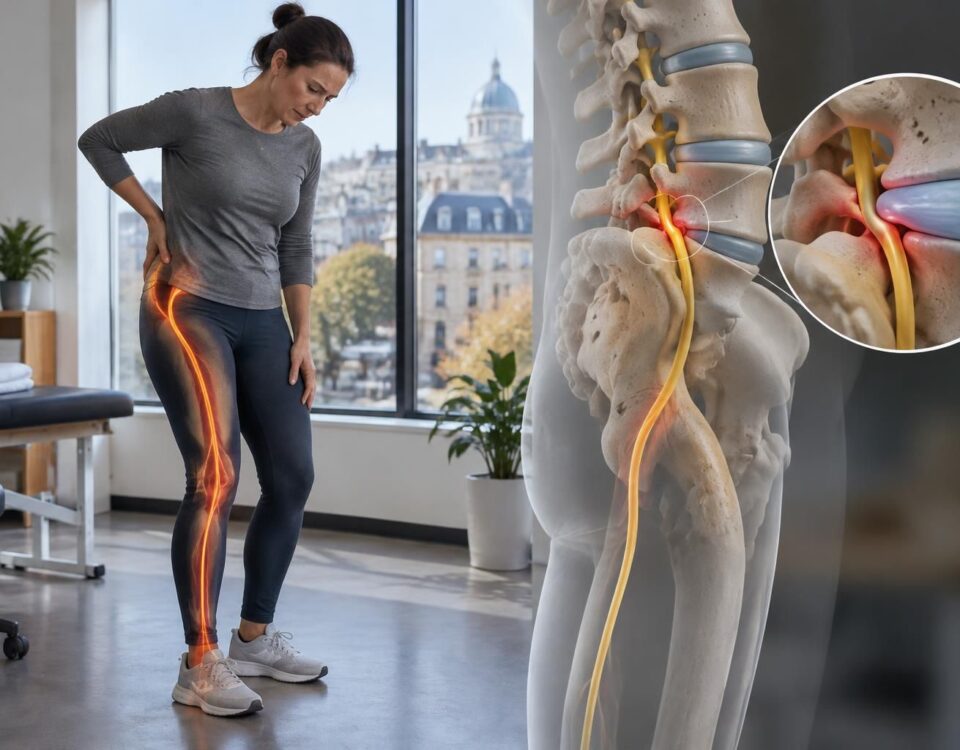
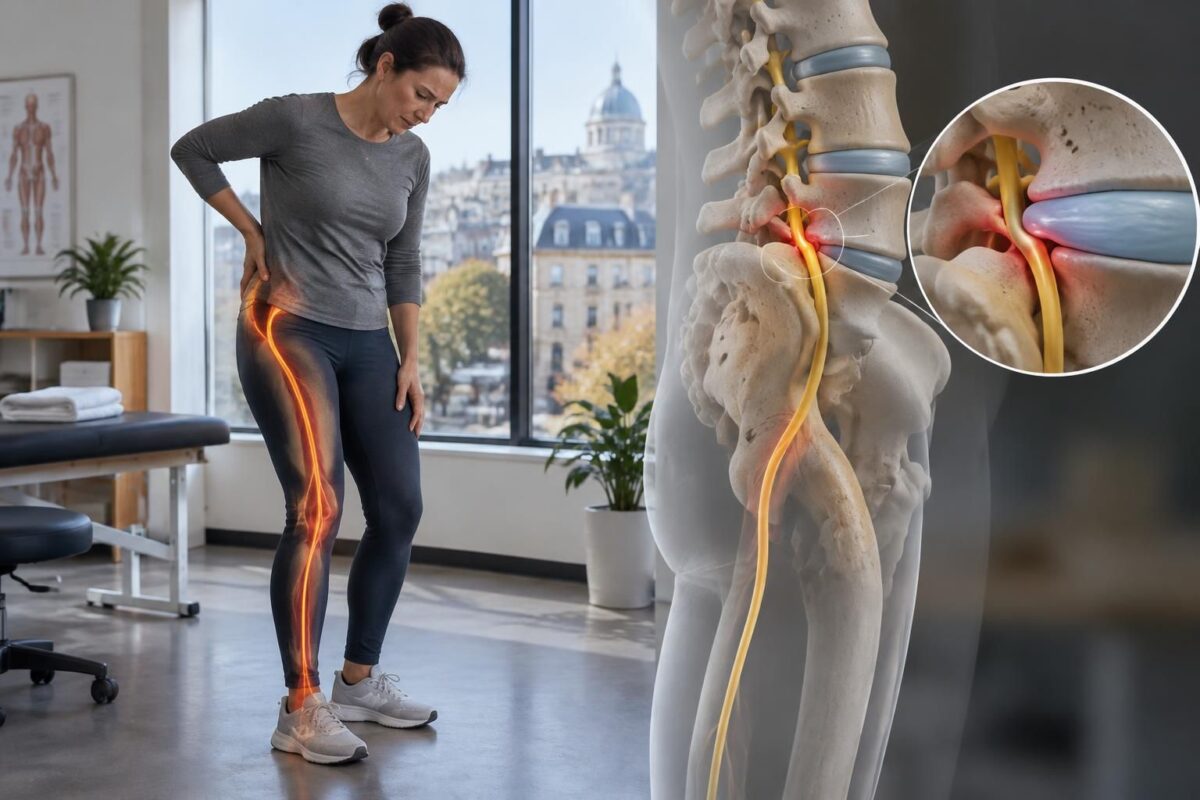
Sciatica is characterized by pain that starts from the lower back and may radiate to the buttock, the back of the leg, and then reach the little toe when the S1 root is involved. This pain may be accompanied by tingling, numbness, or muscle weakness in the foot. The pathway follows the sciatic nerve, the longest in the body, and may explain electric or burning sensations in the hindfoot. To understand the pathway and related causes, see the following resources: Sciatica in Montreal: heel pain and possible S1 root involvement, Understanding the pain pathway before taking action, and Sciatica in Terrebonne: pain that changes pathway over the days.
Origins and Diagnosis
Several mechanisms can cause radicular pain targeting S1, including a lumbar disc herniation, protrusion, or foraminal narrowing. Lumbar osteoarthritis or local muscular tension can also contribute. The diagnosis relies on a clinical examination, tests such as the Lasègue sign, and the evaluation of the painful pathway. Imaging (MRI or CT scan) is considered if the pain persists or is accompanied by warning signs; their interpretation must remain clinically contextualized. To better understand the role of the S1 root in pain and the pathway of the sciatic nerve, consult relevant resources, including those described on Sciatica in Montreal and Understanding the pain pathway.
Warning Signs and When to Seek Emergency Care
Seek immediate care if you observe a marked loss of strength in a lower limb, sphincter issues (incontinence or urinary retention), rapidly worsening pain, or associated fever. Other signs such as severe bilateral pain or unbearable night pain require urgent medical evaluation. For a local perspective on sciatica and signs regarding the heel and S1, refer to specialized resources.
Treatment Options in Montreal and at TAGMED Clinic
Management favors a non-surgical and progressive approach, tailored to the mechanical or radicular origin of the pain. In Montreal and Terrebonne, the preferred options are osteopathy and manual approaches, supplemented when necessary by non-invasive techniques such as motorized neurovertebral decompression in appropriate cases, following a thorough evaluation. The goal is to reduce inflammation, improve mobility, and facilitate a return to activity. To learn more about these approaches in Montreal, you can consult the resources of TAGMED Clinic and the information available on dedicated sciatica websites.
For further details on non-surgical options and insights offered by TAGMED, see: TAGMED Clinic. Additional resources on sciatica and the pain pathway, including details on manifestations along the sciatic nerve pathway, are available at Sciatica in Montreal: heel pain and possible S1 root involvement and Understanding the pain pathway before taking action.
Comparative Table of Treatments
| Treatment | Main Indications | Limits and Remarks |
|---|---|---|
| Motorized Neurovertebral Decompression | Disc herniation or protrusion without contraindication | Variable results depending on the patients; requires specialized assessment |
| Osteopathy and Manual Therapies | Mechanical lower back pain and tension likely to irritate the nerve | Non-invasive approach; effective when tailored to the etiology |
| Medication and Injections | Major inflammatory pain or persistent acute pain | Temporary effects; medical monitoring required |
| Surgery | Significant neurological deficit or failure of conservative treatments | Procedure with risks and recovery period; reserved for certain cases |
| Physiotherapy | Relatively useful in some contexts; may be less effective in the face of major radiculopathy | To be considered in a comparative framework, with preference for the approaches offered at TAGMED clinic |
Additional resources and advice on the care pathway in Montreal are available via the websites mentioned above. For patients experiencing pain directed towards the heel or the outer edge of the foot, a comprehensive assessment can identify potential S1 root involvement and determine the optimal local options available.
For those wishing to delve deeper into the mechanisms and non-surgical approaches, here are some additional useful resources: Sciatica and Long-Distance Travel, Disc Herniation and Sciatica Recurrence, Understanding the Path of Pain Before Acting, and Montreal and Terrebonne: Evolving Path.
For additional information on mechanisms and symptoms, you can explore the following resources: Burning Sensation in the Calf, Heel Pain and Possible S1 Root, and Path of Pain Before Acting.
Medical Disclaimer: The information and advice provided on this site do not replace the opinion, diagnosis, or treatment of a healthcare professional. Please note that the content presented is not intended to replace the judgment of a physician or healthcare professional. The manual therapy and associated approaches described on this site do not include any medical treatment prescribed by a doctor. Always consult your doctor with any medical questions. For more details, please read our full Legal Notice.
- Axis: Clinical pathway targeted at pain radiating to the little toe and S1 root in Montreal.
- Key Symptoms: Lower back pain extending to the little toe, with tingling and possible weakness.
- Quick Diagnosis: Physical exam + radicular tests; MRI/CT in case of doubt.
- Common Causes: Disc herniation, foraminal stenosis, piriformis syndrome.
- Warning Signs: Loss of strength, sphincter disturbances, fever; urgent if present.
- Non-surgical Options: Physiotherapy, osteopathy, motorized neurovertebral decompression based on assessment.
- Montreal Care Plan: Active management, posture, exercises, and decompression when indicated.
- Exercises and Posture: Targeted program to strengthen the trunk and facilitate movement.
- Prevention: Suitable activity, weight control, posture at work and home.
- When to Act: Persistent pain despite measures, progression of signs, or new weakness.
- Indicators of Success: Reduced pain, regained mobility, absence of recurrence with follow-up.
- Safety Note: Non-surgical approach preferred when possible; surgery rare depending on cases.

This recommendation briefly presents the key points for Sciatica in Montreal, with pain radiating to the little toe and a potential involvement of the S1 root. It emphasizes clinical assessment, common causes (disc herniation, foraminal stenosis, piriformis syndrome) and non-surgical options adapted to the Montreal context, in order to reduce pain and restore mobility without necessarily resorting to surgery.
Assessment and Diagnosis in Montreal
Pain generally follows the path of the sciatic nerve and may affect the buttock, the back of the leg, and reach the little toe when the S1 root is involved. The clinical examination, with tests such as the Lasègue maneuver, helps identify signs of radicular irritation. Imaging tests (MRI or CT) are only considered if doubts remain or in the case of unusual developments. In Montreal, specialists will prioritize a graduated approach, initially favoring non-invasive treatments based on the precise evaluation of the pain pathway and potential weakness zones.
Sciatica in Montreal: nerve root, disc, and foramen explained simply
IN BRIEF Sciatica corresponds to pain linked to the irritation of a nerve root, sometimes near a lumbar disc or a narrowed foramen. In Montreal, distinguishing an L4-L5 issue that may affect the L5 root from an L5-S1 problem that…

Sciatica in Montreal: understanding L5-S1 foraminal compression
IN BRIEF L5-S1 foraminal compression is a narrowing of the opening where a nerve root exits, which can cause sciatica with pain, tingling, or weakness in the buttock and leg. In Montreal, an assessment allows for correlating symptoms, clinical examination,…
Symptoms to Monitor and Urgency
In addition to pain radiating to the little toe, tingling, a feeling of numbness or weakness in the foot may appear. Warning signs requiring urgent consultation include marked loss of strength, sphincter disturbances, unbearable night pain, fever, or rapid worsening of symptoms. In the presence of these signals, it is necessary to go to the emergency services or quickly contact a doctor to assess neuro-motor risks and adapt treatment.

Sciatica in Montreal: why L5-S1 is often involved
IN BRIEF The sciatica L5-S1 often corresponds to irritation of the S1 root, sometimes related to a herniated disc. The pain may start in the buttock and descend behind the thigh to the calf or the foot. In Montreal, understanding…
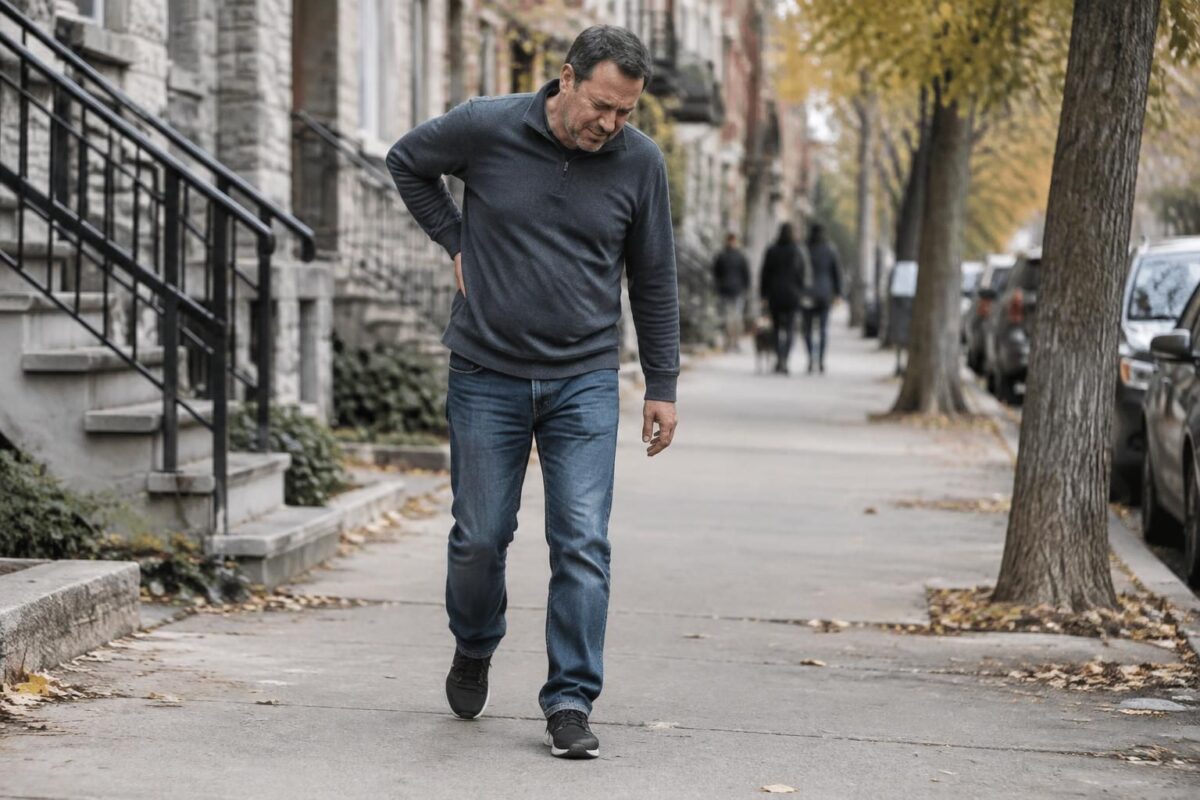
Sciatica in Montreal: L5 and difficulty lifting the foot
IN BRIEF The difficulty in lifting the foot with sciatica can indicate weakness related to the involvement of the L5 root, sometimes caused by a herniated disc. This foot drop increases the risk of falling and requires prompt medical evaluation;…
Non-Surgical Therapeutic Approaches
Targeted Exercises and Activity Maintenance
A personalized exercise program focused on strengthening the trunk, stretching the lumbar muscles and lower limbs, as well as improving posture, is recommended. Regular walking and suitable activities help reduce pain and prevent recurrences. The aim is to gradually restore function without imposing prolonged rest.
Osteopathy and Manual Therapies
Osteopathic approaches and manual techniques can help release joint and muscle restrictions that irritate the sciatic nerve. These treatments are part of a holistic and active approach, in coordination with physiotherapy and postural advice.
Motorized Neurovertebral Decompression
Motorized neurovertebral decompression is considered for selected patients after evaluation. This technique aims to temporarily reduce mechanical stress on the discs and nerve roots, especially in the case of herniation or disc protrusion. It is not indicated for everyone and does not replace curative treatments when necessary.

Sciatica in Montreal: S1 and difficulty rising up on the toes
IN BRIEF S1 sciatica can cause pain from the buttock to the calf and foot, as well as difficulty getting on tiptoe. This weakness may suggest irritation of the S1 nerve root, but is not sufficient to establish a diagnosis.…

Sciatica in Montreal: L4-L5 and pain towards the top of the foot
IN BRIEF The sciatica related to L4-L5 can radiate from the lower back to the buttock and the leg; pain on the top of the foot may suggest involvement of the L5 root, but the pathways vary and symptoms overlap.…
Prevention and Lifestyle
Adopting regular physical activity, maintaining a stable weight, and using appropriate ergonomics at the office and home are key elements in preventing recurrences. Simple gestures, such as bending the knees when lifting, alternating sitting and standing positions, and prioritizing a neutral posture, reduce lumbar and radicular stress.

Sciatica in Montreal: pain in the big toe, L5 root or another cause?
IN BRIEF Pain that radiates toward the big toe may indicate irritation of the L5 root, sometimes related to a herniated disc, but other causes are possible. In Montreal, evaluating the pain pathway, strength, sensitivity, and walking helps guide management…

Sciatica in Montreal: why the affected root changes the pain pathway
IN BRIEF Sciatica refers to pain or nerve symptoms that vary depending on the affected lumbar root. Pain, tingling, or numbness may manifest in the buttock, thigh, calf, or foot. Understanding this distribution helps guide the assessment, without diagnosing based…
When to Make an Appointment in Montreal
For a specialized evaluation of sciatica directed towards the little toe and involving the S1 root, consider a consultation at a clinic offering an integrated approach (osteopathy, physiotherapy, and non-surgical options). Personalized follow-up allows for rapid adjustment of treatments and addressing risk factors specific to your Montreal lifestyle.
| Axis | Concise Statement |
|---|---|
| Origin and Pathway | The sciatic pain may originate from irritation or compression of the S1 root, which innervates the heel and the arch of the foot, following the pathway of the sciatic nerve to the little toe. |
| Symptoms Towards the Little Toe | Pain radiating from the lower back down to the little toe, with tingling, numbness, or weakness in the foot. |
| Location S1 | Attribution to the S1 root may cause pain in the heel and arch of the foot, sometimes with altered walking. |
| Clinical Signs and Tests | Neuro examination and tests such as Lasègue to identify root irritation; evaluation of reflexes and foot strength. |
| Imaging and Diagnosis | MRI or CT scan useful in case of doubt or persistence; interpretation adjusted to clinical context. |
| Non-Surgical Approaches (Montreal) | Targeted physiotherapy and osteopathy, postural work; motorized neurovertebral decompression considered after evaluation. |
| Neurovertebral Decompression | Option for certain patients after assessment; not indicated in cases of instability, infection, or emergency; results vary. |
| Aggravating Factors and Advice | Prolonged sitting posture, standing, and efforts increasing lumbar pressure; suitable activity, active breaks, and recommended ergonomics. |
| Alert Signs and Consultation | Significant loss of strength, sphincter disorders, night pain, or fever require urgent consultation. |
Testimonials on Sciatica in Montreal: Pain Towards the Little Toe and S1 Root
Testimonial 1 — Montreal: “Since I started a sedentary job, a lower back pain has traveled down my leg to the little toe, and I experienced a burning sensation possibly related to the S1 root. After an evaluation in Montreal and a personalized program combining osteopathic techniques and targeted exercises, the pain significantly reduced, and my mobility returned, allowing me to resume my daily activities without fear of recurrence.”
Testimonial 2 — Montreal: “The painful pathway surprised me at first: pain starting from the lower back and radiating down to the little toe, with intense tingling. I was told that this probably corresponded to sciatica affecting the S1 root. Thanks to adapted sessions near Montreal and postural advice, I regained normal walking and the sports activities I love.”
Testimonial 3 — Montreal: “As an athlete, I was afraid I wouldn’t be able to train anymore. The pain radiating towards the little toe indicated possible involvement of the S1 root. After precise screening and a rehabilitation plan in osteopathy in Montreal, the pain decreased, and my stability returned, without resorting to surgery.”
Testimonial 4 — Montreal: “The sciatica manifested as pain invading the nerve and reaching the little toe. The team in Montreal implemented manual treatments and a progressive exercise program. Within a few weeks, I felt less tightness, and I was able to return to my professional activities without acute pain.”
Testimonial 5 — Montreal: “I had painful episodes that started from the lower back and traveled down to the little toe, with a slight sensation of weakness in the foot. The evaluation in Montreal confirmed involvement of the S1 root and proposed a non-invasive approach focused on mobility and posture. Today, the pain is managed, and my daily movements are without limitation.”
Dr. Sylvain Desforges, an expert in osteopathy, naturopathy, and manual medicine, is the founding president of the TAGMED clinics and the ACMA. His career is guided by innovation in the field of care, with particular attention to the management of chronic pain of the spine and the integration of advanced technologies. His approach is to provide evidence-based care to sustainably improve the health and well-being of his patients, especially when sciatica manifests in the Montreal context and targets the long nerve pathway to the little toe.
In Montreal, patients suffering from sciatica may experience pain that follows the pathway of the sciatic nerve, often associated with irradiation to the buttock, thigh, calf, and sometimes down to the little toe. This pain is frequently linked to the S1 root, which may be irritated or compressed by a herniated disc, foraminal stenosis, or other degenerative mechanisms. The practitioner’s job is to determine, during a thorough clinical evaluation, the exact origin to guide appropriate treatment and avoid common self-diagnosis errors.
The diagnostic pathway he favors combines careful physical examination, listening to symptoms, and, if necessary, root tests like the Lasègue sign to locate the painful trajectory. Targeted imaging (MRI or CT scan) may be requested, but always within the framework of integrated clinical reasoning. The goal is to distinguish radiating pain related to S1 from referred pain or other neuralgias, in order to propose a precise and personalized therapeutic strategy for Montreal and its surroundings.
In terms of management, the preferred approach remains non-surgical, tailored to each patient after a comprehensive assessment. The program can combine sessions of osteopathy and manual medicine, targeted exercises for lumbar rehabilitation, postural advice, and gentle physical activities, to promote movement, improve posture, and reduce tension around the irritated nerve. Personalized rehabilitation and patient education about daily activities are essential pillars to prevent recurrences and improve function.
For cases where symptoms persist or become disabling, recourse to complementary non-invasive approaches may be considered, including motorized spinal decompression and possibly complementary therapies such as laser and shock wave therapy, used judiciously after individual assessment. It should be noted that results vary according to profiles and that these options do not systematically replace other treatments when indicated by the underlying pathology.
Located in the heart of Montreal and its surroundings, TAGMED offers coordinated care focused on returning to an active life and achieving a sustainable reduction in pain. The aim is to help you regain optimal mobility and limit relapses while prioritizing an evidence-based approach and interdisciplinary collaboration when necessary. For those seeking clear guidance regarding sciatica involving the S1 root, the expertise and technologies available within TAGMED clinics represent a proactive and personalized option.
This quick summary outlines the essential aspects of sciatica in Montreal, with a focus on pain that may reach the little toe and the possible involvement of the S1 root. It recalls common mechanisms, the diagnostic pathway, and non-surgical options tailored to the local context, while highlighting warning signs and available resources for effective and safe management.
The path of the sciatic nerve explains why low back pain may project down to the heel and sometimes to the little toe when the S1 root is involved. In Montreal, this presentation requires a detailed clinical assessment to distinguish classic sciatica from other neuralgic or referred pains, and to identify the precise cause (e.g., herniated disc, foraminal stenosis, or muscle tension). Several non-surgical pathways may be considered after a personalized assessment, including physiotherapy, osteopathy, and, when indicated, motorized neurovertebral decompression. For local and technical references, please refer to associated resources.
Treatment options favor a graduated, function-centered approach: lumbar rehabilitation, targeted exercises, and postural advice aimed at reducing pressure on the nerve roots and improving mobility. When the origin is discal or foraminal, motorized neurovertebral decompression may be considered for selected patients, but it remains one option among others and does not replace conservative treatments or surgery when warranted. Additional information on these non-surgical choices is available through specialized and local clinical resources.
In practice, assessment primarily relies on a clinical examination and neurological tests, with imaging reserved for doubtful or evolving cases. However, even in the presence of a visible disc herniation on MRI, pain can be multifactorial and require adapted therapeutic planning. To enrich your understanding and find local advice, you can consult resources such as Articles on Sciatica and the specific protocol of Merck Manual.
For patients experiencing pain that targets the heel or the plantar region via the S1 root, local resources in Montreal and Terrebonne detail the signs and assessment pathways. Dedicated pages such as Sciatica – Heel Pain and Sciatica S1 advocate for a coordinated and personalized approach. For specific cases of difficulty walking on heels or on the tips of the feet, accessible resources in Montreal can be consulted via Difficulty Walking on Heels and Tips.
Moreover, non-surgical protocols and prevention advice are reinforced by resources such as Sciatica in Montreal – Walking and Heels and Sciatica in Terrebonne – Pain Top of Foot. These resources complement the clinical assessment and help guide towards the most suitable solutions for each situation.
For practical and personalized guidance in Montreal, specialized clinics offer coordinated care integrating education, rehabilitation, and manual treatments. For additional information and non-invasive pathways, see in particular the dedicated pages on Sciatica S1 and Heel Pain, which illustrate the local approach and available options without systematic recourse to surgery.

Dr Sylvain Desforges, B.Sc., D.O., N.D., osteopath, is the founding president of TAGMED and of the ACMA association. He dedicates his practice to chronic spinal pain, low back pain and symptoms compatible with sciatica, particularly when pain radiates toward the buttock, leg, calf, foot or toes.
Through SOS Sciatique, he publishes educational content on sciatica symptoms, possible causes such as disc herniation, disc narrowing, foraminal stenosis or irritation of a lumbar nerve root, as well as non-surgical approaches that may be considered according to the evaluation. At Clinique TAGMED, care may include, depending on the case, motorized neurovertebral decompression, specific osteopathic care or precision percussion.
For an evaluation related to sciatica treatment in Montreal / Mount Royal or sciatica treatment in Terrebonne, please consult the services available at Clinique TAGMED.
Medical disclaimer
The information published on SOS Sciatique is provided for educational purposes only and does not replace a consultation, diagnosis, opinion or treatment provided by a physician or another authorized healthcare professional. The author of this article is neither a medical doctor nor a specialist in a medical specialty recognized by the Collège des médecins du Québec. The osteopathic, manual medicine or functional support approaches described on this site do not constitute medical acts and are not intended to replace medical follow-up.
Consult a physician or emergency service in cases of loss of bladder or bowel control, anesthesia in the saddle area, significant or progressive weakness in the leg or foot, fever, recent trauma, severe pain or rapid worsening of symptoms. For more details, please read our Legal Notice.