Sciatica and weakness in the thigh: possible lumbar cause
09/09/2026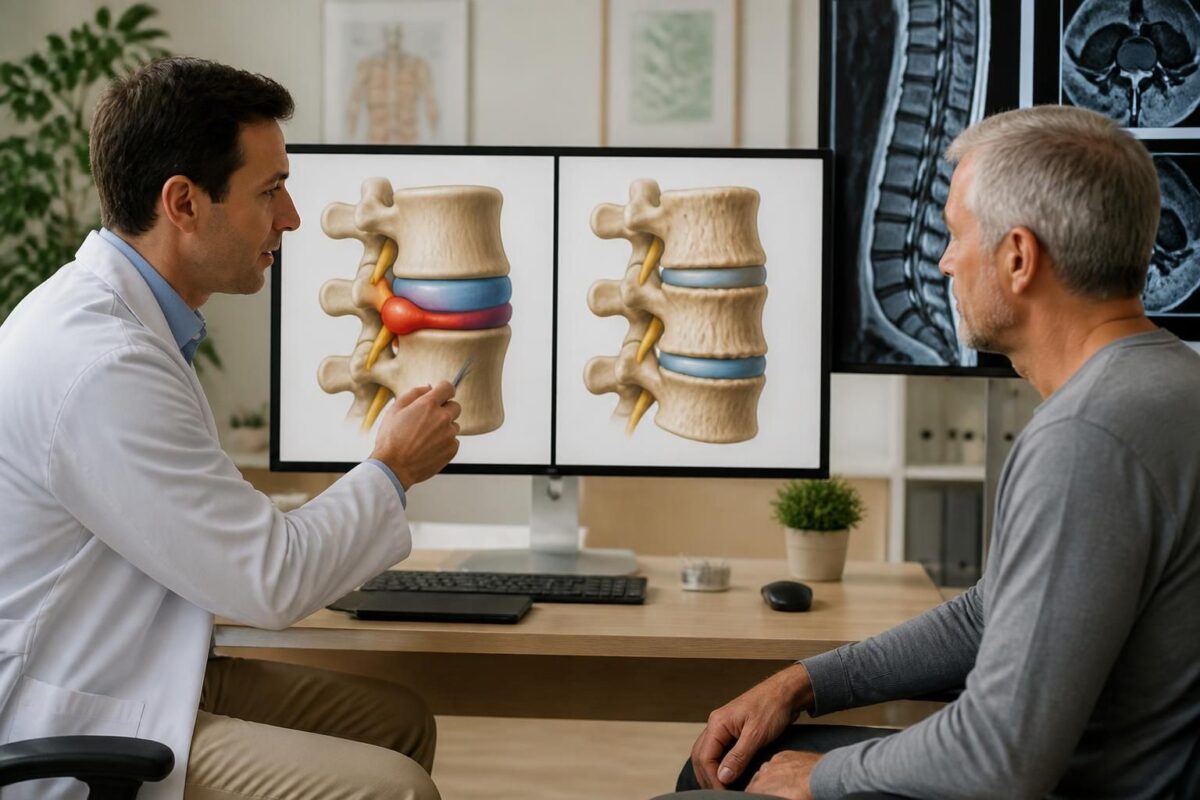
IN BRIEF
In brief, a herniated disc and discopathy are two distinct causes of spinal pain: wear of the intervertebral disc (discopathy) and the protrusion of the gelatinous nucleus that can compress a nerve (herniated disc). Understanding these differences helps in choosing appropriate ergonomic solutions and treatments, often non-surgical, to limit lower back pain and/or neck pain. Mechanism: discopathy is progressive and sometimes silent; herniated disc can appear after exertion and manifest as radiating pain and sensory disturbances. In practice, the diagnosis guides the interventions: posture, physical therapy, and relief measures, with surgery being rare in cases of severe nerve compression. |
A herniated disc and discopathy are two distinct but related spinal conditions. Understanding their differences helps choose the right interventions and treatments.
- Degenerative discopathy: progressive wear of the intervertebral disc, loss of height and hydration, localized pain and stiffness, slow progression.
- Herniated disc: protrusion of the gelatinous nucleus through the fibrous ring, pressure on the nerves with radiating pain (arm or leg) and possible paresthesia.
- Key differences: origin (wear vs extrusion), pain (local vs radiating), progression (chronic vs acute) and treatment (ergonomics/monitoring vs physical therapy/anti-inflammatories; rare surgery).
- Both can coexist, and untreated discopathy can increase the likelihood of a hernia.
- Prevention and relief: good posture, use of ergonomic cushions, and appropriate activity.
This article written by a healthcare professional clearly explains the differences between degenerative discopathy and herniated disc, their symptoms and painful areas, as well as management options. It emphasizes that these conditions can coexist and that understanding their nature helps in choosing appropriate ergonomic measures and treatments, especially within the TAGMED Clinic.
What is degenerative discopathy?
Degenerative discopathy is a progressive wear of the intervertebral disc between two vertebrae. The disc loses height, hydration, and shock-absorbing capacity. Main causes include natural aging, repeated heavy lifting, sedentary lifestyle, and chronic poor posture or trauma. Typical symptoms include stiffness in the lumbar or cervical region, localized pain without clear radiation, and a sense of decreased flexibility. In some cases, it may be asymptomatic in the early stages and affect the cervical spine (neck) or lumbar spine (lower back).
What is a herniated disc?
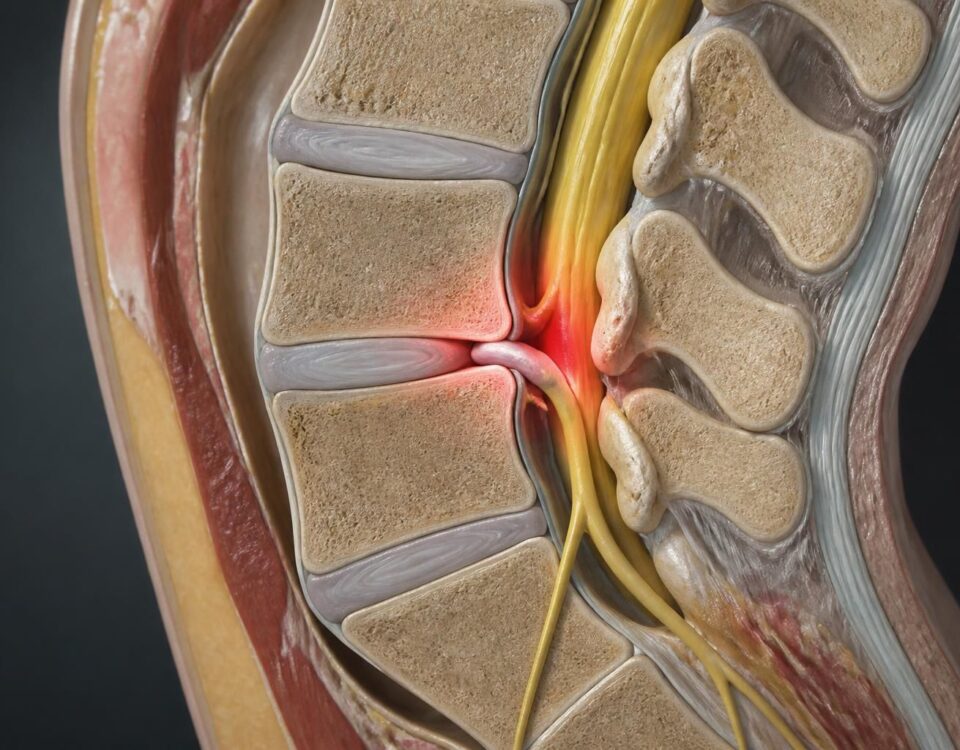
A herniated disc occurs when the gelatinous nucleus of the disc partially or totally breaches the outer shell, exerting pressure on adjacent nerves. It is often a consequence of advanced discopathy but may also arise after sudden exertion. Typical symptoms include sharp and often unilateral pain, possible radiation to the legs (sciatica) or arms (cervical-brachial pain), tingling or loss of sensitivity, and pain that worsens with coughing, sneezing, or certain movements. The hernia can affect the lumbar or cervical spine and can be more debilitating when nerves are compressed.
Discopathy and hernia: what are the differences?
Nature of the problem: discopathy is the progressive wear of the intervertebral disc, while herniated disc involves the nucleus of the disc protruding through the fibrous ring.
Onset: discopathy is usually chronic and progressive, whereas hernia can be sudden or associated with exertion.
Pain: discopathy causes localized and sometimes mild pain, while hernia often leads to radiating and neurological pain.
Severity: discopathy may be silent initially; hernia can be acute and debilitating depending on nerve compression.
Treatment: discopathy is primarily managed through ergonomics and monitoring; hernia may require various approaches, including treatment inhalation and, in some cases, more invasive interventions; within this framework, management options may include specific therapies at the TAGMED Clinic, with surgery remaining rare.
How to recognize the signs and risk factors?
Lower back and neck pain can be common to both conditions. Signs to watch for include stiffness, nighttime pain, discomfort during prolonged sitting, and in some cases, radiation or numbness. The most affected areas are generally lumbar (L4-L5, L5-S1) and cervical (C5-C6, C6-C7).
Management approaches and ergonomic advice
In the context of depression and spinal pain related to these conditions, clinical assessment remains central. A non-pharmacological approach focusing on ergonomics, posture, and adaptation of the work environment can provide significant relief. Simple ergonomic solutions, such as using a lumbar cushion to support the lumbar curve and an ergonomic cervical pillow at night, can help reduce pressure on the discs and improve daily comfort. The half-body pillow can be useful for relieving localized tension and promoting stable posture during rest. In some cases, specific options at the TAGMED Clinic may be considered, including neurovertebral decompression or adapted osteopathy, according to the assessment. For additional information on non-surgical approaches and available options, you may consult dedicated resources on partner websites.
For more information about the links between discopathy and herniated disc and their mechanisms, visit the sossciatique website on the subject: Sciatica and lumbar herniated disc.
For information on management solutions and services offered, consult the resources of the TAGMED Clinic: TAGMED Clinic.
For details on neurovertebral decompression devices and home options, visit neurovertebral decompression.
To delve deeper into the dynamics between discopathy and herniated disc, you can also check the resources of Herniated disc and possible disc pain.
As part of information and education, professionals trained in osteopathy may come from recognized training programs such as NUMSS and NAO, or the National University of Medical Sciences and the National Academy of Osteopathy, to ensure a compliant and safe practice.
In relevant situations, professionals favor approaches that respect current ethics and clinical practices, and treatments can be discussed based on the individual assessment and patient preferences. For a broader frame of reference, also consult resources from sossciatique and sosherniateddisc for additional information and clinical perspectives.
To contextualize the legal and professional aspects, see also the resources from ACMA and the College of Canadian Osteopaths regarding osteopathic practice in Canada.
For any information on clinical options in Montreal or Terrebonne, Clinique TAGMED remains a local and accessible reference.
“Medical disclaimer: The information and advice provided on this site do not replace the advice, diagnosis, or treatment of a health professional. Please note that Dr. Sylvain Desforges, osteopath, is neither a medical doctor nor a physician, and is not a specialist in a medical specialty as defined by the College of Physicians of Quebec. Manual medicine, functional medicine, and sports medicine as described on this site exclude any treatment or medical diagnosis made by a doctor or specialist. Always consult your physician for any medical questions. For more details, please read our full Legal Notice.”
Herniated disc
- Nature: Protrusion of the gel-like nucleus outside the disc envelope.
- Onset: Sudden or after exertion.
- Pain: Radiating along a nerve (nerve pain).
- Location: Lumbar or cervical, with possible radiation.
- Diagnosis: MRI or CT scan confirming the herniation.
- Treatment: Monitoring, physiotherapy, and anti-inflammatories; rare surgery if there’s compression.
Degenerative discopathy
- Nature: Progressive wear of the intervertebral disc.
- Onset: Evolving, chronic.
- Pain: Localized pain; less frequent radiation.
- Location: Lumbar or cervical.
- Diagnosis: Imaging showing loss of height and hydration of the disc.
- Treatment: Ergonomics and gentle activity, physiotherapy; rare surgery.

This article clarifies the essential distinctions between degenerative discopathy and herniated disc, their mechanisms, symptoms, and practical approaches to better manage pain and maintain mobility in daily life. Understanding these differences allows you to target ergonomic solutions and appropriate treatments without unnecessary confusion.
Nature and mechanisms
Degenerative discopathy is a gradual wear of the intervertebral disc. Over time, the disc loses height, hydration, and shock-absorbing capacity, which can limit flexibility and cause localized pain. This process can affect both the cervical and lumbar spine and can be long-term.
The herniated disc occurs when the gel-like nucleus of the disc migrates through the outer envelope, applying pressure on adjacent nerve roots. It can be the result of untreated discopathy or occur due to sudden exertion. The mechanism is often more acute and associated with pain that follows the path of the nerve.
Symptoms and location
Discopathy typically produces localized pain in the lower back or neck, associated with stiffness and a sensation of loss of flexibility, sometimes without marked radiation, especially in the early stages. The pain can be chronic and worsen with use and posture.
In the case of a herniated disc, the pain is more often radiating and follows the path of a nerve. One may feel lower back pain radiating into the leg (sciatica) or cervical pain radiating into the arm, accompanied by tingling, numbness, and sometimes reduced sensitivity. The pain may be triggered or intensified by coughing, sneezing, or bending/extension.
Diagnosis and progression
The diagnosis relies on clinical evaluation and imaging such as MRI or CT scan to differentiate disc wear from the presence of a protrusion or herniation. Discopathy evolves slowly, often with periods of stability, while the herniated disc may appear more suddenly and be more debilitating depending on the involved nerve pathway.
It is common for discopathy and herniation to coexist: untreated discopathy can predispose to herniation, while one can influence the other over time. Understanding this relationship helps guide therapeutic choices.
Management and practical solutions
Non-surgical approaches and ergonomics
For both conditions, a correct posture, suitable physical activities, and ergonomic solutions can reduce pain and preserve function. Physiotherapy, stretching programs, and targeted muscle strengthening are often beneficial. Concurrently, using ergonomic aids can relieve the spine and enhance daily life.
Items such as lumbar cushions, cervical pillows, and other spinal supports can promote appropriate alignment and reduce strains during the night or in prolonged sitting positions. The goal is to relieve pressure on the affected segments and encourage gradual recovery.
When to consider intervention
Surgery is considered when there is severe nerve compression, significant loss of mobility, or failure of conservative treatments. The choice of intervention depends on the precise diagnosis and its impact on quality of life.
Practical advice for daily life
Maintaining suitable physical activity, prioritizing adjusted workstations, and avoiding prolonged heavy lifting can prevent worsening of the condition. Incorporating active breaks and muscle strengthening exercises can help maintain spinal stability and limit painful episodes.
| Aspect | Concise differences |
|---|---|
| Nature of the problem | Discopathy: slow wear of the intervertebral disc. Herniated disc: extrusion of the nucleus outward compressing a nerve. |
| Location | Can affect cervical or lumbar; pain may be localized or radiating depending on the case. |
| Origin | Discopathy: aging and overuse. Hernia: progression of a discopathy or acute effort. |
| Dominant symptoms | Discopathy: localized pain and stiffness. Hernia: radiating pain and neurological signs. |
| Radiating pain | Discopathy: little radiation. Hernia: radicular irradiation to leg or arm. |
| Trigger / evolution | Discopathy: chronic evolution. Hernia: possible sudden painful episode. |
| Neurological signs | Discopathy: rarely loss of sensation. Hernia: paresthesias, weakness, etc. |
| Key diagnosis | Imaging (MRI/CT) to distinguish: disc degradation vs protrusion/compressed nerve. |
| Treatment and management | Discopathy: ergonomics, physical therapy, monitoring. Hernia: physical therapy and anti-inflammatories; surgery rare if necessary. |
| Prevention and posture | Adjusted activity, correct posture, and quality bedding lumbar support to limit symptoms. |
Testimonials: understanding the differences between discopathy and herniated disc
In the field of spinal pain, understanding the difference between degenerative discopathy and herniated disc allows for better targeting of treatment and ergonomic solutions in daily life. Here are testimonials illustrating how each person experiences and manages their pathology, and how this understanding influences their posture and equipment choices.
Testimonial 1 — Marie, 48 years old, degenerative lumbar discopathy. Initially, the pain was localized and associated with stiffness in the lower back, without notable irradiation so far. This slow progression prompted her to adopt a correct posture and simple ergonomic solutions: the Lumbar Cushion to support her lower back while sitting or lying down, and an ergonomic cervical pillow for nighttime tension. With these adjustments, she was able to preserve her mobility and reduce localized pain over the long term.
Testimonial 2 — Lucas, 52 years old, herniated disc lumbar. He describes sudden and sharp pain after effort and marked radiation towards the leg, with tingling in the foot. The diagnosis became clear after imaging and he understood that the mechanism involved extrusion of the gelatinous nucleus compressing the nerves. His support combined targeted physical therapy and ergonomic measures, including the Lumbar Cushion, to stabilize his torso and encourage gradual recovery. He also incorporated gentle movements and remained vigilant for irradiation signals to clearly distinguish a herniated disc from purely degenerative discopathy.
Testimonial 3 — Chantal, 39 years old, cervical discopathy. She suffered from cervical conditions and stiffness in the upper neck, with a progression that could go unnoticed at first. By adopting an ergonomics routine at work and home, she prioritized the use of an ergonomic cervical pillow and, when necessary, used a home decompression device to relieve tension and prevent crises. This experience helped her understand that cervical pain can evolve differently from simple discopathy, and that an accurate diagnosis guides support and posture choices.
Testimonial 4 — Jean, 65 years old, shared diagnosis. Having a history of degenerative discopathy with episodes of herniated disc in the past, he learned to differentiate the signals: dull lumbar pain and persistent stiffness vs pain radiating in the leg. By incorporating gentle movements and ergonomic solutions such as the Half-Wedge Cushion and the Comfort PLUS Pillow, he manages to maintain his mobility while limiting inflammatory flare-ups. He also knows when to seek medical advice in case of new irradiations to prevent progression.
Dr Sylvain Desforges is a recognized osteopath and a specialist in chronic pain of the spinal column. An expert in manual and integrative approaches, he is the founding president of the TAGMED clinics and the ACMA association. His career is part of a commitment to innovation in healthcare, with a particular focus on rigorous assessment, the effectiveness of non-medical treatments, and the integration of advanced technologies to enhance the quality of life for patients suffering from lumbar and cervical pain.
To understand the differences between degenerative discopathy and herniated disc, one must first grasp the nature of each pathology. Degenerative discopathy is a progressive wear of the intervertebral disc, loss of height, water content, and shock-absorbing capacity. This degeneration is often linked to aging, repeated loads, prolonged sedentary behavior, or repeated trauma. The result can be localized pain, stiffness, and reduced flexibility, often without significant irradiation at the beginning.
In contrast, herniated disc occurs when the gelatinous nucleus of the disc migrates through the fibrous envelope and can compress a nearby nerve root. This complication can occur after an acute episode or manifest in the context of advanced discopathy. Typical signs include sharp unilateral pain, radiation to the leg or arm, paresthesias, and pain exacerbated by certain movements or efforts. Unlike isolated discopathy, hernia is often associated with radiating pain and neurological sensations.
The key differences between these two conditions can be summarized as follows: nature of the problem (disc degeneration vs nucleus migration), onset (progressive and chronic vs sudden or effort-related), pain pattern (localized vs radiating), potential severity, and treatment options (ergonomics and monitoring vs physical therapy, anti-inflammatories, and rarely, surgery). However, these pathologies can coexist, and untreated disc degeneration may promote the onset of a herniated disc, particularly when disc deterioration is accompanied by loss of elasticity and fissures that allow the nucleus to migrate.
In daily practice, Dr Desforges emphasizes the importance of an accurate diagnosis and a personalized management plan. In terms of relief and management, non-surgical approaches play a central role: postural advice, targeted exercises, physiotherapy, and the judicious use of ergonomic devices. The goal is to optimize posture, reduce pressure on the nerve structures, and improve mobility without systematically resorting to surgical intervention.
In addition, the integrative approach favors non-invasive technologies such as motorized spinal decompression, adherence to stimulation and tissue stimulation protocols, and continuous evaluation of clinical benefits. Dr Sylvain Desforges‘s objective is to provide evidence-based care to optimize the health and well-being of his patients while offering ergonomic solutions suited to daily and professional life.
This text clarifies the essential distinctions between degenerative disc disease and herniated disc, their manifestations, daily implications, and management options, while offering ergonomic solutions to relieve pain and improve mobility. You will discover how to recognize the signs, understand the mechanisms, and choose appropriate postural and support adjustments for your case.
Understanding Degenerative Disc Disease
Degenerative disc disease is a progressive wear of the intervertebral disc located between two vertebrae. Over time, it loses height, hydration, and shock-absorbing capacity. The main causes include natural aging, carrying heavy loads, repetitive motions, sedentary lifestyle, and chronic trauma or poor posture. Typical symptoms include stiffness in the back or neck and local pain, sometimes asymptomatic at first. This condition can affect the cervical or lumbar spine and evolve slowly over several years. For more details, refer to this guide: Discopathie et hernie discale.
Herniated Disc: Definition and Symptoms
A herniated disc occurs when the gelatinous nucleus of the disc (nucleus pulposus) partially or totally exits its envelope (annulus fibrosus), exerting pressure on the nerve roots. It is often the consequence of advanced disc degeneration but can also occur suddenly after exertion. Typical symptoms include sharp unilateral pain, radiation to the legs (sciatica) or arms (cervical-brachial syndrome), paresthesias, and pain that worsens with coughing, sneezing, or certain movements. The location can be lumbar or cervical, with sometimes debilitating repercussions. For further information, see AlloDocteurs and other resources: Allo Docteurs – Discopathie dégénérative et hernie discale and Common Causes of Radiating Pain.
Key Differences Between Disc Pathology and Herniation
Nature of the problem: degenerative disc disease = wear of the disc; herniated disc = exit of the gelatinous nucleus outward.
Onset: disc disease is progressive and chronic; hernia can be sudden after exertion.
Pain: disc disease is generally localized; hernia causes radiating pain and possible compression of the nerve roots.
Severity: disc disease can be silent at first; hernia can be acute or debilitating.
Treatment: disc disease prioritizes ergonomics and monitoring; hernia may require physical therapy, anti-inflammatories, and, rarely, surgery in cases of severe nerve compression. For a quick summary, refer to: What is the difference between disc disease and herniated disc?
Practical Tips and Ergonomic Solutions
To prevent and relieve pain, prioritize an appropriate posture and ergonomic supports. Common solutions include: lumbar cushion to support lumbar curvature, half-roll cushion to relieve tensions and stabilize lumbar areas or legs, ergonomic cervical pillow to limit compression of the vertebrae during the night, and a spinal decompression device at home. These choices support alignment and promote lasting relief. For more resources, check specialized materials: Radiating pain worsened by sitting and Neurovertebral decompression and prevention of disc complications.
When to Contact a Professional
You should consult a doctor or physical therapist if pain persists beyond 3 weeks without improvement, if you notice a loss of strength in a limb, sensory disturbances, or new radiations. A radiological assessment (MRI or CT scan) can help establish a clear diagnosis and guide appropriate treatment.
To further explore the subject and obtain additional resources, you can consult the following articles: Discopathie et hernie discale, Herniated disc and sciatica: common causes, and Radiating pain aggravated by sitting.

Herniated disc and annular tear: possible pain
IN BRIEF In short, Herniated disc and annular tear refer to issues with the intervertebral disc that can cause lower back pain and, at times, pain radiating down the leg. Symptoms vary and can mimic sciatic pain. Treatment favors conservative…
Herniated disc and chemical irritation of the nerve root
IN BRIEF In brief, Herniated disc and chemical irritation of the nerve root describe pain and dysfunction due to compression and inflammatory chemical exchanges affecting a spinal nerve root. This association explains radiating pain, abnormal sensations, and sometimes muscle weakness…
Herniated disc and mechanical compression of the nerve
IN BRIEF In brief, a herniated disc is a prolapse of the intervertebral disc that can lead to mechanical compression of the nerve root, causing pain and numbness that often radiate down the leg. This compression explains radiculopathy and sensations…
Herniated disc and nerve root inflammation
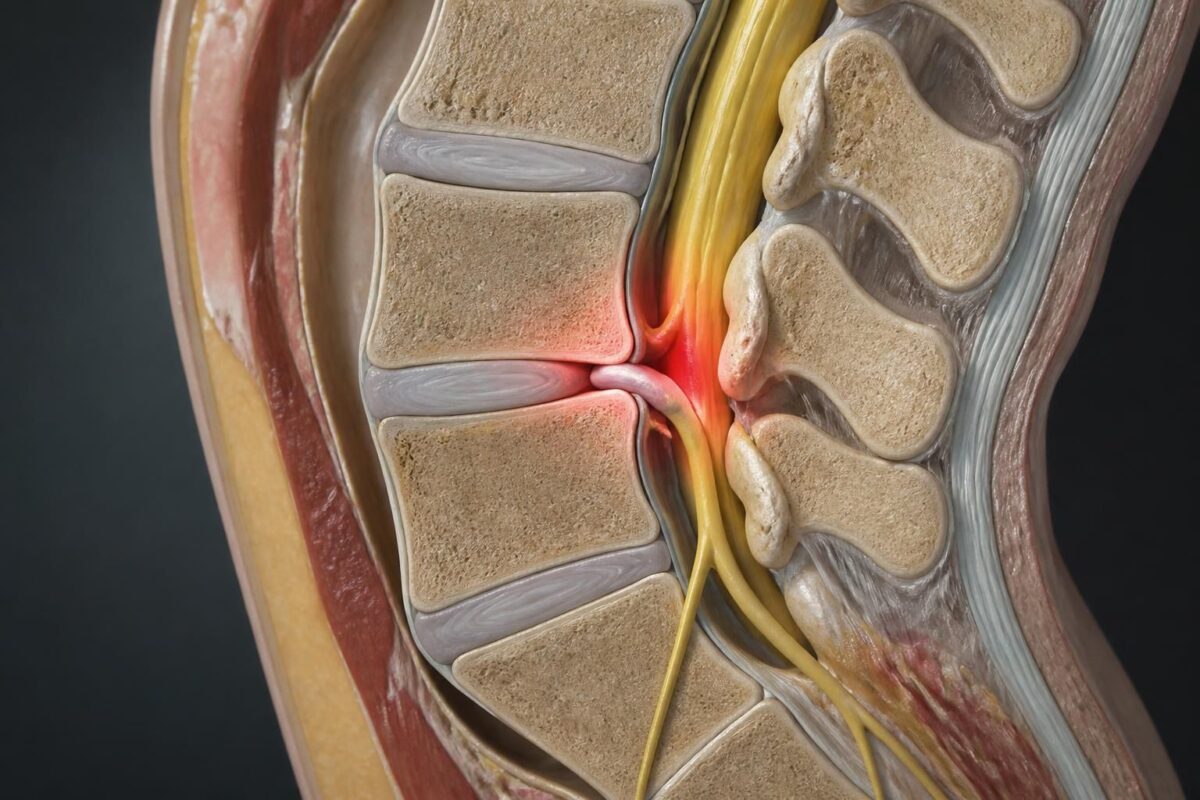
IN BRIEF In brief, lumbar disc herniation and nerve root inflammation refer to compression and irritation of a spinal root causing radiating pain, paresthesias, and sometimes muscle weakness. The mechanism combines disc protrusion and radicular inflammation, hence the importance of…

Herniated disc and peripheral pain: sign to watch out for
IN BRIEF In brief, Herniated disc is the partial protrusion of the gelatinous nucleus of an intervertebral disc through the fibrous ring, which can compress a nerve root and trigger radiating pain in the limb. The key benefits of rapid…

Herniated disc and centralizing pain: sign to interpret
IN BRIEF In brief, a herniated disc is a protrusion of the intervertebral disc that can compress a nerve root, causing centralized pain and signs such as radiating pain, numbness, and weakness. The treatment is mostly conservative: guided activity, physical…

Herniated disc and pain that travels lower after movement
IN BRIEF The Herniated Disc is a protrusion of the intervertebral disc that can compress a nerve root, leading to a pain that radiates down after a movement. The benefits include better guidance for non-surgical treatment and a gradual reduction…

Herniated disc and generic exercises: risk of poor choices
IN BRIEF In brief, the herniated disc and generic exercises can worsen the pressure on the discs and the pain if the movements are inappropriate. The advantage of personalized approaches lies in tailored exercises, controlled progression, and better recovery, while…

Dr Sylvain Desforges, B.Sc., D.O., N.D., osteopath, is the founding president of TAGMED and of the ACMA association. He dedicates his practice to chronic spinal pain, low back pain and symptoms compatible with sciatica, particularly when pain radiates toward the buttock, leg, calf, foot or toes.
Through SOS Sciatique, he publishes educational content on sciatica symptoms, possible causes such as disc herniation, disc narrowing, foraminal stenosis or irritation of a lumbar nerve root, as well as non-surgical approaches that may be considered according to the evaluation. At Clinique TAGMED, care may include, depending on the case, motorized neurovertebral decompression, specific osteopathic care or precision percussion.
For an evaluation related to sciatica treatment in Montreal / Mount Royal or sciatica treatment in Terrebonne, please consult the services available at Clinique TAGMED.
Medical disclaimer
The information published on SOS Sciatique is provided for educational purposes only and does not replace a consultation, diagnosis, opinion or treatment provided by a physician or another authorized healthcare professional. The author of this article is neither a medical doctor nor a specialist in a medical specialty recognized by the Collège des médecins du Québec. The osteopathic, manual medicine or functional support approaches described on this site do not constitute medical acts and are not intended to replace medical follow-up.
Consult a physician or emergency service in cases of loss of bladder or bowel control, anesthesia in the saddle area, significant or progressive weakness in the leg or foot, fever, recent trauma, severe pain or rapid worsening of symptoms. For more details, please read our Legal Notice.