Disc herniation and heel pain
31/10/2026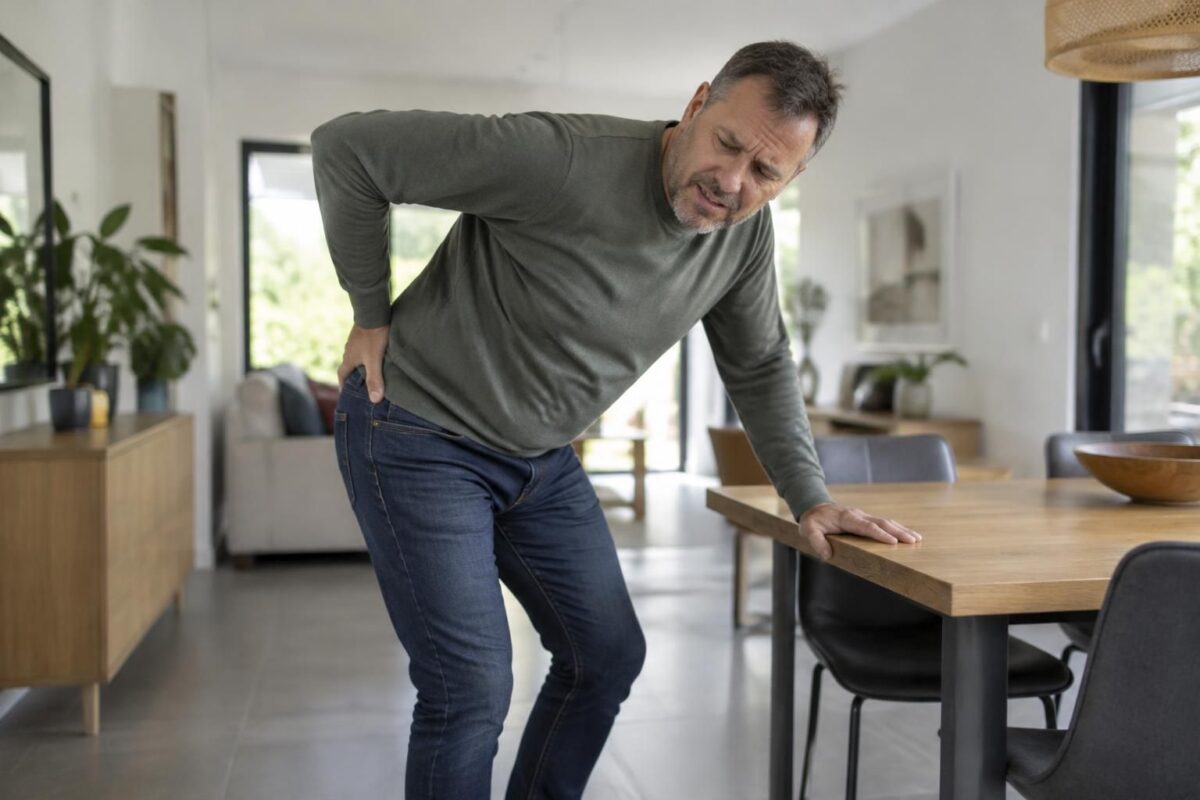
IN BRIEF Sciatica is a pain related to the irritation of a nerve, which can extend from the lower back to the leg. If a movement or exercise increases the radiation, tingling, or weakness, stop it: this helps to avoid worsening the symptoms. Favor gentle and adapted activities rather than complete immobility. In case of loss of strength, marked numbness, or persistent pain, consult a healthcare professional. |
With sciatica, stop any movement that intensifies the pain or sends it further down the leg, especially if it causes tingling, numbness, or weakness. Forcing it can maintain nerve irritation and alter your posture. Reduce effort, favor gentle movements that are well tolerated, and seek medical advice if symptoms persist or worsen.
When a movement causes pain to radiate down the leg, increases tingling, or alters your gait, it should be stopped. This does not mean you must remain still: it’s about reducing gestures that worsen symptoms and choosing a tolerable activity. The reaction during the movement, in the hours that follow, and the next day helps decide what to adjust and when to seek medical advice.
Sciatica refers to pain associated with the irritation of a lumbar nerve root or the sciatic nerve. It can start from the lower back or the buttock and radiate down the thigh, calf, or foot. Tingling, numbness, or weakness may also appear.
A gesture that accentuates these signs may exceed the tolerance of the moment. It can increase the sensitivity of the irritated area and prolong the pain. This alone does not prove that the movement caused an injury or worsened a herniation. However, continuing despite increasing pain does not help to accurately assess the situation.
Identifying a nerve signal
A local and moderate discomfort does not have the same meaning as pain that radiates further down the leg. A burning sensation, electric shock, tingling, or a leg that feels weaker may indicate nerve damage. If these symptoms appear or intensify during an activity, stop the gesture and observe their evolution.
Pain in the calf can take the form of an electric current. To learn more about this sensation, consult the article dedicated to electric pain in the calf related to sciatica.
Which movements can worsen symptoms?
There is no single forbidden movement for everyone with sciatica. The reaction varies according to the cause, the intensity of the episode, and individual sensitivity. Some people are more bothered by back flexion, while others by prolonged positions or impact movements.
Bending, twisting, and lifting
Bending forward, twisting the torso quickly, or lifting a load far from the body can increase symptoms in some individuals. Be mindful of repeated gestures, such as cleaning, gardening, or shoveling. If the pain intensifies during the activity or radiates further down the leg, stop it and avoid resuming in the same session.
Shoveling often combines efforts, rotations, and moving loads. The article on sciatic pain after shoveling addresses this situation.
Running, jumping, and impact activities
Running is not automatically contraindicated for all cases of sciatica. However, repeated impacts may be poorly tolerated during an episode. If the pain increases, radiates lower, or changes your gait, stop the session. Do not continue to “test” your endurance.
To decide when to stop and how to consider a gradual return, consult the guidelines on running with sciatica and those on stopping and resuming running.
Sciatica and movement that provides temporary relief: is it enough?
IN BRIEF Sciatica is pain related to the irritation of the sciatic nerve, often felt from the lower back down to the leg. Gentle movement, walking for a few minutes, and changing positions regularly can provide temporary relief and limit…

Sciatica and exercises found on the Internet: caution depending on the cause
IN BRIEF Sciatica is pain that radiates from the lower back to the buttock and leg. Gentle exercises can promote mobility and relieve symptoms, but their effectiveness depends on the cause: a movement suitable for piriformis irritation may worsen a…
Why stop as soon as the pain increases?
Pain is useful information, especially when it changes direction or is accompanied by nerve signs. Stopping helps avoid unnecessarily maintaining a poorly-tolerated movement and limits compensations. A person who limps or protects a leg alters their walking style; other areas may then be stressed differently.
Stopping the painful gesture does not mean complete rest. Prolonged rest can reduce activity and make returning to normal movements more difficult. The goal is to remain active within tolerated limits, without repeating an action that clearly increases symptoms.
Observe the reaction after exertion
Evaluate symptoms during activity, just after, and the next day. An exacerbation that does not quickly resolve, pain radiating further down the leg, or new discomfort while walking indicates that one should reduce activity and seek advice. Difficulty descending stairs may also alter your way of moving; check the information on sciatica and difficulty descending stairs as well as on pain when descending stairs.

Sciatica and generic exercises: why they are not suitable for everyone
IN BRIEF Sciatica is pain related to irritation or compression of the sciatic nerve. Generic exercises are not suitable for everyone: their effectiveness depends on the cause, intensity of symptoms, and recovery phase. Adapted movements can help maintain mobility without…

Sciatica and pain that travels lower after a stretch
IN BRIEF A sciatic pain that goes lower after a stretch may indicate that the movement is further irritating the nerve. A stretch should not intensify the pain or cause new tingling sensations: stop it and avoid forcing. Only resume…
Adapting daily gestures without immobilizing
Change position regularly if remaining seated or standing increases pain. Temporarily reduce tasks that require repeated bending, quick twisting, or lifting loads. When picking up an object, observe if the position modifies the symptoms and avoid repeating a gesture that causes stronger radiation.
Resting positions can also influence comfort. You can check these tips on positions to avoid with sciatica. Keep in mind that no position is suitable for everyone: favor the one that does not worsen pain and change it if it becomes uncomfortable.
The cause of the symptoms also matters. A herniated disc can irritate a nerve root, but other origins are possible. To better understand the link between a herniated disc and sciatica pain, a healthcare professional can evaluate your symptoms and determine if an examination is necessary.

Sciatica and aggressive stretches: possible sign of worsening
IN BRIEF Sciatica is pain that radiates from the lower back or buttock down the leg. Aggressive stretching does not necessarily relieve the nerve and can intensify the pain, especially if it moves further down to the foot or is…

Sciatica and calf stretching: when the pain increases
IN SHORT A calf stretch can exacerbate sciatica if it further irritates the nerve. It should not cause pain that increases or radiates down the leg: stop the movement and do not push through. Stretches may help with some tensions,…
When to seek medical advice?
Consult a doctor if the pain is strong, persists, worsens, or limits your daily activities. Also seek advice if you have persistent numbness, weakness in your leg, a limp, or increasing difficulty walking. An evaluation allows for determining the cause and defining the next steps.
Some signs require urgent care: loss of control over the bladder or bowels, numbness in the perineal area, or rapidly progressive weakness in one or both legs. If you experience these symptoms, contact emergency medical services immediately.
Be Cautious with Exercises and Stretches
An exercise or stretch is not appropriate simply because it is presented as beneficial for sciatica. A movement may increase symptoms in one person and be well tolerated by another. Avoid forcing a position that causes sharp pain, stronger radiating pain, or tingling. Resources describe exercises related to the sciatic nerve and ways to relieve sciatica, but they do not replace a professional evaluation or advice tailored to your situation.
Medical Disclaimer: The information and advice provided on this site do not replace the opinion, diagnosis, or treatment of a healthcare professional. Please note that Sylvain Desforges, B.Sc., D.O., N.D., doctor of osteopathy, is neither a medical doctor nor a physician, and is not a specialist in a medical specialty as defined by the Collège des médecins du Québec. Manual medicine, functional medicine, and sports medicine as described on this site exclude any treatment or medical diagnosis made by a medical doctor or specialist. Always consult your physician for any medical questions. For more details, please read our full Legal Notice.
Movement to Stop
- Running if the pain radiates down the leg
- Jumping, hills, or an intense session during an episode
- Stretching that aggravates the tingling
- Any action that causes a limp
Why to Stop
- Radiating pain can indicate increased nerve irritation
- Impacts can exceed current tolerance
- Pulling more on the nerve can intensify symptoms
- Changing your gait promotes compensations and other pains
Guideline: stop the movement that aggravates symptoms, without imposing complete rest. In case of marked weakness or numbness, seek medical advice promptly.

With sciatica, a movement that increases pain or radiates further down the leg is a signal to heed. Stopping the concerned exercise does not mean staying still: rather, it involves reducing strain, choosing a better tolerated activity, and gradually resuming. The goal is to protect your mobility without straining an already irritated nerve.
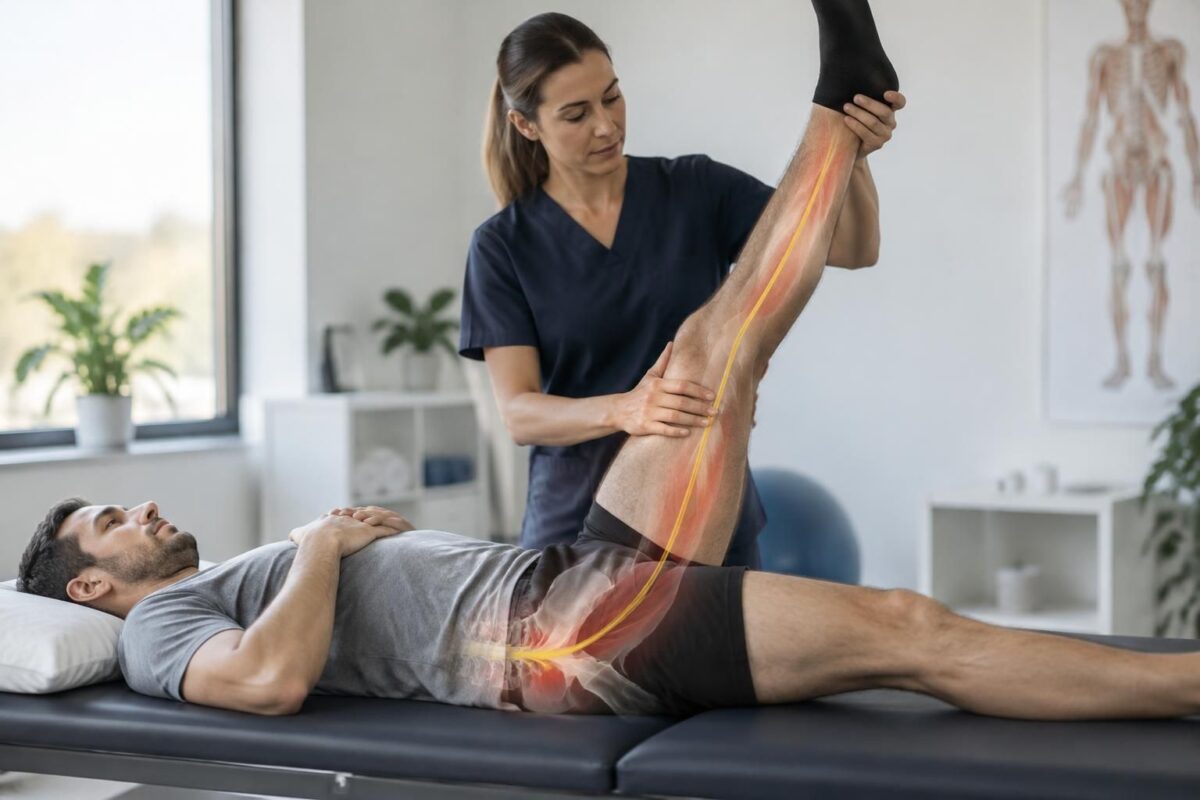
Sciatica and hamstring stretching: possible nerve tension
IN BRIEF Sciatica can make stretching the hamstrings uncomfortable, as the tension felt may come from the nerve rather than the muscle. A gentle stretch, with a straight back and without seeking maximum range, can help loosen the back of…
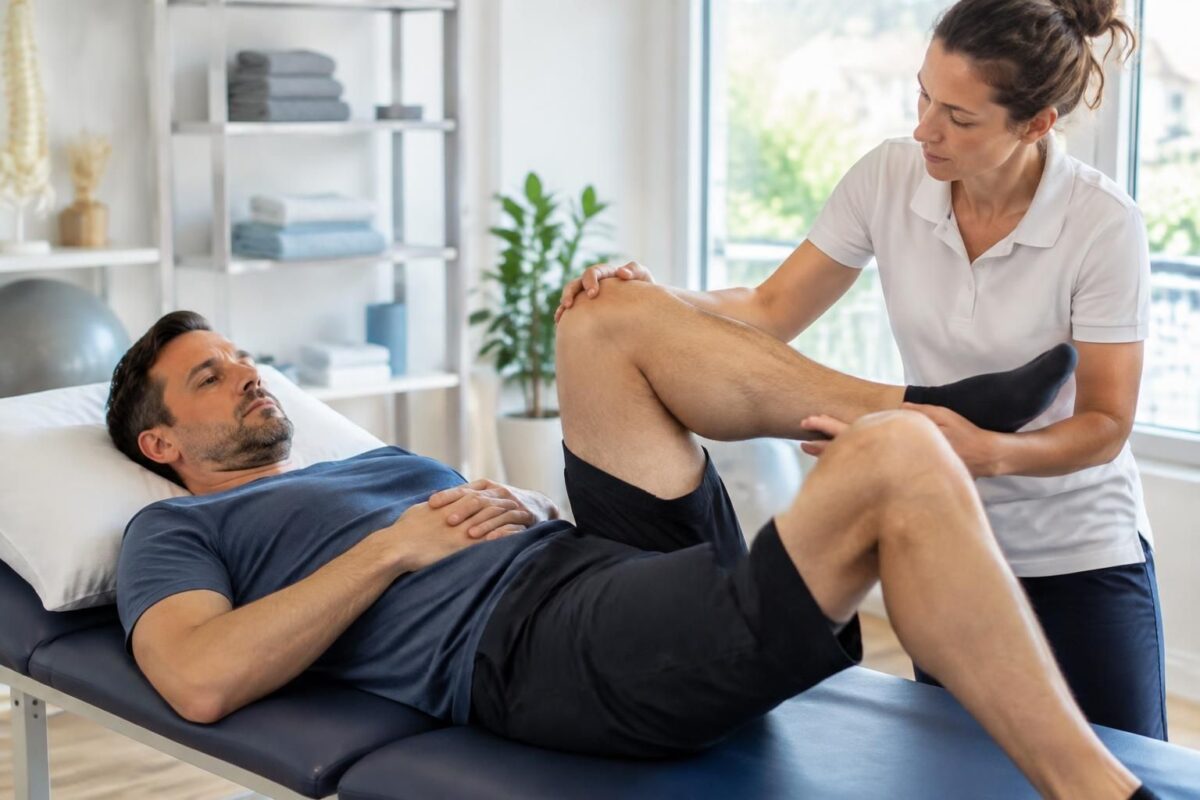
Sciatica and piriformis stretching: useful or worsening depending on the case
IN BRIEF Piriformis-related sciatica can cause deep pain in the buttock, sometimes radiating down the back of the thigh. A gentle stretch can loosen the hip and relieve discomfort if the muscle is involved, but it can worsen symptoms if…
Why Stop a Movement that Aggravates Sciatica?
Sciatic pain can start from the lower back or the buttock and follow the back of the thigh, calf, sometimes down to the foot. It may be accompanied by burning, tingling, or numbness. If an exercise exacerbates these sensations, increases their extent, or triggers new pain, your body indicates that the effort exceeds its current tolerance.
Continuing despite intensifying radiating pain can perpetuate irritation and disrupt your way of moving. You may then limp, change your gait, or compensate with the pelvis, knee, or calf. Stopping the painful movement helps avoid insisting on a poorly tolerated action, without concluding that any activity is dangerous.
Recognizing Signals Not to Ignore
A slight and stable discomfort does not mean the same as sharp pain that descends lower in the leg. Pay attention to its path, intensity, and response after exertion. Pain that worsens with each repetition, persists after the session, or causes a limp warrants stopping the exercise. The same goes if you experience marked tingling, numbness, or weakness.
Adapting Effort Without Becoming Immobilized
Putting aside an aggravating movement does not mean staying in bed or eliminating all movement. A relative rest involves temporarily limiting movements that accentuate symptoms while maintaining, if possible, gentle activity. Walking slowly on flat ground may be suitable for some individuals. Low-resistance biking or swimming may also be considered, provided they do not increase the pain.
First, reduce the duration and intensity rather than testing your endurance. During painful periods, avoid quick sessions, hills, jumps, and heavy efforts if these trigger your symptoms. Deep bends, sudden twists, or intense stretches of the back of the leg may also be poorly tolerated. No movement is to be banned for everyone: the reaction of your symptoms guides the adaptation.
Gradually Resume
When symptoms stabilize, resume with short and easy efforts on regular terrain. During the activity, and in the hours that follow and the next day, check that the pain does not radiate further down and that your gait remains normal. If it increases, reduce the effort or return to the previous step. For running, alternating between walking and very short sequences at a comfortable pace is often more cautious than a direct return to usual training.
When to Seek Medical Advice?
Consult a healthcare professional if the pain is intense, persistent, worsens, or severely limits walking. A loss of strength, significant numbness, or difficulty lifting the foot requires quick evaluation. In case of loss of control over the bladder or intestines, or numbness in the perineal area, seek emergency medical assistance.
| Movement or activity | Why to stop it |
|---|---|
| Running with pain shooting down the leg | May increase nerve irritation. |
| Running with a limp or altered gait | Pain disrupts movement and causes compensations. |
| Sprints, intervals, or hills | Intensity increases stress on the back and pelvis. |
| Jumps and high-impact activities | Repeated impacts may worsen symptoms. |
| Forward bends with straight legs | They may put additional tension on the nerve. |
| Intense stretches of the back of the thigh | They risk exacerbating the radiation down the leg. |
| Carrying heavy loads | It may increase stress on the lower back area. |
| Quick twists of the lower back | They abruptly strain the irritated area. |
Sciatica and movements that worsen: testimonials to understand why to stop
These testimonials are fictional and illustrative. They describe possible situations but do not replace medical advice: pain shooting down the leg can have various causes.
“At first, I thought I had to run despite the discomfort to maintain my level. After a few minutes, the pain shot down from my buttock to my calf, and my stride changed. I stopped the session. By reducing impacts and seeking advice, I was able to resume more gradually.” — Camille, 38 years old
“I kept doing straight-leg stretches because I thought it would unlock my back. But the tingling in my foot increased each time. My physiotherapist advised me not to force a movement that made the pain radiate more.” — Julien, 45 years old
“A uphill outing awakened a pain I already felt while walking. I finished limping, and then my leg seemed less stable. I realized my stride was disturbed and that I needed to stop rather than compensate.” — Sarah, 33 years old
“I didn’t want to cancel my training, so I continued despite a burning sensation behind my thigh. The pain was stronger in the evening and the next day. Since then, I also monitor the response after effort: if it worsens, I reduce or stop the activity.” — Thomas, 51 years old
These situations illustrate an important guideline: if a movement causes pain to shoot further down the leg, increases tingling, or alters gait, it is better to stop that movement. Continuing despite radiation or a limp can maintain symptoms and lead to compensating with the pelvis, knee, or calf.
Stopping does not mean remaining immobile for several days. Relative rest consists of temporarily setting aside the activity that worsens symptoms while keeping gentle movements that remain well tolerated, such as a short walk if it does not worsen the pain. The response of your body during the activity, in the hours that follow, and the next day helps adjust the effort.
In case of loss of strength, marked numbness, difficulty lifting the foot, or intense persistent pain, seek medical advice promptly. Loss of control over the bladder or intestines, or numbness in the area between the legs, requires urgent care.
Sciatica and aggravating movements: why interrupt the effort
Sylvain Desforges specializes in osteopathy, naturopathy, and manual medicine. Founder and president of TAGMED clinics and the ACMA association, he has dedicated his career to health innovation and the management of chronic pain. His approach relies on evidence-based care and the integration of advanced technologies, including spinal decompression, laser, and shockwave therapy.
Sciatica refers to pain related to irritation of a lumbar nerve root or the sciatic nerve. It can originate from the lower back or buttock, and then radiate down the thigh, calf, and sometimes to the foot. Burning sensations, electric shocks, tingling, or numbness may also appear. For Dr. Desforges, understanding the nature and path of the symptoms is crucial to adapt movements and avoid turning discomfort into greater pain.
A movement that increases radiating pain should be interrupted. This does not mean that all activity is dangerous or that one must remain immobile. However, continuing to run, lift a load, or repeat an exercise despite pain that shoots further down the leg can exceed tolerance and maintain symptoms. The right reflex is to stop the action that worsens the pain, find a more comfortable position, and observe how the sensations evolve after the effort.
Certain movements may be poorly tolerated during a flare-up, particularly repeated trunk bends, quick twists, carrying heavy loads, or intense stretches of the back of the leg. Running and jumping can also become irritating when each impact increases pain or alters stride. These movements are not necessarily to be banned forever: their relevance depends on the cause of the sciatica, the recovery phase, and the individual response. It is therefore preferable to reduce range, duration, or intensity rather than to force compliance with a planned program.
In terms of running, the practical criterion is the reaction during and after the session. Mild, stable discomfort without weakness can sometimes allow for adapted activity, but pain extending to the foot, limping, or loss of propulsion indicates that one should stop. Gentle walking, controlled mobility, or another non-impact activity can be considered if they remain comfortable. Worsening in the following hours or the next day encourages reducing activity and seeking advice from a healthcare professional.
Dr. Desforges’ approach combines symptom evaluation with individualized management of chronic pain. The technologies used in TAGMED clinics, such as spinal decompression, laser, or shockwaves, can be considered based on the assessment and needs of the patient. However, they do not replace a medical diagnosis and do not guarantee improvement by themselves. The choice of care should take into consideration the likely origin of the pain, the patient’s history, and the observed signs.
A consultation is particularly important if the pain persists, worsens, or is accompanied by significant tingling, lasting numbness, or weakness in the leg. A rapid loss of strength, difficulty controlling the bladder or bowels, or numbness in the perineum require urgent medical evaluation. In these situations, stopping exercise is not enough: it is necessary to obtain professional advice quickly.
When a movement increases pain that radiates down the leg, causes tingling, or alters your gait, it should be stopped rather than forced. With sciatica, adapting effort helps to avoid worsening the symptoms: the priority is to observe the body’s reaction during the activity, in the following hours, and the next day.
Why stop a movement that worsens sciatica?
Sciatica corresponds to an irritation of a nerve or nerve root. A gesture that accentuates pain, numbness, or tingling may exceed the moment’s tolerance. This does not necessarily mean that the movement damages the nerve, but continuing despite marked aggravation risks maintaining the symptoms and disrupting daily activities.
It is useful to differentiate local stiffness from pain that radiates further towards the buttock, thigh, calf, or foot. Pain that travels further down after a stretch especially warrants stopping that exercise and reassessing its intensity. To better understand this reaction, consult the information on sciatic pain that radiates down after a stretch.
What signals should make you stop?
Stop exercising if the pain sharply increases, spreads further down the leg, becomes electric, or is accompanied by tingling and numbness. Also stop if you begin to limp, if you’re protecting a leg, or if your foot isn’t pushing off well when walking or running. These changes indicate that the movement is not well tolerated at that moment.
After physical activity, monitor the evolution of symptoms. If pain appears or intensifies after exertion, reduce the load and avoid repeating the session under the same conditions. Situations like pain that radiates after physical exertion or discomfort in the leg while climbing stairs, as described in this article on sciatica and stairs, justify re-evaluating the movements that trigger symptoms.
Replace the aggravating effort with a better-tolerated activity
Stopping a painful exercise does not necessarily mean remaining still. Depending on the symptoms, a gentle walk on flat ground or another low-impact activity may be considered if it does not exacerbate pain in the leg. However, cycling, swimming, or certain mobility exercises may not suit everyone: they should be adapted or set aside if they aggravate sensations.
During a crisis, prioritize comfortable range and controlled movements. Avoid forced stretches, repeated trunk flexions, heavy loads, and intense sessions as long as they increase symptoms. Guidance on exercises to practice or avoid and on movements likely to worsen sciatica can help identify adjustments to be made without replacing personalized advice.
Also adapt everyday positions
Some symptoms are influenced by prolonged postures as much as by sport. If sitting, bending, or twisting your back increases pain, change positions regularly and prioritize gestures that keep movement comfortable. Advice on positions to avoid and postures that can relieve, as well as the guide from Doctissimo on positions to avoid, offers general guidelines.
Pain can vary throughout the day or change its path. Discomfort that radiates down the leg and then rises back towards the buttock does not allow for identifying its cause solely. You can consult the information dedicated to pain that travels down then back up towards the buttock. Likewise, the origin may differ depending on cases, especially when a lumbar disc is involved: information on levels L4-L5 and L5-S1 and pain in the leg is available here.
When to seek medical advice?
Have the pain evaluated if it persists, worsens, or returns as soon as you resume an activity, especially if it limits walking or sleeping. Consult quickly in case of weakness in the leg, significant loss of sensation, or difficulty lifting the foot. A loss of bladder or bowel control, or numbness in the perineal area, requires urgent medical attention.
A healthcare professional can investigate the cause of the symptoms and help you choose movements suitable for your situation. General recommendations on exercises to avoid with sciatica can serve as guidelines, but do not determine on their own which movement is appropriate for you.

Sylvain Desforges, B.Sc., D.O., N.D., docteur en ostéopathie
Dr Sylvain Desforges, B.Sc., D.O., N.D., osteopath, is the founding president of TAGMED and of the ACMA association. He dedicates his practice to chronic spinal pain, low back pain and symptoms compatible with sciatica, particularly when pain radiates toward the buttock, leg, calf, foot or toes.
Through SOS Sciatique, he publishes educational content on sciatica symptoms, possible causes such as disc herniation, disc narrowing, foraminal stenosis or irritation of a lumbar nerve root, as well as non-surgical approaches that may be considered according to the evaluation. At Clinique TAGMED, care may include, depending on the case, motorized neurovertebral decompression, specific osteopathic care or precision percussion.
For an evaluation related to sciatica treatment in Montreal / Mount Royal or sciatica treatment in Terrebonne, please consult the services available at Clinique TAGMED.
Medical disclaimer
The information published on SOS Sciatique is provided for educational purposes only and does not replace a consultation, diagnosis, opinion or treatment provided by a physician or another authorized healthcare professional. The author of this article is neither a medical doctor nor a specialist in a medical specialty recognized by the Collège des médecins du Québec. The osteopathic, manual medicine or functional support approaches described on this site do not constitute medical acts and are not intended to replace medical follow-up.
Consult a physician or emergency service in cases of loss of bladder or bowel control, anesthesia in the saddle area, significant or progressive weakness in the leg or foot, fever, recent trauma, severe pain or rapid worsening of symptoms. For more details, please read our Legal Notice.