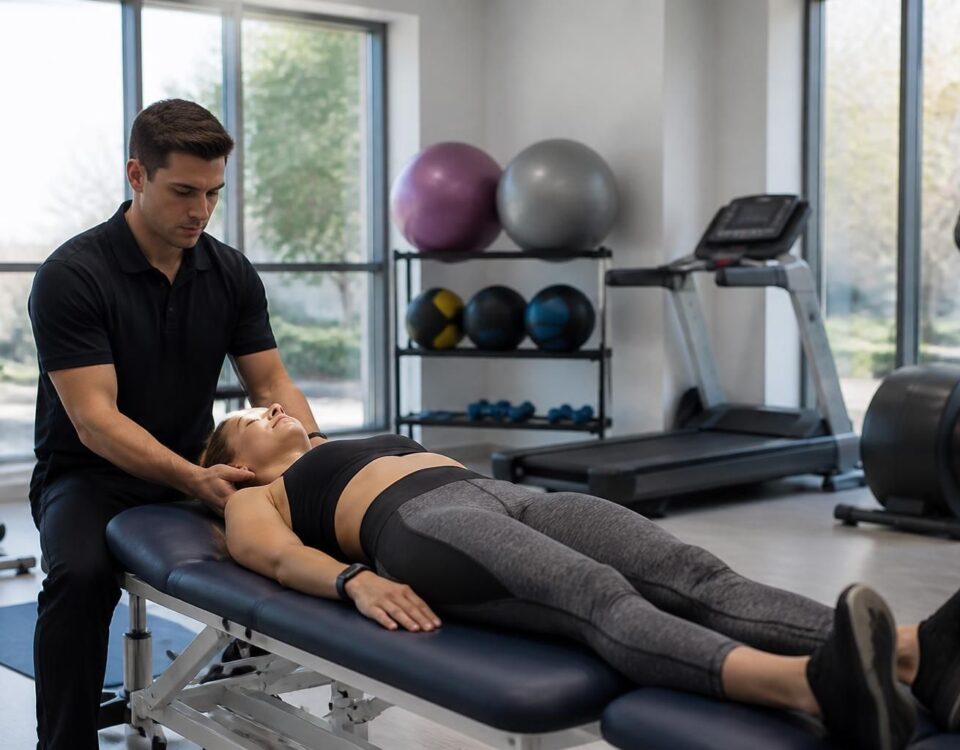
Why neurovertebral decompression is recommended for active seniors
26/06/2026
Neurovertebral decompression and secondary muscle pain: complete management
26/06/2026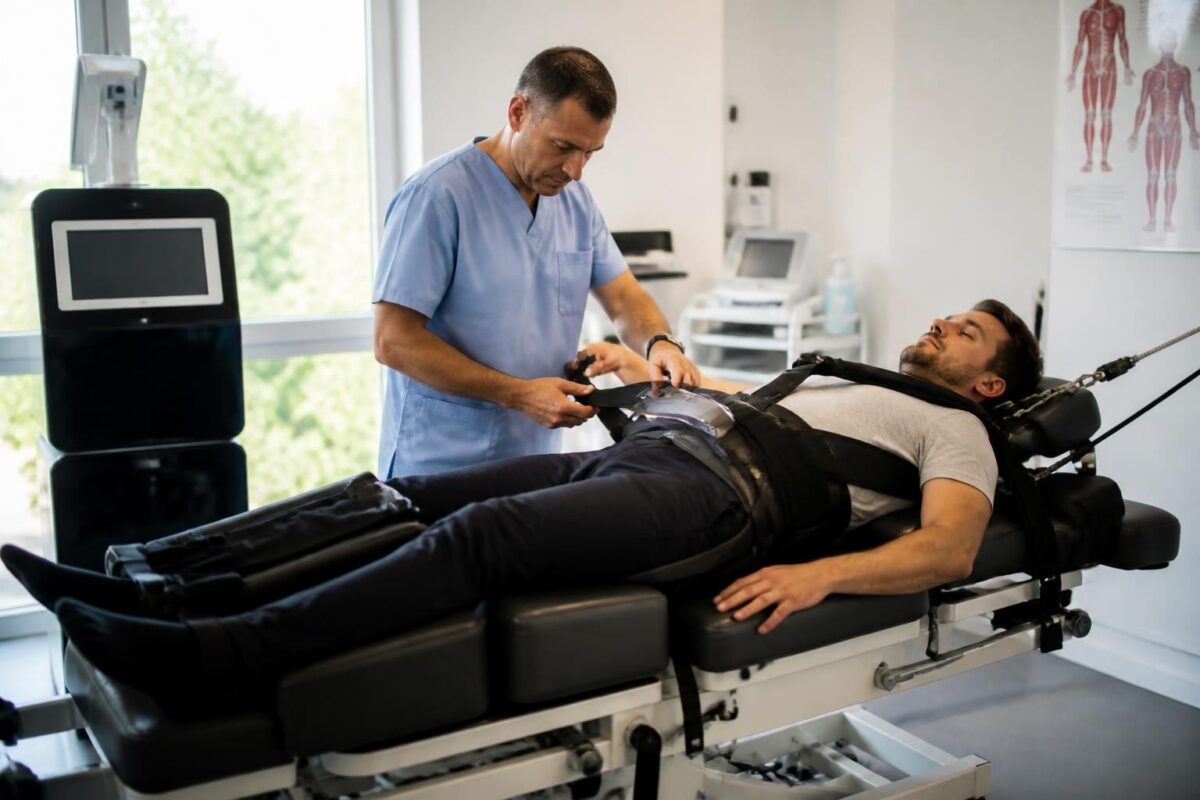
In short
| In short, the neurovertebral decompression is one Non-invasive approach intended to sustainably relieve the Recurrent pain due to herniated discs. By releasing the space between the vertebrae, it reduces the pressure on the discs and nerves, thus reducing the Nocturnal neuropathic pain and improving sleep. Its major advantages include a Lasting pain reduction, a Mobility found and an Prevention of recurrences, without surgery. accessible to Montreal and its surroundings, this treatment personalized Offers a solution effective and painless to improve the quality of daily life. |
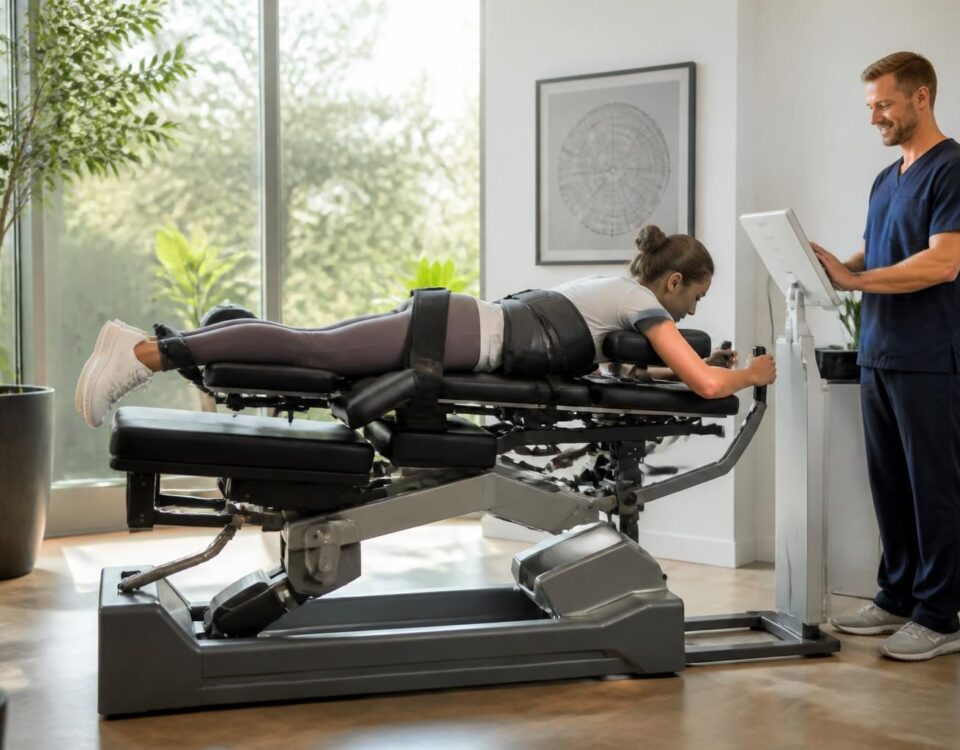
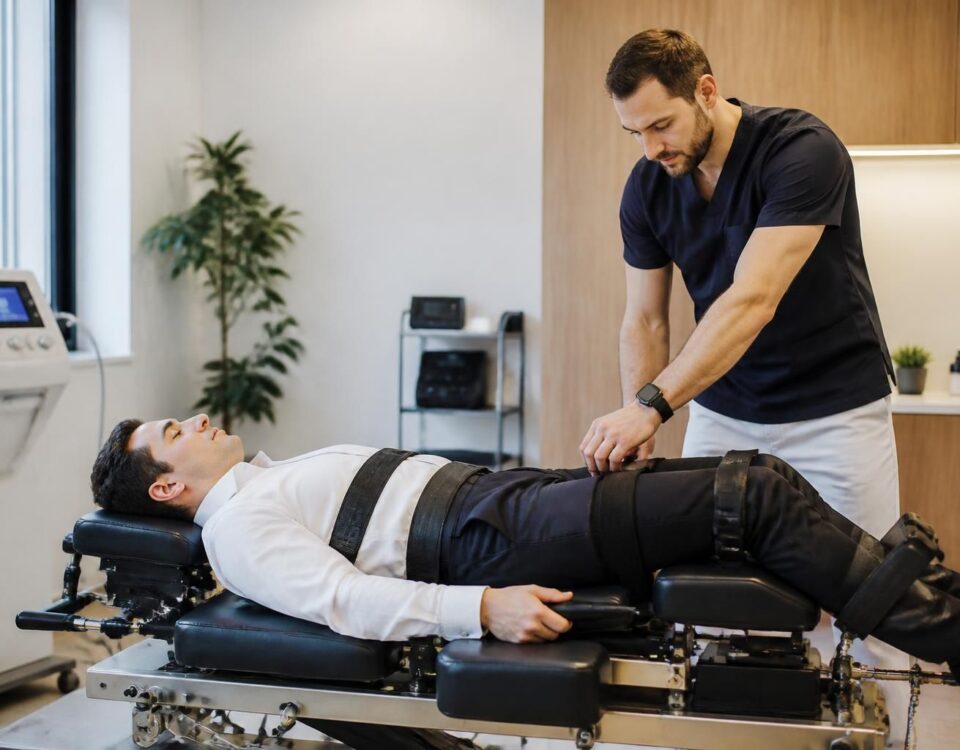
The neurovertebral decompression is an approach non-invasive aimed at relieving pain related to spinal conditions, including nocturnal neuropathic pain due to disc herniations. It is based on a Controlled traction of the spine, which creates a space between the vertebrae and Reduces pressure on intervertebral discs and nerves. This pressure decrease improves the bloodstream and facilitates the tissue rehydration and healing. Typical results include a decrease in pain, a more restful sleep and a better mobility, while offering a Non-surgical alternative and lasting To prevent recurrences and sustainably improve the quality of life.
This text presents in a clear and direct way how the neurovertebral decompression can be a solution lasting for the Chronic pain recurrent related to vertebral pathologies. It describes how it works, benefits and alignment with an evidence-based approach to help patients regain stable quality of life and more restful sleep.
The neurovertebral decompression is an approach non-invasive which aims to reduce the pressure on discs and nerves. It acts by controlled traction on the column, in order to create a space that frees the compressed nerves and improves circulation. This approach can help reduce night pain and promote deeper sleep, while limiting risks and downtime compared to more invasive interventions.
Principle and mechanism
The treatment is based on a Soft and controlled traction applied to the spinal segments concerned. This space gradually releases areas that exert pressure on the nerves and discs, allowing better tissue nutrition and a reduction in inflammation. The process is designed to adapt to each patient and the evolution of their symptoms, without surgery.
Advantages and durability
Key benefits include a Sustainable relief pain and improved mobility. Decompression helps to stabilize the spine and prevent recurrences when the protocol is followed and integrated into a global care plan. It offers an alternative natural and non-surgical For persistent back and cervical pain related to recurrent disc herniation, protrusion or degeneration.
For whom this approach is suitable
It is aimed at people with lower back or cervical pain associated with pathologies such as recurrent disc hernias or protrusions. It is relevant when symptoms disrupt daily and sleep, without requiring immediate surgery.
Integration and associated technologies
At the TagMed clinic in Montreal and Terrebonne, decompression can be combined with other supporting technologies and therapies to optimize well-being. Additional resources and technical explanations can be viewed on dedicated pages such as Neurovertebral Decompression: A Recognized Solution. Other relevant references include sources explaining the impact on intervertebral circulation and the benefits for degenerative pathologies. For information, some resources also describe the importance of the prevention of recurrent pain and mechanical disorders by optimizing spinal mechanisms.
Complementary solutions exist, such as associated non-invasive approaches and recurrence prevention prospects. To enrich your knowledge, you can consult resources such as How decompression improves intervertebral circulation or Decompression and associated muscle pain.
Additional resources and testimonies on the possible benefits of decompression are available on specialized sites dedicated to disc pathology and spinal pain, including resources centered on prevention and improvement of nerve function.
The use of neurovertebral decompression is part of an approach focused on evidence and the individualization of the care plan. It can be proposed in addition to other non-invasive approaches and posture advice in order to support the effectiveness of the treatment and to promote sustainable recovery.
To learn more about possible goals and outcomes, see the following resources:
Neurovertebral Decompression – Prevent Disc Degeneration,
Prevention of recurrent pain,
Benefits for degenerative pathologies,
Modern decompression techniques.
Testimonies and clinical cases indicate that decompression can help reduce symptoms, support mobility and improve daily life without the need for surgery. For patients, this can be a reliable way to find routine and daily activities with less pain.
Preventing recurrences is a key component of the approach. By stabilizing the spine and reducing pain repetition factors, decompression can contribute to a more stable and lasting health trajectory. To learn more about preventive aspects, you can check resources such as Preventing the recurrence of spinal pathologies.
Evidence and feedback show that decompression Does not require surgery and can be integrated into a global care plan. At TagMed Clinic, professionals evaluate each patient and then adapt the protocol and associated technologies to optimize efficacy and safety.
For more information and to consider an evaluation, you can consult the following resources on dedicated domains:
Neurovertebral Decompression – Nocturnal Pain,
Preventing the recurrence of spinal pathologies.
About training and practices, professionals base their expertise on recognized approaches in specialized institutions. Practitioners trained at NUMSS, NAO, National University of Medical Sciences or National Academy of osteopathy Use evidence-based protocols to provide safe and effective care in the field of decompression and associated therapies.
For people wishing to explore additional options, resources and testimonials are available on the sites sosciatica and Tagmed Clinic.
Note: The general information presented does not replace a personalized medical opinion. A consultation is necessary to determine eligibility and the most appropriate protocol for each patient.
Additional useful links to deepen the subject and be oriented towards official and professional resources in the field:
Neurovertebral Decompression – Recognized Solution,
Prevent disc degeneration,
Prevention of recurrent pain,
intervertebral circulation,
Benefits Degenerative pathologies,
Modern decompression techniques,
Prevention Mechanical Disorders,
Associated muscle pain,
Nocturnal neuropathic pain,
Prevent recurrence spinal pathologies,
Medical Disclaimer: The information and advice provided on this site does not replace the health professional’s diagnosis or treatment. Please note that Dr. Sylvain Desforges osteopath is neither a doctor of medicine nor a doctor, and is not a specialist in a medical specialty as defined by the Collège des Médecins du Québec. Manual medicine, functional medicine and sports medicine as described on this site exclude any medical treatment or diagnosis made by a doctor or specialist doctor. Always consult your doctor for any medical questions. For more details, please read our full legal notice.
- neurovertebral decompression is one Controlled traction not invasive on the column, aiming to free theintervertebral space.
- The mechanism creates a space between the vertebrae and improves the circulation fluids and nutrients.
- By reducing the pressure on the discs and nerves, it helps to reduce the aches and promotes a Sommel Repairer.
- The treatment can offer a lasting improvement mobility and quality of life without surgery.
- Indications: For Recurrent disc herniation and associated nocturnal neuropathic pain, sometimes related to osteoarthritis.
- course: one Typical program account 15 to 25 sessions with monitoring and postural adaptation.
- Advantages: non-invasive, pain reduction and Prevention of recurrences.
- Security: low risk and need a prior consultation with a health professional.

This text presents the neurovertebral decompression as a solution lasting For recurrent pain related to disc pathologies. Not invasive And focused on reducing pressure on discs and nerves, it can improve circulation, promote tissue healing and sustainably improve sleep and mobility. Here are practical recommendations to optimize benefits and prevent recurrences.
Understanding neurovertebral decompression
Neurovertebral decompression is based on controlled traction applied to the spine to create a space between the vertebrae and decrease pressure on the intervertebral discs and neighboring nerves. This action promotes the circulation of nutrients and the oxygenation of tissues, which can lead to a gradual reduction in pain and better function of the back and neck.
Who is it suitable for?
This approach is relevant for patients with low back pain or cervical pain related to recurrent disc problems and who are looking for an alternative to surgery or heavy medication. A clinical evaluation and, if necessary, imaging examinations will help determine eligibility and the personalized treatment plan.
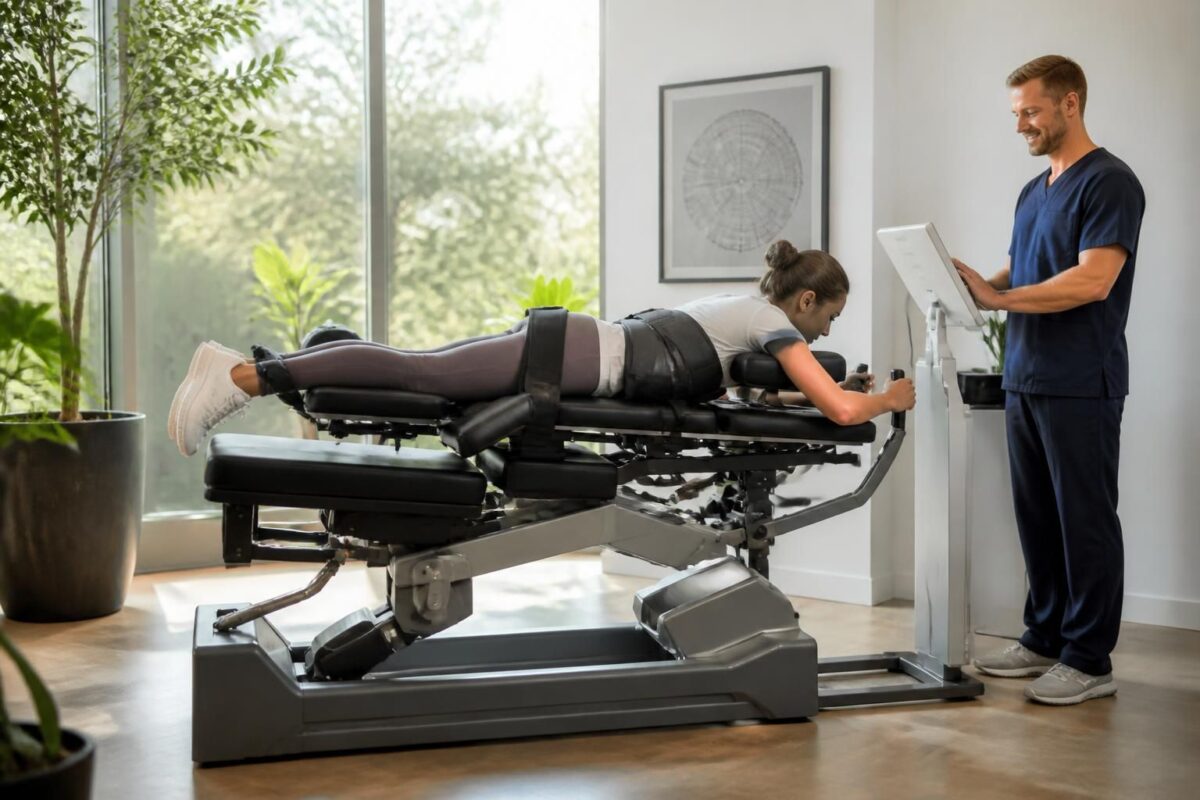
The long-term benefits of neurovertebral decompression for spinal health
In short In short, the neurovertebral decompression is a non-invasive approach that decreases the Pressure on intervertebral discs and nerves, favoring the Natural regeneration and tissue recovery. Its long-term benefits include Lasting pain reduction, Improving mobility and from the posture,…

Neurovertebral decompression and mobility: a return to an active life
In short In short, the neurovertebral decompression is therapy non-invasive who uses a gentle traction To create a space between the vertebrae and reduce the pressure on the Intervertebral discs and the nerves. It promotes a bloodstream improved, lowers tension…
A durable solution for recurring pain
By treating the main cause of pain — disc pressure and intravertebral space — decompression can decrease TBD painful episodes and reduce recurrences when integrated into a global program. The character non-invasive of treatment limits risks and contraindications, while offering a progressive and appropriate approach to each patient.
Key Benefits
benefits including a pain reduction, a Improving mobility, a better circulation local and a decrease in inflammation can be observed gradually. The protocol can be adjusted according to the evolution of symptoms and the patient’s tolerance.
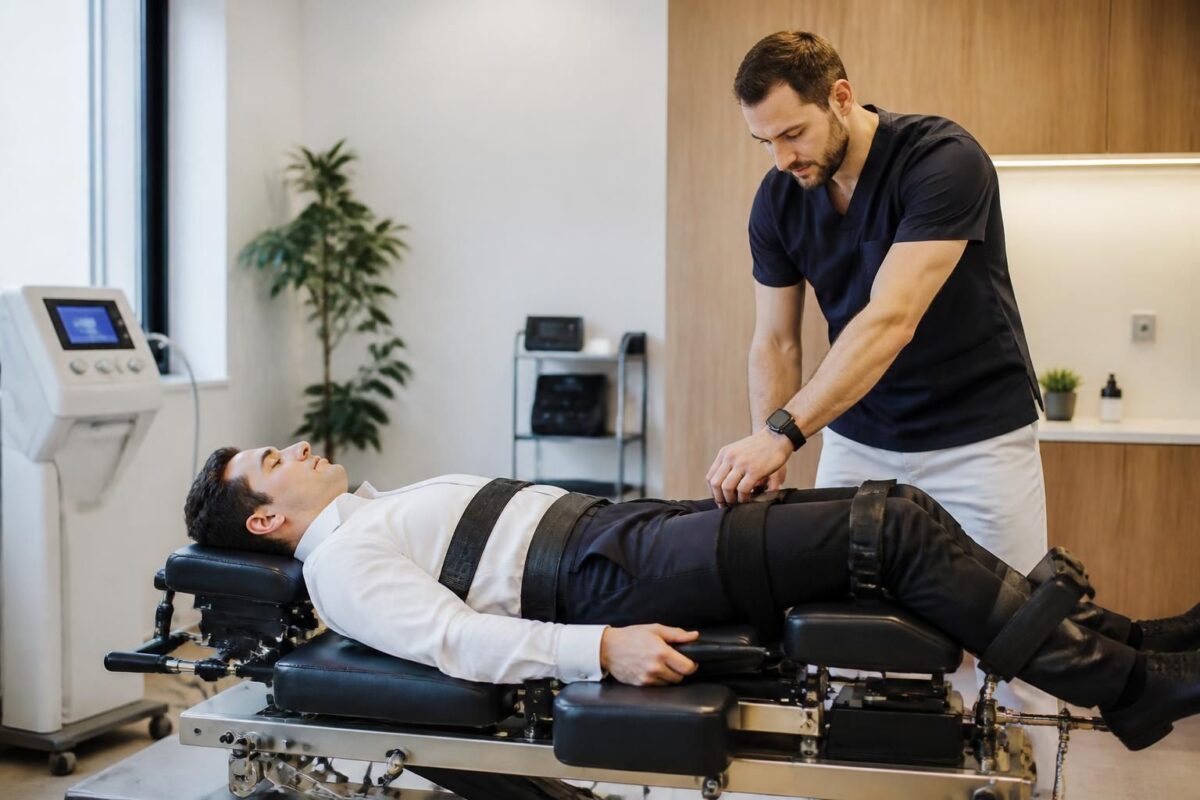
How Neurovertebral Decompression Prevents Diffuse Chronic Pain
In short decompression neurovertebral is one Non-invasive method aimed at reducing the Pressure on the intervertebral discs and the nerves, in order to prevent Diffuse chronic pain. It improves the circulation and thedisc hydration, decreases inflammation and promotes better mobility.…
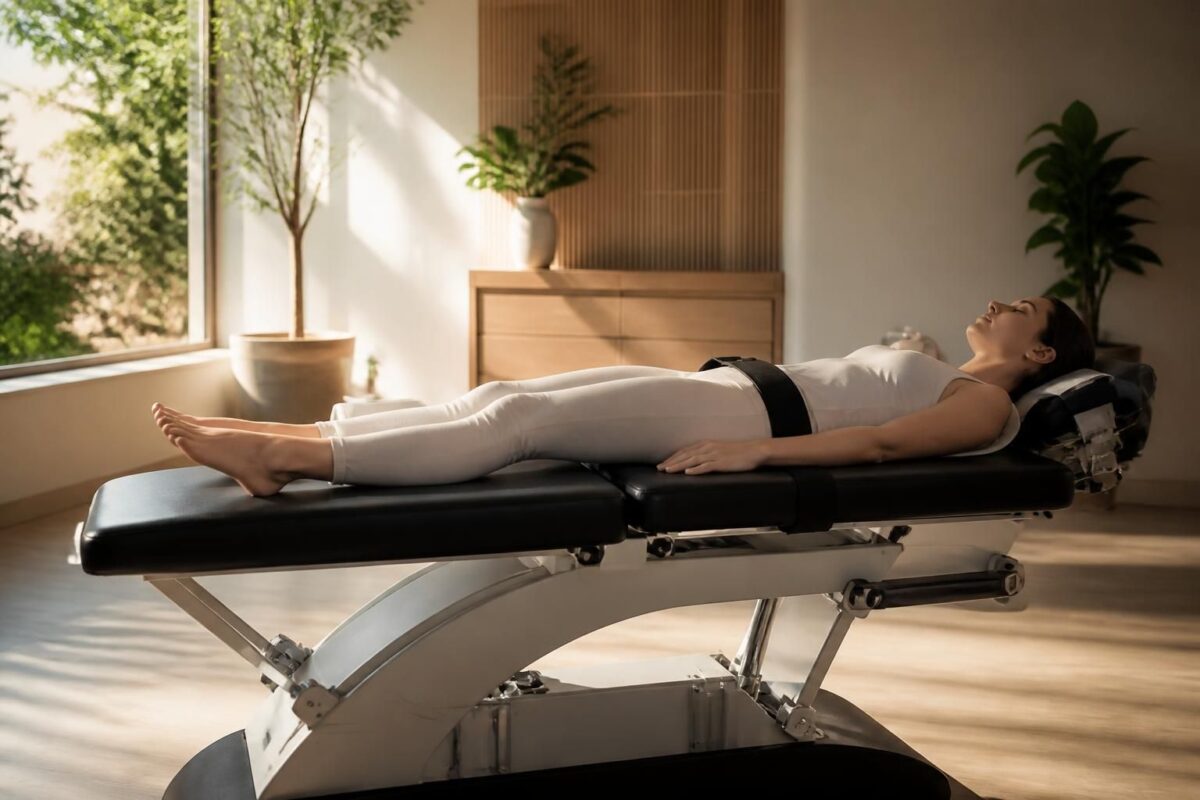
Neurovertebral Decompression and Body Alignment: Restoring Natural Balance
In short In short, neurovertebral decompression is one Non-invasive approach who restores theBody Alignment and thenatural balance back and neck. She acts by a Controlled traction of the spine to widen the intervertebral space and reduce the Pressure on discs…
Prepare and follow the treatment
Before the start, a consultation with a health professional will assess theeligibility and clarify the objectives. A typical plan includes several sessions and a Regular follow-up To adapt the frequency and duration of the interventions according to the progress and feedback of the patient.
What you need to prepare
Bring your medical records, accurately describe your symptoms and mention treatments that have already been tried. Also share your activity level and daily habits in order to integrate postural advice and appropriate exercises into the care plan.
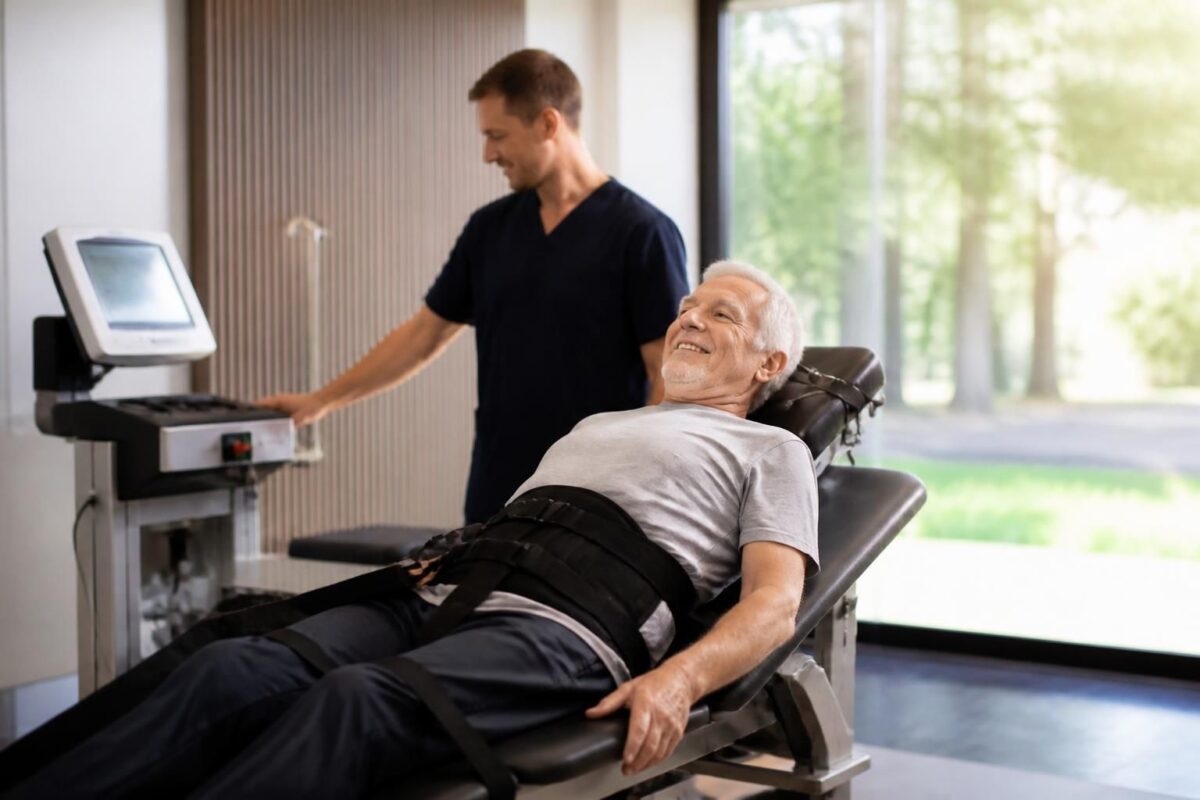
Why neurovertebral decompression is a lasting solution for active seniors
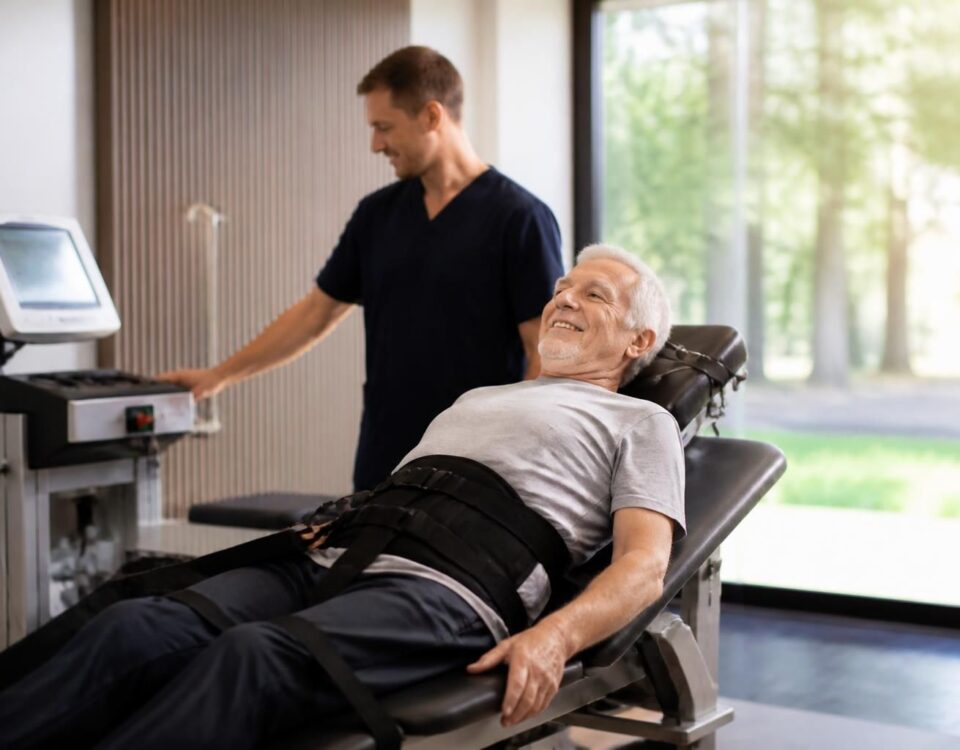
In short In short, the neurovertebral decompression is one Non-invasive therapy which sustainably relieves spinal pain in the spine active seniors By creating, by a Soft and controlled traction, a space between the vertebrae. At Montreal, it is recognized as…
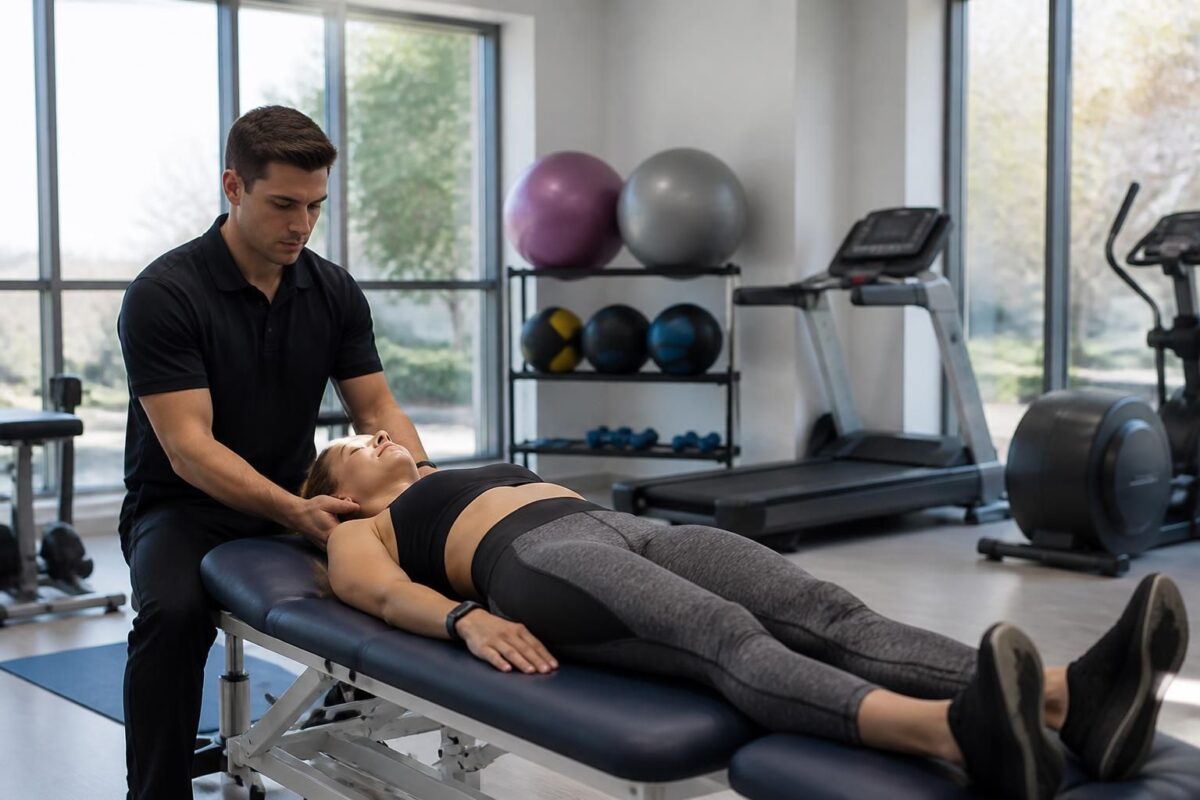
Neurovertebral decompression and recovery after severe sports injury
In short In short, the neurovertebral decompression is one Non-invasive method to Relieve the pressure on the Intervertebral discs and the gristle Via a Controlled traction, to facilitate the recovery After a severe sports injury. It improves the bloodstream towards…
Synergy with other approaches
Decompression can be associated with other non-invasive therapies to amplify the results and stabilize the spine. Combining with neuromodulation techniques, strengthening exercises and targeted stimulation sessions can accelerate the return to normal activity and limit recurrences.
Lifestyle and prevention
To optimize long-term effects, adopt a lifestyle Suitable: correct posture on a daily basis, regular physical activity, strengthening exercises and gentle stretching, and quality sleep. These elements support natural healing and help prevent new pain.
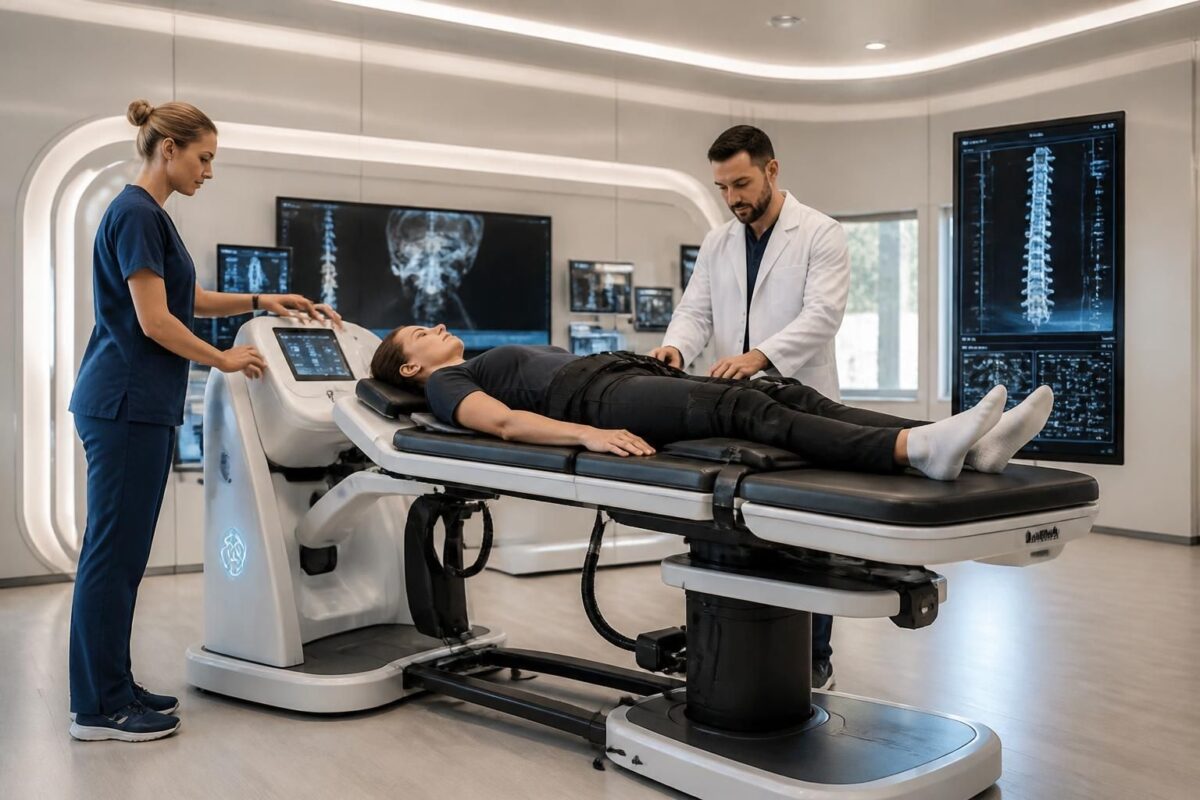
Recent innovations in neurovertebral decompression technologies
In short In short, the neurovertebral decompression is an approach non-invasive Aiming to reduce pressure on discs and nerves, and promote tissue regeneration. At Montreal, it is positioned as an effective option for lower back pain and herniated discs. The…
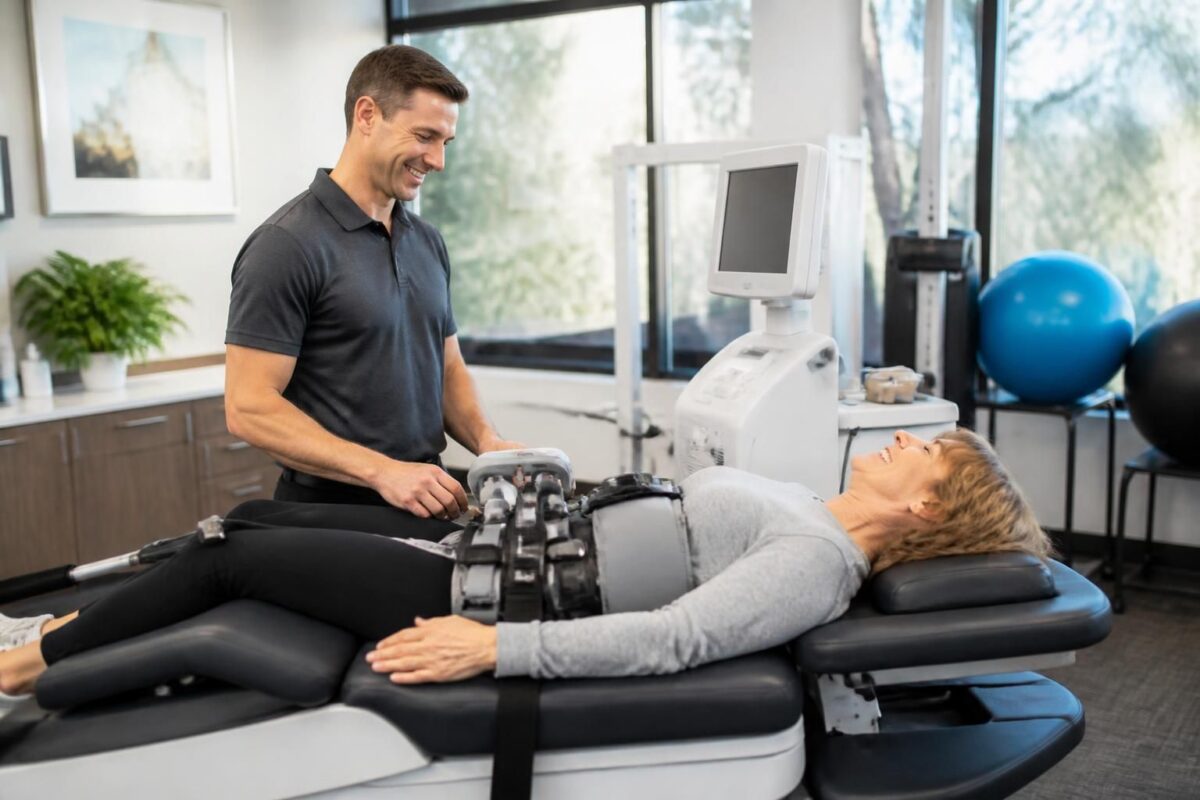
Neurovertebral decompression and diffuse pain: an appropriate solution
In short In short, the neurovertebral decompression is one Non-invasive solution For diffuse pain related to nerve irritation of the spine. She acts in Reducing pressure on intervertebral discs and nerves and improving the bloodstream, which promotes recovery and the…
Operational conclusion
The neurovertebral decompression appears as a solution lasting For recurrent pain when the eligibility criteria are met and treatment is integrated into a global approach to care and prevention. By favoring a personalized and progressive approach, patients can reconnect with a better quality of life and a more restful sleep.
| Aspect | Concise description |
|---|---|
| Sustainable efficiency | Sustainably reduces recurrent pain and improves nerve function by lowering pressure and promoting circulation. |
| non-invasive | No operation or stopping period, with progression of relief without surgery. |
| Controlled traction | Precise traction that creates a disc space and decreases the pressure on the nerves. |
| Night sleep and comfort | Reduction of nocturnal pain, improvement in sleep quality and everyday life. |
| Mobility and posture | Restoration of spinal alignment and lasting improvement in mobility. |
| Prevention of recurrences | Stabilizes the spine and limits pain recurrences. |
| Therapeutic integration | Complements exercises, physiotherapy and manual care for a global plan. |
| Time and adaptation | Personalized program over several weeks with regular follow-up. |
| Accessibility | Advanced technology available in dedicated clinics offering a passable solution. |
| Eligibility | Clinical evaluation and imaging to confirm eligibility for treatment. |
Testimonials: neurovertebral decompression, a lasting solution for recurrent pain
“Before discovering the neurovertebral decompression, my Lower back pain kept coming back after each episode. After several weeks of treatment, I noticed a reduction lasting pain and I was able to resume my daily activities without limitation. »
“As a patient in Montreal, I was hesitant about any intervention. The neurovertebral decompression revealed non-invasive and gradually relieved my Nocturnal pain. My nights are calmer and the Restful sleep came back. »
“In Terrebonne, after a few sessions, I saw a first improvement and the profits set in permanently. Thanks to the Controlled traction And at reducing the pressure on the nerves, my mobility has improved and my activities are no longer limited. »
“I liked to play sports, but my episodes of pain prevented me from doing so. After the neurovertebral decompression, the recurrences have spaced out and the pain decreased, allowing me to resume my training. »
“The Pressure on discs and the gristle has been mitigated. This approach non-invasive gave me a Back to my hobbies and an quality of life found. »
“By avoiding surgery, neurovertebral decompression gave me a Back to my hobbies and an Better quality of life. It’s a solution lasting For the recurring pains that have been following me for years. »
Dr. Sylvain Desforges, expert in osteopathy, Naturopathy and manual medicine, is the founding president of the Tagmed clinics and the ACMA association. His career was built on a vision of health innovation and a specialization in the management of chronic pain, with particular attention paid to the integration of advanced technologies. Its commitment is to provide evidence-based care in order to optimize the health and well-being of patients, by favoring a personalized and safe approach.
The neurovertebral decompression Presents as a natural and lasting solution for recurrent pain related to discal disorders. This technique non-invasive is based on a Controlled spine traction which creates a space between the vertebrae and decreases the pressure on the adjacent discs and nerves. By promoting the rehydration of discs and the release of irritated structures, it helps to improve local circulation and reduce inflammatory signs, thus providing significant and lasting relief.
For Dr. Desforges, sustainable withstand efficiency is based on a Individualized approach which takes into account each patient’s specific background and needs. It systematically associates neurovertebral decompression with other therapeutic modalities and complementary technologies, such as laser and shockwave therapy, in order to optimize the therapeutic response and promote a faster and safer resumption of activities. This synergy makes it possible to address not only pain, but also the factors that contribute to it, such as posture, muscle tone and mobility.
At the heart of this approach is sustained attention to the prevention of recurrences. Dr. Desforges’ team works with patients on intervention plans that include targeted exercises, postural counseling and lifestyle adjustments, to support spinal stability and improve quality of life on a daily basis. The purpose is to help everyone find a restful sleep and a more reliable nervous function, which results in better autonomy and more active participation in the usual activities.
The expected results with neurovertebral decompression for recurrent pain are multiple: Lasting pain reduction, Improving mobility, and Prevention of new aggravations. This approach is designed to provide Long-term solution, without resorting to heavy surgical interventions, while integrating harmoniously into a multidisciplinary care course. Dr. Desforges insists that safety and efficiency are based on rigorous evaluation and personalized follow-up, with a reasoned use of the latest technologies.
In summary, neurovertebral decompression is a promising and lasting path for those who suffer from recurrent pain related to herniated discs and other spinal disorders. By combining gentle and controlled traction, a holistic approach and an orientation towards continuous improvement of the quality of life, Dr. Sylvain Desforges works to offer care that combines science, prevention and sustainable well-being.
This summary summarizes how the neurovertebral decompression can constitute a Durable solution Faced with recurrent pain linked to spinal problems, in particular herniated discs and degenerative disorders. It describes the mechanism, long-term benefits and possibilities of integration with other non-invasive approaches, while providing ways to optimize patients’ outcomes and quality of life.
Synthesis and implications
The neurovertebral decompression is based on a Controlled traction of the spine that creates a space between the vertebrae. This approach aims to Reduce intra-discal pressure and to promote rehydration and repositioning of damaged discs, which can decrease painful sensations and associated neurological symptoms. By improving local circulation and releasing muscle tension, it supports the natural healing of tissues and the recovery of overall column mobility.
Its Sustainable benefits are based on its nature non-invasive, its adaptability to each patient and his potential to Prevent recurrences by stabilizing the spine. Unlike surgical procedures, it offers a gentler way of care with a Limited risk complications and a quick recovery. To optimize the results, it is recommended to combine this treatment with strengthening exercises, gentle stretching and postural advice adapted to each profile.
Beyond physical benefits, decompression can positively influence psychological well-being and quality of life By reducing pain-related anxiety and improving confidence in the body’s ability to recover. This approach is therefore part of an approach holistic and can be supplemented by complementary technologies such as neuromodulation therapies or aesthetic and functional interventions when necessary.
For people living in metropolitan areas and close to Montreal, the availability of neurovertebral decompression offers a realistic and effective alternative to chronic pain that persists despite conservative treatments. Specialized resources and testimonies show that patients who have tried this approach have seen a marked decrease in their pain and an improvement in their sleep and daily activities. To find out more, you can consult analyzes and feedback on dedicated platforms such as tagmed and SOS SCIATIC.
At the same time, the integration of associated technologies, such as assisted decompression devices and neuromodulation options, can amplify the results by preparing the tissues for better tolerance and facilitating the recovery process. These complementary approaches are detailed in the specialized resources available online and can be discussed during a prior consultation with a qualified specialist. To deepen, resources like Neurovertebral Decompression – Preventing Recurrences offer additional lighting.
Finally, it should be remembered that each course of care must be personalized. In-depth clinical evaluation and, if necessary, imaging examinations guide eligibility and the treatment plan, in order to ensure safe and appropriate care for each patient’s lifestyle and goals. For an overview of results and mechanisms, specialized sources such as Equipment innovations and Decompression as a solution provide useful summaries.

Dr Sylvain Desforges, B.Sc., D.O., N.D., osteopath, is the founding president of TAGMED and of the ACMA association. He dedicates his practice to chronic spinal pain, low back pain and symptoms compatible with sciatica, particularly when pain radiates toward the buttock, leg, calf, foot or toes.
Through SOS Sciatique, he publishes educational content on sciatica symptoms, possible causes such as disc herniation, disc narrowing, foraminal stenosis or irritation of a lumbar nerve root, as well as non-surgical approaches that may be considered according to the evaluation. At Clinique TAGMED, care may include, depending on the case, motorized neurovertebral decompression, specific osteopathic care or precision percussion.
For an evaluation related to sciatica treatment in Montreal / Mount Royal or sciatica treatment in Terrebonne, please consult the services available at Clinique TAGMED.
Medical disclaimer
The information published on SOS Sciatique is provided for educational purposes only and does not replace a consultation, diagnosis, opinion or treatment provided by a physician or another authorized healthcare professional. The author of this article is neither a medical doctor nor a specialist in a medical specialty recognized by the Collège des médecins du Québec. The osteopathic, manual medicine or functional support approaches described on this site do not constitute medical acts and are not intended to replace medical follow-up.
Consult a physician or emergency service in cases of loss of bladder or bowel control, anesthesia in the saddle area, significant or progressive weakness in the leg or foot, fever, recent trauma, severe pain or rapid worsening of symptoms. For more details, please read our Legal Notice.