Osteopathy and stress management: a natural method to soothe the body
29/06/2026
Why osteopathy is a natural alternative to drug treatments
29/06/2026
In short the approaches osteopathic To improve thePostural balance rely on a Global vision of the body and Gentle techniques Aiming to restore thealignment and coordination. In Montreal, this service is particularly recommended for active adults and athletes who wish to strengthen their posture and prevent pain. Operation is based on a Overall assessment, identification of Somatic dysfunctions and the application of gentle methods that improve the proprioception, the Joint mobility and daily stability. |
Osteopathic approaches to improve postural balance are based on a holistic view of the body, where posture, mobility and function mutually influence each other. The overall assessment of posture, joint mobility and muscle chains makes it possible to identify the dysfunctions that alter balance. thanks to Soft manual techniques, myofasciales And guided corrections, the osteopath restores alignment, releases tension and optimizes fluid circulation, promoting more stable neuromuscular control. The result is better stability, increased coordination and a more balanced posture in everyday gestures and physical exertion.
The goal osteopathic approaches is to promote a Postural balance sustainable taking into account the body as a unit. Osteopathy uses manual manipulations and techniques that act on tissues, joints and communication pathways of the body. This approach aims to restore the mobility, stability and coordination of the entire musculoskeletal system, while respecting the natural mechanisms of self-regulation of the body.
Foundations and philosophy
The basis is the idea that the body is a Functional Unit interdependent. The Structure-function relationship is central: the shape of the structures influences the function and vice versa. The body has a capacity toself-healing when the mobility and circulation elements are balanced. A good Tissue circulation is essential to tissue health and the ability of the body to adapt to the conscious and unconscious constraints of everyday life.
Osteopathic techniques for balance
Techniques are divided into approaches structural and functional. Structural techniques aim to directly restore joint movements and segment flexibility. In the context of postural equilibrium, they can contribute to dissipating the mobility limitations that affect posture. Functional, softer techniques work on tissue tension and nervous system adaptation mechanisms to promote a more harmonious posture.
Structural and myofascial approaches
the techniques myofasciales are interested in fascia, this connective network that connects muscles and organs. Working on the fascias can release deep tensions and restore fluidity of movement. The vertebral manipulation And joint manipulations belong to this category and, when adapted to the patient, make it possible to restore better postural dynamics.
Visceral and cranial approaches
theVisceral osteopathy Acts on the organs and their mobility to promote a better relationship with other systems. Cranial osteopathy explores the links between the bones of the skull and the central nervous system in order to modulate the tonicities and postural patterns. These approaches contribute to global regulation of the body and can favorably influence the postural balance during daily and sporting gestures.
Jones and Strain-Counterstrain approach
The Jones Method (Strain-CounterStrain) is a gentle technique that releases muscle tension by placing the body in maximum comfort positions. This approach illustrates well the osteopathic philosophy of working with the body and not against it, in order to gradually improve coordination and posture.
Osteopathic diagnosis and postural evaluation
Osteopathic diagnosis is based on a Overall assessment and an palpation neat fabrics. The practitioner is looking for Somatic dysfunctions that modulate mobility and can influence other areas of the body. The evaluation also includes a Postural analysis and joint mobility tests to identify the lesion chains and compensations. This approach makes it possible to establish a global and personalized treatment plan.
Practical applications and postural advice
Osteopathy proposes interventions to improve thePostural balance in adults, at work and during physical activities. It can help reduce tension, restore joint mobility and promote better tolerance to daily loads. To deepen the aspects related to posture and balance, you can consult resources such as articles dedicated to theOsteopathy and posture, benefits on sports performance and post-traumatic recovery on sossciatica.com. Other resources shed light on the impact of osteopathic approaches on mobility and body alignment, in particular through reflections on mobility and flexibility and on the physiological mechanisms that support listening to the body. Links to additional information can be found on Osteopathy and osteoarthritis and Healthy body alignment.
For professionals and students, training in osteopathy Based on recognized programs that guarantee a solid foundation in anatomy, physiology and biomechanics. In France, regulation and training are supervised, and osteopaths can continue their development in recognized institutions such as NUMSS, NAO, National University of Medical Sciences, National Academy of osteopathy. For people seeking practical resources and clinical perspectives, reading and critical evaluation of research papers enables integrating evidence into clinical practice.
To better understand the practical implications on the ground, explore the following resources: Tagmed Clinic, neurovertebral decompression, and the pages dedicated to Posture and alignment on sossciatica.com. Other useful resources address the links between osteopathy and sports performance and the neurophysiological mechanisms that support these approaches.
To deepen the training and regulation aspects, the institutions you need to know include NUMSS, NAO, National University of Medical Sciences and National Academy of Osteopathy. Relevant professional associations bring together ACMA and Canadian structures specializing in osteopathy and manual therapies. Further reading on efficacy and mechanisms of action can be consulted via resources focused on osteopathy and posture and locomotor system disorders.
To learn more about the links between posture, balance and well-being, also consult the following resources: Recovery and prevention, Mobility and flexibility with age, and Healthy postural alignment.
For more details on the reference frame and clinical applications, you can refer to dedicated resources on The benefits of osteopathy to improve sports performance and on Sports recovery and relapse prevention.
For curious readers of other areas, there are also general resources on osteopathy and mobility: Flexibility and mobility, and Osteoarthritis and associated pain.
Finally, do not hesitate to explore resources on postural posts and global approaches that support balance, especially in the pages dedicated to posture and body alignment on Healthy body alignment and other resources referenced in this area.
Useful references and recommended resources: Osteopathy and posture, Benefits for sports performance, Recovery and relapse prevention.
Medical Disclaimer: The information and advice provided on this site does not replace the health professional’s diagnosis or treatment. Please note that Dr. Sylvain Desforges osteopath is neither a doctor of medicine nor a doctor, and is not a specialist in a medical specialty as defined by the Collège des Médecins du Québec. Manual medicine, functional medicine and sports medicine as described on this site exclude any medical treatment or diagnosis made by a doctor or specialist doctor. Always consult your doctor for any medical questions. For more details, please read our full legal notice.
- Mobility and overall alignment : Release restrictions that disrupt postural equilibrium.
- Proprioception and engine control : Strengthen body perception and coordination.
- Stability of the trunk and pelvis : Deep muscle activation for a solid base.
- Respiratory rhythm and nervous balance : Harmonize the breath to optimize the tone.
- Fascial and fluid networks : Release of fascia-ligament tensions for fluid mobility.
- Functional integration : Exercises and repositioning adapted to daily life.

This article presents, in a clear and practical way, the Osteopathic approaches which help to improve thePostural balance. It highlights a global vision of the body, adapted techniques and the importance of patient education to act durably on stability. You will discover how accurate assessment and targeted treatments can reduce imbalances, improve posture, and promote a smoother, safer feeling of movement on a daily basis.
Balance-oriented assessment and diagnosis
To optimize thePostural balance, the osteopath performs a Overall assessment of the patient by observing the standing and moving posture, the distribution of loads and asymmetries. The Static and dynamic palpation Allows to appreciate the texture and mobility of the fabrics, while the Joint mobility tests Determine restrictions and areas to target. The analysis of Lesion chains Helps to understand how a dysfunction can occur remotely in the body, impacting thebalance.

How osteopathy improves the quality of life of active people
In short In short, theosteopathy is a global approach that Optimizes mobility and the function of the body of ACTIVE PEOPLE, for a better quality of life. It helps prevent injury and reduce Musculoskeletal pain While promoting the Sports recovery.…
Osteopathic approaches to restore balance
Structural approach and vertebral manipulation
Structural techniques aim to restore the mobility of the joint segments and column segments, in order to restore harmonious alignment of the spine and belts. By rebalancing the areas that slow down the movement, they directly contribute to the improvement of general stability and the synchronization of the muscle chains that support the posture. These approaches remain appropriate for each patient and are used when indications allow.
Myofascial and cranial techniques
The Myofascial techniques Release the tensions of the fascias that envelop and connect the structures of the body, which can improve the proprioception and the coordination of movements. Cranial osteopathy, focused on oscillations and the relationships between the skull and the nervous system, can promote better stress management and reharmonization of postural patterns, contributing to lasting stability.
Visceral and fluidic approach
By working on the organs and their mobility, the visceral approach can influence the pressures and intra-abdominal dynamics, often involved in maintaining a stable spine. Optimizing the circulation of body fluids strengthens theself-regulation And can improve diaphragmatic breathing, a key component of postural balance.
Jones and Strain-CounterStrain Method
The Jones, or Strain-CounterStrain method, is a gentle technique that aims to relax the pain points and muscle spasms without forcing the tissues. As part of balance, it helps to restore optimal tension around the joints and to find comfortable positions that support a more stable posture on a daily basis.

Osteopathy and sports recovery: prepare the body for lasting performance
In short In short, Osteopathy and Sports recovery is one Global manual approach that sustainably prepares the body for the effort by restoring mobility and circulation After the effort. It is a discipline that acts on the sinews, the joints,…
Postural education and prevention
The intervention is not limited to the session; It is based on active patient education. Practical advice and targeted exercises strengthen the stabilizing muscles and improve the proprioception. The objective is to transform the session into a system ofself-management Balance, with simple gestures to integrate into everyday life and in sports activities.
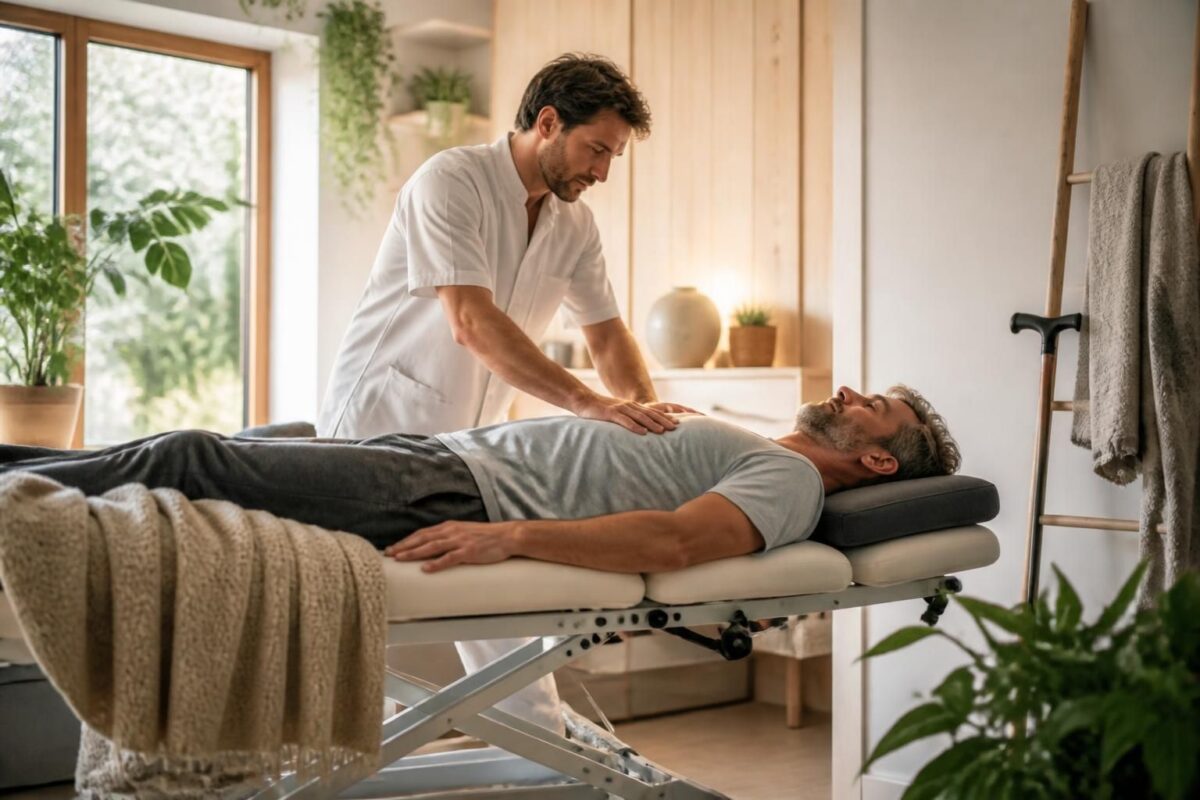
Why Osteopathy Is Essential For Recovery People
In short In short, Osteopathy in convalescence is an approach manual and holistic which helps to accelerate the recovery by restoring The balance, the mobility and a good circulation fabrics. it contributes to Reduce the pain, support the Back to…
Environment and daily habits
maintaining a Postural balance sustainable also depends on the environment and habits. A morphology adapted to the workstation, regular breaks and variations in posture promote better stability. Mobility habits and conscious breathing exercises complement osteopathic treatments and enhance overall effectiveness.

Osteopathic manipulations to strengthen post-traumatic muscles
In short In short, Osteopathic manipulations for Strengthen post-traumatic muscles constitute a gentle manual approach aimed at restoring the mobility, reduce the pain and facilitate the Functional rehabilitation After a injury. What is Is it? A series of precise gestures…
Next steps and follow-up
Each consultation is adapted, with a clear progression of the objectives ofbalance and of posture. The plan may include proprioceptive rehabilitation sessions, home exercises and ergonomic adjustments. The goal is to achieve lasting stability, better coordination and confidence in one’s own movement abilities.

Osteopathy and prevention of work-related musculoskeletal disorders
In short theosteopathy is one Manual approach that restores body balance and prevents MSD related to work. Its advantages: reduction of tension, improvement of mobility and prevention of chronic pain. She is preventive and healing, suitable for office and trades…
Osteopathic approaches to improve postural balance
| Approach | Impact on balance |
|---|---|
| Palpation and postural evaluation | Identifies imbalances and guides therapeutic actions to optimize overall alignment. |
| Structural manipulation | Restores segment mobility and reduces compensation, improving trunk stability. |
| Myofascial techniques | Dissolves fascia tensions and frees motion paths, supporting a more balanced posture. |
| Cranial osteopathy | Regulates the tone of the nervous system and influences postural patterns with a gentle approach. |
| Visceral approach | Improves the mobility of the viscera and their effect on the diaphragm and body axis. |
| Jones / Strain-Counterstrain | Gentle technique that releases pain points and tensions, stabilizing body positioning. |
| Viscero-somatic and fluidic approach | Optimizes fluid circulation and nerve function for better posture. |
| Postural education and practical advice | Gives daily exercises and habits to maintain alignment and prevent imbalances. |

The benefits of osteopathy to treat muscle imbalances
In short theosteopathy is a manual approach to restore themuscle harmony and postural considering the body as a whole. Its main benefits include the reduction of aches and tensions, the improvement of the mobility and from the posture, and prevention…
Testimonials on osteopathic approaches to improve postural balance
“Before, my days were marked by lower back pain and a feeling of instability when I was moving. thanks to theosteopathy, and to a Global approach centered on thebody unity, I found a Postural balance lasting and less tension. »
“In sports practice, I constantly felt like I was out of balance when moving and loading. theosteopathy helped me harmonize my posture and strengthen my stability. the techniques myofasciales and visceral worked smoothly on the muscle chains, which allowed me to gain power and control of the body, thus contributing to better Postural balance. »
“As a senior, I was afraid to stumble or feel pain while walking. The osteopathic approach allowed me to rebalance the key points of my posture. The overall assessment and mobility tests highlighted invisible imbalances, and the sessions improved my walking and stability on a daily basis thanks to a Global approach and fresh. »
“At work, spending hours in front of the screen weakened my posture. With theosteopathy, I learned to reuse the natural mechanisms of the body to regain thebalance. interventions targeting fascias and the joints made it possible to adjust the tensions and to improve my stability in motion, while preserving my security and my comfort. »
“During pregnancy, the postural balance can destabilize quickly. theosteopathy helped me maintain a alignment comfortable and to prevent pain, relying on a Global approach and personalized. The sessions were gentle and reassuring while improving my stability during key moments of pregnancy. »
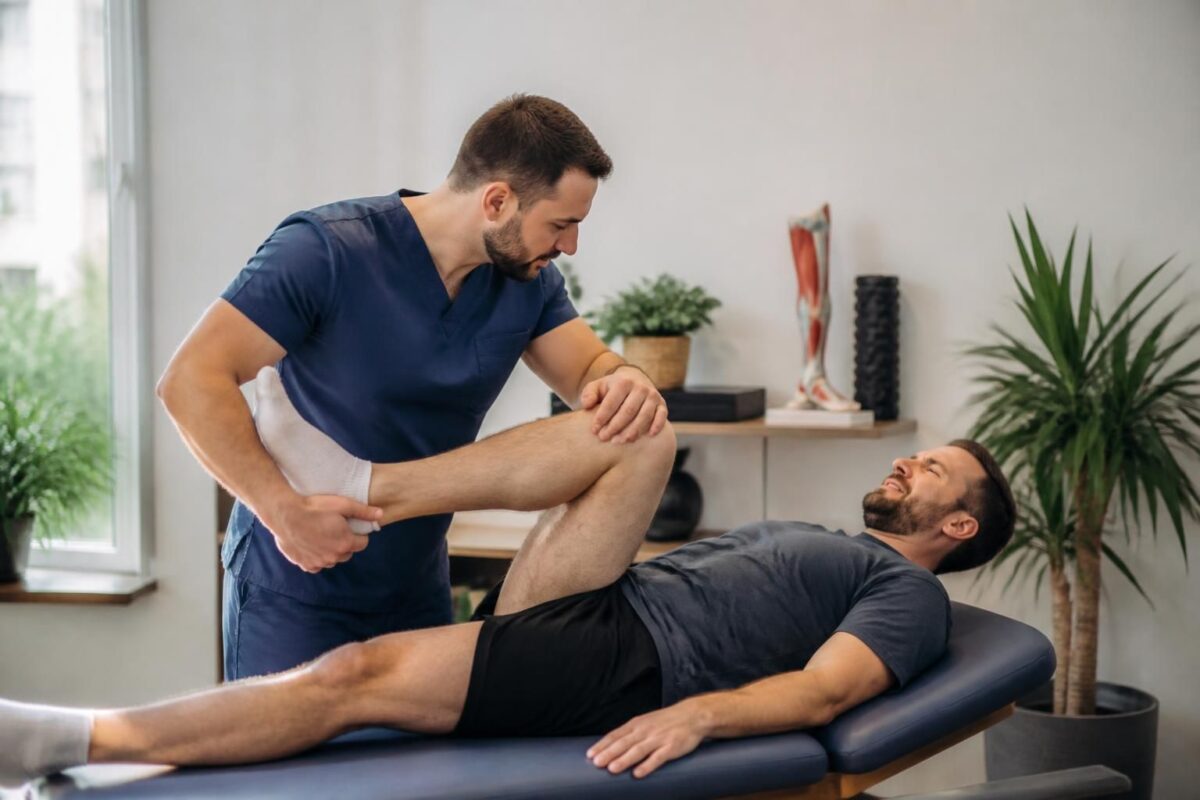
Osteopathy and chronic leg pain: regaining an optimal quality of life
In short In short, Osteopathy is one Global manual approach aimed at reducing Chronic leg pain and improve the quality of life. What is it? Non-drug therapy using the hands to identify restrictions and treat lesional chains. How does it…
Osteopathic approaches to improve postural balance
Dr. Sylvain Desforges, a recognized osteopath, carries a vision holistic of the human body that guides each of its interventions to optimize thePostural balance. Founding President of TagMed and the ACMA association, he combines expertise in osteopathy, naturopathy and manual medicine with an approach focused on innovation and evidence. His practice favors a personalized approach, where posture is analyzed as a reflection of a complex balance between structure, function and nervous system. Its objective is to provide evidence-based care in order to strengthen the stability of the trunk, the distribution of constraints and the coordination of daily gestures.
Osteopathic approaches to improve postural balance are based on founding principles that remain at the heart of his method. The central idea is the unity of the body: each segment influences the others, and a local disturbance can manifest itself far from its origin. The structure-function relationship is highlighted: inadequate posture or reduced mobility modulate the global function and vice versa. The self-regulation of the body and the importance of a fluid circulation of biological fluids are benchmarks for diagnosing and restoring postural harmony. With this in mind, the practitioner pays particular attention to the artery and tissue perfusion, essential factors in the nutrition and recovery of tissues around the joints.
To decipher the root causes of an imbalance, it performs a global assessment of the patient: static and dynamic palpation, joint mobility tests and postural analysis, in order to identify somatic dysfunctions and lesional chains that can maintain or aggravate a imbalance. This diagnostic approach makes it possible to design a targeted treatment plan, which aims not only to correct mobility limitations but also to restore the body’s ability to self-regulate and maintain a lasting balance.
The techniques used are divided between structural and functional approaches. Structural techniques aim to directly restore the mobility of joints and muscle segments, sometimes through precise manipulations, while functional methods aim to rebalance tissue tensions in a softer and more adaptive way. Among them are myofascial techniques, which release the tensions of the fascias and improve the circulation of fluids, as well as cranial and visceral approaches that take into account the interdependence of the systems. The Jones method and Strain-CounterStrain illustrate a gentle approach focused on tension release and physiological repositioning of the body to improve proprioception and stability.
To optimize postural balance, the goal is to improve trunk stability, pelvic alignment and synchronization of muscle chains that support the spine. Osteopathic work aims to correct asymmetries, release chronic tensions and reactivate neuromuscular control mechanisms that allow the body to adjust when standing, walking or during daily activities. At the same time, an educational dimension is favored: postural advice, specific exercises and ergonomic advice to prevent imbalances and promote a balanced posture in the long term.
Finally, Dr. Desforges’ approach is anchored in a practice-based practice: he evaluates the results, adjusts the protocols and opens up to the thoughtful integration of complementary technologies where relevant to optimize balance, function and overall well-being. patients. His care is deployed in a multidisciplinary logic, with continuous attention to safety and individual adaptation, in the service of a lasting postural balance.
This text presents the osteopathic approaches used to improve thePostural balance, starting from a global vision of the body and the body’s ability to self-regulate. By associating gentle and personalized techniques with a complete postural evaluation, osteopathy aims to restore mobility, alignment and harmonious functioning of structures to prevent imbalances and pain related to poor posture.
The foundations are based on thebody unity and the Structure-function relationship, where each segment influences the others. This approach includes the Dynamic palpation, the assessment of the mobility of the joint chains and the overall postural analysis in order to identify the somatic dysfunctions which disturb the balance. By working on sensitive areas and tensions that limit mobility, the osteopath restores more efficient fluid circulation and facilitates better body stability.
the techniques are divided between methods structural aiming to directly release restrictions and approaches functional which rebalance tissue tensions more smoothly. The vertebral manipulation Can be useful in some cases to regain joint mobility, but it is only one component among others. the techniques myofasciales and cranial release the deep tensions of the fascia and the nervous system, while the methods visceral and fluidics Work on organs and body fluids to support postural homeostasis. The Jones Method and the principle Strain-CountersTrain Offer gentle options to treat pain points and chronic spasms without forcing tissue.
Osteopathic diagnosis is based on a Overall postural evaluation and an palpation Precise of tissues at rest and then in motion. The Joint mobility tests and the observation of compensations make it possible to establish an appropriate treatment plan, focused on improving thePostural balance and global function. This approach takes into account the lesional chains and the impact of each area on the rest of the body, in order to offer treatment personalized.
Beyond the relief of pain and tension, osteopathy acts as a lever for prevention and optimization of performance, particularly in athletes, the elderly and pregnant women. By working on joint mobility, posture and regulation of the nervous system, it helps to improve theNeuro-musculoskeletal balance and general stability. Regular sessions associated with postural advice and appropriate exercises can sustainably improve the level of activity and reduce the risk of new tensions linked to prolonged postures.
To deepen the postural aspects and mechanisms of action of osteopathy, you can consult these resources: Osteopathy and postural disorders, The benefits of osteopathy to improve joint flexibility, Prevent prolonged posture tensions, Osteopathy A holistic approach to physical well-being, and other useful resources like Support for recovery after orthopedic surgery. For a practical and contemporary perspective, you can also consult Modern osteopathy: restoring postural balance.
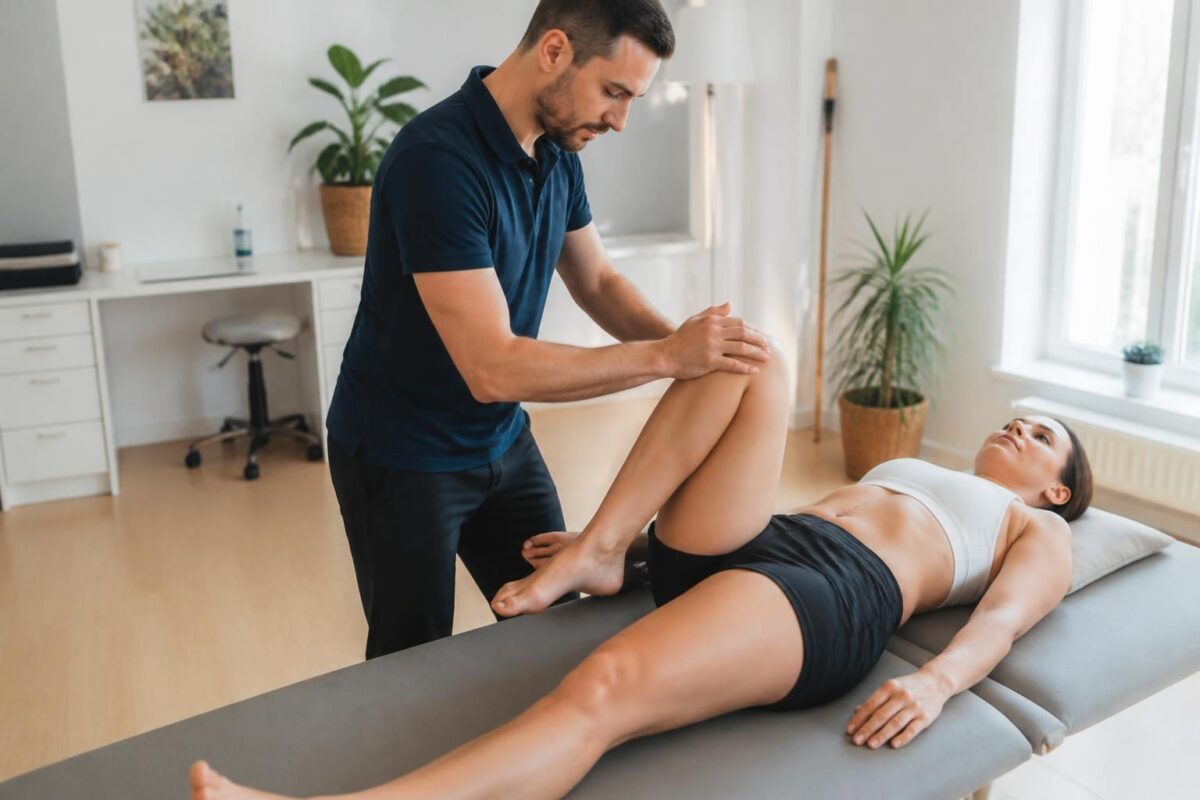
How osteopathy supports recovery after complex surgery
In short In short, Post-operative osteopathy is an approach fresh which supports the recovery After a Complex surgery. It helps to reduce the pain and the fatigue, improves the mobility and accelerates the healing thanks to a better vascularization and…

Dr Sylvain Desforges, B.Sc., D.O., N.D., osteopath, is the founding president of TAGMED and of the ACMA association. He dedicates his practice to chronic spinal pain, low back pain and symptoms compatible with sciatica, particularly when pain radiates toward the buttock, leg, calf, foot or toes.
Through SOS Sciatique, he publishes educational content on sciatica symptoms, possible causes such as disc herniation, disc narrowing, foraminal stenosis or irritation of a lumbar nerve root, as well as non-surgical approaches that may be considered according to the evaluation. At Clinique TAGMED, care may include, depending on the case, motorized neurovertebral decompression, specific osteopathic care or precision percussion.
For an evaluation related to sciatica treatment in Montreal / Mount Royal or sciatica treatment in Terrebonne, please consult the services available at Clinique TAGMED.
Medical disclaimer
The information published on SOS Sciatique is provided for educational purposes only and does not replace a consultation, diagnosis, opinion or treatment provided by a physician or another authorized healthcare professional. The author of this article is neither a medical doctor nor a specialist in a medical specialty recognized by the Collège des médecins du Québec. The osteopathic, manual medicine or functional support approaches described on this site do not constitute medical acts and are not intended to replace medical follow-up.
Consult a physician or emergency service in cases of loss of bladder or bowel control, anesthesia in the saddle area, significant or progressive weakness in the leg or foot, fever, recent trauma, severe pain or rapid worsening of symptoms. For more details, please read our Legal Notice.