The benefits of osteopathy to reduce pain in the lower limbs
28/06/2026
How osteopathy improves mobility after prolonged immobilization
28/06/2026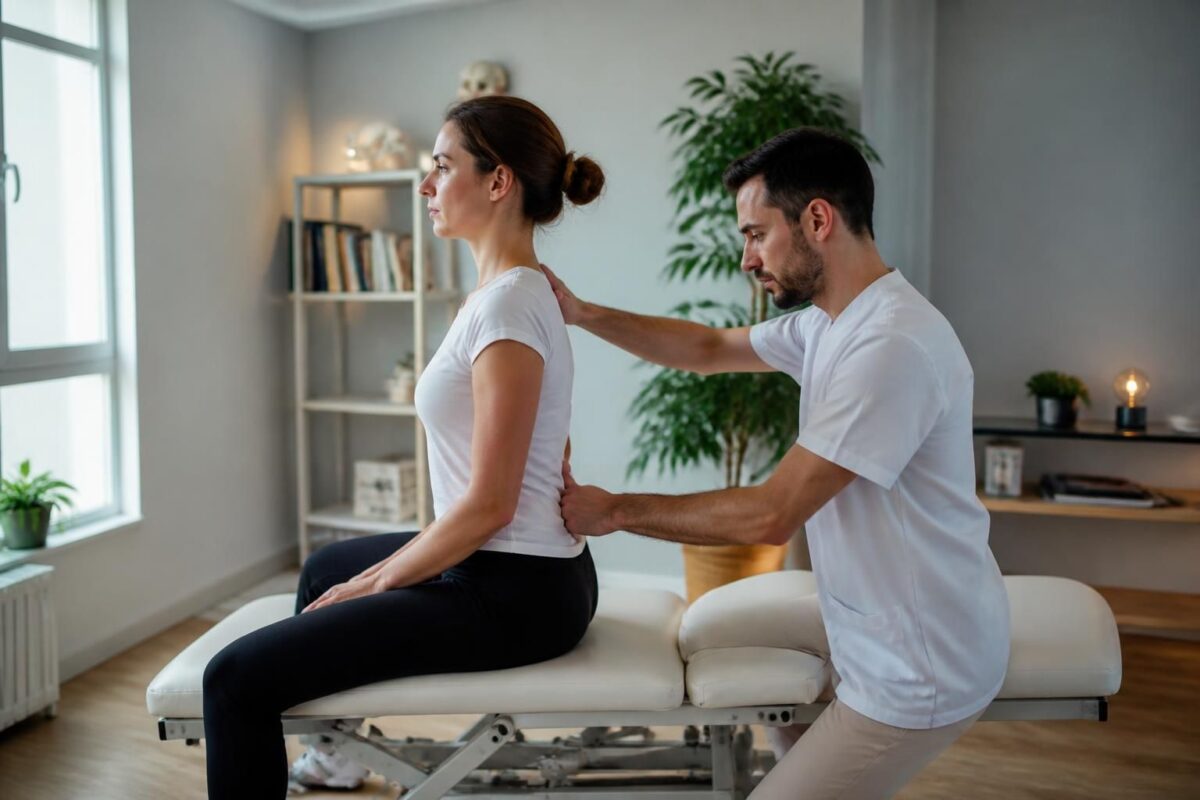
In short
| In short, theosteopathy and the posture aim to find a Healthy body alignment By rebalancing the muscle and joint chains. What is this theme? It is a global manual approach that corrects postural imbalances. What are the advantages? reduction of Chronic pain (back, neck, shoulders), improvement of the mobility and from the breathing, and relapse prevention. How does it work? one Postural assessment followed by Gentle manipulations and practical advice to preserve alignment on a daily basis. accessible to Labege And in the region, this service offers a natural and personalized solution for those who spend long hours in front of a screen or in a static posture. |
The posture is the expression of the body’s balance. theosteopathy Proposes a global approach that acts on muscle chains, joints and viscera to restore a alignment natural.
Working on joint mobility, muscle relaxation and diaphragm (breathing), it improves coordination between the upper and lower body and helps prevent Chronic pain.
The session aims to identify areas that disrupt the posture and rebalance the skeleton segments without forcing, so that the the nervous system Relearn new postural patterns.
Simple daily advice, such as work posture management and breathing breaks, complements care and sustains thealignment and general well-being.
This article, written by Dr. Sylvain Desforges, osteopath, explains how theosteopathy can help to Return a healthy body alignment and prevent pain related to poor posture. It exposes body mechanisms, support points and key actions to maintain a Balanced posture on a daily basis.
Understanding Body Alignment
The human body functions as a unit. thealignment Based on bones, muscles, nervous system and respiration. A good balance is manifested when the head, spine and pelvis fit into a harmonious line. Daily habits, such as work in front of a screen, stress and sedentary lifestyle, alter this alignment and create compensation that weakens the back and joints. A Balanced posture Allows for better distribution of forces and more effective breathing.
Signs of postural imbalance
Postural imbalances are manifested by muscle tension in the neck, shoulders and back, recurrent pain, fatigue-related headaches, or even functional disorders such as less fluid breathing. Modifications in walking or standing can also reveal an imbalance that, if it persists, can promote the appearance of chronic pain.
How Osteopathy Restores Alignment
The osteopathic approach considers the posture as a global expression of the body. The osteopath spots tension zones, joint or visceral blockages, then assesses statics and mobility. The manipulations, gentle and targeted, aim to restore the mobility of the segments and to rebalance the muscle chains. A typical example is an improvement in the pelvi-spinal balance by a gradual correction of the relationships between the pelvis and the bottom of the column.
The role of diaphragm and breathing
The diaphragm plays a central role in the posture. Ineffective breathing can maintain tension and limit range of motion. In osteopathy, the work on the diaphragm facilitates better coordination between the upper and lower body, promotes sufficient spinal mobility and contributes to a more stable posture during daily movements.
Prevent chronic pain through a healthy posture
Postural imbalance often sets in over the long term. Osteopathy acts as both treatment and prevention. By rebalancing joints, muscles and viscera, the overall tension is reduced and the load distribution is improved. This can help reduce recurring pain and preserve mobility, especially in people exposed to repetitive tasks or long hours in front of a screen.
Practical advice on a daily basis
To maintain alignment, favor simple and lasting habits. Vary the positions, adjust your workstation so that the screen is at eye level and adopt a straight posture. Integrate active breaks, and promote gentle activities like walking or yoga. Deep breathing supports postural stability and improves harmony between the upper and lower body.
When to consult
Check if you experience recurring pain in the back, neck or shoulders, postural fatigue at the end of the day, difficulty breathing fully, or visible imbalances in walking. Early management often makes it easier to correct the imbalance and prevent the symptoms from becoming chronic.
Useful resources and training
For osteopathic training, recognized establishments include NUMSS, nao, National University of Medical Sciences and National Academy of osteopathy. Relevant professional associations include acma, College of Canadian Osteopaths and College of Canadian Osteopaths.
To learn more, you can consult additional resources at the following links:
How osteopathy acts on inflammatory pain,
Why osteopathy is essential for people in rehabilitation,
Osteopathy and prevention to avoid musculoskeletal disorders,
How Osteopathy Can Help Improve Posture and Prevent Chronic Pain,
Posture and Osteopathy – Related Resources.
Additional content available on relevant institutional and professional resources, such as trainings and associations mentioned above, to understand postural mechanisms and global approaches.
“Medical disclaimer: The information and advice provided on this site does not replace the health professional’s benefit, diagnosis or treatment. Please note that Dr. Sylvain Desforges osteopath is neither a doctor of medicine nor a doctor, and is not a specialist in a medical specialty as defined by the Collège des Médecins du Québec. Manual medicine, functional medicine and sports medicine as described on this site exclude any medical treatment or diagnosis made by a doctor or specialist doctor. Always consult your doctor for any medical questions. For more details, please read our full legal notice. »
- Posture : Alignment of the head, trunk and pelvis in space for an overall balance.
- Mobility : Restore the mobility of the joints and release muscle tension.
- Breathing : Work of the diaphragm for smooth breathing and a free column.
- Nervous balance : relearn the postural patterns so that the brain regains the correct orientation.
- Muscle chains : Harmonize muscle chains to redistribute loads.
- backing and base: stability of the foot and pelvis for a solid foundation.
- Postural diagnosis : Complete assessment and identification of the tension and compensation zones.
- Gentle techniques : Targeted mobilizations and adapted myofascial releases.
- Exercises and advice : Simple routines to do at home to maintain alignment.
- Prevention : Measures to prevent relapses and recurrent pain.
- Coordination Interprofessional: collaboration with podiatrist, physiotherapist or dentist when necessary.
- Daily adaptation : Ergonomic advice and habits for work and activities.

To find a healthy body alignment, osteopathy offers a global approach that acts on tensions, muscles and joints. This article guides you towards the principles of good alignment, warning signals and concrete recommendations to correct posture and prevent chronic pain.
Understanding alignment and imbalances
The body naturally seeks the balance between the head, the trunk and the limbs. Optimal alignment allows effective movements, smooth breathing and available energy throughout the day. In reality, modern habits — screen work, sedentary lifestyle, stress — create compensation that settles permanently and leads to muscle tension and pain.
Frequent signs of postural imbalance include cervical and lumbar pain, stiffening shoulders, nocturnal or diurnal headaches, and feeling of fatigue in the upper body. These symptoms reflect a body organization that deserves to be rebalanced to avoid unbalanced kronics.
Objectives and body readings
Restoring alignment means releasing the chains that pull the entire musculoskeletal system, restoring joint mobility and promoting better synchronization of muscle chains. The objective is to bring the body back to a natural and lasting posture, without forcing, but by releasing the tensions that limit movement.

How osteopathy improves the quality of life of active people
In short In short, theosteopathy is a global approach that Optimizes mobility and the function of the body of ACTIVE PEOPLE, for a better quality of life. It helps prevent injury and reduce Musculoskeletal pain While promoting the Sports recovery.…

Osteopathy and sports recovery: prepare the body for lasting performance
In short In short, Osteopathy and Sports recovery is one Global manual approach that sustainably prepares the body for the effort by restoring mobility and circulation After the effort. It is a discipline that acts on the sinews, the joints,…
Practical recommendations for tracking alignment
Daily posture : favor a neutral position of the back, screen at eye level, relaxed shoulders and feet comfortably placed on the ground. Alternate positions every hour to avoid static postures that accentuate compensation.
Breathing and diaphragm : Developing diaphragmatic breathing helps to release the thorax and to rebalance the upper and lower body. Smooth breathing directly supports alignment and postural stability.
Adapted physical activity : Favor exercises that strengthen the trunk and deep muscles while remaining soft, such as light sheathing series, gentle stretching of the rib cage and spinal mobility exercises. These gestures support stability and prevent unnecessary curves.
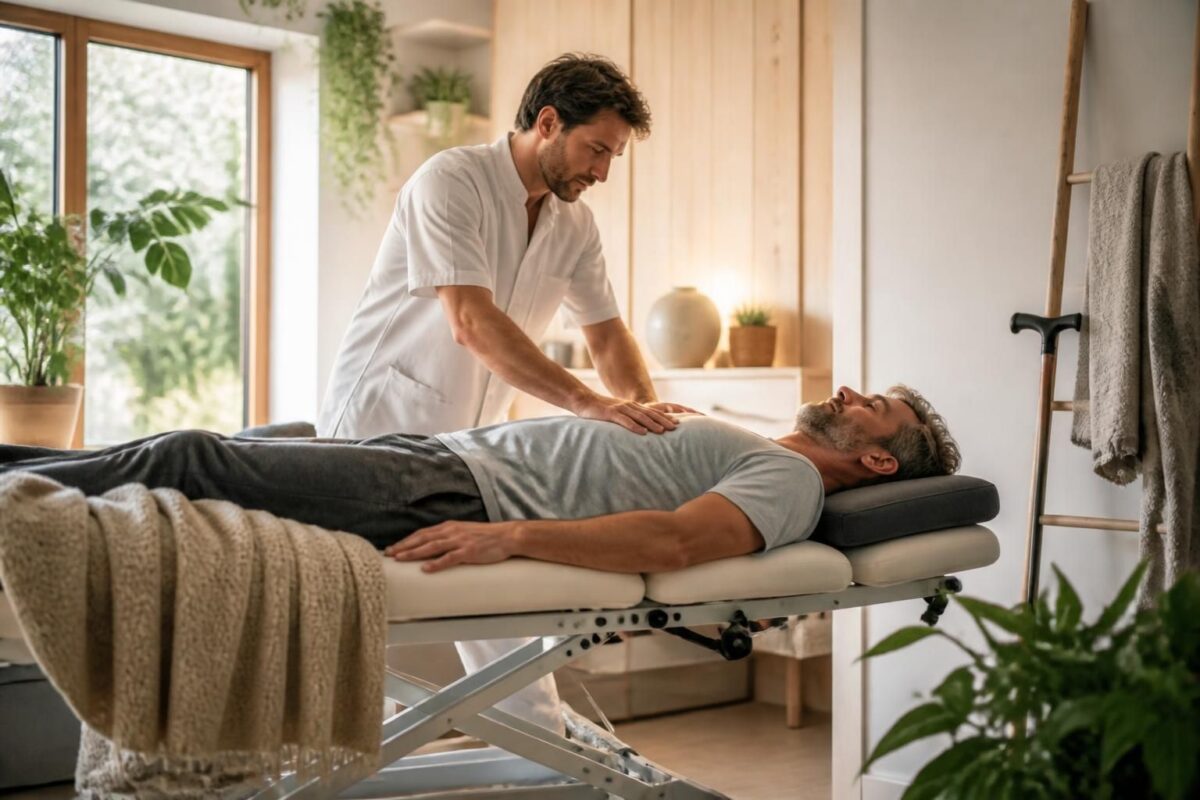
Why Osteopathy Is Essential For Recovery People
In short In short, Osteopathy in convalescence is an approach manual and holistic which helps to accelerate the recovery by restoring The balance, the mobility and a good circulation fabrics. it contributes to Reduce the pain, support the Back to…

Osteopathic manipulations to strengthen post-traumatic muscles
In short In short, Osteopathic manipulations for Strengthen post-traumatic muscles constitute a gentle manual approach aimed at restoring the mobility, reduce the pain and facilitate the Functional rehabilitation After a injury. What is Is it? A series of precise gestures…
The role of osteopathy in rebalancing
In osteopathy, alignment is considered as a global expression of the body. Regular sessions make it possible to identify areas of tension, joint or visceral blockages and to rebalance the muscle chains and joints to restore effective and lasting posture.
Osteopathic manipulations, when necessary, adapt to each person and aim to restore mobility, reduce tension and relaunch coordination between body segments. They complement daily gestures and exercises by providing reinformation of the body and the nervous system.

Osteopathy and prevention of work-related musculoskeletal disorders
In short theosteopathy is one Manual approach that restores body balance and prevents MSD related to work. Its advantages: reduction of tension, improvement of mobility and prevention of chronic pain. She is preventive and healing, suitable for office and trades…

The benefits of osteopathy to treat muscle imbalances
In short theosteopathy is a manual approach to restore themuscle harmony and postural considering the body as a whole. Its main benefits include the reduction of aches and tensions, the improvement of the mobility and from the posture, and prevention…
Prevent pain and maintain balance
Prevention is based on simple habits and daily gestures. Vary positions, practicing active breaks, stretching regularly and integrating a gentle activity during the week improves alignment durably. At the same time, a program of exercises and ergonomic advice adapted to your daily life reinforce the rebalancing and reduce the risk of relapse.
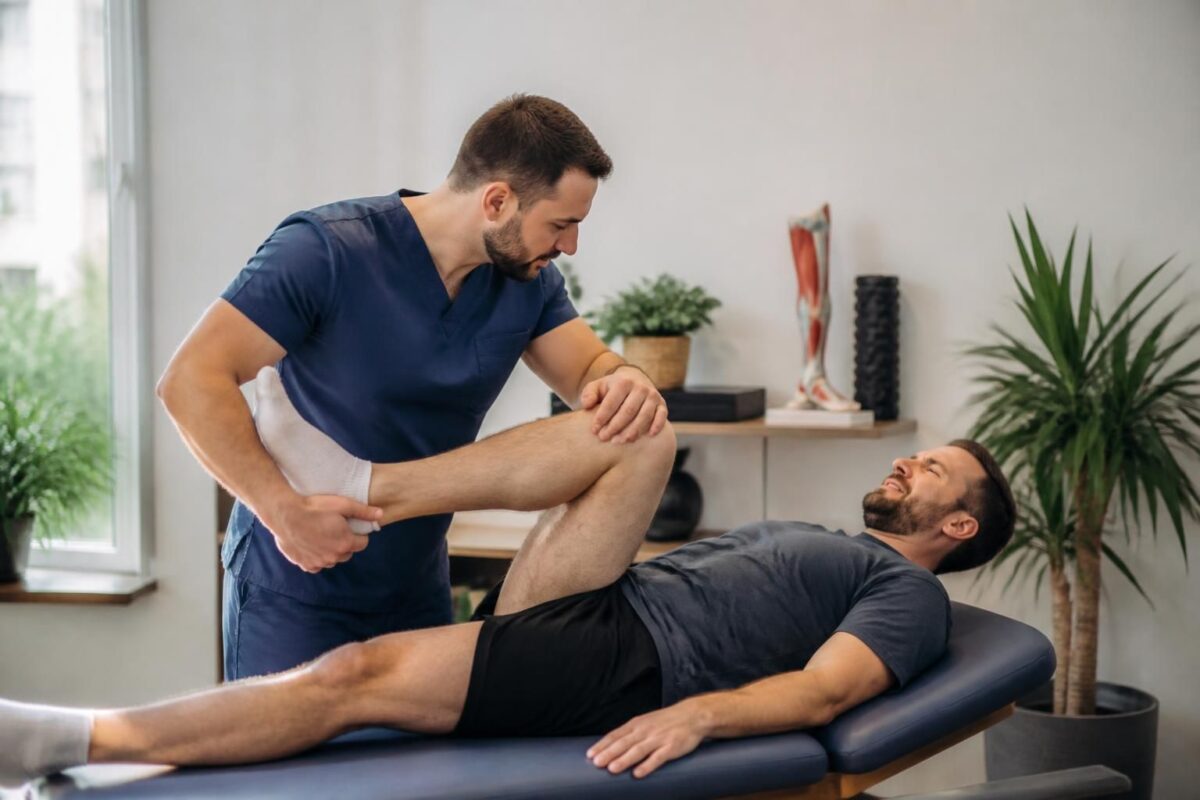
Osteopathy and chronic leg pain: regaining an optimal quality of life
In short In short, Osteopathy is one Global manual approach aimed at reducing Chronic leg pain and improve the quality of life. What is it? Non-drug therapy using the hands to identify restrictions and treat lesional chains. How does it…
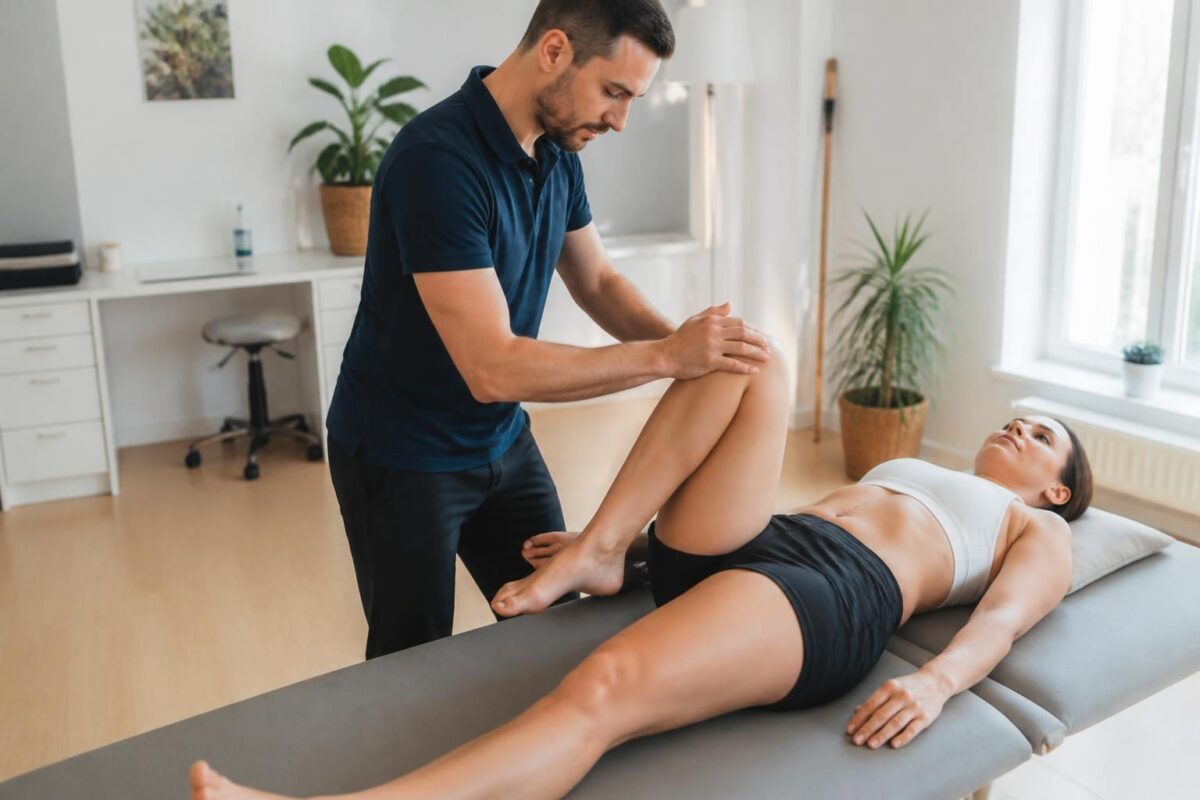
How osteopathy supports recovery after complex surgery
In short In short, Post-operative osteopathy is an approach fresh which supports the recovery After a Complex surgery. It helps to reduce the pain and the fatigue, improves the mobility and accelerates the healing thanks to a better vascularization and…
When to act quickly
If recurrent pain persists, if breathing seems less free or if signs of postural fatigue appear at the end of the day, it is relevant to request a postural evaluation. Correcting imbalances early makes it possible to limit their progress and optimize rehabilitation.
| parts | Concise description |
|---|---|
| Objective of the intervention | restore thealignment and the mobility Body chains to prevent pain and improve posture. |
| Origin of imbalance | postural imbalances related to stress, at the sedentary lifestyle and repetitive gestures. |
| Approach | Perspective overall and manual Targeting joints, muscles and diaphragm. |
| Means of intervention | gentle mobilizations, relaxations myofasciales, and postural advice accompanied by simple exercises. |
| System impact nervous | realignment of proprioceptive signals and relaxation of the nervous system for more stability. |
| Role of the diaphragm | Liberation of the breathing and improved coordination between the upper and lower body. |
| Frequency sessions | On average Two to three sessions followed by preventive follow-up. |
| Daily advice | Position variants, adapted workstation, deep breathing and gentle activities (eg walking, yoga). |
| Indications for consultation | Recurrent pain, postural fatigue or persistent discomfort despite other treatments. |
Testimonials: regain a healthy body alignment through osteopathy and posture
“Before pushing the door of the cabinet, my posture was constantly vaulted and the pain slowed me down on a daily basis. After a few sessionsosteopathy, my alignment came back, tensions have decreased and I live again without limiting my actions. »
“In the professional environment, repeated gestures and screens have weakened my neck and shoulders. The targeted approach has rebalanced my muscle chains, my posture is more stable and my mobility has improved. »
“I spent hours in front of a computer and my breathing was lacking in magnitude. The work on the diaphragm and the breathing helped me restore better posture and gain energy during exercise. »
“After years of chronic pain, I found an approach that aims at prevention as much as treatment. My alignment recovered, my pains went away and my vitality came back. »
“Practical advice and postural adjustments accompanied me beyond the sessions. My posture Holds herself and I feel more confident on a daily basis. »
“Theosteopathy gave me a mobility general and a posture correct which allow me to practice my favorite sport without pain and with pleasure. »
Dr Sylvain Desforges is a recognized practitioner in the fields ofosteopathy, from the naturopathy and manual medicine. At the head of TagMed and the ACMA association, he practiced medicine based on innovation in the service of well-being and pain reduction. His journey illustrates a results-oriented approach, combining clinical expertise and attentive listening to the patient in order to provide lasting solutions to functional disorders and chronic pain. Its commitment aims to offer care that combines scientific rigor and human approach, in the service of continuous improvement of the quality of life.
With a career dedicated to health care innovation, he specializes in Chronic pain management and in theintegration advanced technologies such as spinal decompression, laser and shockwave therapies. This multidisciplinary approach is not limited to isolated techniques: it makes it possible to shed light on the mechanisms of pain, to finely evaluate the causes and to adapt the treatments to optimize the results while remaining faithful to a natural and respectful philosophy of the body. The goal remains to provide support tried and adapted to each patient.
For this practitioner, healthy body alignment is a dynamic balance between bone structure, muscle tone, nervous system and sensory perception. In our modern lifestyle, the intensive use of screens, stress and repetitive gestures generate compensations that gradually alter posture. The objective is to diagnose these imbalances, to analyze the chains of tension and to restore a functional harmony in order to prevent pain and limitations associated with a posture Inadequate.
In osteopathy, posture is considered as the overall expression of the body. Through static and dynamic assessments, precise palpation and respiratory listening, the practitioner identifies areas of tension, joint blockages and visceral imbalances that pull on the postural chain. manipulations sweet and precise Aim to restore the mobility of structures and rebalance the muscle chains, so that the body regains an effortless natural alignment. This approach favors the work of tissues and joints while respecting the individual physiology of each one.
Breathing is an often underestimated posture. The diaphragm connects chest, spine and pelvis; When it is tense or poorly coordinated, body mechanics can become destabilized. In osteopathy, we work on thoracic mobility and diaphragmatic relaxation to release breathing and promote better coordination between the upper and lower body. Fluid breathing naturally supports a more stable and lasting posture, and improves tissue oxygenation, a key factor in endurance and well-being on a daily basis.
Finally, the goal is prevent and maintain long-term alignment. The sessions are part of a logic of postural rehabilitation and practical advice that accompanies the patient beyond the practice. In addition to osteopathic techniques, simple gestures and daily habits—workstation ergonomics, adapted physical activities and breathing exercises—contributes to reducing the risk of recurrence and maintaining a alignment healthy body over the long term. Each course is personalized, with particular attention paid to the evolution and life goals of each one. The desired result is a lasting reduction in Chronic pain And a regained ability to move freely, without compromise on comfort and vitality.
This article recalls how theosteopathy and the posture complement each other to find a Healthy body alignment. By acting on mechanical and neurological mechanisms, it aims to correct imbalances, release tension and establish daily habits that preserve mobility and prevent chronic pain.
Summary and practical recommendations
posture is a reflection of the overall balance of the body. An osteopathic approach considers the body as a whole and focuses on restoring joint mobility, releasing fascial tensions and improving coordination between the upper and lower body. By working on the diaphragm, breathing and muscle chains, it rebalances the exchanges between the muscular, nervous and visceral systems to allow the body to regain a natural posture without effort.
The prevention Pain goes through a clear postural assessment and an appropriate strategy. The practitioner looks for areas that pull the rest of the structure and proposes gentle and targeted manipulations, complemented by postural advice and simple exercises to do on a daily basis to support rebalancing.
The breathing and the diaphragm Play a key role in alignment: Smooth breathing releases the rib cage and facilitates the mobility of the spine and pelvis. This harmony between breathing and posture improves not only comfort but also endurance and physical performance, especially in athletes.
Collaboration with other professionals (podiatrist, physiotherapist, dentist) can amplify the results, especially when factors such as plantar support anomalies, occlusion deviation or temporomandibular tensions contribute to postural imbalance. Simple adjustments such as soles or rehabilitation exercises can permanently stabilize postural gains.
To deepen these notions and see how osteopathy acts concretely on postural imbalances and associated pain, you can consult additional resources such as the preventive benefits of osteopathy, the influence on posture and performance, or even Mechanisms of action on neuropathic and sciatic pain: The benefits of osteopathy to prevent muscle imbalances, Osteopathy and posture – skeleton, How osteopathy acts on neuropathic pain, Osteopathy and posture: regain a healthy body alignment, The influence of osteopathy on the posture, Osteopathy and physical performance.
In practice, an approach personalized and overall allows you to better understand the causes of your imbalances and to respond to them in the long term. The goal is to install a Sustainable posture which supports all daily activities and restores a harmonious balance between body segments.

Dr Sylvain Desforges, B.Sc., D.O., N.D., osteopath, is the founding president of TAGMED and of the ACMA association. He dedicates his practice to chronic spinal pain, low back pain and symptoms compatible with sciatica, particularly when pain radiates toward the buttock, leg, calf, foot or toes.
Through SOS Sciatique, he publishes educational content on sciatica symptoms, possible causes such as disc herniation, disc narrowing, foraminal stenosis or irritation of a lumbar nerve root, as well as non-surgical approaches that may be considered according to the evaluation. At Clinique TAGMED, care may include, depending on the case, motorized neurovertebral decompression, specific osteopathic care or precision percussion.
For an evaluation related to sciatica treatment in Montreal / Mount Royal or sciatica treatment in Terrebonne, please consult the services available at Clinique TAGMED.
Medical disclaimer
The information published on SOS Sciatique is provided for educational purposes only and does not replace a consultation, diagnosis, opinion or treatment provided by a physician or another authorized healthcare professional. The author of this article is neither a medical doctor nor a specialist in a medical specialty recognized by the Collège des médecins du Québec. The osteopathic, manual medicine or functional support approaches described on this site do not constitute medical acts and are not intended to replace medical follow-up.
Consult a physician or emergency service in cases of loss of bladder or bowel control, anesthesia in the saddle area, significant or progressive weakness in the leg or foot, fever, recent trauma, severe pain or rapid worsening of symptoms. For more details, please read our Legal Notice.