Osteopathy and posture: regain a healthy body alignment
28/06/2026
Osteopathic approaches to prevent sports injuries
28/06/2026
In short
| In short, Osteopathy for Improve mobility after Prolonged immobilization is a manual approach that aims to restore range of motion and reduce stiffness. Main advantages: Quick return of Joint mobility, decrease in muscle tension, improvement of circulation and functional recovery, prevention of pain and postural imbalances. How it works: Targeted evaluation, then gentle techniques such as Joint mobilizations and soft tissue work to lift restrictions and reactivate movement. Advantageous for adults, athletes and seniors, this treatment adapts to the state of health and the extent of immobilization, favoring progressive and painless gestures. Note: Results vary depending on duration and starting status; It is recommended to consult a qualified osteopath for a personalized plan. |
After prolonged immobilization, osteopathy helps to regain the mobility By working on tissues and joints, and releasing the restrictions that form during immobility.
- Myofascial release and Progressive joint mobilizations to restore amplitude and flexibility.
- improvement of the circulation and drainage of liquids, promoting tissue recovery.
- reduction of aches and preparation of structures to resume daily and sports activities.
- Tips fromself-care and posture to maintain gains and prevent relapses.
This approach is adapted and adjusted to each patient, ensuring safe and effective progression.
This article, written by an expert osteopath, explains how osteopathy can restore mobility after prolonged immobilization. It describes the underlying mechanisms, adapted techniques and a clear and safe recovery plan. The objective is to promote rediscovered mobility and a lasting function, without excessive pain.
Impact of immobilization on mobility
After a period of immobilization, the muscles atrophy, the joints lose their amplitude and the fascias become less flexible. This stiffness hinders daily gestures and can lead to tension. Osteopathy targets these areas to gradually restore movement and circulation.
Role of osteopathy from the first weeks of recovery
The goal is to quickly assess restrictions, release tension and support the patient in a functional recovery. The treatment aims to allow a gentle and secure activation of movements, respecting everyone’s limits.
Adapted techniques and safety
We favor soft and progressive techniques. The work focuses on fascias, muscles and joints through measured mobilizations and myofascial techniques. The fragile tissues receive special attention, and the gestures evolve according to the patient’s tolerance. To illustrate the relationship between mobility and performance, useful resources exist on specialized sites.
Integration with rehabilitation and daily life
Osteopathy is integrated into a rehabilitation plan supervised by the attending physician or the physiotherapist. It prepares the structures for the movement and facilitates the return to daily activities. To understand the synergies between mobility and sports recovery, you can consult dedicated resources on Osteopathy and mobility on a daily basis and Osteopathy and sports performance. The TagMed Clinic also offers relevant resources.
Care plan and progression
Initial assessment and goal setting
The practitioner will perform a targeted anamnesis and palpation of the affected areas. He will spot restrictions and tensions. Realistic and measurable objectives will be defined, such as range of motion or tolerance to certain gestures.
Processing and progression phases
The program takes place in stages: gentle mobilization, work on the fabrics and conservation of structures, then progression towards functional gestures. Each session assesses tolerance and adjusts the plan to increase mobility without aggravating inflammation.
safety criteria and when to avoid a session
Signals indicate that treatment should be redirected or suspended. In the presence of fever, acute pain, loss of sensitivity or marked weakness, a doctor should be consulted quickly.

How osteopathy improves the quality of life of active people
In short In short, theosteopathy is a global approach that Optimizes mobility and the function of the body of ACTIVE PEOPLE, for a better quality of life. It helps prevent injury and reduce Musculoskeletal pain While promoting the Sports recovery.…
What you can do on a daily basis
Posture and movement
Maintain a neutral posture and take regular breaks. Move gently throughout the day to support the mobility gains obtained in the session. Listen to your body and avoid gestures that trigger new or increased pain.
Adapted activities and resources
Useful resources on mobility and recovery can be viewed on several specialized sites, including Osteopathy and mobility on a daily basis and Sports performance and mobility. the site Tagmed Clinic Offers additional resources.
The training of osteopaths is done in recognized establishments, such as Numss, NAO, National University of Medical Sciences or National Academy of osteopathy. Professional associations such as ACMA, College of Canadian Osteopaths and College of Canadian Osteopaths supervise the practice.

Osteopathy and sports recovery: prepare the body for lasting performance
In short In short, Osteopathy and Sports recovery is one Global manual approach that sustainably prepares the body for the effort by restoring mobility and circulation After the effort. It is a discipline that acts on the sinews, the joints,…
Specific elements to know
Resources and useful links
To learn more, check out the following resources:
– Osteopathy and sports performance
– Osteopathy and mobility on a daily basis
– Sports recovery and injury prevention
– stress-related tensions
– inflammatory pain
– Tagmed Clinic
For general information on mobilization and recovery after immobilization, external resources such as Daily mobility and sports performance can be useful.
Medical Disclaimer: The information and advice provided on this site does not replace the health professional’s diagnosis or treatment. Please note that Dr. Sylvain Desforges osteopath is neither a doctor of medicine nor a doctor, and is not a specialist in a medical specialty as defined by the Collège des Médecins du Québec. Manual medicine, functional medicine and sports medicine as described on this site exclude any medical treatment or diagnosis made by a doctor or specialist doctor. Always consult your doctor for any medical questions. For more details, please read our full legal notice.
- Targeted evaluation Immobilized areas
- Cartography Affected musculo-fascial chains
- Functional objectives custom
- Progression plan and gesture security
- structural techniques and myofascial to lift restrictions
- Joint mobilizations and stretching increasing amplitude
- Nervous system stimulation For motor control and pain
- traffic improvement and drainage
- Rehabilitation advice and earnings maintenance

After prolonged immobilization, mobility changes and tensions accumulate. This article guides you on how osteopathy can help quickly and durably regain an amplitude of movement, favoring a progressive, gentle and adapted approach to your body. You will discover the principles, the recommended gestures and the precautions to be followed to optimize the resumption of movements on a daily basis.
Why Osteopathy Is Essential For Recovery People
In short In short, Osteopathy in convalescence is an approach manual and holistic which helps to accelerate the recovery by restoring The balance, the mobility and a good circulation fabrics. it contributes to Reduce the pain, support the Back to…
Understand the effects of immobilization on mobility
During a prolonged period without activity, the joints lose their fluidity and the soft tissues lose elasticity, leading to stiffness and an mobility restriction. The fascia can become less slippery and the muscles atrophy slightly, which changes postural balance and coordination of movements. Without appropriate intervention, these effects can worsen over time and limit daily activities.
The first steps are to identify the most affected areas, assess the range of motion and identify areas of tension that risk dampening recovery. A targeted and progressive approach avoids overload and prepares the body for greater functional efforts.

Osteopathic manipulations to strengthen post-traumatic muscles
In short In short, Osteopathic manipulations for Strengthen post-traumatic muscles constitute a gentle manual approach aimed at restoring the mobility, reduce the pain and facilitate the Functional rehabilitation After a injury. What is Is it? A series of precise gestures…
Osteopathic principles applied to post-immobilization mobility
In osteopathy, the body is perceived as a unit where structure and function influence each other. The work aims to restore a Appropriate traffic fluids and nervous messages, freeing restrictions and promotingNatural self-regulation of the body. For mobility, we favor techniques that respect the pace of the patient and that favor the Fascia relaxation and joint mobility, while protecting weakened structures after immobilization.
This approach is based on gestures progressive, soft and personalized, in order to gradually improve amplitude, coordination and postural stability. The objective is to allow the nervous system to recalibrate movement patterns and promote the return to more complete functional activities.

Osteopathy and prevention of work-related musculoskeletal disorders
In short theosteopathy is one Manual approach that restores body balance and prevents MSD related to work. Its advantages: reduction of tension, improvement of mobility and prevention of chronic pain. She is preventive and healing, suitable for office and trades…
Practical recommendations to revitalize mobility
Initial assessment and safety
Start with a Personalized evaluation your mobility, your pain and your ability to perform simple gestures. This step makes it possible to establish a suitable plan and to identify the contraindications possible.
Breathing and diaphragm
Integrate exercises Contralateral breathing and diaphragm mobilization. Optimized diaphragmatic breathing promotes tissue oxygenation, improves circulation and prepares structures for new movements.
Progressive mobilizations
Prioritize Progressive mobilizations and gentle stretches, without exceeding the pain thresholds. The objective is to reactivate the tissue slip and to restore the articular amplitude without overloading the tendons or ligaments.
Fascia and posture management
Work on the fascias to improve the continuity of tissue networks and promote a more balanced alignment of the trunk and limbs. A conscious and corrected posture supports the mobility gains obtained during the sessions.
Frequency and progress
Adopt a progression measured over several weeks, with regular checks. A coherent and adapted repetition of exercises sustainably strengthens mobility and reduces the risk of relapse.

The benefits of osteopathy to treat muscle imbalances
In short theosteopathy is a manual approach to restore themuscle harmony and postural considering the body as a whole. Its main benefits include the reduction of aches and tensions, the improvement of the mobility and from the posture, and prevention…
osteopathic techniques useful after immobilization
To restore movement in an appropriate way, the osteopath can combine Myofascial techniques, of Soft joint mobilizations and approaches indirect that promote relaxation and breathing. These gestures respect the pace of the patient and adjust to the evolution of mobility.
Myofascial release and work of the fascias
The work on the fascias helps to free the adhesions and restore the slippage of the tissues around the immobilized areas, in particular at the level of the torso and the ends.
Joint mobilizations and guided exercises
Controlled mobilizations gradually restore the amplitude and prepare the muscles for stronger functional loads. The guided exercises support the neuromuscular integration of new movement patterns.
Indirect techniques and breathing
Indirect techniques, combined with slow and deep breathing, promote tissue relaxation and facilitate the adoption of more flexible and fluid gestures.
Osteopathy and chronic leg pain: regaining an optimal quality of life
In short In short, Osteopathy is one Global manual approach aimed at reducing Chronic leg pain and improve the quality of life. What is it? Non-drug therapy using the hands to identify restrictions and treat lesional chains. How does it…
Contraindications and precautions
In the event of an unconsolidated fracture, acute infection or serious pathology, certain manipulations should be avoided or adapted. The practitioner adjusts the treatment according to the state of health and can direct towards additional medical care when necessary. Monitoring is recommended if signs of persistent pain or sudden limitation appear during exercises.
| Aspect | Impact on mobility |
|---|---|
| initial assessment | Identification of blocking zones and adhesions to target the resumption of movements. |
| Techniques used | gentle mobilizations, myofascial work and progressive stretching adapted to tolerance. |
| Mobility objective | Restore the amplitude and fluidity of the gestures without pain. |
| Role of the fascias | Fascial release to facilitate tissue slip and reduce distal tension. |
| Role of the nervous system | Pain reduction and improvement of proprioception by receptor stimulation. |
| Progress and follow-up | Personalized plan with gradual increase in the intensity and duration of the exercises. |
| Results after immobilization | Gradual improvement in mobility, decreased stiffness and better coordination. |
| Duration and persistence | Sustained effects when home exercises become post-session routine. |
| Safety and contraindications | Appropriate and supervised approach, respect for medical contraindications. |
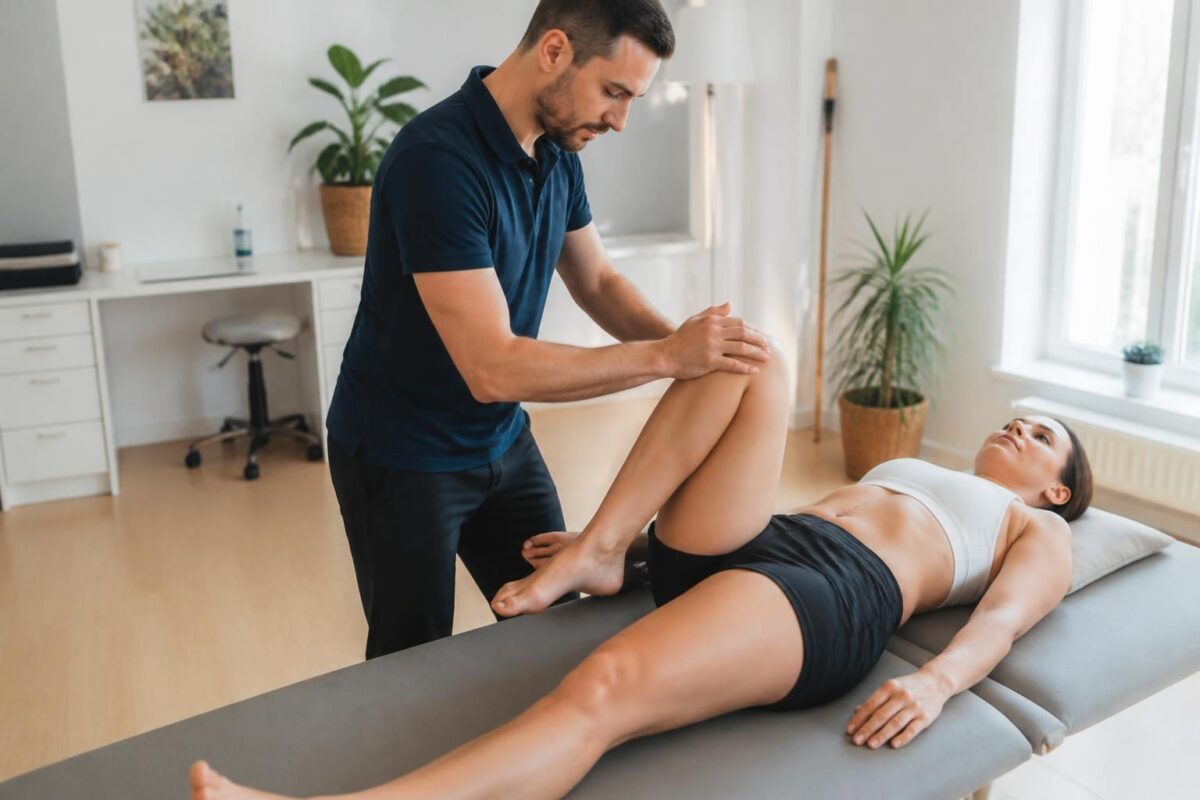
How osteopathy supports recovery after complex surgery
In short In short, Post-operative osteopathy is an approach fresh which supports the recovery After a Complex surgery. It helps to reduce the pain and the fatigue, improves the mobility and accelerates the healing thanks to a better vascularization and…
Mobility stories found after prolonged immobilization
“After eight weeks of immobilization following a fracture of the foot, I thought that my mobility was definitely out of reach. theosteopathy, with Manual techniques soft and targeted, gradually released tensions and restored the mobility joints and fascias around the ankle. In a few sessions, I could walk again without pain and climb the stairs without hesitation. »
“I remained inactive for a long time after a knee surgery and a period of immobilization. thanks to theosteopathy, the Joint mobilizations And the work on soft tissues restored the amplitude of the knee and pelvis. Today, I am traveling my daily journeys and I am even starting to consider light hikes. »
“After a severe sprain followed by immobilization, my shoulder was stiff and my overall mobility was decreasing. The osteopathy sessions helped me find a flexibility sustainable thanks to techniques myofasciales and appropriate stretching. I can work properly again and resume my sports activities gradually. »
“At 76, after a fall and prolonged immobilization, I was afraid of never keeping the balance again. Osteopathy worked on my posture and my muscle chains, improving my balance and my posture. I now move with more confidence and less pain. »
“For my immobilized ankle following an injury, osteopathy was a real revelation. While working on the fascias and gentle movements, my daily gestures recovered and my mobility progressed, which allowed me to resume my professional and personal activities more quickly than expected. »
This biography presents a reference practitioner in osteopathy, naturopathy and manual medicine, founder of Tagmed and the ACMA association. His journey illustrates an approach centered on the mobility and the welfare After prolonged immobilization, relying on clinical data and attentive listening to the patient. Its objective is to restore bodily function while respecting everyone’s safety and pace of healing.
After a period of immobilization, the soft tissues stiffen, the joints lose their amplitude, and the coordination between muscle, fascias and nerves can deteriorate. This stagnation can lead to significant loss of mobility, increased pain and increased risk of further injury upon return to exercise. The osteopathic approach considers that mobility is the result of a balance between structure, function and circulation. By focusing on freeing restrictions, the practitioner paves the way for a gradual and lasting recovery.
The first step is a global and targeted assessment. The osteopath identifies somatic dysfunctions according to palpatory and functional benchmarks, often summarized under the acronym TART (tissue texture, asymmetry, restricted mobility, tenderness). This method makes it possible to determine which areas are essential to deal with to quickly restore mobility while avoiding overloads. Each session is adapted to the recovery stage, pain intensity and patient activity level.
Several technical families are mobilized to restore mobility after prolonged immobilization. Structural techniques aim to free the joint blocks and restore a fluid amplitude. myofascial techniques and manipulations muscular Target tissue tensions and fibroneurovascular adhesions that limit tissue slippage. work on the fascias contributes in particular to improving the sliding and the Tissue resilience, while soft mobilizations gradually restore joint mobility without overloading fragile areas.
The role of the nervous system and circulation is central. By releasing mechanical stresses and stimulating mechanoreceptors, the osteopath can promote better proprioception and pain modulation. At the same time, lymphatic drainage and local vascularization improve, helping to reduce edema and accelerate tissue recovery. This holistic approach explains why some people regain their spontaneity more quickly in daily movements and in physical activities.
Beyond manual techniques, the rehabilitation course is programmed as a continuum. The practitioner advises home exercises, adjusts daily activities and sometimes incorporates complementary technologies to optimize recovery. When indicated, options such as spinal unloading, therapy by laser And shockwave treatments can support the restoration of mobility in addition to osteopathic manipulations, while remaining supervised by an approach based on evidence and individuality of the patient.
To find out more about this approach and the services offered, contact the TagMed clinic and make an appointment to assess your situation and define together a personalized return to mobility plan.
This summary shows that theosteopathy can play a key role in the mobility found after a Extended immobilization, by combining personalized evaluation, gentle techniques and progressive progression. By acting on tissues, joints and the nervous system, it helps to restore amplitude, reduce pain and prevent functional relapses. To learn more, you can consult dedicated resources on this topic: How osteopathy improves mobility after prolonged immobilization.
After immobilization, the body can develop Fascial adhesions, a Loss of mobility joints and a decrease inMuscle elasticity. Without appropriate intervention, these mechanisms can limit daily actions and slow down the return to activity. The osteopath assesses these critical areas and selects targeted interventions to initiate a safe and effective recovery, favoring approaches sweet and progressives.
How does osteopathy act concretely to restore mobility? The practitioner combines techniques structural, myofasciales and functional To free restrictions, improve the Sliding of the fascias and rebalance the muscle chains. This approach makes it possible to find a better Joint amplitude and more fluid neuromuscular coordination, while preventing compensation that may appear after immobilization.
The mechanisms of action mobilize several axes: the relaxation muscular, improving the circulation and lymphatic drainage, and activation of autonomic nervous system to promote relaxation and recovery. resources show that the lymphatic circulation And sports recovery benefit from these mechanisms, as well as the general improvement in mobility after immobilization.
A typical post-immobilization follow-up plan includes regular sessions and progression adapted to the patient’s tolerance, aimed at amplitude growing and a better Neuromuscular coordination. Evidence supports the benefits in the field of joint mobility and postural control. To expand your understanding, you can consult resources such as Guide-osteopathy.
To accompany recovery, osteopathy can be associated with targeted exercises and appropriate lifestyle (progressive physical activity, postural work, relaxing breathing). Useful resources address these synergies and the results observed in the restoration of mobility, postural control and postural balance after immobilization. For example: Benefits for pain and mobility and Postural balance.
Finally, each course is individual and requires an assessment of contraindications and precautions; A qualified osteopath will adapt the techniques (soft or more supported) and will direct if necessary to other health professionals to ensure a safe and sustainable recovery. To go further in understanding the mechanisms and results, you can explore the following resources: Sports recovery, Post-surgery support, and Impact on general health.

Dr Sylvain Desforges, B.Sc., D.O., N.D., osteopath, is the founding president of TAGMED and of the ACMA association. He dedicates his practice to chronic spinal pain, low back pain and symptoms compatible with sciatica, particularly when pain radiates toward the buttock, leg, calf, foot or toes.
Through SOS Sciatique, he publishes educational content on sciatica symptoms, possible causes such as disc herniation, disc narrowing, foraminal stenosis or irritation of a lumbar nerve root, as well as non-surgical approaches that may be considered according to the evaluation. At Clinique TAGMED, care may include, depending on the case, motorized neurovertebral decompression, specific osteopathic care or precision percussion.
For an evaluation related to sciatica treatment in Montreal / Mount Royal or sciatica treatment in Terrebonne, please consult the services available at Clinique TAGMED.
Medical disclaimer
The information published on SOS Sciatique is provided for educational purposes only and does not replace a consultation, diagnosis, opinion or treatment provided by a physician or another authorized healthcare professional. The author of this article is neither a medical doctor nor a specialist in a medical specialty recognized by the Collège des médecins du Québec. The osteopathic, manual medicine or functional support approaches described on this site do not constitute medical acts and are not intended to replace medical follow-up.
Consult a physician or emergency service in cases of loss of bladder or bowel control, anesthesia in the saddle area, significant or progressive weakness in the leg or foot, fever, recent trauma, severe pain or rapid worsening of symptoms. For more details, please read our Legal Notice.