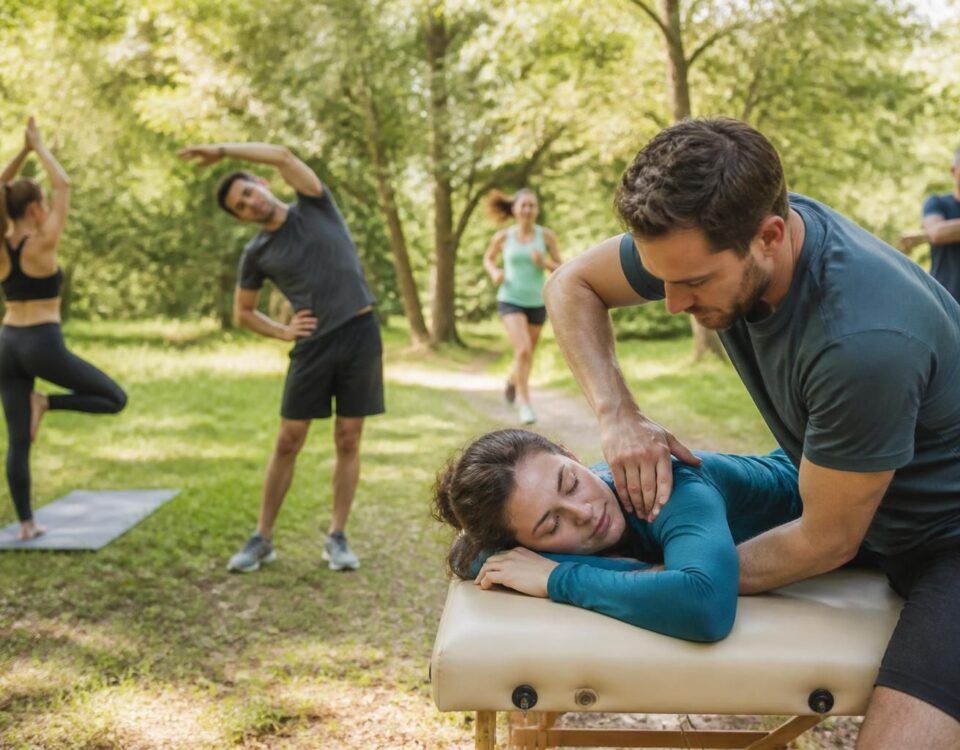
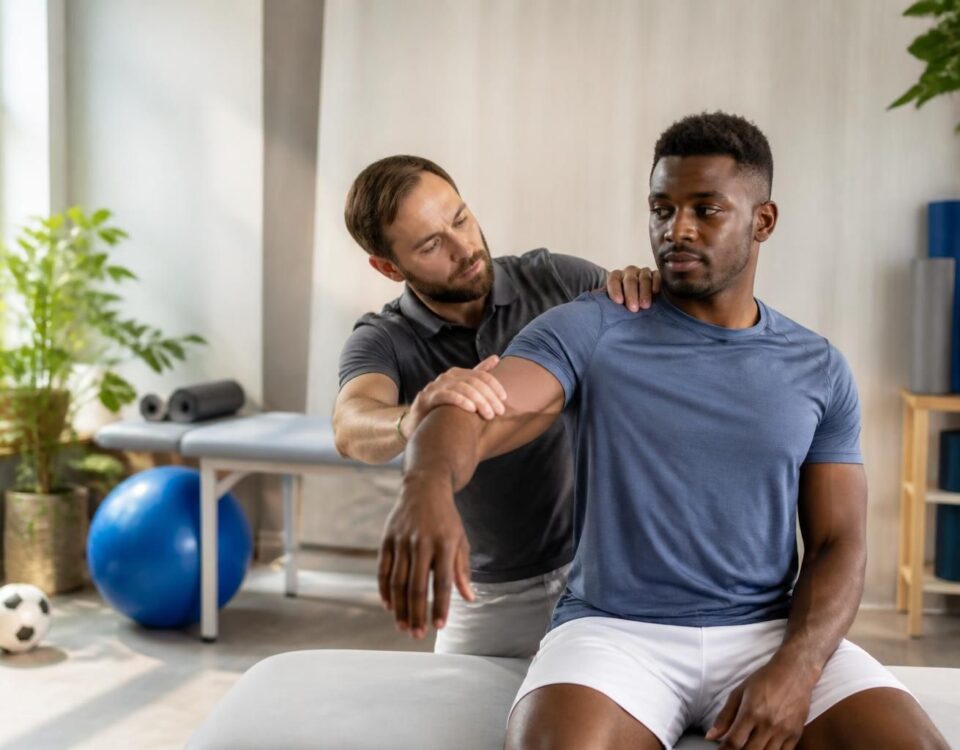
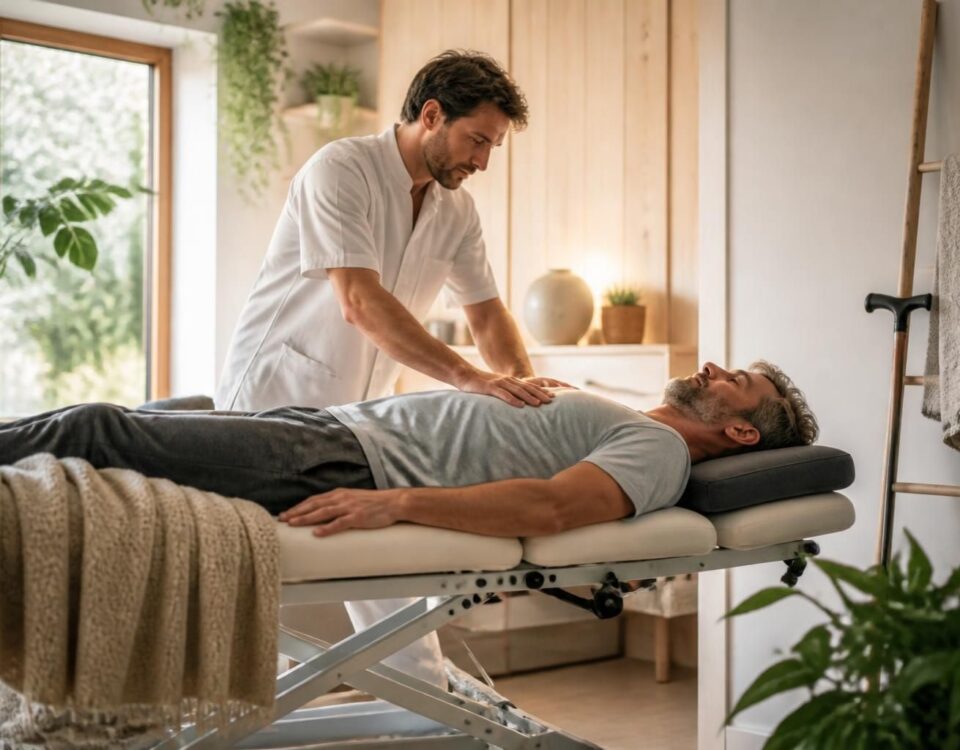
Osteopathic techniques to strengthen post-injury muscles
28/06/2026
Osteopathy and prevention: avoid musculoskeletal disorders
28/06/2026
In short
| In short, theosteopathy for the Chronic leg pain is one Global manual approach Aiming to restore The balance body and reduce pain. it acts by improving the circulation, by releasing tensions and stimulating theself-healing, without surgery Nor drugs. Its advantages include a lasting decrease in pain, better mobility And less heaviness or cramps. The treatment is based on Gentle techniques and personalized who work on muscle chains and functional integration. Accessible in Montpellier, this approach offers an effective solution for people suffering from Chronic pain legs By improving general well-being without invasive effects. |
Find out how theosteopathy can help to Relieve chronic leg pain Through an approach holistic and non-invasive.
- release of tensions and rebalancing muscle chains and joints to reduce pain and improve mobility.
- traffic improvement blood and lymphatic drainage, helping to reduce feelings of heaviness and swelling.
- Reduction of nerve irritations and referred pain while working on structure/function relationships.
- Self-healing stimulation and overall well-being, promoting sleep and energy during daily activities.
Each session is adapted to your situation, with an early assessment to target the causes and propose a safe and personalized treatment plan.
This article explains how theosteopathy can help relieve Chronic leg pain thanks to a global approach and adapted manual techniques. You will discover the simple mechanisms that underlie these benefits, the most useful techniques and the conditions where osteopathy can be integrated into global care.
A patient-centric approach
Each consultation is based on a global assessment, in order to understand how pain, posture and mobility interact. theosteopathy is based on the unity of the body and on the idea that structure and function are interdependent. By working on muscle chains and fascias, the practitioner aims to reduce tensions that can fuel pain in the legs and promoteself-healing natural body.
Relevant osteopathic techniques for the legs
The techniques used aim to release tension and restore mobility without forcing structures. We can use the Myofascial release, at the Release of trigger points and at the Joint mobilization To improve circulation, reduce tension and facilitate movement. The muscle chain approach makes it possible to identify dysfunctions that can manifest far from the initial pain and to intervene in a targeted way throughout the chain.
For some patients, visceral or cranio-sacral techniques may be considered as part of a global strategy. The goal remains to improve the Fluid circulation and the overall functioning of the body, in order to reduce pain and improve mobility sustainably.
Frequent cases and observable benefits
Pain from the lumbar or hips and radiating to the legs, as well as chronic muscle pain in the lower limbs, are common reasons for osteopathic management. Patients often report a decrease in pain, better range of motion and reduced fatigue associated with chronic pain.
It is important to note that the results depend on each person and on the initial assessment. Osteopathy does not promise instant healing, but it can promote gradual pain reduction and lasting functional improvement.
Integration and prevention
Osteopathy is often part of a multidisciplinary approach. It can be associated with postural advice, appropriate exercises and prevention measures to maintain muscle balance and prevent recurrences. Professional associations support the ethical and competent practice of osteopathy, such as ACMA and the College of Canadian Osteopaths.
The training of osteopaths is done in particular in recognized establishments such as Numss, NAO, National University of Medical Sciences and National Academy of osteopathy, guaranteeing a solid theoretical and practical basis.
References and resources to deepen
To enrich your information, you can consult resources that present the benefits of osteopathy for chronic pain and limb pain, including:
Osteopathy#ATFP_CLOSE_TRANSLATE_SPAN# and sciatic pain: a durable and natural solution and LES#ATFP_CLOSE_TRANSLATE_SPAN# Benefits for professional athletes.
Further information on the relationship between sleep and osteopathy can be found here: Improvement#atfp_close_translate_span# Sleep quality, and for recovery after tendonitis: Recovery#ATFP_CLOSE_TRANSLATE_SPAN# after tendinitis.
To better understand general applications, resources available on the site Osteopathy#ATFP_CLOSE_TRANSLATE_SPAN# and sciatica pain can be useful.
Additional information on support possibilities and general indications can be found in that#atfp_close_translate_span# can treat osteopathy.
For additional readings related to limb pain and chronification, you can also consult resources dedicated to pain and leg mobility on reference partner sites in the field.
What to remember when looking for osteopathic help
Choose a trained practitioner in recognized schools and affiliated with recognized professional associations. Ask for a full assessment before any treatment and discuss goals and expectations. Osteopathy can offer a useful complementary approach for chronic leg pain, while remaining compatible with overall medical follow-up.
For more information on specific approaches and scientific bases, see the following resources:
LES#ATFP_CLOSE_TRANSLATE_SPAN# Benefits for professional athletes, Quality#atfp_close_translate_span# sleep, Pain#ATFP_CLOSE_TRANSLATE_SPAN# Sciatica, Recovery#ATFP_CLOSE_TRANSLATE_SPAN# after tendinitis.
“Medical disclaimer: The information and advice provided on this site does not replace the health professional’s benefit, diagnosis or treatment. Please note that Dr. Sylvain Desforges osteopath is neither a doctor of medicine nor a doctor, and is not a specialist in a medical specialty as defined by the Collège des Médecins du Québec. Manual medicine, functional medicine and sports medicine as described on this site exclude any medical treatment or diagnosis made by a doctor or specialist doctor. Always consult your doctor for any medical questions. For more details, please read our full legal notice. »
Benefits of osteopathy for chronic leg pain
- Improvement of the circulation blood and lymphatic in the legs.
- reduction of Muscle tensions and trigger points responsible for the pain.
- Liberation of Muscle chains and improvement of posture pelvis and legs.
- Restoration of the Joint mobility and from the flexibility.
- Decrease in chronic pain and reduction of recurrences through a regular approach.
- Support for the Recovery after effort and improved daily performance.
- Optimization of the nervous function and reduction of referred pain, in particular sciatica.
- Approach personalized adapted to the profile and specific needs of each person.
- Prevention and maintenance to avoid imbalances and improve sustainable well-being.

Introduction and quick summary
This forum presents the Benefits of osteopathy for Relieve chronic leg pain. By favoring a global and non-invasive approach, osteopathy can restore muscle balance, improve circulation and act on the root causes of pain, while offering you lasting solutions adapted to your rhythm of life.

How osteopathy improves the quality of life of active people
In short In short, theosteopathy is a global approach that Optimizes mobility and the function of the body of ACTIVE PEOPLE, for a better quality of life. It helps prevent injury and reduce Musculoskeletal pain While promoting the Sports recovery.…
Understanding the Causes and Role of Osteopathy
Long and persistent leg pain can come from muscle tension, imbalance in body chains or insufficient venous return. Osteopathy aims to restore unity of the body, by releasing mobility restrictions and improving the circulation of fluids in order to reduce pain and inflammation. This approach holistic Takes into account the interactions between the upper and lower body, breathing, posture and locomotion.
By working on the structure and function, osteopathy seeks to restore overall harmony, which can reduce pain that spreads to the legs and promote a gradual return to normal activity. This approach is particularly suitable for chronic pain that does not always respond to local or drug treatments.

Osteopathy and sports recovery: prepare the body for lasting performance
In short In short, Osteopathy and Sports recovery is one Global manual approach that sustainably prepares the body for the effort by restoring mobility and circulation After the effort. It is a discipline that acts on the sinews, the joints,…
How osteopathy works to relieve leg pain
Rebalancing of muscle chains and mobility
The osteopathic method makes it possible to identify and release tension in the muscle chains that connect the hips, thighs and calves. By finding a better coordination of movements, you can feel less stiffness and a greater range of gestures when walking or sport.
Improved circulation and drainage
Targeted techniques promote better blood and lymph circulation, which can reduce feelings of heaviness and swelling. By facilitating the venous return and drainage of toxins, osteopathy can contribute to faster recovery after exercise and a reduction in morning pain.
Stress reduction and sleep optimization
The body responds to stress and fatigue with an increase in tension that can amplify pain. Thanks to psycho- bodily approaches and targeted relaxation, osteopathy helps to reduce these tensions, also improving sleep quality and muscle recovery.
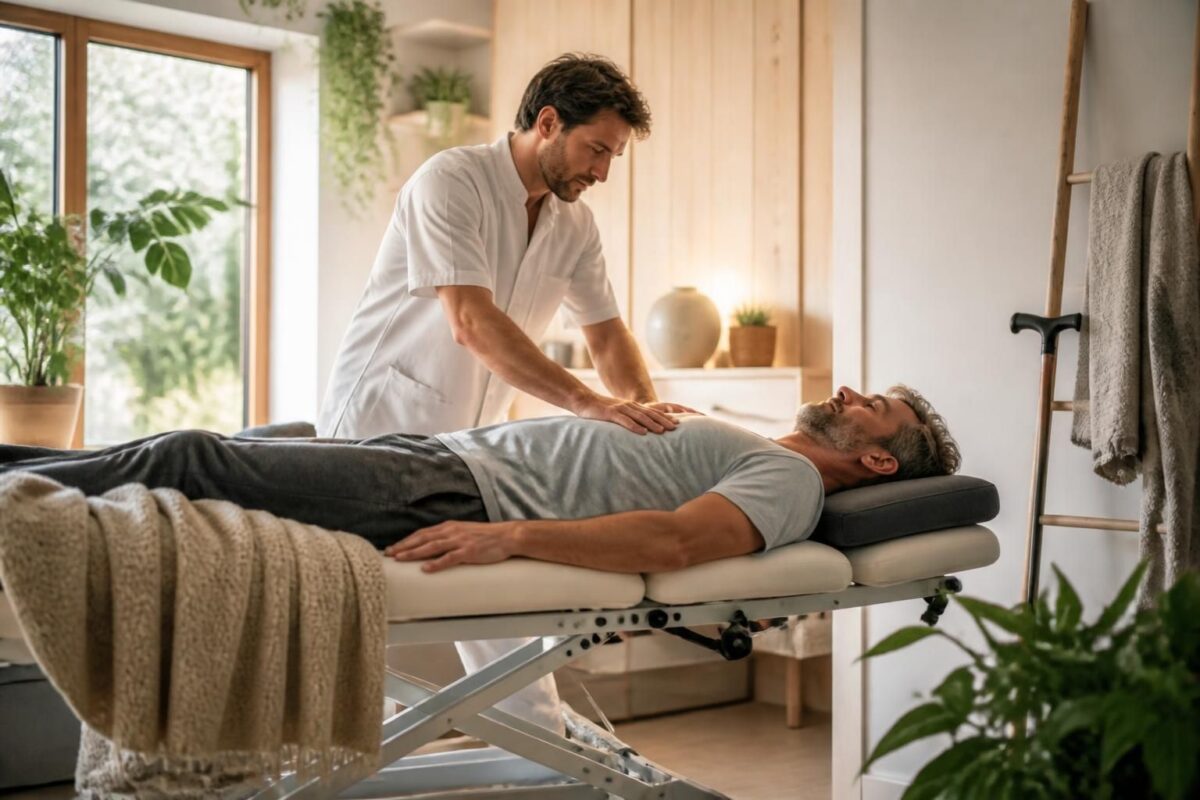
Why Osteopathy Is Essential For Recovery People
In short In short, Osteopathy in convalescence is an approach manual and holistic which helps to accelerate the recovery by restoring The balance, the mobility and a good circulation fabrics. it contributes to Reduce the pain, support the Back to…
the techniques used and their concrete benefits
Gentle mobilizations and specific stretching
Progressive mobilizations and guided stretching help restore the mobility of joints and muscles without pain, promoting smoother and less painful walking.
Myofascial release and trigger points
Release of fascias and work on trigger points target areas of tension that can cause referred pain in the legs, providing quick and lasting relief.
Complementary approaches and prevention
Additional techniques, adapted to your situation, can be integrated to prevent recurrences, including postural advice, simple exercises and recommendations for adapted physical activity.

Osteopathic manipulations to strengthen post-traumatic muscles
In short In short, Osteopathic manipulations for Strengthen post-traumatic muscles constitute a gentle manual approach aimed at restoring the mobility, reduce the pain and facilitate the Functional rehabilitation After a injury. What is Is it? A series of precise gestures…
When and how to do it
A first consultation makes it possible to assess the origin of the pain and to establish a personalized plan. The results often appear after a few sessions, with a gradual improvement in pain, mobility and comfort during daily activities.
To optimize the benefits, it is advisable to combine the sessions with exercises at home and with appropriate management of the lifestyle, in particular in terms of ergonomics and level of physical activity.

Osteopathy and prevention of work-related musculoskeletal disorders
In short theosteopathy is one Manual approach that restores body balance and prevents MSD related to work. Its advantages: reduction of tension, improvement of mobility and prevention of chronic pain. She is preventive and healing, suitable for office and trades…
Operational conclusion and maintenance
Osteopathy offers an approach natural and personalized For chronic leg pain, working on causes, circulation and recovery. By adopting a suitable and regular routine, you can preserve your mobility, reduce your pain and sustainably improve your quality of life.
| Axis | Impact |
|---|---|
| Axis Pain | gradual decrease in pain and improved functional tolerance. |
| Axis Joint mobility | Restoration of the mobility hips, knees and calves, facilitating walking and daily activities. |
| Axis Circulation | Stimulation of the circulation blood and lymphatic, helping to reduce edema and cramps. |
| Axis Myofascial release | release of fascias and reduced deep tension. |
| Axis nervous decompression | decrease in pressure on gristle Spinal and peripherals, reducing irritation. |
| Axis Postural harmonization | correction of imbalances and alignment of the pelvis, reducing the lumbar stresses. |
| Axis Prevention and maintenance | Maintenance of results through regular sessions and advice ergonomic. |
| Axis stress management | reduction of stress and improved relaxation, facilitating recovery. |
| Axis muscle function | Improved endurance when walking and function muscular. |

The benefits of osteopathy to treat muscle imbalances
In short theosteopathy is a manual approach to restore themuscle harmony and postural considering the body as a whole. Its main benefits include the reduction of aches and tensions, the improvement of the mobility and from the posture, and prevention…
Testimonials: The Benefits of Osteopathy for Chronic Leg Pain
“Before, my Chronic leg pain prevented me from walking comfortably. thanks to theosteopathy, I found a better mobility And a marked decrease in pain, which allows me to go out longer and more often. »
“As an assiduous runner, my Leg pain compromised my sessions. The gentle and targeted osteopath approach has improved my circulation and the pain decreased, allowing me to resume my daily outings without hesitation. »
“I work up all day and my legs heavy at the end of the day. After a few sessions, my mobility came back, the tensions cleared up and I feel less fatigue, even after an active day. »
“My 72-year-old mother felt a heaviness in her legs and nocturnal cramps. after theosteopathy, the circulation improved and the pain is less present, which facilitates his movements and his sleep. »
“The muscle chain approach allowed me to understand where the pain came from and to act on all the tensions that went up to the legs. Result: a mobility found and a pain significantly decreased on a daily basis. »
“After several visits, I noticed a better circulation, less night cramps and regained energy that allows me to resume my usual activities without fear of pain. »
Dr. Sylvain Desforges, Expert in osteopathy, in naturopathy And in manual medicine, occupies a place of choice in the field of health. At the head of TagMed and the ACMA association as founding president, he conducted his practice with a constant desire to innovate to improve the well-being of patients. His commitment is focused on Chronic pain management, in particular those that affect the legs, by integrating advanced technologies when appropriate. Its objective is to offer evidence-based care in order to optimize everyone’s health and lifestyle.
In his approach, theosteopathy is based on a holistic approach to the body: structures and functions are intimately linked. For leg pain, this involves examining the pelvis, the lumbar spine and the lumbar and posterior muscle chains in order to identify the imbalances that maintain or aggravate the pain. By working on joint mobility, fascia relaxation and muscle tone, osteopathy can promote better circulation, reduce tension and accelerate functional recovery, which translates into freer walking and better daily energy.
The benefits for chronic leg pain are manifested through several interdependent mechanisms. First, a reduction in the pressure exerted on the nerves that project to the legs can alleviate symptoms of sciatica or neuropathic pain. Second, muscle relaxation and trigger point release decreases local pain and cramps. Third, the optimization of pelvic and lumbar mobility improves posture and gait progress, resulting in less fatigue and increased exercise tolerance.
According to the evaluation, therapeutic supplements may be proposed to enhance efficacy. vertebral decompression protocols and approaches such as laser or shock waves Can be considered as non-invasive supports where relevant, in addition to manual osteopathic techniques. These options aim to promote tissue repair and accelerate recovery, while remaining integrated into a global and personalized approach.
At the heart of its action, Dr. Desforges favors individualized and sustainable care. The goal is not only to reduce pain, but also to restore functionality, improve sleep and enhance autonomy in daily activities. This patient-centric approach is accompanied by transparent dialogue, clear goals and regular monitoring to measure progress and adjust the treatment plan if necessary.
Finally, the importance of preventive monitoring and appropriate maintenance is highlighted. Regular visits help correct imbalances before they replicate in recurring pain, thus helping to preserve mobility and quality of life over the long term.
This quick presentation shows how Osteopathy can act on Chronic leg pain, by improving circulation, reducing muscle tension and restoring the balance of the body as a whole. Based on a personalized and gentle approach, it aims to sustainably relieve pain, promote mobility and support preventive measures to improve daily life and quality of life.
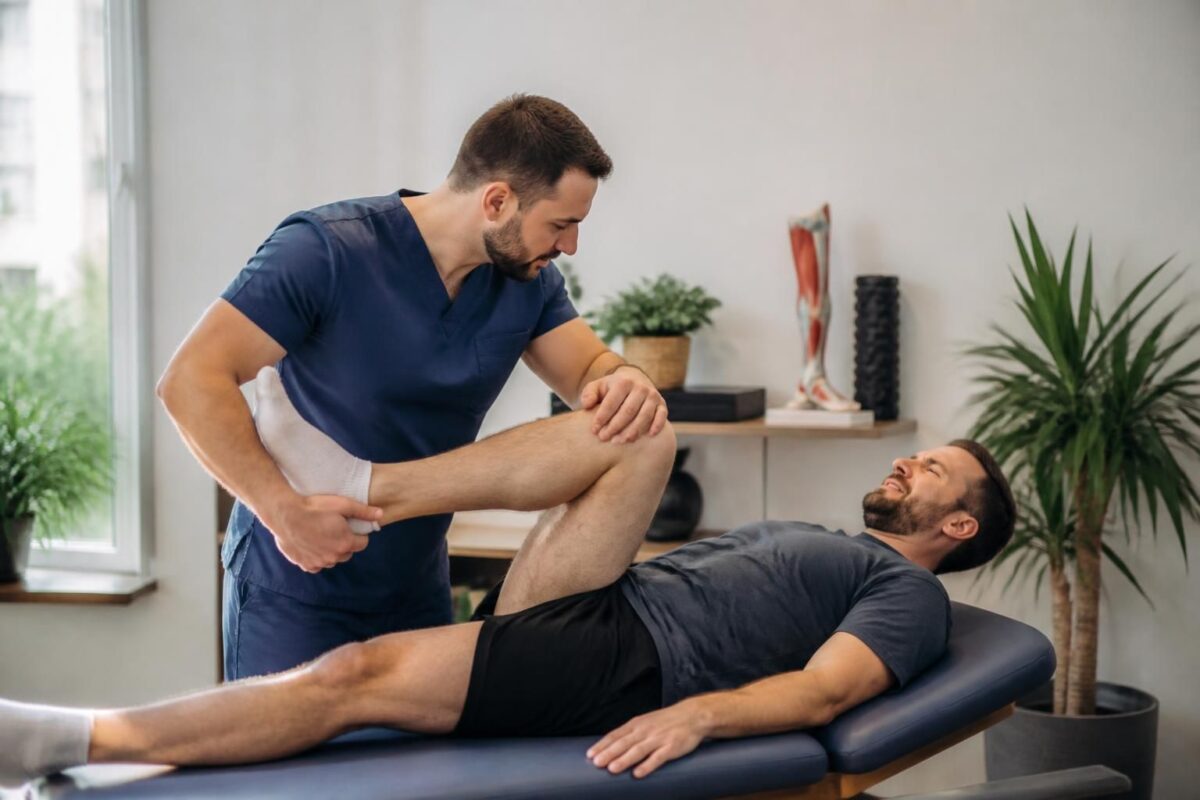
Osteopathy and chronic leg pain: regaining an optimal quality of life
In short In short, Osteopathy is one Global manual approach aimed at reducing Chronic leg pain and improve the quality of life. What is it? Non-drug therapy using the hands to identify restrictions and treat lesional chains. How does it…
The mechanisms of action of osteopathy on leg pain
Leg pain often finds their origin in muscle chain tensions, postural imbalances and insufficient local circulation. theosteopathy Acts on these factors by releasing deep tension, restoring joint mobility and improving the circulation of blood, lymph and nervous fluids. This global approach helps reduce pain and optimize nutrient intake, while facilitating the body’s self-healing mechanisms.
By working on the relationships between structure and function, the osteopath aims to correct the underlying causes rather than just mitigate the symptoms, which can lead to lasting improvements and better endurance of muscle and joint tissues.
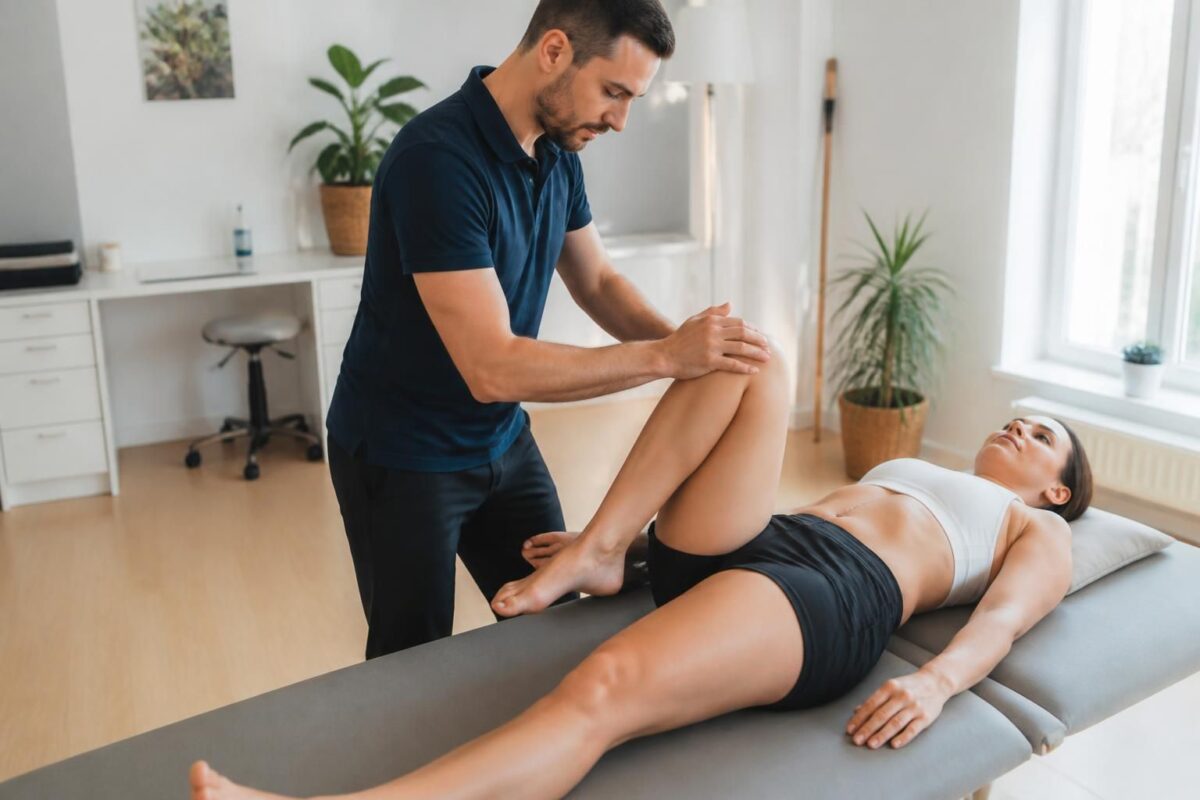
How osteopathy supports recovery after complex surgery
In short In short, Post-operative osteopathy is an approach fresh which supports the recovery After a Complex surgery. It helps to reduce the pain and the fatigue, improves the mobility and accelerates the healing thanks to a better vascularization and…
commonly used techniques and interventions
The sessions are based on techniques sweet and targeted that focus on contact and precision. Methods may include controlled joint manipulations to restore mobility, gentler mobilizations for sensitive joints, and techniques myofasciales or trigger points release to release local tension and reduce referred pain in the legs.
Passive stretching and work on the muscle chains help rebalance tension and improve overall posture, which helps to reduce the load on the lower limbs and prevent recurrences.
Indications and safety
theosteopathy is often beneficial for chronic leg pain linked to musculoskeletal imbalances, mild circulatory disorders or persistent postural pain. Each consultation begins with a full assessment to confirm the suitability of the treatment and to establish a personalized plan. If certain medical conditions require a different approach, the osteopath can adapt the techniques or direct towards other professionals to guarantee safety and effectiveness.
Integration into a well-being and prevention approach
Integrate osteopathy into a process of welfare and prevention can sustainably support the legs by avoiding overloads and promoting better recovery after exercise. Regular consultations can be associated with practical advice on ergonomics, posture and appropriate physical activity, in order to maintain results and prevent injuries related to work or sports activity.
To deepen the benefits and existing approaches, you can consult specialized resources that include prevention of work-related injuries, chronic pain management and the beneficial effects of osteopathy on the lower limbs.
Additional resources
To enrich your understanding, discover these relevant resources: #ATFP_CLOSE_TRANSLATE_SPAN# Benefits of osteopathy to reduce pain in the lower limbs, Osteopathy#ATFP_CLOSE_TRANSLATE_SPAN# and chronic hip pain – complete management, Osteopathy#ATFP_CLOSE_TRANSLATE_SPAN# and prevention of work-related injuries, Osteopathy#ATFP_CLOSE_TRANSLATE_SPAN# and chronic pain, Pain#ATFP_CLOSE_TRANSLATE_SPAN# Muscles – Natural approach and management, les#ATFP_CLOSE_TRANSLATE_SPAN# Benefits of osteopathy on chronic pain, Why#ATFP_CLOSE_TRANSLATE_SPAN# Osteopathy is effective for repetitive work pain, Management#ATFP_CLOSE_TRANSLATE_SPAN# Chronic pain – Osteopathy, Comment#ATFP_CLOSE_TRANSLATE_SPAN# Osteopathy prevents overuse injuries, Osteopathy#ATFP_CLOSE_TRANSLATE_SPAN# to relieve pain and improve well-being.

Dr Sylvain Desforges, B.Sc., D.O., N.D., osteopath, is the founding president of TAGMED and of the ACMA association. He dedicates his practice to chronic spinal pain, low back pain and symptoms compatible with sciatica, particularly when pain radiates toward the buttock, leg, calf, foot or toes.
Through SOS Sciatique, he publishes educational content on sciatica symptoms, possible causes such as disc herniation, disc narrowing, foraminal stenosis or irritation of a lumbar nerve root, as well as non-surgical approaches that may be considered according to the evaluation. At Clinique TAGMED, care may include, depending on the case, motorized neurovertebral decompression, specific osteopathic care or precision percussion.
For an evaluation related to sciatica treatment in Montreal / Mount Royal or sciatica treatment in Terrebonne, please consult the services available at Clinique TAGMED.
Medical disclaimer
The information published on SOS Sciatique is provided for educational purposes only and does not replace a consultation, diagnosis, opinion or treatment provided by a physician or another authorized healthcare professional. The author of this article is neither a medical doctor nor a specialist in a medical specialty recognized by the Collège des médecins du Québec. The osteopathic, manual medicine or functional support approaches described on this site do not constitute medical acts and are not intended to replace medical follow-up.
Consult a physician or emergency service in cases of loss of bladder or bowel control, anesthesia in the saddle area, significant or progressive weakness in the leg or foot, fever, recent trauma, severe pain or rapid worsening of symptoms. For more details, please read our Legal Notice.