How osteopathy improves blood circulation in sore areas
29/06/2026
Osteopathy and prevention: avoiding musculoskeletal imbalances
29/06/2026
In short
In short, the Osteopathic approaches for the Shoulder pain are one Global approach aimed at treating the cause and not only the pain, thanks to a Overall assessment And some Gentle techniques adapted. This method allows Reduce the pain, fromImprove mobility and prevent recurrences by Custom program Including reinforcement, postural correction and lifestyle advice. it covers the main origins such as the Headdress tendinopathies, the Subacromial conflict, the Retractile capsulitis and theinstability, while remaining compatible with possible medical treatments and without necessarily having to resort to surgery. accessible in local clinics, in particular at Montreal, this approach adapts to your sporting and professional activity for a sustainable recovery. |
Osteopathic approaches to relieve shoulder pain are based on a Overall assessment and a management that can target causes located at a distance, such as the cervical spine or the back. They favor Manual techniques sweet for release tension, restore the mobility and restore the balance of scapulo-humeral mechanisms.
common pathologies, such as Headdress tendinopathies, the Subacromial conflict, the Retractile capsulitis and the instabilities, are approached by a Targeted rehabilitation, a progressive reinforcement and a correction of the scapulo-humeral rhythm. The treatment associates education, adapted exercises and, if necessary, coordination with other professionals to reduce pain and improve function while preventing recurrences, and practical advice on posture and daily gestures complete the care.
Quick summary: Osteopathy addresses shoulder pain by linking local pain to body imbalances. It uses a global assessment, gentle techniques and personalized support. The goal is to improve mobility, reduce pain and prevent recurrences by correcting imbalances.
A complex joint and fragile, the shoulder requires an approach that examines the region and the body as a whole. The pain can come from a local process or be projected through the cervical spine, back or shoulder girdle. An osteopathic approach then seeks to restore the morphological and functional balance through simple and appropriate gestures.
Identification of causes and warning signals
Shoulder pain is often manifested by tendinopathies from the headdress, Subacromial pain and conflict, Retractile capsulitis, instabilities and referred pain. Pain can be localized, diffuse or nocturnal, and mobility may be limited. The osteopathic assessment evaluates the interactions between the shoulder, the spine, the diaphragm and the pelvic belt to target the source of the imbalance.
General osteopathic approaches
In osteopathy, we Overall evaluates posture, movement habits and pain history. The treatment is based on Soft manual techniques and adapted, intended to release tension, improve joint mobility and restore the balance of the musculoskeletal system. The therapist advises gestures to avoid, exercises that are easy to practice and postures to favor to reduce pain and promote recovery.
Headdress tendinopathies and lateral pain
The pain is often lateral and can be associated with functional weakness. The care is aimed at education of the patient and a Load modulation on the shoulder. The plan includes a Progressive strengthening rotators, a job scapular and an improvement in chest mobility.
Subacromial pain and conflict
The alarm signal issorrow at elevation. Osteopathic treatment favors a Targeted rehabilitation and an Kinematic correction movement, with progressive exercises. Surgery is rarely needed in the early stages.
Retractile capsulitis
Patients generally go through three phases: pain, stiffness and recovery. The typical profile is between 40 and 60 years old, with increased frequency in people with diabetes or hypothyroidism. Management is based on education, analgesics or injections according to medical advice, and Sweet mobilizations and tolerated exercises.
Long biceps and slap lesions
The pain is often anterior and deep, aggravated by elevation and supination movements. The treatment consists of a drop of load, a strengthening and an Correction of the scapulo-humeral rhythm. In the event of persistent failure, an intervention may be considered.
acromioclavicular osteoarthritis
The pain is localized on the AC joint and is noticeable whenHorizontal adduction. The protocol favors a Load setting, appropriate exercises and, if necessary, a infiltration.
instabilities
we distinguish theapprehension, history of subluxation or dislocation and a hyperlaxity. The care is aimed at Dynamic stability involving the headdress and scapula, with graduated exposure and, in the event of recurrences, a surgical opinion.
Pain of cervical or scapulo-thoracic origin
These pains can be referred towards the shoulder. The treatment consists of Process the source region In parallel with the shoulder, in order to obtain a lasting improvement of the function.
To strengthen efficiency and prevent recurrences, it is useful to adopt simple actions on a daily basis. Maintaining good posture while sitting, spreading weight when carrying loads and practicing gentle neck, shoulder and back relaxation exercises can make a noticeable difference in your comfort and mobility.
Lasting results can be achieved through personalized support. The objective is to reduce pain, improve mobility and support recovery after trauma or surgery, while limiting recurrences by correcting imbalances.
To deepen, discover the following resources on osteopathy and shoulder pain:
Health Magazine,
Cahors Osteo,
SOS SCIATIC,
The nursing home,
SOS SCIATIC.
For any additional information, you can consult the following resources, all compliant with authorized domains:
sossciatica.com,
Cliniquetagmed.com,
decompressionneurovertabale.com,
SoshernieDiscale.com,
SosherniatedDisc.com,
sostunnelcarpien.com,
sossciatica.com.
Medical Disclaimer: The information and advice provided on this site does not replace the health professional’s diagnosis or treatment. Please note that Dr. Sylvain Desforges osteopath is neither a doctor of medicine nor a doctor, and is not a specialist in a medical specialty as defined by the Collège des Médecins du Québec. Manual medicine, functional medicine and sports medicine as described on this site exclude any medical treatment or diagnosis made by a doctor or specialist doctor. Always consult your doctor for any medical questions. For more details, please read our full legal notice.
- Overall assessment and differential diagnosis.
- Education and postural advice.
- Load management and progression of efforts.
- Manual techniques and gentle mobilizations.
- Targeted rehabilitation According to the pathology:
- Headdress tendinopathies : progressive reinforcement, scapulo-thoracic work, mobility.
- Conflict/bursitis : kinematic correction and progressive exercises.
- Retractile capsulitis : gentle mobilizations and tolerated exercises.
- Long Biceps/Slap : load reduction and reinforcement; scapulo-humeral rhythm.
- AC osteoarthritis : load management and exercises; Infiltrations according to medical advice.
- instabilities : dynamic stability and graduated exposure; Surgical advice if recurrence.
- neck pain and scapulo-thoracic: treat the source.
- pain regulation and prevention of recurrences.

This article presents the Osteopathic approaches To relieve shoulder pain. By mobilizing a global evaluation and gentle techniques, osteopathy aims to identify local and distal causes, then to propose a personalized plan combining education, load management and progressive exercises to restore mobility and functionality.
Headdress tendinopathies
The cuff tendinopathies are often manifested by lateral or antero-lateral pain and can lead to functional weakness. Factors such as training overload, posterior stiffness, scapular dyskinesia and conditions like diabetes or tobacco play a role. In osteopathic practice, we favor a education of the patient, a Load modulation and one Progressive strengthening of rotators, supplemented by work on scapular stability and thoracic mobility to improve alignment and function.
Lasting results are based on the appropriate progression of the exercises and the correction of risky movements. The objective is to allow daily and sporting use without pain, while avoiding repeated overloads that maintain pain.

How osteopathy improves the quality of life of active people
In short In short, theosteopathy is a global approach that Optimizes mobility and the function of the body of ACTIVE PEOPLE, for a better quality of life. It helps prevent injury and reduce Musculoskeletal pain While promoting the Sports recovery.…
Subacromial pain (conflict/bursitis)
Pain on elevation and “painful arc” reflects subacromial conflict or associated bursitis. The osteopathic approach aims to correct the mechanical causes rather than intervene only on pain. The Targeted rehabilitation, the Kinematic correlation And some Progressive exercises are privileged, in order to improve mobility and rebalance the rhythm of gestures.
In most cases, surgery is not necessary as a first option. The treatment focuses on restoring the movement plan and preventing recurrences through small daily adjustments and appropriate self-exercise sessions.

Osteopathy and sports recovery: prepare the body for lasting performance
In short In short, Osteopathy and Sports recovery is one Global manual approach that sustainably prepares the body for the effort by restoring mobility and circulation After the effort. It is a discipline that acts on the sinews, the joints,…
Retractile capsulitis
Retractile capsulitis generally follows three phases: painful, then stiffness, then recovery over several months. It mainly affects adults between 40 and 60 years old and is more frequent with certain conditions (diabetes, hypothyroidism). In osteopathy, we bet on a education, appropriate pain management (analgesics or injections according to medical advice), as well as gentle mobilizations and tolerated exercises to encourage mobility without aggravating inflammation.
The key is to move forward slowly, respecting body signals, to preserve structures and promote a gradual resumption of activities.
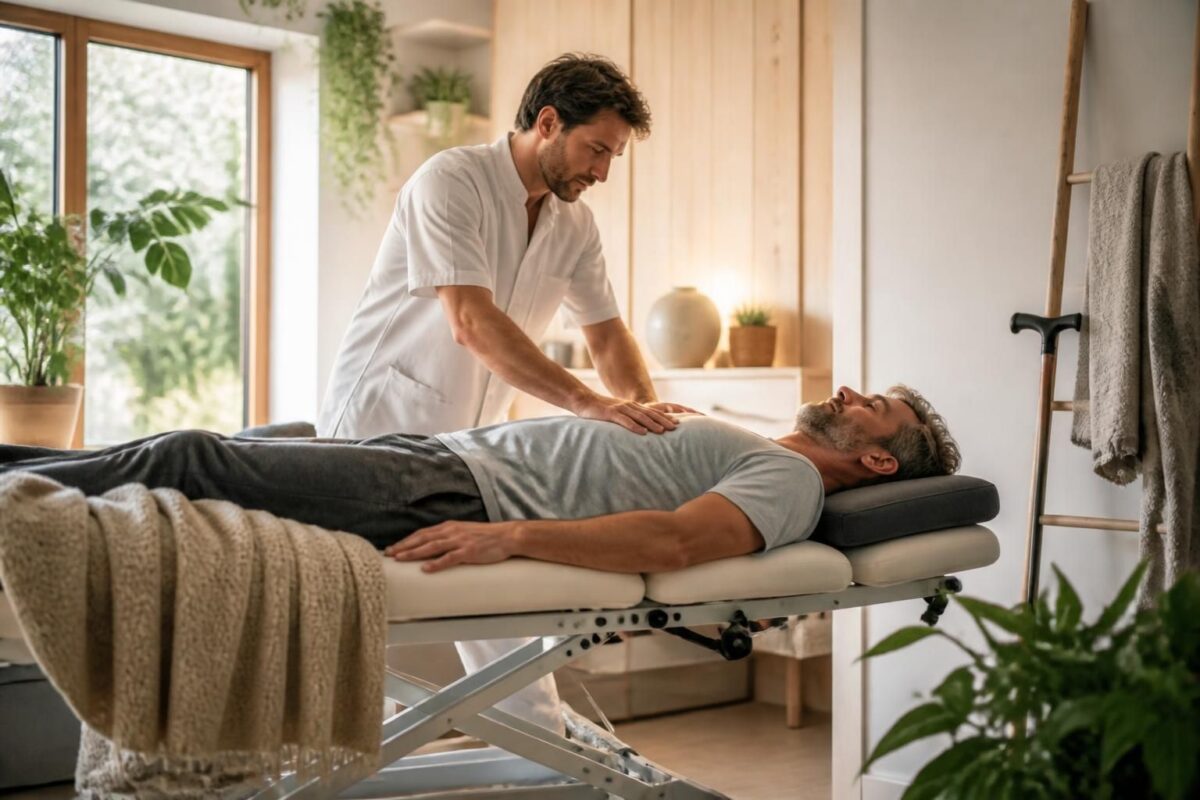
Why Osteopathy Is Essential For Recovery People
In short In short, Osteopathy in convalescence is an approach manual and holistic which helps to accelerate the recovery by restoring The balance, the mobility and a good circulation fabrics. it contributes to Reduce the pain, support the Back to…
Long biceps and slap lesions
Deep anterior pain can be aggravated by elevations and movements in supination. The osteopathic approach aims to reduce the load, strengthen the muscles around the shoulder and correct the scapulo-humeral rhythm to improve stability and control.
In refractory cases, a specialized consultation may be recommended to assess surgical options. The objective is to restore a harmonious dynamic between the headdress, the biceps and the scapula in order to restore function.

Osteopathic manipulations to strengthen post-traumatic muscles
In short In short, Osteopathic manipulations for Strengthen post-traumatic muscles constitute a gentle manual approach aimed at restoring the mobility, reduce the pain and facilitate the Functional rehabilitation After a injury. What is Is it? A series of precise gestures…
acromioclavicular osteoarthritis
Local pain in the acromioclavicular joint and during horizontal elevations or adductions is common in osteoarthritis. The osteopathic strategy is based on a Load adjustment, of Adapted exercises and, if necessary, a infiltration In a medical setting, to reduce inflammation and preserve mobility.
The treatment targets the maintenance of stability and the optimization of daily and sporting gestures, while delaying the progression of joint damage.

Osteopathy and prevention of work-related musculoskeletal disorders
In short theosteopathy is one Manual approach that restores body balance and prevents MSD related to work. Its advantages: reduction of tension, improvement of mobility and prevention of chronic pain. She is preventive and healing, suitable for office and trades…
instabilities
Instabilities are manifested by a feeling of apprehension, a history of subluxation or dislocation and sometimes hyperlaxity. The osteopathic approach focuses on Dynamic stability of the headdress and scapula and a graduate experience loads and movements to promote muscle and tissue adaptation.
In the event of recurrences, a surgical opinion can be considered after multidisciplinary evaluation in order to ensure the best solution, adapted to the patient’s profile.

The benefits of osteopathy to treat muscle imbalances
In short theosteopathy is a manual approach to restore themuscle harmony and postural considering the body as a whole. Its main benefits include the reduction of aches and tensions, the improvement of the mobility and from the posture, and prevention…
Pain from cervical/scapulo-thoracic origin
Distant pain or paresthesia may come from the cervical spine or scapulo-thoracic environment. Osteopathy considers these pains as signals of a common dysfunction and proposes to treat the source region in parallel with the shoulder to find a harmonious muscle chain.
Success is based on a global approach that rebalances tensions, improves mobility and reduces the risk of harmful compensation around the shoulder.
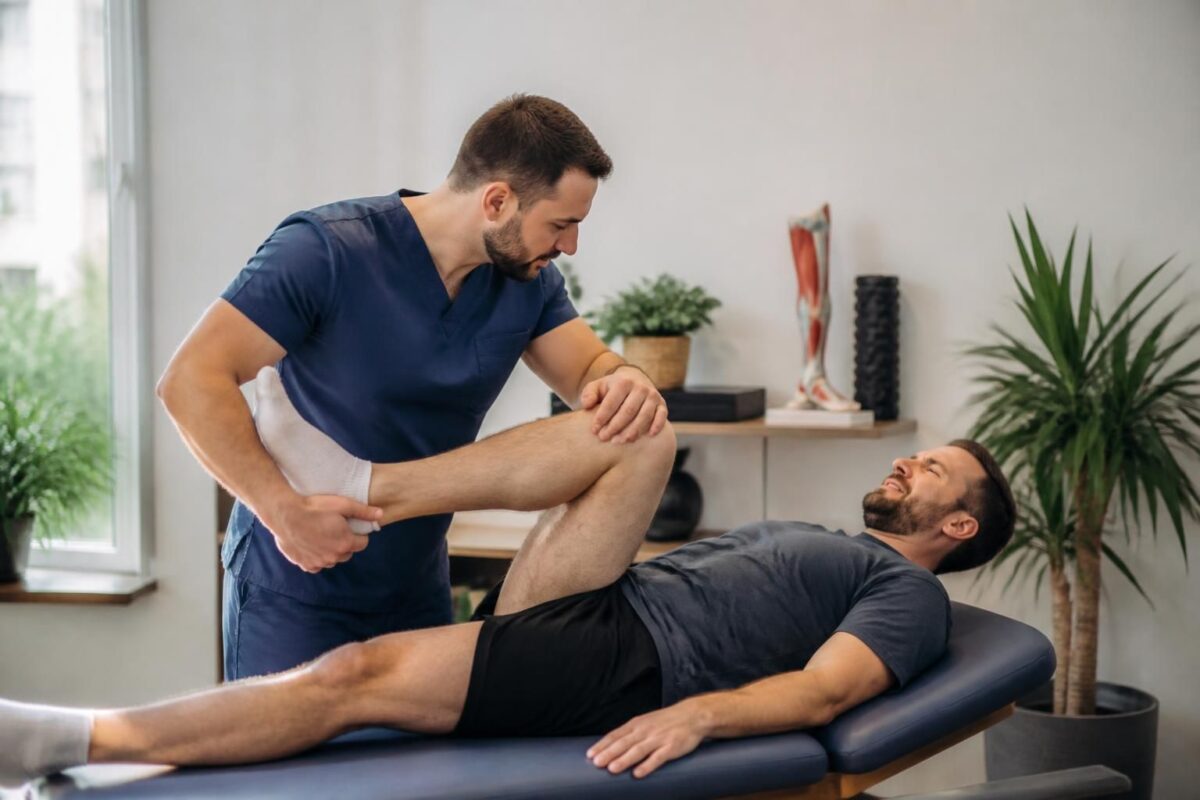
Osteopathy and chronic leg pain: regaining an optimal quality of life
In short In short, Osteopathy is one Global manual approach aimed at reducing Chronic leg pain and improve the quality of life. What is it? Non-drug therapy using the hands to identify restrictions and treat lesional chains. How does it…
Osteopathic approaches to relieve shoulder pain
| Osteopathic approach | Profit and concise approach |
|---|---|
| 1 Tendinopathy of the headdress | Education, Load modulation, Progressive strengthening rotators and scapular work, thoracic mobility. |
| 2 Sub-acromial pain (conflict/bursitis) | Targeted rehabilitation, kinematic correction and Progressive exercises; Surgery rarely from the start. |
| 3 retractile capsulitis | Education, pain management and Sweet mobilizations With tolerated exercises, progression over several months. |
| 4 long biceps / slap lesions | Load reduction, reinforcement, correction of the scapulo-humeral rhythm; Surgery if failure. |
| 5 Acromioclavicular osteoarthritis | Adjust the load, Targeted exercises, possible infiltration according to medical advice. |
| 6 Instabilities | Dynamic stability, graduated progression; Surgical advice in the event of recurrences. |
| 7 Pain of cervical/scapulo-thoracic origin | Process the source region and the shoulder cervico-thoracic coordination. |
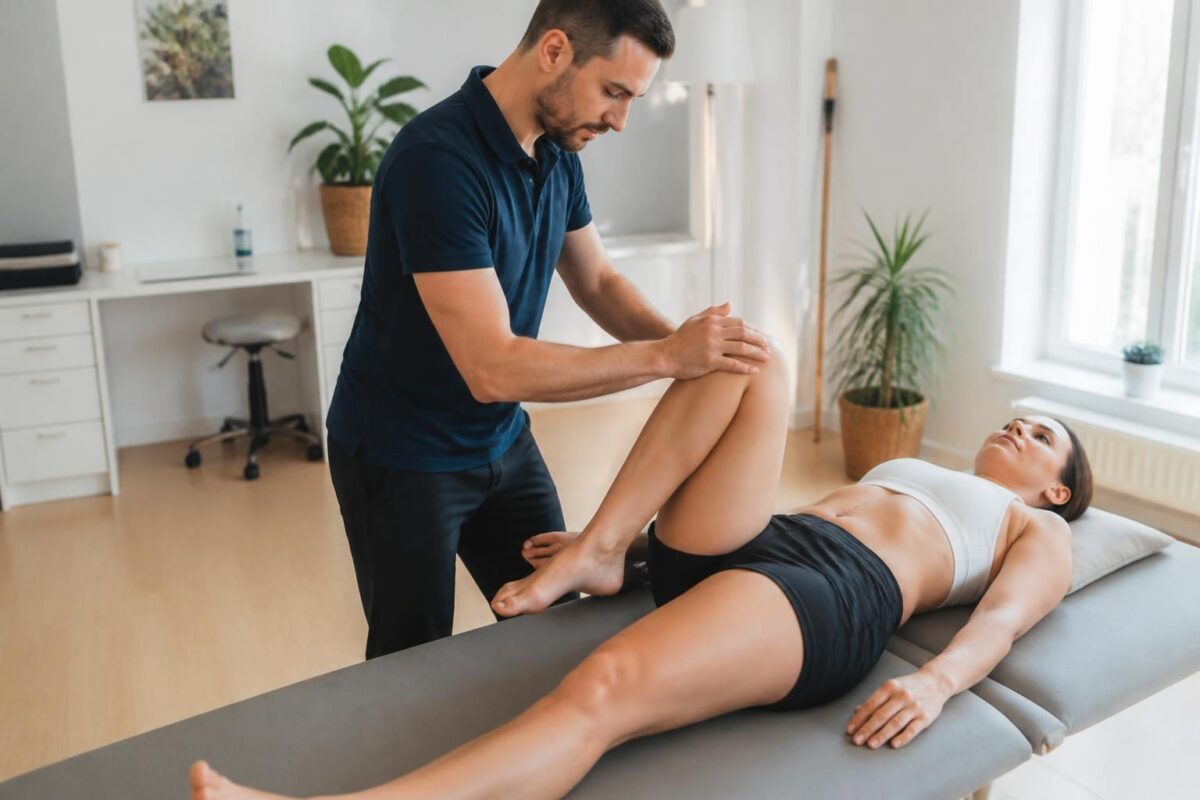
How osteopathy supports recovery after complex surgery
In short In short, Post-operative osteopathy is an approach fresh which supports the recovery After a Complex surgery. It helps to reduce the pain and the fatigue, improves the mobility and accelerates the healing thanks to a better vascularization and…
Testimonials on osteopathic approaches to relieve shoulder pain
“Before my first session, the lateral shoulder pain prevented me from training and even carrying a bag. The overall assessment was clear and educational: an imbalance and an overload were identified. The treatment plan was based on Load modulation, Progressive strengthening of rotators, scapular work and chest mobility. Gradually, the pain subsided and my mobility improved, which allowed me to resume my activities and my sport with confidence.”
“My painful bow at elevation was disabling. The osteopathic approach favored a Targeted rehabilitation and an Kinematic correction, with progressive exercises adapted to my daily life. Within a few weeks, the pain decreased and I found a correct range of movements; Surgery was not needed right away.”
“I went through a retractile capsulitis» And the progression was slow, with painful phases and then stiffness. The team focused on theeducation, of Sweet mobilizations and tolerated exercises. The course lasted several months, but I found some of my mobility and everyday gestures that I lacked.
“The deep anterior pain, aggravated by elevation and supination, was annoying on a daily basis and during sporting effort. The approach consisted of one drop of load, a Target reinforcement and a correction of the scapulo-humeral rhythm. If necessary, surgery can be considered as a last resort, but the improvement with osteopathy has been real and lasting.”
“For localized pain in AC and during horizontal adduction, the treatment was based on a Load setting And some Adapted exercises, with an infiltration envisaged according to the medical protocol. The coordination of movements improved and I was able to continue my professional and sporting activities with less discomfort.”
“I had episodes of apprehension and hyperlaxity that compromised shoulder stability. The program focused on a Dynamic stability, with work on the headdress and scapula and a graduated exposure to gestures. Recurrences have decreased and my confidence in my daily actions has returned.
“Some shoulder pain probably came from a cervical and scapulo-thoracic origin. The assessment allowed to treat the source region in addition to the shoulder, which gave a lasting improvement: less intense pain and more freedom of movement in the shoulder.”
DR Sylvain Desforges, recognized specialist in osteopathy, naturophatia and manual medicine, is the founding president of TagMed and the ACMA association. With a career focused on health innovation, he specializes in the management of chronic pain and the integration of advanced technologies such as spinal decompression, laser and shockwave therapy. Its mission is to provide evidence-based care to optimize the health and well-being of its patients. This global approach guides his work with people with shoulder pain and functional limitations.
In his practice, theosteopathy is not just a local treatment. Dr Desforges performs an overall assessment that assesses shoulder mobility in connection with the cervical spine, diaphragm and general posture. This approach makes it possible to identify the root causes rather than treating only the symptom. The starting point is based on education, load control and implementation of a movement plan adapted to each patient, with gentle manual techniques and progressive progression of efforts.
For the Headdress tendinopathies, management is based on activity and posture advice, Load modulation and a progressive reinforcement of the rotators combining scapular work and thoracic mobility. The objective is to restore the balance of forces around the shoulder and to avoid overloads that maintain lateral pain and nocturnal discomfort.
In case of subacromial pain (conflict/bursitis), the focus is on a Targeted rehabilitation and a kinematic correction. The exercises are progressive and adapted to widen the painful bow without aggravating the pain. Surgical intervention is only rarely considered as the first option, after exhaustion of conservative approaches.
For the Retractile capsulitis, also called “frozen shoulder”, the course includes a phase of education and pain, injections or analgesics according to medical advice, and gentle mobilizations associated with tolerated exercises. The process can last for several months, and the goal is to gradually guide the recovery, while respecting the individual pace of the patient.
pain related to long biceps or lesions slap are subject to load adjustment, targeted reinforcement and scapulo-humeral rhythm rebalancing. If the symptoms persist despite these measures, a surgical evaluation can be considered in refractory cases, after in-depth discussion with the patient.
For theacromioclavicular osteoarthritis (Pain localized to AC and horizontal adduction), the strategy combines Load adjustment, specific exercises and, if necessary, a infiltration adapted. The objective is to preserve mobility and function while controlling pain.
The instabilities of the shoulder are treated with dynamic stability focused on the headdress and scapula, with graduated exposure to aggravating situations. In the event of recurrences, a surgical opinion may be necessary, but early work on strength, control and coordination takes priority to prevent repeated imbalances.
Finally, Dr. Desforges pays particular attention to Pain from cervical or scapulo-thoracic origin who project themselves on the shoulder. The treatment aims to treat the source region in parallel with the shoulder, in order to reduce referred pain and to improve the effectiveness of local treatments.
This integrated approach, based on solid clinical data and adapted to each course, makes it possible to combine education, movement and technologies to optimize the return to activity. The treatment aims not only to reduce pain, but also to restore function and prevent recurrences by correcting structural and functional imbalances.
This article summarizes how osteopathy offers a global and personalized approach to relieve shoulder pain, identifying possible causes, modulating constraints and gradually restoring mobility, while preventing recurrences thanks to gestures and exercises adapted.
Headdress tendinopathies : the pain is often lateral or anterolateral and can be accompanied by nocturnal periods. The triggering factor is frequently overload associated with posterior stiffness and scapular dyskinesia, with comorbidities such as diabetes or tobacco. The osteopathic approach focuses on patient education, careful modulation of the load, progressive reinforcement of the rotators and targeted work on scapular and thoracic mobility to restore the balance of forces around the shoulder.
Subacromial pain (conflict/bursitis) : characterized by pain during elevation and a “painful bow”, it is managed by targeted rehabilitation and kinematic corrections. The exercises progress gradually and, in most cases, surgery is not recommended from the outset but considered if the symptoms persist after appropriate conservative treatment.
Retractile capsulitis : it unfolds in phases — painful, then stiff, then with slow recovery over several months. The typical terrain includes patients between the ages of 40 and 60, with a possible association with diabetes or hypothyroidism. Osteopathic treatment is based on education, analgesics or injections according to medical advice, and gentle mobilizations associated with tolerated exercises to gradually restore mobility.
Long biceps / slap lesions : Deep anterior pain aggravated by elevation and supination. The treatment aims at a reduction in load, a targeted reinforcement and a correction of the scapulo-humeral rhythm. In the event of failure of the conservative protocols, surgery may be considered.
acromioclavicular osteoarthritis : Localized pain in the AC joint and pain during horizontal adduction. The treatment plan favors progressive regulation of loads, appropriate exercises and, if necessary, local infiltration to reduce inflammation and promote mobility.
instabilities : apprehension, history of subluxation or dislocation and sometimes hyperlaxity. The osteopathic approach aims for dynamic stability by strengthening the cap and scapula, and gradually exposing the patient to functional stresses. In the event of recurrences, a surgical opinion can be considered.
Pain from cervical/scapulo-thoracic origin : The pain can be referred or accompanied by paresthesias. The treatment focuses on the source region while managing the shoulder, in order to prevent the chains of dysfunction and to restore a harmonious pattern of movement.

Dr Sylvain Desforges, B.Sc., D.O., N.D., osteopath, is the founding president of TAGMED and of the ACMA association. He dedicates his practice to chronic spinal pain, low back pain and symptoms compatible with sciatica, particularly when pain radiates toward the buttock, leg, calf, foot or toes.
Through SOS Sciatique, he publishes educational content on sciatica symptoms, possible causes such as disc herniation, disc narrowing, foraminal stenosis or irritation of a lumbar nerve root, as well as non-surgical approaches that may be considered according to the evaluation. At Clinique TAGMED, care may include, depending on the case, motorized neurovertebral decompression, specific osteopathic care or precision percussion.
For an evaluation related to sciatica treatment in Montreal / Mount Royal or sciatica treatment in Terrebonne, please consult the services available at Clinique TAGMED.
Medical disclaimer
The information published on SOS Sciatique is provided for educational purposes only and does not replace a consultation, diagnosis, opinion or treatment provided by a physician or another authorized healthcare professional. The author of this article is neither a medical doctor nor a specialist in a medical specialty recognized by the Collège des médecins du Québec. The osteopathic, manual medicine or functional support approaches described on this site do not constitute medical acts and are not intended to replace medical follow-up.
Consult a physician or emergency service in cases of loss of bladder or bowel control, anesthesia in the saddle area, significant or progressive weakness in the leg or foot, fever, recent trauma, severe pain or rapid worsening of symptoms. For more details, please read our Legal Notice.