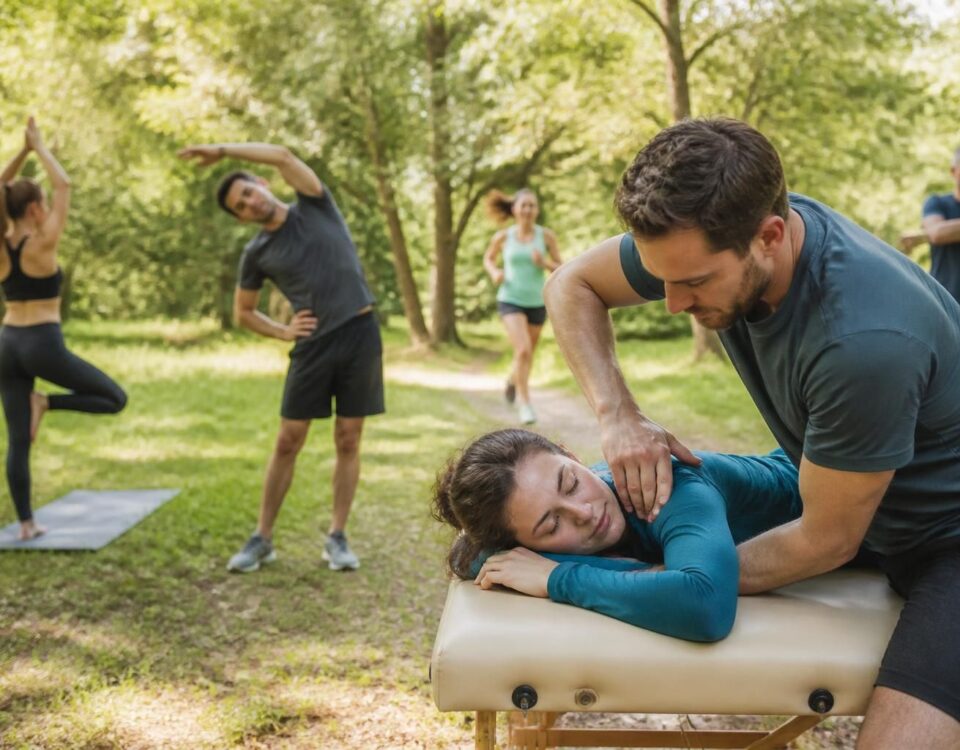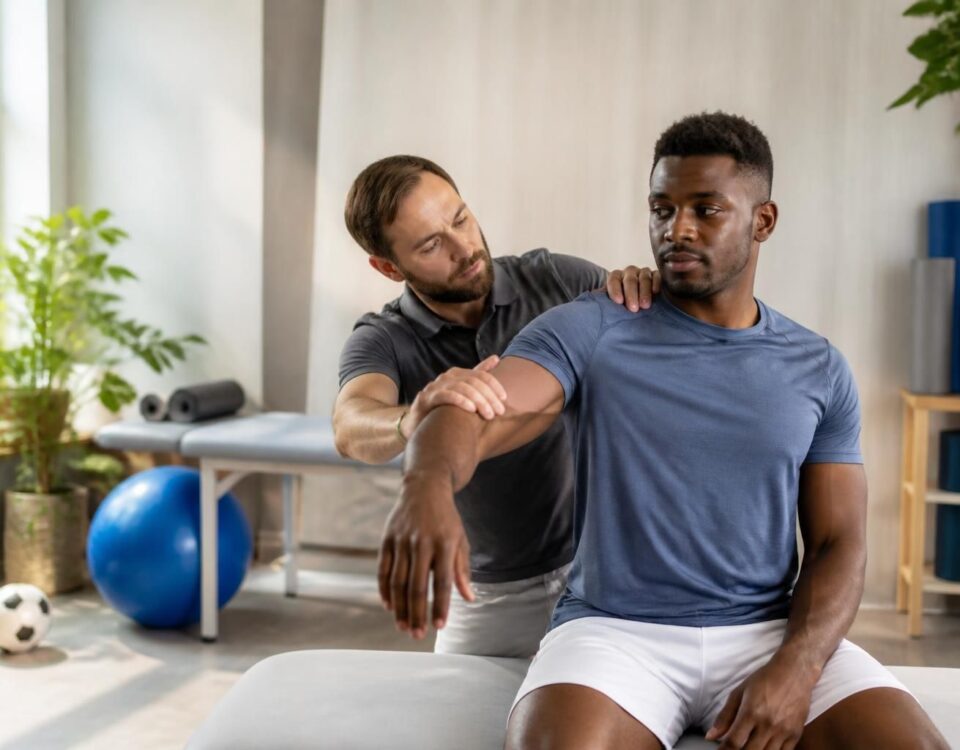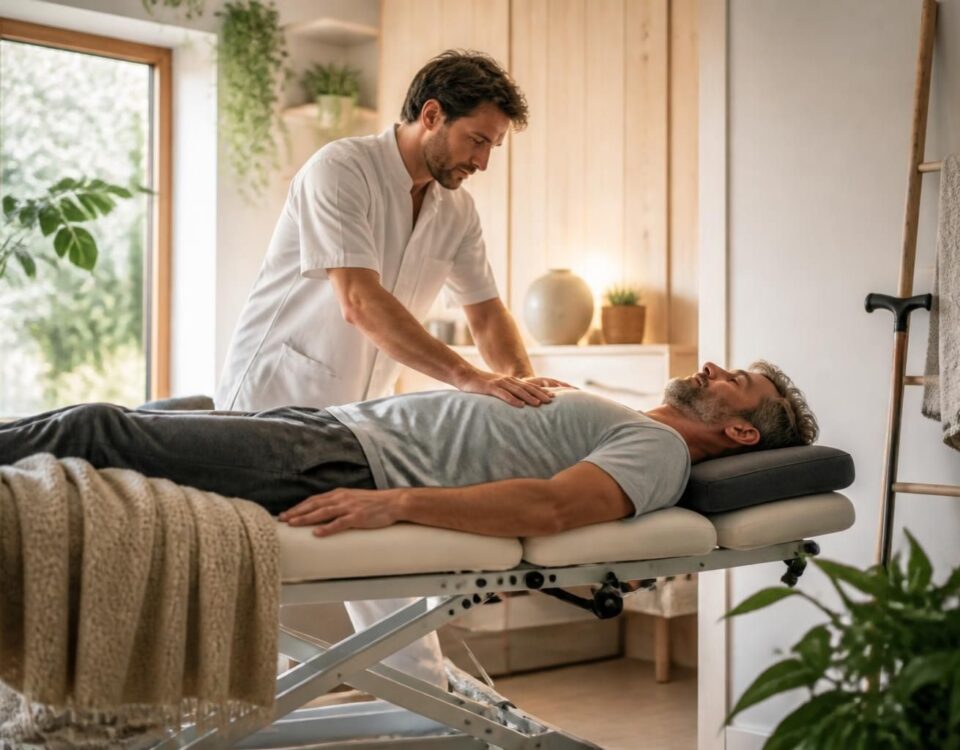
The Benefits of Osteopathy to Prevent Injuries
27/06/2026
Misconceptions about demystified osteopathy
27/06/2026
In short In short, theosteopathy is one supported overall for the fibromyalgia, aimed at reducing the pain and restore the mobility while improving the sleep and the quality of life. This method Offers gentle and personalized techniques that act on the muscles, joints and the nervous system to reduce sensitivity and promote return to daily activities. Benefits include better mobility, a reduction in fatigue and management of stress more effective, with a progression adapted to the profile of each patient. Accessible in Montreal, this supported Can contribute to a lasting improvement in comfort and well-being without repeated pain and no systematic use of medications. |
osteopathy and fibromyalgia form a therapeutic alliance that favors an approach holistic of the body. The goal is to reduce the Diffuse pain, to improve the mobility and promote a Restful sleep, while reducing stiffness and muscle tension. In practice, this care is envisaged in addition to medical treatment and is part of a process multidisciplinary. The results vary by person, but many patients experience a Improvement of well-being and a better ability to carry out daily activities after appropriate sessions. The protocol is individualized and is based on gentle and targeted techniques to support the neuro-musculoskeletal balance.
This article explains how theosteopathy can help people with fibromyalgia. It describes what a global approach proposes, the possible benefits and the limits. It also features practical resources and advice for safe and coordinated support.
Understanding fibromyalgia and its impact on daily life
The fibromyalgia is a chronic condition. It is manifested by a Diffuse pain in muscles and soft tissues. It is often accompanied by fatigue, sleep disorders and altered concentration. The diagnosis can be long and complex, because there is no single test. It is based on the patient’s history, symptoms and the elimination of other possible causes.
Pain can limit daily and professional activities. The quality of life is often affected. Treatment aims to reduce symptoms and improve mobility and overall well-being. A multidisciplinary approach is often necessary.
How Osteopathy Can Help
theosteopathy consider the body as a whole. It acts on the musculoskeletal, circulatory and nervous systems. Osteopathic work can help:
– reduce tension and stiffness,
– Improve the mobility of joints and tissues,
– Promote better sleep and better regulation of stress,
– Support the circulation and irrigation of organs and nervous structures,
– Support body self-regulation mechanisms and pain management.
The results vary by individual. Osteopathy is not a single cure. It integrates with overall care that can include appropriate activity measures, a balanced diet and stress management. For safety reasons, it does not constitute a replacement of medical treatments when they are indicated.
What the research and limits say
Studies show that osteopathy can reduce some symptoms in fibrosis people, including pain and fatigue. However, the results are not uniform and the protocols vary. An individualized approach remains essential. Always seek the advice of your doctor before starting a new therapy.
Integration into global support
Osteopathy is ideally part of a multidisciplinary care. It can be associated with other non-pharmacological approaches and medical treatment when necessary. An open dialogue with the attending physician is recommended to coordinate care and avoid interactions or contraindications.
Osteopathy training courses can be followed in recognized institutions such as NUMSS, NAO or National University of Medical Sciences, National Academy of osteopathy. In Quebec, major professional associations remain ACMA, the College of Canadian Osteopaths and the College of Canadian Osteopaths, who support the practice and safety of care.
Resources and training in osteopathy
For patients and professionals, online resources address the action of osteopathy on fibromyalgia and holistic approaches. Useful information can be found on the sites:
– decompressionneurovertebrale.com,
Useful links and online resources
Additional resources help enrich your thinking and evaluate options. For example, you can consult pages dedicated to osteopathy and fibromyalgia at the sites mentioned below and chat with a qualified professional before undertaking any treatment.
To learn more about the benefits of osteopathy in other contexts, you can also explore the content available on sossciatica.com and clinicagmed.com.
Trainings and resources associated with osteopathy are accessible via NUMSS, NAO, National University of Medical Sciences and National Academy of Osteopathy. The ACMA, College of Canadian Osteopaths and College of Canadian Osteopaths associations support practitioners in their practice and ethics.
To deepen further, here are resources dedicated to fibromyalgia and osteopathic management:
– Advantages of osteopathy for postpartum women,
– Common pathologies supported by osteopathy.
It is essential to remember that any approach should be discussed with the attending physician and adapted to each person. Osteopathy offers a global and human perspective to improve well-being, while remaining complementary to medical treatments when they are indicated.
In addition, specialized resources and feedback can help to better understand the potential benefits and limits of osteopathy in fibromyalgia. The goal is a better quality of life through an integrated and personalized approach.
Medical Disclaimer: The information and advice provided on this site does not replace the health professional’s diagnosis or treatment. Please note that Dr. Sylvain Desforges osteopath is neither a doctor of medicine nor a doctor, and is not a specialist in a medical specialty as defined by the Collège des Médecins du Québec. Manual medicine, functional medicine and sports medicine as described on this site exclude any medical treatment or diagnosis made by a doctor or specialist doctor. Always consult your doctor for any medical questions. For more details, please read our full legal notice. »
- Global approach : The body is considered as a whole to reduce pain and sensitivity.
- pain reduction : Techniques targeted on painful areas and trigger points.
- Improved mobility : Release of tension and improvement of flexibility and joint amplitudes.
- Sleep and energy : Sessions promoting relaxation and a better quality of rest.
- Non-pharmacological approach : Reduction of medications and their side effects.
- Custom Plan : Protocol adjusted to each patient according to their sensitivity and level of activity.
- Progressive strengthening : Guided exercises to stabilize the body and prevent relapses.
- stress management : Work on breathing and posture to limit hyperexcitability.
- self-management : Practical advice to maintain the benefits between sessions.
- Collaboration : Coordination with the doctor and other health professionals.

This sheet shows how theosteopathy can be an effective approach to the fibromyalgia, by acting on the body as a whole. Expect support personalized, focused on reducing diffuse pain, improving mobility, sleep and stress management, without replacing essential medical follow-up.
Why Osteopathy Can Help Fibromyalgia
key elements
Fibromyalgia is characterized by a Diffuse pain and increased sensitivity. Osteopathy aims to restore theNeuro-musculoskeletal balance And reduce fascia tensions that can amplify the pain. By working on posture, breathing and mobility of muscle chains, it can help alleviate associated pain and fatigue.
Techniques used
the approaches used remain sweet and adapted to each patient: myofascial release, gentle joint manipulations, targeted stretching and techniques of relaxation of the autonomic nervous system. The objective is to reduce local tensions without causing excessive reaction, while respecting the limits specific to fibromyalgia.
goals
Expected results include a Improving mobility, a pain reduction and a better sleep quality. At the same time, the approach aims to promote better stress management and to facilitate appropriate physical activity, key factors for the progression of the disease.

How osteopathy improves the quality of life of active people
In short In short, theosteopathy is a global approach that Optimizes mobility and the function of the body of ACTIVE PEOPLE, for a better quality of life. It helps prevent injury and reduce Musculoskeletal pain While promoting the Sports recovery.…
Personalized and multimodal approach
initial assessment
A comprehensive assessment helps to understand areas of tension, movement limitations and patient-specific triggers. This step establishes a Custom Plan which takes into account symptoms, level of fatigue and daily life goals.
Treatment plan
The treatment is structured in adapted sessions, with regular reassessment to adjust the techniques and progression. The approach can combine specific osteopathic techniques, postural advice and stimuli to improve venous return and local circulation, thus promoting a progressive decrease in pain.
home support
Simple stretching exercises, breathing micro-mauses and lifestyle advice (sleep, stress management, moderate physical activity) complete the sessions to optimize the results and strengthen the gains obtained in the office.

Osteopathy and sports recovery: prepare the body for lasting performance
In short In short, Osteopathy and Sports recovery is one Global manual approach that sustainably prepares the body for the effort by restoring mobility and circulation After the effort. It is a discipline that acts on the sinews, the joints,…
Security and collaboration
When to contact a doctor
As with any fibromyalgia management, it is essential to coordinate care with your attending physician and specialists. In the presence of unusual symptoms, rapid onset of weakness or other worrying signs, medical advice is essential.
Collaboration with other professionals
Osteopathy is part of an approach multidisciplinary. It can be supplemented by physical therapy advice, stress management and appropriate physical activity recommendations. Open communication between providers and the patient is essential for a harmonized and effective plan.
Why Osteopathy Is Essential For Recovery People
In short In short, Osteopathy in convalescence is an approach manual and holistic which helps to accelerate the recovery by restoring The balance, the mobility and a good circulation fabrics. it contributes to Reduce the pain, support the Back to…
What you can expect from osteopathic treatment
Potential effects
Improvements may relate to the pain and the Postural stability, with an increased feeling of welfare and better energy on a daily basis. Sleep can improve thanks to a reduction in muscle tone and better general relaxation.
Deadlines and results
The answers vary according to the individual and the attendance at the proposed plan. Some people see progress after a few weeks, others after several months. The objective remains a lasting improvement, obtained by an approach personalized and progressive.
| Axis | Context and impact |
|---|---|
| Clinical objective | reduction of the Diffuse pain and improvement of mobility in a multidisciplinary approach. |
| Targeted mechanisms | release of tensions myofasciales and improvement of circulation and the local nervous system. |
| Population concerned | adults diagnosed with fibromyalgia with diffuse pain and stiffness. |
| Methods of treatment | Regular sessions with evaluation individual and personalized plan. |
| Tolerance and safety | Generally treatment well-tolerated, with adjustments according to comorbidities. |
| observed efficiency | subjective improvement in pain and fatigue in some cases; results variables. |
| Sleep and fatigue | Possible improvement of sleep and fatigue via decreased pain and better relaxation. |
| Cost and accessibility | Cost dependent on the firm; Possibility of integration into an approach multidisciplinary. |
| Practical recommendations | Consult a certified osteopath and integrate the approach with medical treatment, adapting the plan. |

Osteopathic manipulations to strengthen post-traumatic muscles
In short In short, Osteopathic manipulations for Strengthen post-traumatic muscles constitute a gentle manual approach aimed at restoring the mobility, reduce the pain and facilitate the Functional rehabilitation After a injury. What is Is it? A series of precise gestures…
Testimonials on losteopathy and fibromyalgia: effective management
“Before, the pain related to fibromyalgia punctuated my days and my nights. After a few osteopathy sessions, I felt a Diffuse pain reduction and a better mobility. »
“The approach has been personalized, focused on Myofascial release and gentle exercises. Each session gave me the impression of regaining control over pain and fatigue. »
“My sleep has become more restorative and my energy gradually returns. Stress decreases and brain fog fades when tensions ease. »
“I was helped to set up a practical routine: breathing, posture and adapted activities. I can stay active without aggravating the pain, and I feel supported in my care. »
“For me, osteopathy is a key step in the management of fibromyalgia, because it acts on tensions and breathing while respecting my rhythm. »
Dr Sylvain Desforges, a recognized osteopath, is a multidisciplinary expert in the fields of osteopathy, naturopathy and manual medicine. As founding president of TagMed and the ACMA association, he places innovation at the heart of his practice and is committed to offering care that combines science and clinical experience. His work focuses on managing the chronic pain and the integration of advanced technologies to optimize the health and well-being of its patients. Its approach is based on care based on evidence-based, personalized and adapted to each individual history, particularly in the context of fibromyalgia.
Fibromyalgia is a complex condition characterized by diffuse pain, persistent fatigue and sleep disorders. Faced with this syndrome, osteopathy offers a valuable contribution by acting on the musculoskeletal system and the myofascial network, in order to reduce tensions and improve overall mobility. This approach aims to restore harmony between tissues, promote better circulation and reduce areas of sensitivity. It is based on attentive listening to the patient, a progressive plan and realistic objectives to reduce painful sensitivity and improve quality of life.
The framework multimodal and personalized management is based on an in-depth evaluation and a lasting therapeutic alliance. After a rigorous examination, the practitioner develops a program that combines gentle osteopathic techniques, protocols dedicated to mobility and muscle strengthening, as well as practical advice in lifestyle. Pain education, breathing exercises and stress management are central, to allow the patient to gradually regain control and better tolerate daily activities.
To complete this approach, the targeted use of adapted technologies can be considered when relevant. Spinal decompression can optimize space around nerve structures and promote lasting lumbar comfort. The laser Can support soft tissue recovery and soothe painful areas, while shock waves offer benefits for some myofascial homes held as a source of local pain. These tools support manual work and are part of a logic of progressive and lasting relief, without deviating from the fundamental objective: to allow the patient to move more freely and without fear of pain.
At the heart of this approach are active listening, safety and patient autonomy. Personalized support translates into measurable objectives, regular monitoring of progress and adjustment of the protocol according to returns. Adapted physical activity programs, combining mobility, light endurance and stability work, improve exercise tolerance while reducing fatigue. The holistic approach also values sleep, diet and psychological well-being, which are essential for effective fibromyalgia management.
In short, osteopathy offers a pragmatic and human way for the management of fibromyalgia, combining gentle manual techniques, practical advice and relevant technologies for the service of the patient. This approach aims to reduce symptoms, improve mobility and restore a sustainable quality of life, while remaining faithful to a proof-based approach adapted to each personal journey. If you are looking for support that combines science and clinical experience, this approach can accompany you towards concrete and measurable improvements.
This article explores how Osteopathy can be integrated into the management of fibromyalgia, describing pain mechanisms, potential benefits and limitations, and focusing on an approach multidisciplinary patient-centric.

Osteopathy and prevention of work-related musculoskeletal disorders
In short theosteopathy is one Manual approach that restores body balance and prevents MSD related to work. Its advantages: reduction of tension, improvement of mobility and prevention of chronic pain. She is preventive and healing, suitable for office and trades…
Approach and potential benefits
As part of a fibromyalgia characterized by diffuse pain, fatigue and sleep disorders, Osteopathy offers support holistic which aims to improve the mobility of joints and soft tissues, while stimulating better circulation and better regulation of the nervous system. This approach can help reduce muscle tension, ease localized pain and promote more restful sleep, which can positively influence energy and daily activities.
It can also support the relaxation of myofascial chains and promote better cooperation of the body in everyday gestures, which can make movements more harmonious and reduce pain-related limitations. For people with a drop in physical activity, osteopathy can be a lever to gradually relaunch appropriate exercises, thus improving overall mobility and quality of life.
For sedentary people wishing to better understand the potential effects of osteopathy, dedicated resources address the advantages for this group in particular and explain how these approaches can be part of a global approach to moving again: Advantages of osteopathy for sedentary people.

The benefits of osteopathy to treat muscle imbalances
In short theosteopathy is a manual approach to restore themuscle harmony and postural considering the body as a whole. Its main benefits include the reduction of aches and tensions, the improvement of the mobility and from the posture, and prevention…
Indications, precautions and integration
The potential benefits of osteopathy in fibromyalgia require individualized assessment and close collaboration with other health professionals. The objective is to complete existing medical treatments and physical therapies, in order to propose an integrated strategy that respects the specific needs of each patient. Osteopathy can be considered in addition to pharmacological approaches, physical therapies and stress and sleep management practices.
In this context, it may be useful to rely on the techniques used in osteopathy and to discuss them with the practitioner to adapt the treatment to the symptoms and the patient’s tolerance. Specialized resources detail the techniques used, their indications and their limitations to help make an informed decision: Techniques used in osteopathy.
Osteopathy and chronic leg pain: regaining an optimal quality of life
In short In short, Osteopathy is one Global manual approach aimed at reducing Chronic leg pain and improve the quality of life. What is it? Non-drug therapy using the hands to identify restrictions and treat lesional chains. How does it…
Mechanisms and expected results
Scientific hypotheses on osteopathic action in fibromyalgia relate to pain modulation by reducing muscle tension, improving circulation and an influence on the autonomic nervous system. The concept of Central pain awareness — where the brain and spinal cord become hyperreactive to stimuli usually poorly felt — can, to some extent, be approached by manual techniques and stress and sleep management strategies.
The results vary from person to person and depend on a set of biological, psychological and environmental factors. While some patients and patients report a decrease in pain and better mobility after osteopathy sessions, it is crucial to consider osteopathy as a component of a global treatment plan rather than a single solution.
How osteopathy supports recovery after complex surgery
In short In short, Post-operative osteopathy is an approach fresh which supports the recovery After a Complex surgery. It helps to reduce the pain and the fatigue, improves the mobility and accelerates the healing thanks to a better vascularization and…
Resources and additional readings
To deepen the potential benefits of osteopathy in the management of fibromyalgia and discover complementary perspectives, you can consult several relevant resources, in particular on the role of osteopathy in the management of specific pain and the improvement of blood circulation. Among them:
Understanding the role of osteopathy in fibromyalgia management
How osteopathy promotes blood circulation
The positive impact of osteopathy on sports performance
Fibromyalgia: what support through osteopathy
Osteopathy and fibromyalgia — Interview and perspectives
To broaden your mapping of approaches, also discover resources that explore the integration of osteopathy in a global approach to treatment and patient education: Osteopathic and practical techniques, Benefits for lower back and sciatic pain, and Benefits for sedentary people.

Dr Sylvain Desforges, B.Sc., D.O., N.D., osteopath, is the founding president of TAGMED and of the ACMA association. He dedicates his practice to chronic spinal pain, low back pain and symptoms compatible with sciatica, particularly when pain radiates toward the buttock, leg, calf, foot or toes.
Through SOS Sciatique, he publishes educational content on sciatica symptoms, possible causes such as disc herniation, disc narrowing, foraminal stenosis or irritation of a lumbar nerve root, as well as non-surgical approaches that may be considered according to the evaluation. At Clinique TAGMED, care may include, depending on the case, motorized neurovertebral decompression, specific osteopathic care or precision percussion.
For an evaluation related to sciatica treatment in Montreal / Mount Royal or sciatica treatment in Terrebonne, please consult the services available at Clinique TAGMED.
Medical disclaimer
The information published on SOS Sciatique is provided for educational purposes only and does not replace a consultation, diagnosis, opinion or treatment provided by a physician or another authorized healthcare professional. The author of this article is neither a medical doctor nor a specialist in a medical specialty recognized by the Collège des médecins du Québec. The osteopathic, manual medicine or functional support approaches described on this site do not constitute medical acts and are not intended to replace medical follow-up.
Consult a physician or emergency service in cases of loss of bladder or bowel control, anesthesia in the saddle area, significant or progressive weakness in the leg or foot, fever, recent trauma, severe pain or rapid worsening of symptoms. For more details, please read our Legal Notice.