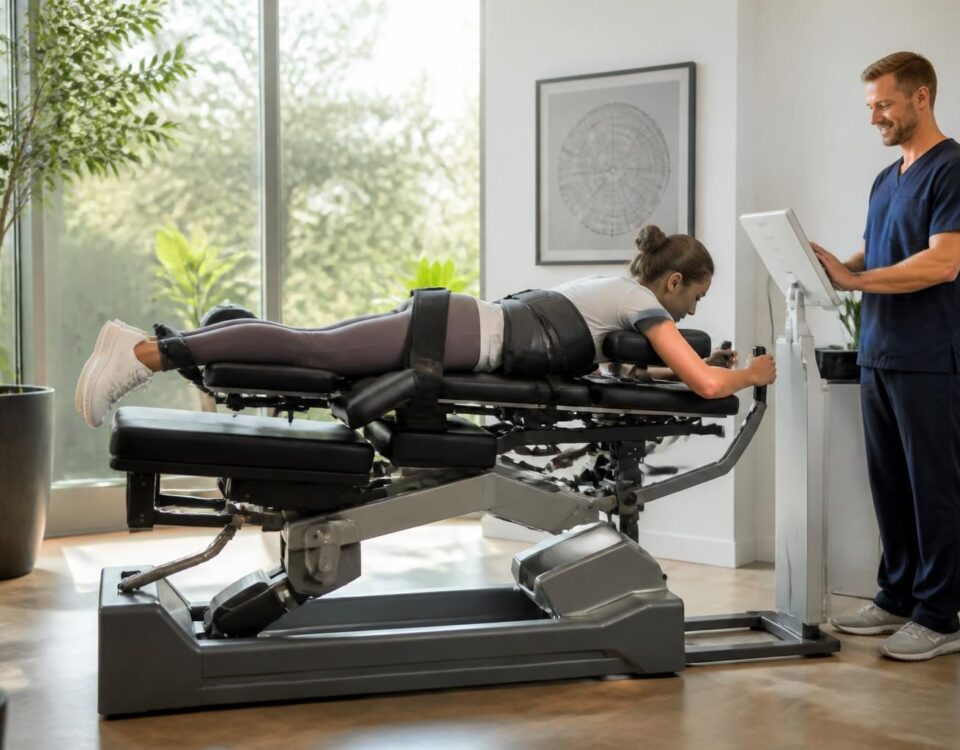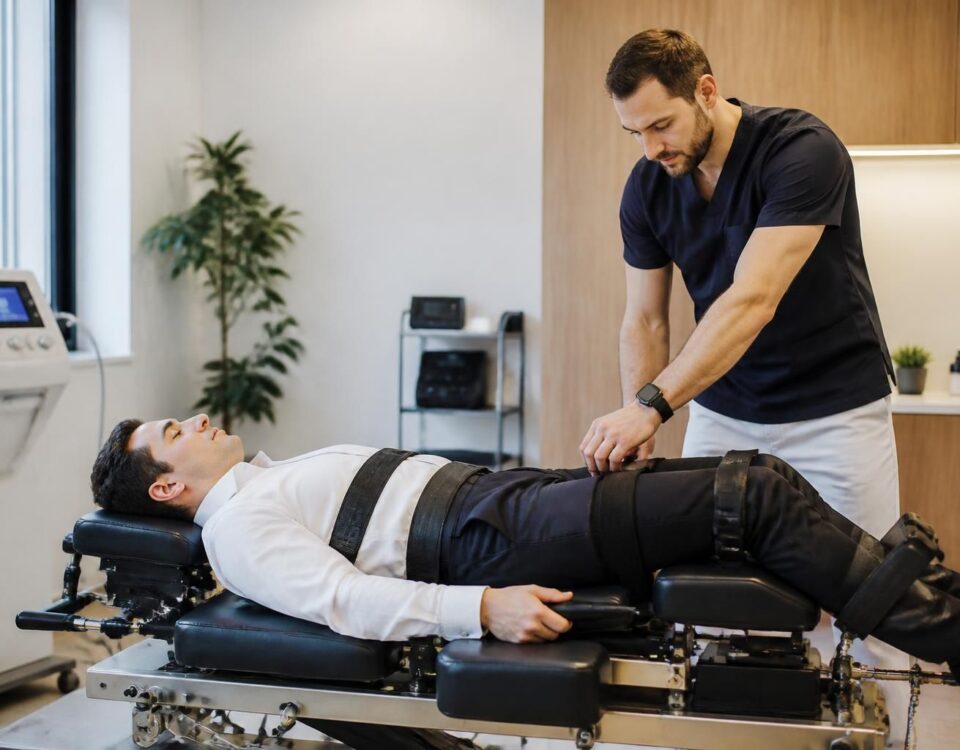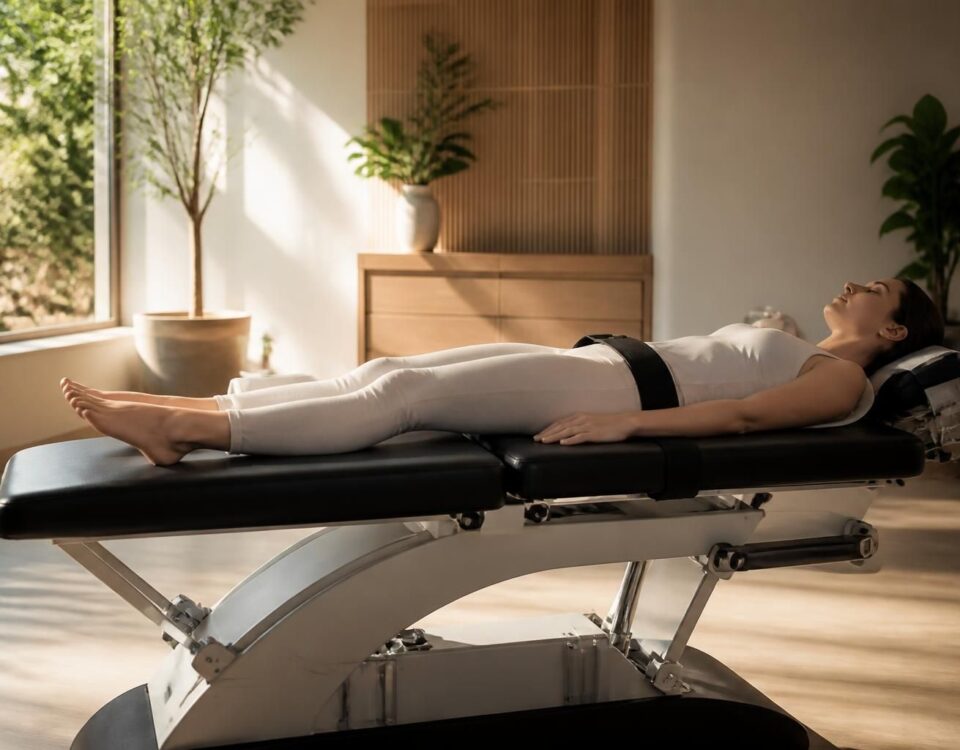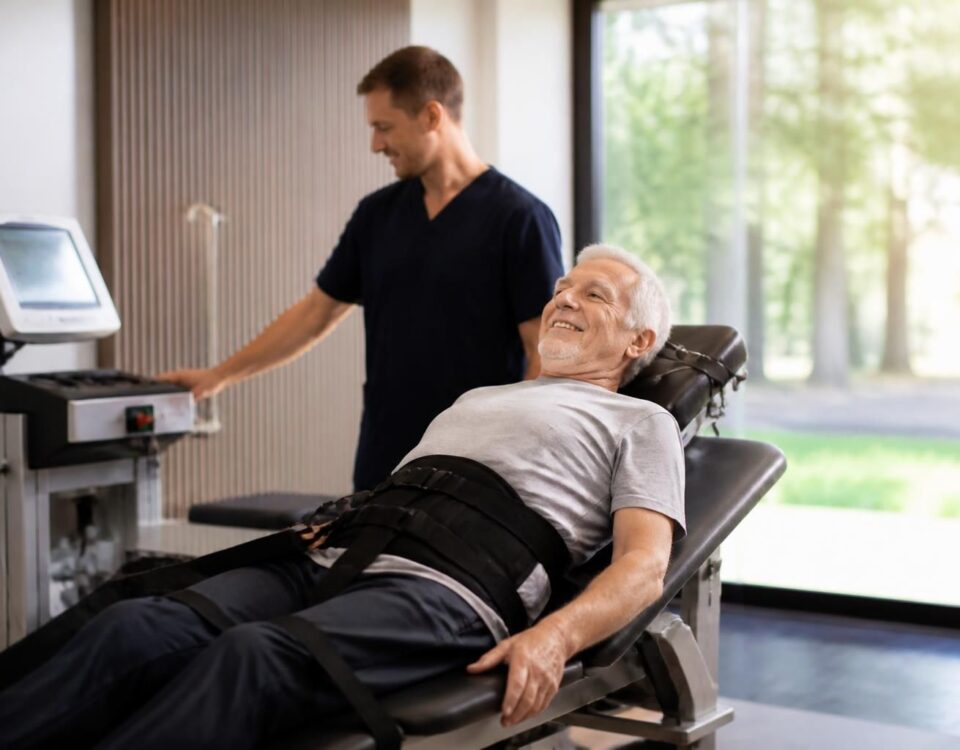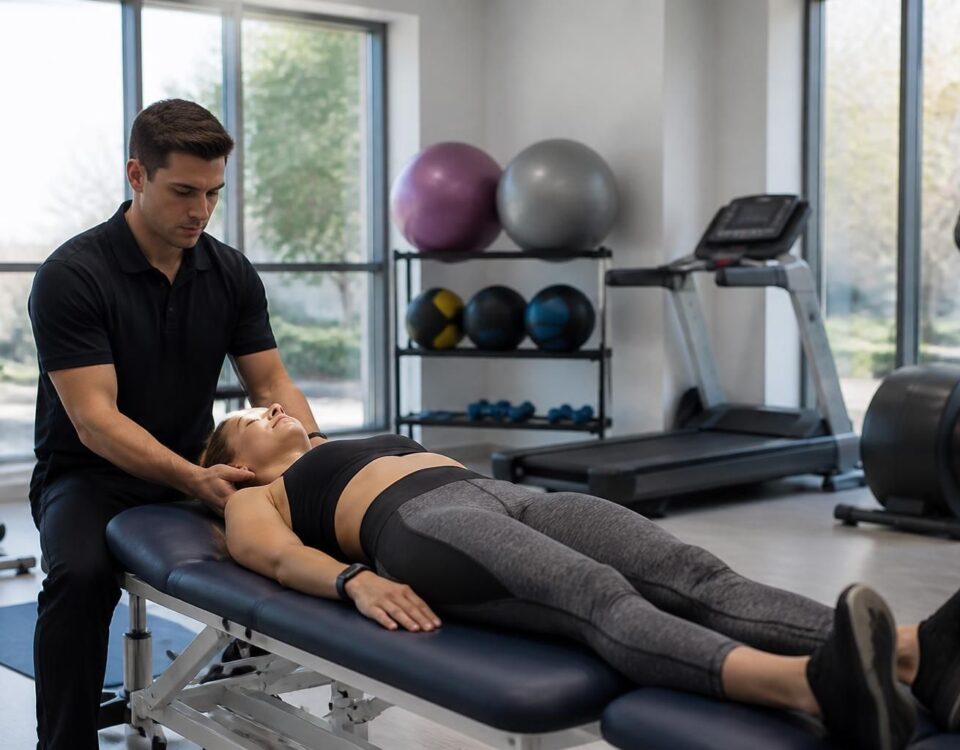
The criteria for choosing a good specialist in neurovertebral decompression
26/06/2026
Neurovertebral decompression and body alignment: regaining natural balance
26/06/2026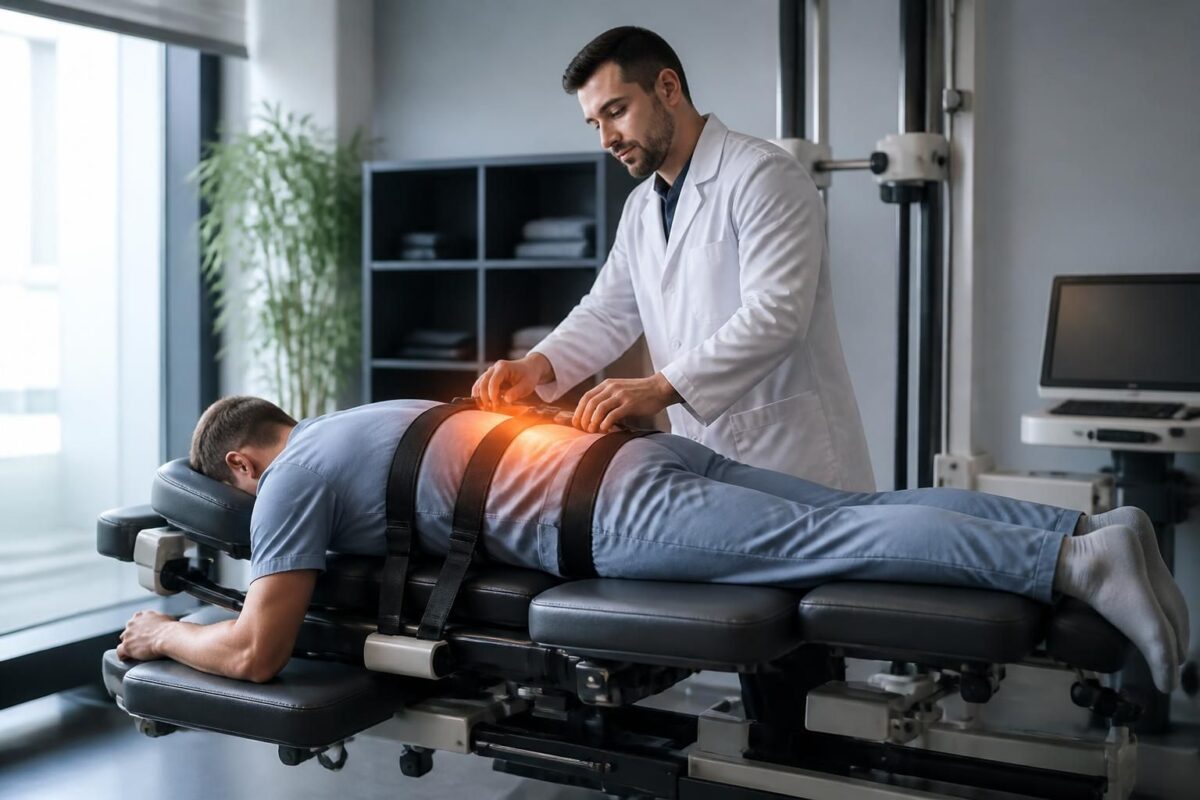
In short
| In short, the neurovertebral decompression is an approach non-invasive intended to relieve middle back pain by reducing the pressure on the intervertebral discs and spinal nerves, and increasing the space between the vertebrae thanks to a gentle traction. accessible to Montreal, it quickly improves blood circulation, promotes tissue regeneration and restores mobility, while helping to prevent recurrences and avoiding surgery. This method is particularly useful for pain related to herniated discs or chronic nerve tension and can fit into a global care plan. |
The neurovertebral decompression is an approach non-invasive which acts on the pain of middle of the back By applying a Controlled traction for reduce the pressure on the Intervertebral discs and the Spinal nerves. By increasing theintervertebral space, it decreases the nervous compression and improves the bloodstream, favoring the tissue regeneration and the reduction ofinflammation. Result: a Quick relief and an Mobility found Without surgery, with little risk and a favorable recovery.
This article, written by a health professional and expert in osteopathy, clearly explains how neurovertebral decompression acts on the Middle back pain. This approach non-invasive decreases the pressure on the Intervertebral discs and the Spinal nerves, improves the circulation and promotes tissue healing. It can quickly relieve and improve mobility without surgery.
Decompression applies a gentle traction on the spine. This traction creates a space between the vertebrae. This development reduces the nerve pressure and on intervertebral discs. It also allows better circulation of blood and nutrients to the affected tissues.
Principle and mechanism
The process aims to decrease the pressure that compresses the nerves and discs. The increase in space between the vertebrae releases tension and facilitates blood flow. Better circulation helps in tissue regeneration and attenuation of local inflammation.
Effects on pain and mobility
Patients often experience rapid improvement After a few sessions. Decreased nerve compression and expansion of intervertebral space improve mobility and reduce pain.
Care process and follow-up
Before the start, a Full assessment is performed. The treatment is done on a specialized device with controlled and painless forces. Each session lasts 15 to 30 minutes. Regular follow-up makes it possible to adapt the care plan according to the progress.
Integration into a care plan
Decompression can be included in a Global plan of care. It can be associated with osteopathic approaches and other manual therapies. This integrated approach can optimize results and support recovery.
To learn more, you can consult relevant resources on neurovertebral decompression, including analyzes and feedback. Neurovertebral decompression and post-surgical pain — a great help and The quick results obtained thanks to neurovertebral decompression. To understand the mechanism, see How it works.
What decompression brings to mid-back pain
pressure reduction On the nerves and discs, direct pain relief and better mobility. The action targets areas where nerve pressure or mild to moderate disc degeneration persists.
Regeneration and nutrition fabrics and discs thanks to better circulation. This improvement promotes tissue renewal and reduces local inflammation.
Balance and posture Correct vertebral misalignments. This supports a more homogeneous load distribution and helps maintain gains obtained during treatment.
Prevention of recurrences By decreasing pressure on the vertebral structures and improving muscle regulation around the spine.
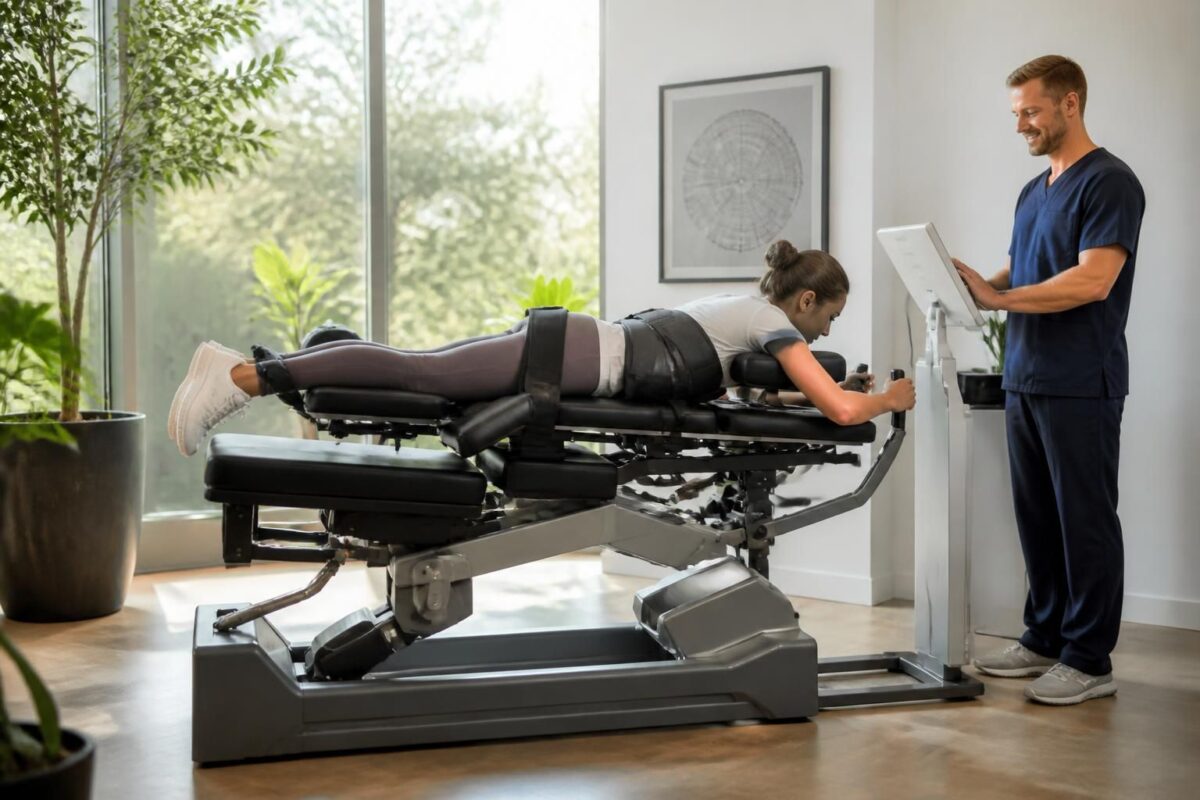
The long-term benefits of neurovertebral decompression for spinal health
In short In short, the neurovertebral decompression is a non-invasive approach that decreases the Pressure on intervertebral discs and nerves, favoring the Natural regeneration and tissue recovery. Its long-term benefits include Lasting pain reduction, Improving mobility and from the posture,…
What to expect during a treatment and what to do
You will benefit from a Preliminary report and an individualized protocol. The sessions are done without pain and with precise adjustments. The number of sessions depends on your condition and your response to treatment.
Decompression can be part of a set of treatments offered at Tagmed Clinic and in associated approaches to osteopathy and manual medicine. For more information, consult specialized resources on Modern techniques to maximize results.
More useful information on other aspects and results can be viewed on Detail on neurovertebral decompression and disc herniation and on Role of neurovertebral decompression for any patient.
For more general information on mechanisms and results, see also the resources presented by Quick results and Valuable post-surgical help.
For a summary of operation, see Neurovertebral Decompression – Functioning.
Medical Disclaimer: The information and advice provided on this site does not replace the health professional’s diagnosis or treatment. Please note that Dr. Sylvain Desforges osteopath is neither a doctor of medicine nor a doctor, and is not a specialist in a medical specialty as defined by the Collège des Médecins du Québec. Manual medicine, functional medicine and sports medicine as described on this site exclude any medical treatment or diagnosis made by a doctor or specialist doctor. Always consult your doctor for any medical questions. For more details, please read our full legal notice.
- gentle traction which creates an intervertebral space and decreases the pressure on the discs and nerves.
- Improved traffic in the middle of the back, promoting the supply of nutrients and the evacuation of waste.
- Muscle relaxation Around the column, releasing tension and reducing pain.
- Reduction of inflammation local thanks to better vascularization and decompression.
- Restoration of intervertebral space and decreased nerve compression.
- Mobility found With better range of motion and more comfort.
- Prevention of recurrences by a more stable and lasting vertebral alignment.
- Non-invasive approach avoiding surgery and operative risks.

This recommendation describes how the neurovertebral decompression acts on the middle back pain and how to optimize its efficiency. It presents key mechanisms, expected benefits, treatment framework and practical advice for an approach non-invasive and personalized.

Neurovertebral decompression and mobility: a return to an active life
In short In short, the neurovertebral decompression is therapy non-invasive who uses a gentle traction To create a space between the vertebrae and reduce the pressure on the Intervertebral discs and the nerves. It promotes a bloodstream improved, lowers tension…
Mechanism of action
The neurovertebral decompression relies on a Controlled traction and fresh applied to the spine. This action gradually creates a space between the vertebrae, which Reduces pressure on intervertebral discs and the Spinal nerves located nearby. By freeing up this space, the discs can rehydrate and regenerate, which helps reduce pain and restore the function of the thoracic segment.
This pressure reduction also improves the bloodstream local, facilitating the supply of essential nutrients and the evacuation of metabolic waste. At the same time, soft traction helps Relieve muscle tension around the column and to restore a vertebral alignment more favorable. All of these mechanisms affect not only pain, but also on the mobility and stability of the middle of the back.
In addition, the technique can promote an improvement in the nervous responsiveness and a reduction in local inflammation, which can accelerate recovery and promote better exercise tolerance. The cumulative effect is often a Progressive improvement in mobility and an Lasting pain reduction.
Procedure and progress
The treatment is generally portioned in sessions adaptable to each patient, with a progressive progression of intensity and duration according to tolerance and results. A typical protocol targets regular sessions over several weeks, to support the restoration of movement and the prevention of recurrences.
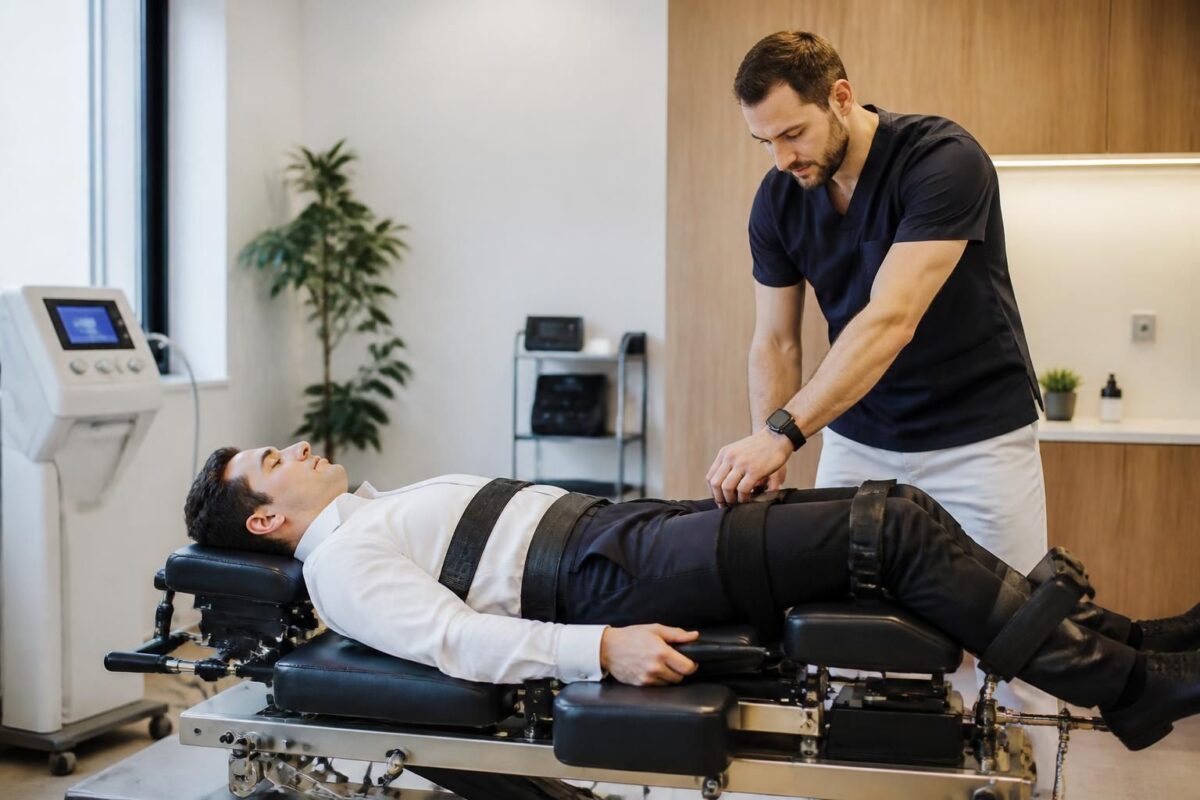
How Neurovertebral Decompression Prevents Diffuse Chronic Pain
In short decompression neurovertebral is one Non-invasive method aimed at reducing the Pressure on the intervertebral discs and the nerves, in order to prevent Diffuse chronic pain. It improves the circulation and thedisc hydration, decreases inflammation and promotes better mobility.…
Expected benefits and results
Patients often describe a Quick relief After the first sessions and a lasting improvement range of movement. This non-invasive approach allows pain to be treated without the need for surgery, which is particularly relevant for mid-back pain due to spinal imbalances or nerve compressions.
Profits include a Better mobility of the trunk, a Decreased stiffness and an Prevention of recurrences by reducing the pressure exerted on the discs and nerves. In addition, circulation and nutritional intake to intervertebral tissues improves the healing process and the general condition of the back.
This approach integrates well with other therapies such as posture work, strengthening exercises and lifestyle advice, which potentiates the results and helps maintain the functional gains obtained.
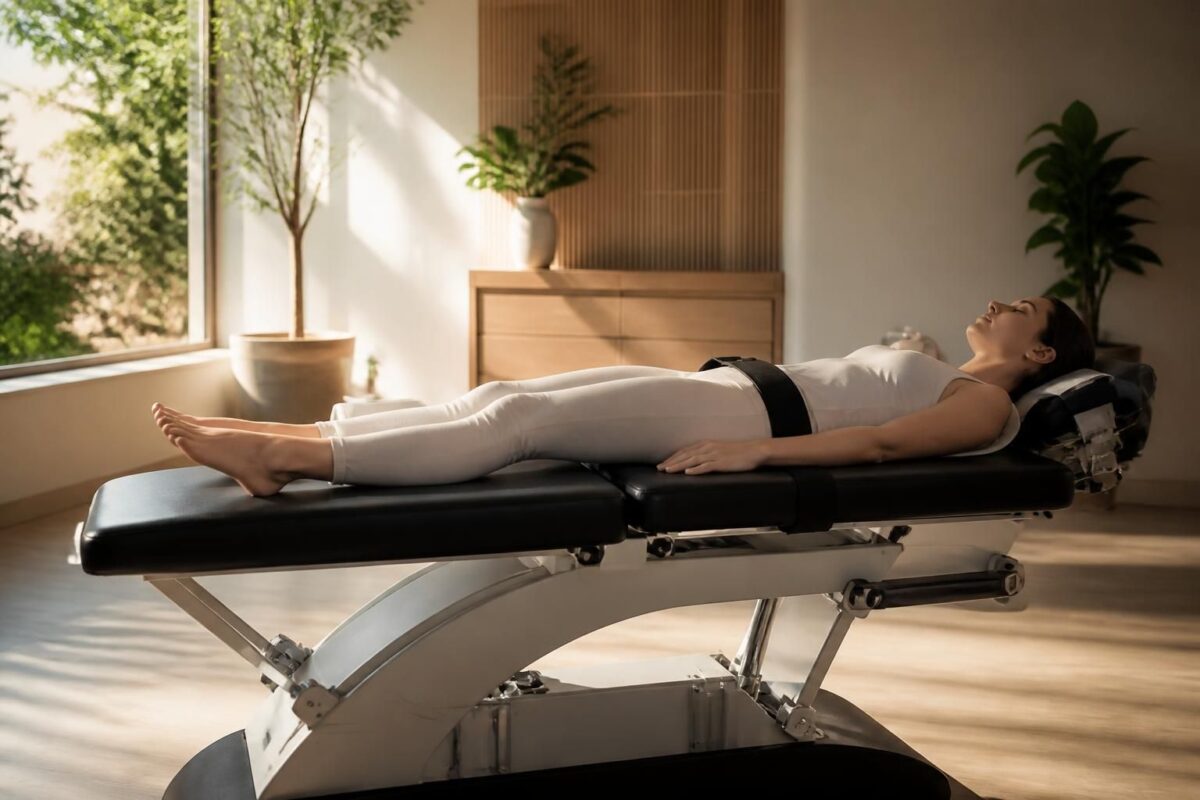
Neurovertebral Decompression and Body Alignment: Restoring Natural Balance
In short In short, neurovertebral decompression is one Non-invasive approach who restores theBody Alignment and thenatural balance back and neck. She acts by a Controlled traction of the spine to widen the intervertebral space and reduce the Pressure on discs…
Before starting a decompression, a prior consultation Allows you to assess the chest condition and identify any contraindications. The personalized plan is then adjusted according to the origin of the pain, the age and the level of activity.
The protocol is designed to be reassuring and tolerable, with sessions that typically last between 15 and 30 minutes. The number of sessions may vary, but a suitable series is often necessary to achieve significant pain reduction and lasting functional improvement.
To optimize the results, the team can recommend additional exercises, targeted physiotherapy and postural preservation strategies to integrate on a daily basis.
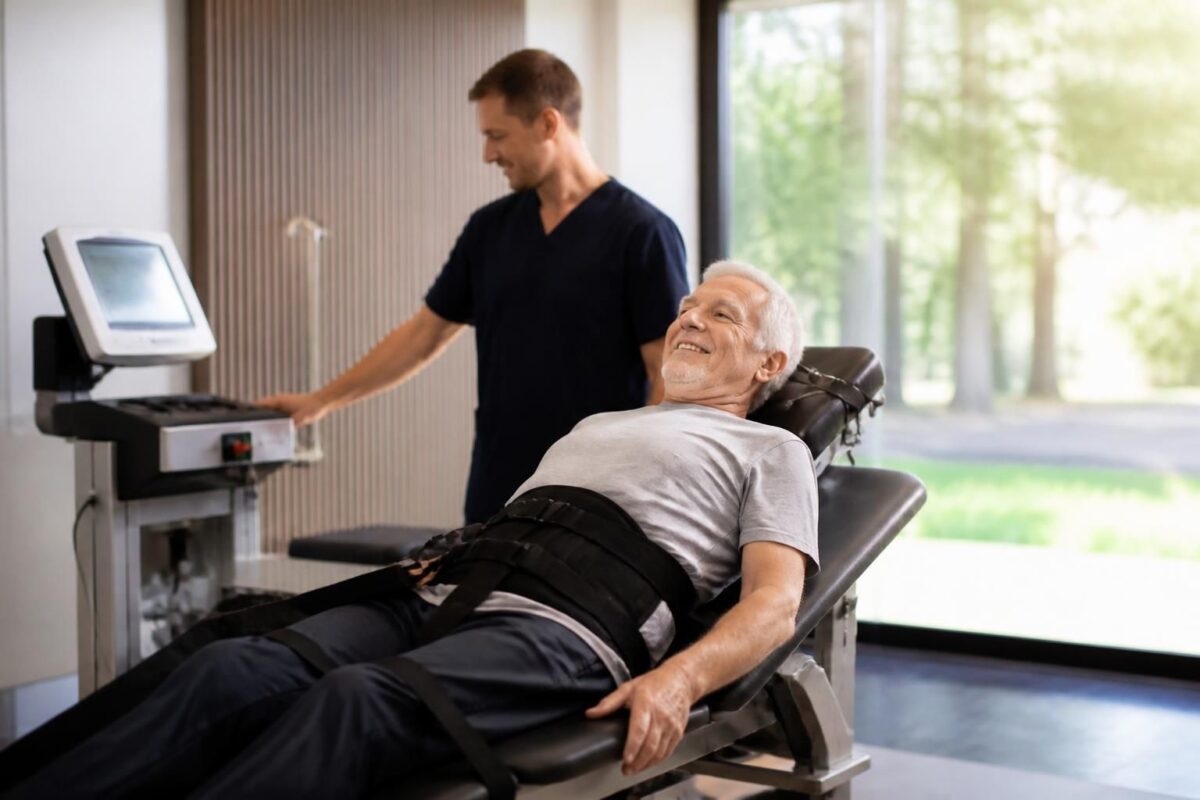
Why neurovertebral decompression is a lasting solution for active seniors
In short In short, the neurovertebral decompression is one Non-invasive therapy which sustainably relieves spinal pain in the spine active seniors By creating, by a Soft and controlled traction, a space between the vertebrae. At Montreal, it is recognized as…
To get the most out of decompression, adopt a Active lifestyle and maintain a correct posture at work and at home. Integrate mobility and reinforcement exercises adapted to your back, to support spinal stability and post-treatment recovery.
Schedule regular feedback with the healthcare professional to adjust the protocol and ensure proper progression. Combine decompression with other non-invasive approaches and avoid excessive loads that could compromise gains.
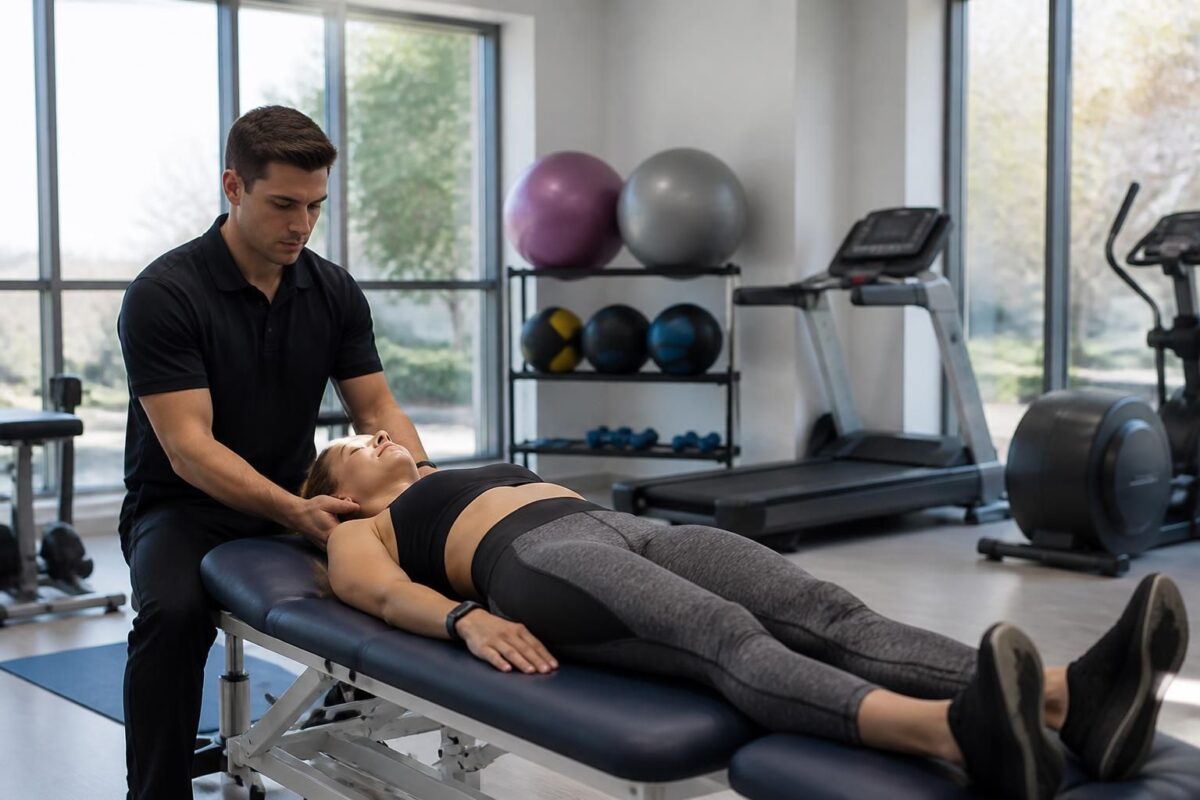
Neurovertebral decompression and recovery after severe sports injury
In short In short, the neurovertebral decompression is one Non-invasive method to Relieve the pressure on the Intervertebral discs and the gristle Via a Controlled traction, to facilitate the recovery After a severe sports injury. It improves the bloodstream towards…
Safety and contraindications
Decompression is generally safe and non-invasive, but it is not suitable for all patients. Contraindications exist in particular in the presence of vertebral fractures, advanced osteoporosis, infections, tumors or certain spinal pathologies. An in-depth assessment is essential to ensure the safety and effectiveness of treatment.
| Element | Effect |
|---|---|
| Controlled traction | Causes a Quick relief by reducing the pressure on discs and nerves. |
| Increased intervertebral space | Decreases the nervous pressure and Improves local blood circulation. |
| Improved blood circulation | Promotes the intake of nutrients and Accelerates healing fabrics. |
| decrease inflammation | Reduce theinflammation, reducing pain and improving mobility. |
| muscle relaxation | Releases tensions around the column, reducing aches and the stiffness. |
| vertebral alignment | Restore a posture more natural and better distributes the expense. |
| Prevention of recurrences | Maintains space and limits painful relapses. |
| Non-invasive approach | avoid the surgery and the associated risks while remaining effective. |
| Quick results | relief after several sessions and Mobility found. |
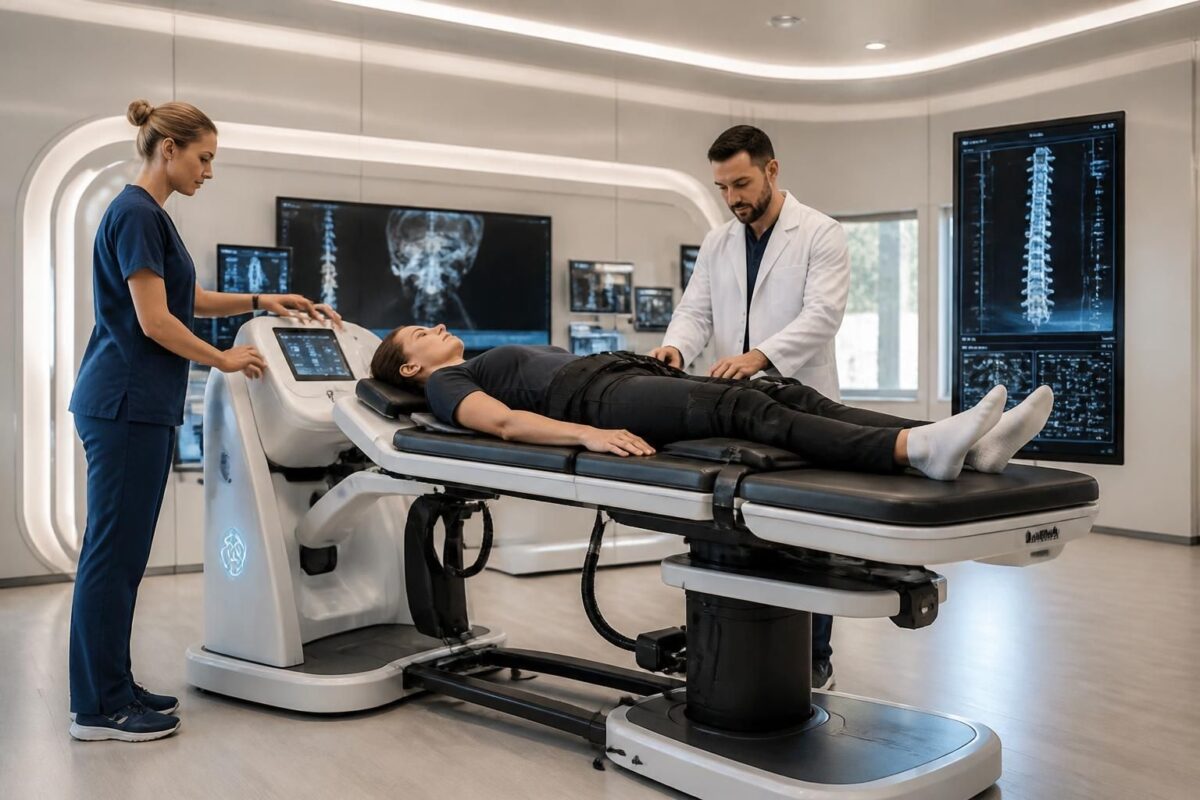
Recent innovations in neurovertebral decompression technologies
In short In short, the neurovertebral decompression is an approach non-invasive Aiming to reduce pressure on discs and nerves, and promote tissue regeneration. At Montreal, it is positioned as an effective option for lower back pain and herniated discs. The…
Testimonials on neurovertebral decompression and mid-back pain
“Before, middle back pain made my days heavy and tedious. After several sessions of neurovertebral decompression, I felt a progressive relief that allowed me to resume my activities without fear of pain. »
“The gentle traction Used during sessions acts as a breath for my spine. I felt the Pressure on the intervertebral discs Decrease and my nerves break free, which reduced my pain and improved my mobility over the weeks. »
“I found a Better blood circulation Around my back, which favored tissue recovery. This improvement also led to a Improving mobility, and I can now stretch and move with less restriction. »
“What convinced me the most is that this treatment is non-invasive And that it allows me to find a Ability to practice my activities daily without pain or worry. »
“I particularly appreciate the preventive dimension: the neurovertebral decompression Help to Reduce pain sustainably By promoting a more stable alignment of the spine and decreasing muscle tension around the middle of the back. »
“As an amateur athlete, my mid-back pain limited my workouts. After the sessions, I found a Increased mobility and an Faster recovery After the effort, which changed my practice and my daily life. »
Dr. Sylvain Desforges is recognized as Expert in osteopathy, naturopathy and manual medicine, and he directs the Tagmed clinics as well as the ACMA association. his journey, dedicated toHealth Innovation, led him to develop an approach centered on the management of Chronic pain and the integration of advanced technologies. In this perspective, the neurovertebral decompression Occupies a key place to understand and treat pain in the middle of the back.
Neurovertebral decompression is based on traction Soft and controlled which aims to create a space between the vertebrae. This increase inintervertebral space Reduces the pressure exerted on the Intervertebral discs and the Spinal nerves. At the same time, it promotes a Better blood circulation in the chest area, which facilitates the supply of nutrients and the evacuation of metabolic waste, essential to the Tissue regeneration and the reduction of local inflammation.
For mid-back pain, this approach works in several stages. First, it directly decreases the nerve pressure and discs, which leads to rapid pain relief and decreased stiff feelings. Second, improving traffic allows for better Fabric nutrition and accelerates the healing of damaged structures. Finally, the traction process contributes to Relieve muscle tension around the column, favoring a Improving mobility and a smoother resumption of daily activities.
This technique is particularly relevant in the face of common conditions such as herniated discs or nerve compressions at the chest level. By offering an alternative non-invasive And without surgery, it reduces the associated risks while promoting a Sustainable recovery. By working on the vertebral alignment and the intervertebral space, it also helps to prevent recurrences and to support a more balanced posture in the long term.
As part of a personalized care plan, Dr Desforges Usually associates decompression with other complementary approaches such as physiotherapy, stretching exercises and muscle building work. This integrative approach aims to stabilize the spine, improve flexibility and promote a healthy lifestyle, a major factor in preventing recurrent pain. Pre-operational evaluation and regular monitoring allow protocols to be adjusted and results to be optimized.
Guided by an evidence-based philosophy, Dr. Desforges is committed to providing clinical data-based care and clearly communicating expectations and progress. Its objective is to optimize the health and well-being of each patient by placing neurovertebral decompression at the heart of a personalized and ethical care pathway, in order to sustainably restore the quality of life of people suffering from mid-back pain.
This note presents, in a clear and detailed way, how the neurovertebral decompression Acts on pain in the middle of the back. It explains the therapeutic mechanism, the effects on pain and mobility, indications and best practices to optimize results, while proposing additional resources to deepen understanding.
The Soft and controlled traction Used by neurovertebral decompression helps create additional space between the vertebrae, gradually reducing the Pressure on intervertebral discs and nerves. This decrease in pressure promotes better bloodstream in the dorsal region and facilitates the tissue regeneration damaged. By extending the intervertebral space, the technique opens the way to better nutrition of the discs and a reduction in local inflammation, which directly contributes to the attenuation of pain in the middle of the back.
The mechanisms of action are not limited to immediate relief. By acting on muscle tension around the spine and restoring a more harmonious vertebral alignment, decompression participates in a Sustainable improvement in mobility and a more stable posture. This approach can also prevent recurrences by decreasing the mechanical factors responsible for pain, which is highlighted in the resources dedicated to this subject (Long-term benefits). For a general view of the basics and conceptual framework, see the encyclopedic article on neurovertebral decompression.
This approach is non-invasive and can be adapted to mid-back pain related to herniated discs, nerve compressions or disc bulges. It will ideally fit into a global and personalized care plan, in addition to targeted exercises, posture work and lifestyle advice. To deepen the reasons that make this method a relevant and lasting choice, you can consult additional explanations on specialized sites and professional resources such as tagmed and other reliable sources.
Potential benefits include faster pain reduction, better range of motion, and an increased ability to resume daily and sports activities. Efficacy is promoted by in-depth preliminary assessment and regular sessions, adapted to the patient’s condition, as described by specialized resources for neurovertebral decompression and vertebral alignment (Alignment and duo efficiency, Circulation and unexpected profit). For those who want a broader view of the mechanisms and benefits, reference articles also cover the aspects Natural treatment and back health.
Finally, the integration of neurovertebral decompression in a therapeutic course can be enriched by complementary approaches, such as advice onPostural lifestyle, reinforcement exercises and adapted manual techniques. For a general understanding and additional perspectives, the resources on Natural pain management and other specialized sources can be viewed.
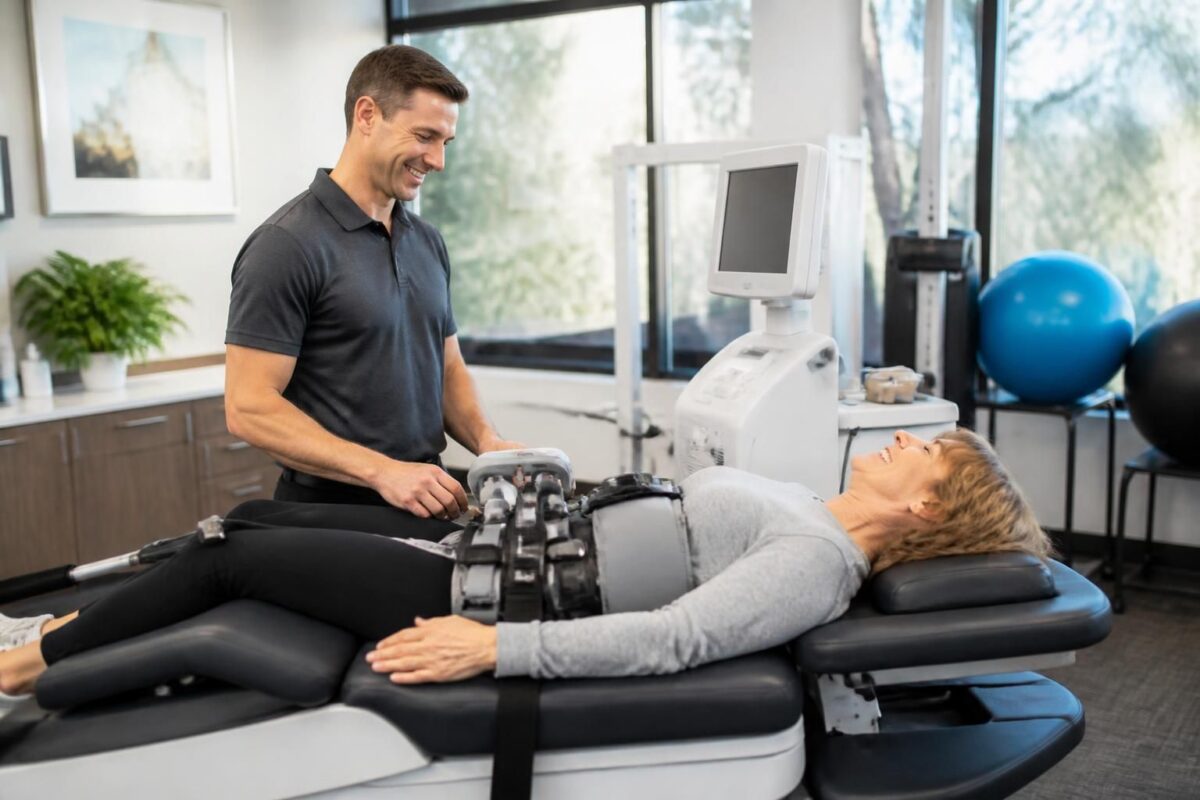
Neurovertebral decompression and diffuse pain: an appropriate solution
In short In short, the neurovertebral decompression is one Non-invasive solution For diffuse pain related to nerve irritation of the spine. She acts in Reducing pressure on intervertebral discs and nerves and improving the bloodstream, which promotes recovery and the…

Dr Sylvain Desforges, B.Sc., D.O., N.D., osteopath, is the founding president of TAGMED and of the ACMA association. He dedicates his practice to chronic spinal pain, low back pain and symptoms compatible with sciatica, particularly when pain radiates toward the buttock, leg, calf, foot or toes.
Through SOS Sciatique, he publishes educational content on sciatica symptoms, possible causes such as disc herniation, disc narrowing, foraminal stenosis or irritation of a lumbar nerve root, as well as non-surgical approaches that may be considered according to the evaluation. At Clinique TAGMED, care may include, depending on the case, motorized neurovertebral decompression, specific osteopathic care or precision percussion.
For an evaluation related to sciatica treatment in Montreal / Mount Royal or sciatica treatment in Terrebonne, please consult the services available at Clinique TAGMED.
Medical disclaimer
The information published on SOS Sciatique is provided for educational purposes only and does not replace a consultation, diagnosis, opinion or treatment provided by a physician or another authorized healthcare professional. The author of this article is neither a medical doctor nor a specialist in a medical specialty recognized by the Collège des médecins du Québec. The osteopathic, manual medicine or functional support approaches described on this site do not constitute medical acts and are not intended to replace medical follow-up.
Consult a physician or emergency service in cases of loss of bladder or bowel control, anesthesia in the saddle area, significant or progressive weakness in the leg or foot, fever, recent trauma, severe pain or rapid worsening of symptoms. For more details, please read our Legal Notice.