Osteopathy and recovery after surgery: accelerate healing
28/06/2026
Osteopathy and posture: regain a healthy body alignment
28/06/2026
In short
|
In short, Osteopathy To reduce the Lower limb pain is an approach manual and holistic which aims to restore the mobility and thebalance hips, knees and ankles. Key Benefits: pain reduction, improvement of the posture and from the flexibility, better circulation blood and lymph, and decreased stress on the nervous system, all without surgery or pharmaceuticals. The treatment takes place in sessions short and Custom, with a evaluation and gentle techniques that release tension and restorealignment. At Montreal, this service is particularly recommended for hip, knee and ankle pain, in adults and athletes. |
theosteopathy acts on the pain affecting the hip, knee and ankle thanks to Soft manual techniques who restore theMusculoskeletal balance and improve the circulation. These interventions aim to release tension, release the blocked joints and promote better mobility, so that you find comfort and movement on a daily basis.
- pain reduction by unlocking joints and muscle relaxation.
- Improving mobility and flexibility of muscles and joints.
- Injury prevention and support for recovery after exercise.
- Better nervous functioning and circulation, promoting a circulation of nutrients to the tissues.
This guide shows how Osteopathy may decrease the Lower limb pain. You will discover the mechanisms of action, the issues concerned and the advantages of posture, mobility and recovery. This global approach aims for lasting comfort, without resorting to invasive gestures.
How osteopathy acts on pain in the lower limbs
Osteopathic techniques use gentle manipulations and targeted mobilizations to release muscle and joint restrictions. They improve circulation and reduce tension on the nerves that pass through the limbs. This concerted action promotes a gradual return to normal function and better range of motion.
The session begins with a complete assessment of posture, joints and mobility. The therapist identifies the dysfunctional areas and adapts the gestures to your situation. The results result in a gradual reduction in pain and a lasting feeling of relaxation. To understand the mechanisms related to chronic postural imbalances, you can consult dedicated resources on Osteopathy and postural imbalances.
Frequent pains targeted by osteopathy
the disorders affecting the hip, knee, ankle and the foot are often attenuated by gentle techniques that restore alignment and mobility. Osteopathy can help reduce pain related to muscle tension, sprains or joint-TAC imbalances. The approach focuses on returning to a natural function without imposing invasive gestures.
It can also intervene when pain in the lower limbs is part of chronic or recurrent pain profiles. For information on how osteopathy can act in a post-intervention context or after disc problems, refer to specialized resources dedicated to post-operative recovery and disc diseases.
Impact on posture and balance
Proper body alignment reduces pressure on joints and soft tissues. Osteopathy assesses compensation and corrects imbalances, which improves balance and reduces the risk of repeated pain. Better posture also helps to prevent the tensions that arise during daily or sports activities.
By working on the mobility of the lower segments and the relaxation of the fascias, osteopathy can help restore a more homogeneous functional dynamic between the pelvis, thighs and calves. To find out more about the link between osteopathy and post-fracture recovery, you can consult dedicated resources on Post-Fracture Recovery.
Recovery, prevention and physical activity
Osteopathic action promotes recovery More effective after exercise by improving circulation and relaxing tissues. This can allow you to resume physical activity more quickly and prevent painful recurrences. Osteopathy can be associated with advice on the rhythm of activities and body sensations, in order to optimize recovery and long-term prevention.
For athletes wishing to optimize their performance and their recovery, dedicated resources discuss the benefits of osteopathy in preparation and return to effort. Some pages also present how osteopathy can intervene in contexts of post-operative recovery and improvement of overall function.
Integration with other approaches and resources
Osteopathy fits well into a global care process. It can coexist with other non-invasive therapies and promote mobility and well-being. In some cases, a complementary approach may be considered, particularly in connection with specialists and specialized resources on removal of postural restrictions and musculoskeletal disorders.
To deepen the recovery and performance aspects, the following resources provide additional insights into the action of osteopathy and postural and functional healing mechanisms: Osteopathy and sports recovery, Post-Fracture Recovery, and Disc disease and osteopathy.
For information on the importance of neurovertebral decompression and other specific approaches, relevant resources are available at neurovertebral decompression.
Additional and professional resources remain available in specialized sources, including content published by ACMA and other recognized professional organizations in the field.
To deepen the mechanisms and potential outcomes of osteopathy on Lower limb pain, also consult public and professional resources on structures related to pain and recovery.
Medical Disclaimer: The information and advice provided on this site does not replace the health professional’s diagnosis or treatment. Please note that Dr. Sylvain Desforges osteopath is neither a doctor of medicine nor a doctor, and is not a specialist in a medical specialty as defined by the Collège des Médecins du Québec. Manual medicine, functional medicine and sports medicine as described on this site exclude any medical treatment or diagnosis made by a doctor or specialist doctor. Always consult your doctor for any medical questions. For more details, please read our full legal notice.
- Joint mobility well-established
- Myofascial release and soft tissues
- Biomechanical rebalancing hips, knees and ankles
- traffic improvement blood and lymphatic
- pressure reduction On peripheral nerves
- muscle relaxation target
- Pain decreased in the lower limbs
- Amplitude and stability Improved movements
- Locomotion facilitated and fatigue Reduced to walking
- Post-effort recovery very fast
- Prevention of recurrences and less night pain
- Sleep and welfare Improved

This article presents the Benefits of Osteopathy To reduce the Lower limb pain. By working on the mobility of the hips, knees, ankles and feet, osteopathy can reduce tension, improve circulation and restore balance to the body. thanks to Soft manual techniques, it targets the causes rather than the symptoms, allowing you to regain comfort, better approach and a regained quality of life.
What is osteopathy and why it acts on the lower limbs
Osteopathy is an approach holistic which considers the body as an interdependent whole. For pain in the lower limbs, she looks for dysfunctions not only in the joints and muscles but also in the chains that connect the pelvis, the back and the feet. This approach aims to restore Structural balance and the function of the entire lower limb.
The fundamental principles guide each session: the body is a living unit, it has a Self-healing ability, the structure governs the function, and good circulation is essential to health. By activating these levers, osteopathy can reduce joint and muscle tension that fuels lower limb pain.

How osteopathy improves the quality of life of active people
In short In short, theosteopathy is a global approach that Optimizes mobility and the function of the body of ACTIVE PEOPLE, for a better quality of life. It helps prevent injury and reduce Musculoskeletal pain While promoting the Sports recovery.…
Common causes of lower limb pain and the role of osteopathy
Hip and knee pain
The pain in these areas often comes from postural imbalances, mobility limitations or compensation related to other segments of the body. The osteopath assesses alignment, releases tension and rebalances muscle chains to facilitate walking and reduce pain.
ankle and foot pain
In the event of instability, former trauma or plantar fascia disorders, osteopathic techniques aim to restore joint mobility and fluidify the fascias. A stable ankle and tension-free feet support a less painful and more effective gait.
Tendinopathies and peripheral inflammations
For tendonitis and deep tissue inflammation around the knees, hips or ankles, osteopathy works by reducing overloads, improving local circulation and rebalancing muscle chains. The goal is to soothe the pain and avoid recurrences through better posture and appropriate mobility.

Osteopathy and sports recovery: prepare the body for lasting performance
In short In short, Osteopathy and Sports recovery is one Global manual approach that sustainably prepares the body for the effort by restoring mobility and circulation After the effort. It is a discipline that acts on the sinews, the joints,…
How Osteopathy Improves Mobility and Posture
thanks to a muscle relaxation targeted and Joint mobilizations Soft, osteopathy frees blocked areas and reopens motion ranges. Improving circulation facilitates the supply of oxygen and nutrients, promoting tissue repair and reduction of inflammation.
By working on the lumbar and pelvic chains as well as on the plantar supports, osteopathy can correct compensations that cause pain at foot, knee or hip, thus reducing the risk of new tensions during daily and sporting activities.
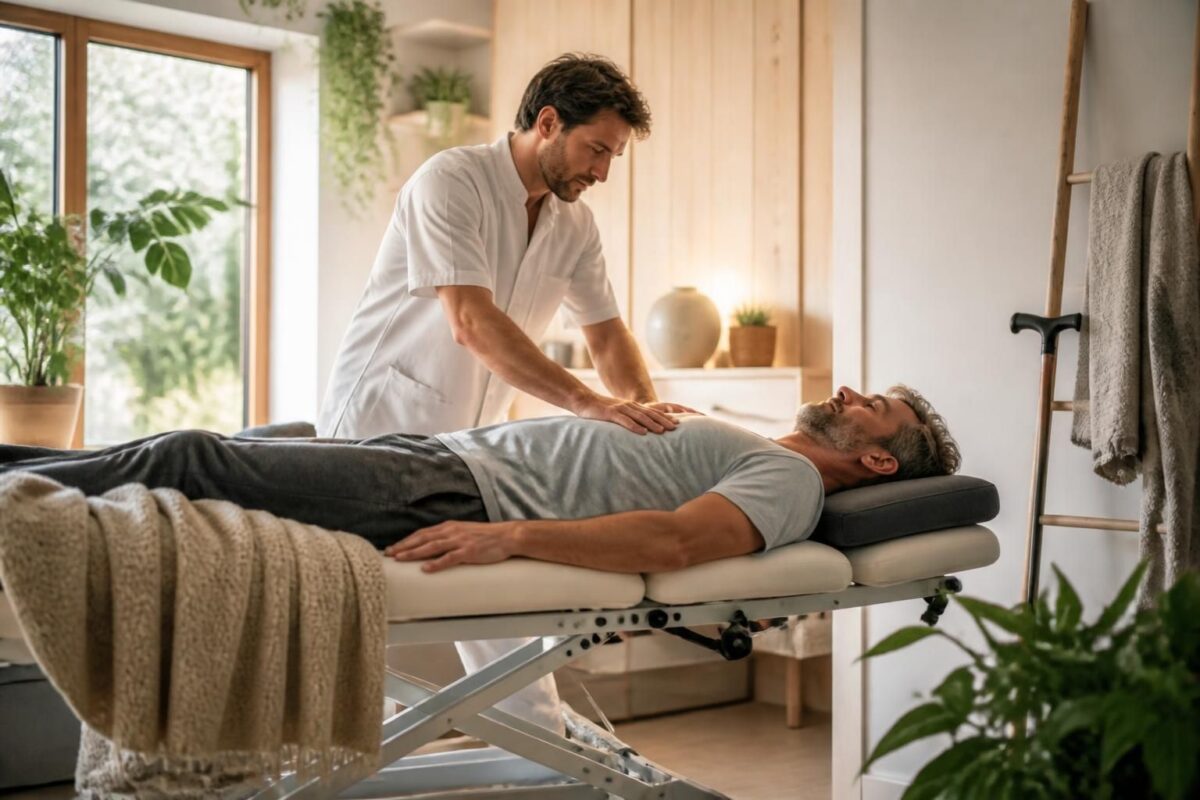
Why Osteopathy Is Essential For Recovery People
In short In short, Osteopathy in convalescence is an approach manual and holistic which helps to accelerate the recovery by restoring The balance, the mobility and a good circulation fabrics. it contributes to Reduce the pain, support the Back to…
Practical advice to optimize the benefits between sessions
Integrate Gentle stretching and mobility exercises adapted, wear suitable shoes and favor a progressive walk. Hold a Balanced posture At work and during everyday actions, alternate periods of rest and activity and avoid unnecessary overloads that aggravate pain.
Between sessions, favor low-impact activities such as light walking, swimming or cycling, and listen to your body so as not to force on painful areas. A moisturizing diet and good stress management complement the beneficial effects on recovery.

Osteopathic manipulations to strengthen post-traumatic muscles
In short In short, Osteopathic manipulations for Strengthen post-traumatic muscles constitute a gentle manual approach aimed at restoring the mobility, reduce the pain and facilitate the Functional rehabilitation After a injury. What is Is it? A series of precise gestures…
When to consult and what to expect in a session
If the pain persists for several weeks or is accompanied by swelling, consult an osteopath for a personalized assessment. During a session, you will benefit from a postural and functional assessment followed by an appropriate treatment, with feelings of relaxation and, sometimes, a slight temporary aches that fade quickly.

Osteopathy and prevention of work-related musculoskeletal disorders
In short theosteopathy is one Manual approach that restores body balance and prevents MSD related to work. Its advantages: reduction of tension, improvement of mobility and prevention of chronic pain. She is preventive and healing, suitable for office and trades…
Benefits of osteopathy to reduce pain in the lower limbs
| Targeted area | Impact on pain |
|---|---|
| Hip | Reduces tension and improves mobility, helping to reduce pain when moving. |
| Knee | Reduces tensions around the patella and improves joint mobility, relieved when walking. |
| Ankle | Releases the fascias and restores stability, decreasing pain on walking and exertion. |
| Foot and arch | Relaxation of muscles and fascias, relieves plantar pain and improves support. |
| Achilles tendon | Improves elasticity and reduces pain during physical activity. |
| ankle sprain | Releases tension and prevents recurrences while reducing post-sprain pain. |
| Sciatica | Releases nerve pressure and improves circulation, reducing irradiated pain. |
| posture and walking | Corrects alignment, reduces tension and pain when walking. |
| Recovery after effort | Accelerates recovery and decreases post-exercise muscle pain. |

The benefits of osteopathy to treat muscle imbalances
In short theosteopathy is a manual approach to restore themuscle harmony and postural considering the body as a whole. Its main benefits include the reduction of aches and tensions, the improvement of the mobility and from the posture, and prevention…
Customer testimonials
“Before my first session, my knee pain And the hip prevented me from enjoying my activities to the full. After a few sessionsosteopathy Focused on mobility and tissue rebalancing, I found a Improved mobility and an Reduced pain on a daily basis. »
“I was suffering from repeated sprains and walking discomfort. The gentle and global approach to osteopathy helped release tension around the ankle and knee, leading to a Lasting pain reduction and to a Better stability during sports activities. »
“I thought my hip pain would be a permanent limit. Thanks to osteopathy, movement restrictions dissipated and my pain decreased, allowing me to go up the stairs without fear and to resume my daily walks with pleasure. »
“In anticipation of an intensive sport, I consulted for pain in the tibia and ankle. the targeted techniques used quickly improved my flexibility and the circulation, and I was able to resume training without worsening symptoms. »
“After a long period of leg and calf pain, I discovered that the cause could be multi-factorial. The osteopath worked on the balance of structures and restored a Normal operation of the fabric, which led to a Significant reduction in pain and an Best recovery After the effort. »
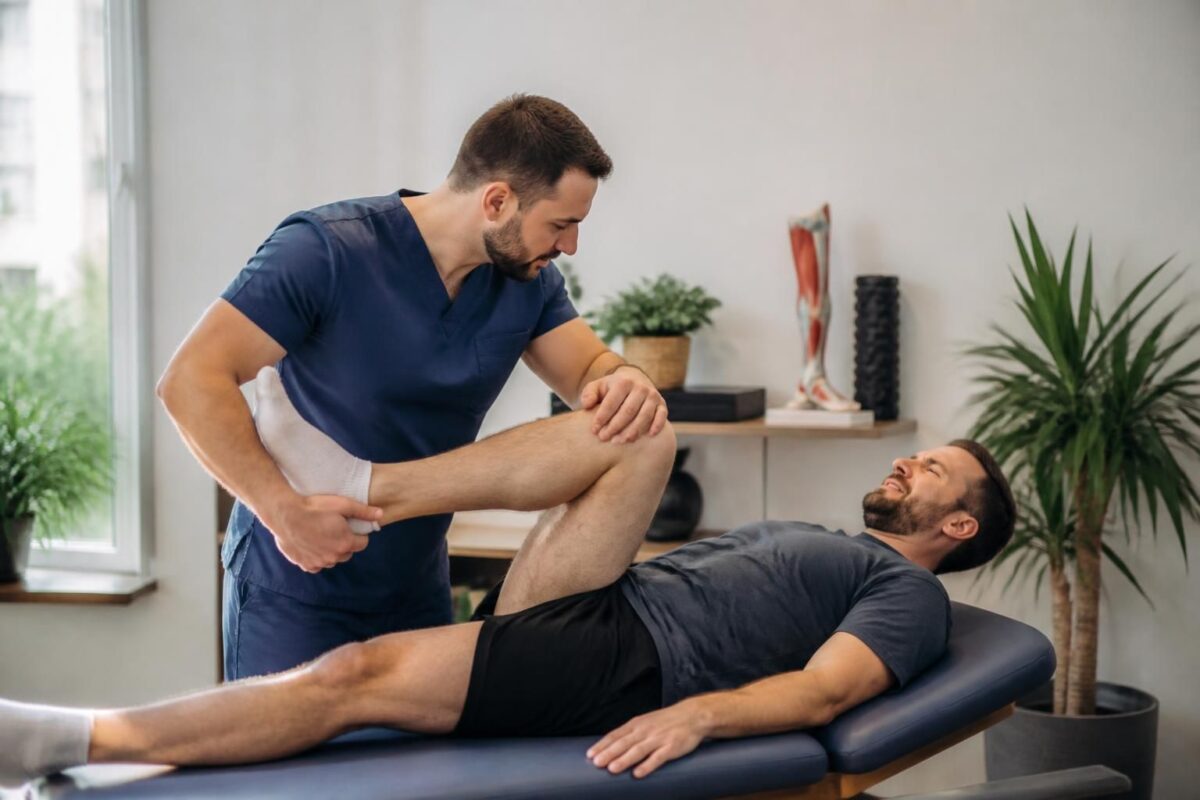
Osteopathy and chronic leg pain: regaining an optimal quality of life
In short In short, Osteopathy is one Global manual approach aimed at reducing Chronic leg pain and improve the quality of life. What is it? Non-drug therapy using the hands to identify restrictions and treat lesional chains. How does it…
Detailed biography on the benefits of osteopathy to reduce pain in the lower limbs
Dr Sylvain Desforges is an expert in osteopathy, naturopathy and manual medicine, and occupies the roles of founding president of Tagmed and theacma Association. Its professional trajectory is part of a dynamic of innovation in health care, with a marked specialization in the support for Chronic pain and the integration of advanced technologies. Among them, complementary approaches such as spinal decompression, the laser and the Shockwave therapy, used in a suitable way to optimize the results in patients with lower limb pain. Its objective is to offer care evidence-based In order to sustainably improve everyone’s health and well-being, favoring a natural, non-invasive approach.
The Lower limb pain constitute a major field of action of osteopathy. The practitioner’s approach is holistic: she considers that the body functions as a dynamic unit where the pelvis, hips, knees, ankles and feet form an interconnected chain. In practice, this means evaluating not only local pain but also pelvic imbalances, calf tension, knee mobility restrictions and compensations that can impact walking and posture. This global vision makes it possible to identify causes that are often invisible at other levels of care and provide lasting solutions.
The techniques used by the osteopath to reduce pain in the lower limbs are varied and targeted. They include Myofascial releases To release the fascias surrounding the muscles, Joint mobilizations To find a fluid range of motion, Soft stretches In order to restore the elasticity of the tissues, and manipulations that rebalance the postural chains. Combined with practical advice, these techniques aim to improve the circulation local and reduce the tensions that fuel pain, while promoting better mobility and an walking quality more efficient.
Beyond the simple reduction of pain, osteopathy promotes a lasting improvement in the posture and thebalance, two determining factors in the prevention of recurrences and sprains. Better hip and knee mobility allows a more homogeneous distribution of loads when walking or sporting, which contributes to limiting repeated tension and microtrauma. From a global perspective, the improvement in circulation supports the disappearance of pain and can promote more restorative sleep and a reduction in stress, elements often associated with chronic pain.
Dr. Sylvain Desforges’ practice is based on an individualized approach: each patient benefits from a complete evaluation and then from an adapted treatment plan, which can integrate osteopathic techniques and, when necessary, additional protocols based on evidence. This approach aims to optimize the locomotor function and to offer a natural and effective alternative to reduce pain in lower limbs, while supporting the resumption of regular physical activity beneficial to general health.
This text shows how theosteopathy can help reduce Lower limb pain By working on the hips, knees and ankles, while improving the mobility, the flexibility and the circulation to promote a better quality of life.
As part of the reduction of Lower limb pain, theosteopathy Targets interconnected structures and uses gentle techniques to restore balance and release fascia and joint tension, which can reduce pain and prevent recurrences.
By acting on hip and knee mobility, pelvic alignment and improving the circulation Blood, it can alleviate pain, sprains and tibio-pibular pain, while promoting better recovery after exercise and reducing compensatory tensions in the lower limbs.
practice promotes better posture and a better balance, key elements to reduce stress on the joints and limit long-term pain. Myofascial relaxation techniques and targeted mobilizations help release tension and improve the range of movements of the feet, ankles and knees.
For those who practice physical activity or who wish to find ease in everyday gestures, theosteopathy Can support performance and recovery by improving the mobility and the circulation, while managing physical stress related to exertion. To deepen, you can check out dedicated resources like these: The benefits of osteopathy to relieve chronic leg pain and The benefits of osteopathy to relieve chronic leg pain.
Complementary resources allow us to deepen this subject, in particular analyzes on the impact of osteopathy on pain in the lower limbs and on sports performance: Osteopathy and pain in the lower limbs and How Osteopathy Improves Physical Performance in Athletes.
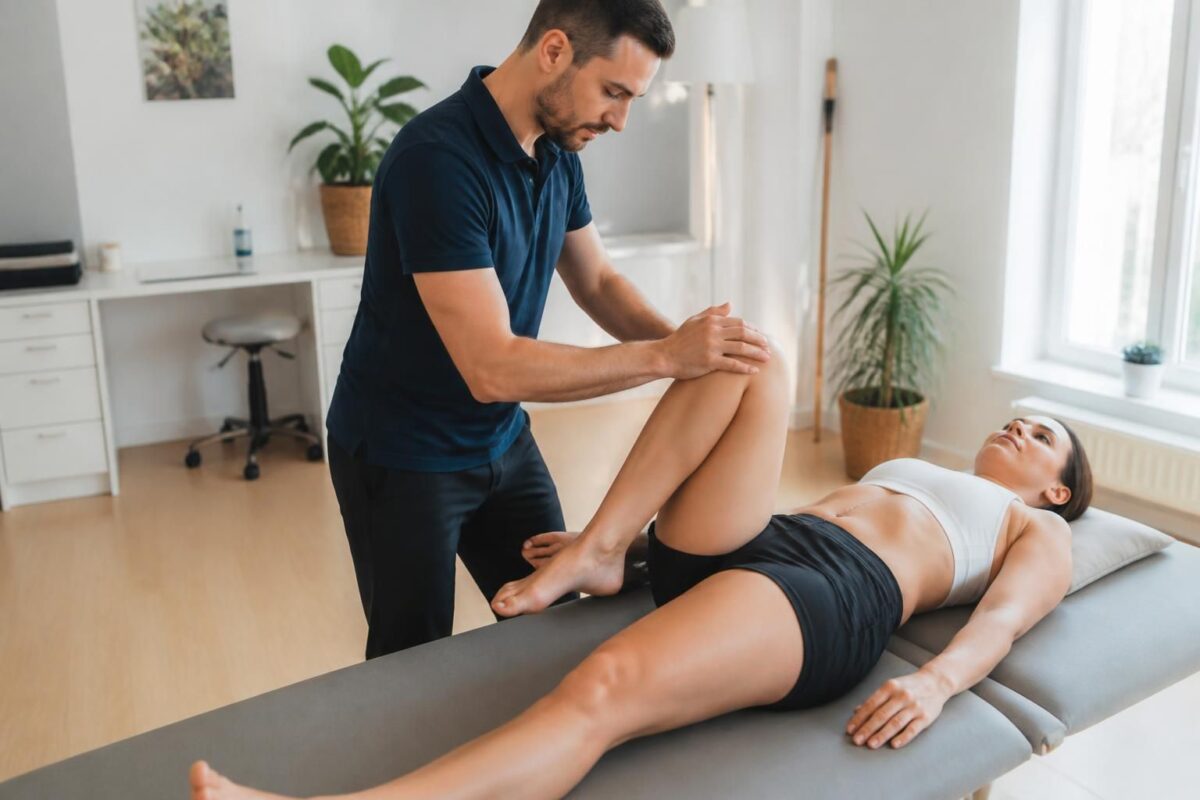
How osteopathy supports recovery after complex surgery
In short In short, Post-operative osteopathy is an approach fresh which supports the recovery After a Complex surgery. It helps to reduce the pain and the fatigue, improves the mobility and accelerates the healing thanks to a better vascularization and…

Dr Sylvain Desforges, B.Sc., D.O., N.D., osteopath, is the founding president of TAGMED and of the ACMA association. He dedicates his practice to chronic spinal pain, low back pain and symptoms compatible with sciatica, particularly when pain radiates toward the buttock, leg, calf, foot or toes.
Through SOS Sciatique, he publishes educational content on sciatica symptoms, possible causes such as disc herniation, disc narrowing, foraminal stenosis or irritation of a lumbar nerve root, as well as non-surgical approaches that may be considered according to the evaluation. At Clinique TAGMED, care may include, depending on the case, motorized neurovertebral decompression, specific osteopathic care or precision percussion.
For an evaluation related to sciatica treatment in Montreal / Mount Royal or sciatica treatment in Terrebonne, please consult the services available at Clinique TAGMED.
Medical disclaimer
The information published on SOS Sciatique is provided for educational purposes only and does not replace a consultation, diagnosis, opinion or treatment provided by a physician or another authorized healthcare professional. The author of this article is neither a medical doctor nor a specialist in a medical specialty recognized by the Collège des médecins du Québec. The osteopathic, manual medicine or functional support approaches described on this site do not constitute medical acts and are not intended to replace medical follow-up.
Consult a physician or emergency service in cases of loss of bladder or bowel control, anesthesia in the saddle area, significant or progressive weakness in the leg or foot, fever, recent trauma, severe pain or rapid worsening of symptoms. For more details, please read our Legal Notice.