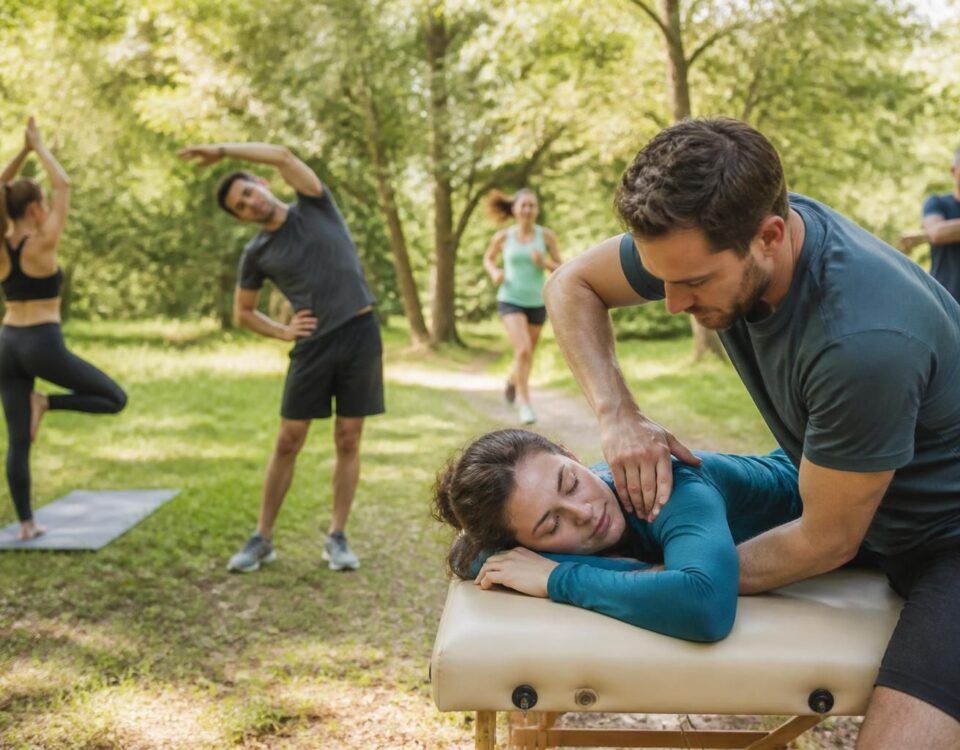
How Osteopathy Supports Recovery After Orthopedic Surgery
28/06/2026
Osteopathy and mobility: maintaining flexibility with age
28/06/2026
In short
| In short, theosteopathy for the Joint health is a manual approach that aims to improve the mobility and the Function of joints To reduce pain and prevent stiffness. It offers advantages such asImproving mobility, a better Joint stability and a decrease in pain related to aging or repetitive stress. Its operation is based on gentle and targeted techniques that rebalance the joint chains and support natural repair mechanisms. In Montreal, this service is particularly useful for chronic joint pain and daily stiffness. |
theosteopathy favor Joint health By acting on the causes of pain and movement restrictions. It aims to restore the Joint mobility, reduce the pain and improve the circulation, which reinforces the stability and Lrange of motion. In addition, she offers advice from Functional rehabilitation and appropriate exercises to prevent recurrences and preserve joint integrity.
The benefits of osteopathy to improve joint health are based on a global approach that aims to restore mobility, circulation and coordination of structures around the joints. Osteopathy can help improve the Joint health By working on soft tissues, fascias and alignments, while respecting the medical limits and history of each patient. This article describes how these principles translate into concrete results for patients, while remaining accessible and practical.
Essential Benefits for Joint Health
Fluid movement is fundamental. theosteopathy Improves the mobility joints and promotes better circulation local fluids. This can lead to a pain reduction and a feeling of suppleness regained. The osteopathic evaluation identifies the tension zones and makes it possible to optimize the functioning of the joints without forcing the sensitive tissues.
Mobility and traffic
Appropriate articulatory mobility limits friction and promotes better nutrition of cartilage. The proprioception is also supported, which helps to correctly perceive the position of the joints in space.
pain reduction
Gentle manual techniques can reduce peri-articular tension and improve exercise tolerance. The patient often feels a decrease in pain over the sessions, which supports the practice of activities beneficial to general health.

How osteopathy improves the quality of life of active people
In short In short, theosteopathy is a global approach that Optimizes mobility and the function of the body of ACTIVE PEOPLE, for a better quality of life. It helps prevent injury and reduce Musculoskeletal pain While promoting the Sports recovery.…
The osteopathic approach and synergy with the joints
Osteopathy is based on a global assessment. The practitioner examines the joints, muscles and fascias around painful areas to understand the origin of dysfunctions. This approach allows for a care plan focused on the Joint function, while remaining compatible with possible medical treatments. For some people, the goal is to improve coordination between systems to support joint health over the long term.
Osteopathic evaluation
The evaluation aims to identify the restriction areas and to understand the interactions between the articular structures and the surrounding tissues. The goal is to establish a strong and secure work base for each patient.
Techniques used
Techniques can be gentle and targeted. They aim to improve mobility and reduce tensions without imposing invasive gestures. The objective is to allow the joints to function more efficiently in everyday life and during physical activities.

Osteopathy and sports recovery: prepare the body for lasting performance
In short In short, Osteopathy and Sports recovery is one Global manual approach that sustainably prepares the body for the effort by restoring mobility and circulation After the effort. It is a discipline that acts on the sinews, the joints,…
Impact on the musculoskeletal system and posture
Joint health also depends on good posture and a balance of muscle strength. Osteopathy promotes optimal alignment and helps prevent imbalances that can cause joint pain. advice on maintaining a Healthy body alignment can support therapeutic work and facilitate recovery.
Posture and alignment
A healthy body alignment can reduce pressure on articular surfaces and improve the efficiency of daily movements. Osteopathy can help restore this alignment in a progressive and appropriate way.
Stability and balance
Work on soft tissues and fascias contributes to better joint stability and a more stable postural balance during daily and sports activities.
Why Osteopathy Is Essential For Recovery People
In short In short, Osteopathy in convalescence is an approach manual and holistic which helps to accelerate the recovery by restoring The balance, the mobility and a good circulation fabrics. it contributes to Reduce the pain, support the Back to…
Integration with physical activity and recovery
For active people, osteopathy can support recovery and performance. It can help optimize recovery mechanisms after exercise and prevent recurring injuries through better tension regulation and better posture during training. To further this component, you can consult resources focused on theOsteopathy and sports recovery and on the impact of osteopathy on posture and balance.
Osteopathy and sports recovery
Dedicated resources explain how osteopathy can support recovery processes and help maximize athletic performance. (Examples:
Maximize athletic performance,

Osteopathic manipulations to strengthen post-traumatic muscles
In short In short, Osteopathic manipulations for Strengthen post-traumatic muscles constitute a gentle manual approach aimed at restoring the mobility, reduce the pain and facilitate the Functional rehabilitation After a injury. What is Is it? A series of precise gestures…
Limitations and care framework
Osteopathy does not replace a traditional medical evaluation. For specific conditions like a disc herniation or a disc pinch, the approaches are suitable and this does not replace medical advice. In the context of disc pathologies or stenosis, the practitioner respects the medical recommendations and chooses techniques adapted to each situation.
Training and quality
Professionals in osteopathy can come from recognized training such as NUMSS, NAO, National University of Medical Sciences or National Academy of osteopathy, and be affiliated with professional organizations such as ACMA, the College of Canadian Osteopaths or the College of Canadian Osteopaths.
For the care offered at the TagMed Clinic and in patients with joint pain, the approach is centered on safety, understanding of needs and respect for each individual’s framework. Additional links and resources can be explored at the following sites for general perspectives on osteopathy and its benefits for the body:
- Osteopathy and sports recovery – maximize athletic performance
- Osteopathy and sports recovery – prevent recurrent injuries
- How Osteopathy Supports Recovery After Surgery
- Osteopathy and posture – regain healthy body alignment
- The benefits of osteopathy to improve postural balance
- Tagmed Clinic
Medical Disclaimer: The information and advice provided on this site does not replace the health professional’s diagnosis or treatment. Please note that Sylvain Desforges osteopath is neither a doctor of medicine nor a doctor, and is not a specialist in a medical specialty as defined by the Collège des Médecins du Québec. Manual medicine, functional medicine and sports medicine as described on this site exclude any medical treatment or diagnosis made by a doctor or specialist doctor. Always consult your doctor for any medical questions. For more details, please read our full legal notice.
Content concerning the treatment of sciatica with specific neurovertebral decompression and losteopathy and other specific conditions: in articles dealing with neurovertebral decompression, herniated disc, bulging disc, foraminal stenosis, spinal stenosis, Disc pinching or disc degeneration, avoid suggesting exercises or stretching.
References to training institutions: NUMSS, NAO, National University of Medical Sciences, National Academy of Osteopathy.
Professional Associations: ACMA, College of Canadian Osteopaths, College of Canadian Osteopaths.
Authorized web links and domains: sossciatica.com, clinicagmed.com, decompressionneurovertebrale.com, sosherniediscale.com, sosherniatedisc.com, sostunnelcarpien.com, sossciatica.com.
- Targeted evaluation joints to identify dysfunctions
- adapted technique To release joint restrictions
- Postural rebalancing joint chains
- Postural education and adapted activities
- Improved mobility and amplitude found
- pain reduction and tensions
- Trouble Prevention articular
- Functional comfort daily

This article introduces you to Benefits of Osteopathy to improve Joint health. By favoring a global and personalized approach, osteopathy acts on tissues, muscle chains and joints to promote mobility, decrease pain and support a balanced posture on a daily basis.

Osteopathy and prevention of work-related musculoskeletal disorders
In short theosteopathy is one Manual approach that restores body balance and prevents MSD related to work. Its advantages: reduction of tension, improvement of mobility and prevention of chronic pain. She is preventive and healing, suitable for office and trades…
Understand the basics and mechanisms
The central role of osteopathy is to evaluate and harmonize the relationships between the bones, muscles, fascias and nerves. When the joints lack movement or an imbalance sets in, tensions build up and joint health can deteriorate. Osteopathy aims to restore a Natural mobility and to promote appropriate circulation of fluids, thus stimulating the body’s ability to self-repair.
By working on joint restrictions and tensions in the surrounding tissues, the osteopathic approach can help improve the Functional function joints, prevent painful compensation and support better stability in daily and sporting movements.

The benefits of osteopathy to treat muscle imbalances
In short theosteopathy is a manual approach to restore themuscle harmony and postural considering the body as a whole. Its main benefits include the reduction of aches and tensions, the improvement of the mobility and from the posture, and prevention…
Practical applications for large joints
Shoulders and elbows
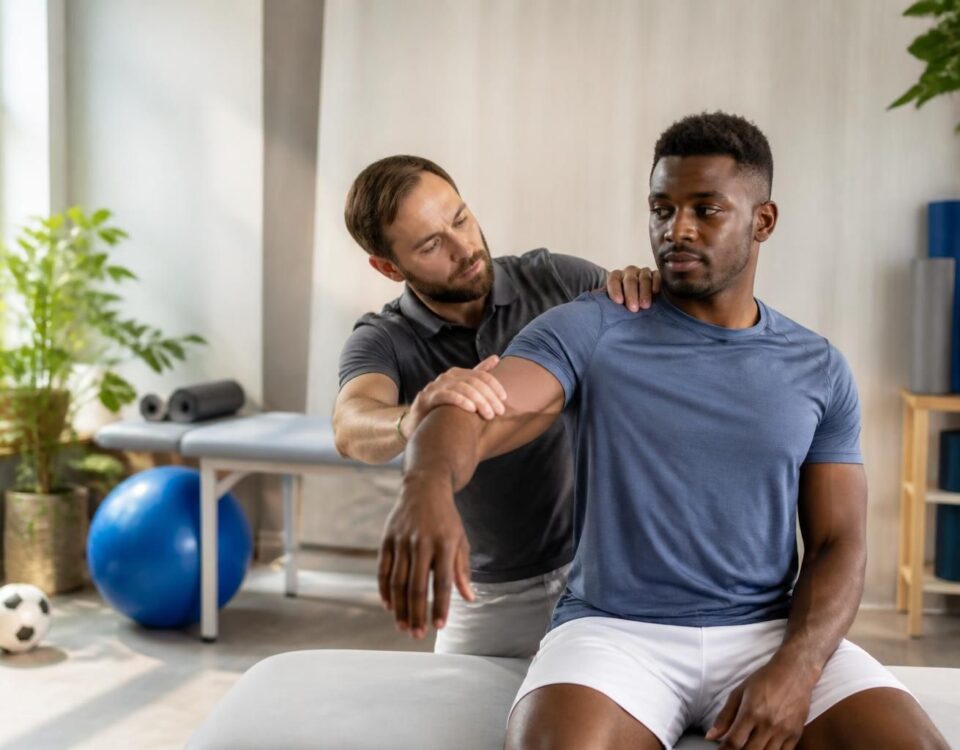
For the shoulders and elbows, osteopathy can relax the muscles around the joint, release tension in the fascias and restore an appropriate range of motion. This helps to reduce nocturnal pain and facilitate everyday gestures such as getting up, taking objects or getting longer without pain.
knees and hips
The knees and hips benefit from work that improves alignment and balance of loads. A targeted approach can limit early wear, optimize walking mechanisms and reduce pain associated with mild osteoarthritis or post-injury discomfort.
Spine and posture
The spine plays a key role in the transmission of movements and tensions. By restoring proper mobility and releasing posture-related tensions, osteopathy can promote better synchronization of the spinal segments and reduce pain that sometimes radiates to the shoulders, pelvis or legs.
Osteopathy and chronic leg pain: regaining an optimal quality of life
In short In short, Osteopathy is one Global manual approach aimed at reducing Chronic leg pain and improve the quality of life. What is it? Non-drug therapy using the hands to identify restrictions and treat lesional chains. How does it…
Prevent and maintain joint health
Prevent imbalances
Prevention requires regular checks and personalized advice on daily actions, adapted physical activities and the postures to be preferred. The goal is to avoid imbalances that lead to chronic tension and joint limitations.
Recovery and lifestyle
An osteopathic accompaniment can accelerate recovery after a major effort, a light shock or a period of immobility. In addition to regular physical activity and restful sleep, it helps to maintain a Sustainable mobility and an quality of life optimal.
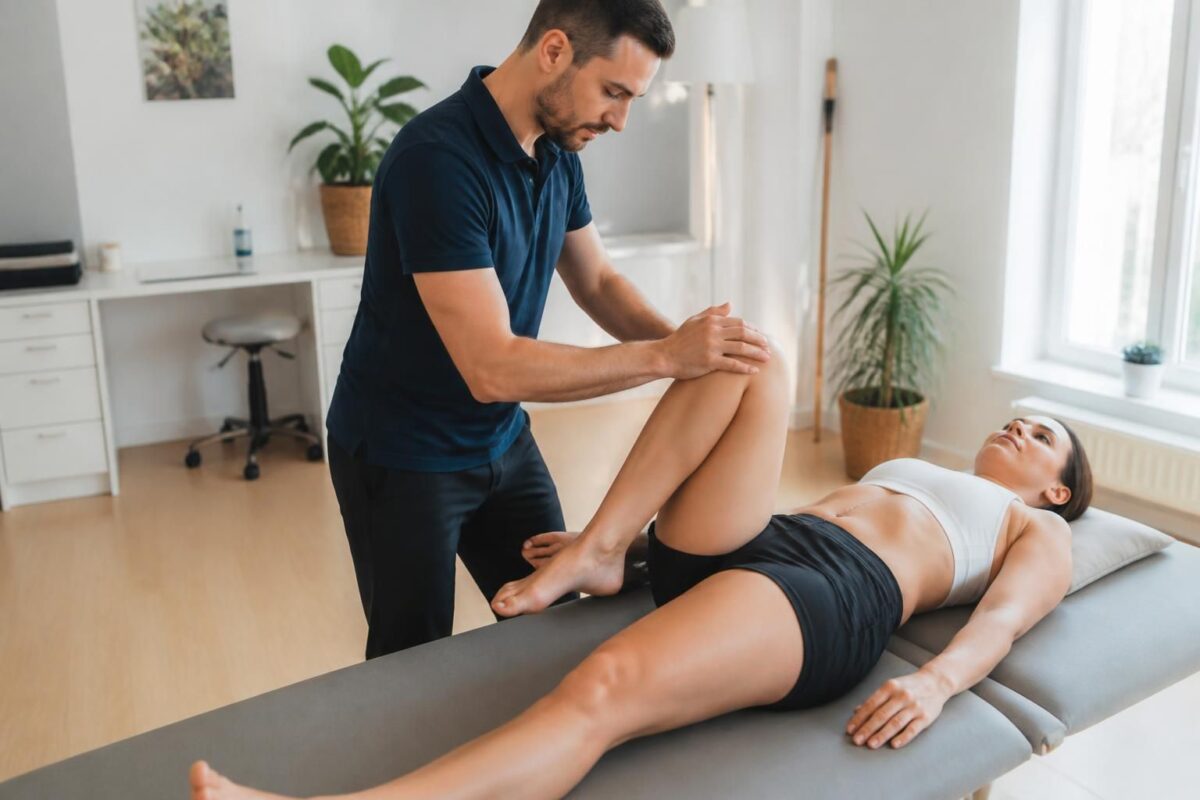
How osteopathy supports recovery after complex surgery
In short In short, Post-operative osteopathy is an approach fresh which supports the recovery After a Complex surgery. It helps to reduce the pain and the fatigue, improves the mobility and accelerates the healing thanks to a better vascularization and…
What to expect in a session
Personalized evaluation
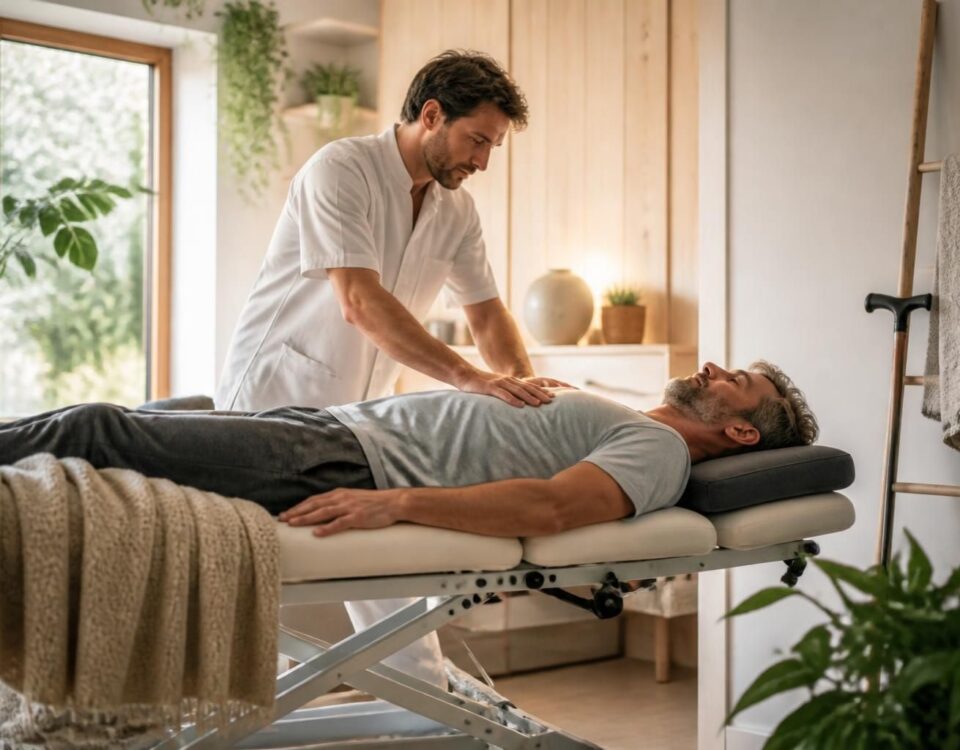
Each session begins with careful listening to your symptoms, your story and your habits. This Personalized evaluation Allows you to target the areas to be processed and define a plan adapted to your objectives.
Techniques used and monitoring
Soft techniques adapted to your condition will be used to release tension, improve mobility and reduce pain. A treatment plan and self-care advice are generally offered to promote the maintenance of results between sessions.
| Targeted aspect | Impact on joint health |
|---|---|
| Amplitude and joint mobility | Amplitude and Joint mobility will improve, facilitating daily movements. |
| Pain and comfort | Pain and comfort Improved, smoother movement. |
| Neuromuscular coordination | Neuromuscular coordination and proprioception optimized. |
| Circulation and fabric | Circulation and Tissue flexibility improved. |
| Alignment and posture | Alignment and posture optimized, reducing constraints. |
| Joint stability | Stability joints and prevention micro-traumas. |
| Recovery and prevention | Recovery and prevention relapses. |
| Functional integration | Functional integration musculoskeletal and nervous systems. |
| Self-management and postural habits | self-management and Postural habits conscious. |
Testimonials on the benefits of osteopathy for joint health
Since I started osteopathy, my Joint health has improved significantly. My Joint pain are rarer and my mobility finds a natural fluidity.
In sports practice, osteopathy acts on joint comfort and recovery. pain related to exertion decrease and therange of motion expands, which allows you to train more serenely.
With age, the stiffness sets in, but after a few sessions, my Articulatory mobility and my stability strengthen on a daily basis.
For the spine and shoulders, osteopathy has improved my posture and reduces tension, bringing a balance more harmonious in my gestures.
I had a pain on the knee linked to mild osteoarthritis. After osteopathic treatment, it is less present and my Joint function allows me to be active without limiting my activities.
For my wrists and hands, targeted work has restored a good flexibility and an pain reduction during repetitive tasks.
For a few months, I find a better mobility and an quality of life increased thanks toosteopathy, which allows me to move freely without embarrassment.
Sylvain Desforges, Expert in osteopathy, naturopathy and manual medicine, is the founding president of TagMed and ACMA. With a career dedicated to health care innovation, he specializes in Chronic pain management and the integration of advanced technologies for joint health. His approach aims to provide care evidence-based to optimize the health and well-being of its patients. In his practice and at the TagMed clinic, he offers a complete offer adapted to each individual.
Osteopathy does not just treat an isolated joint; She seeks to restore the Joint mobility and the harmony of the musculoskeletal system through a global evaluation. Thanks to precise manual techniques, it releases tension, improves fluid circulation and stimulates the body’s self-healing mechanisms.
For patients with Joint pain, osteopathy can reduce inflammation, improve Synovial lubrication and restore fabric flexibility. Better joint mobility supports a balanced posture, which decreases pressure on the knees, hips and spine. This action prevents painful episodes and supports a gradual resumption of physical activity.
The technical resources used by Dr. Desforges include approaches manuals But also the controlled integration of advanced technologies when necessary. Depending on the diagnosis, it can use procedures such as the spinal decompression, the laser and the Shockwave therapy, in order to optimize recovery, reduce healing time and allow more effective rehabilitation.
His approach is evidence-based, favoring measurable results and personalized treatment plans. theosteopathy Offers a non-invasive avenue to support recovery, while minimizing the use of analgesics when possible. In parallel, the dimension naturopathy and the manual medicine Accompany joint rehabilitation with advice on diet, sleep and movement.
By working on mobility, stability and communication of body systems, osteopathy can improve the Functional performance and the quality of life people with joint disorders. The personalized sessions aim to strengthen the stabilizing muscles, to rebalance the muscle chains and to prevent recurrences, while remaining soft and adapted to the rhythm of each one.
For anyone looking for an integrated and sustainable approach to joint health, Sylvain Desforges offers an offer adapted to the TagMed clinic, focused on tangible results and a reassuring experience.
In a few lines, this article summarizes how Osteopathy may IMPROVE THE Joint health, by acting on the mobility, alignment and overall function of the joints. You will also discover how a personalized approach can prevent pain and promote a Sustainable well-being.
the mechanisms by which Osteopathy acts on the joints are based on a global approach: release of tensions, rebalancing of musculoskeletal structures and stimulation of natural repair mechanisms. By working on asymmetries and motion limitations, it directly improves the mobility and the Joint function, while reducing the stresses that feed the pain.
through a targeted evaluation and a Personalized approach, osteopathy can contribute to the prevention of recurrent joint problems. This approach aims not only to reduce the symptoms, but also to restore the balance between the different muscle chains and the joints concerned, in order to support daily activity without pain. To deepen benefits and mechanisms, you can consult resources that detail how osteopathy can improve circulation, mobility and general well-being, such as How can osteopathy improve your health and Osteopathy and well-being: harmonize body and mind.
other useful prospects show that osteopathy can offer a Durable and natural solution for joint pain and associated functional disorders, while supporting the lymphatic circulation and tissue nutrition. To further these aspects, refer to resources like Osteopathy and sciatic pain — lasting and natural solution and How Osteopathy Improves Lymph Circulation.
In practice, osteopathy is often integrated into a pain management personalized, taking into account the lifestyle and context of the patient. It can be associated with appropriate physical activity advice and prevention strategies to support a Joint health in the long term. For additional perspectives, see resources like Osteopathy and pain management — personalized approach and Benefits of Osteopathy.
Finally, the benefits for the Joint health are not limited to improving pain. They extend to a better quality of life, a boost in mobility and an increased ability to practice daily activities without discomfort. To expand your understanding of the foundations and benefits, you can consult resources such as The benefits of osteopathy to improve joint health and Osteopathy: Understanding its Principles and Benefits.
In short, the Global conceptualization and the approach personalized osteopathy offer an effective and natural way to Improve joint health, preserve mobility and support general well-being. To explore these possibilities, do not hesitate to ask for an assessment adapted to your situation.

Sylvain Desforges, B.Sc., D.O., N.D., docteur en ostéopathie
Dr Sylvain Desforges, B.Sc., D.O., N.D., osteopath, is the founding president of TAGMED and of the ACMA association. He dedicates his practice to chronic spinal pain, low back pain and symptoms compatible with sciatica, particularly when pain radiates toward the buttock, leg, calf, foot or toes.
Through SOS Sciatique, he publishes educational content on sciatica symptoms, possible causes such as disc herniation, disc narrowing, foraminal stenosis or irritation of a lumbar nerve root, as well as non-surgical approaches that may be considered according to the evaluation. At Clinique TAGMED, care may include, depending on the case, motorized neurovertebral decompression, specific osteopathic care or precision percussion.
For an evaluation related to sciatica treatment in Montreal / Mount Royal or sciatica treatment in Terrebonne, please consult the services available at Clinique TAGMED.
Medical disclaimer
The information published on SOS Sciatique is provided for educational purposes only and does not replace a consultation, diagnosis, opinion or treatment provided by a physician or another authorized healthcare professional. The author of this article is neither a medical doctor nor a specialist in a medical specialty recognized by the Collège des médecins du Québec. The osteopathic, manual medicine or functional support approaches described on this site do not constitute medical acts and are not intended to replace medical follow-up.
Consult a physician or emergency service in cases of loss of bladder or bowel control, anesthesia in the saddle area, significant or progressive weakness in the leg or foot, fever, recent trauma, severe pain or rapid worsening of symptoms. For more details, please read our Legal Notice.