

Osteopathic approaches to relieve chronic lower back pain
29/06/2026
Osteopathy and pain management: a natural and sustainable solution
29/06/2026
In short |
In short, osteopathic techniques aimed at improving the lymphatic circulation Offer a comprehensive approach to re-establishing fluid movement and tissue homeostasis. They make it possible to reduce the edemas and congestion, improve cellular nutrition and support the immune system, especially after trauma, surgery or infection. The principle is based on a Diaphragmatic release, of Visceral mobilization, of Myofascial techniques and cranio-sacral work, carried out by a fine palpatory listening adapted to the patient. In Montreal, this service is particularly recommended for peripheral edema and circulatory slowdowns, with a painless and non-invasive approach. |
Discover how the Osteopathic techniques can optimize the lymphatic circulation Based on a global approach to fluid movement and tissue respiration.
- Key principles : Diaphragmatic release, Harmonization of large collectors and Peripheral rebalancing to promote veno-lymphatic return.
- Approach : not just a massage; Listening to living tissue and mechanical, visceral and fluid interactions.
- associated techniques : gentle pumping, visceral mobilization, cranio-sacral work and technical myofasciales.
- directions : edema, venous congestion, heavy legs, post-infectious recovery, immune support and circulatory slowdown.
Objective: to restore the continuity and the tissue breathing, by promotingself-regulation and overall well-being.
Quick summary: losteopathy offers an approach that improves lymphatic circulation by appropriate actions. The work aims to free the tensions of the fascias, to mobilize the diaphragm and restore the balance of Lymph collectors. This method is based on the Tissue breathing and fluid movement to promote veno-lymphatic return and cellular nutrition.
Understanding lymph circulation and its role
The system lymphatic Ensures the return of interstitial fluids to the venous compartment. It participates in immunity and metabolic purification. It carries proteins and cellular debris that do not directly reach the blood.
In osteopathy, the lymph is a reflection of vital movement. Limited fascial mobility can slow down this flow and cause tissue stasis. Restoring these movements is necessary for tissue homeostasis.
Basic principles of an osteopathic approach to lymphatic drainage
The lymph Embodies the vital movement and the free movement of bodily fluids. The impairment of their flow can lead to stagnation and inflammation. Osteopathic lymphatic drainage aims to restore the natural dynamics of the system, without being limited to an isolated technique.
The fascias form a network in which the lymphatic vessels travel. A fascial restriction can block inter-tissue slippage and create micro-blocks. The osteopath identifies these areas and releases them by precise palpation.
osteopathic techniques used
The practitioner does not reproduce a unique iconic gesture, but adapts the gesture to the tissue logic of each patient. It emphasizes the globality of mechanical, visceral and fluid interactions.
Diaphragmatic release: The diaphragm acts as a central pump during breathing. Its mobilization improves veno-lymphatic return.
Harmonization of the large collectors: stimulation of the thoracic canal, the inguinal, cervical and claviculo-sub-clavian regions to optimize the path of the fluid.
Peripheral rebalancing: normalization of edematous or congestive areas, particularly in the limbs and face.
Specific adapted techniques: gentle pumping applied to infiltrated tissues, visceral mobilizations to release the liver, mesentery and thoracic plane, craniosacral work to support lymphatic and myofascial techniques to restore envelope dynamics.
The hand of the osteopath follows the principle of the “listening hand”: light, constant touch, and search for the spontaneous movement of the fluid.
Treatment sequence and indications
In practice, osteopathic lymphatic drainage consists of three axes. First, diaphragmatic release to improve veno-lymphatic return. Second, the harmonization of the main collectors. Third, peripheral rebalancing of congestive or edematous areas. Each session adapts to the mobility and pace of the patient.
Common indications: post-traumatic or post-surgical edema, circulatory slowdown, heavy leg sensation, venous congestion, lymphedema, convalescence after infection, digestive disorders related to stasis Mesenteric and functional immune system support. Physiologically, this work stimulates veno-lymphatic return, decreases interstitial pressure and improves cell nutrition.
Precautions and safety
Like any approach that acts on traffic, precautions apply. Some situations require caution or abstention: progressive cancers, active infections, unstabilized cardiac or kidney failure, phlebitis or recent thrombosis. Prior clinical assessment and coordination with the attending physician are essential.
Training Resources and Resources
Professionals trained in recognized establishments provide solid foundations in osteopathy and lymphatic drainage. To learn more, you can consult resources associated with content dedicated to osteopathy and lymphatic circulation at the following partner sites: SOS Sciatica – How Osteopathy Supports Recovery After a Sprain, SOS Sciatica – Osteopathy and sports recovery, SOS Sciatica – Osteopathy and chronic pain, SOS Sciatica – Injury Prevention in Athletes. For practical information on TagMed clinic management, you can consult Tagmed Clinic. Some additional resources evoke the links between lymphatic drainage and osteopathic practices, such as general resources dedicated to osteopathy and sports recovery.
Relevant training references include institutions such as NUMSS and NAO, as well as National University of Medical Sciences and National Academy of osteopathy, who provide specialized training in osteopathy.
Disclaimer
Medical Disclaimer: The information and advice provided on this site does not replace the health professional’s diagnosis or treatment. Please note that Dr. Sylvain Desforges osteopath is neither a doctor of medicine nor a doctor, and is not a specialist in a medical specialty as defined by the Collège des Médecins du Québec. Manual medicine, functional medicine and sports medicine as described on this site exclude any medical treatment or diagnosis made by a doctor or specialist doctor. Always consult your doctor for any medical questions. For more details, please read our full legal notice.
- Diaphragmatic release — Improves veno-lymphatic return and tissue respiration.
- Visceral mobilization — Release of the liver, mesentery and thoracic plan.
- Cranio-sacred work — Supports the lymphatic rhythm by the membranes of reciprocal tension.
- Mild lymph pumps — Targeted stimulation of superficial tissue flows.
- Harmonization of large collectors — Thoracic duct and cervical and inguinal regions.
- Peripheral rebalancing — Reduction of edema and congestion of the extremities.
- Myofascial techniques — Release of envelopes and subcutaneous planes.
- Touch listening and global approach — Patient-friendly gesture and spontaneous movement of the fluid.

This summary presents the Osteopathic techniques the most relevant for Improve lymphatic circulation. It offers a systemic approach, not limited to simple drainage, but guided by tissue listening and overall support for internal body movements. The objective is to optimize the veno-lymphatic return, to reduce congestion and edema, while respecting the balance of cellular exchanges and tissue respiration.
Basic principles of the osteopathic approach
The lymphatic system ensures the return of interstitial fluids and participates in the immune defense. In osteopathy, the lymphatic is considered a control of vital movement and tissue fluidity. A Reduced fascial mobility or visceral restrictions can slow down the circulation of lymph, leading to stasis and local suffering. The osteopathic approach aims to restore the continuity of these subtle movements to promote theGeneral homeostasis.

How osteopathy improves the quality of life of active people
In short In short, theosteopathy is a global approach that Optimizes mobility and the function of the body of ACTIVE PEOPLE, for a better quality of life. It helps prevent injury and reduce Musculoskeletal pain While promoting the Sports recovery.…

Osteopathy and sports recovery: prepare the body for lasting performance
In short In short, Osteopathy and Sports recovery is one Global manual approach that sustainably prepares the body for the effort by restoring mobility and circulation After the effort. It is a discipline that acts on the sinews, the joints,…
Osteopathic techniques to stimulate the lymph
Diaphragmatic release
The diaphragm acts as a central pump for lymphatic and venous return. A targeted diaphragmatic release improves overall drainage and facilitates tissue respiration. In practice, the gestures adapt to the breathing of the patient, favoring synchronized movements with expiration to release the points of tension around the diaphragm and diaphragm-organ areas.
Fascial mobilizations and tissue plans
The fascias constitute a three-dimensional network where the lymphatic vessels travel. of Myofascial techniques Soft release tension lingers that hinder inter-tissue slippage, allowing the lymphatic flow to resume its natural path. The work focuses on the superficial and deep planes, with precision that respects the patient’s limits and avoids any excessive pressure.
Visceral and cranio-sacral mobilizations
Visceral mobilizations promote the mobility of the liver, mesentery and other organs that influence drainage. Cranio-sacral work, when appropriate, supports membrane motility and re-harmonizes fluid rhythms that contribute to energy-intensive tissue respiration. These gestures, gentle and gradual, are based on listening to the internal rhythm and aim to relaunch the circulation of fluids without causing unnecessary tension.
global approach and hand that listens
Beyond the technical gestures, the osteopath favors an attitude of “hand that listens”: light touch, constancy and observation of the spontaneous movement of the fluid. This posture makes it possible to adjust the gestures to the tissue dynamics of each patient, taking into account the mechanical, visceral and fluid interactions that structure the lymph circulation.
Why Osteopathy Is Essential For Recovery People
In short In short, Osteopathy in convalescence is an approach manual and holistic which helps to accelerate the recovery by restoring The balance, the mobility and a good circulation fabrics. it contributes to Reduce the pain, support the Back to…

Osteopathic manipulations to strengthen post-traumatic muscles
In short In short, Osteopathic manipulations for Strengthen post-traumatic muscles constitute a gentle manual approach aimed at restoring the mobility, reduce the pain and facilitate the Functional rehabilitation After a injury. What is Is it? A series of precise gestures…
Common indications
Osteopathic lymphatic drainage can be considered in the presence of post-traumatic or post-surgical edema, circulatory slowdown, Heavy legs, venous congestion, lymphedema, or even during post-infective support. It can also support tissue nutrition and neurovegetative regulation, contributing to a general feeling of relaxation and relaxation.
Precautions and coordination
Some situations require caution or abstention, including progressive cancers, active infections, unstabilized cardiac or kidney failure, or recent phlebitis. A prior clinical evaluation and coordination with the attending physician remain essential to adapt the procedures and ensure maximum safety.
| Osteopathic technique | Concise description |
|---|---|
| Release diaphragmatic | Activates the central pump of the veno-lymphatic flow and optimizes peripheral feedback. |
| work on the fascias and membranes | Releases the tensions that slow down the intertissular slip and restore flow continuity. |
| engagement visceral | Improves organ mobility and resorption of lymphatic deposits around the viscera. |
| Techniques of pumping lymphatic | Gentle pulse effect targeting lymph resorption-propulsion dynamics. |
| Work craniosacral | Revives membrane motility and supports the overall lymphatic rhythm. |
| mobilization of manifolds lymphatic | Optimizes the central canals like the thoracic duct and the cervical and inguinal regions. |
| rebalancing peripheral | Normalizes the edematous and congestive areas of the extremities and the face. |
| Approach overall and touch listening | Adaptation of the gesture to the spontaneous movement of the fluid to promote self-regulation. |

Osteopathy and prevention of work-related musculoskeletal disorders
In short theosteopathy is one Manual approach that restores body balance and prevents MSD related to work. Its advantages: reduction of tension, improvement of mobility and prevention of chronic pain. She is preventive and healing, suitable for office and trades…

The benefits of osteopathy to treat muscle imbalances
In short theosteopathy is a manual approach to restore themuscle harmony and postural considering the body as a whole. Its main benefits include the reduction of aches and tensions, the improvement of the mobility and from the posture, and prevention…
Testimonials on osteopathic techniques to improve lymphatic circulation
“From the first session, I felt a feeling of lightness in the limbs thanks to the Osteopathic lymphatic drainage. I was told that it was not a simple massage, but an approach that acts on the lymphatic circulation and the Diaphragmatic release, and I felt my fabrics “breathe” again. »
“After a minor surgery, the edema decreased rapidly. The practitioner adapted the gestures to my morphology and my needs, favoring fine listening and smooth work. The result? a Flow responsiveness and smoother recovery, with a print of listening hand and guides the movement of fluids. »
“As a sportswoman, I was looking to optimize my recovery. Osteopathic techniques have strengthened my Tissue fluidity and improved the lymphatic circulation around the requested areas. My muscles and fascias seem to cooperate better, and the aches disappear faster after training. »
“I always had feelings of heaviness and slowing down in my legs. work on fascias and the Lymph collectors Rebalanced the flow, with a noticeable decrease in clutter and better cellular nutrition. It’s as if my tissues regained their natural breathing. »
“Following an infection, the drainage supported my convalescence by promoting veno-lymphatic return and reducing local inflammation. The osteopathic approach is not an isolated massage, but an accompaniment of the physiological movement of liquids, in respect of the internal dynamics of the body. »
“I highly recommend these techniques for anyone with recurring congestion or edema. Osteopathy proposes a global approach, where each gesture aims to Rebalance lymph flow And to support the self-regulation of the body, beyond simple deflation. »
Dr. Sylvain Desforges, Expert in osteopathy, Naturopathy and manual medicine, is the founding president of TagMed and the ACMA association. His career is under the sign of innovation at the service of patients and their quality of life. specialist in the management of chronic pain and the integration of advanced technologies, it intervenes with an approach Based on evidence to optimize health and well-being. In his practice, the lymphatic circulation occupies a central place, not as an isolated technique, but as a key dimension of the functional balance of the body.
The lymphatic network ensures the return of tissue fluids to the venous system while supporting immune defense and metabolic purification. For Dr. Desforges, lymph is the very expression of living movement and tissue vitality. Restricted fascial, visceral or joint mobility can slow down this flow, generating stasis that impacts cell nutrition and local metabolism. The osteopathic approach then aims to restore the continuity of the subtle movements which govern the drainage and tissue respiration, in order to restore general homeostasis.
In clinical practice, osteopathic techniques are not limited to reproducing standardized gestures. They adapt to the tissue logic of each patient and are part of a global approach where fluidity and regulation are at the heart of the treatment. The work revolves around precise gestures that respect the physiology of lymphatic flow and the intimate relationship between fascia, organs and membranes. The movement is guided by a fine tactile listening and by the principle that the flow of liquids must be able to circulate freely to nourish the tissues and support immunity.
The therapeutic sequence favors three axes: diaphragmatic release, considering the diaphragm as a central pump that would activate veino-lymphatic return; the harmonization of the main collectors, particularly in the cervical, thoracic and inguinal regions; and a peripheral rebalancing targeting edematous or congested areas. The techniques used combine gentle pumping, visceral mobilizations promoting hepatic and mesenteric release, as well as cranio-sacral and myofascial approaches. The whole is guided by the “listening hand”, a light and constant palpation that seeks the spontaneous movement of the fluid rather than a simple mechanical gesture.
The indications and physiological effects of this work are varied and profoundly positive. Osteopathic lymphatic drainage can accompany post-traumatic or post-surgical edema, promote better venous circulation, fight congestion and support convalescence after infection. On the tissue level, it helps to reduce pore pressure, improve cell nutrition and promote autonomic nervous system regulation, inducing a lasting state of relaxation. This approach is a lever of vitality and resilience, in the service of the fluidity and self-regulation of the body.
This approach is part of an integrative vision where osteopathy is enriched by the experience and therapeutic tools offered within TagMed. It aims to optimize fluid mobility and support the body’s ability to self-regulate. For patients, this translates into better restitution of internal exchanges, a reduction in tension and a lasting feeling of functional lightness, useful on a daily basis and during multimodal treatments.
This article offers a sales and practice oriented reading of osteopathic techniques for Improve lymphatic circulation, emphasizing the fluidity, tissue dynamics and self-regulation of the body. It shows that osteopathic lymphatic drainage is not an isolated technique but a systemic approach which aims to restore the free flow of fluids, in close connection with the diaphragm, fascias and internal exchanges.
The lymphatic circulation is a pillar of fluid physiology and, in osteopathic practice, drainage becomes a tissue rebalancing lever. This approach is not limited to a mechanical gesture: it is based on a fine listening to internal movements and on an aspiration to restore the continuity of flows, promoting better cellular nutrition and a reduction in local congestion.
The Osteopathic techniques adapted exceed the standard protocols: they integrate the Diaphragmatic release, the Mobilization of fascias, of Visceral mobilization, and sometimes a job craniosacral To stimulate the motility of the lymphatic system and membranes of reciprocal tension. The practitioner guides the movement of fluids through a gentle, progressive and patient-centric approach.
the physiological effects are manifested by an improvement in the Back veno-lymphatic, a decrease in edema and a better Cell nutrition, as well as regulation of the autonomic nervous system. Beyond deflation, the goal is to restore tissue respiration that supports the body’s self-regulation and overall resilience.
To ensure safety and efficiency, the evaluation remains essential and is carried out in collaboration with the attending physician when necessary. Some situations require caution: active infections, unstabilized heart conditions, or recent thrombosis. The dialogue between professionals and an approach adapted to each patient makes it possible to execute the techniques with precision and discernment.
To deepen these notions and discover complementary perspectives, you can explore these resources dedicated to osteopathy and lymphatic drainage: Osteopathy and well-being, lymphatic drainage, Biomedical approach, Mild lymphatic drainage, one session, Lymphatic drainage – Selma, Posture and alignment, Healthy body alignment, Joint flexibility.
Osteopathy and chronic leg pain: regaining an optimal quality of life
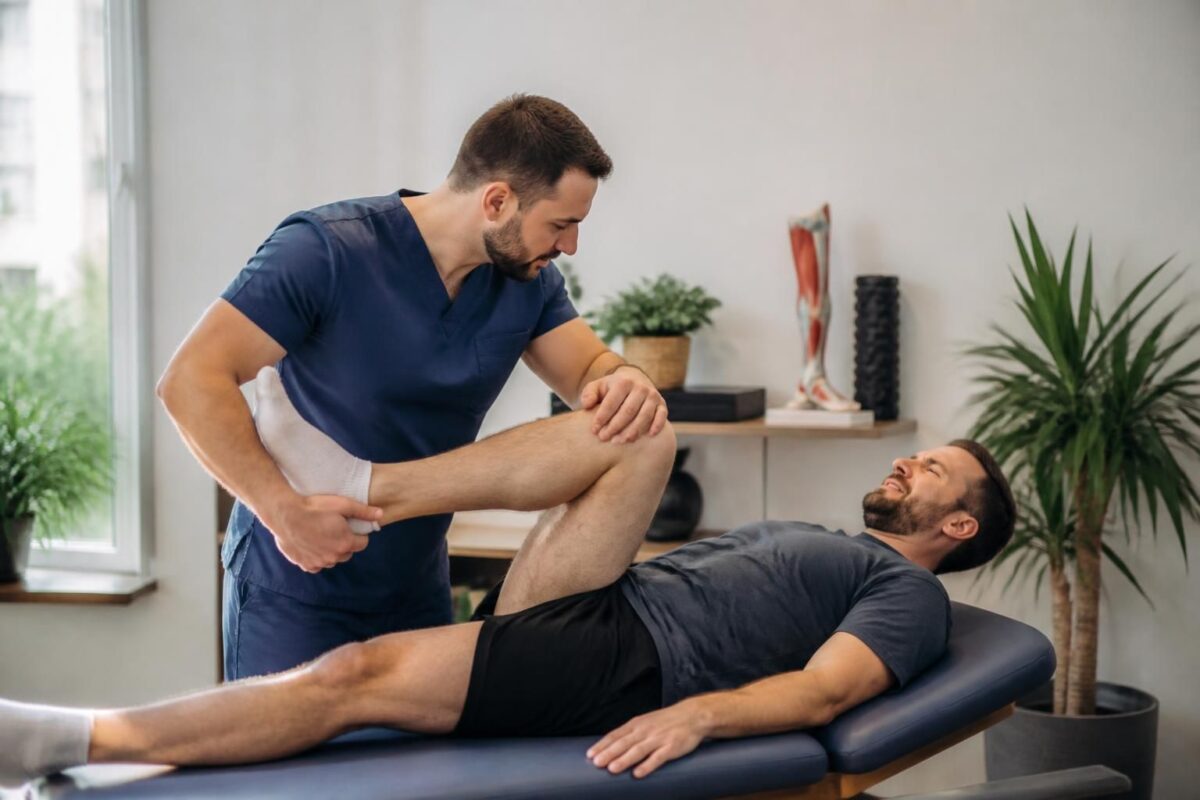
In short In short, Osteopathy is one Global manual approach aimed at reducing Chronic leg pain and improve the quality of life. What is it? Non-drug therapy using the hands to identify restrictions and treat lesional chains. How does it…
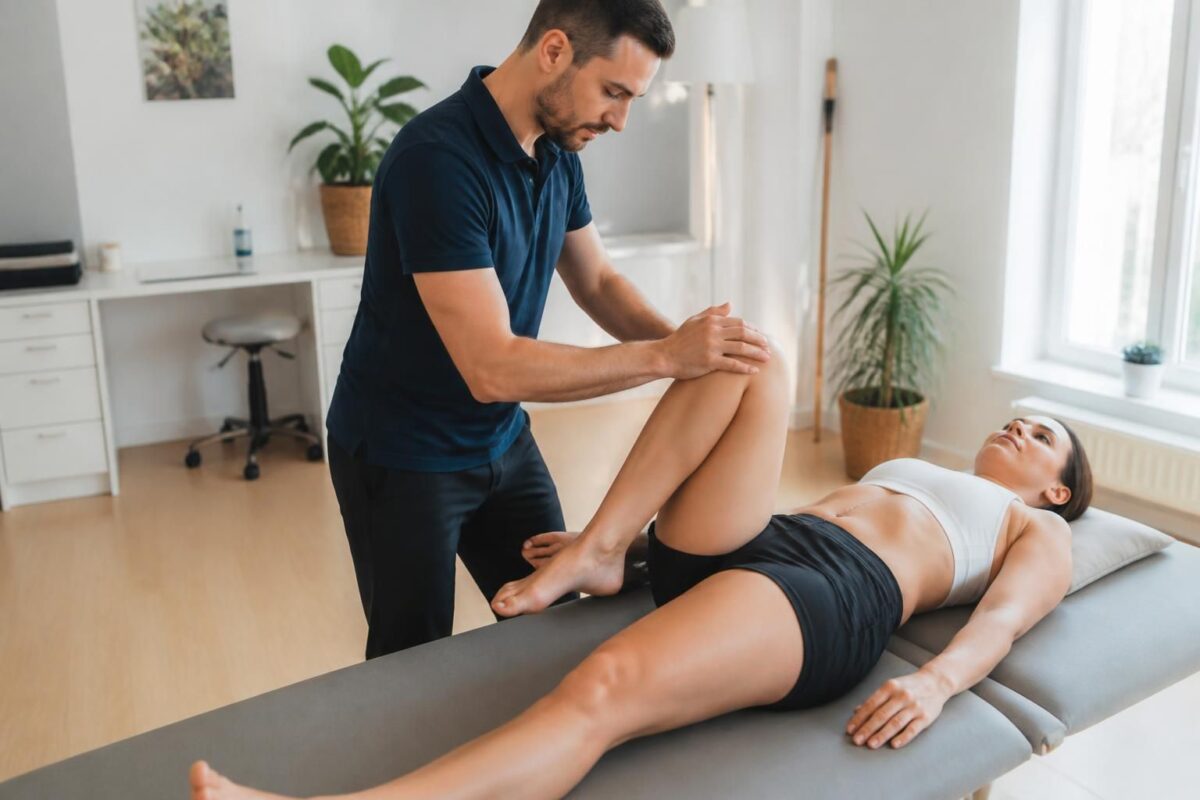
How osteopathy supports recovery after complex surgery
In short In short, Post-operative osteopathy is an approach fresh which supports the recovery After a Complex surgery. It helps to reduce the pain and the fatigue, improves the mobility and accelerates the healing thanks to a better vascularization and…

Dr Sylvain Desforges, B.Sc., D.O., N.D., osteopath, is the founding president of TAGMED and of the ACMA association. He dedicates his practice to chronic spinal pain, low back pain and symptoms compatible with sciatica, particularly when pain radiates toward the buttock, leg, calf, foot or toes.
Through SOS Sciatique, he publishes educational content on sciatica symptoms, possible causes such as disc herniation, disc narrowing, foraminal stenosis or irritation of a lumbar nerve root, as well as non-surgical approaches that may be considered according to the evaluation. At Clinique TAGMED, care may include, depending on the case, motorized neurovertebral decompression, specific osteopathic care or precision percussion.
For an evaluation related to sciatica treatment in Montreal / Mount Royal or sciatica treatment in Terrebonne, please consult the services available at Clinique TAGMED.
Medical disclaimer
The information published on SOS Sciatique is provided for educational purposes only and does not replace a consultation, diagnosis, opinion or treatment provided by a physician or another authorized healthcare professional. The author of this article is neither a medical doctor nor a specialist in a medical specialty recognized by the Collège des médecins du Québec. The osteopathic, manual medicine or functional support approaches described on this site do not constitute medical acts and are not intended to replace medical follow-up.
Consult a physician or emergency service in cases of loss of bladder or bowel control, anesthesia in the saddle area, significant or progressive weakness in the leg or foot, fever, recent trauma, severe pain or rapid worsening of symptoms. For more details, please read our Legal Notice.