Pain in the buttock: is it sciatica?
29/06/2026
Sciatica in Montreal: Understanding pain before choosing treatment
29/06/2026
In short
| In short, the Causes of sciatica refer to the mechanisms that irritate or compress the sciatic nerve, causing pain that descend into the leg. The most common are theslipped disc, the Foramen shrinkage and lumbar osteoarthritis, often accompanied by an inflammatory process. Advantages: Understanding these causes makes it possible to diagnose and target the treatment, adapt activities and postures, and prevent recurrences to better regain mobility and quality of life. How does it work? The mechanism combines mechanical compression and inflammation around the sciatic nerve; The diagnosis is based on clinical examination and can be based on imaging if necessary; Management favors non-invasive approaches (targeted exercises, osteopathy, physiotherapy) and a personalized plan. In Montreal, this type of approach is particularly useful for quickly relieving pain and preventing relapses. |
- The sciatic nerve is irritated or compressed at the level of nerve roots which form it, most often the roots L5 and S1.
- Common mechanical causes: slipped disc with protrusion, Foramen shrinkage Where does the nerve come from, Lumbar duct stenosis and facet osteoarthritis.
- Possible non-lumbar causes: Piriform Syndrome and Sacroiliac dysfunction May irritate the nerve trunk.
- Role of inflammation: The contents of the disc can trigger an inflammatory reaction that amplifies the pain, even in the presence of limited compression.
- Risk factors and context: Overweight, smoking, repeated efforts and other factors that promote disc wear and pain awakening.
This article explains the causes of sciatica and why the pain can go down along the leg. It distinguishes mechanical mechanisms from inflammatory mechanisms, shows how nerve root irritation occurs and specifies the main nerve paths involved. It also offers clinical benchmarks to understand the signals that alert and describe the resources useful to deepen the subject.
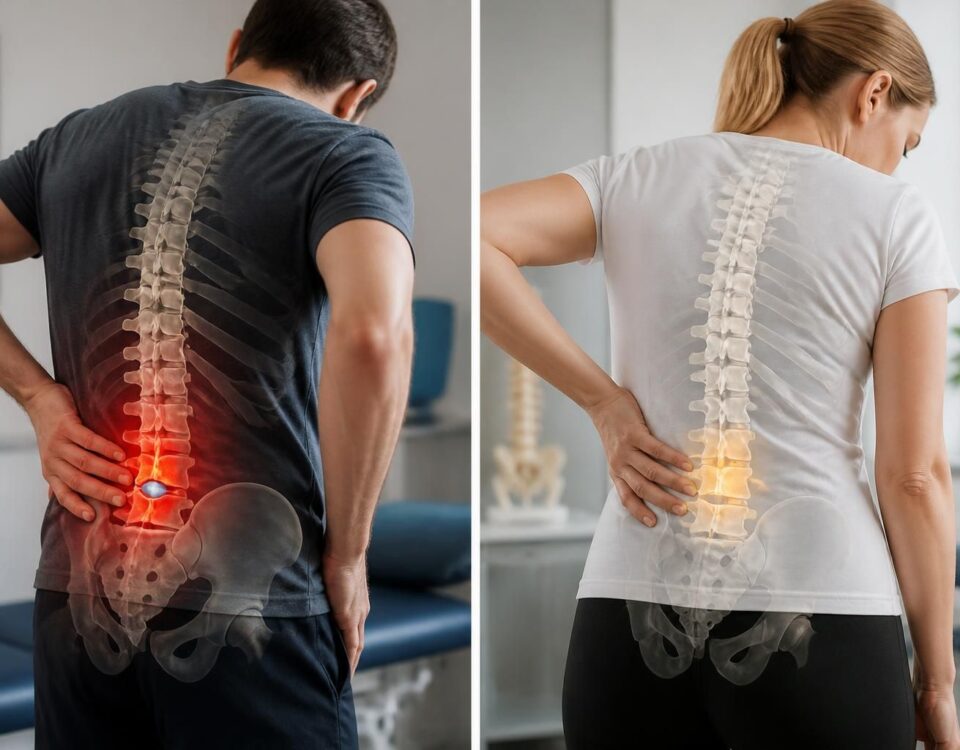
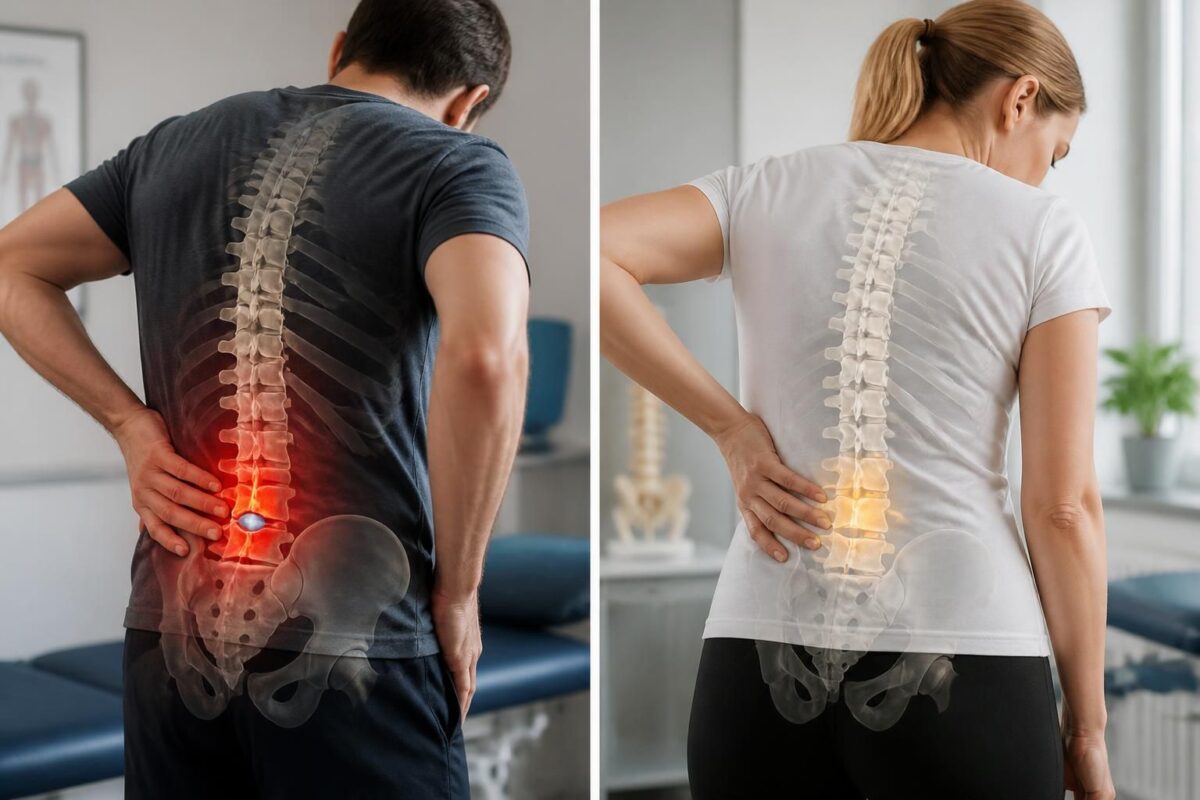
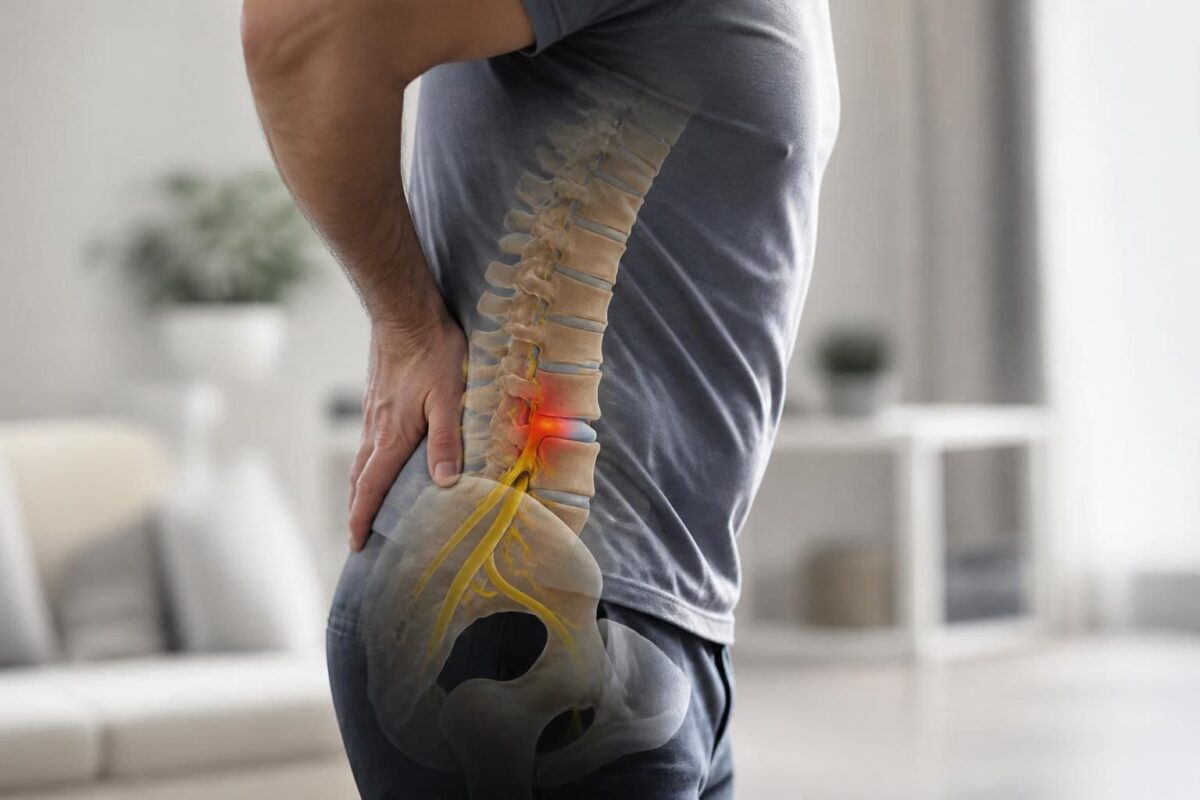
Sciatic pain is the result of a disorder that projects inflammation and pain along the path of the sciatic nerve. The sciatic nerve is the longest and largest in the body. It originates from several roots of the lumbar spine, in particular L5 and S1, and sometimes L4. When this nerve is irritated, the pain follows the path that crosses the buttocks, thigh, leg and can reach the foot.
Main mechanical causes
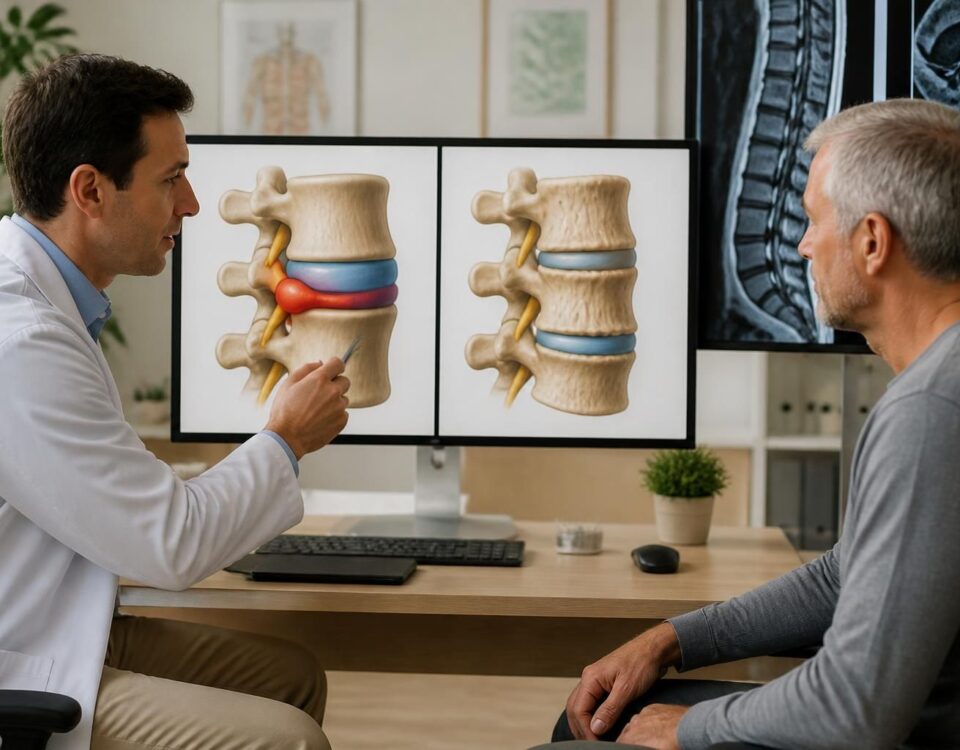
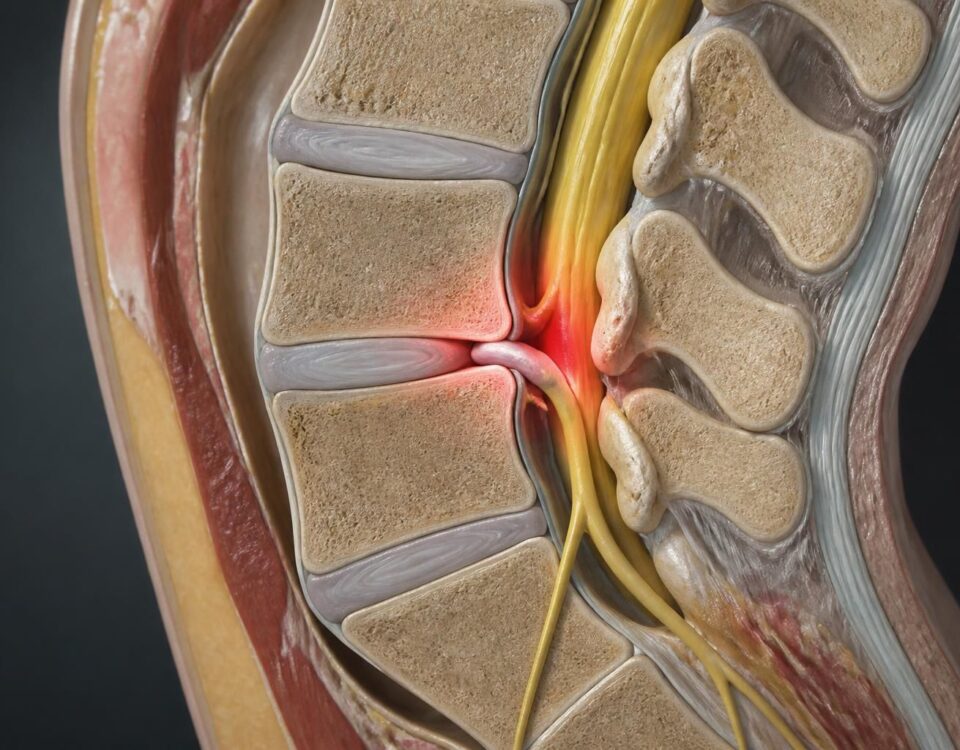
The most common mechanical mechanisms are protrusion or disc herniation which can compress a nerve root. A narrowing of the foramen through which the nerve comes out can also cause irritation. The lumbar canal can become narrow (facetodial osteoarthritis or stenosis), limiting the space around the nerve. These situations create pain that follows the path of the nerve and can be accompanied by a motor or sensory deficit.
Inflammation and chemical reaction
Pain is not always proportional to mechanical pressure. Sometimes the disc spills inflammatory substances that irritate the nerve. This chemical inflammation can greatly amplify nerve sensitivity and prolong pain, even in the presence of modest compression.
Other causes and contributing factors
Piriformis syndrome can compress the trunk of the sciatic nerve when this buttock muscle is tense or spasmic. Sacroiliac dysfunctions or other less frequent factors (trauma, infections, tumors) may also occur, but they remain rare compared to the mechanical and inflammatory causes. Lifestyle and risk factors (weight, smoking, physical activity) play a role in the appearance of episodes.
Typical signs and journeys to know
The path of pain can help identify the nerve concerned. Sciatic pain usually follows the path of the buttocks, back of the thigh and leg, sometimes to the foot. The opposite layout, called cruralgia, affects the front of the thigh and may involve other territories. To deepen the distinction between these two routes, you can consult sciatica or cruralgia.
In addition to pain, paresthesias (tingling or numbness) and muscle weakness can accompany nervous irritation. More worrying warning signals require urgent assessment, including marked weakness, sphincter disorders, or rapidly worsening pain.
Risk factors and context
The risk of disc pathologies increases with age, inactivity, overweight and smoking. Tissue malnutrition and disc wear generate increased vulnerability of the lumbar system. However, each person is different and some individuals have pain-free degenerate discs, while others develop significant pain with modest discs.
To enrich your understanding of the mechanisms, you can consult specialized resources such as Sciatica and lumbar spinal stenosis and Why osteopathy can help against sciatica.
The distinction between nerve paths is essential to understand pain and guide treatment. The sciatic nerve comes from the lumbar roots and slides towards the leg, while other nerves, such as the femoral nerve, follow different paths and can produce distinct pain. This mapping makes it possible to identify the compressed root and the inflammatory mechanisms that accompany the inflammation.
In the event of unusual or persistent symptoms, it is useful to refer to specialized resources and to evaluate the options for management. Additional information can be found in particular on The impact of walking on sciatica and on the general bases of the tensions and spinal dynamics at Sciatica.
In some cases, the neurovertebral decompression and other specialized approaches are subject to specific assessments. To learn more about these mechanisms, specialized resources direct you to general information and support alternatives.
Treatments and management vary depending on the causes and symptoms. At the TagMed clinic in Montreal or Terrebonne, appropriate solutions can be proposed when a clinical examination confirms a disc pathology or nervous irritation without immediate emergency.
To deepen details and different mechanisms, consult specialized resources on related topics, including Lumbar spinal stenosis and Neurovertebral and sciatic decompression.
The information presented is intended to provide a clear view of possible causes and the signals to monitor. For an assessment adapted to your case, it is recommended to consult a health professional.
Medical disclaimer : The information and advice provided on this site does not replace the advice, diagnosis or treatment of a health professional. Please note that Dr. Sylvain Desforges osteopath is neither a doctor of medicine nor a doctor, and is not a specialist in a medical specialty as defined by the Collège des Médecins du Québec. Manual medicine, functional medicine and sports medicine as described on this site exclude any medical treatment or diagnosis made by a doctor or specialist doctor. Always consult your doctor for any medical questions. For more details, please read our full legal notice.
- Slipped disc or protrusion which tablet A nerve root.
- Foraminal narrowing limiting the space through which the nerve comes out.
- Facet syndrome (Lumbar osteoarthritis) Irritating the nerve root.
- Lumbar duct stenosis Reducing space around the nerve.
- Piriform Syndrome or muscle contracture irritant the sciatic nerve.
- vertebral disturbances (for example spondylolisthesis) leading to a shifting and nervous compression.
- disc inflammation and inflammatory reaction around the root.
- aggravating factors : overweight, bad posture and repeated efforts to promote irritation.

This guide explains the causes of sciatica and why the pain can go down along the leg. You will understand the main mechanisms, inflammatory factors and non-discal causes, in order to better guide your care and your daily actions.
Main mechanical causes
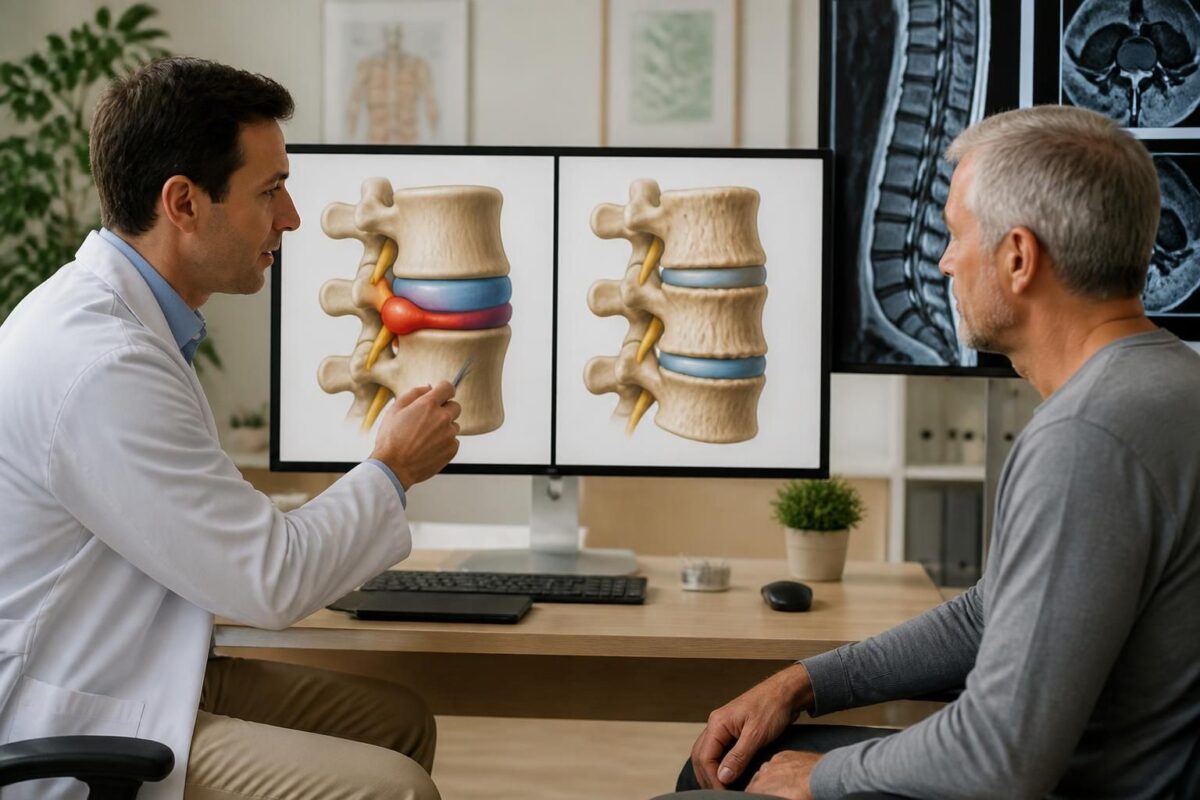
Among the most common causes, The disc herniation is often the first suspect. The disc nucleus can protruse and irritate a nerve root, triggering pain that follows the path of the sciatic nerve. This mechanism is frequently associated with painful episodes in the lower back and leg.
Disc hernia and nervous compression
When the disc deforms, it can weigh on the nerve root which comes out between two vertebrae. This mechanical compression is sometimes accompanied by local inflammation and pain that can radiate to the heel or toes.
Foraminal narrowing and narrow lumbar duct
The passage through which the nerve comes out can shrink, either by disc protrusion, or by posterior osteoarthritis of the facets of the joints, or by a stenosis of the lumbar canal. In these situations, the nerve is trapped, which produces pain that follows the course of the nerve.
Facet syndrome and spondylolisthesis
posterior joint disorders, called Facet syndrome, or a slip from one vertebra to the other (spondylolisthesis) may also trigger root irritation and pain that radiates into the leg.
Other mechanical mechanisms
Factors such as repeated microtraumas, poor posture at work, or repetitive efforts can promote nervous irritation, even without major hernia. These mechanisms, often combined, explain part of the sciatica unrelated to an obvious hernia.
Herniated disc and disc bulge: do not confuse
IN BRIEF In brief, the Herniated disc and the disc bulge are two conditions of the spine that differ in their mechanism and prognosis. The disc bulge is a protrusion of the disc without rupture of the fibrous ring, often…
Herniated disc and disc disease: understanding the differences
IN BRIEF In brief, a herniated disc and discopathy are two distinct causes of spinal pain: wear of the intervertebral disc (discopathy) and the protrusion of the gelatinous nucleus that can compress a nerve (herniated disc). Understanding these differences helps…
Herniated disc and annular tear: possible pain
IN BRIEF In short, Herniated disc and annular tear refer to issues with the intervertebral disc that can cause lower back pain and, at times, pain radiating down the leg. Symptoms vary and can mimic sciatic pain. Treatment favors conservative…
Inflammation and chemical imbalance
Beyond compression, inflammation around the disc plays a key role. The contents of the leaky disc can trigger an aggressive inflammatory reaction, making the nerve hypersensitive and amplifying the pain even in the face of slight pressure.
Role of inflammation
This chemical inflammation may explain why the pain is sometimes disproportionate to the initial severity of the compression. The nerve reacts in an exaggerated way, which prolongs the pain and can limit movement.
aggravating factors
Lifestyle factors promote low-grade inflammation, such as a diet high in sugars and saturated fats, overweight and sedentary lifestyle. Smoking and stress can also increase nervous sensitivity and the likelihood of seizures.
Herniated disc and chemical irritation of the nerve root
IN BRIEF In brief, Herniated disc and chemical irritation of the nerve root describe pain and dysfunction due to compression and inflammatory chemical exchanges affecting a spinal nerve root. This association explains radiating pain, abnormal sensations, and sometimes muscle weakness…
Herniated disc and mechanical compression of the nerve
IN BRIEF In brief, a herniated disc is a prolapse of the intervertebral disc that can lead to mechanical compression of the nerve root, causing pain and numbness that often radiate down the leg. This compression explains radiculopathy and sensations…
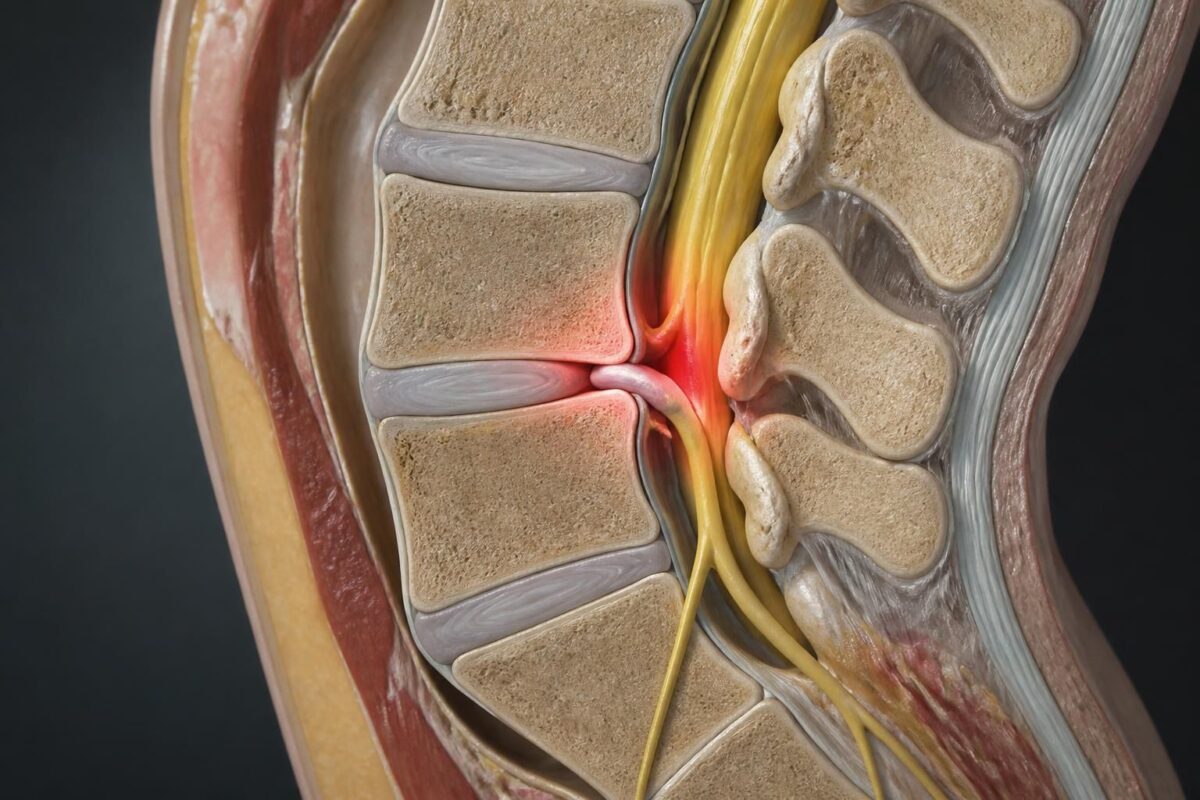
Herniated disc and nerve root inflammation
IN BRIEF In brief, lumbar disc herniation and nerve root inflammation refer to compression and irritation of a spinal root causing radiating pain, paresthesias, and sometimes muscle weakness. The mechanism combines disc protrusion and radicular inflammation, hence the importance of…
Non-disc causes and external influences
Some situations involve the sciatic nerve without a disc being directly compromised. The piriform May, in case of contracture, compress the trunk of the sciatic nerve. Likewise, a Sacroiliac dysfunction Or other pelvic dysfunctions can result in pain that follows the sciatic path.
Piriform syndrome and other non-spinal pathologies
The piriform is a deep muscle of the buttocks. When its tensions increase, it can spread the sciatic nerve and cause radiating pain in the leg, without obvious disc conflict.
Risk factors and posture
Repeated heavy loads, insufficient musculature, lack of activity and poor ergonomics at work or at home can promote the appearance or repetition of sciatica. Adapting daily actions and improving muscle tone are important levers to reduce risks.
| causes | Concise description |
|---|---|
| lumbar disc herniation | irritation of a root by a Disc protrusion → root pain going from buttock to foot. |
| Foraminal stenosis | Shrinkage of foram → Root irritation and pain. |
| Narrow lumbar canal | space reduction in the Lumbar duct → Root compression and descending pain. |
| spondylolisthesis | Slip from a vertebra → Root irritation and pain. |
| Piriform Syndrome | compression of the sciatic nerve by the piriform → Pain in buttock and leg. |
| Sacroiliac dysfunction | Sacroiliac dysfunction → Pain butt radiating sometimes thigh. |
| Facet osteoarthritis | osteoarthritis facets → Lumbar pain that may spread. |
| vertebral infection or discital | Disc infection or inflammation → Acute pain and emergency sign. |
| Lumbar trauma | Trauma → Nervous irritation and possible irradiation. |
“Before, I thought my pain was just muscle tension. I was told that the pain path followed the sciatic nerve and that the cause could be a slipped disc which compresses a nerve root. Understanding this allowed me to take the right measures and see a gradual improvement. »
“My doctor mentioned a Foramen shrinkage, and I understood that the sciatic nerve had less room. Since then, the treatment plan is clear and appropriate, and the pain goes less far into the leg. »
“For me, it was a Narrow lumbar canal with Facet osteoarthritis. We targeted both pain and posture, and the exercises helped regain mobility without aggravating. »
“The Piriform Syndrome was the real source of my pain in the buttocks and in the thigh. The professional adapted the gestures and positions to release the nerve, and the pain decreased rapidly. »
“I realized that the inflammation around the disc could amplify the pain much more than the size of the hernia. The keyword: inflammation and radiculalgia. By combining the advice, I found comfort. »
“We have also seen that the Risk factors Like carrying heavy loads and poor posture aggravated sciatica. By adjusting my gestures and resuming gentle physical activity, the pain decreased. »
Dr. Sylvain Desforges is recognized for his integrated approach to chronic pain and lumbar pain, based on evidence and holistic vision of the body. Expert in osteopathy, in naturopathy and manual medicine, he applies a rigorous method to detect the root causes of sciatica and to guide his patients towards lasting solutions. His role as founding president of TagMed and ACMA clinics demonstrates a continued commitment to innovation and improvement in clinical practices. His approach favors listening, personalized evaluation and the alliance between manual techniques and modern technologies in the service of a reliable recovery.
Named pain sciatica is actually a painful manifestation that follows the path of the sciatic nerve, the largest and the longest of the body. Understanding why this pain “descends” into the leg requires careful reading of the nerve roots and their anatomical environment. The sciatic nerve originates from several lumbar and sacral roots and, when it is irritated or compressed, it can trigger symptoms that start from the lower back, pass through the buttock and gain the posterior surface of the thigh and leg, up to the foot. This characteristic trajectory guides the diagnosis and therapeutic choices that Dr. Desforges offers to effectively relieve pain.
The causes of sciatica are divided into several families, and Dr. Desforges approaches them with a clear and resolution-oriented clinical logic. Among the Mechanical causes, there is a herniated disc which irritates a nerve root, a narrowing of the foramen from which the nerve comes out, a stenosis of the spinal canal or posterior articulation disorders. postmen inflammatory or infections can also amplify the pain. Other non-discal origins, such as piriformis syndrome or sacroiliac dysfunction, can compress the nerve trunk and produce similar symptoms. Finally, lifestyle elements and biomechanical factors, such as posture and stress, play an amplifier in painful perception.
With his experience, Dr. Desforges emphasizes differential diagnosis and functional evaluation rather than unnecessary heavy interventions. He favors the analysis of the painful journey, the search for warning signs and the clinical examination to guide therapeutic decisions. Its approach is based on targeted interventions, appropriate exercise programs and patient education, while remaining open to complementary treatments when they are part of an evidence and safety approach.
In addition to the examination and osteopathic care, Dr. Desforges incorporates advanced technologies that enhance the effectiveness of treatments. The goal is to reduce inflammation, release compressed areas and restore normal nerve function. Thus, motorized spinal decompression, therapies by laser and wave wave protocols can be used when their use is supported by the evidence and adapted to the patient’s profile. This combination, combined with postural rehabilitation and targeted muscle strengthening, aims to prevent recurrences and optimize mobility and overall well-being.
Its mission remains clear: to offer care evidence-based and personalized, in order to help each patient regain control of their pain and quality of life. By articulating scientific knowledge, manual competence and innovative technologies, Dr. Desforges is committed to guiding his patients on the path to sustainable recovery and sustainable well-being.
This article helps you understand why sciatica pain sometimes goes down the entire leg. In a few points, you will discover the main causes, the mechanisms in play (compression and inflammation) and what makes it possible to distinguish the different pain tracks from the sciatic nerve, in order to better guide appropriate care. To learn more, you can consult the dedicated resources on the subject’s links, including those that deal with pinching and disc protrusion, as well as foraminal stenosis.
The pain following the path of the sciatic nerve is usually a sign of irritation or compression of one or more L5-S1 nerve roots, sometimes associated with other roots. The most common causes are mechanical, such as slipped disc or a Disc protrusion, which can compress a root and trigger pain that radiates towards the buttocks, thigh and leg. To understand these mechanisms, refer to the detailed explanations of the Pinch#ATFP_CLOSE_TRANSLATE_SPAN# Discal and on the Protrusion#atfp_close_translate_span# disc.
The Foramen shrinkage and the Foraminal stenosis limit the space left to the nerve and can cause root pain that extends into the leg. In this context, pain is often associated with other clinical signs and may require a specialized assessment, as discussed in the resources devoted to stenose#atfp_close_translate_span# foraminal.
Beyond the mechanical causes, a significant part of the pain is linked to inflammatory mechanisms. The inflammatory fluid and mediators released around an injured disc can sensitize the nerve and amplify the pain, sometimes even when compression is limited. This inflammatory dimension can be highlighted in the discussions around the Protrusion#atfp_close_translate_span# disc and associated symptoms, such as those described in the general resources on the Pain#ATFP_CLOSE_TRANSLATE_SPAN# Sciatica.
There are also non-lumbar causes that can radiate to the leg, such as certain pelvic disorders or specific muscle tension. For an overview of the mechanisms and symptoms, you can consult the practical guides such as the sciatic nerve path and its causes on dedicated sources, in particular the Route#ATFP_CLOSE_TRANSLATE_SPAN# and causes of sciatic nerve pain.
The diagnosis usually associates a clinical examination and the interrogation of symptoms, with tests like the sign of Lasègue to explore the painful journey. Imaging is not always essential at first and can be reserved in case of persistent symptoms or warning signs. For additional information on diagnostic perspectives and possible treatments, you can consult the resources on the Causes,#atfp_close_translate_span# Symptoms and treatments and on practical advice on sciatica on les#atfp_close_translate_span# Sciatica Tips.
Finally, several symptoms require special vigilance and quick consultation, especially in case of pain that worsens at night, loss of strength in the leg, or sphincter disorders. To better recognize these signals and understand the different possible scenarios (including irradiation cases to the calf or foot), refer to dedicated resources such as Pain#ATFP_CLOSE_TRANSLATE_SPAN# Calf and sciatica and Pain#ATFP_CLOSE_TRANSLATE_SPAN# at the foot or toes and sciatica. For a general view and practical advice, also consult the pages all#atfp_close_translate_span# Know about sciatica and Pain#ATFP_CLOSE_TRANSLATE_SPAN# Sciatica.
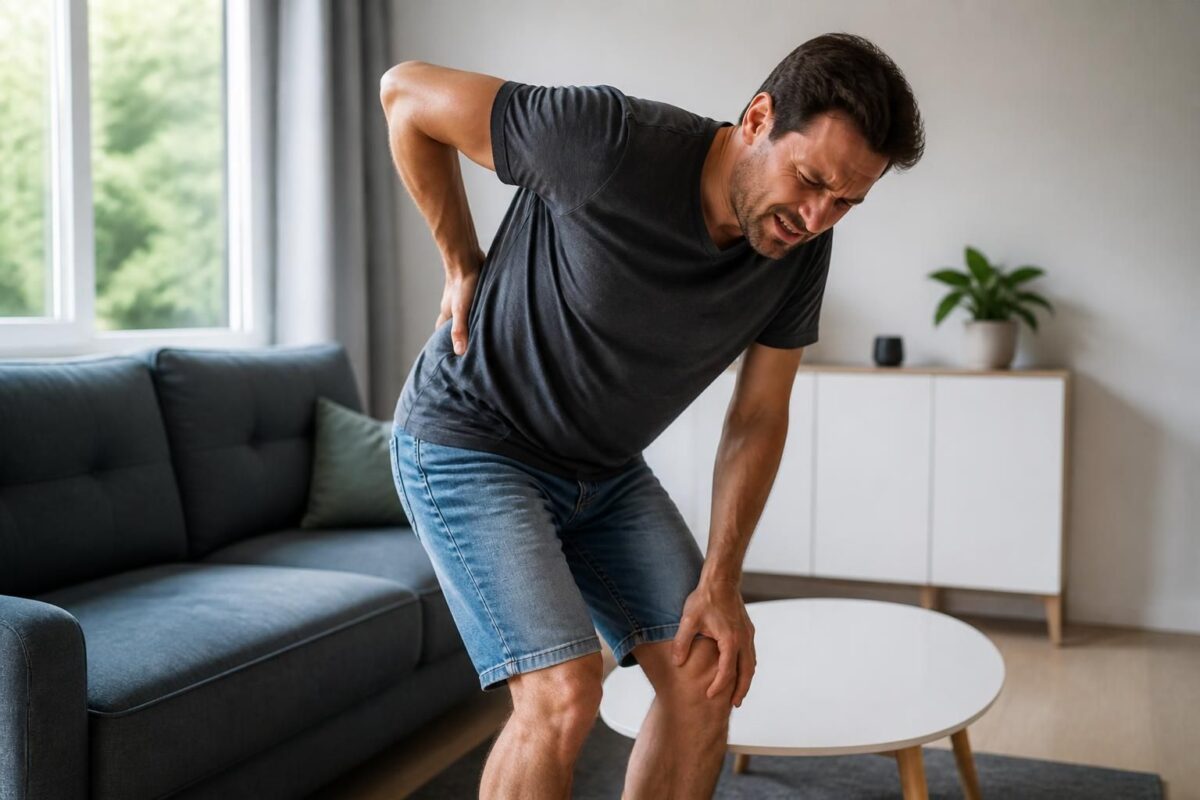
Herniated disc and peripheral pain: sign to watch out for
IN BRIEF In brief, Herniated disc is the partial protrusion of the gelatinous nucleus of an intervertebral disc through the fibrous ring, which can compress a nerve root and trigger radiating pain in the limb. The key benefits of rapid…

Herniated disc and centralizing pain: sign to interpret
IN BRIEF In brief, a herniated disc is a protrusion of the intervertebral disc that can compress a nerve root, causing centralized pain and signs such as radiating pain, numbness, and weakness. The treatment is mostly conservative: guided activity, physical…

Dr Sylvain Desforges, B.Sc., D.O., N.D., osteopath, is the founding president of TAGMED and of the ACMA association. He dedicates his practice to chronic spinal pain, low back pain and symptoms compatible with sciatica, particularly when pain radiates toward the buttock, leg, calf, foot or toes.
Through SOS Sciatique, he publishes educational content on sciatica symptoms, possible causes such as disc herniation, disc narrowing, foraminal stenosis or irritation of a lumbar nerve root, as well as non-surgical approaches that may be considered according to the evaluation. At Clinique TAGMED, care may include, depending on the case, motorized neurovertebral decompression, specific osteopathic care or precision percussion.
For an evaluation related to sciatica treatment in Montreal / Mount Royal or sciatica treatment in Terrebonne, please consult the services available at Clinique TAGMED.
Medical disclaimer
The information published on SOS Sciatique is provided for educational purposes only and does not replace a consultation, diagnosis, opinion or treatment provided by a physician or another authorized healthcare professional. The author of this article is neither a medical doctor nor a specialist in a medical specialty recognized by the Collège des médecins du Québec. The osteopathic, manual medicine or functional support approaches described on this site do not constitute medical acts and are not intended to replace medical follow-up.
Consult a physician or emergency service in cases of loss of bladder or bowel control, anesthesia in the saddle area, significant or progressive weakness in the leg or foot, fever, recent trauma, severe pain or rapid worsening of symptoms. For more details, please read our Legal Notice.