



Treatment of sciatica in Terrebonne: non-surgical approach
29/06/2026
Causes of sciatica: Understanding why pain descends into the leg
29/06/2026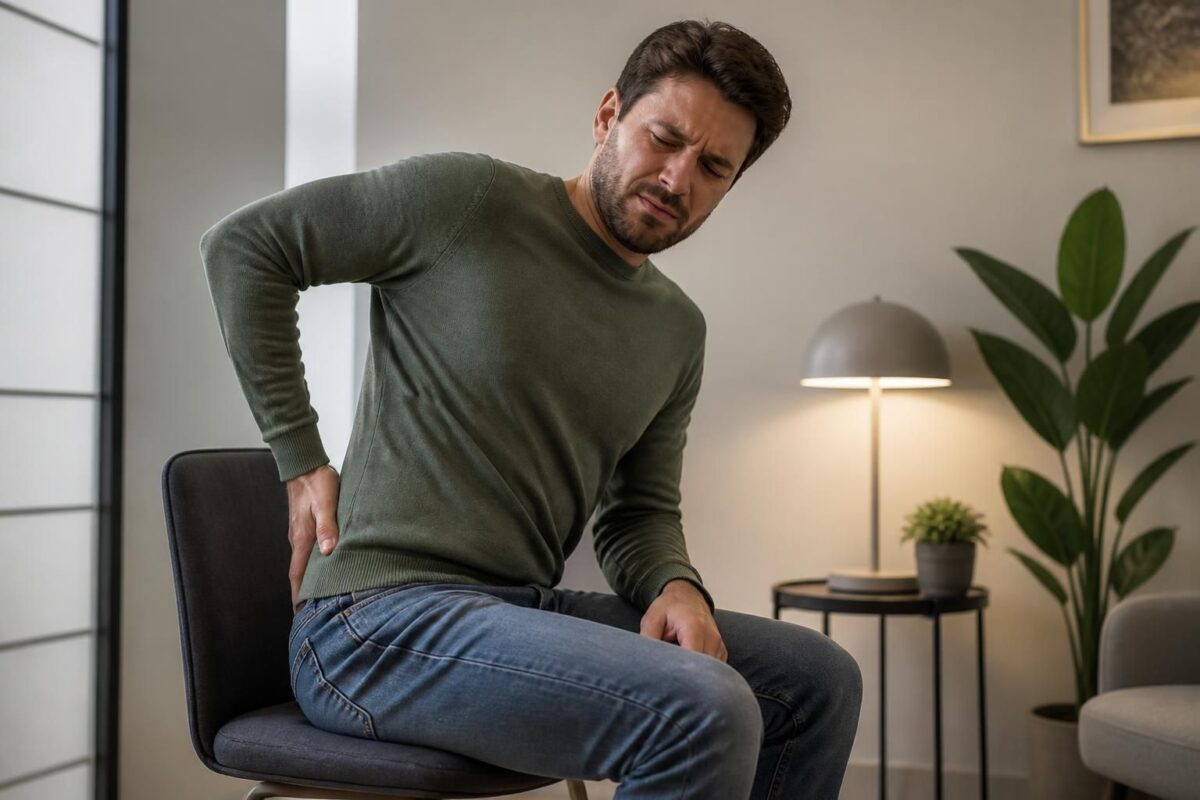
In short |
In short, Pain in the buttock which can be a sciatica (Lombosacral radiculopathy) and result from slipped disc, canal narrowing or piriform disorder. This guide recalls what the sciatica, its signs and its diagnosis, as well as the main stages of the treatment — Rest, physiotherapy and non-surgical options, with surgery considered if necessary. The evaluation is based on theclinical examination And, if useful, theimagery, with a rapid evaluation and personalized solutions, including Montreal. |
pain in the buttock: is it a sciatica ? In short, yes sometimes. The sciatica is a pain that follows the path of the sciatic nerve : from the lower back, via the buttocks, to the back of the leg. Common causes include a slipped disc, narrowing of the spinal canal or joint lesions; the Piriform Syndrome May also give butt pain without root damage. The typical table presents a irradiated pain With tingling or weakness, aggravated by walking, flexing or prolonged sitting. Diagnosis is primarily based on theclinical examination; Imaging examinations (MRI or CT) and electrodiagnostic tests can be useful if the pain persists or is accompanied by a deficit. treatment combines relief measures, physiotherapy and targeted exercises; Infiltrations or surgery may be considered in case of severe pain or nerve compression.
quick summary : Pain in the buttock can be sciatica, but other causes exist. The diagnosis is based on a clinical examination, then on imaging examinations or neurological tests if necessary. The treatment aims at the relief and maintenance of the function. At the TagMed clinic, approaches like specific osteopathy or neurovertebral decompression can be proposed, with surgical options in severe cases. For more information, see causes-diagnosis-sciatica on sossciatica.com and the page dedicated to full support on Our SOS Sciatica website.
The pain follows the path of the sciatic nerve. It can start from the lower back, go through the buttocks and go down the back of the leg. The sciatic nerve is very long and wide. Irritation, pinching or inflammation of the nerve roots can cause this pain along the nerve to the foot.
What is sciatica?
Sciatica is a lumbosacral radiculopathy. It occurs when the nerve roots that form the sciatic nerve are irritated or compressed. Disc hernia, foraminal stenosis or joint lesions can be causes. The pain is often unilateral and can be accompanied by tingling, numbness or weakness.
Common causes and signs
Common causes include disc herniation, spinal canal stenosis, osteoarthritis, piriformis syndrome and trauma. Typical signs include pain that radiates from the lower back to the buttocks and back of the leg, sometimes with pain that gets worse when walking or sitting. Signs of severity appear when a loss of urinary control or other major neurological deficits occurs.
Diagnosis
The diagnosis is based on a clinical examination and can be based on imaging examinations when necessary. MRI or CT scan help to check the origin of the pain when motor or neurological signs persist. Nervous tests can specify the affected root and the severity of the attack.
Treatment options
Most pain improves without heavy intervention. The treatment seeks to relieve pain and preserve activity. At the TagMed clinic, treatments such as specific osteopathy and motorized neurovertebral decompression can be offered. Options such as injections or surgery may be considered in case of severe pain or persistent deficiency. To temporarily relieve, simple measures such as rest, cold and heat application, and over-the-counter painkillers can be useful. Discussions with your doctor allow you to assess specific needs and the best course of action.
When to consult and prevention
Quickly consult pain associated with loss of control, significant weakness or sphincter disorders. In case of persistent pain despite rest and initial measures, make an appointment with your doctor for an appropriate orientation.
For more information on causes and diagnosis, you can consult the following resources in authorized domains:
Causes and diagnosis of sciatica and Full osteopathic support. For details on available services, visit Tagmed Clinic and neurovertebral decompression.
To learn more about sciatica and non-surgical options, see the resources associated with Sciatica after lumbar surgery and calf and sciatica pain.
For any additional information, you can also consult SOS SCIATIC.
Note that the above content is provided for informational purposes and does not replace personalized medical advice.
“Medical disclaimer: The information and advice provided on this site does not replace the health professional’s benefit, diagnosis or treatment. Please note that Dr. Sylvain Desforges osteopath is neither a doctor of medicine nor a doctor, and is not a specialist in a medical specialty as defined by the Collège des Médecins du Québec. Manual medicine, functional medicine and sports medicine as described on this site exclude any medical treatment or diagnosis made by a doctor or specialist doctor. Always consult your doctor for any medical questions. For more details, please read our full legal notice. »
- Location : pain in the lower back where the buttock, irradiation along the sciatic nerve.
- Path : follows the path of sciatic nerve to the back of the leg.
- Characteristic : feeling of burn or pain throbbing, paresthesias and sometimes numbness.
- Possible causes : slipped disc, narrowing of the spinal canal, osteoarthritis or root irritation.
- Alert signs : Marked weakness, loss of urinary/intestinal control, fever, worsening pain.
- Examination : evaluation of the force And some reflexes; tests that reproduce pain.
- investigation : MRI or TDM to identify compression or lesion; sometimes electrodiagnostics.
- Treatment plan : relief measures and physiotherapy; surgery envisaged in the event of Severe compression.
- When to consult quickly : debilitating pain or Engine deficit.
- Daily tips : stay active, avoid prolonged rest and adapt positions.

This sheet answers the question: Pain in the buttock Is it a sciatica ? You will read the possible causes, how to differentiate sciatica from other buttocks, useful examinations and treatment and prevention options for effective recovery.
What is pain in the buttocks and sciatica?
The sciatica Refers to pain that follows the path of the sciatic nerve, one of the largest and longest nerves in the body. This nerve starts from the lower back, passes through the buttock and goes down the leg to the knee, which can radiate to the foot. This pain can be described as burning, throbbing or acute and can be accompanied by tingling or numbness sensations.
The causes vary: a slipped disc, a Spinal canal stenosis Or lesions related to osteoarthritis can compress the nerve roots and trigger the pain. Other elements around the hip or spine can also play, and it is necessary to specify the etiology to adapt the treatment.

Sciatica and pain worsened while sitting: consider the disc?
IN BRIEF Sciatica aggravated in a seated position may be related to irritation of a nerve root, sometimes caused by a herniated disc. Remaining seated can exacerbate pain that radiates from the buttock down the leg, but this symptom alone…

Sciatica and pain relieved while seated: consider stenosis?
IN BRIEF A sciatica relieved in a seated position may suggest a lumbar stenosis and neurogenic claudication, but this sign alone is not sufficient for a diagnosis. Observing walking, weakness, and symptom evolution helps guide the evaluation and compare signs…
How to recognize and differentiate sciatica from other buttocks?
The pain can affect only one side and be accompanied by tingling, numbness or weakness in the leg or foot. A sciatica Is characterized by irradiation along the nerve path and by aggravations when walking, flexing the back or exerting a cough. Other causes to consider include the Piriform Syndrome, middle gluteus tendinopathy, trochanteric bursitis, trauma or osteoarthritis.
Warning signs requiring rapid assessment
Loss of urinary or anal control, feeling of anesthesia in the saddle, marked weakness or rapid progression of weakness, fever or pain after trauma: these elements require emergency medical care.
Sciatica and pain that worsens when walking
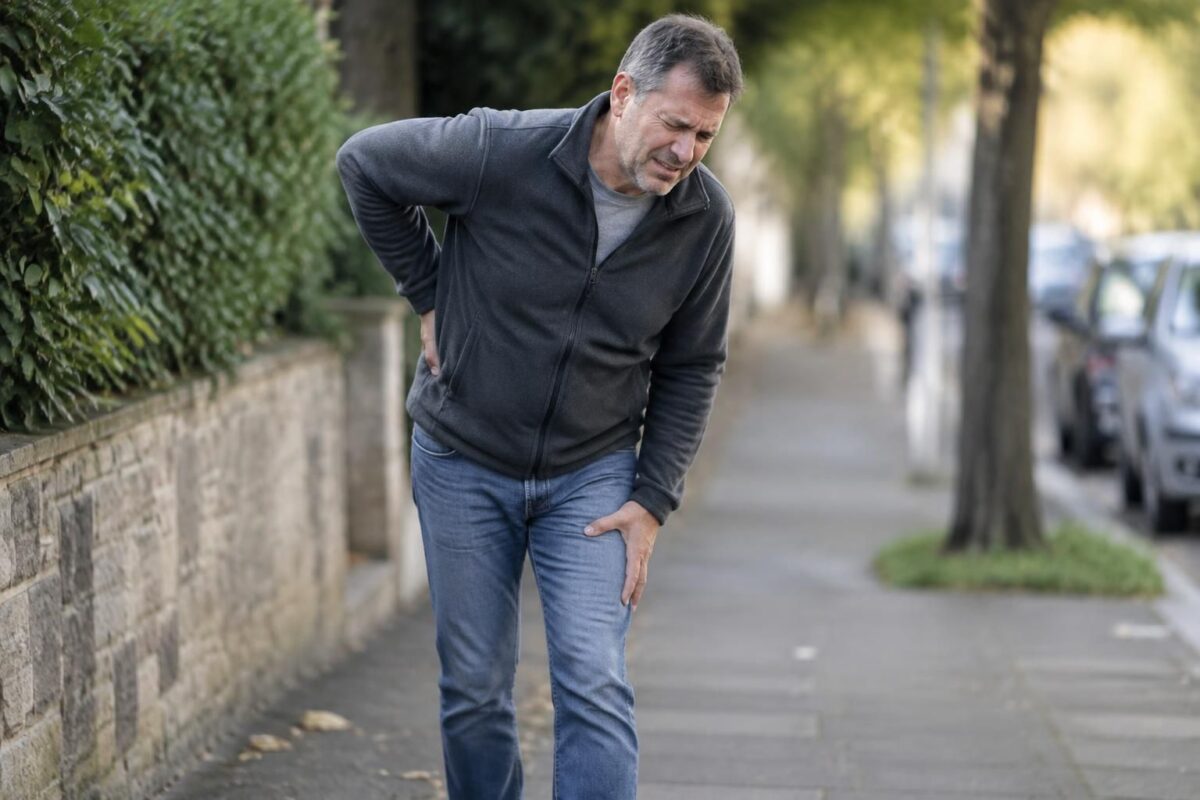
IN BRIEF A sciatica that worsens with walking is pain radiating from the buttock down the leg, exacerbated by walking. Several causes are possible: this symptom alone does not suffice for a diagnosis. Temporarily reduce walking duration, change positions, and…

Sciatica and pain that improves when walking
IN SUMMARY Sciatica is pain that radiates from the lower back or buttock down to the leg, sometimes all the way to the foot. If it decreases with walking, a gentle and regular walk can help limit stiffness and maintain…
How is the diagnosis?
The diagnosis begins with a precise clinical examination: strength assessment, reflexes and pain location. Imaging tests like MRI or CT scan can be useful if symptoms persist, worsen or there is a neurological deficit. Nervous tests identify the affected root and the severity of the attack.

IN BRIEF Sciatica is pain that often starts from the lower back or buttock and travels down the leg. Pain that worsens at the end of the day may be related to activities or prolonged positions, but it is not…

Sciatica and pain that worsens in the evening
IN BRIEF more painful sciatic pain in the evening is often related to inactivity, fatigue, and increased attention to sensations. This does not necessarily mean that the nerve is worsening. Gently changing positions, walking for a few minutes, and finding…
Treatments and care pathways
The initial treatment aims to relieve the pain: appropriate rest, application of cold then heat, and use of analgesics or NSAIDs according to medical advice. Physiotherapy and targeted exercises strengthen the central muscles, improve mobility and reduce tension on the back and nerve.
In case of persistent pain or significant compression, additional options exist: infiltrations and, when necessary, surgery. The objective is to quickly restore the function and avoid pain that persists for a long time. Many patients get significant improvement with a structured and progressive program.

Sciatica and pain when turning in bed
IN BRIEF Sciatica can cause pain when turning in bed, as certain movements irritate the lower back or leg. Turn slowly, moving your shoulders and hips together; a cushion between the knees or under the knees can improve comfort. If…

Sciatica and pain when getting out of bed
IN BRIEF Sciatica upon getting out of bed is pain that radiates from the lower back to the buttock or leg and can be more pronounced after the night. Gradually rising, moving gently, and finding a comfortable sleeping position can…
prevent and promote recovery
To limit risks and promote recovery, adopt good habits: maintain a healthy weight, strengthen and stretch the central muscles, and apply adequate lifting techniques. Prefer regular physical activity — walking, swimming — and specific exercises for the glutes to stabilize the spine and reduce tension on the discs and ligaments.
| Item to check | what this indicates |
|---|---|
| pain following the path of the nerve sciatica | Strong index of radiculopathy; clinical examination necessary. |
| pain from lower back or buttock then descending into the leg | corresponds to the path of the nerve; Confirm by examination and neurological tests. |
| pain radiating to the foot or at toes | Typical descent along the nerve; Evaluate via imaging if persists. |
| paresthesias or weakness in the leg/foot | Nervous signs; Requires quick assessment if progression. |
| pain aggravated by walking, climbing stairs, coughing or sneezing | Nerve irritation sign; Quick consultation recommended. |
| pain relieved by the Back straightening or in a standing position | Possible postural relief; Requires a medical assessment to determine the cause. |
| localized pain in the buttock without clear irradiation | can evoke a local origin like piriform; Useful targeted tests. |
| Alarm signs: loss of urinary control or fecal or marked weakness | medical emergency if present. |
| recent trauma or suspicion of fracture | Imaging required and appropriate orthopedic management. |
“When the Pain in the buttock appeared, I first thought of muscle pain. In reality, she followed the journey of the sciatica and went up to the back of the leg. My doctor explained to me that it could be a sciatica and recommended a Diagnosis by clinical examination and, if necessary, Imaging Reviews To confirm the cause and guide the treatment. »
“Evaluation showed that the pain could also come from the piriform. thanks to a Full assessment, we were able to differentiate the causes and adapt the care plan without rushing to surgery. »
“I followed simple gestures and a physiotherapy with progressive exercises. I quickly noticed that a Non-surgical treatment could bring back mobility and relieve, without going through an operation. »
“For some, a surgery Can be considered when the nerve is severely compressed, but in my case it was not necessary and recovery accelerated thanks to the custom plan. »
“The most useful was a Appropriate assessment and a progressive approach that strengthens the central muscles and reduces tension on the spine. It also helps to prevent relapses. »
“If you feel a Pain in the buttock who sirrade towards the leg, do not delay in being assessed: to understand if it is a sciatica And knowing the right treatment can change your daily life. »
The pain felt in the buttocks can emanate from various origins, and the question is often whether it reflects a sciatica or if it is another pelvis or back disorder. The sciatica Corresponds to pain that follows the path of the sciatic nerve, starting from the lower back, passing through the buttock, then descending into the leg. But other pathologies can mask this pain: piriformis syndrome, middle-gluteal tendinopathy, trochanteric bursitis, hip osteoarthritis, or even visceral or neurological causes. A comprehensive assessment makes it possible to distinguish these possibilities and to adapt the treatment.
this expert, Expert in osteopathy, naturopathy and manual medicine, is both founder and president of the Tagmed clinics and the ACMA association. With an approach focused on innovation in care, it specializes in the sustainable management of chronic pain and in the integration of advanced technologies. Among these are neurovertebral decompression, the use of laser and shockwave therapy, which complement an evidence-based approach to maximize patient health and well-being.
The diagnosis is based on a clinical examination Rigorous and on the precise observation of the symptoms: location of pain, irradiation along the nervous course, intensity, and aggravating factors (sitting, walking, climbing stairs, coughing or exertion). Imaging examinations or neurophysiological studies can be considered when the doubt persists or when a neurological deficit is present. The objective is to identify a possible slipped disc, a Foraminal stenosis or a nerve injury that would require specific treatment. Everything remains oriented towards a non-surgical strategy when possible.
Among the most common causes of buttock pain is the sciatica related to nervous compression or irritation, the Piriform Syndrome which requires targeted gestures to relax the deep muscle, middle-gluteal tendinopathy or bursitis at the level of the great trochanter. Pain after trauma or related to osteoarthritis or sacroiliac pain may also occur. In some cases, visceral causes or pelvic neuralgia require a specialized assessment to avoid diagnostic confusion.
The treatment is primarily aimed at relief and the gradual resumption of mobility. Simple measures like modulation of pain, application of cold or heat, and anti-inflammatory drugs when appropriate may be useful, but appropriate rehabilitation is often necessary. Specific exercises, gentle stretching and deep muscles of the trunk and hips, performed with supervision, help stabilize the spine and reduce tension on the sciatic nerve. When persistent signs or mechanical irregularities are present, options such as innovative therapies or, in some cases, surgery can be discussed as part of a personalized plan.
For those who want to understand the warning signs and the gestures to favor, listening to a specialist remains essential. In the presence of a marked motor deficit, a significant loss of sensitivity, or pain that worsens quickly, consideration should be given to rapid medical care. A multidisciplinary approach, centered on the obvious and individualization of the course, makes it possible to optimize the chances of recovery and to limit relapses and recurring pain.
To find out more about its approach and the services available, contact the TagMed Clinic and request an assessment adapted to your situation.
Quick summary: pain felt in the buttock can be linked to a sciatica or other causes of the pelvic and lumbar region. The diagnosis is based on theclinical examination, the appearance of irradiation along the path of the sciatic nerve, and, if necessary, examinations ofimagery (MRI, CT) or neuromuscular tests. The treatment combines measures to relieve pain, muscle strengthening and rehabilitation, with the possibility of surgery in cases of significant compression or persistence of symptoms despite non-surgical approaches. To deepen the mechanisms and options available, you can consult specialized resources on neurovertebral decompression and non-invasive approaches.
The Pain in the buttock may be the manifestation of a sciatica When a sciatic nerve or its roots are pinched, inflamed or irritated. The pain is often described as burning or throbbing and can radiate from the lumbar region to the back of the leg. Warning signs, such as marked weakness, sphincter disorders or pain associated with loss of sensitivity, require urgent and rapid medical care.
To make the right diagnosis, the medical team combines clinical examination and, if necessary, examinations ofimagery (mainly MRI or CT) and neuromuscular assessments to identify the affected root and the severity of the attack. sources like Neurovertebral and sciatic decompression or Why this approach can be non-invasive provide additional perspectives on non-surgical mechanisms and options. In addition, resources on the causes and treatments of gluteal and sciatic pain can be consulted via articles such as Pain in the buttock and practical guides available on Sciatica: Symptoms and Treatments.
The treatment aims for rapid and lasting relief: basic measures such as appropriate rest, application of cold then heat, and analgesics or NSAIDs according to the recommendations, supplemented by non-pharmacological approaches such as physiotherapy and central muscle strengthening. If the pain persists or is accompanied by a motor deficit, options such as infiltration or surgery (discectomy, laminectomy) can be considered, especially when the pathology is compressive and clearly identified with imaging. To better understand the therapeutic choices and expected results, refer to specialized resources such as Non-invasive care and Sciatica: Causes, Symptoms and Treatments.
For practical mechanisms and advice on prevention and day-to-day management, public and professional online resources such as vidal or Everything for my health can complete your thinking. Finally, resources dedicated to osteopathy and neurovertebral decompression highlight the potential benefits of these approaches as complementary pathways to reduce sciatica pain without surgery.

Dr Sylvain Desforges, B.Sc., D.O., N.D., osteopath, is the founding president of TAGMED and of the ACMA association. He dedicates his practice to chronic spinal pain, low back pain and symptoms compatible with sciatica, particularly when pain radiates toward the buttock, leg, calf, foot or toes.
Through SOS Sciatique, he publishes educational content on sciatica symptoms, possible causes such as disc herniation, disc narrowing, foraminal stenosis or irritation of a lumbar nerve root, as well as non-surgical approaches that may be considered according to the evaluation. At Clinique TAGMED, care may include, depending on the case, motorized neurovertebral decompression, specific osteopathic care or precision percussion.
For an evaluation related to sciatica treatment in Montreal / Mount Royal or sciatica treatment in Terrebonne, please consult the services available at Clinique TAGMED.
Medical disclaimer
The information published on SOS Sciatique is provided for educational purposes only and does not replace a consultation, diagnosis, opinion or treatment provided by a physician or another authorized healthcare professional. The author of this article is neither a medical doctor nor a specialist in a medical specialty recognized by the Collège des médecins du Québec. The osteopathic, manual medicine or functional support approaches described on this site do not constitute medical acts and are not intended to replace medical follow-up.
Consult a physician or emergency service in cases of loss of bladder or bowel control, anesthesia in the saddle area, significant or progressive weakness in the leg or foot, fever, recent trauma, severe pain or rapid worsening of symptoms. For more details, please read our Legal Notice.


