Sciatica in Terrebonne: pain that wakes you up at night
22/09/2026
Herniated disc and sciatica: when the pain becomes persistent
22/09/2026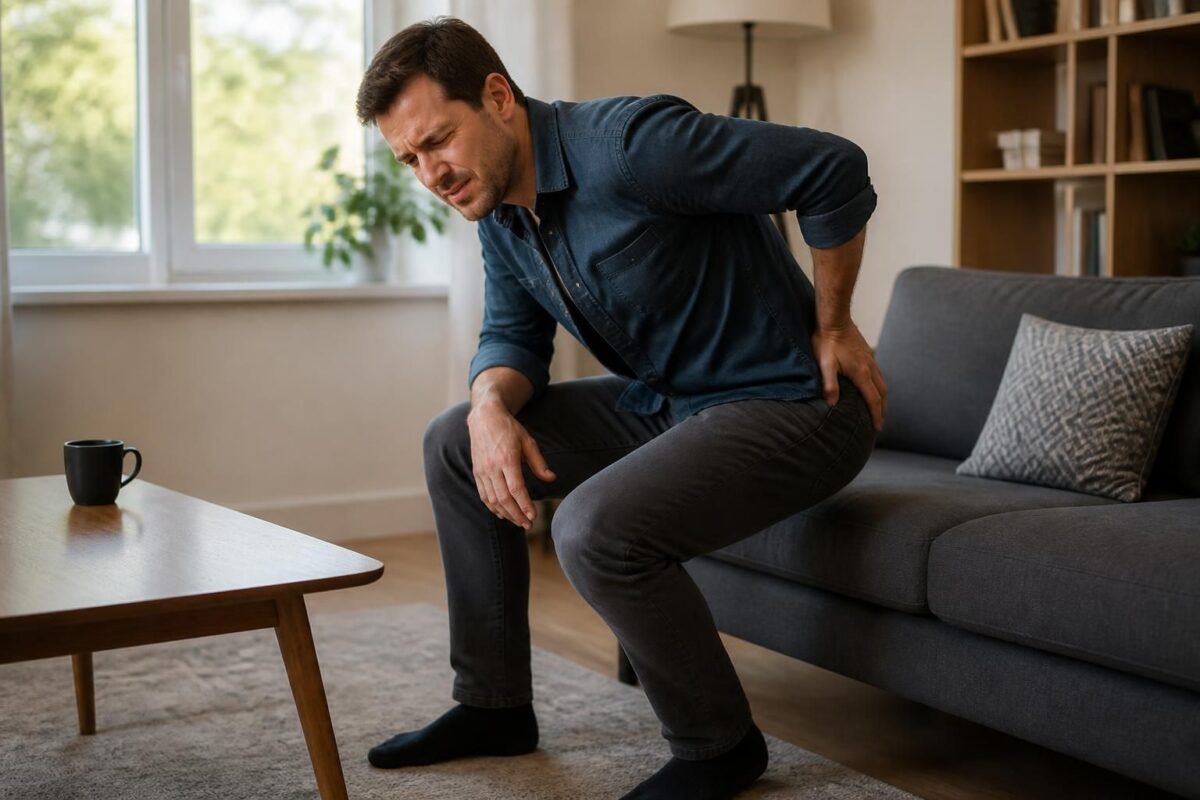
IN BRIEF In brief, Sciatica and pain when standing up is a pain radiating along the sciatic nerve, often triggered or worsened by the effort of standing up and maintaining an upright posture. It most often results from a nerve compression such as a herniated disc and can affect the lower back, hip, and leg. The benefits of this approach lie in a better understanding of the causes, non-surgical solutions, and practical advice to reduce pain when standing up, improve mobility, and prevent recurrences. Its effectiveness relies on a targeted clinical assessment, tailored exercises, and postural advice, complemented as needed by physical therapies, to promote lumbar stability and flexibility without resorting systematically to surgery. In Montreal, this service is particularly beneficial for individuals wanting to quickly relieve pain associated with standing up and resume normal activities pain-free. |
Sciatica is an intense pain due to compression of the sciatic nerve, the longest nerve in the body that runs from the spine to the foot. When standing up, the pain may worsen and radiate from the lower back to the hip, leg, and sometimes the foot, accompanied by tingling or numbness.
The most common cause is a herniated disc, but other factors such as lumbar osteoarthritis, trauma, or inflammation may also be involved.
The diagnosis primarily relies on a clinical examination; additional tests (imaging or nerve conduction) may be requested if necessary or if symptoms persist.
The treatment aims for relief and resumption of activities: anti-inflammatory and analgesic medications, physiotherapy and tailored exercises, and sometimes procedures like injections or surgery depending on the cause and severity. To prevent recurrences, prioritize back strengthening and stretching, good posture, and regular physical activity; seek prompt advice for signs of alert (significant weakness, loss of urinary control).
Quick summary: Sciatica is pain caused by compression of the sciatic nerve. This pain can appear or worsen when you stand up, get up, or stand after a period of sitting. This article, written by Dr. Sylvain Desforges, osteopath, outlines the mechanisms, signs, causes, and management options available at the TAGMED Clinic.
About the author
Dr. Sylvain Desforges, B.Sc., D.O., N.D., osteopath, is the founding president of
TAGMED and the ACMA association. He dedicates his practice to chronic pain of the spine, lumbar pain, and pain compatible with sciatica, especially when the pain radiates to the hip, leg, calf, foot, or toes.
Through SOS Sciatica, he publishes educational content on the symptoms of sciatica, possible causes such as herniated disc, disc pinching, foraminal stenosis, or irritation of a lumbar nerve root, as well as non-surgical approaches that may be considered according to assessment. At the TAGMED Clinic, care may include, where appropriate, motorized neurovertebral decompression, specific osteopathy, or precision impact therapy.
For an evaluation related to sciatica treatment in Montreal / Mont-Royal or sciatica treatment in Terrebonne, check the services available at the
TAGMED Clinic.
Medical disclaimer
The information published on SOS Sciatica is provided for educational purposes and does not replace a consultation, diagnosis, advice, or treatment by a physician or other authorized health professional. The author of this article is neither a physician nor a specialist in a medical field recognized by the Collège des médecins du Québec. The approaches of osteopathy, manual medicine, or functional support described on this site do not constitute medical acts and are not intended to replace medical follow-up.
Consult a doctor or an emergency service in case of loss of bladder or bowel control, numbness in the saddle area, significant or progressive weakness of the leg or foot, fever, recent trauma, severe pain, or rapid deterioration. For more details, please read our
Legal Notice.
What is pain when standing up and how does sciatica manifest?
Sciatica is a pain that results from compression of the sciatic nerve. It can radiate from the hips to the foot. The pain is often described as burning or shooting. Standing up, getting up, or stretching can trigger or intensify the pain. You may also feel paresthesias, numbness, or weakness in the leg.
The pain may be associated with low back pain. This is referred to as lumbosciatica. The diagnosis is based on a clinical examination and the evaluation of symptoms, especially during the straight leg raise test. Imaging tests may be considered if symptoms persist, or if there is significant loss of strength or sensation.
The most common causes include a herniated disc, but other conditions like lumbar osteoarthritis or spinal canal narrowing can also cause pain that radiates down the leg. In pregnant women, postural issues may also be involved and resolve after childbirth.
To delve deeper into the causes and mechanisms, you can refer to specialized resources on dedicated sites, including the information available on sossciatique.com and sosherniediscale.com.
Signs and symptoms when standing up
Pain is typically felt on one side. It can be described as pain following the path of the nerve, starting from the lower back to the back of the leg. Tingling or numbness may accompany the pain. Standing up or simply maintaining an upright position can increase the pain.
Signs indicating more significant nerve damage include marked weakness in the leg or foot, or difficulty walking. In case of loss of bladder control or other severe symptoms, emergency consultation is needed.
Diagnosis and role of assessment
The doctor checks muscle strength, reflexes, and performs simple tests like the Lasègue test. If the pain persists beyond six weeks or is accompanied by weakness, significant numbness, or neurological deficit, imaging studies or electrical tests may be considered to clarify the source of the affected nerve.
For additional information on symptoms and assessment options, see the resources on sosSciatique Montreal and Sciatica and pain when getting up.
Treatment options and approach at TAGMED
The sciatica treatment depends on the cause and severity. At TAGMED Clinic, options include neurovertebral decompression and targeted osteopathic care. The use of manual techniques may help reduce pain and improve function, based on the assessment. Work around the precision percussion instrument may be considered for certain conditions, always after an appropriate evaluation.
Physical therapy can be beneficial in some cases, but is generally contraindicated in the acute phase of sciatica. In any case, any approach is decided after a personalized evaluation at TAGMED and may involve a combination of non-surgical therapies. To learn more about our services, visit TAGMED Clinic.
In cases where pain is refractory to medical treatment or there is a neurological deficit, specialized intervention may be discussed depending on the exact cause of sciatica, such as removal of a herniated disc or targeted structural adjustment based on the evaluation. For information on non-surgical approaches and available options, you can consult the dedicated resources on sosherniateddisc.com and sosherniediscale.com.
When to consult urgently and practical solutions
Consult urgently if you experience extreme sciatica pain not relieved by analgesics, weakness or paralysis worsening in the leg, loss of bladder control or bowel dysfunction, or signs of infection or fever.
To prevent or better manage sciatica, prioritize suitable physical activity, maintain a healthy weight, and ensure good posture. Practical resources and advice may sometimes be available through training and professional associations, including ACMA and the College of Canadian Osteopaths. For background information and tailored advice, visit the above reference sites and TAGMED’s dedicated pages.
Prevention and practical advice
Stay active and engage in activities that strengthen the back and supporting muscles without straining. Adopt good posture during daily activities and when lifting loads. Avoid movements that trigger pain and consult promptly if the pain becomes recurrent or worsens.
For additional resources, patients can consult information at sossciatique.com and TAGMED Clinic.
To delve into aspects related to pain and mobility, you can also explore content on sosSciatique – Terrebonne and Sciatica and walking.
References and binding resources
For general information, consult resources on areas compatible with our approach, including sossciatique.com and cliniquetagmed.com. Other useful pages mention specific aspects such as neurovertebral decompression or non-surgical options provided by our care.
Personalized consultations and assessments are available at the TAGMED Clinic in Montreal and Terrebonne. To better understand the mechanisms and non-surgical approaches, you can consult the dedicated pages on sossciatique.com and sosherniediscale.com.
Note that information on decompressions and other specific conditions is discussed after evaluation and does not replace a personalized medical consultation. For more details, please read our full Legal Notice.
Medical Disclaimer: The information and advice provided on this site do not replace the opinion, diagnosis, or treatment of a healthcare professional. Please note that Dr. Sylvain Desforges, osteopath, is neither a doctor nor a physician and is not specialized in a medical specialty as defined by the Quebec College of Physicians. Manual medicine, functional medicine, and sports medicine as described on this site exclude any treatment or diagnosis made by a physician or specialist. Always consult your doctor for any medical questions. For more details, please read our full Legal Notice.
Sensation when straightening up
- Pain radiating from the lower back to the buttock and leg
- Burning pain or stabbing sensation
- Pinching or numbness
- Worsening with extension or when coughing
- Often one side affected
Management and gestures
- Encourage gentle movements and avoid prolonged rest
- Adopt a neutral posture and work on back strengthening
- Avoid aggressive gestures; prioritize muscle rebalancing
- If pain persists > 6 weeks or neurological signs, consult
- Possible non-surgical options: physiotherapy, osteopathy, appropriate decompression

This article explains why sciatica may increase when you straighten up, the mechanisms and possible causes, and offers practical recommendations for adopting an appropriate posture, performing targeted stretches and strengthening exercises to reduce pain and prevent recurrences, without overly straining the spine during movements.
Understanding Pain When Straightening Up
Sciatica is often linked to compression of the sciatic nerve. The pain can be radiating from the lower back to the buttock and leg. The mechanism generally involves pressure on the lumbar nerve roots, which may be accompanied by burning, tingling, or numbness. When straightening up, these signs can worsen if the spine is inappropriately stressed or if trunk stability is insufficient.
Factors and Causes to Know
The most common causes include a hernia, but wear and tear of the lumbar joints (osteoarthritis) or slippage of a vertebra can also cause pain when straightening up. Inflammations, infections, or rare tumors of the spine may also be involved. In pregnant women, postural changes can temporarily create pain when straightening, which disappears after childbirth.
Practical Recommendations for Straightening Up Without Worsening Pain
Adopt a Good Starting Posture
When standing, maintain the natural curve of the spine and engage the deep core muscles. Distribute your weight over both feet and avoid sudden twists or excessive bending of the back when straightening up. A neutral alignment helps limit stress on the nerve roots and reduce pain.
Techniques and Movements to Prefer
Favor slow and controlled movements. Bend your knees and use your legs to stand up, keeping your back long. Lightly contract your glutes and core to stabilize the spine when moving from sitting to standing. Avoid sudden movements that trigger or worsen the pain.
Non-Pharmaceutical Exercises and Therapies
Incorporate trunk strengthening exercises and gentle stretches for the hamstrings and piriformis. Also work on diaphragmatic breathing and posture daily. Ask a professional to adapt the program according to your pain, sensations, and physical capability.
When and How to Ask for Help
If pain persists beyond a few weeks, or if you notice increasing weakness, loss of sensation, or changes in bladder or sphincter control, consult promptly. In case of acute pain associated with fever, signs of infection, or neurological hardening, seek medical evaluation without delay.
Daily Action Plan and Prevention
Postural Hygiene and Physical Activity
Incorporate activities compatible with sciatica, like walking, swimming, or gentle yoga, which strengthen the core without excessively loading the back. Maintain a healthy weight, prioritize a good posture at work and home, and adopt appropriate lifting techniques: bend your knees, keep the load close to your body, and avoid sudden rotations.
| Aspect | Concise Description |
|---|---|
| Origin and Mechanism | Pain radiating from the lower back to the foot due to compression of the sciatic nerve. |
| Location and Asymmetry | Often unilateral; follows the path of the sciatic nerve from the buttock to the foot. |
| Type of Pain When Straightening Up | Intense, burning pain that worsens with extension of the trunk or exertion. |
| Impact on Mobility | Difficulties in straightening up and reduced mobility. |
| Associated Signs | Tingling, numbness, or weakness in the leg/foot. |
| Emergency Signs | Severe neurological deficit or loss of urinary/anal control. |
| Rapid Diagnosis | Clinical examination + Lasègue; MRI/CT if persistence >6 weeks. |
| Immediate Management | Adapted activity, physiotherapy after the acute phase; anti-inflammatories as advised by a doctor. |
| Prevention and Advice | Regular exercise, strengthening, and good posture. |
Testimonials on Sciatica and Pain When Straightening Up
“Before, every time I had to straighten up, a sciatica shot a burning pain in my lower back that radiated down to my leg. It felt like every movement pulled me towards the ground. After a few osteopathy sessions, the pain gradually eased and straightening up became much more natural.”
“I felt a dull, burning pain that intensified as soon as I stood up. The posture-centered approach and manual techniques helped me calm the inflammation and improve my ability to straighten up without fear.”
“As an athlete, sciatica blocked me when I had to stand up after warming up. Targeted intervention and the rehabilitation program reduced the pain and allowed me to regain my performance without discomfort when straightening up.”
“After months of suffering with every movement, I tried osteopathy and a holistic approach that includes postural advice. I now feel less pain when I straighten up and my leg no longer “pulls” like before.”
“I thought this pain would never go away, but thanks to appropriate care, the sciatica has eased significantly, and getting my back to a standing position has become much easier.”
Sciatica and Pain When Straightening Up: Biography of Dr. Sylvain Desforges
Dr. Sylvain Desforges, an expert in osteopathy, naturopathy, and manual medicine, is the founding president of TAGMED clinics and the ACMA association. With a career dedicated to innovation in healthcare, he specializes in chronic pain management and the integration of advanced technologies for the spine to provide concrete solutions for patients suffering from sciatica and pain related to straightening up. His goal is to offer evidence-based care that sustainably improves quality of life and mobility. His pedagogical and clinical commitment unfolds around integrated approaches that combine manual skills and technological innovations, continuously adapted to the unique profile of each patient.
In his approach, he considers that sciatica most often results from a combination of mechanisms: disc herniation, lumbar osteoarthritis, canal narrowing, or nerve irritation. This observation guides his work during the initial assessment: thorough clinical examination, functional tests, and, when necessary, referral for additional investigations, while favoring conservative measures. A precise diagnosis allows him to explain to the patient the possible causes of pain radiating from the lower back to the hip and leg, which sometimes accompanies paresthesia, weakness, or walking difficulties.
His therapeutic approach is multidisciplinary and patient-centered. It combines osteopathic techniques, postural advice, strengthening of the deep trunk muscles, and tailored stretching programs. The aim is to reduce nerve compression, improve mobility, and prevent recurrences. In his practice, he prioritizes non-surgical methods and proposes personalized plans to avoid surgery, except for strict medical indications.
To complement manual care, Dr. Desforges integrates cutting-edge technologies that support healing and accelerate the return to active life. Motorized spinal decompression may be considered when mechanical mechanisms of the back limit movement, laser can help manage pain and stimulate tissues, and shockwave therapy can promote recovery in some patients suffering from radicular pain. This synergy between clinical expertise and technological tools allows for more predictable and lasting results for patients who awaken while straightening up and wish to regain their active life.
Beyond treatment, Dr. Desforges places the person at the heart of his approach. He is committed to educating his patients, teaching them simple actions to perform at home, and guiding them towards better body awareness and posture in daily life. His work aims not only to alleviate pain but also to restore safety and confidence during movements that trigger pain when straightening up. In collaboration with TAGMED teams and associated associations, he offers comprehensive and evolving plans adapted to the evolution of pain and patient activities.
Quick summary: This conclusion clarifies that sciatica and pain when straightening up result from a variety of mechanisms, ranging from local mechanical causes to irritation of the sciatic nerve, and highlights a multidisciplinary, gradual, and posture-focused approach to improve mobility and reduce pain.
When straightening up and experiencing sciatica, it is crucial to distinguish between local mechanical pain and radicular pain that radiates along the leg. The diagnosis is based on a clinical examination and, if necessary, imaging studies or neurophysiological assessments to identify the cause, such as a disc herniation or spinal canal narrowing. This precision then guides the choice of the most suitable treatments and helps avoid inappropriate actions during straightening up.
The management prioritizes a multidisciplinary and non-surgical approach whenever possible, with targeted exercises, postural corrections, and gradual progression of daily activities like walking. Complementary options, such as targeted interventions when necessary, may be considered based on the cause and severity of symptoms. For practical aspects and available options, consult dedicated resources addressing symptoms when going down stairs, variations at the end of the day, and situations concerning walking on a slope.
In most cases, straightening up should not be imposed as a constraint: prioritize gentle stretching and strengthening exercises, and adapt your daily movements (grasping, lifting, standing) to reduce tension on the sciatic nerve. Utilizing practical resources on exercise and posture can be helpful, such as those providing exercises dedicated to sciatica and advice on walking and stair climbing.
Warning signs or persistence despite treatment should prompt a quick consultation: worsening pain, progressive weakness of a leg, loss of urinary or sphincter control, fever, or low back pain associated with marked neurogenic pain. In the presence of these symptoms, immediate medical evaluation is recommended to rule out an emergency and adapt the therapeutic plan.
To guide your journey, you can rely on specialized resources on sciatica, treatment options, and precautions to adopt when straightening up and walking: going down stairs, symptoms at the end of the day, walking on a slope, and other useful resources on movements and signals to monitor. For general advice and practical exercises, you can also consult dedicated guides on sciatica and back pain prevention, as well as recommendations from health organizations.
In summary, pain when sitting up related to sciatica is managed most effectively when approached through a combination of accurate diagnosis, appropriate non-surgical therapies, a tailored progression of activities, and a set of daily actions aimed at preserving posture and muscle strength. For additional details and resources, explore the links mentioned above and discuss with a healthcare professional for a personalized plan.
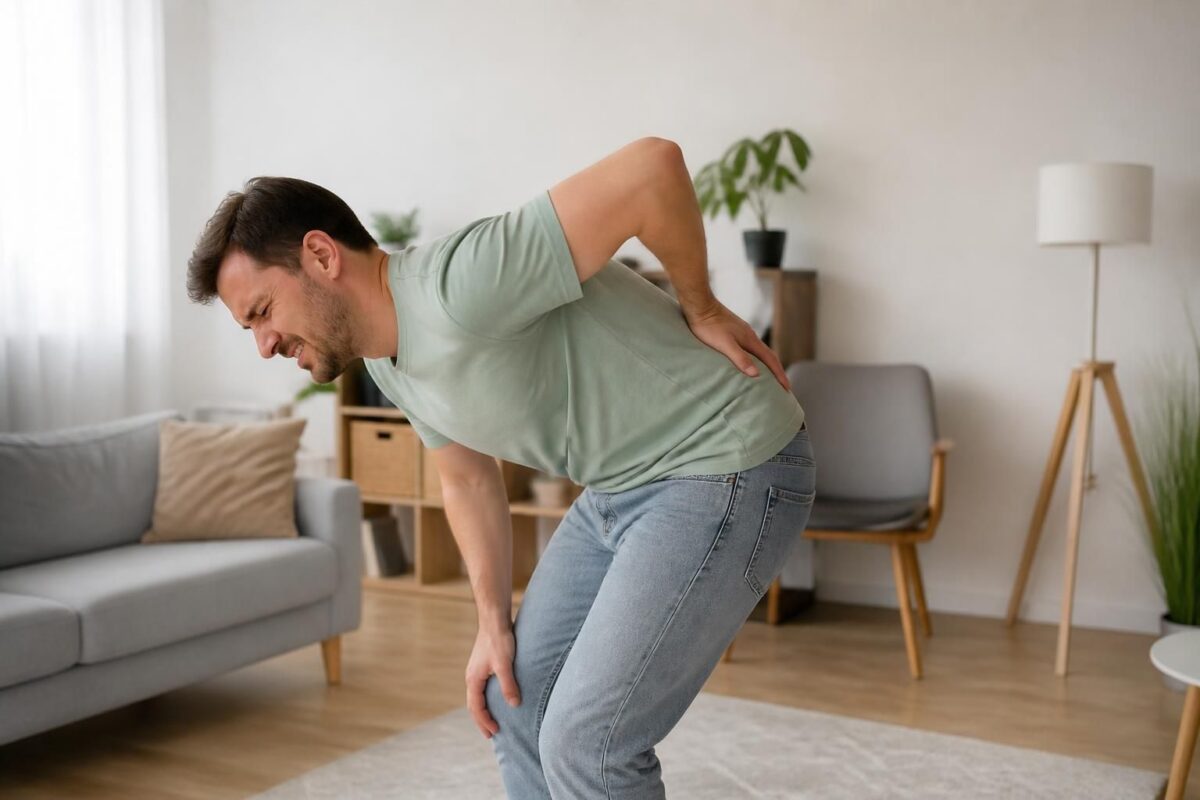
Sciatica and pain when leaning forward
IN BRIEF In brief, Sciatica and pain when bending forward describe lower back pain that radiates into the leg when flexing, often due to irritation of a nerve root or disc compression. This page offers a clear definition, common causes,…
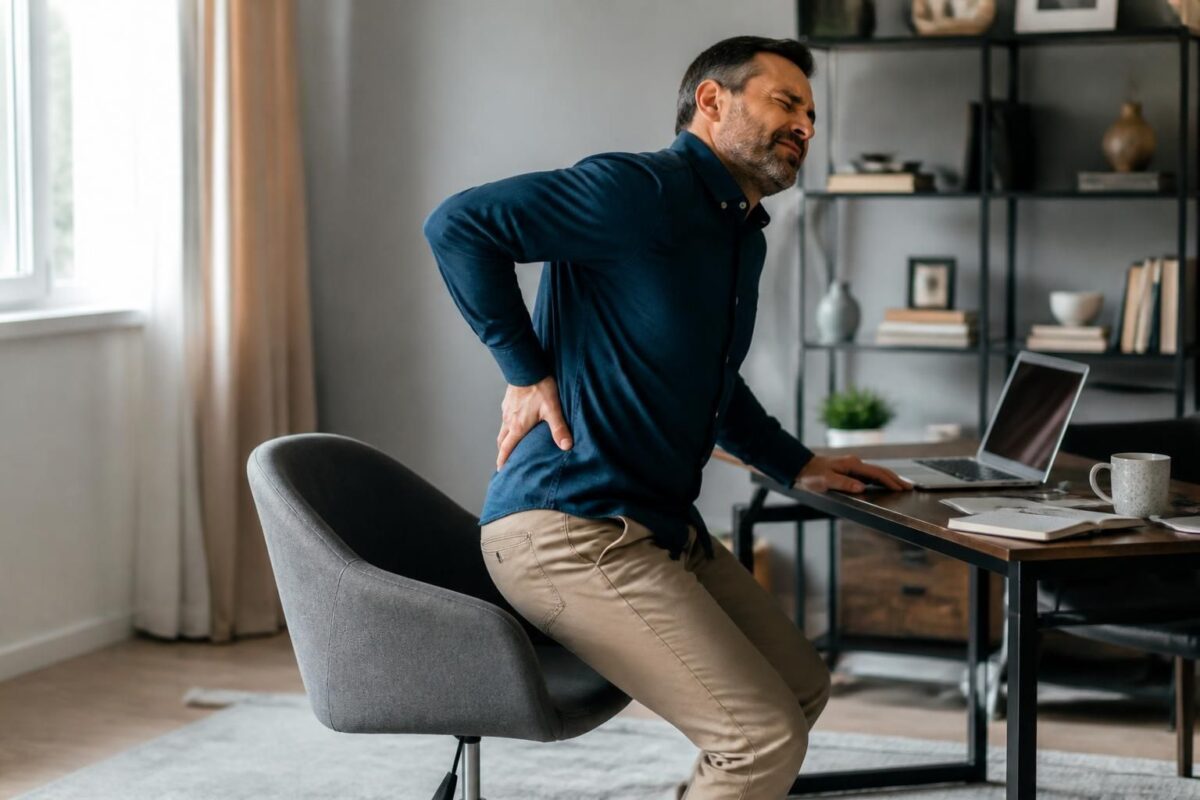
Sciatica and pain when getting up from a chair
IN BRIEF In brief, sciatica and pain when getting up from a chair refer to lower back discomfort triggered by the transition from sitting to standing, often related to irritation of a lumbar nerve root or poor posture. What is…

Sciatica and Pain with Position Change
IN BRIEF In brief, sciatica and pain during position change is pain radiating along the sciatic nerve triggered or worsened by postural changes and prolonged postures. Benefits: identifying positions to avoid and adopting ergonomic adjustments helps reduce pain, improve comfort,…
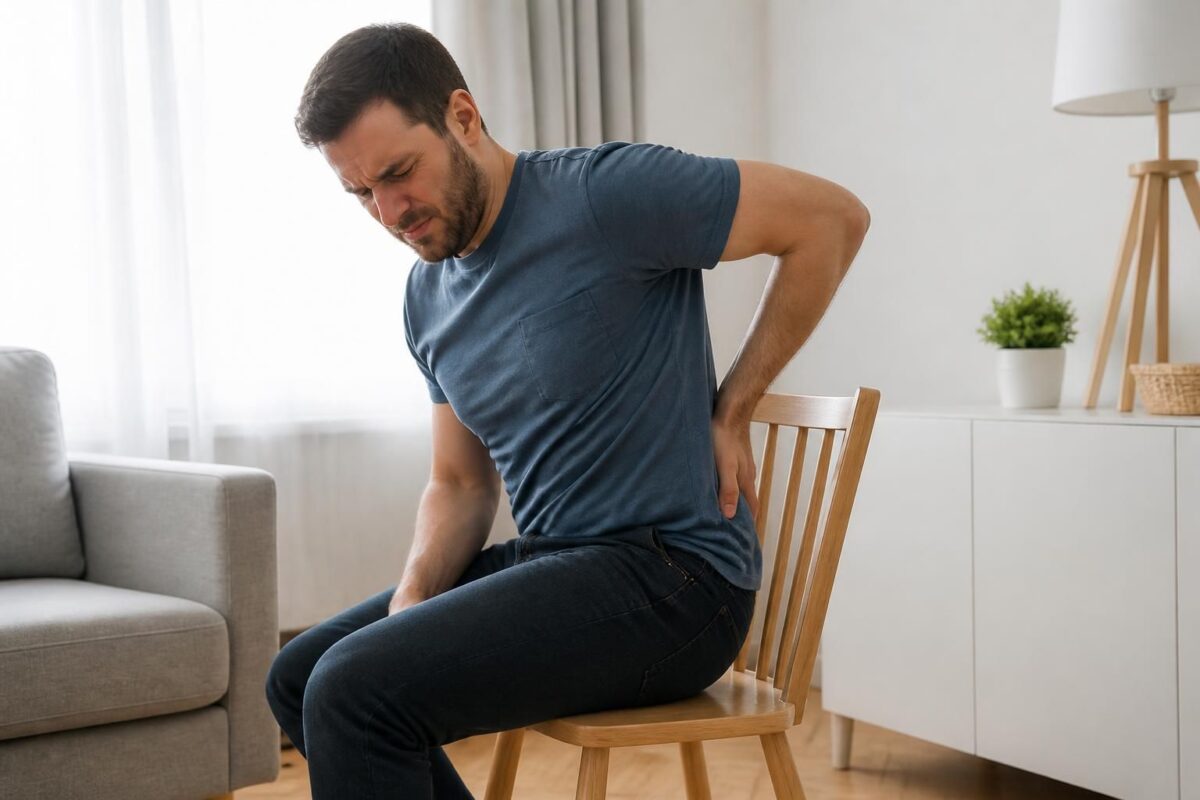
Sciatica and difficulty sitting
IN BRIEF In brief, Sciatica and difficulty sitting describes pain that follows the path of the sciatic nerve, often worsened by prolonged sitting. This approach aims to break up sitting periods and adjust posture to reduce pressure on the lumbar…
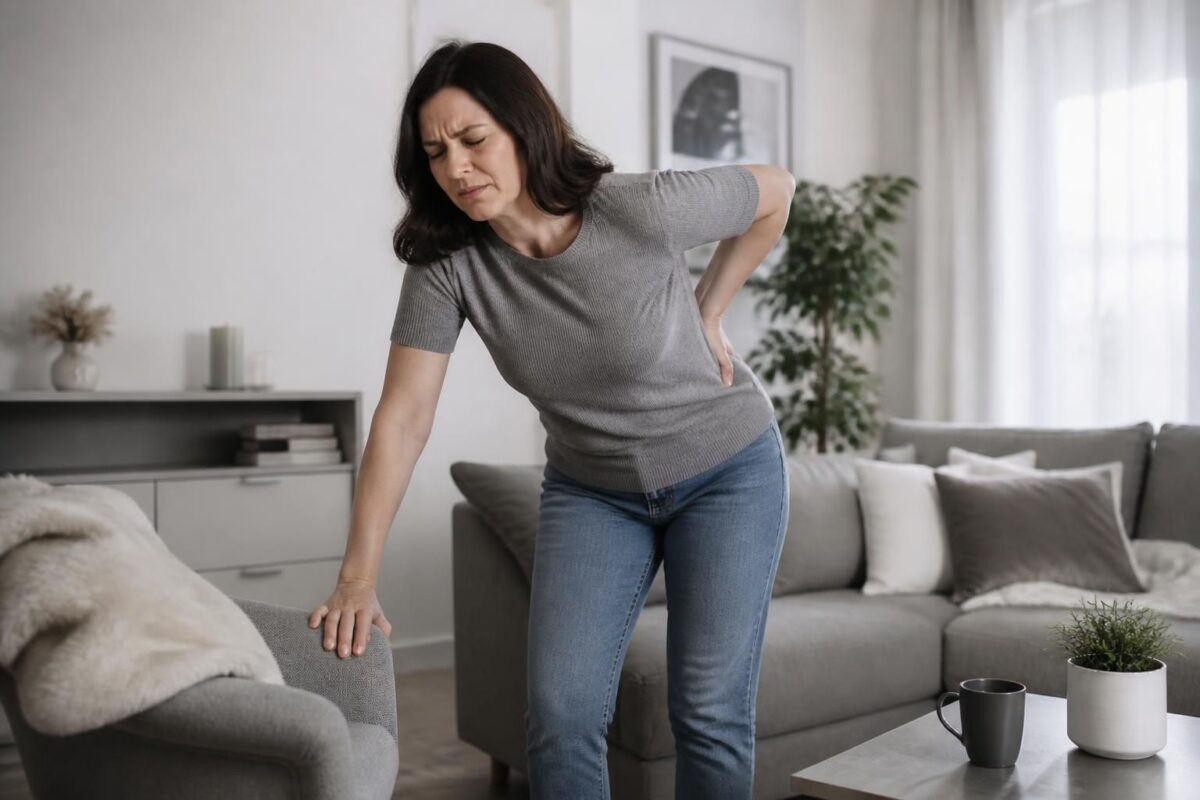
Sciatica and difficulty standing upright
IN BRIEF In brief, sciatica and difficulty standing refer to painful radiation starting from the lower back down the leg, which can significantly hinder standing. What is it? A pain that may radiate into the buttock and leg, with sensations…

Sciatica and pain when going down the stairs
IN SHORT Sciatica and the pain felt when going down the stairs is a pain that radiates along the path of the sciatic nerve and can be triggered by descending steps. This condition may be related to causes such as…

Sciatica and pain when going up stairs
IN BRIEF In brief, sciatica is a pain that follows the path of the lumbosacral nerves, starting from the lower back and going down to the back of the leg. It can be related to a herniated disc, stenosis, or…
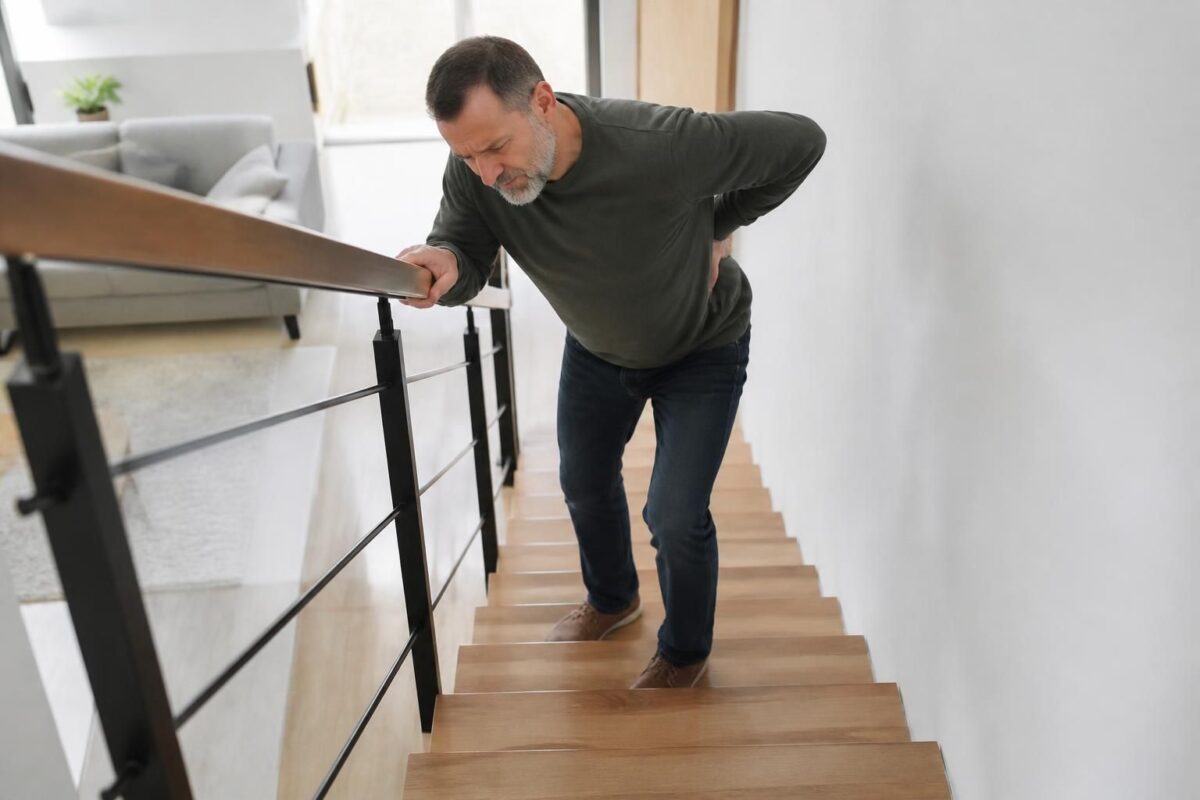
Sciatica and difficulty going down stairs
IN BRIEF In brief, sciatica associated with d difficulty descending stairs is pain that follows the path of a nerve root and intensifies when going down steps, often due to the eccentric effort of the quadriceps and pressure on joint…

Dr Sylvain Desforges, B.Sc., D.O., N.D., osteopath, is the founding president of TAGMED and of the ACMA association. He dedicates his practice to chronic spinal pain, low back pain and symptoms compatible with sciatica, particularly when pain radiates toward the buttock, leg, calf, foot or toes.
Through SOS Sciatique, he publishes educational content on sciatica symptoms, possible causes such as disc herniation, disc narrowing, foraminal stenosis or irritation of a lumbar nerve root, as well as non-surgical approaches that may be considered according to the evaluation. At Clinique TAGMED, care may include, depending on the case, motorized neurovertebral decompression, specific osteopathic care or precision percussion.
For an evaluation related to sciatica treatment in Montreal / Mount Royal or sciatica treatment in Terrebonne, please consult the services available at Clinique TAGMED.
Medical disclaimer
The information published on SOS Sciatique is provided for educational purposes only and does not replace a consultation, diagnosis, opinion or treatment provided by a physician or another authorized healthcare professional. The author of this article is neither a medical doctor nor a specialist in a medical specialty recognized by the Collège des médecins du Québec. The osteopathic, manual medicine or functional support approaches described on this site do not constitute medical acts and are not intended to replace medical follow-up.
Consult a physician or emergency service in cases of loss of bladder or bowel control, anesthesia in the saddle area, significant or progressive weakness in the leg or foot, fever, recent trauma, severe pain or rapid worsening of symptoms. For more details, please read our Legal Notice.