How neurovertebral decompression affects diffuse muscle tension
26/06/2026
Neurovertebral decompression and spinal mobility: regain optimal flexibility
26/06/2026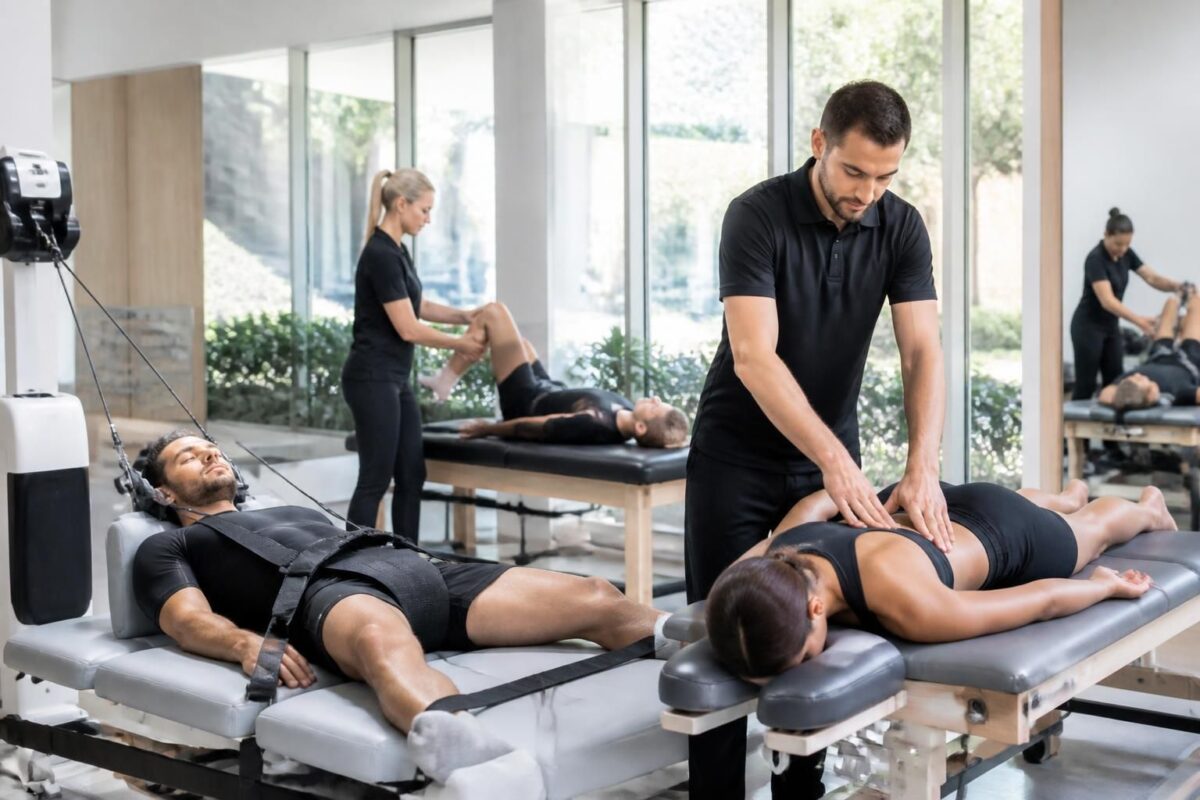
In short
In short, the Advanced Protocols in neurovertebral decompression for the athletes offer a solution non-invasive To relieve the vertebral pain and optimize the recovery and the performance sporty. Quick definition: a Controlled traction applied to the column decreases the Pressure on discs and on the gristle, promoting regeneration and better mobility. Key Benefits: pain reduction, Improving mobility, Prevention of recurrences and approach personalized thanks to a In-depth assessment and the integration of Complementary therapies such as theosteopathy and the physiotherapy. Accessible in Montreal, this protocol adapts to the condition of each athlete after sports injury or lumbar/cervical pain, for a quick return to training without surgery and without pain. |
The Advanced Protocols in neurovertebral decompression for the athletes constitute an approach non-invasive aimed at relieving column pain and optimizing the recovery and the performance. It all starts with a initial assessment complete and the development of a Custom Plan Suitable for each wound (hernias or disc bulges, etc.). The pull controlled Applied on precise segments decreases the pressure on the discs and nerves, facilitating rapid functional improvement. The approach is based on theIntegration of complementary therapies such as osteopathy and physiotherapy for a global and balanced rehabilitation of the musculoskeletal system. One Regular follow-up and adjustments make it possible to adapt the sessions to the evolution of the athlete, with effective advice from Prevention of recurrences and targeted exercises to strengthen the trunk and maintain mobility, in order to preserve and optimize the performance sporty.
This article presents the Advanced Protocols neurovertebral decompression for athletes. It describes the evaluation steps, the technologies used, and the benefits on recovery and performance. The goal is to provide an approach evidence-based and adapted to sports practice, without the need for surgery.
Initial evaluation and treatment plan
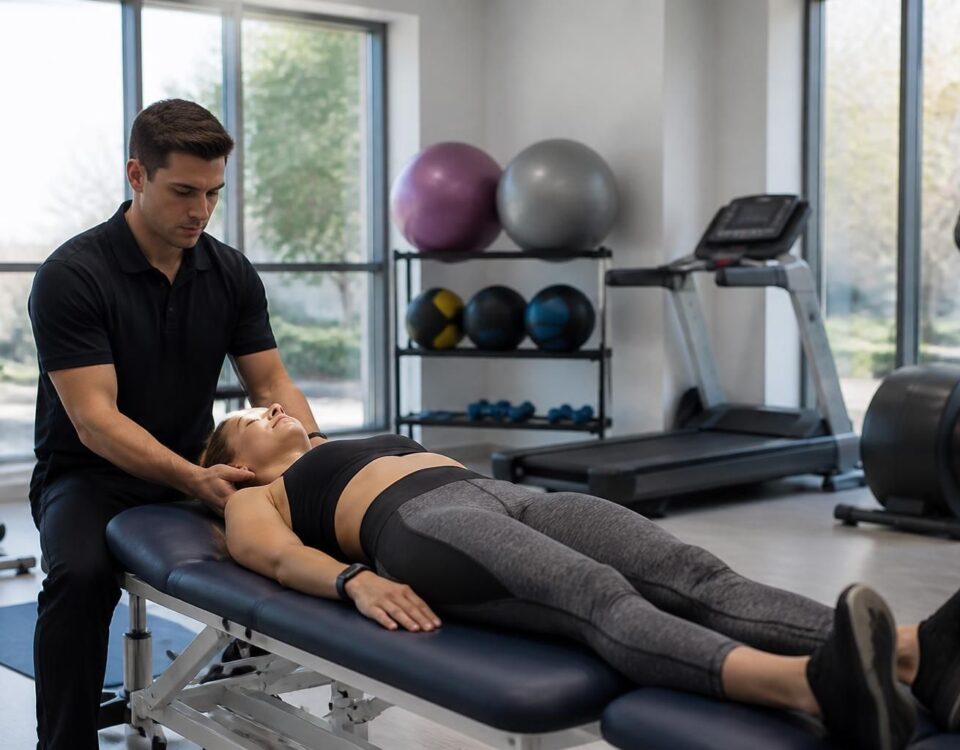
A initial assessment is performed to understand the background and current condition of the athlete. This step includes a detailed clinical examination and, if necessary, imaging examinations to address the areas to be treated. The treatment plan is then established on the basis of this information, with a gradual implementation of the appropriate sessions and traction parameters. This approach aims to create a space between the vertebrae and reduce the pressure on the discs and nerves concerned, while respecting the patient’s safety.
Technologies and protocols
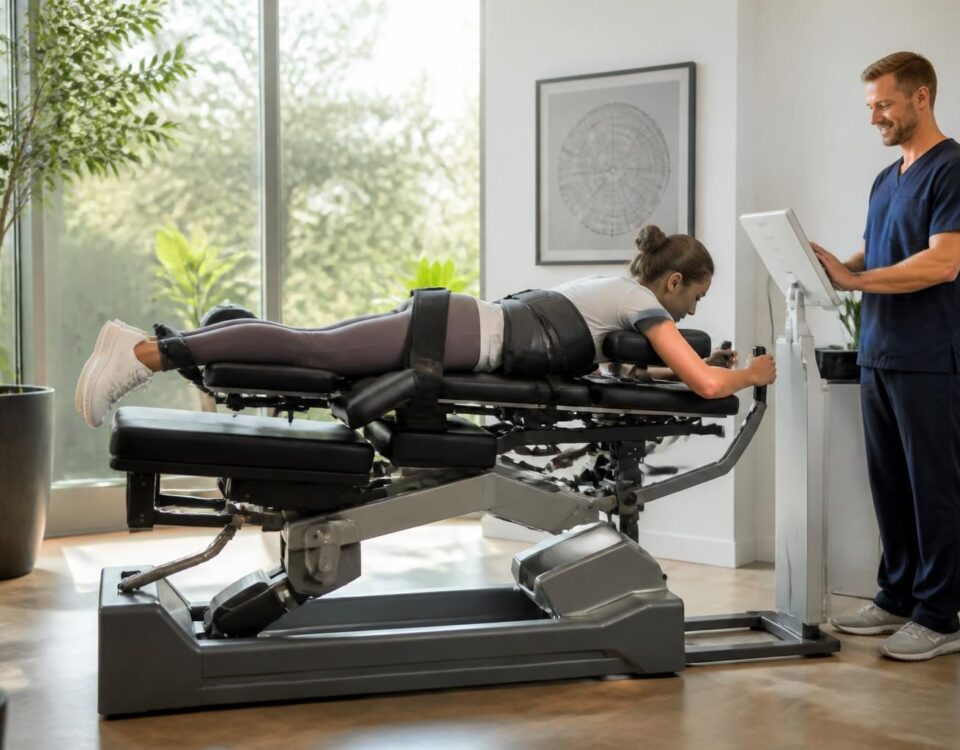
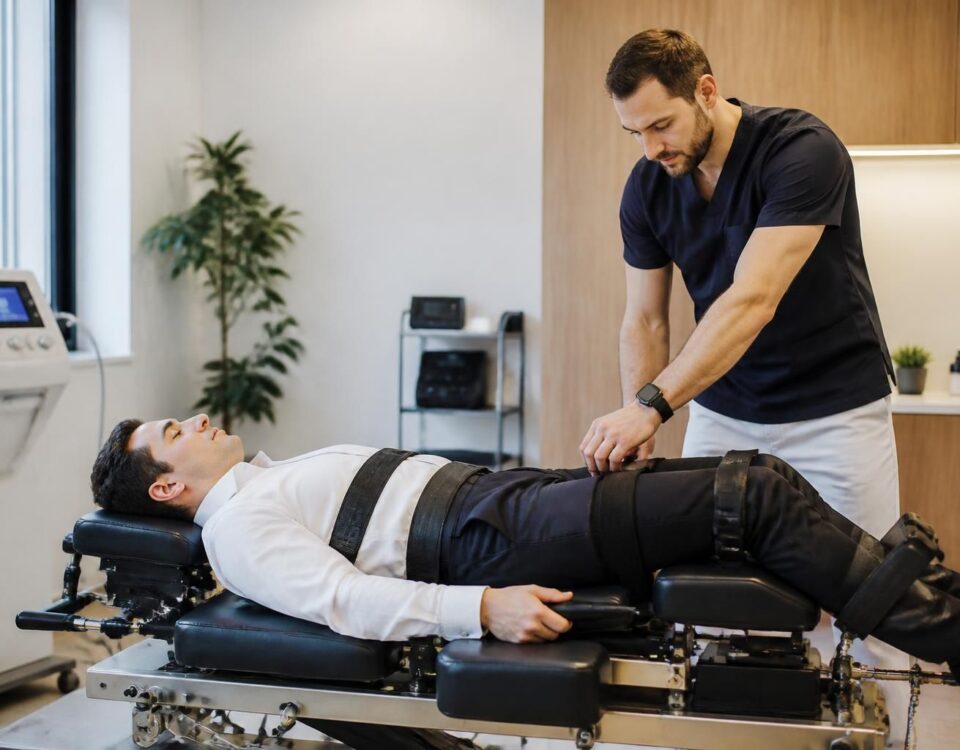
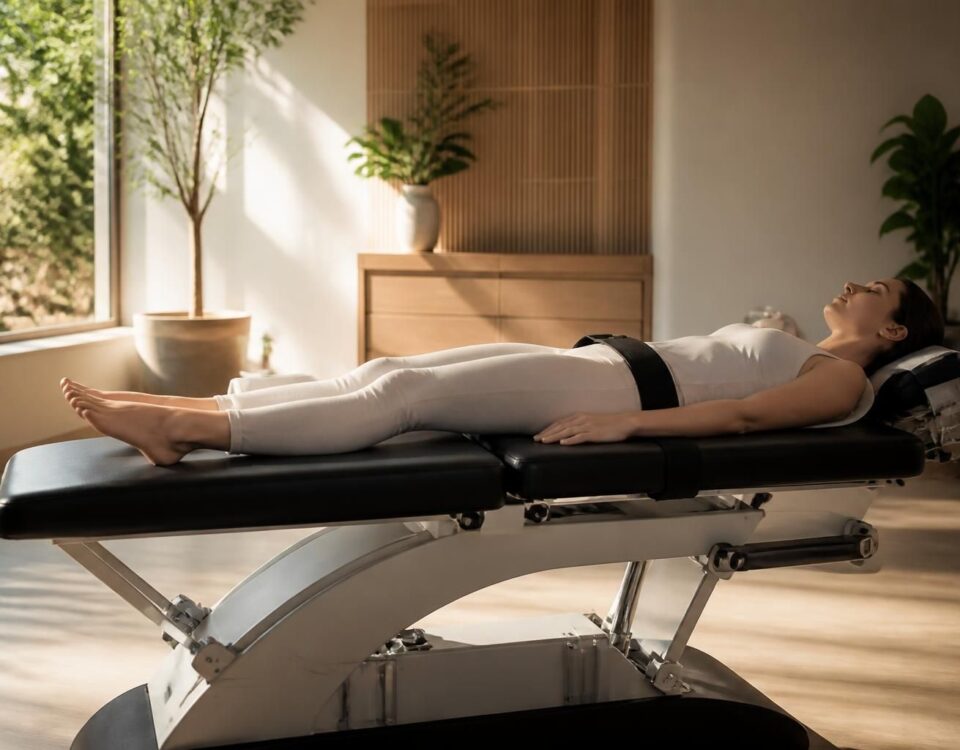
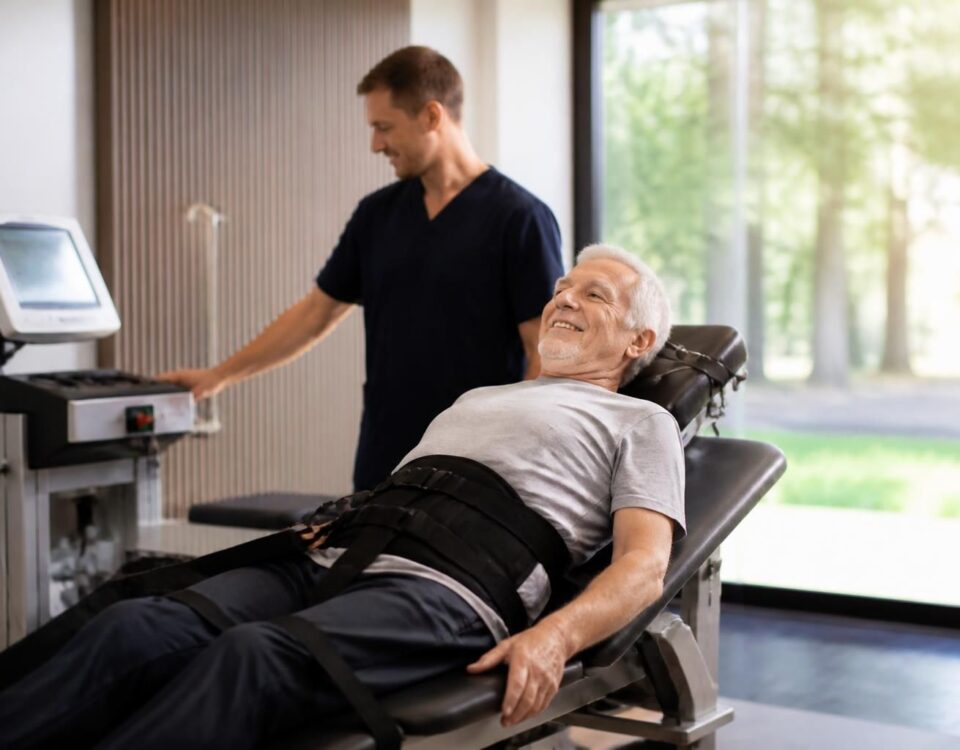
Protocols use modern devices that apply a Controlled traction on the spine. This traction is soft, targeted and adjusted according to the athlete’s response. The objective is to promote the rehydration and recovery of tissues, while preserving the comfort and tolerance of the patient. The integration of advanced technologies makes it possible to follow the reaction of the body in real time and to adjust the sessions to optimize the results.
Specialized sources emphasize the importance of a modern and precise approach in this area. To access analytics and feedback, please refer to the following resources: neurovertebral decompression and vertebral function, Modern techniques for optimal decompression results, and Neurovertebral decompression and cervical pain — natural management.
Multidisciplinary integration and follow-up
Advanced protocols are part of a Multidisciplinary approach. They frequently associate with additional physiotherapy or osteopathy interventions, in order to work on movement control, stability and overall functional recovery. Regular monitoring makes it possible to adjust the therapeutic plan according to the evolution of the symptoms and performance of the athlete. The goal is a quick recovery and a gradual resumption of training, while minimizing the risk of recurrence.
Recent studies and reviews underline the interest of integrating these protocols into a coordinated care pathway. For additional analytics, see the following resources: Sports injuries — Study of current techniques and protocols, and Neurovertebral Decompression — Current Protocols and Efficacy.
Impact on performance and recovery
neurovertebral decompression can contribute to pain reduction and an improvement in mobility. By reducing the pressure on discs and nerves, it facilitates the return to physical activity in a safe and controlled setting. Athletes often describe improvements in their endurance and ability to train over longer periods without major pain. Clinical comments and data indicate that this approach can accelerate recovery from sports-related injuries.
Security, Efficiency and Considerations
advanced protocols aim to offer an option non-surgical and low-risk to treat sports-related spinal pain. patient safety is supported by the use of a Personalized evaluation and progressive adjustments to the sessions. As with any treatment, limitations and contraindications exist, and a medical consultation remains necessary to assess the most appropriate choices.
Integration with TagMed Clinical Care
In Montreal and in the regions, advanced protocols are part of a multidisciplinary offer that favors osteopathic expertise and advanced technologies. Patients can benefit from comprehensive support, including specialized assessments and regular follow-ups, to support their recovery and athletic performance. For more information, visit the official resources: Advanced protocols to optimize neurovertebral decompression and Advanced protocols in neurovertebral decompression for athletes.
To broaden the understanding of benefits and mechanisms, additional specialized resources exist, such as Reduction of radiant back pain and Why choose neurovertebral decompression for radicular pain.
Additional links on current approaches and protocols can be viewed through the following resources: Cold Wrap Therapy in rehabilitation and Current protocols and efficiency.
To deepen, articles and guides disseminated by sources specialized in decompression and vertebral management can be consulted via the resources mentioned above and via the following areas: sossciatica.com, CliniqueTagmed.com, decompressionneurovertebrale.com, sosherniediscale.com, sosherniateddisc.com, sostunnelcarpien.com, sossciatica.com.
Additional references and resources:
– Neurovertebral decompression and support of vertebral function: sossciatica.com
– Modern techniques for optimal results: sossciatica.com
– Neurovertebral decompression and cervical pain: sossciatica.com
– Current protocols and effectiveness: decompressionneurovertebrale.com
– Advanced protocols and athletes: drdesforges.com
– Advanced protocols to optimize decompression: tagmed.ca
Medical Disclaimer: The information and advice provided on this site does not replace the health professional’s diagnosis or treatment. Please note that the content presented is not a medical consultation and does not replace a doctor’s opinion. Always consult your doctor for any medical questions. For more details, please read our full legal notice.
Nota Bene: In the context of this article, mentions relating to neurovertebral decompression, disc herniation, disc bulge, foraminal stenosis or disc degeneration are not intended to propose exercises or specific stretches. Any therapeutic recommendation is determined by the attending physician after individual patient assessment.
initial assessment — Accurate diagnosis of history and symptoms related to sports practice.
Custom Plan — Adaptation of traction parameters according to sport and level.
Controlled traction — gentle and targeted application to reduce disc pressure.
Advanced technologies — Computerized devices ensuring precision and comfort.
Multidisciplinary integration — osteopathy and physiotherapy in synergy.
Regular follow-up — Continuous reassessments and adjustments.
Security and tolerance — Low risks and pain management.
Functional rehabilitation — Trunk strengthening and mobility exercises.
Gradual return to training — Stage protocol for performance and prevention.
Prevention of recurrences — Post-treatment and vertebral lifestyle advice.
Individualization by the athlete — Dynamic adaptation according to progression and competitions.

Advanced neurovertebral decompression protocols for athletes aim to reduce pressure on intervertebral discs and nerves, promote rapid recovery and improve performance. This framework combines in-depth assessment, controlled traction and a multidisciplinary approach to deliver measurable results while keeping athletes safe.
Initial evaluation and personalized plan
Success goes through a initial assessment complete that analyzes sports history, symptoms and limitations. On this basis, the practitioner determines the areas to be targeted and develops a Custom Plan Suitable for the type of injury and the conditioning level. This early step allows you to adjust the traction parameters and the duration of the sessions according to the returns of the athlete.
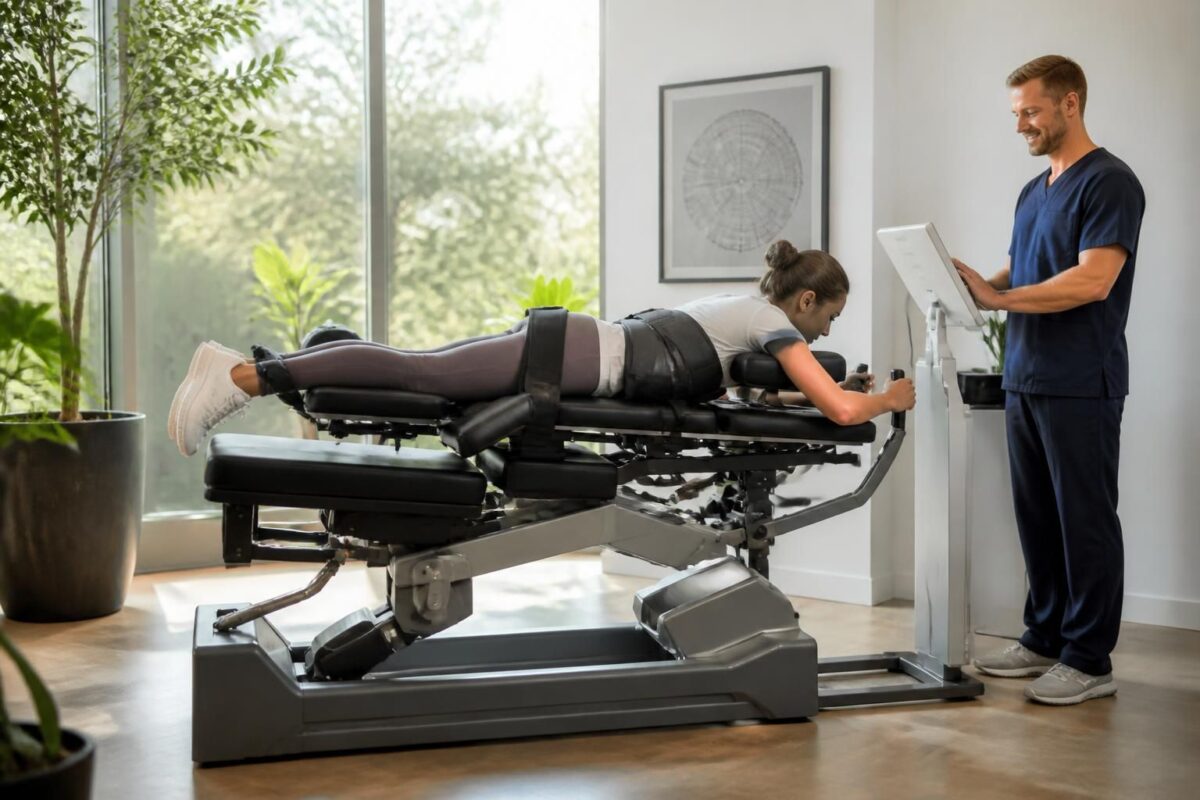
The long-term benefits of neurovertebral decompression for spinal health
In short In short, the neurovertebral decompression is a non-invasive approach that decreases the Pressure on intervertebral discs and nerves, favoring the Natural regeneration and tissue recovery. Its long-term benefits include Lasting pain reduction, Improving mobility and from the posture,…
Controlled traction and technologies used
Advanced protocols are based on a Controlled traction and precise, applied via dedicated devices and algorithms that ensure smooth and safe progress. These tools allow you to open the vertebral spaces, release pressure and improve local blood circulation. The accuracy of the settings helps to maximize efficiency while minimizing discomfort.

Neurovertebral decompression and mobility: a return to an active life
In short In short, the neurovertebral decompression is therapy non-invasive who uses a gentle traction To create a space between the vertebrae and reduce the pressure on the Intervertebral discs and the nerves. It promotes a bloodstream improved, lowers tension…
Integration of complementary therapies
To optimize the results, the protocols integrate complementary approaches such as Osteopathy and the physiotherapy. This synergy aims to correct musculoskeletal imbalances, stabilize the spine and accelerate the resumption of training. The goal is a comprehensive and lasting recovery, not just a punctual pain reduction.
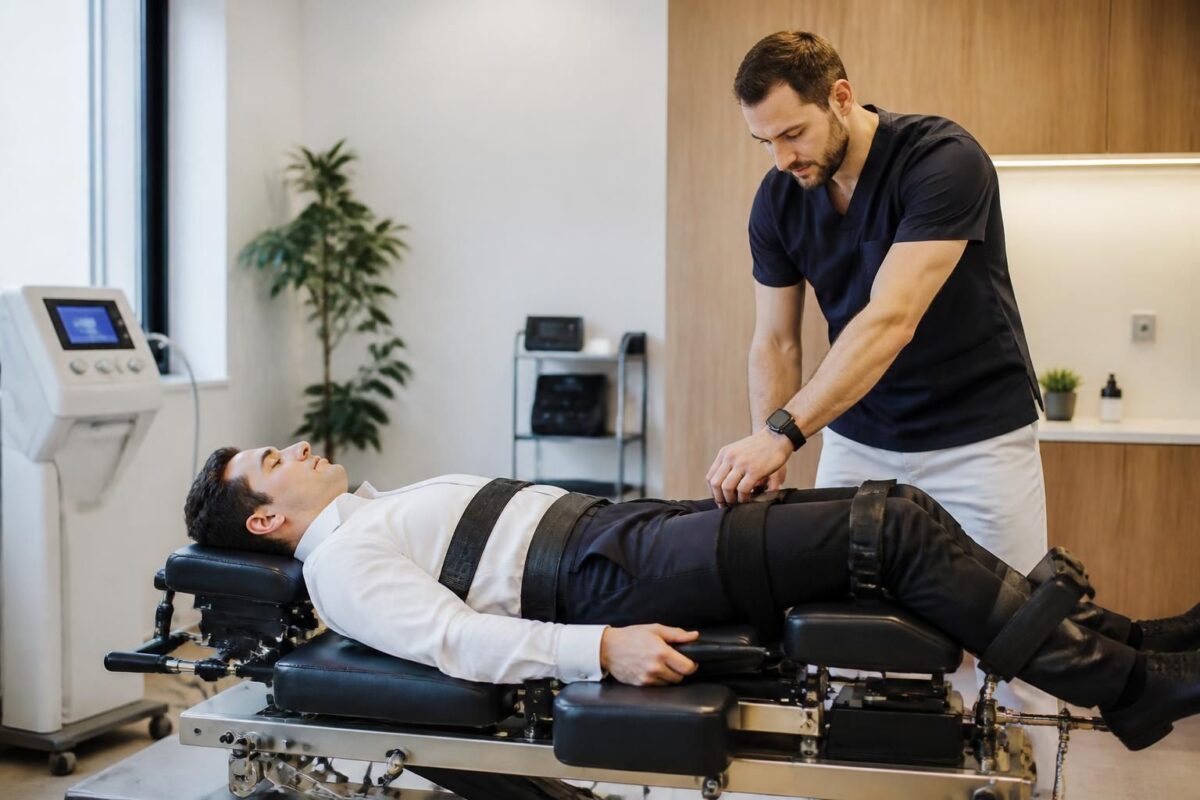
How Neurovertebral Decompression Prevents Diffuse Chronic Pain
In short decompression neurovertebral is one Non-invasive method aimed at reducing the Pressure on the intervertebral discs and the nerves, in order to prevent Diffuse chronic pain. It improves the circulation and thedisc hydration, decreases inflammation and promotes better mobility.…
Duration, frequency and progress of sessions
Each session usually lasts between 30 and 45 minutes, with a frequency Recommended 2-3 times a week at the beginning. Progress depends on athlete feedback and progress observed. Over time, workload and intensity can be adjusted to support muscle building and mobility.
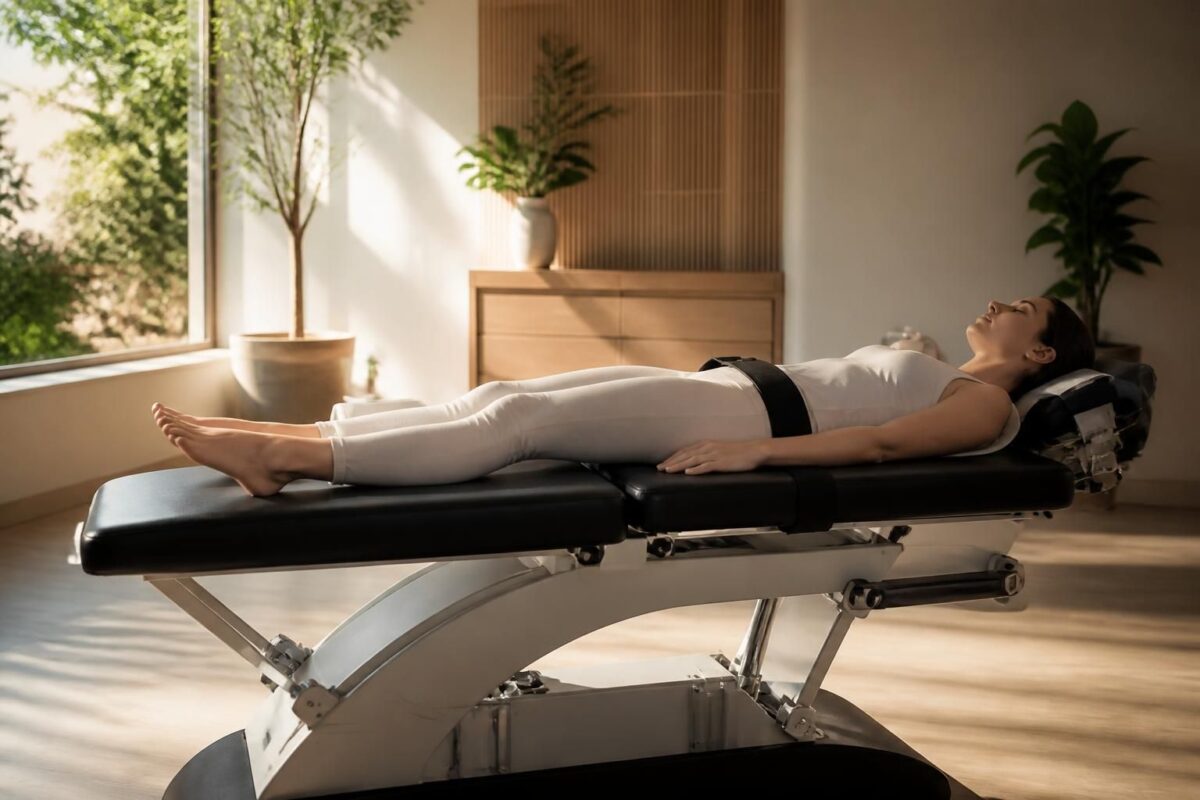
Neurovertebral Decompression and Body Alignment: Restoring Natural Balance
In short In short, neurovertebral decompression is one Non-invasive approach who restores theBody Alignment and thenatural balance back and neck. She acts by a Controlled traction of the spine to widen the intervertebral space and reduce the Pressure on discs…
Approach adapted to each sport
The protocols consider the specific requirements of each sport and periods of competition. In collaboration with coaches and therapists, plans are adjusted to preserve the mobility, promote a quick recovery after efforts and reduce the risk of recurrence. The objective is a return to optimal and lasting performance.
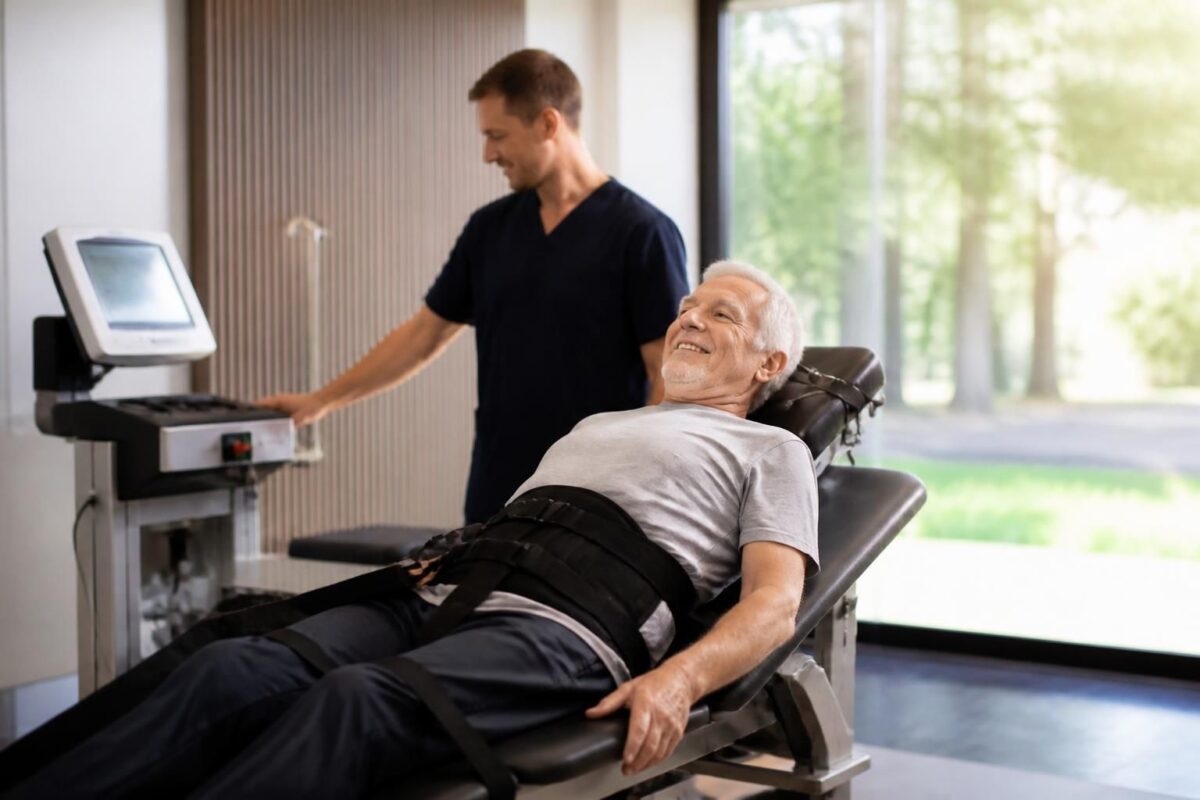
Why neurovertebral decompression is a lasting solution for active seniors
In short In short, the neurovertebral decompression is one Non-invasive therapy which sustainably relieves spinal pain in the spine active seniors By creating, by a Soft and controlled traction, a space between the vertebrae. At Montreal, it is recognized as…
Monitoring, safety and prevention
Regular monitoring assesses the impact on pain, muscle function and the sports performance. The protocols emphasize safety and prevention of recurrences through specific exercises and posture advice. This proactive approach contributes to maintaining gains and supporting the maintenance of a high level of training.
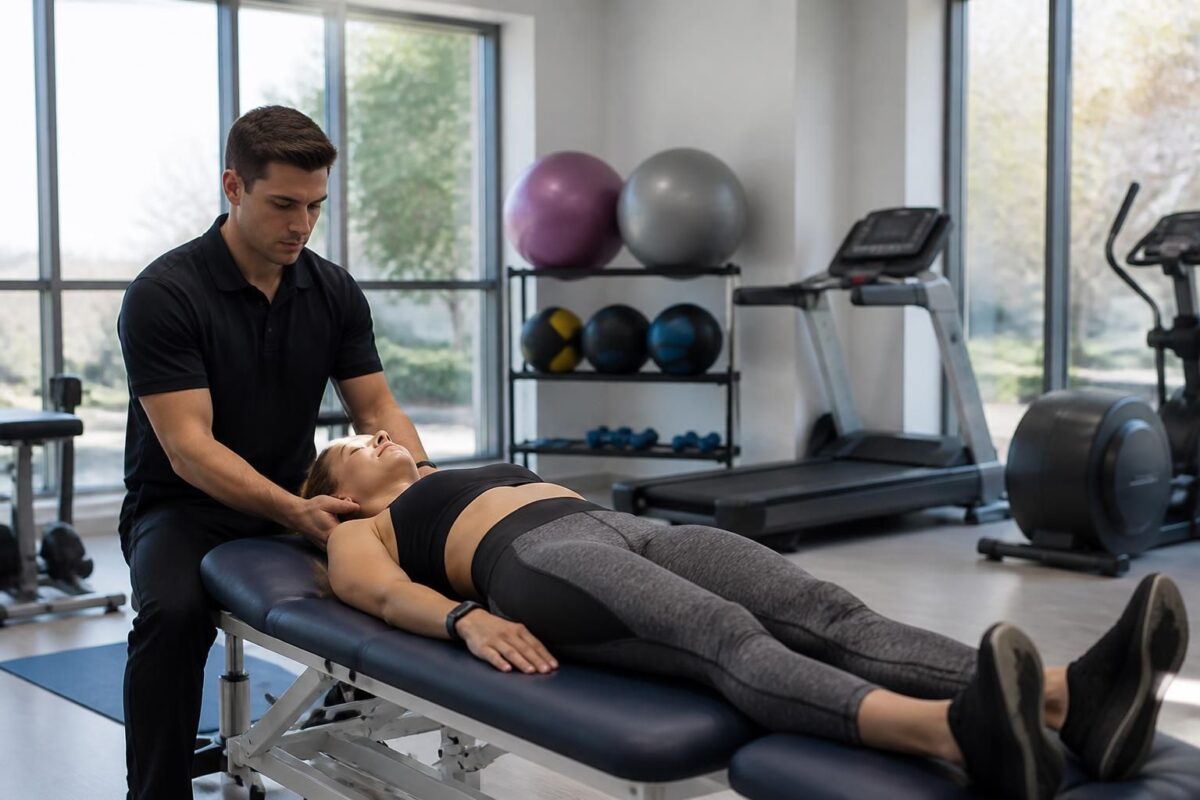
Neurovertebral decompression and recovery after severe sports injury
In short In short, the neurovertebral decompression is one Non-invasive method to Relieve the pressure on the Intervertebral discs and the gristle Via a Controlled traction, to facilitate the recovery After a severe sports injury. It improves the bloodstream towards…
Patient education and autonomy
Athletes receive clear information on the mechanisms of decompression and the habits to adopt between sessions. patient education focuses on maintaining spinal health, program adherence and integrating preventive exercise into the daily routine to prolong the benefits.
Indications and precautions
Advanced protocols are particularly suitable for herniated discs, at Disc bulges and other spinal dysfunctions in athletes. They remain non-invasive and pose little risk, while requiring rigorous evaluation and continuous treatment adaptation to ensure safety and efficacy.
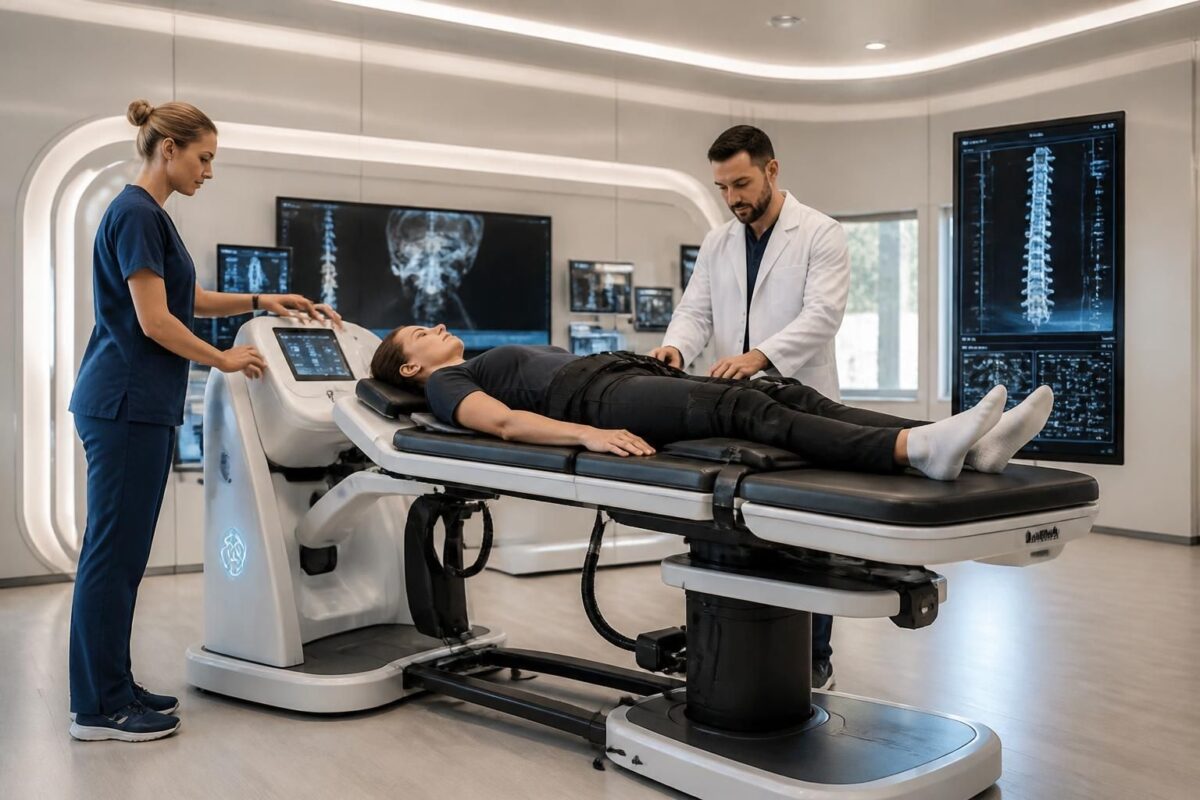
Recent innovations in neurovertebral decompression technologies
In short In short, the neurovertebral decompression is an approach non-invasive Aiming to reduce pressure on discs and nerves, and promote tissue regeneration. At Montreal, it is positioned as an effective option for lower back pain and herniated discs. The…
Advanced neurovertebral decompression protocols for athletes
| Aspect | Concise description |
|---|---|
| Pre-treatment assessment | Medical assessment and objectives of performance, history and imaging as needed to customize the protocol. |
| Controlled traction | soft traction applied to the targeted segments, adjusted according to tolerance and reply. |
| Indications Athletes | Typical indications: hernia or bulge disc, sports-related low back pain, recurrence prevention. |
| Session settings | DURATION: 30-45 minutes per session; 2-3 times per week at startup; Adjustment according to progression. |
| Technologies used | Technologies: Computerized traction and sensors, real-time monitoring for precise adjustments. |
| Multidisciplinary integration | Integration: osteopathy and physiotherapy In addition to correct the imbalances. |
| Monitoring and re-evaluations | Regular reassessments and adaptation of the plan according to symptoms and performance. |
| Performance Benefits | pain reduction, mobility improved, Accelerated recovery and quick return to training. |
| Precautions and safety | Evaluation of contraindications; Interruption in case of increased pain or weakness. |
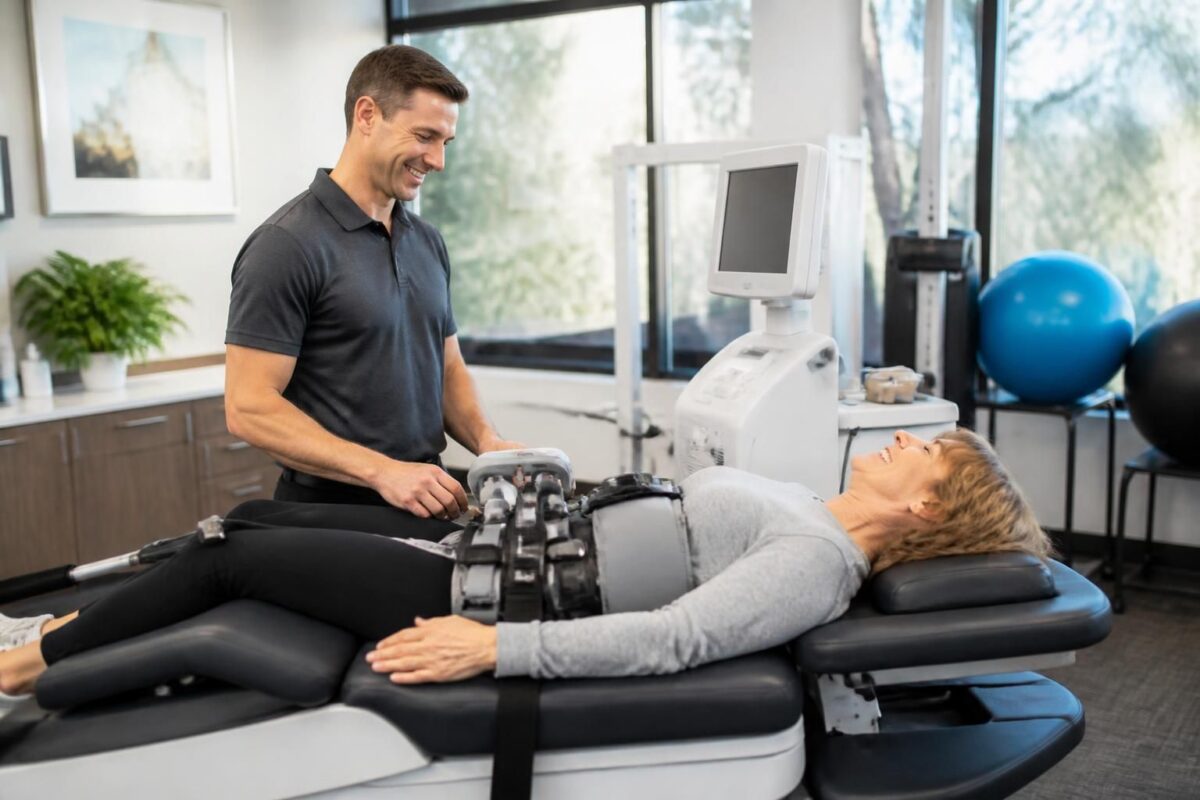
Neurovertebral decompression and diffuse pain: an appropriate solution
In short In short, the neurovertebral decompression is one Non-invasive solution For diffuse pain related to nerve irritation of the spine. She acts in Reducing pressure on intervertebral discs and nerves and improving the bloodstream, which promotes recovery and the…
Testimonials on advanced neurovertebral decompression protocols for athletes
“As a long-distance runner, I experienced years of lower back pain that slowed down my training. Thanks to Advanced Protocols of neurovertebral decompression, my pain fell and my mobility increased. personalized follow-up and Controlled traction were gentle but effective, and I found a regularity that I had not known for a long time. — Léa M., Athlete
“Former professional player, I had to face a long recovery after a disc injury. The Advanced Protocols offered me a Non-invasive solution and personalized. I felt listened to, and after a few weeks, my mobility and my Muscle resilience improved, allowing faster return to the field. — Adrien B., football player
“As a cyclist, the pressure and tension in the back slowed me down over long distances. The sessions of neurovertebral decompression with Guided traction reduced my pain and I gained in endurance. I returned to the roads with a quick recovery and better trunk stability. — Mateo D., professional cyclist
“In my practice, accuracy and mobility are essential. After episodes of cervical pain, the Advanced Protocols helped me regain full amplitude and resume intensive training earlier than expected. The mobility found and the pain reduction were phenomenal. — Natacha S., Gymnast
“I was skeptical but convinced by the results. the program of neurovertebral decompression was personalized and combined initial assessment and Additional exercises. My back calmed down, my flexibility improved, and the performance global has returned. — Lucas T., amateur triathlete
“In swimming, I had pain that limited my breathing and my technique. With the Advanced Protocols, the pain decreased and I was able to return to longer series without embarrassment. The treatment is non-invasive and focused on sustainable improvement of the vertebral health. — Chloe R., swimmer
Advanced protocols in neurovertebral decompression for athletes
Dr. Sylvain Desforges, recognized expert in osteopathy, naturopathy and manual medicine, is at the origin of the TagMed and ACMA clinics, with a vision focused on health innovation. his commitment to Non-invasive solutions and evidence-based has been particularly manifested in the development and improvement of advanced neurovertebral decompression protocols for athletes. His approach aims to optimize performance while protecting the spinal structures under intense sporting effort.
The advanced protocols it promotes are based on a comprehensive assessment of the specific needs of each athlete. After a Detailed anamnesis and, when necessary, Imaging Reviews, a personalized treatment plan is developed. The goal is to apply a Controlled traction On the vertebral segments concerned, in order to create a physiological space between the vertebrae, reduce the pressure on the intervertebral discs and release the compressed nerves. This non-invasive approach promotes quick recovery And a return to training with less pain and more functionality.
At the heart of these protocols is the elegant integration of advanced technologies and multidisciplinary know-how. Modern and computerized decompression devices make it possible to precisely adjust the intensity, duration and frequency of the sessions, ensuring comfort and efficiency during sessions parallel to sports practice. The approach is systematically interdisciplinary: osteopathy, physiotherapy and physiotherapy interact to strengthen trunk stability, improve mobility and restore muscle balance around the spine.
The therapeutic strategy is also based on complementary therapies such as laser and shockwave therapy, used in combination with decompression to optimize the pain reduction, the Tissue recovery and thefunction improvement Neuromuscular. This synergy not only alleviates the symptoms, but also to address the underlying factors that hinder performance, such as postural imbalances and chronic muscle tension.
The benefits observed in athletes are varied and significant: marked reduction in pain, improvement in mobility and of Pelvic floor functional, and acceleration of the return to competition. Regular monitoring and continuous evaluation of progress makes it possible to adjust protocols according to the evolution of symptoms and competitive objectives. Anticipation of recurrences and prevention of recurrent injuries are an essential component of the approach, with targeted strengthening exercises and post-treatment advice adapted to the rhythm and sport practiced.
In addition, Dr. Desforges’ approach is based on transparent communication and a patient’s commitment to his own spinal health. The protocols encourage active education of athletes on pain mechanisms and ways to sustainably maintain column health. This pedagogical dimension enriches support and strengthens adherence to the program, essential for optimal and lasting performance in the demanding world of professional and amateur sport.
This text offers a clear and convincing summary of the Advanced protocols in neurovertebral decompression for the athletes, highlighting the key elements that allow quick recovery, a Mobility found and an Sustainable performance improvement, without surgical recourse. He explains why this personalized approach, supported by advanced technologies, is an effective solution for sports-related injuries and Chronic pain of the spine.
The Advanced Protocols in neurovertebral decompression offer an approach personalized and non-invasive Designed to specifically target painful areas in athletes. A first step inIn-depth assessment Identifies the origins of pain and builds a Tailor-made treatment plan which adapts to the evolution of physical condition and performance. For athletes, this approach promotes rapid pain reduction and an Better mobility, while preserving the physiology of discs and nerves.
The pull controlled and the use of Modern technologies constitute the heart of the therapeutic device. They make it possible to open the intervertebral spaces, to reduce the pressure on the discs and nerves, and to optimize blood circulation to the affected tissues. To deepen these mechanisms and the benefits, you can consult the dedicated resources, including the approaches described in Advanced protocols for patients with neurovertebral decompression.
An essential component is integration multidisciplinary which combines osteopathy, physiotherapy and rehabilitation technologies to ensure a Overall recovery and sustainable. This holistic approach not only maximizes the tissue healing, but also the Prevention of recurrences and optimization of sports performance. To understand how these collaborations are set up and what benefits they bring, refer to the analyzes and examples present in the specialized resources.
The Regular follow-up and the adjustments Adapt the protocol to the returns of the athlete and the evolution of his performance. This re-evaluation rate guarantees sustained efficacy over time and continuous adaptation of the therapeutic plan, depending on training loads and future competitions. resources like those dedicated to Mobility and flexibility illustrate the importance of this follow-up.
Finally, athlete education and prevention councils play a key role. Informing about good post-treatment practices, integrating appropriate reinforcement exercises and adopting an adapted lifestyle make it possible to prolong the benefits and reduce the risk of relapse. You can find relevant elements on prevention and recovery approaches in resources dedicated to neurovertebral decompression and long-term vertebral injury prevention, such as Prevention of long-term spinal lesions.
To enrich your knowledge, explore the information relating to the evolution of protocols and their specific applications in athletes through the additional resources offered, in particular the publications and case studies available on the dedicated sites.

Dr Sylvain Desforges, B.Sc., D.O., N.D., osteopath, is the founding president of TAGMED and of the ACMA association. He dedicates his practice to chronic spinal pain, low back pain and symptoms compatible with sciatica, particularly when pain radiates toward the buttock, leg, calf, foot or toes.
Through SOS Sciatique, he publishes educational content on sciatica symptoms, possible causes such as disc herniation, disc narrowing, foraminal stenosis or irritation of a lumbar nerve root, as well as non-surgical approaches that may be considered according to the evaluation. At Clinique TAGMED, care may include, depending on the case, motorized neurovertebral decompression, specific osteopathic care or precision percussion.
For an evaluation related to sciatica treatment in Montreal / Mount Royal or sciatica treatment in Terrebonne, please consult the services available at Clinique TAGMED.
Medical disclaimer
The information published on SOS Sciatique is provided for educational purposes only and does not replace a consultation, diagnosis, opinion or treatment provided by a physician or another authorized healthcare professional. The author of this article is neither a medical doctor nor a specialist in a medical specialty recognized by the Collège des médecins du Québec. The osteopathic, manual medicine or functional support approaches described on this site do not constitute medical acts and are not intended to replace medical follow-up.
Consult a physician or emergency service in cases of loss of bladder or bowel control, anesthesia in the saddle area, significant or progressive weakness in the leg or foot, fever, recent trauma, severe pain or rapid worsening of symptoms. For more details, please read our Legal Notice.