Osteopathic manipulations to treat elbow pain
29/06/2026
The benefits of osteopathy to improve sports performance
29/06/2026
In short
| In short, theosteopathy and the Diffuse muscle pain constitute a Personalized approach who considers the body as a whole and attacks Functional causes rather than just pain. What is it? It’s a Manual therapy using Manual techniques targeted to release tensions and restore mobility. What are the advantages? pain reduction, Improving mobility, Prevention of recurrences and an approach without medication. How does it work? A Overall assessment Identifies restriction areas, then Adapted techniques (articular, fascial and tissue) are applied, with practical advice forlifestyle and physical activity. Local accessibility : Available in Montreal and in your region, to help you quickly regain your comfort and mobility on a daily basis. |
As part of Diffuse muscle pain, Losteopathy offers a Personalized approach which considers the body as a whole. It favors the identification of root causes rather than the simple relief of symptoms, in order to act on the mechanisms that maintain pain, in particular muscle tension, postures and stress.
During a consultation, the osteopath performs a Overall assessment mobility and tone, then uses appropriate techniques to restore balance and improve circulation and innervation. Common methods include Joint manipulations and the Myofascial release, supplemented by targeted stretching.
- A Overall assessment body and lifestyle factors that influence pain.
- Techniques manuals adapted, including Joint manipulations and the Myofascial release.
- One Custom Plan To improve the mobility, reduce pain and prevent recurrences.
To benefit from a Personalized approach And regain comfort and movement on a daily basis, consider an osteopathic consultation adapted to your situation.
This article describes how Osteopathy can relieve the Diffuse muscle pain thanks to a Personalized approach which takes into account the body as a whole. We explain the possible causes, the techniques used and the expected benefits, as well as the advice to optimize the results between the sessions.
Understand diffuse muscle pain
Diffuse muscle pain affects many people. They can be linked to chronic tensions, contractures or postural tensions. Osteopathy considers the body as a whole and looks for dysfunctions that fuel pain, beyond isolated symptoms.
How osteopathy acts on these pains
The osteopathic approach aims to restore the balance of muscular and joint structures using techniques textbooks adapted. The practitioner analyzes joint mobility, muscle tension and relationships between physical and visceral systems. He can use techniques such as Joint manipulations, the Myofascial release and gentle mobilizations to promote circulation, improve innervation and reduce tensions.
To understand how osteopathy can act on the diffuse pain and the stress that accompanies them, you can consult specialized resources on Link dedicated to stress and osteopathy.
Why choose a Personalized approach in osteopathy
Each patient is unique. The osteopath takes into account history, lifestyle, posture and symptoms to define a personalized treatment plan. This approach aims to address root causes and prevent recurrences. It can be associated with advice on lifestyle and preventive measures adapted to your daily life.
Additional resources explore how osteopathy can reduce diffuse pain and promote overall recovery. To learn more about general mechanisms, see the resources associated with conservative osteopathic approaches on the portal Neuropathic pain.
Typical session
A session begins with an interview and the study of your background. The practitioner observes your posture, assesses mobility and identifies areas of tension. The treatment aims to release tense areas, improve irrigation and optimize innervation. The choice of techniques depends on your profile and your needs.
As part of a global approach, the osteopath can offer advice to reduce aggravating factors and support recovery between sessions. To understand the impact of osteopathy on diffuse pain, see the general resources mentioned below.
The role of the patient between sessions
Between sessions, good hydration and healthy lifestyles support the results. Adapting your workstation and taking regular breaks can help preserve the gains obtained during the sessions. Simple mobilization strategies and adapted routines can facilitate the return to normal activity without pain.
Prevention and follow-up
Regular follow-up can help prevent recurrences and adjust the support according to the evolution of your condition. Osteopathy aims not only to relieve symptoms, but also to restore body balance and improve quality of life in the long term.
Comparative table: Physiotherapy vs osteopathy
| Therapy | Effectiveness on diffuse muscle pain | |
|---|---|---|
| osteopathy | often effective in the short and medium term | Global approach, adapted to each patient, aims at the root causes. |
| Physiotherapy | Variable efficiency; May be less suitable for diffuse pain without precise lesion | Often useful for targeted rehabilitation after injury, but may require other approaches for diffuse tensions. |
| physiotherapy | Can help in reinforcement and rehabilitation | Uses appropriate exercises and movement programs. |
To deepen the different aspects of osteopathy and muscle pain, you can consult specialized resources on Appropriate support and on Resources released (Note that some external content may be presented for informational purposes and do not replace an individual consultation).
FAQ
1. Is osteopathy suitable for diffuse muscle pain? Yes I do. It makes it possible to identify the underlying causes and to provide lasting relief without systematically resorting to drugs.
2. How many sessions do you need? It depends on chronicity and origin. On average, 1 to 3 sessions for acute pain and 4 to 6 sessions for chronic pain. Preventive monitoring can be considered 2 to 4 times a year.
3. Are there any contraindications? Osteopathy has few contraindications, but the osteopath will adapt the techniques to your profile. In the event of a recent fracture, active infection or undiagnosed serious pathology, medical advice is necessary.
4. What trainings are associated with osteopathy? Professionals train in particular with NUMSS, NAO, National University of Medical Sciences and National Academy of osteopathy. These establishments provide recognized training for osteopaths.
For more information on osteopathy, you can consult resources dedicated to osteopathy and the management of diffuse muscle pain at the following sites:
Osteopathy and stress,
Neuropathic pain,
and Tagmed Clinic For examples of practical support.
Medical disclaimer
Medical Disclaimer: The information and advice provided on this site does not replace the health professional’s diagnosis or treatment. Please note that Dr. Sylvain Desforges osteopath is neither a doctor of medicine nor a doctor, and is not a specialist in a medical specialty as defined by the Collège des Médecins du Québec. Manual medicine, functional medicine and sports medicine as described on this site exclude any medical treatment or diagnosis made by a doctor or specialist doctor. Always consult your doctor for any medical questions. For more details, please read our full legal notice.
For additional information on neurovertebral decompression and other related approaches, you can consult articles and resources dedicated to decompression and disc pathologies on authorized sites, including neurovertebral decompression or herniated disc and osteopathy.
- Diagnosis holistic and personalized to identify the causes.
- IDENTIFICATION OF root causes and triggers.
- Osteopathic techniques targeted and sweet adapted.
- Improvement of the mobility and from the circulation muscular.
- Program personalized aligned with your activity (sport, work).
- Approach non-invasive and secure, without drugs.
- Effect on pain: reduction and Improvement of amplitude.
- enhanced autonomy thanks to Exercises at home.
- Monitoring structured and regular adjustments.
- Possible collaboration with other professionals if necessary.
- Prevention plan and postural advice to integrate on a daily basis.
- Recommended frequency: 2 to 4 sessions per year For support.

This summary presents how Osteopathy can address Diffuse muscle pain by a Personalized approach, centered on the body as a whole. It recalls the possible mechanisms, the techniques used and the practical advice to optimize the results between the sessions.
A personalized approach: why it is essential
In osteopathy, each patient is seen as a living system where muscles, fascias, joints and nerves interact. A Overall assessment Allows you to identify the origins of the pain and offer a treatment adapted to your posture, your daily gestures and your activities. This customization aims not only to relieve, but also to prevent recurrences by rebalancing musculoskeletal chains and their interactions with digestive, cardio-respiratory and nervous systems.

How osteopathy improves the quality of life of active people
In short In short, theosteopathy is a global approach that Optimizes mobility and the function of the body of ACTIVE PEOPLE, for a better quality of life. It helps prevent injury and reduce Musculoskeletal pain While promoting the Sports recovery.…
Types of pain and intervention objectives
Pain without anatomical lesion
The vast majority of cases concern contractures, of aches or postural tension. The osteopathic objective is to release tension, promote blood flow and muscle recovery, and gradually improve mobility. The first effects can appear from the first sessions, with an increased feeling of relaxation.
pain with minor lesion
In some cases, repeated micro-tears or overloads exist. The approach remains gradual and targeted, favoring gentle techniques that preserve function and promote healing while minimizing the risk of post-session pain. The work extends over several weeks and is accompanied by adapted rehabilitation exercises.

Osteopathy and sports recovery: prepare the body for lasting performance
In short In short, Osteopathy and Sports recovery is one Global manual approach that sustainably prepares the body for the effort by restoring mobility and circulation After the effort. It is a discipline that acts on the sinews, the joints,…
key techniques and their benefits
The Osteopathic techniques mobilize the structures in a way non-invasive and personalized. The Joint manipulations restore joint mobility, Myofascial release releases the tensions of the fascias and the muscle relaxation is obtained by gentle and targeted maneuvers. When necessary, Visceral techniques or posturals complete the device. The objective is to improve circulation, innervation and efficiency of the muscles, while respecting the biological rhythm of the patient.
Why Osteopathy Is Essential For Recovery People
In short In short, Osteopathy in convalescence is an approach manual and holistic which helps to accelerate the recovery by restoring The balance, the mobility and a good circulation fabrics. it contributes to Reduce the pain, support the Back to…
Treatment plan and follow-up
The therapist begins with a Personalized report and the development of an appropriate therapeutic path. The number of sessions depends on chronicity and response to treatment, but one or two sessions may be sufficient in acute episodes, while chronic pain requires support over several weeks with regular reassessments to adjust the plan.

Osteopathic manipulations to strengthen post-traumatic muscles
In short In short, Osteopathic manipulations for Strengthen post-traumatic muscles constitute a gentle manual approach aimed at restoring the mobility, reduce the pain and facilitate the Functional rehabilitation After a injury. What is Is it? A series of precise gestures…
Between sessions: practical tips to optimize results
To extend the benefits, practice sessions ofself-massage And some stretches Simple but regular, according to your osteopath’s indications. Adopt a Adapted posture at work and plan active breaks every 2–3 hours to reduce tension. Hold a lifestyle Healthy: progressive physical activity, sufficient hydration and restful sleep. Finally, choose a Adapted physical activity in order to sustainably strengthen stability and mobility.

Osteopathy and prevention of work-related musculoskeletal disorders
In short theosteopathy is one Manual approach that restores body balance and prevents MSD related to work. Its advantages: reduction of tension, improvement of mobility and prevention of chronic pain. She is preventive and healing, suitable for office and trades…
Quick FAQs
Q: Theosteopathy Is it effective for diffuse pain?
A: Yes, it targets causes and symptoms with appropriate and progressive techniques.
| Aspect | Description |
|---|---|
| Approach | holistic Aiming the cause and balance of the body, not just the symptoms. |
| Objective | Restore theMusculoskeletal balance and prevent recurrences. |
| Types of pain | Contractures, aches and postural tensions, with or without injury as appropriate. |
| Key Techniques | joint manipulations, Myofascial release, stretching and contracted-released. |
| Benefits | Relief natural, regained mobility, prevention of recurrences, without long-term side effects. |
| Evaluation | Analysis of mobility, posture, history and habits to personalize the treatment. |
| between sessions | self-massage and targeted stretching, lifestyle advice and posture at work. |
| When to consult | persistent pain > 48H, recurrent pain or limitation of daily gestures. |
| Security and cost | Approach safe with few contraindications; reimbursement depends on the mutual insurance contract. |

The benefits of osteopathy to treat muscle imbalances
In short theosteopathy is a manual approach to restore themuscle harmony and postural considering the body as a whole. Its main benefits include the reduction of aches and tensions, the improvement of the mobility and from the posture, and prevention…
Testimonials: Osteopathy and diffuse muscle pain — a personalized approach
“Before discovering theosteopathy, my Diffuse muscle pain looped and blocked me in my daily activities. Since I started a Personalized approach, each session is adapted to my body and my sensations of the moment, which allowed me to find real mobility and less stiffness. »
“I work in front of a screen all day and the tensions accumulated in the neck and back. The osteopath identified postural imbalances and guided me to simple and effective exercises. Result: a Mobility found and better sleep thanks to a lasting reduction in tension. »
“My diffuse pain was manifested especially after exercise or stress. With a Global approach And targeted techniques, I felt a real muscle relaxation and a decrease in local inflammation, which changed my relationship with my body. »
“I was skeptical at first, but the clear explanations and practical advice were decisive. Between the sessions, I learned to do self-massages and stretches adapted to my muscles. This Prevention of recurrences Has become a habit that allows me to continue my activities without fear. »
“As an amateur athlete, I was looking for a natural solution for my diffuse pain related to stress and training overload. The osteopathic intervention, personalized and progressive, not only calmed the pain but also improved my recovery and my overall performance. »
“I appreciated the balance between manual techniques and daily life advice. theosteopathy helped me understand the mechanisms of my pain and act on the root causes rather than just masking the symptoms. My ability to sit, get up and move has improved significantly. »
“My diffuse pain was associated with chronic fatigue. thanks to a Personalized approach, each session targeted a different area and my overall posture improved. I feel more energetic on a daily basis and able to chain my activities without permanent tension. »
Dr. Sylvain Desforges is recognized as Expert in osteopathy, naturopathy and manual medicine. At the head of Cliniques TagMed and the ACMA association, he has a vision centered on health innovation and on care adapted to diffuse muscle pain. His practice is part of an approach holistic: Treat not only the symptoms, but also the root causes that disrupt muscle function and daily posture.
In his approach, he highlights an approach personalized and based on evidence. Faced with diffuse muscle pain, he favors a global assessment of the patient, which goes beyond a simple local examination. Each session is based on the identification of triggering factors — stress, sedentary lifestyle, postural over-solicitation, bodily imbalances — and on understanding the interactions between musculoskeletal, digestive and cardio-respiratory systems. This method aims to restore a lasting balance rather than mask the symptoms.
The field of action of osteopathy for diffuse muscle pain includes responses adapted to different profiles. For pain without obvious lesion, contractures and postural tension, the approach favors gentle and targeted techniques that release tense areas and improve muscle elasticity. In the presence of more complex dysfunctions, the osteopath uses a combination of techniques, including work on the fascias, joint mobilizations and tissue mobility reports. The objective is to optimize innervation and local vascularization while rebalancing the muscle and postural chains.
To support the results in the office, Dr. Desforges integrates complementary technologies and methods, when relevant and adapted to each patient. Among the options used, there are non-invasive approaches intended to support muscle relaxation and recovery, as well as tools intended to improve decompression and circulation, always in compliance with natural healing mechanisms. This reasoned use of modern tools makes it possible to amplify the effects of manipulations and to offer measurable progress in the reduction of pain and the improvement of mobility.
Communication and patient education are key elements of his practice. Dr. Desforges explains the possible causes of diffuse muscle pain and offers concrete advice to improve self-management: adaptation of ergonomics to work, regular active breaks, hydration, and simple mobilization and stretching exercises adapted to everyone’s lifestyle. At the same time, it encourages the gradual return to physical activity and the prevention of recurrences, in order to maintain the gains obtained during the sessions.
This approach personalized and integrated Makes osteopathy a relevant option for active people, sedentary workers and seniors facing diffuse muscle pain. It offers a natural way to regain comfort, mobility and quality of life, relying on a relationship of trust between the practitioner and the patient and on a care plan adapted to the evolution of the physical state and personal objectives.
This sheet summarizes how theosteopathy can respond effectively to Diffuse muscle pain thanks to a Personalized approach, identifying root causes and favoring gentle manual techniques to improve the mobility and prevent recurrences. You will discover the mechanisms of action, the indications and practical advice to optimize the results between the sessions, with reliable resources to deepen your approach.
Osteopathy and chronic leg pain: regaining an optimal quality of life
In short In short, Osteopathy is one Global manual approach aimed at reducing Chronic leg pain and improve the quality of life. What is it? Non-drug therapy using the hands to identify restrictions and treat lesional chains. How does it…
What does osteopathy bring to diffuse muscle pain
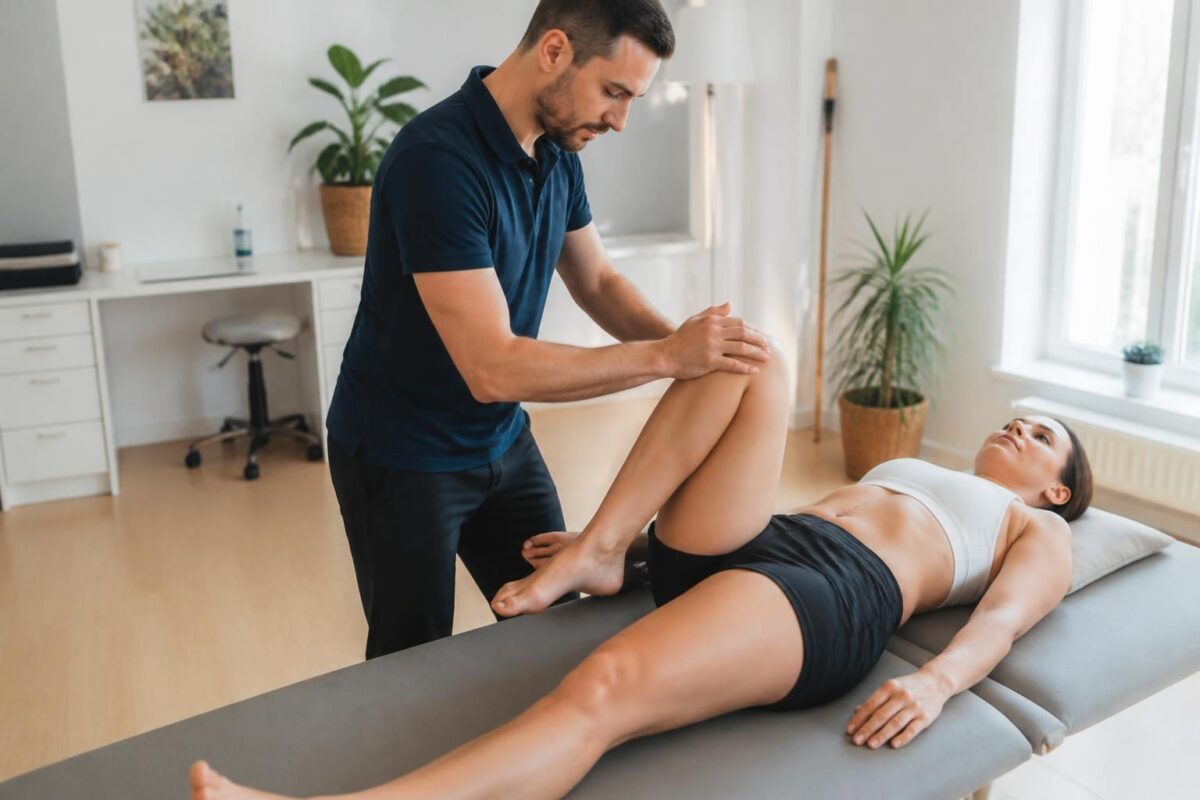
The Diffuse muscle pain can affect many people and manifest themselves even without a clear anatomical lesion. theosteopathy Proposes a global approach that targets underlying causes, such as fascial tension, postural imbalances and stress, rather than limiting yourself to relieving symptoms. thanks to appropriate techniques and Custom, the osteopath acts on the musculoskeletal chains to reduce pain and preserve the mobility and quality of life on a daily basis.
How osteopathy supports recovery after complex surgery
In short In short, Post-operative osteopathy is an approach fresh which supports the recovery After a Complex surgery. It helps to reduce the pain and the fatigue, improves the mobility and accelerates the healing thanks to a better vascularization and…
Personalized approach and mechanisms of action
Each consultation is based on a Overall assessment of the body, where the practitioner seeks the interrelationships between structures and functions. The treatment plan is custom designed and can combine Joint manipulations, from the Myofascial release And some stretches targeted. The objective is to release tensions, improve innervation and optimize the vascularization local while taking into account influential systems such as the digestive, cardio-respiratory system and postural tensions. To deepen, consult resources that summarize these mechanisms and the benefits of OST on pain and physical function, such as this guide and recent analyzes on the efficacy of OST in chronic pain on Healthlog.
When to consult and what to expect
consult a osteopath is relevant in case of muscle pain that persists after 48 hours, stress-related tensions or recurrent postural disorders. In the short term, some people experience improvement after 1 to 3 sessions; In the medium term, better posture, regained mobility and better quality sleep may appear. For data-based perspectives, explore resources and news on osteopathy and chronic pain via Healthlog and associated publications.
What to do between sessions and practical advice
To amplify the effects between appointments, favor simple and regular gestures: self-massage targeted, stretches adapted and coordinated physical activity, while adopting a lifestyle Favorable (sufficient hydration, balanced diet and regular breaks at work). These elements support recovery and prevention of future tensions. To enrich your approach, discover how osteopathy supports recovery after a sprain or after a fracture and how it acts on chronic back and limb pain via the dedicated resources opposite.
Examples of useful readings and resources: How osteopathy supports recovery after a sprain, How osteopathy acts on chronic back pain, and A holistic approach to pain relief.
To enrich your understanding, you can also consult Practical advice to relieve diffuse pain and specific resources dedicated to limb pain and recovery after injury, such as Action on diffuse limb pain.
Resources and references
To deepen mechanisms, effectiveness and practical approaches, here are some useful resources: Overall osteopathic diagnosis, Reduced drug dependence, Recovery after sprain, Effective approach in musculoskeletal disorders, Latest scientific data, Fracture recovery, and Chronic back pain.
To go further in exploring the mechanisms and clinical results, follow the additional resources and the references cited in these pages and in the platforms dedicated to osteopathy and the management of diffuse muscle pain.

Dr Sylvain Desforges, B.Sc., D.O., N.D., osteopath, is the founding president of TAGMED and of the ACMA association. He dedicates his practice to chronic spinal pain, low back pain and symptoms compatible with sciatica, particularly when pain radiates toward the buttock, leg, calf, foot or toes.
Through SOS Sciatique, he publishes educational content on sciatica symptoms, possible causes such as disc herniation, disc narrowing, foraminal stenosis or irritation of a lumbar nerve root, as well as non-surgical approaches that may be considered according to the evaluation. At Clinique TAGMED, care may include, depending on the case, motorized neurovertebral decompression, specific osteopathic care or precision percussion.
For an evaluation related to sciatica treatment in Montreal / Mount Royal or sciatica treatment in Terrebonne, please consult the services available at Clinique TAGMED.
Medical disclaimer
The information published on SOS Sciatique is provided for educational purposes only and does not replace a consultation, diagnosis, opinion or treatment provided by a physician or another authorized healthcare professional. The author of this article is neither a medical doctor nor a specialist in a medical specialty recognized by the Collège des médecins du Québec. The osteopathic, manual medicine or functional support approaches described on this site do not constitute medical acts and are not intended to replace medical follow-up.
Consult a physician or emergency service in cases of loss of bladder or bowel control, anesthesia in the saddle area, significant or progressive weakness in the leg or foot, fever, recent trauma, severe pain or rapid worsening of symptoms. For more details, please read our Legal Notice.