Osteopathic approaches to treat neuropathic pain
28/06/2026
Osteopathic techniques to prevent postural disorders
28/06/2026
In short
In short, theSport osteopathy is a manual and holistic approach that optimizes the Sports recovery and strengthens the resilience of the body. it can reduce the Post-effort pain (DOMS), Improve the circulation and the mobility, prevent injuries and promote a better sleep. It integrates with muscle building, stretching and active rest, as part of a global program. Accessible in a local sports clinic, particularly in Montreal, this service is particularly useful for recovery after exercise and the prevention of biomechanical imbalances. |
theSport osteopathy is an effective lever to strengthen the resilience of the body and improve the recovery After the effort.
She acts in a way overall By working on the tensions, the circulation and muscle coordination to support repair mechanisms, while integrating into a recovery program including sleep and nutrition.
The direct performance benefits remain modest depending on the studies, but indirect effects, such as better recovery and pain reduction, are regularly observed.
To optimize the results, sports osteopathy must be personalized and used in addition to a balanced training plan.
This article explains how theosteopathy can promote the Sports recovery and strengthen the resilience of the body. It describes the mechanisms of action, summarizes the results of the studies and proposes an integrated and personalized approach to optimize recovery after exercise, without recommending specific exercises for disc pathologies.
Role and objectives
The goal of osteopathy in recovery is to improve mobility and coordination of the body, while supporting natural mechanisms of repair after exercise. It aims to reduce residual tension, promote better circulation and support a posture adapted to return to training. This approach is part of a global perspective that favors functional balance and the prevention of imbalances.
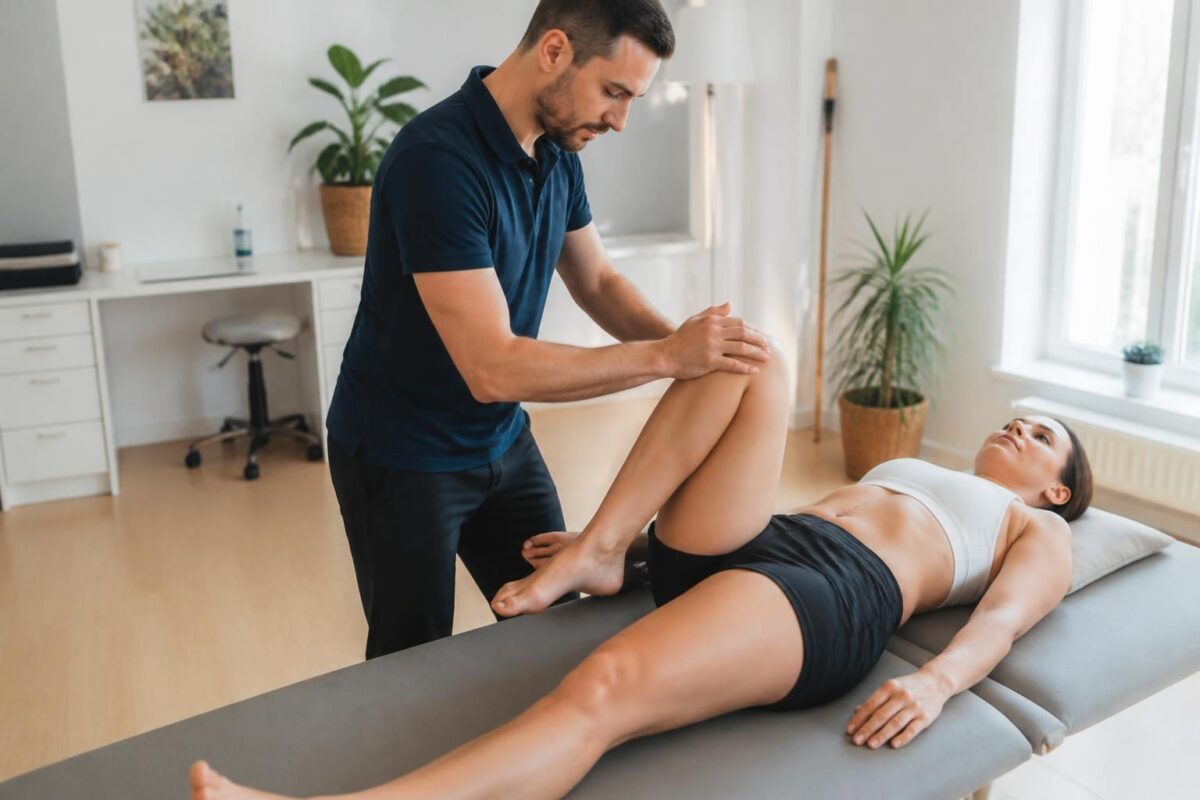
In practice, sport osteopathy is based on gentle mobilizations, myofascial techniques and, when relevant, on manual lymphatic drainage. These gestures are part of a personalized care pathway in connection with other recovery resources.
How osteopathy acts on recovery
Osteopathic action aims to free up mobility restrictions and support the muscle and joint chains involved in performance. It can contribute to:
– Improve local circulation and drainage of post-effort toxins,
– promote better muscle elasticity and a more harmonious recovery of tissues,
– Reduce general tension and promote nervous system relaxation, which can facilitate sleep and nervous restitution after training.
These effects are part of a holistic logic where the osteopath assesses the body as a whole and offers appropriate support for the athlete, in addition to other recovery levers..
To deepen these aspects, specialized resources present the links between osteopathy and pain reduction, and explain how circulation and flexibility can be supported by osteopathic approaches. For example, articles explore how osteopathy can affect inflammation and joint tension, and how it can help optimize muscle recovery and overall resilience. Osteopathy and inflammation, muscle flexibility, lymphatic circulation.
What the studies say
existing data show potential effects on pain and on mobility. Some research signals a reduction in muscle pain after exercise and an improvement in range of motion, but the results vary by individual and often remain transient.
With regard to athletic performance, direct evidence remains limited. Indirect benefits, however, are cited, such as improving sleep quality, reducing chronic stress and better regularity in workouts..
Analyzes suggest that certain myofascial techniques could promote venous drainage and inflammatory regulation, two important axes of recovery. However, the researchers stress the need for more robust and repeatable methodologies to establish clear evidence.
The actual effectiveness depends heavily on integration into a global care pathway and the practitioner-patient relationship, as well as the clinical experience and personalized follow-up of the athlete.
Integration and personalized approach
Osteopathy can be coordinated with other recovery levers: adapted muscle strengthening, mobility work, nutrition strategy and active recovery. It makes it possible to identify areas of fragility, optimize posture and prevent certain compensations that can lead to recurrent injuries.
In a perspective of prevention and sustainable performance, sport osteopathy is part of a care setting focused on functional balance and continuity of movement.
Complementary elements and nutrition
Effective muscle recovery is also based on a suitable diet. Sufficient intakes of protein, essential fatty acids and micronutrients support repair processes. Natural sources of collagen and vitamin C are sometimes discussed as complementary elements for connective tissue support.
Additional resources and recommendations exist to guide recovery and prevention, particularly in connection with approaches compatible with osteopathy. Consult specific resources on domains that are compatible with your practice and context.
Useful resources to deepen these concepts are on sites dedicated to joint and muscle recovery and inflammation, such as Osteopathy and joint stiffness benefits, Muscle recovery and flexibility.
Practical plan and advice
Hydration: Drinking regularly after exertion helps to eliminate toxins and supports recovery.
Sleep: Aiming for sufficient rest periods contributes to cell repair and regeneration.
Diet: favor anti-inflammatory choices and appropriate proteins supports tissues and muscles.
Stress management: relaxation techniques and a holistic approach can improve sleep and nerve recovery after exercise.
Comparative table with physiotherapy
| Therapy | Main objective | Relative efficiency in muscle recovery | Benefits | inconvenience |
|---|---|---|---|---|
| osteopathy | Global network and functional balance | Variable depending on the case; Benefits observed in reducing tensions and improving circulation | holistic approach; customization; recovery support | heterogeneous evidence; dependent on the therapeutic relationship |
| Physiotherapy | Targeted rehabilitation and strengthening | often limited evidence regarding overall post-exercise muscle recovery | structured protocols; Measurable results on rehabilitation | May require significant resources and specific exercises |
| Therapeutic massage | Relaxation, circulatory flow and muscle relaxation | Possible local and transient effects | Soothing tension and improving comfort | variable evidence dependent on the technique used |
To deepen the practical aspects and mechanisms, you can consult resources that embrace these approaches and that are integrated into a logic of sports recovery.
Professional associations and respected training institutions ensure the quality of practices and professional ethics in the field of sports osteopathy. Recognized training may include NUMSS and NAO, and frames of reference align with professional bodies such as ACMA, College of Canadian Osteopaths and the College of Canadian Osteopaths.
Additional resources and information are available on specialized sites accessible to the public and focused on recovery and prevention, including through the following links: Osteopathy and recovery – flexibility, lymphatic circulation, Inflammation and painful joints, Muscle tensions.
Medical Disclaimer: The information and advice provided on this site does not replace the health professional’s diagnosis or treatment. Please note that Dr. Sylvain Desforges osteopath is neither a doctor of medicine nor a doctor, and is not a specialist in a medical specialty as defined by the Collège des Médecins du Québec. Manual medicine, functional medicine and sports medicine as described on this site exclude any medical treatment or diagnosis made by a doctor or specialist doctor. Always consult your doctor for any medical questions. For more details, please read our full legal notice.
Medical Disclaimer: The information and advice provided on this site does not replace the health professional’s diagnosis or treatment. Please note that Dr. Sylvain Desforges osteopath is neither a doctor of medicine nor a doctor, and is not a specialist in a medical specialty as defined by the Collège des Médecins du Québec. Manual medicine, functional medicine and sports medicine as described on this site exclude any medical treatment or diagnosis made by a doctor or specialist doctor. Always consult your doctor for any medical questions. For more details, please read our full legal notice.
- Functional adaptation – Optimize joint and fascial chains to better collect loads.
- Relaxation and mobility – Reduction of tensions and improvement of post-effort mobility.
- Improved traffic – Stimulation of drainage and vascularization for faster regeneration.
- Posture and coordination – Harmonization of muscular synergies and reduction of compensations.
- Sleep and recovery – Action on the nervous system to promote restorative rest.
- Injury prevention – Early detection of imbalances to avoid relapses.
- Multidisciplinary integration – Complementarity with nutrition, hydration and appropriate training.
- therapeutic relationship – Personalized approach that strengthens adherence to the recovery program.

This summary demonstrates that theSport osteopathy can become a key tool to strengthen the resilience of the body in the face of effort, accompanying overall recovery, circulation and postural alignment. If direct performance evidence remains scalable, the clear benefits lie in reducing tension, improving natural repair mechanisms and better injury prevention when the approach is integrated into a multidisciplinary recovery program.
Why recovery is crucial in sport
After the effort, the body undertakes an active reconstruction to restore its functional capabilities. This phase involves the resupply of energy, the evacuation of metabolic waste, the reduction of inflammation and the repair of micro-lesions. Effective recovery supports the Sustainable performance and the Injury prevention. In this context, lifestyle habits — sleep, diet, hydration and mild physical activity — play a major role, as do manual approaches that affect tensions and imbalances.

How osteopathy improves the quality of life of active people
In short In short, theosteopathy is a global approach that Optimizes mobility and the function of the body of ACTIVE PEOPLE, for a better quality of life. It helps prevent injury and reduce Musculoskeletal pain While promoting the Sports recovery.…

Osteopathy and sports recovery: prepare the body for lasting performance
In short In short, Osteopathy and Sports recovery is one Global manual approach that sustainably prepares the body for the effort by restoring mobility and circulation After the effort. It is a discipline that acts on the sinews, the joints,…
Sport osteopathy: principles and fields of action
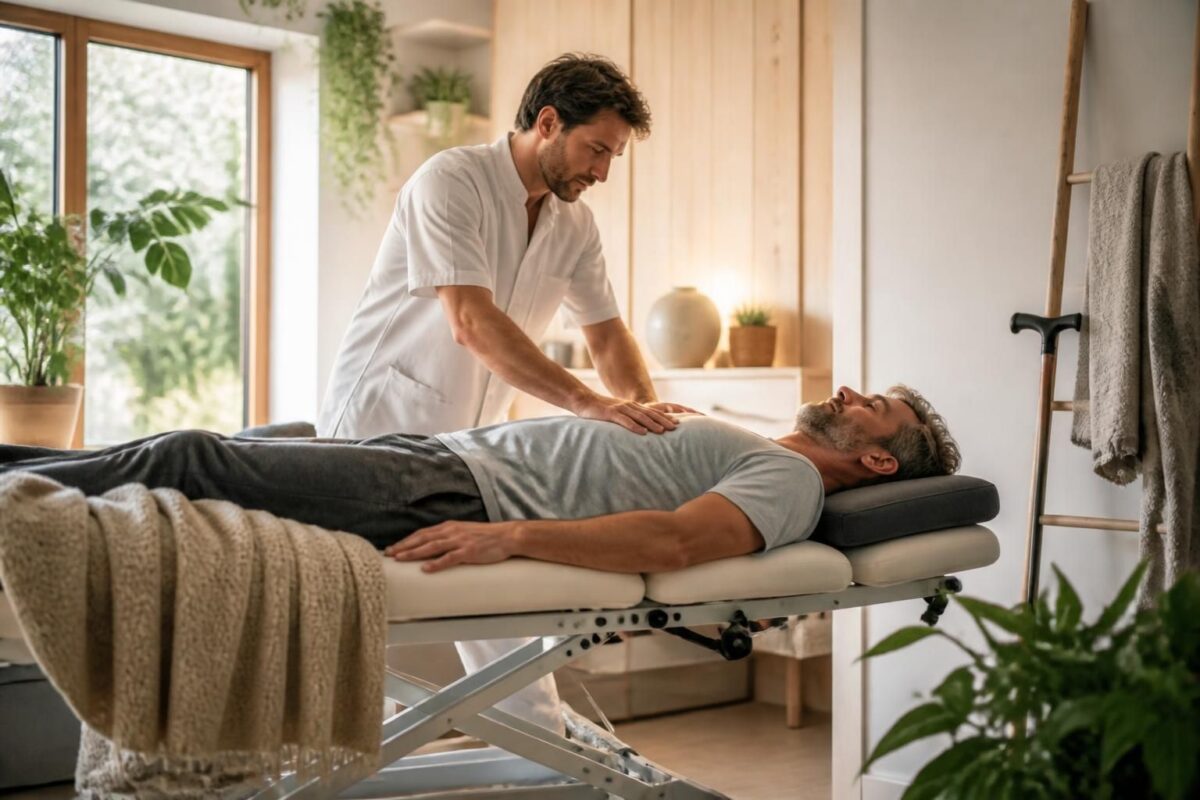
The practice is based on the restoration of joint, visceral and fascial mobility to optimize the body’s adaptability. In athletes, the objective is to fluidify the functional chains and to promote harmonious recovery between the muscle groups and the joints. The most common techniques include soft joint mobilizations, myofascial techniques and, when relevant, elements of manual lymphatic drainage. The ultimate goal is to accompany the body in its natural ability to repair itself, while supporting posture and coordination.
Key Techniques and Objectives
In practice, sport osteopathy aims to release residual tensions, stimulate local circulation and optimize tissue recovery. It can also help to rebalance muscle chains and improve neuromuscular coordination, thus contributing to better preparation and reduction of compensations that lead to injury.
Why Osteopathy Is Essential For Recovery People
In short In short, Osteopathy in convalescence is an approach manual and holistic which helps to accelerate the recovery by restoring The balance, the mobility and a good circulation fabrics. it contributes to Reduce the pain, support the Back to…

Osteopathic manipulations to strengthen post-traumatic muscles
In short In short, Osteopathic manipulations for Strengthen post-traumatic muscles constitute a gentle manual approach aimed at restoring the mobility, reduce the pain and facilitate the Functional rehabilitation After a injury. What is Is it? A series of precise gestures…
What the studies say
The available data show that osteopathy can reduce certain muscle pain after exercise and promote increased range of motion in some cases. However, the direct effect on measured performance (strength, speed, endurance) remains little demonstrated in a robust way. Indirect benefits—better sleep quality, stress reduction, recurrent pain reduction, and better regularity of workouts—now, however, emerge as significant contributions for recovery and overall resilience.
What the data show
Some results suggest that myofascial techniques could improve drainage and post-effort inflammation, but the results remain encouraging without being universal evidence. The methodological particularities and the heterogeneity of approaches largely explain these limits, while emphasizing that effectiveness is also based on the practitioner-patient alliance and integration into a personalized care pathway.

Osteopathy and prevention of work-related musculoskeletal disorders
In short theosteopathy is one Manual approach that restores body balance and prevents MSD related to work. Its advantages: reduction of tension, improvement of mobility and prevention of chronic pain. She is preventive and healing, suitable for office and trades…

The benefits of osteopathy to treat muscle imbalances
In short theosteopathy is a manual approach to restore themuscle harmony and postural considering the body as a whole. Its main benefits include the reduction of aches and tensions, the improvement of the mobility and from the posture, and prevention…
Practical integration and recommendations
To optimize recovery and build real resilience, sport osteopathy must be part of a holistic approach adapted to the athlete. It complements other essential levers like targeted muscle building, stretching, nutrition and active recovery. A regular preventive consultation can help identify areas of fragility before they turn into pain or injury.
Practical advice
Integrate sports osteopathy into your recovery routine by placing sessions at key moments: after an intense effort to promote circulation and relaxation, or in anticipation of an event to optimize mobility and breathing. Combine these sessions with appropriate hydration, sufficient sleep and anti-inflammatory diet rich in protein, omega-3 and antioxidants. Use a multimodal approach (massages, cryotherapy, hot/cold baths) and stay tuned to your body to adjust training loads and rest phases. A regular consultation, even in the absence of pain, can help you maintain a body aligned, flexible and ready to perform.
| Aspect | concise text |
|---|---|
| Objective | osteopathy aims to optimize the recovery and the resilience of the athlete by restoring mobility and functional balance. |
| Key mechanism | Improvement of the circulation, reduction of strain and harmonization of muscle chains through targeted mobilizations. |
| Pain and mobility | reduction of the pain and improvement of mobility Post-effort, facilitating the return to training. |
| Recovery and drainage | Stimulation of drainage and tissue regeneration, reduction of local inflammation. |
| Sleep and stress | indirect effects on the sleep and the stress, promoting quality recovery. |
| Integration into the program | integrates into a global plan including nutrition, rest and training, without replacing conventional methods. |
| Injury prevention | Identification and correction of imbalances to prevent injuries and relapses. |
| Evidence and limits | The studies show benefits, but without proof of direct effect on the performance; It is based on experience and the overall framework. |
| Recommended frequency | For a sustainable program, favor regular sessions adapted to the volume of training. |
“After six weeks of targeted sessions, my recovery became a smooth routine. I feel my muscles relax, fatigue evacuating faster and my resilience Faced with training has strengthened” — Antoine, amateur cyclist.
“Osteopathy has improved my circulation And my lymphatic drainage after exercise, which allowed me to come back more quickly and to be less prone to post-exertion pain. — Camille, road runner.
“I discovered that you can work on mobility and residual tension without pain. For three sessions, my recovery is more effective and my resilience Mental is also affected, because I feel capable of chaining the sessions without fearing overwork” — Lucas, an athlete from CrossFit.
“After a minor injury, the osteopathic accompaniment allowed me to restore body balance more quickly. I am more resilient, less pain and I can gradually resume my training with confidence” — Sophie, multi-activity sportswoman.
“Adding an osteopathic approach to my routine has transformed my recovery time management. I sleep better, I recover earlier and I am able to maintain a lasting training volume, which increases my resilience general” — Thomas, triathlete.
Dr. Sylvain Desforges is a recognized expert in Osteopathy, the naturopathy and the manual medicine. Founding President of TagMed and a major professional association, he devotes his practice to helping athletes to go through critical periods of recovery and to strengthen their resilience in the face of effort. His career combines commitment to health innovation and the desire to propose approaches evidence-based to optimize the health and well-being of its patients. In his approach, he sees sporting activity as a dynamic whole where body and mind must continually adapt.
With his experience, he considers theSport osteopathy as a key recovery lever. In practice, it relies on gentle and targeted techniques intended to restore joint, visceral and fascial mobility, while supporting natural repair mechanisms. Joint mobilizations, myofascial work, vertebral manipulations and manual lymphatic drainage are among the most used tools, sometimes supplemented by cranio-somatic approaches when the case requires. The objective is clear: to release residual tension, optimize circulation and harmonize muscle coordination in order to improve recovery after exercise.
From a scientific point of view, Dr. Desforges favors a balanced reading of the available data. While direct evidence on improved athletic performance is still modest, clinical observations highlight positive effects on post-exercise pain reduction, amplitude of movement and sleep quality, all ingredients that support muscle recovery and relapse prevention. However, he recalls that the effectiveness of osteopathy largely depends on its integration into a global and personalized care course, where listening to the athlete and adjusting training plans play a preponderant role.
Dr. Desforges’ practice is part of a global vision and personalized sports recovery. He considers osteopathy as a central element of a multidisciplinary program including appropriate nutrition, optimized hydration, sufficient sleep and active recovery protocols. In addition to osteopathic sessions, it can use advanced technologies presented as additional levers to support tissue regeneration and nervous balance when relevant to the sports patient. This approach intimates athletes to adopt a proactive routine, in order to limit imbalances and prevent recurring injuries.
In addition, Dr. Desforges insists on the relational dimension of his practice. The effectiveness of osteopathy is, according to him, strongly linked to the quality of the practitioner-patient relationship and to the trust established. Each session begins with an in-depth assessment that makes it possible to identify areas of tension, mobility limitations and contextual factors that can slow recovery. This approach is based on the idea that resilience sports is built on a sustainable functional balance, rather than on ad hoc solutions. By summarizing, the osteopathy of sport, practiced with rigor and humanity, offers a natural and effective framework to help athletes to recover, adapt and perform durably.
This article explores how theSport osteopathy can support the muscle recovery and strengthen the resilience athletes, by examining the mechanisms, evidence, limitations and practical applications to integrate this manual approach into a global prevention and performance program.
THE ROLE OF THESport osteopathy in the muscle recovery is based on an approach holistic which acts on muscle tension, circulation and neuromuscular coordination, while respecting the rhythms of the body to strengthen the resilience Faced with training.
In practice, it is a lever complementary and personalized, which can intervene upstream of a competition, after exercise and in prevention, in order to optimize recovery and prevent injuries. To understand its role in the sustainable health framework, you can consult resources like Why osteopathy is essential for sustainable health.
Current evidence shows effects on pain and mobility, with indirect performance benefits through better sleep quality, stress reduction and increased regularity of workouts. However, direct performance data remains variable and requires additional studies; The approach remains indirectly pro-performing and especially preventive.
To integrate this into a routine, favor regular sessions and plan interventions around training cycles, without replacing medical follow-up. Practical advice and appropriate protocols can be found in specialized resources such as How Osteopathy Can Improve Sports Recovery.
To deepen, here are additional resources and practical guides that illustrate how osteopathy can fit into a comprehensive recovery and well-being strategy: Osteopathy and overall well-being – Restoring body balance, Sports recovery and osteopathy, Osteopathy, an asset for athletes looking for performance, and Osteopathy in sports practice.
Osteopathy and chronic leg pain: regaining an optimal quality of life
In short In short, Osteopathy is one Global manual approach aimed at reducing Chronic leg pain and improve the quality of life. What is it? Non-drug therapy using the hands to identify restrictions and treat lesional chains. How does it…
How osteopathy supports recovery after complex surgery
In short In short, Post-operative osteopathy is an approach fresh which supports the recovery After a Complex surgery. It helps to reduce the pain and the fatigue, improves the mobility and accelerates the healing thanks to a better vascularization and…

Dr Sylvain Desforges, B.Sc., D.O., N.D., osteopath, is the founding president of TAGMED and of the ACMA association. He dedicates his practice to chronic spinal pain, low back pain and symptoms compatible with sciatica, particularly when pain radiates toward the buttock, leg, calf, foot or toes.
Through SOS Sciatique, he publishes educational content on sciatica symptoms, possible causes such as disc herniation, disc narrowing, foraminal stenosis or irritation of a lumbar nerve root, as well as non-surgical approaches that may be considered according to the evaluation. At Clinique TAGMED, care may include, depending on the case, motorized neurovertebral decompression, specific osteopathic care or precision percussion.
For an evaluation related to sciatica treatment in Montreal / Mount Royal or sciatica treatment in Terrebonne, please consult the services available at Clinique TAGMED.
Medical disclaimer
The information published on SOS Sciatique is provided for educational purposes only and does not replace a consultation, diagnosis, opinion or treatment provided by a physician or another authorized healthcare professional. The author of this article is neither a medical doctor nor a specialist in a medical specialty recognized by the Collège des médecins du Québec. The osteopathic, manual medicine or functional support approaches described on this site do not constitute medical acts and are not intended to replace medical follow-up.
Consult a physician or emergency service in cases of loss of bladder or bowel control, anesthesia in the saddle area, significant or progressive weakness in the leg or foot, fever, recent trauma, severe pain or rapid worsening of symptoms. For more details, please read our Legal Notice.