Sciatica and soft chair: why the pain may increase
16/07/2026
Sciatica with heavy leg: nerve pain or another cause?
16/07/2026
IN BRIEF
| In brief, sciatica is pain that follows the path of the sciatic nerve. When a narrow lumbar spinal canal compresses the nerve roots, radiating leg pain may intensify and sitting can become painful. Conservative approaches involving exercises, manual techniques, and postural advice often provide rapid and lasting relief without surgery. An accurate assessment identifies the cause—such as a disc disorder, osteoarthritis, piriformis syndrome, or lumbar spinal stenosis—and guides a progressive plan to reduce pressure on the nerve and improve mobility. Available locally, this service aims to improve sitting tolerance and quality of life for patients with sciatica and a narrow lumbar spinal canal. |
Sciatica is pain that follows the path of the sciatic nerve and is often felt in the lower back, buttock, and leg. When associated with a narrow lumbar spinal canal, symptoms may be relieved while sitting because flexion increases the space around the nerves. Diagnosis is based on a clinical examination and imaging, particularly MRI, to distinguish spinal stenosis from a disc disorder or other causes. Treatment favours conservative measures: targeted exercises, physical therapy, and analgesics. Surgery may be considered if symptoms persist or worsen despite treatment.
This article explains how sciatica may cause pain that sometimes subsides while sitting when a narrow lumbar spinal canal is involved. It describes the mechanisms, diagnosis, and management options for pain that travels down the leg, with an emphasis on situations in which sitting may provide relief. You will find clear clinical guidelines and reliable resources to guide your care journey.
Understanding sciatic pain and a narrow lumbar spinal canal
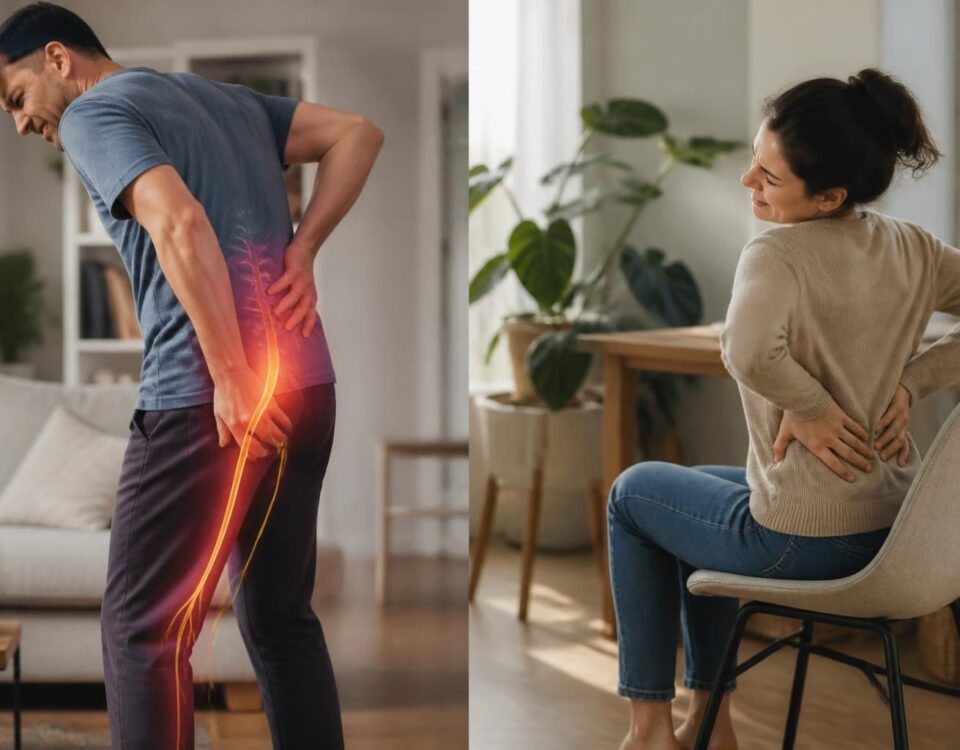
Sciatica is pain that follows the path of the sciatic nerve. It may affect the buttock and thigh before travelling down the leg and into the foot. The term “sciatica” describes a set of symptoms, not a single diagnosis.
A narrow lumbar spinal canal refers to reduced space around the nerves in the lower back. This compression may become noticeable while walking or standing. When sitting, flexion of the trunk can increase the available space and reduce nerve compression, which may relieve symptoms.
How sitting can influence symptoms associated with a narrow lumbar spinal canal
With a narrow lumbar spinal canal, sitting may help relieve pain when trunk flexion increases the space within the canal. Conversely, prolonged standing or walking may worsen pain when compression is significant.
Typical symptoms may subside when the back is flexed or during a movement that opens the canal. This relationship between posture and symptoms helps guide the assessment and treatment choices while ensuring continued vigilance for signs requiring prompt professional care.
Assessment and diagnosis
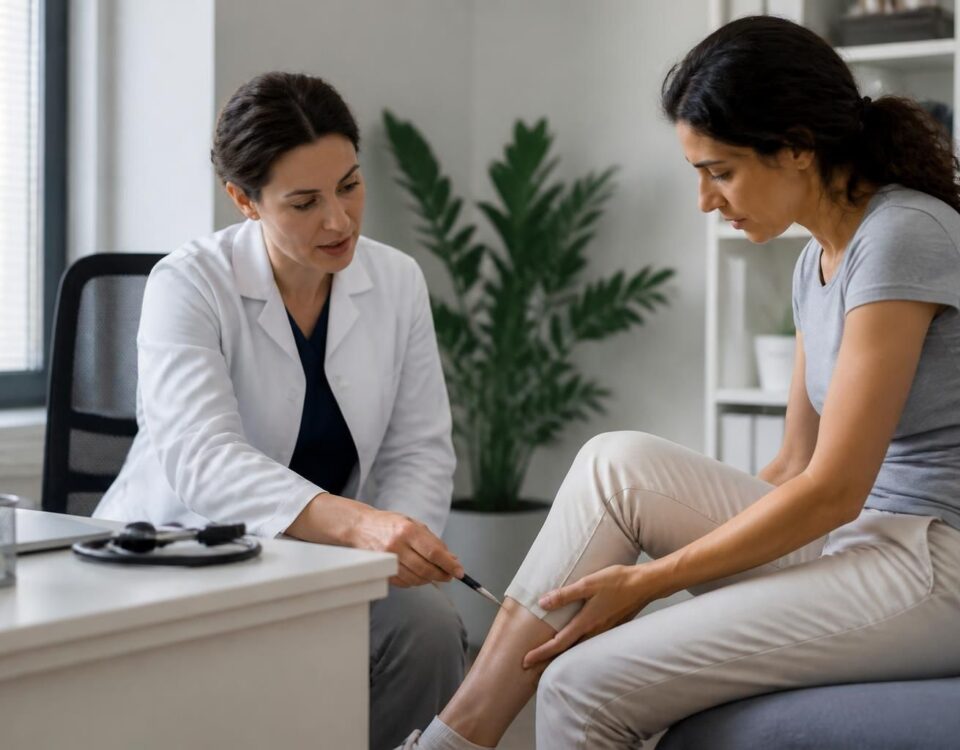
The assessment begins with an interview and clinical examination focused on the location, intensity, and triggers of the pain. Simple tests can identify nerve irritation and help distinguish radicular pain from isolated lower-back pain.
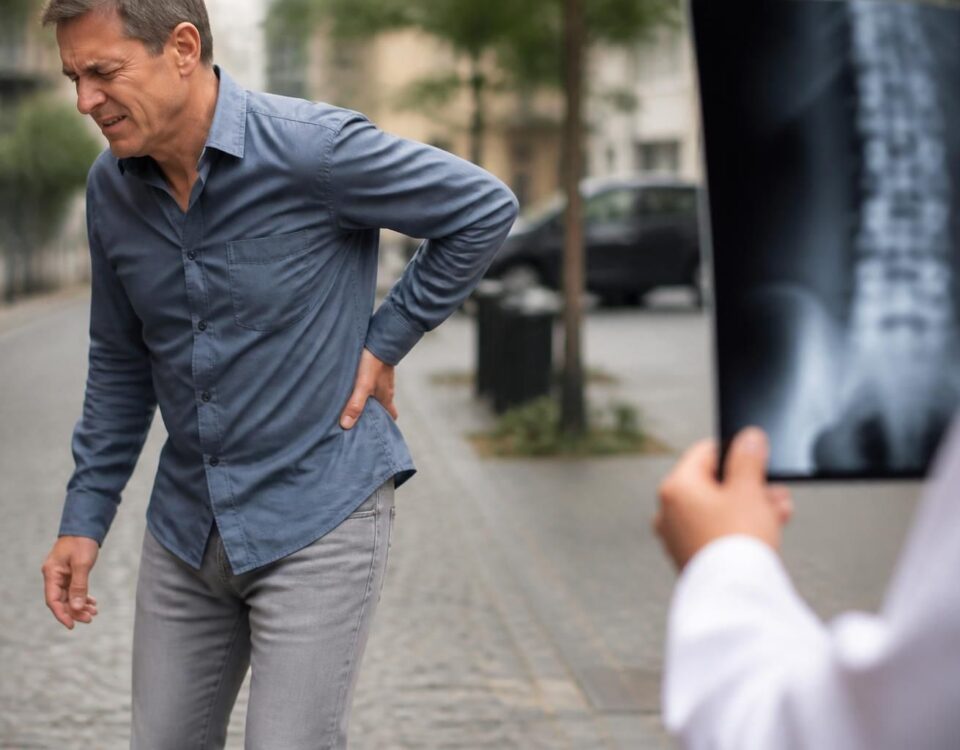
Imaging, such as MRI or CT, may be considered if symptoms persist beyond a few weeks or if signs of neurological impairment are present. Imaging findings must be interpreted in conjunction with the clinical examination to guide treatment.
Management options and the role of TAGMED Clinic
Management of a narrow lumbar spinal canal and sciatica is based on a gradual, individualized approach. At TAGMED Clinic in Montreal or Terrebonne, options may include motorized neurovertebral decompression when appropriate, targeted osteopathic care, and a precision percussion approach based on the patient’s assessment. These approaches are intended to reduce pressure on the nerves while respecting medical recommendations and avoiding invasive procedures when they are unnecessary. To learn more, visit TAGMED Clinic.
In some cases, complementary options may be considered depending on the precise diagnosis and response to initial treatment. For specific information on symptoms and related options, consult specialized resources on sciatica and pain along the outer edge of the foot and other dedicated content on SOS Sciatica.
For an overview and comparisons of treatment options, some patients rely on information available through the Terrebonne network and related resources.
Prevention and lifestyle
Prevention involves appropriate physical activity and maintaining a healthy weight to reduce the load on the lumbar spine. An ergonomic posture at work and regular breaks promote back health. Activities such as walking, cycling, or swimming may help stabilize the spine without placing excessive strain on the nerves.
If pain persists, it is best to promptly consult a professional to adjust the treatment plan and rule out potential complications.
When to seek professional care and warning signs
Seek professional care if the pain is accompanied by motor impairment, bladder or bowel dysfunction, fever, or inflammatory features, or if symptoms worsen despite rest and initial treatments. Surgical decompression may be considered in severe cases that do not respond to conservative treatment.
For general information about the symptoms and mechanisms of sciatic pain, consult dedicated resources on tingling and nerve compression and related resources.
Medical disclaimer: The information and advice provided on this website are not a substitute for the advice, diagnosis, or treatment of a healthcare professional. Please note that Dr. Sylvain Desforges, osteopath, is neither a Doctor of Medicine nor a physician, and is not a specialist in any medical specialty as defined by the Collège des médecins du Québec. Manual medicine, functional medicine, and sports medicine, as described on this website, exclude any medical treatment or diagnosis provided by a physician or medical specialist. Always consult your physician with any medical questions. For more details, please read our full Legal Disclaimer.
- Practical focus: an approach centred on relief while sitting and the implications of a narrow lumbar spinal canal.
- Context: sciatica related to a narrow lumbar spinal canal; possible relief with flexion and sitting.
- Key symptoms: radiating pain in the buttock and leg; improvement while sitting; pain after walking a certain distance.
- Mechanism: narrowing of the spinal canal compresses the nerve roots; extension worsens symptoms.
- Prompt diagnosis: targeted clinical examination; imaging if symptoms persist (>6 weeks) or neurological deficits are present.
- Therapeutic approach: adapted activity; targeted exercises; ergonomic sitting posture; physiotherapy.
- Useful exercises: gentle neural mobility; moderate lumbar flexion; regular walking; hamstring stretches.
- Complementary approaches: osteopathy and manual therapies focused on the canal space.
- To avoid: prolonged extension; aggravating positions; a sedentary lifestyle.
- When to seek professional care: pain persisting for >6 weeks; motor impairment; warning signs requiring urgent care.

Sciatica and a narrow lumbar spinal canal can sometimes cause pain that subsides while you are sitting, especially when you adopt slight trunk flexion. This article provides practical, personalized recommendations to help you better understand and manage this pain in daily life, with an emphasis on conservative approaches tailored to your comfort.
Understanding the relationship between pain while sitting and a narrow lumbar spinal canal
Sciatica is radiating pain that follows the path of the sciatic nerve. With a narrow lumbar spinal canal, narrowing of the canal can compress the nerve roots and cause pain in the buttock, thigh, or leg. Unlike some types of lower-back pain, symptoms of a narrow lumbar spinal canal may respond better to flexion: sitting and leaning slightly forward can increase the space around the nerve roots and temporarily relieve pain. This characteristic guides treatment toward positions and exercises that favour flexion rather than prolonged extension.

Sciatica: why the pain pathway helps to identify the cause
IN BRIEF Sciatica is pain that follows the path of the sciatic nerve, from the lower back to the foot. Understanding this path helps to identify the cause, adjust the diagnosis and treatment, and prioritize non-surgical solutions when possible. Its…
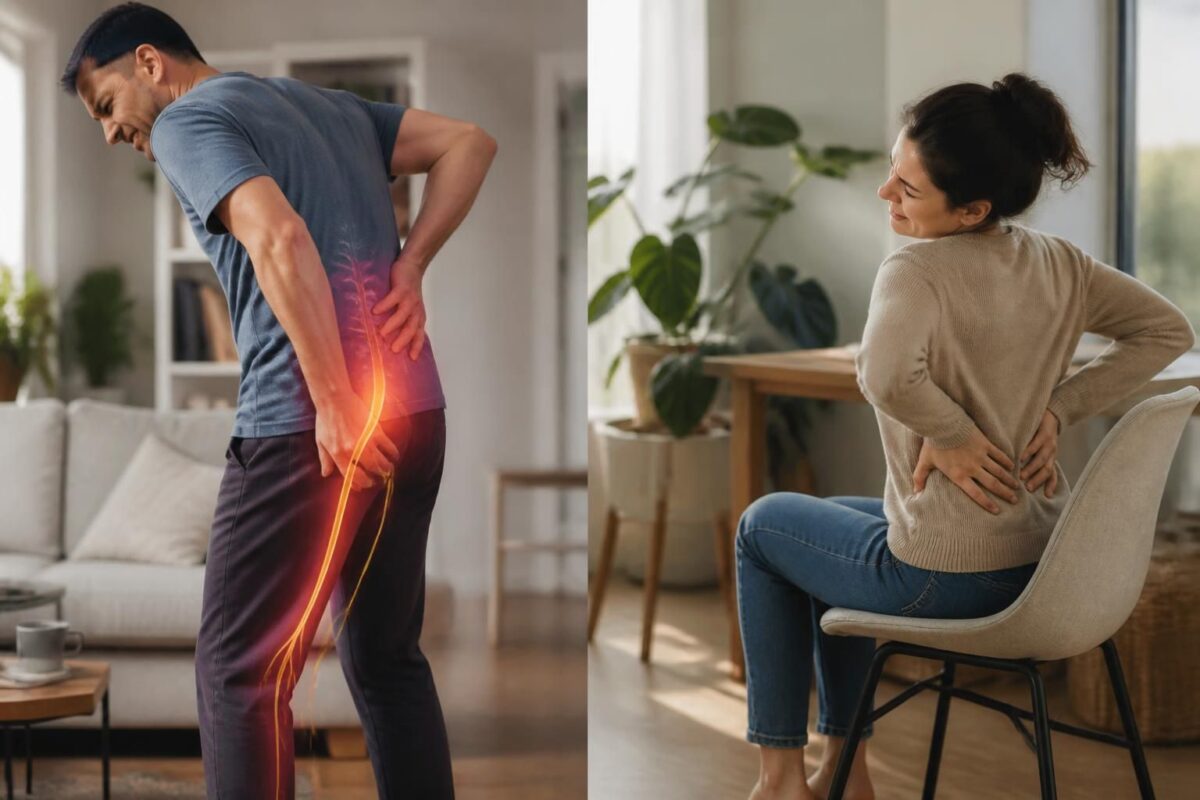
Sciatica: nerve pain or mechanical pain?
IN BRIEF In brief, sciatica is a nerve pain caused by irritation or compression of a lumbar root, most often L5 or S1, which radiates from the lower back to the buttock and leg. It is distinguished from a mechanical…
Practical recommendations for relieving pain while sitting
Posture and ergonomics
Adopt an appropriate sitting position: use a backrest that supports the lower back, keep your feet flat on the floor, and maintain a neutral hip angle. While sitting, favour slight forward flexion of the trunk and avoid sudden twisting. Alternate positions regularly: stand up and walk for a few minutes every hour to promote circulation and prevent stiffness.
Physical activity and exercises
Choose low-impact activities that accommodate flexion and avoid excessive extension. Moderate walking, swimming, and cycling for an appropriate duration may be beneficial, provided that you pay attention to your pain. Simple lumbar-flexion and gentle-mobility exercises performed under supervision may help maintain the opening of the canal and reduce radiating pain. Avoid forceful extension movements and sudden twisting, which may worsen the pain.
Relative rest and pain management
During acute flare-ups, alternating ice and heat may help reduce localized inflammation and muscle tension. Keep sessions short—15 to 20 minutes—and use protective layers to avoid burns. As the pain subsides, maintain gentle, progressive activity to preserve mobility and prevent recurrence.
Lifestyle and prevention
Maintain a healthy weight and improve trunk strength with targeted, progressive exercises. Prevent pain by coordinating work, household tasks, and posture: place objects at a safe height, use assistive devices when necessary, and take regular active breaks. A lumbar support belt may be considered temporarily during flare-ups on the advice of a professional.
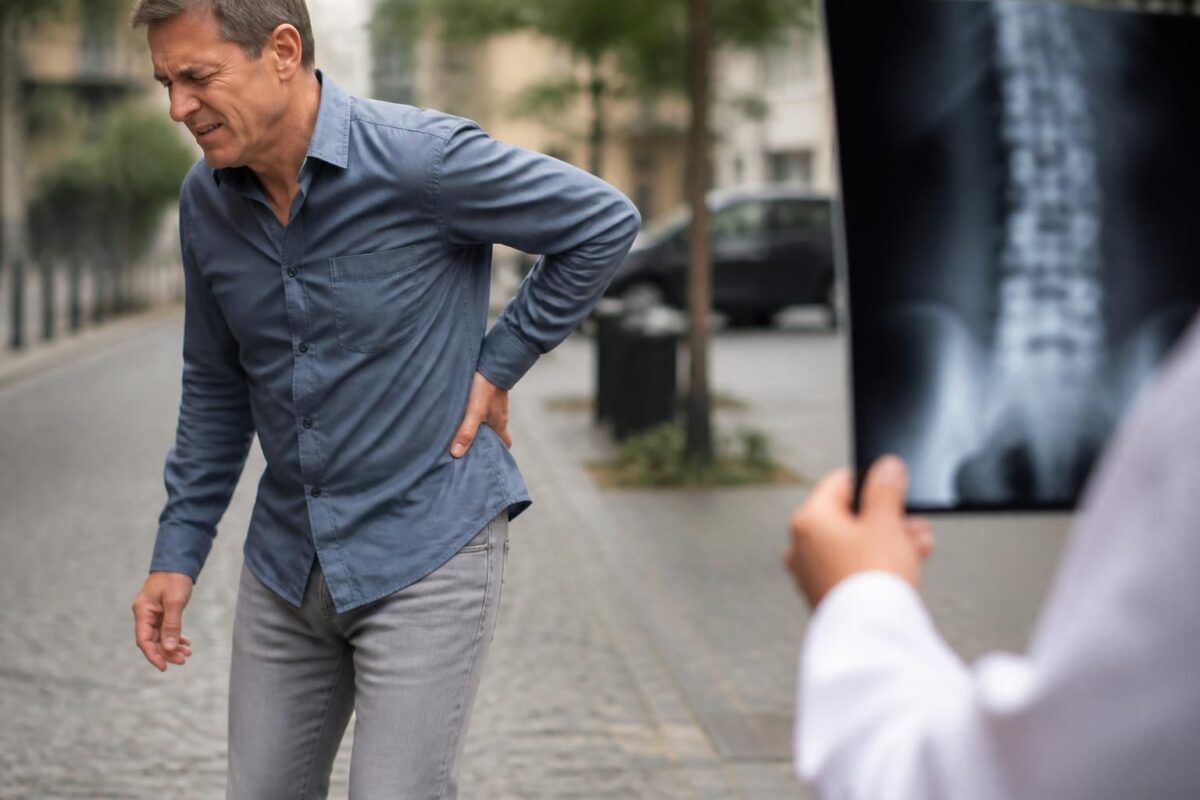
Sciatica: pain that worsens with walking and possible stenosis
IN BRIEF Sciatica is a pain that follows the path of the sciatic nerve: lower back, buttock, and leg. It can worsen with walking and may be associated with lumbar stenosis or a herniated disc. The diagnosis relies on clinical…

Sciatica: pain that worsens when sitting and possible disc-related cause
IN BRIEF The sciatic pain is a pain that follows the path of the sciatic nerve, most often due to a herniated disc, osteoarthritis, or lumbar canal stenosis. This pain can worsen in a seated position and radiate from the…
When to seek professional care and what to expect
If pain persists for more than several weeks despite conservative measures, or if you notice marked weakness, urinary problems, or rapidly worsening leg pain, seek prompt reassessment. A physician may reconsider the diagnosis, order additional tests, and consider complementary options suited to your condition.

Sciatica: tingling in the toes and nerve compression
IN BRIEF In short, sciatica with tingling in the toes and nerve compression is pain that follows the path of the sciatic nerve, caused by irritation or compression of the nerve roots, leading to numbness, tingling, and pain in the…

Sciatica: burning in the leg and nerve irritation
IN BRIEF In brief, sciatica is pain that follows the path of the sciatic nerve, starting from the lower back, passing through the buttock, and descending into the leg down to the foot. It often manifests as a burning sensation…
Sciatica: pain relieved while sitting and a narrow lumbar spinal canal—comparison table
| Criteria | Concise Overview |
|---|---|
| Main Trigger | Radicular pain that may extend from the lumbar region to the leg, worsened by walking and standing; sitting and flexion alleviate symptoms in those with a narrow lumbar canal. |
| Pain Relieved in Sitting Position | Yes, it is typically relieved by sitting and flexion that limit irritation of the canal. |
| Aggravating Position | Prolonged standing and lumbar extension worsen symptoms; flexion and sitting provide relief. |
| Key Diagnosis | Lumbar MRI is recommended to confirm narrowing of the canal and evaluate the structures. |
| Differential Diagnosis | Distinguish between a narrow canal and disc-related radiculopathy through clinical examination and imaging. |
| Conservative Treatment | Physiotherapy, targeted exercises, NSAIDs, and related therapies. |
| When to Consider an Injection or Surgery | An injection or surgery may be considered if pain persists for >6 weeks or motor impairment is present. |
| Practical Advice | Prioritize regular mobilization and active breaks; avoid aggravating positions. |
| Educational Elements | Therapeutic education and medical follow-up optimize the prognosis. |
Sciatica: foot weakness and possible neurological cause
IN BRIEF Weakness of the foot in the context of sciatica may reveal a neurological cause due to the irritation or compression of a lumbar root (L5/S1). This weakness manifests as a foot that catches, difficulty raising the toes or…

Sciatica: leg numbness and cause to clarify
IN BRIEF In brief, sciatica is a pain that follows the path of the sciatic nerve, starting from the lower back and descending to the buttock and leg, sometimes reaching the foot. It can manifest as numbness, tingling, or muscle…
Testimonials: relief of sciatic pain while sitting with a narrow lumbar spinal canal
“Previously, sciatica prevented me from sitting for long because of a narrow lumbar spinal canal. I experienced a dull pain that worsened while walking and was difficult to relieve at rest. After receiving personalized care focused on comfortable positions and targeted exercises, the pain improved significantly while I was sitting. I can now sit to work or read without the pain flaring up again.”
“My condition involved episodes of pain radiating down the leg and difficulty standing for long periods because of a narrow lumbar spinal canal. By adopting a suitable sitting position and performing simple exercises, I experienced considerable relief and gradually returned to my daily activities. The pain became much more tolerable while sitting, which changed my quality of life.”
“I thought I would never again be able to enjoy car rides without pain. After being diagnosed with a narrow lumbar spinal canal and receiving specific postural advice, my sciatica is now relieved while sitting, and repeated exertion no longer causes the pain to escalate. The sessions also strengthened my back muscles and taught me how to manage my days more effectively.”
“As an active senior, sciatica associated with a narrow lumbar spinal canal severely limited me. After receiving an appropriate therapeutic approach, I discovered that sitting comfortably with slight flexion and lumbar support quickly relieved the pain. Today, I can sit to work and enjoy my leisure activities without the pain dominating my movements.”
“My physician explained that certain positions could promote relief. In my case, a well-supported sitting position reduced painful episodes caused by the narrow lumbar spinal canal. Mobility exercises and postural advice reinforced this improvement and made sitting much more tolerable.”
Dr. Sylvain Desforges is an expert in osteopathy, naturopathy, and manual medicine, and is the founding president of TAGMED clinics and ACMA. His career is guided by healthcare innovation and recognized specialization in chronic pain and spinal disorders. He is particularly committed to issues involving sciatica and a narrow lumbar spinal canal, with the goal of providing patients with practical and safe solutions.
His practice is based on a multidisciplinary approach combining precise diagnosis, individualized care, and thoughtful use of available technologies. He favours an evidence-based approach that combines osteopathic techniques, naturopathic principles, and manual medicine to address the underlying causes of pain rather than merely easing symptoms. Each patient receives a personalized care pathway designed to improve mobility, stability, and long-term quality of life.
When examining manifestations of sciatica associated with a narrow lumbar spinal canal, Dr. Desforges takes a targeted approach. In particular, he assesses why pain may be relieved while sitting in some cases and how posture influences the path of the sciatic nerve and adjacent structures. This reasoning makes it possible to tailor postural advice and exercises, favouring positions that relieve the nerve and promote nerve mobility without worsening the narrowing of the canal.
In practical terms, his therapeutic options favour non-invasive care whenever possible: motorized neurovertebral decompression, laser and shockwave therapies, and precision percussion to release muscle tension and restore mobility. Based on the assessment, he may combine targeted osteopathy with gentle techniques to reduce inflammation, restore spinal dynamics, and prevent recurrence. The goal is to strengthen spinal stability and improve function without resorting to surgery whenever possible.
At the same time, he actively shares knowledge about sciatica. He publishes educational content on symptoms and possible causes—such as a herniated disc, foraminal narrowing, or lumbar nerve-root irritation—and on non-surgical approaches adapted to each assessment strategy. This educational component forms part of his mission to provide evidence-based care and give patients a clear understanding of their therapeutic journey.
His clinical objective is clear: to assist people with a narrow lumbar spinal canal and sciatic pain in resuming an active life. By emphasizing therapeutic education, adapted protocols, and coordination with healthcare professionals, he aims to promote lasting recovery and reduce functional limitations while favouring non-surgical solutions whenever possible.
This article emphasizes that when sciatica is associated with a narrow lumbar spinal canal, pain may be more tolerable while sitting or in flexion because these postures tend to increase the space around the nerve roots and reduce compression. It describes the mechanisms, typical signs, diagnostic process, and appropriate therapeutic options to provide a better understanding of how to achieve lasting pain relief and improve walking and daily activities.
A narrow lumbar spinal canal often causes leg pain that intensifies while walking or standing and may be relieved by sitting or leaning forward. This condition, sometimes called neurogenic claudication, differs from simple lower-back pain and may be related to factors such as facet-joint osteoarthritis, ligament thickening, or a disc protrusion. In this context, relief while sitting results from flexion, which enlarges the canal and reduces pressure on the nerve roots, thereby easing radicular symptoms.
Diagnosis is based first on the patient’s history and clinical examination, followed by imaging when necessary. Clinical tests assess limb function and identify signs of nerve involvement; lumbar MRI or CT can confirm lumbar spinal stenosis and identify the structures involved. In some cases, similar symptoms may result from a herniated disc or other spinal causes, but improvement with flexion and sitting is consistent with spinal stenosis. Useful resources for understanding the assessment and symptoms are available in specialized online guides on sciatica and lumbar spinal stenosis, including Ameli, the MSD Manual, and publications devoted to lower-back and sciatic pain.
From a therapeutic perspective, management initially favours conservative approaches. Adapted exercises that maintain mobility and strengthen the muscles of the trunk and lower limbs, with an emphasis on positions that promote flexion, may be particularly beneficial. Improving ergonomics at work and during daily activities, combined with regular physical activity such as walking or swimming, helps reduce episodes and delay progression toward possible intervention. Medication and manual therapies, including physiotherapy and osteopathy, may be combined; targeted injections may be considered when symptoms persist despite conservative treatment. As a last resort, and depending on the severity and impact on quality of life, surgery may be proposed to decompress the canal and restore space around the nerves.
To better manage this condition in daily life, adopt postures and habits that favour flexion and promote spinal stability while avoiding movements that aggravate symptoms. Appropriate exercise selection, activity modification, and follow-up with a healthcare professional can produce significant improvements and reduce functional limitations. Additional resources and practical advice are available in patient guides and on websites dedicated to sciatica and lower-back pain.
To learn more about the path and mechanisms of pain that travels down to the foot, consult resources dedicated to the relationship between sciatic pain and nerve pathways: sciatic pain that travels down to the foot—understanding the pathway. To understand the characteristics of a narrow lumbar spinal canal and appropriate physiotherapy options, consult specialized articles and patient guides such as narrow lumbar spinal canal and physiotherapy and recognizing sciatic pain on Ameli. Other useful resources include clear summaries of the mechanisms and treatments, such as MSD Manual—Sciatica and pages explaining the pain pathway and symptoms extending to the foot on Sciatica—calf pain and possible nerve origin.

Dr Sylvain Desforges
Dr Sylvain Desforges, B.Sc., D.O., N.D., osteopath, is the founding president of TAGMED and of the ACMA association. He dedicates his practice to chronic spinal pain, low back pain and symptoms compatible with sciatica, particularly when pain radiates toward the buttock, leg, calf, foot or toes.
Through SOS Sciatique, he publishes educational content on sciatica symptoms, possible causes such as disc herniation, disc narrowing, foraminal stenosis or irritation of a lumbar nerve root, as well as non-surgical approaches that may be considered according to the evaluation. At Clinique TAGMED, care may include, depending on the case, motorized neurovertebral decompression, specific osteopathic care or precision percussion.
For an evaluation related to sciatica treatment in Montreal / Mount Royal or sciatica treatment in Terrebonne, please consult the services available at Clinique TAGMED.
Medical disclaimer
The information published on SOS Sciatique is provided for educational purposes only and does not replace a consultation, diagnosis, opinion or treatment provided by a physician or another authorized healthcare professional. The author of this article is neither a medical doctor nor a specialist in a medical specialty recognized by the Collège des médecins du Québec. The osteopathic, manual medicine or functional support approaches described on this site do not constitute medical acts and are not intended to replace medical follow-up.
Consult a physician or emergency service in cases of loss of bladder or bowel control, anesthesia in the saddle area, significant or progressive weakness in the leg or foot, fever, recent trauma, severe pain or rapid worsening of symptoms. For more details, please read our Legal Notice.