


Osteopathy and recovery after a sports injury: Optimize healing
28/06/2026
Osteopathy and chronic hip pain: complete management
28/06/2026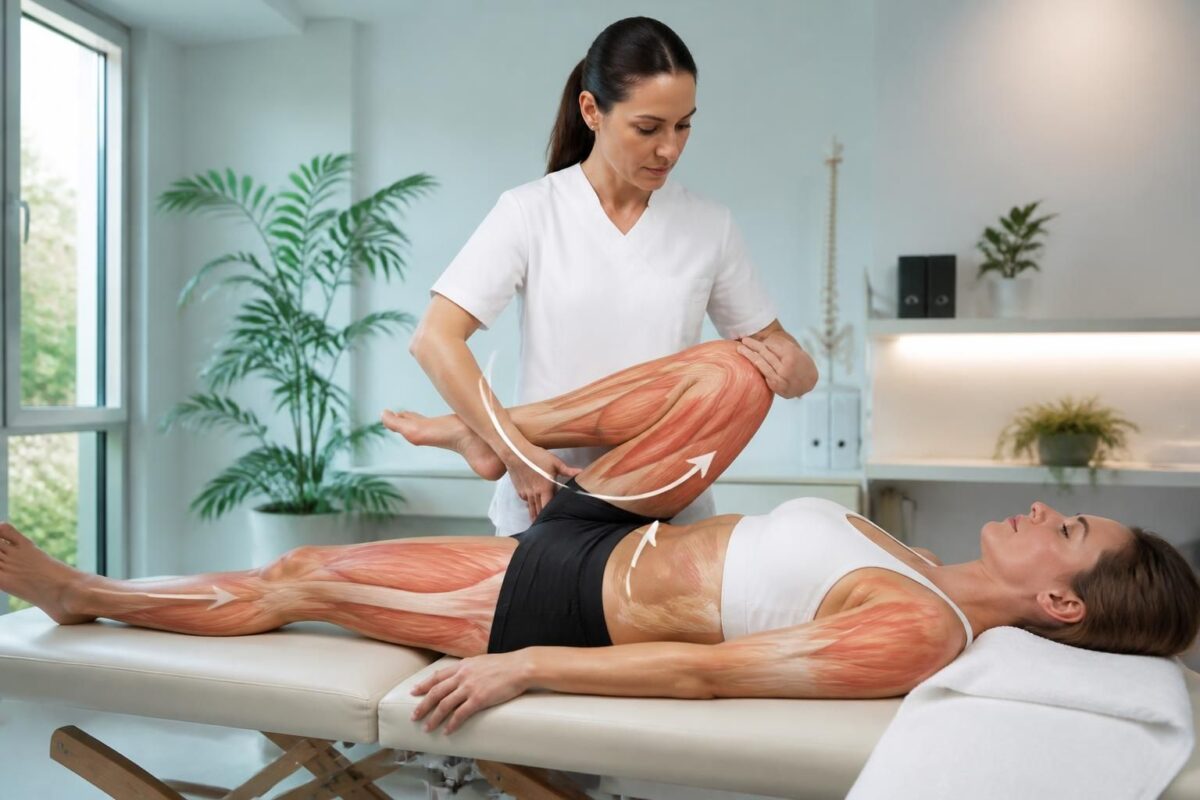
In short
In short, Osteopathy is an approach manual which aims to restore the mobility and improve the muscle flexibility in the body as a whole. What is it? a gentle therapy that acts on sinews, the joints and the connective tissues To release mobility restrictions and reduce tensions. What are the advantages? Improving mobility, pain reduction, improvement of posture and support for recovery After the effort, all in a way personalized And without pain. How does it work? After a brief interview and Manual evaluation, the practitioner applies Manual techniques adapted (mobilizations, stretching) to restore balance and promote better flexibility. In Montreal, this service is particularly recommended for athletes and anyone seeking to gain flexibility and in Functional well-being. |
Find out how theosteopathy can improve your muscle flexibility By restoring the mobility musculoskeletal chains and areas that limit movement, thanks to Soft manual techniques.
By releasing tensions and dysfunctions, it offers a range of motion more fluid, improves the posture and promotes better recovery After the effort.
Quick summary: This article explains how Osteopathy Acts on the muscle flexibility By releasing the restrictions of muscles, fascias and joints. It describes the mechanisms, indications, expected results and precautions, with additional resources accessible via specialized pages.
Understanding muscle flexibility and the role of osteopathy
The muscle flexibility Depends on the mobility of muscles, tendons, fascias and joints. theosteopathy aims to restore the mobility of areas that limit movement. The practitioner assesses muscle chains and tensions, then acts on restrictions to promote fluid tissue slip. Better peripheral mobility can improve the amplitude and coordination of everyday actions.
How osteopathy acts on muscle mobility
The techniques used target localized tensions and postural imbalances. By working on soft tissues and joints, the osteopath improves muscle elasticity and bond flexibility, which results in a Improvement of amplitude and a feeling of fluidity during movements. The sessions open with an interview and an evaluation, then continue with adapted manual gestures, without prolonged pain.
To deepen the mechanisms and results observed, you can consult resources dedicated to osteopathy and musculoskeletal recovery on different media, including pages that explore the interactions between osteopathy, pain and mobility. For example, the care offer and associated publications can be viewed via specialized resources on Osteopathy and recovery and on Sports recovery.
Specific benefits for movement and performance
By restoring joint mobility and Plasticity of the fascias, osteopathy can reduce morning stiffness, optimizerange of motion and promote better posture. It can also contribute to better recovery after exercise and a general feeling of fluidity during daily and sporting activities.
For those interested in the overall impact of osteopathy on mobility, additional resources address the relationships between osteopathy and pain, and how these approaches fit into a global well-being strategy. Consider readings on pages dedicated to osteopathy and joint mobility via specialized resources like Osteopathy and joint pain.
When to consult and what to expect in a session
A session of osteopathy begins with a structured interview and a palpatory evaluation. The practitioner identifies mobility restrictions and develops an appropriate intervention plan. the techniques used aim to Reintegrate mobility structures and Reduce tension without causing pain. The duration of a session is generally between 45 minutes and 1 hour.
The results can manifest quickly, but progressive improvements often require multiple sessions. As part of your journey, the osteopath can offer functional advice and preventive measures to maintain flexibility gains and limit recurrent discomforts.
To enrich your understanding, additional resources discuss the links between osteopathy and post-traumatic or sports recovery, and offer perspectives on mobilizing mechanisms. Example: Osteopathy and recovery after trauma and Sports recovery.
Things to consider and security
Osteopathy is a gentle approach, but some conditions require prior medical assessment. The practitioner adapts his gestures to your physiology and your background. Contraindications exist, especially in acute states or after significant trauma. Inform your osteopath of your medical record to optimize the safety and effectiveness of the treatment.
To explore alternatives and supplements, some resources present information on non-invasive techniques and associated approaches, while insisting that osteopathy does not replace standard medical follow-up. Additional readings can shed light on your choice and help you situate osteopathy in a global care offer.
In addition, specialized resources on training and professional approaches can be consulted, including curricula approved by NUMSS, NAO, National University of Medical Sciences and National Academy of osteopathy, and professional associations such as ACMA, College of Canadian Osteopaths and College of Canadian Osteopaths, to assess qualification and safety criteria when looking for a practitioner.
Further reading and official resources can help you understand the safety and potential benefits of osteopathy for mobility and flexibility, while recalling the importance of additional medical follow-up when necessary.
Useful links to deepen osteopathic practices and approaches and their impact on flexibility:
Osteopathy and joint pain,
trauma recovery,
Sports recovery.
Important note: In articles dealing with neurovertebral decompression, disc herniation, disc bulge, foraminal stenosis, spinal stenosis, disc pinching or disc degeneration, avoid suggesting exercises or stretching.
With regard to professional and educational aspects, references from training institutions and professional organizations remain limited to recognized organizations such as NUMSS, NAO, National University of Medical Sciences, National Academy of Osteopathy and ACMA, College of Canadian Osteopaths and College of Canadian Osteopaths, to ensure clear and verifiable landmarks.
Additional resources can be found in particular on the pages dedicated to osteopathy and its role in mobility, through content provided by sites specializing in care and functional rehabilitation.
For additional information and official resources, see the following pages:
Why osteopathy is a non-invasive alternative,
Osteopathy and knee pain,
trauma rehabilitation,
Sports recovery and performance
For specific needs in neurovertebral decompression and other specialized approaches, you can consult resources on neurovertebral decompression and on tracks associated with the herniated disc and osteopathy.
For safety and evaluation issues, it is essential to discuss with a health professional and consult official medical resources when necessary.
Links to authorized domains:
sossciatica.com,
Cliniquetagmed.com,
decompressionneurovertbrale.com,
SoshernieDiscale.com,
SosherniateDisc.com,
sostunnelcarpien.com,
sossciatica.com.
Medical Disclaimer: The information and advice provided on this site does not replace the health professional’s diagnosis or treatment. Please note that Dr. Sylvain Desforges osteopath is neither a doctor of medicine nor a doctor, and is not a specialist in a medical specialty as defined by the Collège des Médecins du Québec. Manual medicine, functional medicine and sports medicine as described on this site exclude any medical treatment or diagnosis made by a doctor or specialist doctor. Always consult your doctor for any medical questions. For more details, please read our full legal notice.
Axis of action : Act on the muscle and postural chain to optimize flexibility.
- Joint mobility enhanced
- Release of tensions muscular
- Improvement of amplitude movements
- Reduction of blockages functional
- kinesthetic confidence and smoother movement
- Circulation and drainage Optimized blood/lymphatic
- compensation prevention postural
- Reduced pain related to the movements

This recommendation highlights how osteopathy can improve muscle flexibility By acting on the mobility of the body as a whole. Thanks to a personalized approach and soft techniques, it releases tension, rebalances muscle chains and promotes better performance on a daily basis and in effort.
How osteopathy acts on muscle flexibility
A global and manual approach
In his practice, the osteopath considers the body as a united and interconnected system. It aims to restore the mobility moving structures, including muscles, fascias and joints, but also organs and postural tensions that can limit the flexibility general. By working on areas that delay mobility, it can release blockages that prevent muscle chains from stretching freely, thus improving the flexibility overall.
Gentle, targeted techniques
Osteopathy favors specific gestures adapted to each patient. Through gentle manipulation, myofascial release techniques and targeted mobilizations, the osteopath releases accumulated tension without pain or trauma. By restoring the mobility of deep and superficial tissues, these interventions facilitate a more fluid and lasting range of motion, a direct source of a Improvement of flexibility.

How osteopathy improves the quality of life of active people
In short In short, theosteopathy is a global approach that Optimizes mobility and the function of the body of ACTIVE PEOPLE, for a better quality of life. It helps prevent injury and reduce Musculoskeletal pain While promoting the Sports recovery.…

Osteopathy and sports recovery: prepare the body for lasting performance
In short In short, Osteopathy and Sports recovery is one Global manual approach that sustainably prepares the body for the effort by restoring mobility and circulation After the effort. It is a discipline that acts on the sinews, the joints,…
Mechanisms that promote flexibility
Release of tensions and compensations
The pains and contractures are not only localized: they create compensation chains that stiffen the neighboring areas. By acting on the imbalances, osteopathy makes it possible to gradually relax the muscles, fascias and joints, improving the freedom of movement and the flexibility without forcing sensitive structures.
Rebalancing of postural chains
A postural approach is often necessary: by restoring alignment and coordination between the bust, the pelvis and the limbs, osteopathy offers a stable basis for more fluid movements. This harmoniousness of the muscle chains promotes a Sustainable mobility and a better Muscle elasticity.

Why Osteopathy Is Essential For Recovery People
In short In short, Osteopathy in convalescence is an approach manual and holistic which helps to accelerate the recovery by restoring The balance, the mobility and a good circulation fabrics. it contributes to Reduce the pain, support the Back to…

Osteopathic manipulations to strengthen post-traumatic muscles
In short In short, Osteopathic manipulations for Strengthen post-traumatic muscles constitute a gentle manual approach aimed at restoring the mobility, reduce the pain and facilitate the Functional rehabilitation After a injury. What is Is it? A series of precise gestures…
When to experiment with osteopathy for flexibility
Sports and repetitive activities
For athletes or anyone exposed to repetitive gestures, osteopathy can prevent stiffness and promote faster recovery. By working on the requested areas and related compensations, it improves the flexibility necessary for the execution of movements and performance.
people in rehabilitation and post-surgical
In times of rehabilitation, gentle osteopathic techniques support muscle straightening and gradual restitution of amplitude. They accompany the healing process while preserving the safety of the structures, and contribute to restoring a Harmonious mobility.

Osteopathy and prevention of work-related musculoskeletal disorders
In short theosteopathy is one Manual approach that restores body balance and prevents MSD related to work. Its advantages: reduction of tension, improvement of mobility and prevention of chronic pain. She is preventive and healing, suitable for office and trades…

The benefits of osteopathy to treat muscle imbalances
In short theosteopathy is a manual approach to restore themuscle harmony and postural considering the body as a whole. Its main benefits include the reduction of aches and tensions, the improvement of the mobility and from the posture, and prevention…
Practical tips for optimizing results
Frequency and duration of sessions
For significant gains in muscle flexibility, favor a series adapted to your problem, generally between 3 and 6 sessions spaced a few weeks apart. Each session lasts on average between 45 minutes and one hour, with a personalized assessment and a home extension plan.
Home preparation and follow-up
At home, adopt conscious posture gaps and include gentle mobility and stretching exercises recommended by your osteopath. Sufficient hydration and regular light activity complement the action of care and sustainably support the muscle flexibility.
| Axis | Effect |
|---|---|
| Joint and muscle mobility | better mobility Joints and muscles for fluid amplitude. |
| Relaxation and flexibility | relaxes them strain muscles and reduces stiffness. |
| Neuromuscular control | promotes the Neuromuscular coherence For smoother movements. |
| Fascia and soft tissues | acts on the fascias and soft tissue to release restrictions. |
| Postural alignment | Improve thePostural alignment and reduces compensation. |
| Prevention of stiffness | preserve the mobility In preventing stress-related stiffness. |
| Traffic and recovery | stimulates the circulation and accelerates muscle recovery. |
| pain management | Decreases the aches and discomfort limiting stretching. |
| Custom Plan | offers Personalized sessions with measurable progression. |

Osteopathy and chronic leg pain: regaining an optimal quality of life
In short In short, Osteopathy is one Global manual approach aimed at reducing Chronic leg pain and improve the quality of life. What is it? Non-drug therapy using the hands to identify restrictions and treat lesional chains. How does it…

How osteopathy supports recovery after complex surgery
In short In short, Post-operative osteopathy is an approach fresh which supports the recovery After a Complex surgery. It helps to reduce the pain and the fatigue, improves the mobility and accelerates the healing thanks to a better vascularization and…
Testimonials on the benefits of osteopathy to improve muscle flexibility
Clara, 34, executive: “Since the first sessions, my muscle flexibility improved significantly; My movements are more fluid and morning tensions have decreased. »
Mathieu, 41, runner: “As an athlete, my muscles remained tense after training. My osteopath released my mobility and my muscle flexibility increased, allowing me to train longer without pain. »
Nathalie, 52, employee: “My low back pain prevented me from living normally. After a few sessions, my muscle flexibility came back and I found an essential range of movement on a daily basis. »
Lucas, 18, sports student: “I won in muscle flexibility and in mobility hips and back; My performance has improved and I am less prone to post-workout tensions. »
Isabelle, 60, retired: “I am delighted to see my muscle flexibility progress; The morning stretches gained smoothly and my posture improved. »
Julie, 28, mother-to-be: “During pregnancy, the approach is gentle and respectful; my muscle flexibility improved and back tensions decreased, which gives me more comfort on a daily basis. »
Dr. Sylvain Desforges, expert in osteopathy, naturopathy and manual medicine, is the founding president of TAGMED and the ACMA association. His journey is guided by a constant quest for innovation in health care and by a strong conviction: mobility And the well-being of the patient goes through a global approach adapted to each one. In his practice, he emphasizes the quality of life and the effectiveness of evidence-based care to optimize outcomes for each person.
Osteopathy is a manual therapeutic discipline that aims to restore the mobility body structures and restore overall balance. By working on muscles, joints, fascias and even organs, she seeks to release areas that move less well than expected. This approach considers the body as a whole and recognizes that the bloodstream and the integrity of musculoskeletal chains play a central role in health and flexibility.
To improve the muscle flexibility, osteopathy targets restrictions that limit range of motion. By releasing tension and restoring the mobility of muscle planes and fascias, it allows better elasticity of the tissues and a more fluid range of motion. This intervention can also reduce the imbalances that accumulate over time, thus helping to prevent contractures and pain related to stiffness.
Adopting a holistic approach, osteopathy considers the interactions between different areas of the body and the kinetic chains that influence mobility. For example, a neck discomfort may be related to an old sprain, tension in a leg or a visceral restriction. By treating these dysfunctions as a whole, the osteopath promotes a natural rehabilitation of flexibility and coordination, thus improving neuromuscular coordination and recovery after exercise.
A typical consultation revolves around an in-depth anamnesis, followed by a gentle palpation to identify areas of tension and mobility limitations. The diagnosis made, the practitioner applies appropriate manual techniques: gentle manipulations, mobilizations and targeted stretching. Each session is designed to respect the pace of the patient and fit into a personalized plan, with an average duration adapted to individual needs. In many cases, an improvement in flexibility and mobility can be felt from the first sessions, although some problems may require several appointments.
The earnings Osteopathy for muscle flexibility goes beyond pure stretching. By restoring harmonious tissue mobility and reducing reflex tensions, it helps to improve posture, optimize sports performance and reduce the risk of injury. It can also act as support during rehabilitation, facilitating recovery and alleviating functional symptoms related to stress and daily fatigue.
In addition, the integration of modern technologies such as spinal decompression, laser Therapeutic and shockwave approaches supports mobility in an even more proactive and precise way. This combination of manual know-how and advanced tools enhances the effectiveness of interventions and supports an approach evidence-based To sustainably improve your flexibility and overall health. To discover the approach and the services offered, contact the TagMed clinic and request an appointment to assess your mobility potential and progress together.
This conclusion highlights how Osteopathy can improve Muscle flexibility By acting on the Joint mobility, the connective tissue and the overall balance of the body. By combining gentle techniques adapted to everyone, it allows you to release tension, increase range of movements and optimize performance on a daily basis as well as in sports.
The Role of osteopathy in improving the muscle flexibility is based on a holistic approach that aims to restore the Structure mobility—From muscles to fascias to joints. When muscle chains and joint areas work harmoniously, tensions decrease and the possibilities of movement widen. The techniques used, such as gentle manipulations, targeted stretching and joint mobilization, work together to free mobility restrictions and promote lasting muscle rebalancing.
Concretely, a better flexibility results in increased range of motion, decreased pain associated with repeated efforts and better recovery after exercise. This is also felt in postural stability and in the overall quality of movements, which can prevent injuries and support sports performance. For people with functional disorders, osteopathy offers an approach that can improve coordination between the nervous system, muscles and organs, thus contributing to a more fluid muscle function.
The safety and individualization of care are at the heart of this approach. Each session is adapted to the patient’s profile, level of activity and state of health, with a progression that respects physical and sensitive tolerances. This customization makes it possible to learn to gradually mobilize the joints and muscle groups, while minimizing the risks associated with an inappropriate practice.
For those who wish to go further, resources explore how osteopathy globally supports well-being and mobility, both physically and functionally. They describe in particular how the balance of systems and tissues can support a Sustainable improvement in flexibility and overall performance. You can view guides and articles such as Osteopathy and overall well-being, or the complete guide on osteopathy and mobility of the joints on Osteopathy Guide.
To enrich your understanding of mechanisms and benefits, you can also consult resources such as Feminine Health — Benefits of Osteopathy and Dr Sylvain Desforges — Benefits for muscle flexibility. These sources illustrate how flexibility can be enhanced by an appropriate and regular intervention.
In summary, Osteopathy Offers an effective and safe approach to improve Muscle flexibility Through targeted mobilization, appropriate management of tensions and optimization of coordination between body systems. For a personalized and long-term beneficial support, contact a qualified and experienced osteopath.

Dr Sylvain Desforges, B.Sc., D.O., N.D., osteopath, is the founding president of TAGMED and of the ACMA association. He dedicates his practice to chronic spinal pain, low back pain and symptoms compatible with sciatica, particularly when pain radiates toward the buttock, leg, calf, foot or toes.
Through SOS Sciatique, he publishes educational content on sciatica symptoms, possible causes such as disc herniation, disc narrowing, foraminal stenosis or irritation of a lumbar nerve root, as well as non-surgical approaches that may be considered according to the evaluation. At Clinique TAGMED, care may include, depending on the case, motorized neurovertebral decompression, specific osteopathic care or precision percussion.
For an evaluation related to sciatica treatment in Montreal / Mount Royal or sciatica treatment in Terrebonne, please consult the services available at Clinique TAGMED.
Medical disclaimer
The information published on SOS Sciatique is provided for educational purposes only and does not replace a consultation, diagnosis, opinion or treatment provided by a physician or another authorized healthcare professional. The author of this article is neither a medical doctor nor a specialist in a medical specialty recognized by the Collège des médecins du Québec. The osteopathic, manual medicine or functional support approaches described on this site do not constitute medical acts and are not intended to replace medical follow-up.
Consult a physician or emergency service in cases of loss of bladder or bowel control, anesthesia in the saddle area, significant or progressive weakness in the leg or foot, fever, recent trauma, severe pain or rapid worsening of symptoms. For more details, please read our Legal Notice.





