Why osteopathy is a non-invasive alternative to drug treatments
28/06/2026
How Osteopathy Helps Relieve Neuropathic Pain
28/06/2026
In short In short, Osteopathic manipulations for Strengthen weak joints designate a manual approach aimed at improving the mobility, the stability and the Joint function with gentle and targeted gestures. They offer benefits such as pain reduction, improvement of mobility and prevention of recurrences, without systematic recourse to surgery. Operation is based on a global assessment and engagement and adjustments adapted to each patient, by integrating the breathing and work on muscle and fascia chains to restore thebalance. In Montreal, this service is particularly recommended for people suffering from joint fragility related to age, injury or sedentary lifestyle, in order to find a better Joint function and a better quality of life. |
Osteopathic manipulations aim to restore the joint play and strengthen the joints weakened by therapeutic mobilizations And some adjustments targeted.
From a Overall assessment, they improve the mobility, reduce pain and optimize the circulation and the operation mechanical regions of the body.
The techniques favor softness, are based on respect for contraindications and adapt speed and intensity to age, pathology and tolerance of the patient, for safe progression.
To benefit from personalized joint reinforcement, make an appointment with a qualified osteopath who will know how to combine mobilization, light manipulation and overall support of the body.
This summary presents the Osteopathic manipulations intended for Strengthen weak joints. It describes the principles, techniques and the safety framework. The objective is to improve mobility, free up blockages and restore the balance of tension around the joints concerned, without forcing or prescribing inappropriate exercises.
The Osteopathic manipulations Work to restore the movement of the joints and to correct the blockages that limit their function. They apply to peripheral and vertebral joints, in compliance with the fundamental rules of safety and diagnostics posed by the practitioner. The objective is to support the stability and fluidity of the movements, in order to limit pain and functional constraints.
Understanding joints and weakening
A joint can become impaired by age, repeated micro-traumas or musculo-fascial imbalances. The role of the osteopath is to assess the poor movements of the joint play and to identify the areas of Joint dysfunction. This evaluation is based on palpable anatomical benchmarks and simple tests to guide the therapeutic protocol.
Objectives and expected results
The purpose of the manipulations is to Restore mobility articular surfaces, dissipate blockages and facilitate a balance of forces around the joint. Through targeted maneuvers, optimizing positioning and muscle coordination can contribute to better functional stability and reduced associated pain.
Techniques used
the techniques focus on therapeutic mobilizations And some Osteopathic adjustments suitable for the body floor concerned. Mobilizations aim to drag the articular surfaces and soften the capsules and ligaments, without seeking excessive force. The adjustment, according to the osteopathic approach, can be carried out with precision that respects the respiratory rhythm and the anatomical contours of the patient. Some corrections are made without noticeable noise, others may be associated with a slight articulatory noise, but it is not a single indicator of success.
For peripheral joints, techniques can be adapted to the patient’s location and condition. The approaches aim to restore tissue tolerance and improve local circulatory exchanges, which contributes to the regulation of tensions around the joints.
Useful informative resources on osteopathic techniques explicitly address the underlying mechanisms and expected results. To learn more, you can consult content like those available on Osteopathy and posture or Why osteopathy is essential for an active and painless life. You can also read Osteopathy and lower back pain To understand how the global approach fits into support.
Security and processing customization
Security is at the heart of every session. The practitioner respects the patient’s consent, evaluates the contraindications and adapts the technique to age and pathology. We favor a smooth and progressive progression, avoiding any pain. Each gesture aims for the maximum effect with the slightest discomfort, and the treatment is integrated into a global plan for rebalancing tensions and forces.
Integration into a global approach
Osteopathic manipulation is never seen as an isolated technique. She is part of a framework overall rebalancing tensions, musculo-fascial chains and postural patterns. The manipulations can be supplemented by mobilizations targeted on the peripheral joints and by advice of posture and ergonomics. The objective is to sustainably support stability and mobility, without overloading joint structures.
To enrich your understanding, discover additional resources on Osteopathy and sports recovery, or on Optimal body alignment.
For additional information or support options, you can view the available resources at Tagmed Clinic.
The techniques described below are part of a respectful, rigorous and appropriate practice for each patient, in order to promote better autonomy and lasting reduction of joint symptoms.
Medical Disclaimer: The information and advice provided on this site does not replace the health professional’s diagnosis or treatment. Please note that Dr. Sylvain Desforges osteopath is neither a doctor of medicine nor a doctor, and is not a specialist in a medical specialty as defined by the Collège des Médecins du Québec. Manual medicine, functional medicine and sports medicine as described on this site exclude any medical treatment or diagnosis made by a doctor or specialist doctor. Always consult your doctor for any medical questions. For more details, please read our full legal notice.
- Informed consent and security – clear information and appropriate actions.
- Palpable landmarks and bilateral tests – targeted diagnosis to locate joint imbalances.
- therapeutic mobilizations and Selective adjustments – Adapted, progressive and painless techniques.
- Integration into the program – The treatment is part of a global rebalancing and targeted reinforcement.
- Reinforcement of stabilizers – Functional objectives to restore joint stability.
- Mechanical and reflex effects – Unleash blockages and improve joint play.
- Four Golden Rules – Patient information, identification of contraindications, never forcing, adaptation according to age and pathology.
- Reinforcement plan and advice – Home exercises, safe progression and prevention of relapses.

This article develops the principles of Osteopathic manipulations And some engagement for Strengthen weak joints. You will discover how these gestures, carried out with method and safety, can improve stability, mobility and proprioception, while being part of a global reinforcement program. We will see the mechanisms, essential precautions and concrete examples of exercises to integrate into your routine.
Understand the mechanisms and objectives
The Osteopathic manipulations and the adjustments target the musculoskeletal system and aim to correct Minor joint dysfunctions which limit the normal play of the joints. The objective is not to force an articulation but to restore a Movement right and an Functional stability. On the technical level, we speak of intervertebral blockages or malfunctions and precise adjustment rather than displacements. Compliance with golden rules – informed consent, recognition of contraindications, lack of force on an articulation that refuses to give in, adaptation to age and pathology – is fundamental for safety and effectiveness.
Complementary roles
The gestures are based on palpable anatomical benchmarks and are part of a logic of rebalancing of tensions and global forces. Beyond the mechanical effect, reflex actions can promote muscle relaxation and improved circulation and tissue drainage. Techniques can be spring effect or not audible, but their success is based above all on the precision of the gesture and the proper alignment of the musculoskeletal locks.

How osteopathy improves the quality of life of active people
In short In short, theosteopathy is a global approach that Optimizes mobility and the function of the body of ACTIVE PEOPLE, for a better quality of life. It helps prevent injury and reduce Musculoskeletal pain While promoting the Sports recovery.…

Osteopathy and sports recovery: prepare the body for lasting performance
In short In short, Osteopathy and Sports recovery is one Global manual approach that sustainably prepares the body for the effort by restoring mobility and circulation After the effort. It is a discipline that acts on the sinews, the joints,…
Safe protocols to strengthen joints
To aim for sustainable reinforcement, the osteopath combines manipulation targeted and therapeutic mobilizations With exercises in stability and motor control. The gentle mobilizations, repeated and guided by the articular sliding planes, make it possible to progressively improve the amplitude and the tolerance to the effort without aggravating the inflammation. Integration with proprioception and stabilizing muscle strengthening exercises is essential to support the long-term joint.
Evaluation and security
Each treatment begins with a precise and personalized assessment, in order to identify areas of weakness, movement limitations and aggravating factors. In case of contraindication or acute inflammation, the manipulations will be adjusted or suspended. Patient information and consent remain essential prerequisites.
Why Osteopathy Is Essential For Recovery People
In short In short, Osteopathy in convalescence is an approach manual and holistic which helps to accelerate the recovery by restoring The balance, the mobility and a good circulation fabrics. it contributes to Reduce the pain, support the Back to…

Osteopathic manipulations to strengthen post-traumatic muscles
In short In short, Osteopathic manipulations for Strengthen post-traumatic muscles constitute a gentle manual approach aimed at restoring the mobility, reduce the pain and facilitate the Functional rehabilitation After a injury. What is Is it? A series of precise gestures…
Exercises and approach at home
To support weakened joints, favor a progressive approach. Start with Motor control and proprioception exercises, then add targeted muscle strengthening around the affected joints. Short and regular routines (5 to 15 minutes, 3 times a week) are more effective than long and irregular sessions. Integrate soft and progressive gestures, pain-compatible stretching, and make sure you maintain a good posture and smooth breathing during exercise.
For a personalized program adapted to your situation, consult your osteopath to combine manipulations, mobilizations and reinforcements in a coherent and secure approach.

Osteopathy and prevention of work-related musculoskeletal disorders
In short theosteopathy is one Manual approach that restores body balance and prevents MSD related to work. Its advantages: reduction of tension, improvement of mobility and prevention of chronic pain. She is preventive and healing, suitable for office and trades…

The benefits of osteopathy to treat muscle imbalances
In short theosteopathy is a manual approach to restore themuscle harmony and postural considering the body as a whole. Its main benefits include the reduction of aches and tensions, the improvement of the mobility and from the posture, and prevention…
Osteopathic manipulations to strengthen weak joints
| Type of handling | Concise impact |
|---|---|
| Soft joint mobilizations | Improves play and stability without pain, promote reinforcement by rebalancing |
| Targeted adjustments | Accurate correction of a malfunction; Restores movement and supports loads |
| Peripheral mobilizations | Strengthens the joint axes of the limb (knee, shoulder, hip) via appropriate gestures |
| Soft tissue work and stretching | release of tensions and improvement of mobility; reduction of compensation |
| Guided spinal mobilizations | restoration of the vertebral axes; Better postural stability and load transfer |
| Neuromuscular coordination | Optimizes engine control; Prevents overloads and blockages |
| Breathing and thoraco-pelvic mobility | Improves trunk stability by better diaphragm-perineum synchronization |
| Targeted visceral mobilization | Functional rebalance of organs and locomotor reports to support stability |
Osteopathy and chronic leg pain: regaining an optimal quality of life
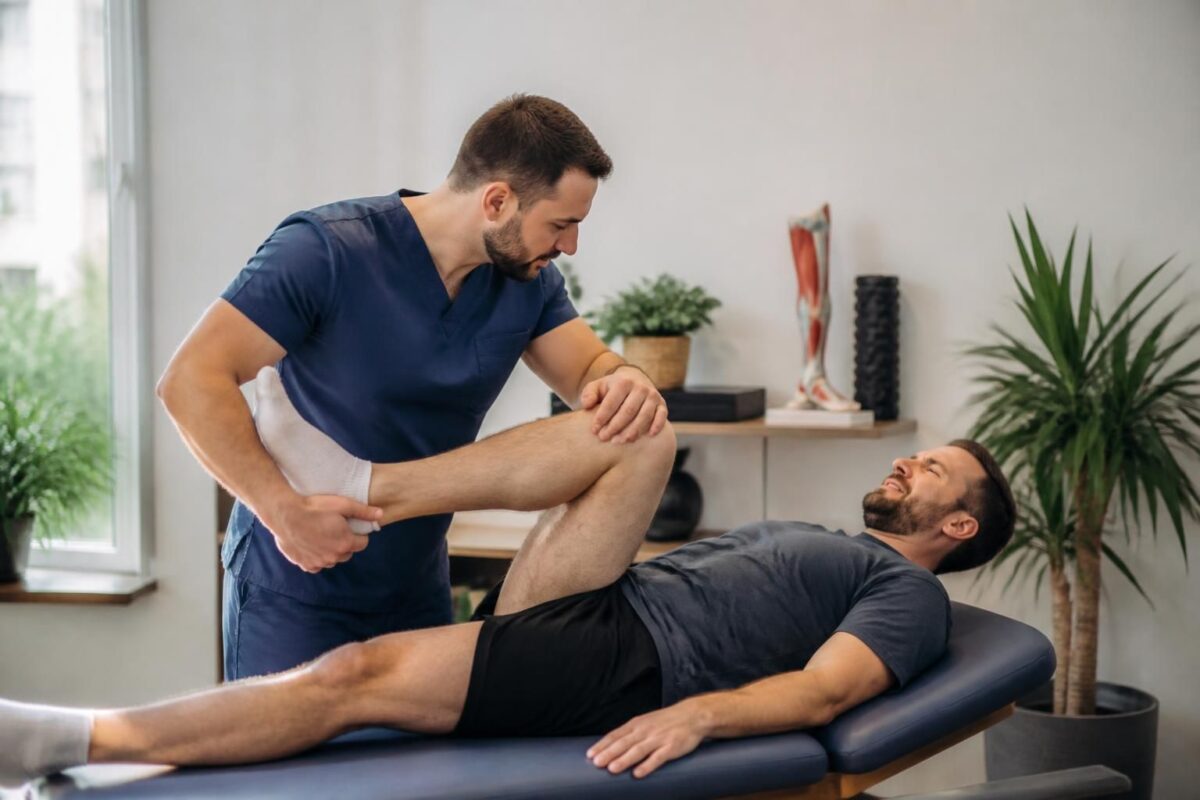
In short In short, Osteopathy is one Global manual approach aimed at reducing Chronic leg pain and improve the quality of life. What is it? Non-drug therapy using the hands to identify restrictions and treat lesional chains. How does it…
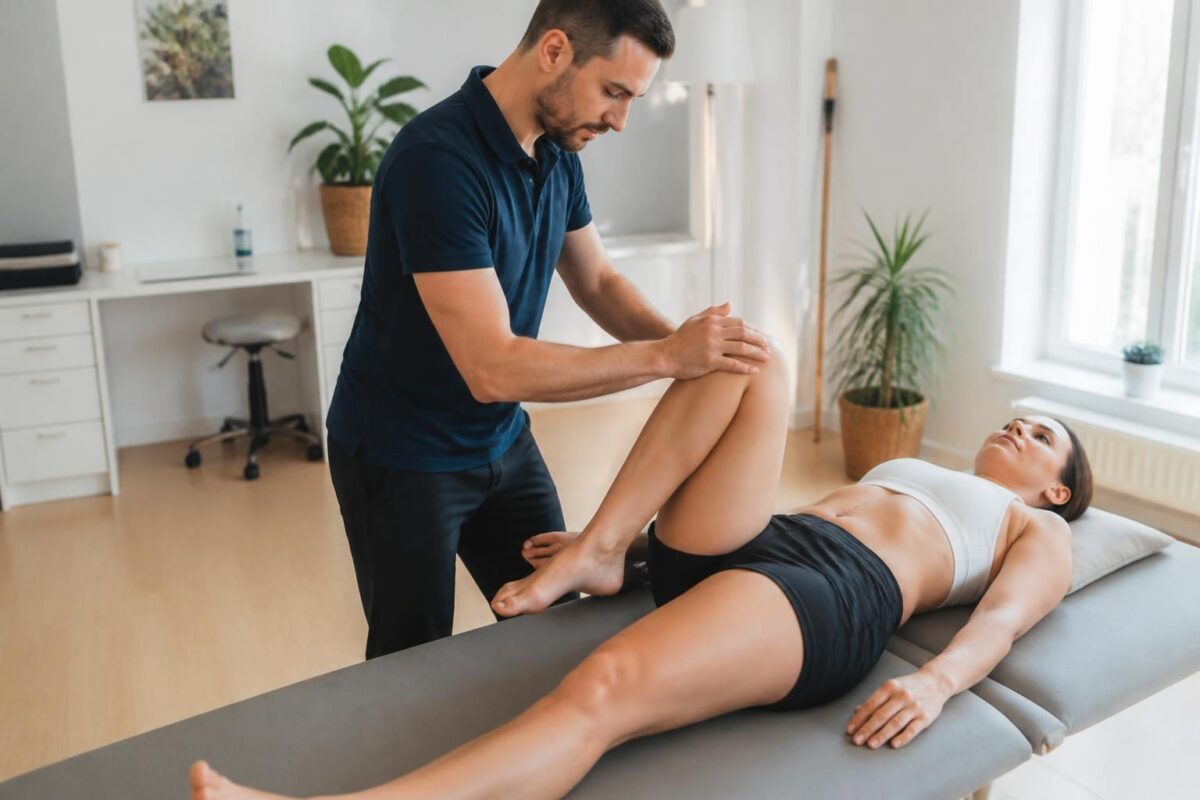
How osteopathy supports recovery after complex surgery
In short In short, Post-operative osteopathy is an approach fresh which supports the recovery After a Complex surgery. It helps to reduce the pain and the fatigue, improves the mobility and accelerates the healing thanks to a better vascularization and…
Testimonials on osteopathic manipulations to strengthen weak joints
“Thanks to Osteopathic manipulations targeted, my Weakened joints have gained in stability and in mobility. Today I find better autonomy in my daily actions and less pain when I get up and during my activities. »
“The adjustments carried out with a careful respect for the rhythm of my breathing calmed my tensions and offered me a Mobility found in the knee and back. My pains have greatly diminished and my joints feel more solid. »
“Over the sessions, the Fitting Techniques released tensions and strengthened the ligaments around my joints. Today, my mobility has become fluid again and my aches have decreased, which allows me to practice my activities without brake. »
“I recommend these osteopathic treatments for their approach fresh and secure. I regained the endurance necessary for my daily and even sporting activities, without fear of joint setbacks. »
“If you are looking to Strengthen your joints Without resorting to surgery, these manipulation can change your life. The practitioner takes the time to listen and adapts each gesture to your body, with great attention to the health and comfort, which gives you confidence and results. »
Dr. Sylvain Desforges is a multidisciplinary practitioner whose expertise coversosteopathy, the naturopathy and the manual medicine. Founding President of the TagMed Clinic and the ACMA Association, he puts his energy at the service of innovation in health care and the improvement of mobility and joint stability. His work focuses on the management of Chronic pain spinal and the integration of advanced technologies to optimize joint function. Its objective is to offer care obvious and evidence-based, in order to sustainably improve everyone’s health and well-being. It invites you to discover its approach and the services available within the TagMed clinic, in order to assess how osteopathic manipulations can strengthen your weakened joints and support your daily life.
In his practice, the Osteo-articular manipulations and the therapeutic mobilizations constitute the base to energize the weakened joints. He recalls that the objective is not only to put a joint in place, but to correct a Joint dysfunction and restore freedom of movement around a reliable articulatory plan. Each session is thought of as a balance between precision, safety and effectiveness, respecting the contraindications and particularities of each patient. This approach is based on a comparative and progressive evaluation that aims to restore joint play while strengthening muscle belts and local nervous mechanisms.
To strengthen the joints, Dr. Desforges combines targeted manual techniques with functional rehabilitation principles. It can combine joint adjustments, work on the fascias and simple exercises to do at home, in order to promote the alignment, stability and endurance of the joint segments. The objective is a lasting reduction in pain and an improvement in the ability to withstand daily constraints, while minimizing risks and favoring progression adapted to age and pathological context.
In addition to the manipulations, it integrates modern technologies to optimize the results: sessions of spinal decompression motorized, the use of laser therapeutic And some shock waves To stimulate tissue recovery, improve circulation and accelerate the repair of joint structures. This holistic approach can treat not only pain, but also the mechanical and biological factors that weaken the joints, while remaining patient-centric and clinical evidence available.
Dr. Desforges’ care pathway focuses on safety, ethics and effectiveness. Each protocol is personalized, adjusted according to the level of activity, age and patient history, and integrated into a global plan for rebalancing tensions and forces. The desired result is a more stable joint, a regained amplitude and a better quality of life, without systematically resorting to invasive treatments.
To find out more about its approach and the services available, contact the TagMed Clinic and learn how these osteopathic manipulations can strengthen your weakened joints and support your mobility on a daily basis.
Quick summary: Osteo-articular manipulations intended for Strengthen weak joints are based on specific gestures, adapted to each patient, which combine engagement, adjustments and rehabilitation programs. This approach aims to restore movement, stabilize fragile areas and optimize the overall function of the musculoskeletal system.
The Osteo-articular manipulations Focused on the joint strengthening are part of a global logic: they aim to restore the joint play, to reduce tensions and promote lasting stability through targeted and controlled gestures, without imposing painful constraints. This approach is accompanied by a personalized rehabilitation plan that optimizes neuromuscular coordination and resilience of the segments concerned.
The process is based on a Overall assessment and comparative tests that identify dysfunctions and priority areas to be reinforced. The practitioner then chooses suitable techniques, such as therapeutic mobilizations And some adjustments selective, integrated into a safe and progressive framework. Expected results include regained mobility, decreased pain and improved joint stability, even in patients with chronic impairment.
To deepen and illustrate the beneficial mechanisms, discover resources on the effects of osteopathy on posture and stress, as well as on improving mobility after surgery: How Osteopathy Improves Posture in Active Patients, Osteopathy and stress, relax physical tension, and Improved mobility after surgery.
Finally, respect for the principles of safety and ethics remains essential: respecting contraindications, obtaining informed consent and adapting techniques to age, health status and patient tolerance. Joint strengthening is not based on pain, but on a measured and personalized progression that fits into a global plan of well-being and prevention. To extend the benefits and optimize the results, do not hesitate to explore the resources and practical advice available and discuss with your osteopath the best strategy adapted to your situation.

Dr Sylvain Desforges, B.Sc., D.O., N.D., osteopath, is the founding president of TAGMED and of the ACMA association. He dedicates his practice to chronic spinal pain, low back pain and symptoms compatible with sciatica, particularly when pain radiates toward the buttock, leg, calf, foot or toes.
Through SOS Sciatique, he publishes educational content on sciatica symptoms, possible causes such as disc herniation, disc narrowing, foraminal stenosis or irritation of a lumbar nerve root, as well as non-surgical approaches that may be considered according to the evaluation. At Clinique TAGMED, care may include, depending on the case, motorized neurovertebral decompression, specific osteopathic care or precision percussion.
For an evaluation related to sciatica treatment in Montreal / Mount Royal or sciatica treatment in Terrebonne, please consult the services available at Clinique TAGMED.
Medical disclaimer
The information published on SOS Sciatique is provided for educational purposes only and does not replace a consultation, diagnosis, opinion or treatment provided by a physician or another authorized healthcare professional. The author of this article is neither a medical doctor nor a specialist in a medical specialty recognized by the Collège des médecins du Québec. The osteopathic, manual medicine or functional support approaches described on this site do not constitute medical acts and are not intended to replace medical follow-up.
Consult a physician or emergency service in cases of loss of bladder or bowel control, anesthesia in the saddle area, significant or progressive weakness in the leg or foot, fever, recent trauma, severe pain or rapid worsening of symptoms. For more details, please read our Legal Notice.