Why osteopathy is effective for recurrent pain
27/06/2026
How Osteopathy Improves Post-Sports Injury Recovery
27/06/2026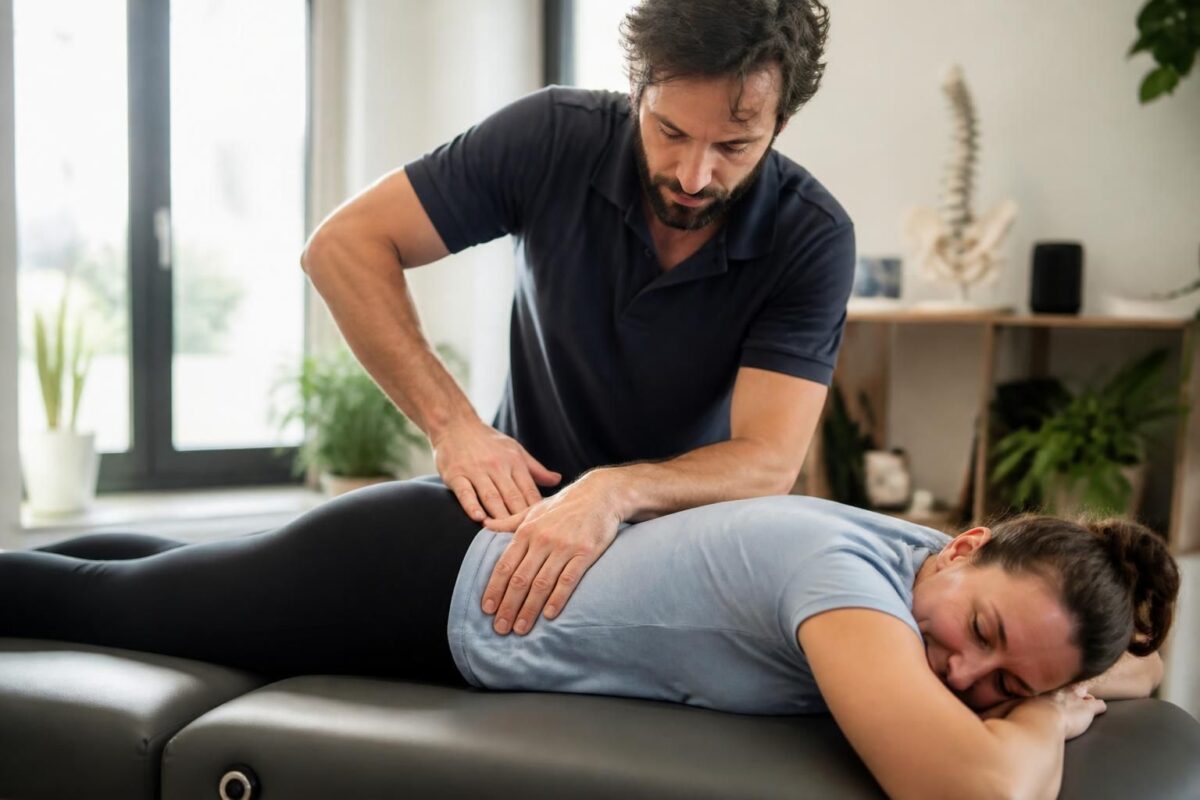
In short
In short, theosteopathy and the Non-invasive support of Lower back pain offer an effective solution for Chronic low back pain. Definition : A non-medicated manual approach that restores mobility and relieves pain. Benefits : Reduction of pain and functional limitations, better mobility, sleep and quality of life, without surgical recourse. Operation : Targeted manipulations and myo-fascial techniques act on the tissues and, according to the neurosciences, modulate the “Bread Matrix” for increased tolerance. In Montreal, this service is particularly recommended for persistent lower back pain and sciatica. |
Find out how theosteopathy Can help relieve lower back pain without surgery or medication, thanks to a comprehensive manual approach adapted to each patient.
- Flexibility and mobility found : Osteopathic manipulations aim to restore the mobility of lumbar structures and surrounding tissues, gently.
- Pain reduction and functional improvement : Many patients experience a decrease in pain and a better ability to move and carry out daily activities.
- Global approach : Postural evaluation, balance of muscle chains and prevention of recurrences to treat the underlying causes.
- Effects on the brain : Recent research suggests that osteopathy can alter the brain circuits involved in pain, contributing to better tolerance and general wellness.
- Multimodal context : osteopathy is part of a global care including adapted physical activity and therapeutic education; The results vary from patient to patient.
This article presents Osteopathy as an approach non-invasive for the Lower back pain. It describes potential mechanisms, emerging evidence and organization of patient-centered care, while focusing on safety and overall well-being.
What is lower back pain and the role of losteopathy
The Lower back pain refer to the pain located in the lower back. When the pain persists beyond three months, we speak of chronic low back pain. Osteopathy intervenes without surgery or invasive drugs and can affect muscle tension, joint mobility and functional relationships between back structures. Its objective is to improve mobility, reduce tension and support the mechanisms of regulating the nervous and sensory system, while promoting the general well-being of the patient.
How Losteopathy acts without surgery
Osteopathic techniques aim to restore the mobility of the joints and release tensions from adjacent tissues. This dynamic approach can help to reduce lumbar discomfort and optimize the overall function of the spine. It is based on a global assessment of the body and manual gestures adapted to each patient, without the need for surgical interventions or invasive treatments.
Evidence and neural mechanisms
Imaging approaches show that osteopathy can influence brain networks dedicated to pain. After osteopathic management, some patients report a decrease in painful perception and an improvement in their functional capacity. These results suggest that osteopathy acts not only on tissues, but also on how the brain processes and interprets pain, which can promote increased tolerance and positive reassessment of painful sensations.
Integration into global support
Ideally, the Osteopathic care is part of a multimodal approach. It can be associated with appropriate physical activity advice, therapeutic education and postural measures to support the lumbar spine. The goal is a lasting improvement in mobility and quality of life, avoiding invasive treatments when possible. Training in osteopathy is done by recognized establishments such as NUMSS, NAO, National University of Medical Sciences and National Academy of osteopathy.
What happens during a session
During a consultation, the osteopath performs a global assessment of posture and movement, then identifies areas of tension and potential dysfunctions. The treatment is based on precise manual gestures adapted to the patient. The goal is to restore mobility, reduce tension and promote better control of sensations. The protocol is personalized and may include a follow-up to adjust techniques and approach depending on the evolution of symptoms. No manipulation is envisaged if there are any doubts about the safety or indication of the treatment.
Resources and useful links
To learn more, you can consult the following resources that show the benefits and mechanisms of osteopathy in the management of lower back pain:
The benefits of osteopathy for optimal recovery
Why osteopathy is a lasting solution for chronic pain
Thesis on osteopathy and lower back pain
Osteopathy and lower back pain: when the brain reveals its secrets
Prevent musculoskeletal disorders
Strengthen mobility after surgery
Osteopathy and low back pain – Recognized benefits
For training issues, recognized institutions include NUMSS, NAO, National University of Medical Sciences and National Academy of Osteopathy. For professional aspects, the reference organizations remain ACMA and the College of Canadian Osteopaths.
Medical Disclaimer: The information and advice provided on this site does not replace the health professional’s diagnosis or treatment. Please note that Dr. Sylvain Desforges osteopath is neither a doctor of medicine nor a doctor, and is not a specialist in a medical specialty as defined by the Collège des Médecins du Québec. Manual medicine, functional medicine and sports medicine as described on this site exclude any medical treatment or diagnosis made by a doctor or specialist doctor. Always consult your doctor for any medical questions. For more details, please read our full legal notice.
- Objective: Sustainably relieve low back pain without surgery or heavy medication.
- Approach: holistic and personalized.
- techniques: precise manipulations, myo-fascial therapies and guided exercises.
- Security: non-invasive; Appropriate assessment and informed consent.
- Evaluation: Targeted tests and lumbar mobility specified.
- Results Expected: reduced pain and regained mobility.
- Prevention: Reinforcement of stabilizers and sustainable posture.
- Accompaniment: Progressive processing plan and personalized follow-up.

This summary presents an approach non-invasive for the Lower back pain centered on theosteopathy. She explains how manual techniques, combined with education and targeted exercises, can reduce pain and improve mobility without having to resort to surgery or heavy pharmacological treatments. Beyond mechanical relief, theosteopathy Aims to restore overall body balance and pain tolerance, with positive effects on quality of life and daily activities.
Why favor non-invasive care
The Lower back pain are a major cause of functional disability. Current recommendations focus on non-drug approaches, including appropriate physical activity, therapeutic education and manual care when appropriate. A gait non-invasive Allows you to target muscle tension, postural imbalances and mobility limitations without resorting to treatments that may have undesirable effects. The objective is to regain the ability to carry out daily activities with comfort and to limit recurrences.
In this context, the sessions ofosteopathy are based on a global assessment of the body and on gentle but targeted techniques. They aim to restore mobility, release tension and improve tissue circulation, while taking into account the personal history and specific constraints of each patient.

How osteopathy improves the quality of life of active people
In short In short, theosteopathy is a global approach that Optimizes mobility and the function of the body of ACTIVE PEOPLE, for a better quality of life. It helps prevent injury and reduce Musculoskeletal pain While promoting the Sports recovery.…

Osteopathy and sports recovery: prepare the body for lasting performance
In short In short, Osteopathy and Sports recovery is one Global manual approach that sustainably prepares the body for the effort by restoring mobility and circulation After the effort. It is a discipline that acts on the sinews, the joints,…
How osteopathy acts on low back pain
The action of theosteopathy goes far beyond a one-time relief. By working on musculo-fascial chains, joints and breathing, it can reduce the stresses that fuel pain and improve overall posture. This approach can also promote better pain tolerance and a more neutral perception of painful sensations.
After a personalized evaluation, the techniques are adapted to pain location, mobility and clinical history. Expected results include a Improving mobility, a pain reduction and a better ability to wear and perform everyday gestures.
Mechanisms that go beyond simple relief
Clinical observations and research indicate that theosteopathy May influence the brain networks involved in pain, contributing to an emotional and perceptual reassessment of painful sensations. These neurophysiological mechanisms partly explain why patients feel not only less pain, but also a general improvement in well-being.
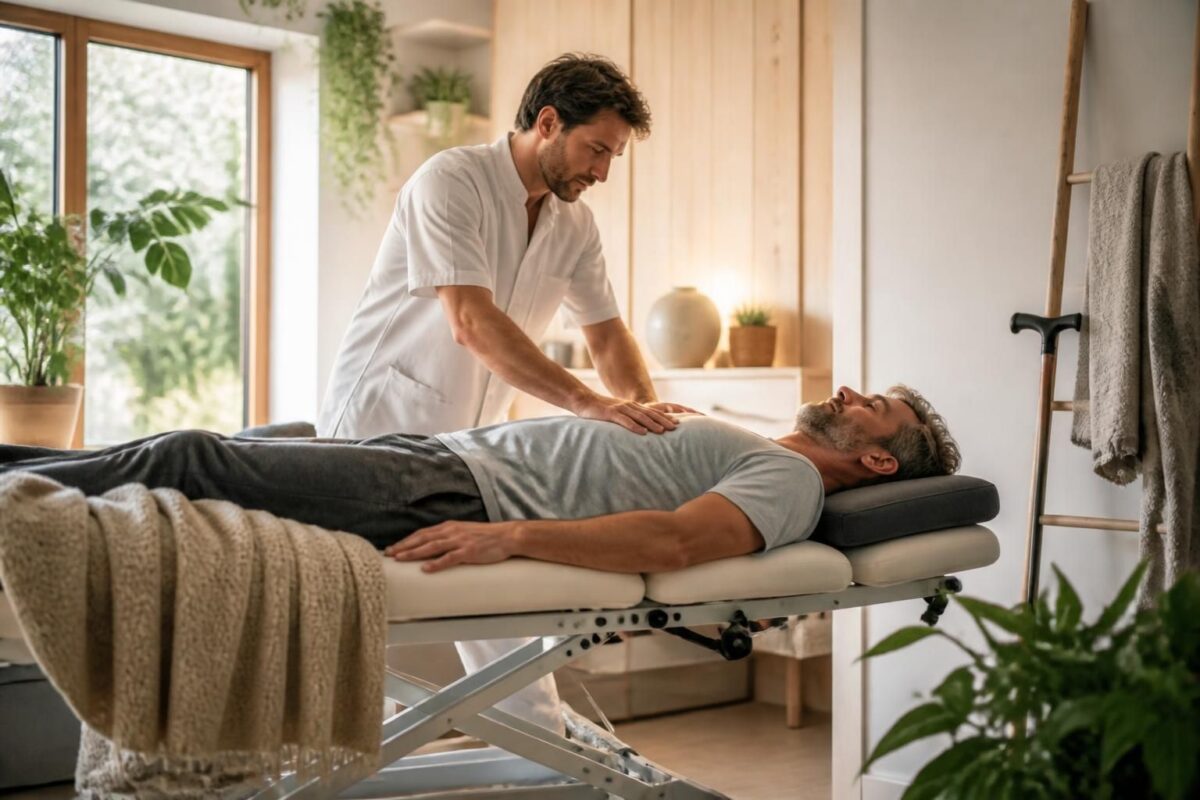
Why Osteopathy Is Essential For Recovery People
In short In short, Osteopathy in convalescence is an approach manual and holistic which helps to accelerate the recovery by restoring The balance, the mobility and a good circulation fabrics. it contributes to Reduce the pain, support the Back to…

Osteopathic manipulations to strengthen post-traumatic muscles
In short In short, Osteopathic manipulations for Strengthen post-traumatic muscles constitute a gentle manual approach aimed at restoring the mobility, reduce the pain and facilitate the Functional rehabilitation After a injury. What is Is it? A series of precise gestures…
Practical plan and daily advice
Support begins with a evaluation and one Personalized treatment plan. In addition, simple and adapted exercises at home strengthen the stabilizing muscles and promote the relaxation of the tissues. Postural counseling and regular physical activity are easily integrated into everyday life and accelerate recovery.
It is important to discuss with your practitioner about the delays and steps of treatment. Collaboration with other professionals, such as physiotherapists or sports doctors, can enhance the effectiveness and safety of the therapeutic journey.

Osteopathy and prevention of work-related musculoskeletal disorders
In short theosteopathy is one Manual approach that restores body balance and prevents MSD related to work. Its advantages: reduction of tension, improvement of mobility and prevention of chronic pain. She is preventive and healing, suitable for office and trades…

The benefits of osteopathy to treat muscle imbalances
In short theosteopathy is a manual approach to restore themuscle harmony and postural considering the body as a whole. Its main benefits include the reduction of aches and tensions, the improvement of the mobility and from the posture, and prevention…
What you can expect and how to optimize the results
With appropriate progression, significant improvements in pain and mobility may appear after a few sessions. The key lies in the regularity of visits, the integration of exercises to practice at home and postural education. An adapted and personalized approach maximizes the chances of sustainable recovery and better well-being on a daily basis.
| Axis | Concise description |
|---|---|
| Definition and purpose | Losteopathy is an approach non-invasive which aims to reduce the lumbar pain and to restore overall mobility without surgery or initial medication. |
| Non-invasive nature | Manual intervention fresh, suitable for the patient, without incision or first-line drug. |
| Main mechanism of action | Improvement of the mobility joint, release of tension and rebalancing of muscle chains, with effect on the neural networks involved in the pain. |
| pain results | Progressive relief and reduction in pain perceived after a few sessions. |
| Functional impact | top mobility, posture and daily activities, promoting a return to the activity. |
| Safety and side effects | Effects Uncommon and transients (passage pain, stiffness); enhanced security by prior assessment. |
| Accessibility and duration of sessions | Typical sessions of 30 to 45 minutes, progressive treatment plan and variable accessibility depending on the practitioner. |
| Prerequisites and follow-up | initial evaluation and osteo-differential tests; Follow-up needed to adjust manipulations and exercises. |
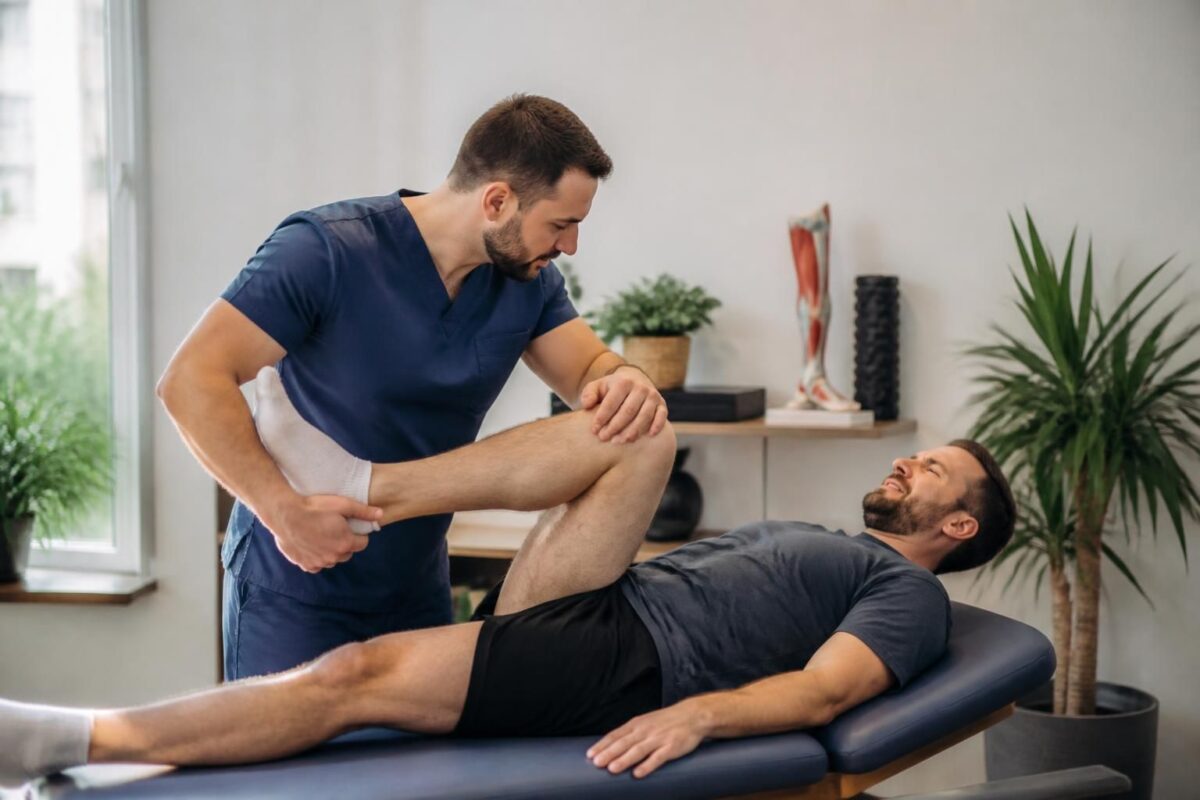
Osteopathy and chronic leg pain: regaining an optimal quality of life
In short In short, Osteopathy is one Global manual approach aimed at reducing Chronic leg pain and improve the quality of life. What is it? Non-drug therapy using the hands to identify restrictions and treat lesional chains. How does it…
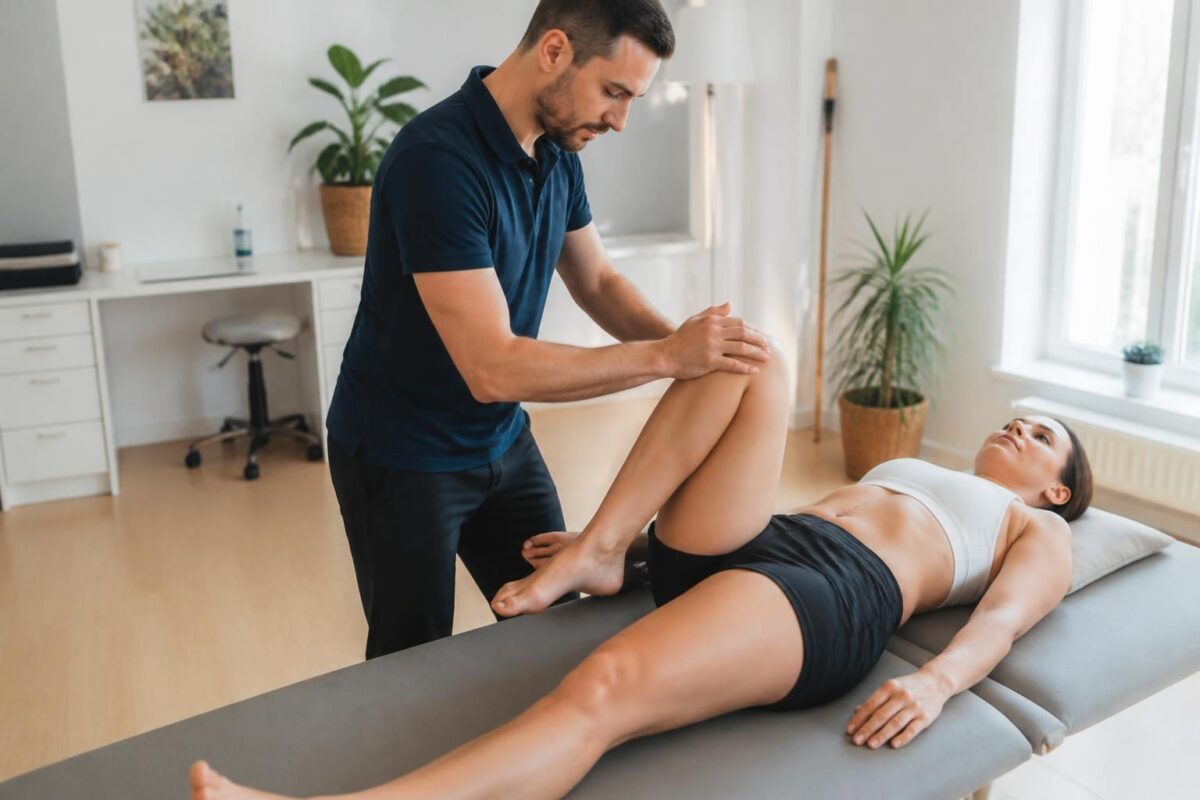
How osteopathy supports recovery after complex surgery
In short In short, Post-operative osteopathy is an approach fresh which supports the recovery After a Complex surgery. It helps to reduce the pain and the fatigue, improves the mobility and accelerates the healing thanks to a better vascularization and…
Testimonials: Osteopathy and lower back pain — Non-invasive care
“Before, my Lower back pain bothered me on a daily basis and woke me up at night. After 6 sessions ofosteopathy, I found better mobility and sleep. The treatment is non-invasive And adapted to my body, without medication. » Marie, 38, librarian.
“Working for a long time in front of the computer, my low back pain worsened at the end of the day. theosteopathy brought me lasting relief and, above all, without product or surgery: an approach non-invasive which allowed me to resume my family activities. Thomas, 34, developer.
“After sciatica, I was afraid of invasive treatments. Osteopathy has been a gentle and effective way, non-invasive, which reduced my pain and improved my daily mobility. I highly recommend. » Sandrine, 46, customer advisor.
“As a retiree, my low back pain hindered me in my favorite activities. The approach non-invasive Osteopathy rebalanced my posture and reduced my lower back pain. My gardening afternoons and walks are back. » Philippe, 66, retired.
“Graphist and seated for a long time, my low back pain slowed me down. Thanks to osteopathy, my Lower back pain decreased and my mobility improved without surgery or medication; an approach non-invasive which made me freer and more focused. Léa, 29, graphic designer.
Dr. Sylvain Desforges embodies a modern approach to Osteopathy and manual medicine, with a clear vocation: to propose a management of Lower back pain Based on evidence and tangible results, without systematically resorting to invasive treatments. Recognized expert in osteopathy, naturopathy and manual medicine, he is the founding president of tagmed and association acma, and is part of an innovation approach at the service of health. His practice favors the individualization of care and the integration of advanced technologies to optimize the well-being of his patients.
Faced with chronic low back pain, which it manifests as persistent pain, stiffness and limitation of daily activities, Osteopathy offers support non-invasive and centered on the whole body. Manipulative osteopathic treatment (OMT) and associated techniques aim to restore the mobility of joint structures, release muscle tension and correct postural imbalances. This approach, supported by recent research, shows pain reduction and function improvement, while avoiding tissue invasion and potential side effects from pharmacological treatments.
Beyond the therapeutic gesture, Dr. Desforges insists on a holistic evaluation that considers physical, postural and behavioral factors. Its approach combines targeted manipulations, myo-fascial techniques and practical advice on exercises and ergonomics, in order to promote sustainable self-management of pain. In addition, it relies on non-invasive tools, such as decompression methods and physical therapies, to support the healing process without the need for surgical procedures.
A key dimension of its practice is based on the integration of relevant technologies for the treatment of low back pain. The vertebral decompression, the sessions of laser and therapies by shock waves Integrate with osteopathic manipulations to alleviate pain, accelerate tissue recovery and improve activity tolerance. This combination makes it possible to approach the pain from several angles, favoring a personalized and secure approach which remains non-invasive and adapted to each patient.
For patients, this approach offers a clear perspective: a gradual reduction in painful intensity, better mobility, regained quality sleep and a regained ability to resume daily activities. The goal is to create a lasting balance between body and mind, strengthening resilience mechanisms and promoting a better quality of life. Throughout the course, the patient is invited to participate actively in his treatment, in order to promote the adhesion and effectiveness of non-invasive care.
To learn more about his approach and the services available, contact TagMed and find out how Osteopathy can support you in the management of Lower back pain without surgery or medication. A professional and adapted approach awaits you, designed to optimize your health and well-being.
quick summary : theosteopathy offers an approach non-invasive for the Lower back pain, able to reduce pain and improve mobility by acting on tissues and nerve circuits. Recent evidence indicates changes in the Brain connectivity and better pain tolerance, which positions osteopathy as an effective option in the multimodal management of low back pain.
Synthesis
As part of Lower back pain Chronicles, theosteopathy Not limited to mechanical relief. It is part of a global approach aimed at restoring mobility, releasing tension and recalibrating the nerve signals that fuel pain.
The results of clinical work show that osteopathic manipulations can permanently reduce pain and functional limitations, while integrating into a multimodal therapeutic strategy including appropriate physical activity, therapeutic education and stress management.
Imaging analyzes and perceptual assessments reveal changes in the Matrix Bread », the brain network involved in the perception and modulation of pain. After osteopathic treatment, there is a decrease in connectivity in the lumbar somatosensory cortex, an increase in the insula and a strengthening of connections in the prefrontal cortex. These adjustments are associated with a reduction in pain and a better quality of life.
Concretely, this translates into better pain tolerance, a decrease in tension and a gradual resumption of daily activities without excessive dependence on drugs.
It is important to emphasize that the results vary between patients and the severity of the symptoms, which underlines the need for a personalized diagnosis and treatment plan to optimize the results.
Resources and additional readings
To deepen, discover these resources and analyzes on osteopathy and lower back pain:
Lumbago – Causes, prevention and effective treatments with osteopathy
Osteopathy and muscle tension linked to repetitive activities
Osteopathy – a valuable support against lower back pain
Back pain – Is osteopathy really effective?
Osteopathy and lower back pain – Non-invasive management
How Osteopathy Can Reduce Diffuse Muscle Pain
The benefits of osteopathy on repetitive work pain
Osteopathy and post-traumatic rehabilitation — Complementary treatment
Why osteopathy is essential for top athletes

Dr Sylvain Desforges, B.Sc., D.O., N.D., osteopath, is the founding president of TAGMED and of the ACMA association. He dedicates his practice to chronic spinal pain, low back pain and symptoms compatible with sciatica, particularly when pain radiates toward the buttock, leg, calf, foot or toes.
Through SOS Sciatique, he publishes educational content on sciatica symptoms, possible causes such as disc herniation, disc narrowing, foraminal stenosis or irritation of a lumbar nerve root, as well as non-surgical approaches that may be considered according to the evaluation. At Clinique TAGMED, care may include, depending on the case, motorized neurovertebral decompression, specific osteopathic care or precision percussion.
For an evaluation related to sciatica treatment in Montreal / Mount Royal or sciatica treatment in Terrebonne, please consult the services available at Clinique TAGMED.
Medical disclaimer
The information published on SOS Sciatique is provided for educational purposes only and does not replace a consultation, diagnosis, opinion or treatment provided by a physician or another authorized healthcare professional. The author of this article is neither a medical doctor nor a specialist in a medical specialty recognized by the Collège des médecins du Québec. The osteopathic, manual medicine or functional support approaches described on this site do not constitute medical acts and are not intended to replace medical follow-up.
Consult a physician or emergency service in cases of loss of bladder or bowel control, anesthesia in the saddle area, significant or progressive weakness in the leg or foot, fever, recent trauma, severe pain or rapid worsening of symptoms. For more details, please read our Legal Notice.