Osteopathy and posture: correcting imbalances
27/06/2026
The benefits of osteopathy to relieve tension in the shoulders
27/06/2026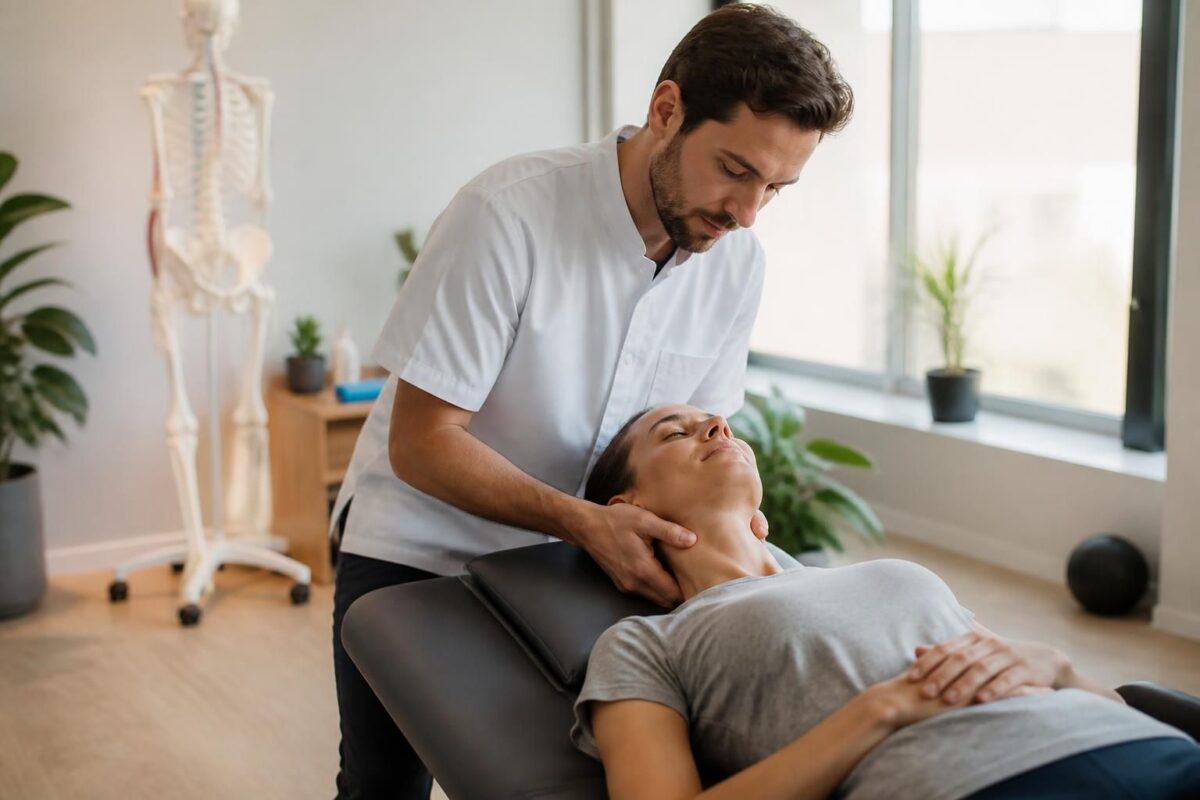
In short
|
theosteopathy is a manual approach that helps to reduce Diffuse muscle pain By acting on tensions and joints. Benefits include pain reduction, Improving mobility and compensation prevention Posturals. how it works: Gentle techniques, of stretches And some engagement Targeted release tensions and restore balance, with practical tips for everyday life. In Montreal, this service is particularly useful for people with diffuse pain related to stress or poor posture. |
In case of Diffuse muscle pain, osteopathy works by correcting the chronic tensions, the bad postures and the stress that cause them. thanks to Manual techniques targeted such as stretches, of gentle pressures And some engagement, it helps to release contractures and lift movement restrictions. This allows to Reduce the pain, to restore the flexibility muscles and tissues, and improve the mobility on a daily basis. By also acting on the near and remote structures of the painful area, osteopathy promotes sustainable recovery and better quality of life.
This article explains how Osteopathy can reduce Diffuse muscle pain By acting on tensions, mobility and traffic. It describes the compensation mechanisms and approaches used by the osteopath to help restore function and quality of life without the need for invasive treatments.
Understand diffuse muscle pain
Diffuse pain does not affect a single muscle. They come from Chronic tensions, poor postures, stress and repeated loads. They are manifested by contractures and a generalized painful sensation in different areas of the body.
Analgesic attitudes, i.e. positions taken to limit pain, play a role. They seem comfortable, but they can block remote joints and trigger pain from a distance. The osteopath evaluates these mechanisms and identifies the compensation zones.
To deepen the links between inflammation and osteopathy, check out this article: How Osteopathy Reduces Chronic Inflammation.
How osteopathy acts on diffuse pain
Osteopathy aims to decrease muscle tension and restore the fabric function By acting on the fascias, the muscle groups and the joints. This approach can reduce nerve irritation and improve circulation local, which contributes to reducing pain and restoring a better mobility.
the techniques used are manuals, soft and suitable for each person. They include engagement and light pressures, in order to free the blockages without attacking the structures. The objective is to eliminate protective reactions that feed the vicious pain-tension circle.
To learn more about the role of osteopathy in rehabilitation and pain reduction, see this article: Osteopathy and sports pain: prevent and treat effectively.
Typical techniques and interventions
The approaches favor precise gestures adapted to the location and intensity of the pain. The work can target areas close to or away from pain in order to identify tension chains and compensations. The goal is a pain reduction and a lasting improvement in the Functional mobility.
Additional readings make it possible to broaden the understanding of the mechanisms of action of osteopathy in diffuse muscle pain, for example this article on the benefits for recurrent sports pain: The advantages of osteopathy to treat recurrent athletic pain.
Practical integration into support
During the first consultation, the osteopath identifies the areas of tension and the postural patterns. A follow-up plan can be proposed to prevent compensation and adapt the actions according to the evolution. Osteopathy can be integrated into lifestyle advice and the management of daily loads in order to optimize the results and the prevention of recurrences.
To better understand the link between osteopathy and reduction of muscle pain, check out this excerpt: (read an illustrative resource).
Resources and additional readings
To deepen the mechanisms, you can consult:
• How Osteopathy Reduces Chronic Inflammation
• Osteopathy and osteoarthritis, relieve without medication
• Osteopathy and sports pain: prevent and treat effectively
• The advantages of osteopathy to treat recurrent athletic pain
To learn more about the practical aspects and results of osteopathy in the context of diffuse muscle pain, see also the following resources on the TagMed website: Tagmed Clinic.
Medical Disclaimer: The information and advice provided on this site does not replace the health professional’s diagnosis or treatment. Please note that Dr. Sylvain Desforges osteopath is neither a doctor of medicine nor a doctor, and is not a specialist in a medical specialty as defined by the Collège des Médecins du Québec. Manual medicine, functional medicine and sports medicine as described on this site exclude any medical treatment or diagnosis made by a doctor or specialist doctor. Always consult your doctor for any medical questions. For more details, please read our full legal notice.
- relieve tension by targeted techniques.
- Improve mobility muscles and tissues.
- Reduce remote blockages and prevent compensation.
- Harmonize postures and musculoskeletal chains.
- Balance muscle chains and nearby joints.
- Boost circulation blood and lymphatic.
- Prevent recurrences by maintenance tips.
- Make daily life easier without pain.

This summary explains how theosteopathy can help reduce Diffuse muscle pain By acting on tension, mobility and body balance. By evaluating the entire musculoskeletal system and targeting sensitive areas, the osteopath can reduce pain while preventing the compensatory mechanisms that maintain discomfort on a daily basis.
Understand diffuse muscle pain
Diffuse muscle pain is presented as a generalized feeling of tension, without single location. They often emanate from chronic tension, poor posture, stress or lack of activity. Some people adopt analgesic attitudes, positions that temporarily relieve but can create blockages elsewhere in the body and fuel pain from a distance. Understanding these mechanisms helps the osteopath to intervene in a more targeted way.
The role of osteopathy is not only to relieve pain, but also to consider the root causes. This involves evaluating the mobility of the near and distant joints, the balance of the fascias and the interaction between the skeleton and the soft tissues. The goal is to restore a mobility fluid and prevent Compensatory reactions which can reproduce or aggravate the pain.

How osteopathy improves the quality of life of active people
In short In short, theosteopathy is a global approach that Optimizes mobility and the function of the body of ACTIVE PEOPLE, for a better quality of life. It helps prevent injury and reduce Musculoskeletal pain While promoting the Sports recovery.…

Osteopathy and sports recovery: prepare the body for lasting performance
In short In short, Osteopathy and Sports recovery is one Global manual approach that sustainably prepares the body for the effort by restoring mobility and circulation After the effort. It is a discipline that acts on the sinews, the joints,…
The mechanisms and actions of osteopathy to reduce diffuse muscle pain
Global assessment and personalized plan
Each patient benefits from a Overall assessment which takes into account posture, joint mobility and muscle tension throughout the body. This approach makes it possible to identify the painful areas and segments that influence pain at a distance. The care plan is then adapted with realistic goals to restore mobility and limit the triggers.
Release of tensions and improved circulation
thanks to manual techniques delicate, the osteopath can release tense muscles and fascias, while stimulating the circulation blood and lymphatic. This action helps to reduce contractures, accelerate the evacuation of metabolic waste and promote the intake of essential nutrients, which reduces pain and improves flexibility.
Restoration of mobility and prevention of compensation
By working on the joints and surrounding structures, the osteopath helps to restore a mobility harmonious. This limits remote blockages and compensatory phenomena which can create new pains elsewhere. At the same time, posture and activity advice are given to prevent recurrences.
Practical advice and progress on a daily basis
To support the results, simple and secure exercises can be recommended, such as gentle stretching, active micro-breaks and breathing techniques to reduce stress. The objective is to gradually integrate habits that maintain the mobility and reduce tension, without overloading muscles or joints.
| Intervention axis | expected effect |
|---|---|
| Identification of voltages and blocks | Identification of tensions and blocks to release movement and reduce pain. |
| Release of muscle tension | Release of tensions by targeted manual techniques. |
| Local joint mobilizations | Local articular mobilizations to restore mobility and circulation. |
| Reduction of compensatory schemes | Correction of compensatory postural patterns. |
| Stimulation of local traffic | Stimulation of local muscle circulation. |
| Nervous system regulation | regulation of the regional nervous system to decrease sensitivity. |
| Postural education and self-care | Postural education and self-care advice. |
| Sweet exercises and progressive reinforcement | Gentle exercise program to strengthen and relax. |
| Personalized follow-up | Custom tracking to adjust treatment and maintain gains. |
Why Osteopathy Is Essential For Recovery People
In short In short, Osteopathy in convalescence is an approach manual and holistic which helps to accelerate the recovery by restoring The balance, the mobility and a good circulation fabrics. it contributes to Reduce the pain, support the Back to…

Osteopathic manipulations to strengthen post-traumatic muscles
In short In short, Osteopathic manipulations for Strengthen post-traumatic muscles constitute a gentle manual approach aimed at restoring the mobility, reduce the pain and facilitate the Functional rehabilitation After a injury. What is Is it? A series of precise gestures…
Testimonials: how osteopathy can reduce diffuse muscle pain
“Before consulting, my diffuse muscle pains pulled my back and woke me up at night. thanks to specific manual techniques such as Targeted stretching, gentle pressures And some engagement, I felt a Real pain decrease and an Better mobility on a daily basis. »
“Stress and bad postures caused tensions that extended throughout the body. After a few sessions, osteopathy released these tensions and restored muscle balance, resulting in a Lasting pain reduction and an Improvement of flexibility. »
“The diffuse pain held me back in my daily actions and my hobbies. The osteopathic approach, focused on the release of tensions and the reharmonization of muscle chains, allowed me to find Better range of motion and an Better quality of life without the use of heavy treatment. »
“We think the pain is localized, but osteopathy shows that Remote blocks can settle. By restoring the mobility of nearby joints, the offsets fade and diffuse pain decreases. »
“After a few sessions, the diffuse pain decreased and the feeling of fatigue subsided. the techniques used, in particular the engagement and the stretches, made me more mobile and less tense. »

Osteopathy and prevention of work-related musculoskeletal disorders
In short theosteopathy is one Manual approach that restores body balance and prevents MSD related to work. Its advantages: reduction of tension, improvement of mobility and prevention of chronic pain. She is preventive and healing, suitable for office and trades…

The benefits of osteopathy to treat muscle imbalances
In short theosteopathy is a manual approach to restore themuscle harmony and postural considering the body as a whole. Its main benefits include the reduction of aches and tensions, the improvement of the mobility and from the posture, and prevention…
Dr. Sylvain Desforges, expert in osteopathy, naturopathy and manual medicine, is the founding president of TagMed and the ACMA association. With a career dedicated to innovation in health care, he specializes in Management of chronic pain and the integration of advanced technologies such as spinal decompression, the laser and the Shockwave therapy. Its methodology is based on a holistic vision of the body, where diffuse pain is seen as the culmination of an interconnected network of muscles, fascias, joints and nerves. Its mission is to offer care evidence-based In order to optimize everyone’s health and well-being. To discover its approach and the services offered, consider a consultation within the TagMed clinic.
When we talk about Muscle pain diffused, osteopathy is not limited to treating the painful muscle, but seeks to understand and correct the imbalances that extend beyond the affected area. The job is to loosen fascia tensions, rebalance the muscle chains and restore the mobility of joints that can be near or distant from pain. Diffuse pain often reflects compensation mechanisms where the body adapts its function. By analyzing the body as a functional whole, the practitioner identifies these patterns and adjusts the structures concerned to reduce pain and prevent the appearance of new tensions.
Concretely, osteopathy acts through targeted manual techniques that release myofascial tensions, harmonize joint mobility and improve local blood and lymph circulation. This approach facilitates more fluid movements and allows the nervous system to better regulate pain. By correcting postural habits and repeated pressures, the osteopath helps patients get out of pain attitudes — these reflexes which, if they persist, can lead to remote blockages and nourish new pain. The objective is to permanently reduce pain while restoring functional stability compatible with normal daily activity.
To enrich his action, Dr. Desforges can use additional tools such as Motorized spinal decompression, protocols of laser and sessions of Shockwave therapy, always in a logic of individualized evaluation and appropriate care. These technologies, used with discernment, support tissue rehabilitation and accelerate the return to painless daily activities. They are part of a process Based on clinical evidence and personalization of care, in order to respond to the wide variety of diffuse pain sources in patients.
At the heart of his practice, Dr. Desforges relies on patient education and prevention. After a complete assessment, he develops a progressive treatment plan that combines manual techniques, stretching tips, strengthening exercises and stress management strategies. The objective is to optimize tissue mobility, improve posture and strengthen resilience in the face of triggering factors, so that everyone can resume and maintain regular physical activity without diffuse pain. To find out more about its approach and the services offered, contact the TagMed Clinic.
Quick Summary: Osteopathy can reduce Diffuse muscle pain By acting on tensions, bad positions and compensations of the body. thanks to Manual techniques targeted and a global approach, it promotes the reduction of pain, the restoration of mobility and the prevention of repetitive pain linked to remote blockages.
The Analgesic attitudes may seem natural but they sometimes maintain Remote blocks and tensions that delay healing. The objective of the osteopath is to identify these compensations and to assess the mobility of the joints, both near and far from the painful area, in order to limit the repercussions on other areas and to avoid further pain.
In practice, the global approach consists of releasing chronic tensions, improving circulation and restoring tissue flexibility through Manual techniques such as stretches, of gentle pressures And some engagement. These targeted gestures make it possible to unwind contractures, improve mobility and promote more fluid daily gestures.
Resources and summaries show that theosteopathy Can act permanently on musculoskeletal pain and, in particular, on lower back pain and diffuse pain. To explore these areas of proof and application, discover:
Relieve joint pain without medication thanks to osteopathy,
Osteopathy and shoulder pain, a natural solution,
The benefits of osteopathy to relieve lower back pain,
HealthLog: confirmed efficacy.
To go further, other analyzes highlight the benefits of osteopathy on Chronic pain and general well-being, and open the door to a functional and lasting recovery. You can consult in particular:
The benefits of osteopathy on chronic pain,
Santémag: Osteopathy to relieve pain and improve well-being.
In addition, the association between Sports recovery and postural adjustment shows that osteopathy can optimize performance and reduce stress-related pain, correcting Postural imbalances Chronicles. To deepen these aspects and the links between posture and pain, see:
Osteopathy and sports recovery,
Chronic postural imbalances.
Finally, for a personalized and sustainable approach, requesting an osteopathic evaluation makes it possible to identify areas of tension and compensation schemes in order to adapt daily gestures and posture, by favoring a progressive and respectful approach to the body.
Osteopathy and chronic leg pain: regaining an optimal quality of life
In short In short, Osteopathy is one Global manual approach aimed at reducing Chronic leg pain and improve the quality of life. What is it? Non-drug therapy using the hands to identify restrictions and treat lesional chains. How does it…
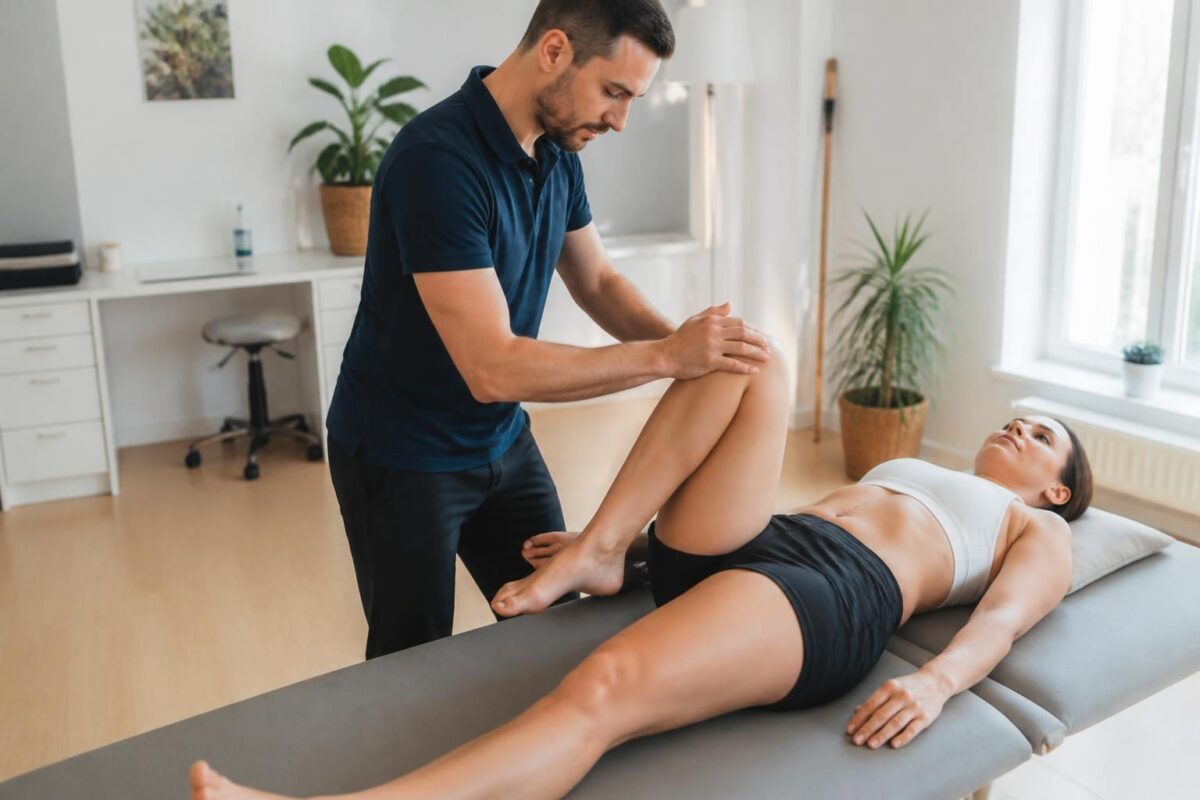
How osteopathy supports recovery after complex surgery
In short In short, Post-operative osteopathy is an approach fresh which supports the recovery After a Complex surgery. It helps to reduce the pain and the fatigue, improves the mobility and accelerates the healing thanks to a better vascularization and…

Dr Sylvain Desforges, B.Sc., D.O., N.D., osteopath, is the founding president of TAGMED and of the ACMA association. He dedicates his practice to chronic spinal pain, low back pain and symptoms compatible with sciatica, particularly when pain radiates toward the buttock, leg, calf, foot or toes.
Through SOS Sciatique, he publishes educational content on sciatica symptoms, possible causes such as disc herniation, disc narrowing, foraminal stenosis or irritation of a lumbar nerve root, as well as non-surgical approaches that may be considered according to the evaluation. At Clinique TAGMED, care may include, depending on the case, motorized neurovertebral decompression, specific osteopathic care or precision percussion.
For an evaluation related to sciatica treatment in Montreal / Mount Royal or sciatica treatment in Terrebonne, please consult the services available at Clinique TAGMED.
Medical disclaimer
The information published on SOS Sciatique is provided for educational purposes only and does not replace a consultation, diagnosis, opinion or treatment provided by a physician or another authorized healthcare professional. The author of this article is neither a medical doctor nor a specialist in a medical specialty recognized by the Collège des médecins du Québec. The osteopathic, manual medicine or functional support approaches described on this site do not constitute medical acts and are not intended to replace medical follow-up.
Consult a physician or emergency service in cases of loss of bladder or bowel control, anesthesia in the saddle area, significant or progressive weakness in the leg or foot, fever, recent trauma, severe pain or rapid worsening of symptoms. For more details, please read our Legal Notice.