How osteopathy acts on neuropathic pain
28/06/2026
Osteopathic techniques to ease diffuse muscle tension
28/06/2026
In short
| In short, theosteopathy is one Global approach and personalized of the pain management, which uses manual techniques to improve the mobility and promote the Natural healing. its main benefits include pain reduction, improved mobility and well-being, as well as an approach non-invasive and adapted to each patient. Operation is based on a Holistic evaluation of the body and a personalized treatment plan combining engagement, spinal manipulation and soft tissue work. In Montreal, this service is particularly useful for lower back pain and chronic musculoskeletal disorders. |
in theosteopathy, the pain management is done by a Personalized approach which considers the body as a unit where Structure and function mutually influence each other. of Manual techniques soft, such as mobilization and work on the fabrics, aim to restore theBody balance and improve mobility for a lasting effect.
This method is non-invasive and is distinguished by its overall patient assessment, the definition of a Custom Plan and, when necessary, integration into a framework multidisciplinary to optimize results and general well-being.
The osteopathy offers a body-centric approach as a unit. She aims for a pain management Durable by simple and precise manual techniques. This article describes how this discipline fits into a Personalized approach of the patient.
Understanding Osteopathy
Osteopathy starts from the finding that structure and function mutually influence each other. The practitioner evaluates the body as a whole and acts with precise gestures. Techniques include mobilization joints, vertebral manipulations and soft tissue work. The objective is to restore balance and promote the body’s self-healing ability.
Techniques and mechanisms
Osteopathic gestures aim to improve mobility, circulation and coordination of structures. These gestures are practiced in a way non-invasive and adapted to each patient. To deepen, consult resources on the role of osteopathy in managing chronic pain and recovery after trauma, for example.
For more, resources like Why osteopathy is essential for rapid recovery after trauma or Osteopathy and recovery after a fracture: regain mobility illustrate these dimensions.
Osteopathy and chronic pain
Studies show that osteopathy can reduce pain and improve function in chronic lower back and cervical pain. When osteopathy is integrated into a Overall care plan, the results often improve. Testimonials from patients suggest a decrease in pain after regular sessions. To enrich your reading, see Santémag: Osteopathy to relieve pain and improve well-being.
Additional resources show how osteopathy is part of a comprehensive, non-drug approach to chronic pain. Integration with other therapies can optimize results.
Limits and precautions
Osteopathy helps manage pain, but it does not always eliminate it. Regular sessions may be needed to maintain benefits. It is advisable to consult a doctor to guide the course, especially in the presence of significant or progressive symptoms.
Integration and care pathway
Osteopathy can complete a multidisciplinary approach. She joins forces with medical advice and other non-invasive approaches to aim for an overall improvement in quality of life.
To deepen, useful resources include articles on the link between osteopathy and chronic pain and practical guides, such as Osteopathy and chronic pain management and Chronic pain and osteopathy.
Training context and professional resources
Professionals practice their training in recognized institutions including NUMSS, NAO, National University of Medical Sciences and National Academy of osteopathy.
Specific references and resources
To explore other perspectives and content, you can view these resources:
Osteopathy and recovery after trauma,
Recovery after a fracture,
Non-invasive osteopathy for chronic pain,
Interest of osteopathy in the management of acute and chronic pain,
Chronic hip pain: complete management.
To benefit from a Personalized pain management, contact a certified osteopath for a comprehensive assessment and a suitable care plan.
Useful links :
Osteopathy and chronic pain management,
Chronic pain and osteopathy,
Santémag – Osteopathy and well-being.
Medical Disclaimer: The information and advice provided on this site does not replace the health professional’s diagnosis or treatment. Please note that Dr. Sylvain Desforges osteopath is neither a doctor of medicine nor a doctor, and is not a specialist in a medical specialty as defined by the Collège des Médecins du Québec. Manual medicine, functional medicine and sports medicine as described on this site exclude any medical treatment or diagnosis made by a doctor or specialist doctor. Always consult your doctor for any medical questions. For more details, please read our full legal notice.
- Overall assessment to identify the causes and constraints of pain.
- Custom Plan adapted to your goals and lifestyle.
- Functional objective : regain mobility and comfort on a daily basis.
- Non-pharmacological approach and centered on the body.
- Gentle techniques adapted to release tension and improve mobility.
- Structure/function balance To reduce tensions and prevent recurrences.
- Personalized follow-up and adjustments according to the patient’s response.
- Coordination with other professionals if necessary for global care.

This article presents how Osteopathy can facilitate the pain management By adopting a Personalized approach, centered on the whole body and adapted to each patient. By combining targeted manual techniques and a global assessment, it aims to restore balance, reduce pain and improve function, while integrating into a coordinated care plan.
Understanding osteopathy and pain
Osteopathy starts from the principle that the body forms a functional unit where the structure and the function mutually influence each other. Osteopaths use manual techniques like the Joint mobilization, the vertebral manipulation and work on soft tissues to detect, treat and prevent dysfunctions. The objective is to restore overall balance and promote natural healing while optimizing mobility.
As part of the chronic pain, osteopathy can reduce pain and improve mobility without first resorting to invasive treatments. It is not a universal solution, but it can fit into a multidisciplinary care plan, in addition to other approaches such as physiotherapy or lifestyle advice. Its effectiveness varies according to the people and the specific conditions, but it is distinguished by an approach personalized and not drug.

How osteopathy improves the quality of life of active people
In short In short, theosteopathy is a global approach that Optimizes mobility and the function of the body of ACTIVE PEOPLE, for a better quality of life. It helps prevent injury and reduce Musculoskeletal pain While promoting the Sports recovery.…
A personalized approach: the heart of pain management
The central value of osteopathy lies in an overall assessment of the body, not just in the painful area. By identifying tensions, mobility losses and compensation patterns, the osteopath can design a Treatment plan custom-made. This plan aims to restore equilibrium, reduce tensions and promote lasting improvement in function.
This approach is progressive and adapted to each individual. The patient actively participates in the process, with clear and realistic goals. The treatment may change over the sessions depending on progress, pain feedback and daily activities of the patient.

Osteopathy and sports recovery: prepare the body for lasting performance
In short In short, Osteopathy and Sports recovery is one Global manual approach that sustainably prepares the body for the effort by restoring mobility and circulation After the effort. It is a discipline that acts on the sinews, the joints,…
Techniques and mechanisms involved
Techniques used
of Soft manual gestures and adapted make it possible to release tensions, improve circulation and restore the mobility of tissues and joints. The Global osteopathic treatment Mobilizes all the structures of the body to optimize balance and support the body’s ability to self-regulate.
The beneficial effects can extend beyond the painful area, influencing the nervous system, circulation and general well-being. This targeted approach, combined with careful listening to the patient, promotes lasting pain reduction and a better quality of life.
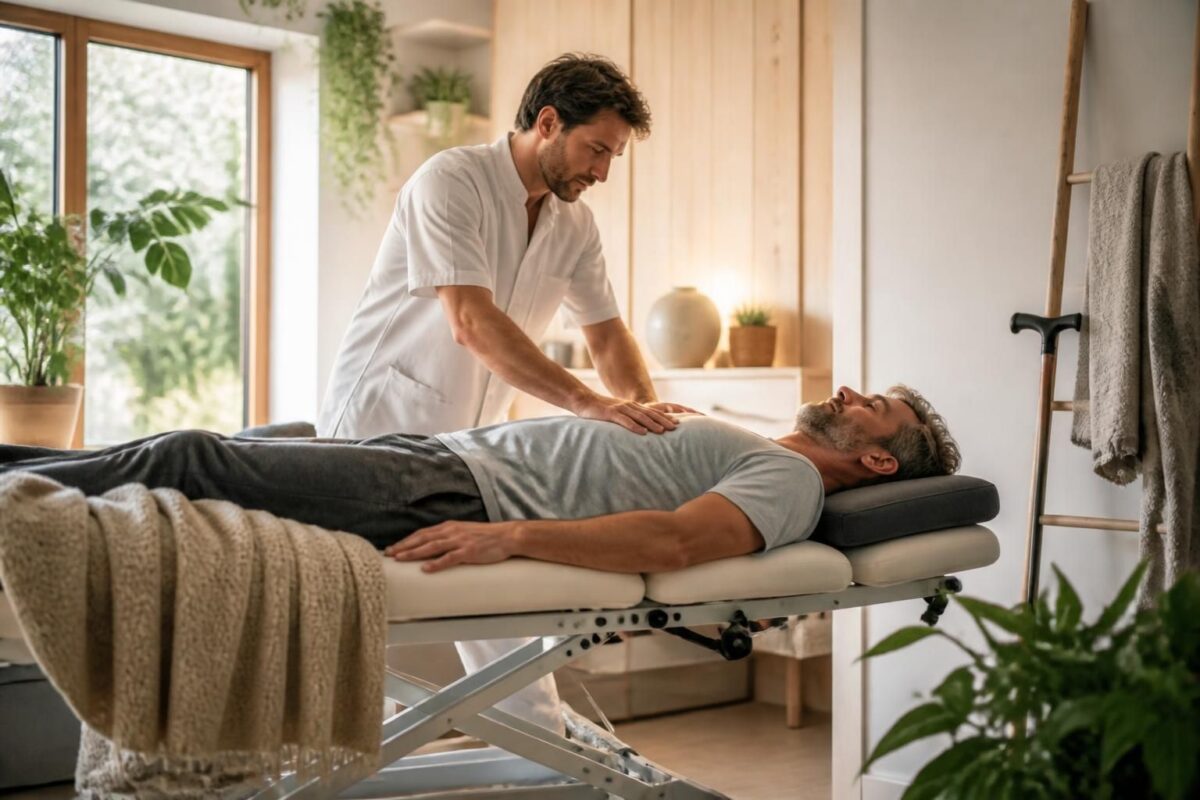
Why Osteopathy Is Essential For Recovery People
In short In short, Osteopathy in convalescence is an approach manual and holistic which helps to accelerate the recovery by restoring The balance, the mobility and a good circulation fabrics. it contributes to Reduce the pain, support the Back to…
Integration into a treatment plan
It is important to consider osteopathy as a component of a comprehensive care plan. In many cases, it joins forces with other disciplines such as physiotherapy or behavioral interventions to optimize results. Coordination between health professionals can improve the care, prevention and maintenance of long-term benefits.
To get the most out of osteopathy, choose certified and experienced practitioners. A preliminary consultation makes it possible to assess needs, discuss objectives and establish an appropriate roadmap, while respecting the necessary precautions, in particular in the event of severe pain or neurological symptoms.

Osteopathic manipulations to strengthen post-traumatic muscles
In short In short, Osteopathic manipulations for Strengthen post-traumatic muscles constitute a gentle manual approach aimed at restoring the mobility, reduce the pain and facilitate the Functional rehabilitation After a injury. What is Is it? A series of precise gestures…
Practical tips to get the most out
Before the first session, gather your background and treatments in progress, and prepare questions about your goals and daily activities. During the session, accurately describe the location and nature of the pain, as well as the factors that aggravate or improve it.
After each session, follow the recommendations of the osteopath and consider simple exercises or postural adjustments to integrate into your routine. Combine this approach with appropriate physical activity and a balanced diet to support the effects of the sessions and promote sustainable progression.
| Axis | Concise description |
|---|---|
| Nature From the approach | The approach is holistic: body and function in equilibrium for a Sustainable well-being. |
| Objective | treat the causes and restore the function rather than limiting oneself to symptoms. |
| Personalization | plan adapted to your morphology and your way of life. |
| techniques | mobilizations, gentle manipulations and work of soft tissues. |
| Efficiency | pain reduction and improvement in mobility, depending on the context. |
| Duration and Monitoring | progressive results requiring Regular sessions and personalized follow-up. |
| Security | Approach non-invasive and adapted, with evaluation of contraindications. |
| Course of care | integrates a Multidisciplinary plan to optimize the results. |
| Accessibility | local meetings and Flexible time slots facilitating access to treatment. |

Osteopathy and prevention of work-related musculoskeletal disorders
In short theosteopathy is one Manual approach that restores body balance and prevents MSD related to work. Its advantages: reduction of tension, improvement of mobility and prevention of chronic pain. She is preventive and healing, suitable for office and trades…
Testimonials: Osteopathy and pain management, a personalized approach
My name is Julie and I suffered from persistent lower back pain. After receiving a osteopathy Focused on a Personalized approach, my pain has decreased and my mobility has improved. Each session was adapted to my activities and my limits, which gave me confidence in the process.
As an active and busy person, I was looking for a solution to pain management which does not impose heavy drugs. The osteopathic intervention offered me a more natural and sustainable approach thanks to a personalization treatment and techniques targeted at muscles and joints.
Jean, 52, works mainly in front of a screen and often feels cervical tension. thanks to a Personalized approach and regular sessions ofosteopathy, he regained better posture and less tension, which also improved his sleep.
Marie, sportswoman, found that the work on the soft tissues and the relevant mobilizations of theosteopathy allow him to return to training without recurring pain more quickly. This experiment illustrates the effectiveness of a Personalized approach adapted to their level and objectives.
Dr. Sylvain Desforges is recognized as Expert in osteopathy, naturopathy and manual medicine, and he occupies the role of founding president of TagMed as well as the ACMA association. His career is marked by a constant desire to innovate in health care, with a strong specialization in the Chronic pain management and the integration of advanced technologies. It favors an individual-centered approach, where each patient benefits from a personalized approach adapted to their history, lifestyle and well-being goals.
With a practice guided by Clinical evidence, it implements a combination of knowledge in osteopathy, manual therapies and holistic approaches to develop treatment plans based on the daily reality of patients. Its action is part of a logic of sustainable improvement of health, where the security and the quality of life go through a rigorous evaluation and transparent communication on the therapeutic options available.
In the area of pain, his approach is based on the reasoned use of Manual techniques which restore mobility, balance and function. It carries out a global assessment of the body, identifying the tensions, limitations and mechanisms that fuel pain. This approach leads to a Treatment plan personalized, designed to target the underlying causes rather than limiting themselves to masking symptoms, in order to promote a healing progressive and sustainable.
Among the innovative axes that it integrates, we count the spinal decompression, the laser and the Shockwave therapy. These modalities, used with discernment and safety, fit harmoniously into a non-invasive approach aimed at reducing pain, improving mobility and accelerating functional recovery. The goal is to optimize the welfare of the patient and quickly resume essential activities, while respecting the individual pace of recovery.
In practice, Dr. Desforges promotes close collaboration with patients and, when necessary, with multidisciplinary teams to ensure complete care. The framework integration Technologies and proven methods allow treatments to be adapted over time, adjusting parameters and objectives according to patient progress and feedback. This philosophy is based on clear communication and patient education about its active role in the care process.
Observed results illustrate the potential effectiveness of an approach personalized and patient-centric, with feedback highlighting significant pain reduction and functional and psychological improvement. The orientation is clearly focused on measurable progression, better tolerance to activities and decreased daily limitations related to chronic pain, while promoting a strengthened perception of control and hope.
For those who wish to explore this approach and the services offered, access to the appropriate approach and solutions is facilitated by a professional presence oriented towards evidence and continuous improvement. A consultation enables the assessment of specific needs and discusses options available through a comprehensive health program and welfare.
This article presents how Osteopathy offer a Personalized pain management, relying on a Overall assessment and gentle manual techniques to restore body balance and promote natural healing. This is an overview of current practices, future prospects and practical resources for patients and professionals.

The benefits of osteopathy to treat muscle imbalances
In short theosteopathy is a manual approach to restore themuscle harmony and postural considering the body as a whole. Its main benefits include the reduction of aches and tensions, the improvement of the mobility and from the posture, and prevention…
Personalized approach and overall assessment
in an approach personalized, osteopathy considers the body as an interdependent unit where Structure and function mutually influence each other. Holistic assessment helps identify tensions, mobility limitations and factors that contribute to pain. The treatment adapts to the profile of each patient and can combine mobilization, soft tissue work and muscle chain rebalancing techniques, to support the Natural healing and sustainable improvement of the function.
To deepen the preventive approach and mechanisms of action, consult resources dedicated to the prevention and daily management of health via osteopathy.
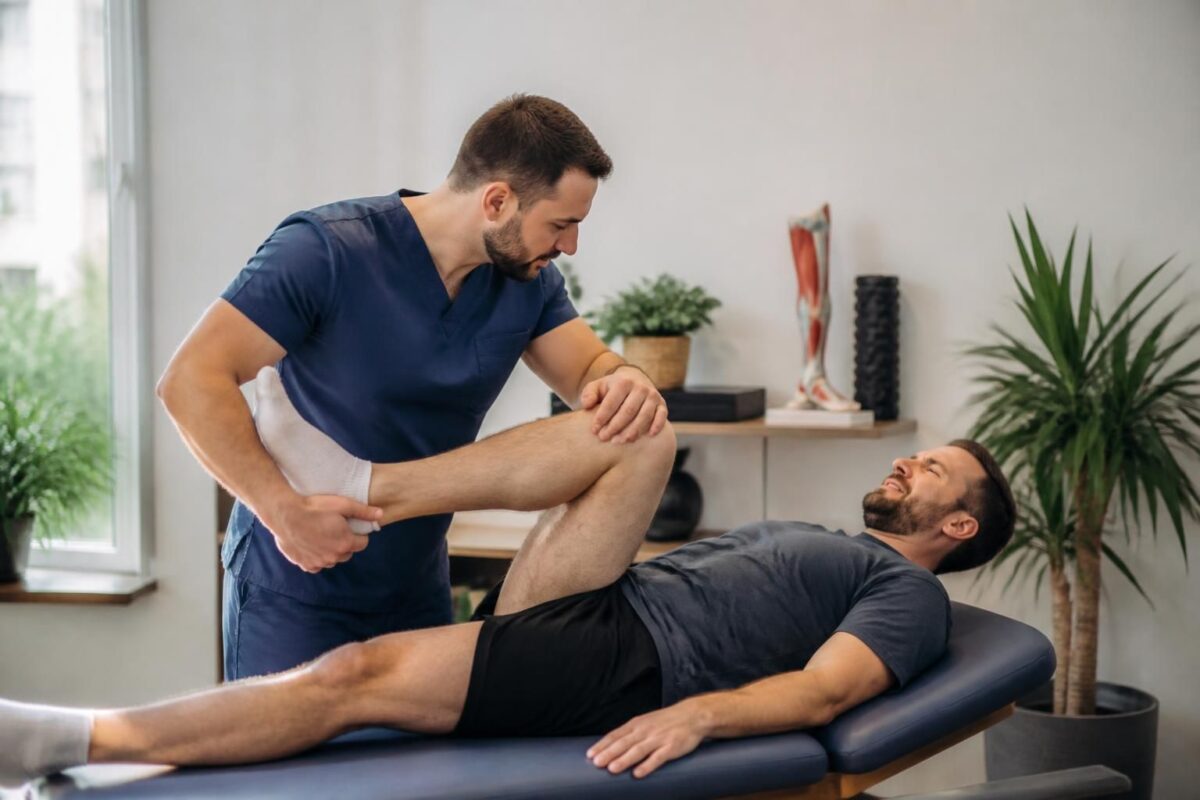
Osteopathy and chronic leg pain: regaining an optimal quality of life
In short In short, Osteopathy is one Global manual approach aimed at reducing Chronic leg pain and improve the quality of life. What is it? Non-drug therapy using the hands to identify restrictions and treat lesional chains. How does it…
Pain management and results
Current data show that osteopathic interventions can reduce pain and improve mobility in patients with lower back pain and other musculoskeletal disorders. However, the results vary by individual and it is often useful to integrate osteopathy into a multidisciplinary care plan. The goal remains A non-invasive and personalized approach which targets the underlying causes of pain rather than limiting itself to masking the symptoms.
Patient feedback illustrates significant improvements in pain and well-being when the sessions are part of a global health strategy, including adapted physical activity and lifestyle.
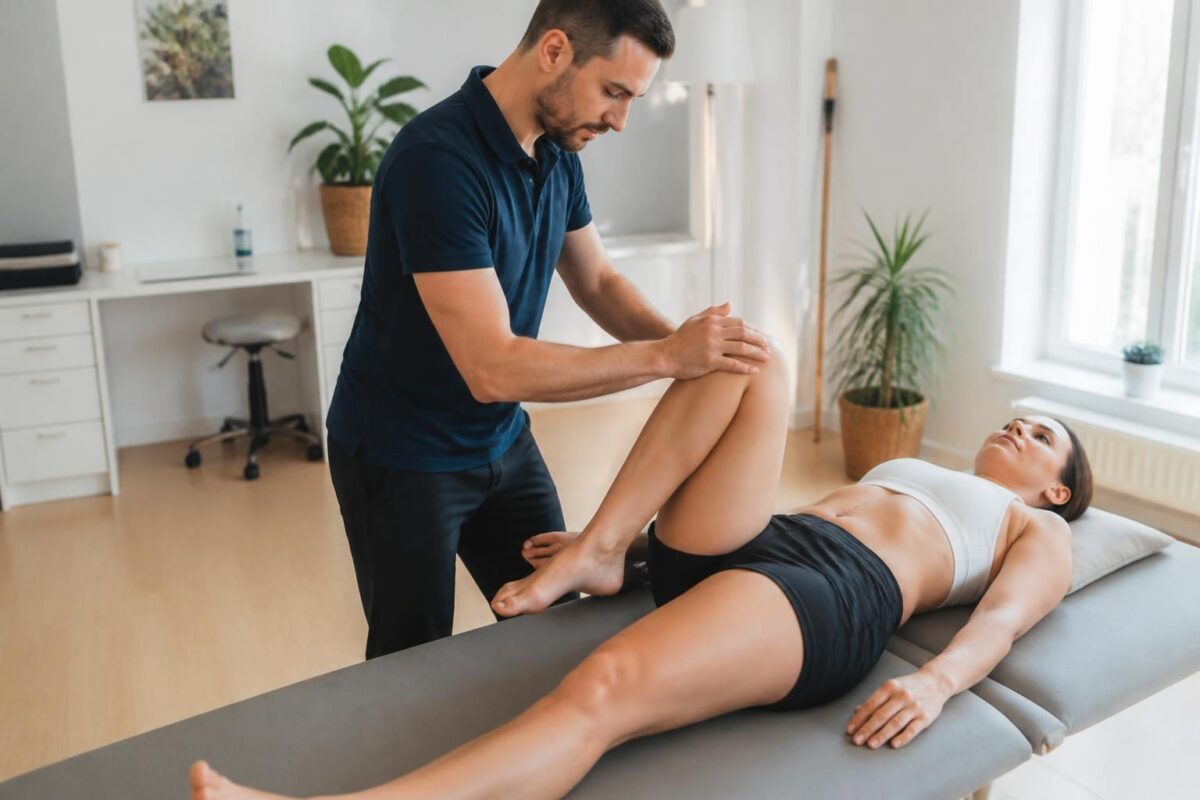
How osteopathy supports recovery after complex surgery
In short In short, Post-operative osteopathy is an approach fresh which supports the recovery After a Complex surgery. It helps to reduce the pain and the fatigue, improves the mobility and accelerates the healing thanks to a better vascularization and…
Integration into the care pathway
Rather than considering osteopathy as a single remedy, it is beneficial to integrate it into a Multidisciplinary care pathway. This makes it possible to combine the benefits of non-pharmacological approaches with complementary interventions such as physiotherapy and behavioral advice, in order to optimize the quality of life and maintaining long-term results.
To guide your decision and find suitable resources, here are some useful links that present different aspects of pain management and osteopathy in common practice:
Resources and additional readings
To understand how osteopathy can help maintain optimal health and prevent overuse injuries, see: Osteopathy and prevention – Maintaining optimal health on a daily basis.
For a vision centered on pain management and a personalized approach, you can read: Osteopathy and pain management – natural and sustainable solution and Personalized approach in osteopathy.
To explore the role of osteopathy in the management of chronic pain in adults and its integration into the care pathway, see: Role of osteopathy in chronic pain management in adults.
For references on mechanisms of action and potential benefits in other areas, see: How osteopathy acts on inflammatory pain and Support for recovery after surgery.
For practical resources on pain management and osteopathy, other relevant links include: Managing Chronic Pain — Osteopathic Approach, Pain and Osteopathy — Management, and Osteopathy and mobility — Improving the quality of life.

Dr Sylvain Desforges, B.Sc., D.O., N.D., osteopath, is the founding president of TAGMED and of the ACMA association. He dedicates his practice to chronic spinal pain, low back pain and symptoms compatible with sciatica, particularly when pain radiates toward the buttock, leg, calf, foot or toes.
Through SOS Sciatique, he publishes educational content on sciatica symptoms, possible causes such as disc herniation, disc narrowing, foraminal stenosis or irritation of a lumbar nerve root, as well as non-surgical approaches that may be considered according to the evaluation. At Clinique TAGMED, care may include, depending on the case, motorized neurovertebral decompression, specific osteopathic care or precision percussion.
For an evaluation related to sciatica treatment in Montreal / Mount Royal or sciatica treatment in Terrebonne, please consult the services available at Clinique TAGMED.
Medical disclaimer
The information published on SOS Sciatique is provided for educational purposes only and does not replace a consultation, diagnosis, opinion or treatment provided by a physician or another authorized healthcare professional. The author of this article is neither a medical doctor nor a specialist in a medical specialty recognized by the Collège des médecins du Québec. The osteopathic, manual medicine or functional support approaches described on this site do not constitute medical acts and are not intended to replace medical follow-up.
Consult a physician or emergency service in cases of loss of bladder or bowel control, anesthesia in the saddle area, significant or progressive weakness in the leg or foot, fever, recent trauma, severe pain or rapid worsening of symptoms. For more details, please read our Legal Notice.