Osteopathic manipulations to reduce work-related muscle tension
28/06/2026
Why osteopathy is essential for physically demanding professions
29/06/2026
In short
| In short, theosteopathy and the Sports recovery constitute an approach non-invasive which prepares the body for effort and accelerates recovery. What is it? A manual discipline focused on balance and global mobility. What are the advantages? Reduced muscle tension, improved joint mobility, injury prevention and faster recovery, for lasting performance. How does it work? Global assessment, gentle and personalized techniques, then followed to adapt care to training and goals. Accessible in the Montreal area and surroundings, this service offers a natural and painless solution for athletes of all levels. |
osteopathy and recovery sports form an approach non-invasive which acts on the whole body. By promoting a better circulation and freeing the Muscle tensions, it improves the mobility and accelerates the recovery After exercise, reducing body aches and pains. She supports the Injury prevention and an Physical preparation more effective, allowing performance sustainable without the use of invasive treatments. Suitable for all levels, this holistic approach strengthens the body-mind balance and accompanies sports progression.
This article, written by Dr Sylvain, expert in osteopathy and sports recovery, presents how osteopathy acts as a non-invasive approach to optimize recovery after exercise. He explains the overall assessment of the body, improvement of mobility and prevention of tensions, and proposes practical ways to integrate these treatments into a sports routine.
Prevent and prepare the body for effort
An osteopathic consultation begins with a Overall assessment movement, posture and muscle tension. This approach makes it possible to identify imbalances which, if left untreated, can limit performance and promote injuries. By aiming forBody balance, osteopathy improves Joint mobility, the Muscle resilience and the coordination of technical actions. Appropriate preparation contributes to sustainable sports practice, reducing fatigue and supporting long-term goals.
To better understand the links between osteopathy and recovery, you can consult our technical resources on sossciatica.com and clinicagmed.com, which explain how the osteopathic approach can strengthen the musculoskeletal system and support global mobility.
Post-effort and regeneration recovery
After exercise, osteopathy acts on blood and lymphatic circulation, facilitating the elimination of metabolic waste and the supply of nutrients necessary for muscle repair. This intervention contributes to reducing residual tensions and accelerating the return to an optimal level of performance. The goal is faster recovery and better recovery between sessions, in order to calmly prepare for the following workouts.
Dedicated resources explain how osteopathy can support recovery by acting on tension release and mobility enhancement mechanisms. To deepen, consult the dedicated pages on sossciatica.com and sosherniediscale.com, which describe the beneficial effects of osteopathy on pain and muscle recovery.
Role in rehabilitation and management of stress-related tensions
Sport recovery goes through a holistic approach. Osteopathy can help reduce stress-related tensions and restore effective breathing and posture. This approach supports the Preservation of mobility and the Quality of active life, which is valuable when an athlete recovers from an injury or prepares a resumption after a rest period.
To better understand the overall aspect and the link between physical constraints and well-being, you can explore the resources on sossciatica.com/Osteopathy-and-well-being-global-reinforce-the-musculoskeletal-system- sosherniediscale.com/comment-losteopathie-acts-on-the-inflammatory pains.
Practical integration into the sports routine
Integrating osteopathy into a sports routine is done through planned tours based on the training schedule. The objective is to anticipate tensions, optimize mobility and improve post-effort recovery. Osteopathy is an effective complement to other recovery approaches, without invasive intervention and without medication.
Additional resources offer perspectives on the sustainable integration of osteopathy in the sporting course. For example, check out the pages on sossciatica.com and decompressioneurovertebrale.com to understand how osteopathic techniques articulate with decompression devices and overall body assessments.
About training, osteopathy is taught in recognized settings such as NUMSS, NAO, National University of Medical Sciences and National Academy of osteopathy. These institutions support evidence-based practice and continuous improvement of osteopathic care in sport and rehabilitation.
Medical disclaimer
The information and advice provided on SOS Sciatica is provided for educational purposes and does not replace a consultation, diagnosis, advice or treatment carried out by a doctor or other authorized health professional. The author of this article is neither a doctor nor a specialist in a medical specialty recognized by the Collège des Médecins du Québec. The approaches to osteopathy, manual medicine or functional support described on this site are not medical acts and are not intended to replace medical follow-up.
Consult a doctor or emergency department in case of loss of urinary or intestinal control, anesthesia in the stool area, significant or progressive weakness of the leg or foot, fever, recent trauma, severe pain or aggravation fast. For more details, please read our legal notice.
To deepen the notions related to sports recovery and osteopathy, you can consult the following resources: Osteopathy and overall well-being, inflammatory pain, Recovery after surgery, and Muscle pain.
Osteopathy and sports recovery: non-invasive approach
- Approach Non-invasive and holistic
- Recovery accelerated muscle
- Mobility and increased amplitudes
- Circulation Improved blood and lymphatic
- Pain Reduced post-effort
- Prevention Tensions and injuries
- Posture Aligned and durable
- Breathing and optimized diaphragmatic function
- mental recovery and stress reduction
- Balance body overall
- Confidence In the sports recovery
- Adaptation personalized to the sport practiced

This article presents theosteopathy as an approach non-invasive and effective for sports recovery. By evaluating the body as a whole and releasing tensions and imbalances, it improves the mobility, stimulates the circulation and promotes a gradual and lasting recovery after exercise. The goal: to prevent injuries, optimize performance and accelerate recovery, whatever your level.
The foundations of osteopathy for sports recovery
theosteopathy is based on an approach holistic of the body. The overall assessment identifies the imbalances and tensions that can limit movement, then manual techniques sweet release these constraints without pain. By acting on the articular, myofascial and visceral structures, the osteopath promotes a Improving mobility and function, while preserving the body from excessive inflammation. This natural method aims to restore the balance to allow sustainable sports.

How osteopathy improves the quality of life of active people
In short In short, theosteopathy is a global approach that Optimizes mobility and the function of the body of ACTIVE PEOPLE, for a better quality of life. It helps prevent injury and reduce Musculoskeletal pain While promoting the Sports recovery.…
Injury prevention and performance optimization
For athletes, prevention is key. By correcting the Postural imbalances and improving thealignment Of the body, osteopathy reduces repetitive tensions that often lead to pain or injury. work on breathing and posture Improves the stability and effectiveness of technical gestures, which translates into a Performance optimization and a reduction in punctual fatigue. Each session is adapted to the practitioner’s profile and his sport.

Osteopathy and sports recovery: prepare the body for lasting performance
In short In short, Osteopathy and Sports recovery is one Global manual approach that sustainably prepares the body for the effort by restoring mobility and circulation After the effort. It is a discipline that acts on the sinews, the joints,…
Recovery after exercise
After training or competition, a quick recovery goes through a better bloodstream and lymphatic, facilitating the intake of nutrients and the evacuation of metabolic waste. Osteopathic techniques target tense areas and promote drainage tensions, which can reduce body aches and improve sleep quality. This approach contributes to a less painful and smoother recovery from workouts, while strengthening the overall profit preparation sessions.
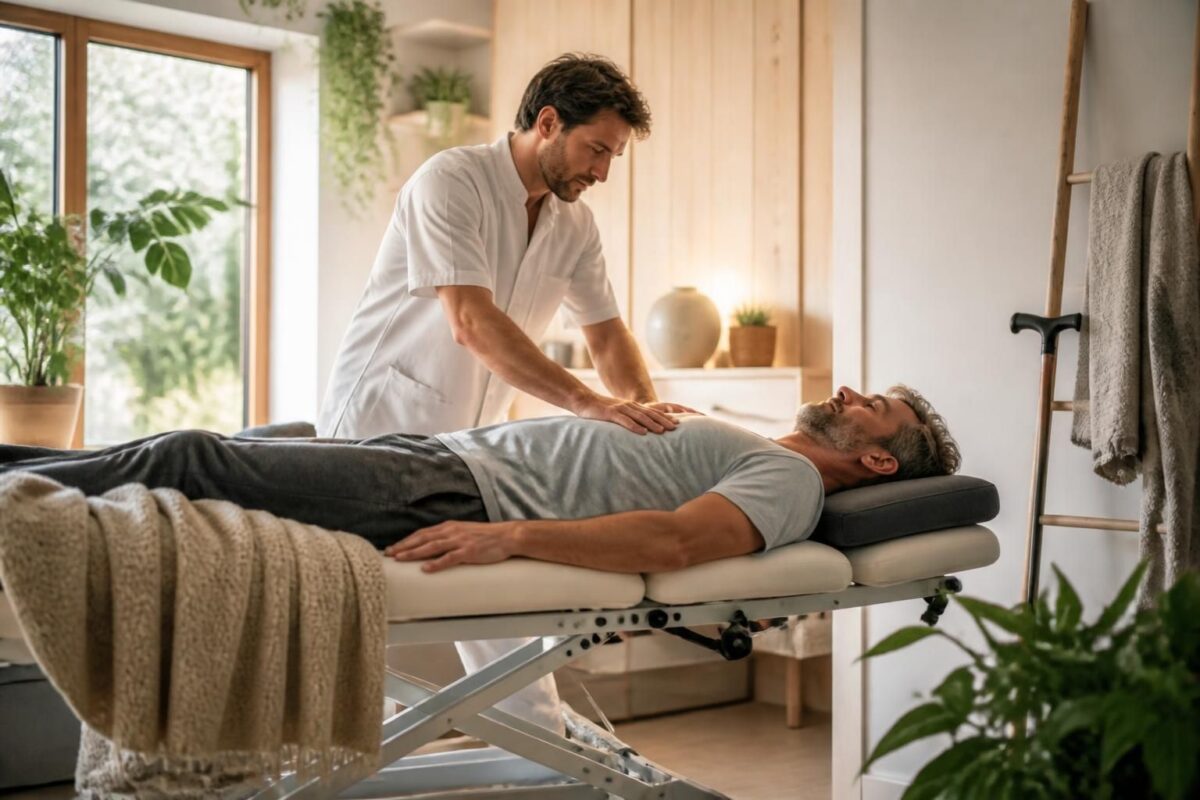
Why Osteopathy Is Essential For Recovery People
In short In short, Osteopathy in convalescence is an approach manual and holistic which helps to accelerate the recovery by restoring The balance, the mobility and a good circulation fabrics. it contributes to Reduce the pain, support the Back to…
Rehabilitation after injury and gradual recovery
During an injury, the osteopathic goal is to identify the underlying causes rather than just soothe the pain. By restoring the mobility And by correcting the imbalances of the muscle chains and fascias, the approach facilitates re-education effective and a gradual recovery activities. Overall support helps to limit relapses, improve coordination and move towards a Sustainable performance without overload.

Osteopathic manipulations to strengthen post-traumatic muscles
In short In short, Osteopathic manipulations for Strengthen post-traumatic muscles constitute a gentle manual approach aimed at restoring the mobility, reduce the pain and facilitate the Functional rehabilitation After a injury. What is Is it? A series of precise gestures…
Practical integration for athletes
To get the most out of osteopathy, plan regular sessions in the preparation phase and during the high load period. Each program is customizable and can be integrated harmoniously with the training and advice of a coach. The goal is a Holistic physical preparation which maximizes performance while preserving the body and promoting optimized recovery.
Quick tips to implement
Plan an osteopathic session after intense training periods to maintain overall balance and prevent tension. Adapt the rhythm of the sessions to your sport and your experience of injury, in order to support a recovery effective and sustainable. Finally, consider osteopathy as a partner of your Physical preparation and your rehabilitation In order to achieve long-term sporting goals.
| Element | Concise description |
|---|---|
| Intervention axis | Approach holistic aiming sinews, fascias and joints To restore thebalance without surgery. |
| Main objective | Reactivate mobility, lighten the strain and promote a recovery effective aftereffort. |
| Mechanisms | engagement sweet, Myofascial release and Postural rebalancing. |
| common techniques | techniques manuals adapted, painless, adjusting the movement and the breathing. |
| Impact on recovery | better circulation blood and lymphatic, reduces the pain and accelerates the phase of repair. |
| Injury prevention | Correct them imbalances posturals and strain repetitive to prevent relapses. |
| Security and invasiveness | Not invasive, usually sure; effects transitory possible, discuss with the practitioner. |
| Target audience | All sports wishing to optimize recovery and performance, pre- and post-workout. |

Osteopathy and prevention of work-related musculoskeletal disorders
In short theosteopathy is one Manual approach that restores body balance and prevents MSD related to work. Its advantages: reduction of tension, improvement of mobility and prevention of chronic pain. She is preventive and healing, suitable for office and trades…
Testimonials: osteopathy and sports recovery — a non-invasive approach
Jean, trail runner: “Osteopathy, a non-invasive approach that transforms my recovery. After my long outings, my aches fade and I find a mobility faster.”
Camille, cyclist: “Every session targets the strain and the imbalances Without unnecessary pain. This approach non-invasive Improve my recovery And my endurance after each outing, and my muscles feel more relaxed.”
Malik, rugby player: “On the ground, shocks and charges accumulate. Theosteopathy helped me reduce aches And to recover faster between matches, without the use of drugs or invasive gestures.”
Léa, swimmer: “In swimming, the breathing and the mobility make the difference. Thanks to a non-invasive approach, my strain decrease and my recovery After each session is faster, which allows me to progress more serenely.”
Sophie, dancer: ‘Theosteopathy Free them strain and improve thealignment of the body, what is felt in my fluidity and my recovery between rehearsals. It’s a method non-invasive which respects the body and supports my performance“.”
Tom, football player: “After a minor injury, a few sessions accelerated my recovery No pain or surgery. The approach osteopathic is non-invasive and effective, and I regained my vivacity more quickly.”
Clara, triathlete: “Before the competition, I appreciate the regular sessions that improve my mobility and prepare my body for the effort. This experience non-invasive Optimize my recovery after the effort and support my performance global.”
Dr. Sylvain Desforges, 59, is a recognized expert in the fields ofosteopathy, naturopathy and manual medicine. Founder and president of the Tagmed Clinic as well as the ACMA association, it places its action at the service of athletes and patients suffering from Chronic pain. His approach is guided by the goal of providing care evidence-based, while favoring an approach non-invasive that respects the integrity of the body and promotes lasting recovery. It combines clinical expertise and advanced technologies to optimize everyone’s health and well-being.
As part of the Sports recovery, his work is based on a global assessment that takes into account postural balance, joint mobility, breathing and muscle tension. This holistic vision allows you to quickly identify excessive loads and imbalances that could induce injury. By targeting the underlying factors rather than just treating pain, it helps athletes improve their mobility, optimize their technical gestures and prepare their bodies for lasting performance.
The techniques used are part of a process non-invasive and personalized. The practitioner favors gentle mobilizations and myofascial approaches, supplemented by postural advice and appropriate stretching programs. In a logic of post-effort recovery, it also works on blood and lymphatic circulation, promoting the evacuation of toxins and the reduction of muscle tension. This combination accelerates recovery, limiting fatigue and improving flexibility and energy transfer during sport-specific technical actions.
Its commitment is manifested by close collaboration with athletes and teams, in order to design protocols custom that fit into the training and competition schedule. For each athlete, he develops a care plan that aims to prevent injuries, optimize movement amplitudes and support long-term physical progression. The objective is clear: to allow a rapid and effective resumption of activity after an injury, while preserving the overall balance of the body and the capacity for performance.
Beyond the ad hoc intervention, Dr. Desforges favors an educational and preventive approach. It explains the mechanisms of the tensions, the postures to be preferred and the daily gestures which promote effective recovery. Its objective is to make the sportsman an actor of his recovery, by strengthening his proprioception, his stability and his breathing. Thanks to this method holistic, athletes gain autonomy and resilience, which translates into a better quality of active life and a constant progression in their sporting practice.
In short, theosteopathy applied to the Sports recovery offers a way non-invasive To prepare the body for lasting performance, prevent injuries and promote effective rehabilitation. Dr. Sylvain Desforges puts his expertise at the service of a body-mind balance, so that each movement is fluid, effective and aligned with the athlete’s objectives.
This article highlights how theosteopathy Can optimize sports recovery in a way non-invasive, by acting on the whole body to improve mobility, circulation and general well-being. You will discover the key mechanisms, benefits for prevention and recovery after exercise, as well as practical resources to integrate this approach into a sustainable sports routine.

The benefits of osteopathy to treat muscle imbalances
In short theosteopathy is a manual approach to restore themuscle harmony and postural considering the body as a whole. Its main benefits include the reduction of aches and tensions, the improvement of the mobility and from the posture, and prevention…
Role of osteopathy in sports recovery
As part of the recovery, theosteopathy Aims to identify and loosen muscle tension and joint restrictions that limit performance. Thanks to a global assessment, the osteopath can restore Structural balance and promote a Joint mobility Optimal, essential condition for preventing fatigue and post-effort pain. This dynamic approach acts not only on the painful area but on thebody set, which allows a better coordination of technical gestures and a reduction of tensions that hinder recovery.
the techniques used favor interventions sweet and targeted, compatible with the requirements of athletes. By working on the musculo-fascial chains and on the postural diaphragm, osteopathy can improve the bloodstream and lymphatic, accelerating the elimination of metabolic waste and the nutrient supply to the tissues required during exercise.
Clinical and practical sources emphasize that osteopathy can contribute to a pain reduction and to a Improving mobility After exercise, while supporting the rehabilitation process when injuries occur. To deepen these notions, you can consult resources dedicated to sports recovery and the effectiveness of osteopathy.
To learn more about the mechanisms and results observed, see resources dedicated to sports recovery and osteopathy efficacy:
Sport osteopathy and muscle recovery: what does science say,
Osteopathy and sports recovery — a non-invasive approach,
Prevent recurring injuries.
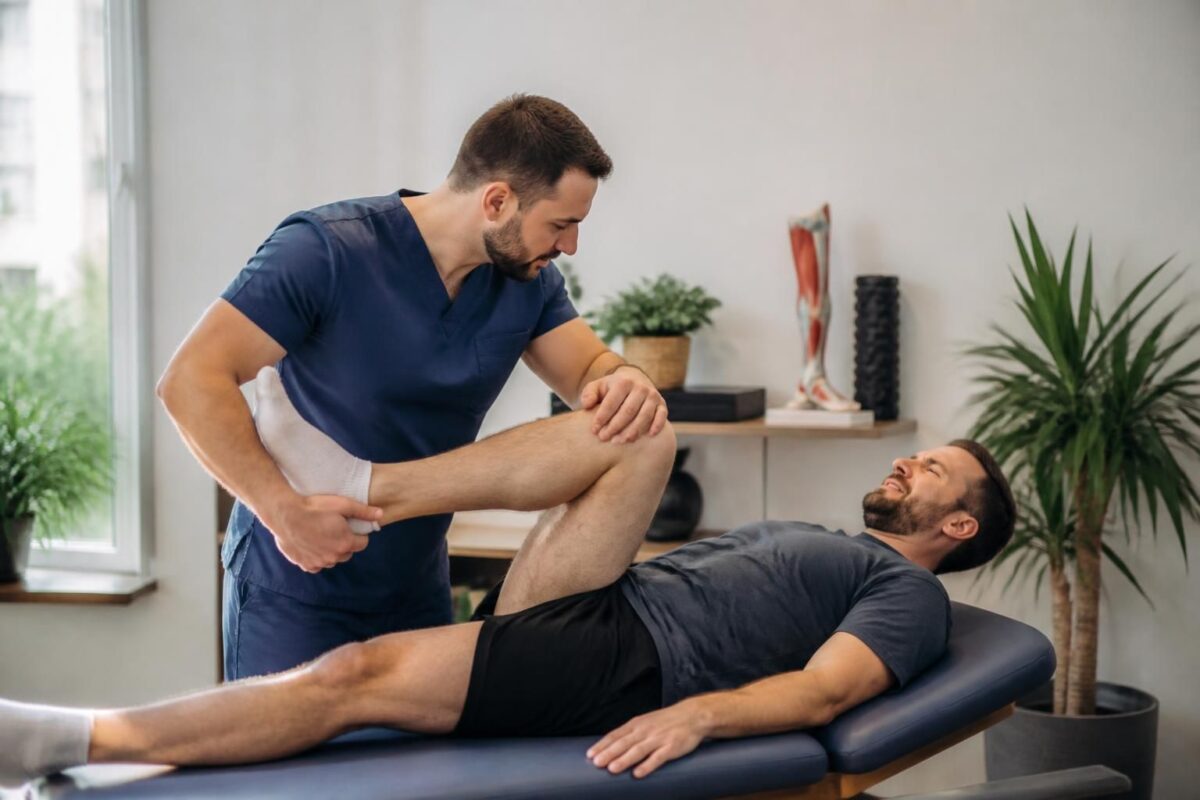
Osteopathy and chronic leg pain: regaining an optimal quality of life
In short In short, Osteopathy is one Global manual approach aimed at reducing Chronic leg pain and improve the quality of life. What is it? Non-drug therapy using the hands to identify restrictions and treat lesional chains. How does it…
Non-invasive approach and safety
The character non-invasive Osteopathy is a major asset for athletes. The sessions favor gentle manipulations and progressive adjustments that respect the body’s capacities and minimize the risks. This approach can be adapted to all levels, from beginners to competitors, and fits easily into a workout routine without interrupting the program.
Patient safety is at the heart of this practice. Although the side effects are rare and generally mild (light pain or temporary fatigue), a competent practitioner adjusts the sessions according to the biomechanical profile and objectives of each athlete. To deepen this dimension, specialized resources in sports recovery and safety of non-invasive treatments offer practical benchmarks and relevant warnings.
For additional perspectives on the non-invasive aspect and results in athletes, refer to dedicated sources such as:
Techniques to release tension and stress and Postural alignment and healthy posture.
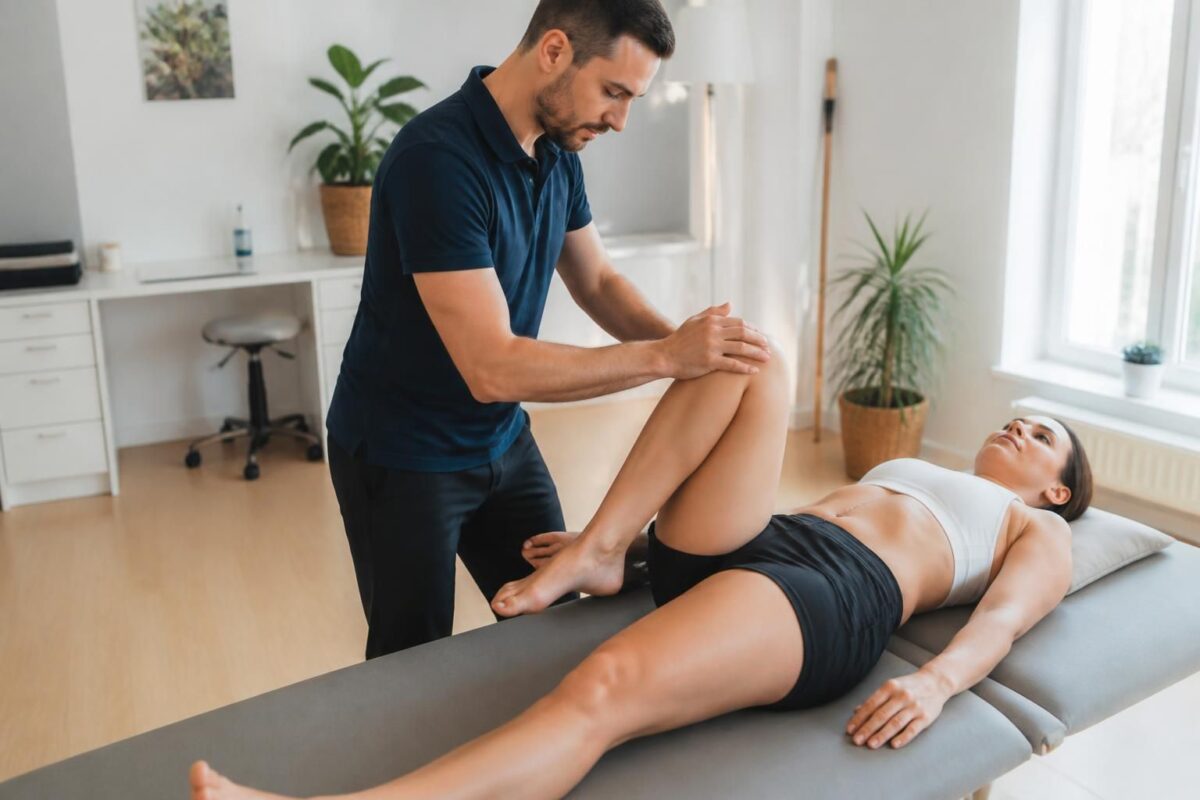
How osteopathy supports recovery after complex surgery
In short In short, Post-operative osteopathy is an approach fresh which supports the recovery After a Complex surgery. It helps to reduce the pain and the fatigue, improves the mobility and accelerates the healing thanks to a better vascularization and…
Performance prevention and optimization
One of the pillars of sports osteopathy is the Injury prevention. By identifying dysfunctions and imbalances before they manifest, the osteopath helps maintain a functional and lasting body mechanics. Postural evaluations and movement pattern analyzes allow you to adjust the training loads and introduce exercises to strengthen the joints and muscles repeatedly.
Beyond prevention, osteopathy also contributes to Performance optimization By improving overall body flexibility, alignment and coordination. A balanced and fluid body system facilitates energy transfer, effective breathing and better endurance during technical gestures, essential elements for lasting performance.
To enrich this preventive and operational dimension, practical resources and clinical analyzes offer useful perspectives, for example on the integration of osteopathy in recovery and prevention protocols:
Osteopathy and pain related to repetitive work,
Joint health benefits,
Sports recovery and osteopathy.
Post-effort recovery and progressive reintegration
In the recovery phase, the objective is to Promote muscle regeneration and reduce post-exercise pain. Osteopathy can support bloodstream and lymphatic, accelerating the elimination of toxins and improving the nutritional intake necessary for tissue repair. This approach also contributes to a Reduced muscle fatigue and better preparation of muscles and joints for the next workouts.
When returning to training, osteopathic accompaniment can facilitate a Progressive reintegration and adapted to the fitness level of the athlete. In addition to physiotherapy and reinforcement programs, osteopathy is a pillar of a holistic and sustainable rehabilitation course.
For benchmarks and feedback related to sports recovery and the effectiveness of osteopathy, see in particular:
Osteopathy and sports recovery,
Amateur sport and osteopathy,
Osteo Reflex – Science and Muscle Recovery.
To deepen the practical aspects and testimonies around osteopathy and sports recovery, you can consult the resources below, which illustrate how a non-invasive approach can be integrated effectively into varied and adapted sports courses.

Dr Sylvain Desforges, B.Sc., D.O., N.D., osteopath, is the founding president of TAGMED and of the ACMA association. He dedicates his practice to chronic spinal pain, low back pain and symptoms compatible with sciatica, particularly when pain radiates toward the buttock, leg, calf, foot or toes.
Through SOS Sciatique, he publishes educational content on sciatica symptoms, possible causes such as disc herniation, disc narrowing, foraminal stenosis or irritation of a lumbar nerve root, as well as non-surgical approaches that may be considered according to the evaluation. At Clinique TAGMED, care may include, depending on the case, motorized neurovertebral decompression, specific osteopathic care or precision percussion.
For an evaluation related to sciatica treatment in Montreal / Mount Royal or sciatica treatment in Terrebonne, please consult the services available at Clinique TAGMED.
Medical disclaimer
The information published on SOS Sciatique is provided for educational purposes only and does not replace a consultation, diagnosis, opinion or treatment provided by a physician or another authorized healthcare professional. The author of this article is neither a medical doctor nor a specialist in a medical specialty recognized by the Collège des médecins du Québec. The osteopathic, manual medicine or functional support approaches described on this site do not constitute medical acts and are not intended to replace medical follow-up.
Consult a physician or emergency service in cases of loss of bladder or bowel control, anesthesia in the saddle area, significant or progressive weakness in the leg or foot, fever, recent trauma, severe pain or rapid worsening of symptoms. For more details, please read our Legal Notice.