Osteopathy and prevention: maintain optimal mobility with age
29/06/2026
The benefits of osteopathy to relieve nervous tension
29/06/2026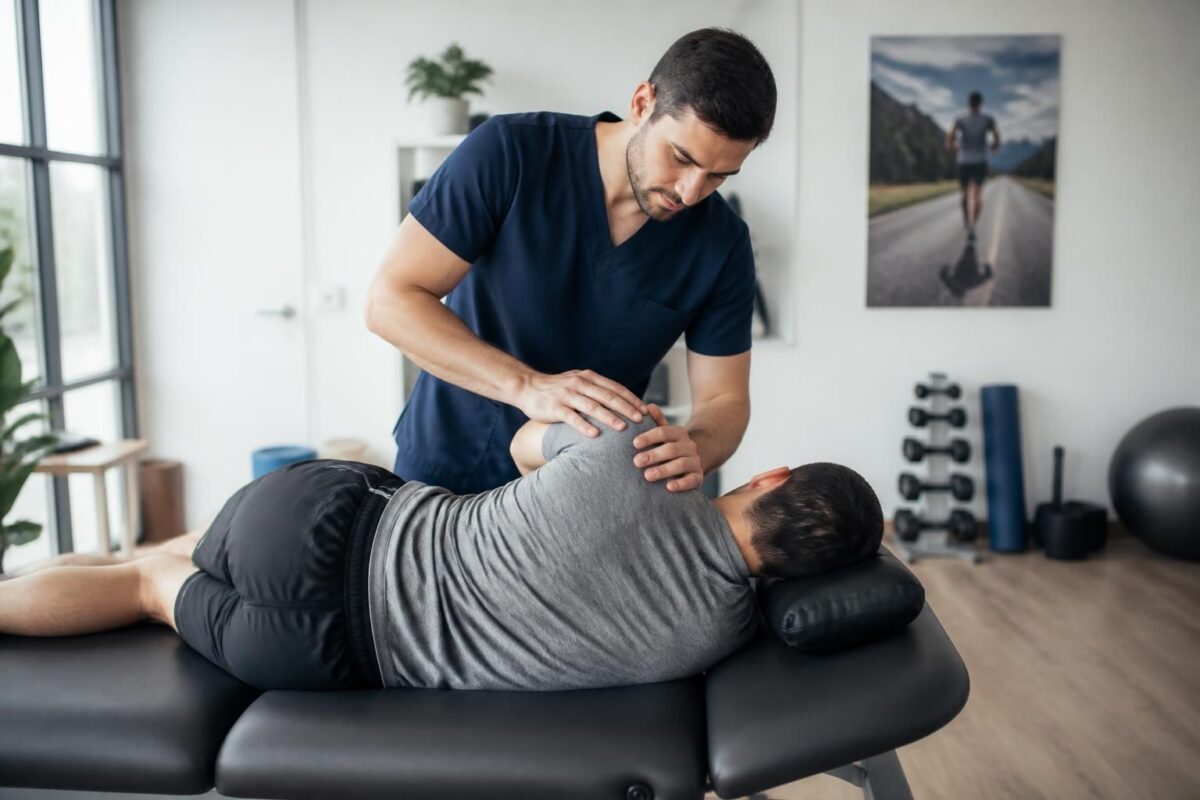
In short In short, Osteopathy acts on the pain related to repeated physical exertion By restoring the Tissue mobility, theAlignment of structures and the proper functioning of the the nervous system. What is this theme? It is a global approach that aims to treat the causes rather than the isolated symptoms. What advantages? Reduced tension, improved mobility and faster recovery after exercise, with an approach fresh and adapted. How does it work? thanks to Targeted manual techniques which release the constraints, rebalance the muscle chains and soothe the brain, without pain and with personalized follow-up. accessible to Montreal, this service is particularly recommended for athletes and people exposed to repeated efforts. |
In terms ofRepeated efforts, osteopathy acts with a Global approach which aims to understand and treat not a single symptom, but the terrain and the mechanisms of pain. It identifies the triggering and promoting factors (posture, sedentary, stress, fatigue), then adjusts the structures involved to restore the mobility and reduce tensions.
- reduction of tensions and improvement of the mobility tissues and joints.
- rebalancing of the nervous system to calm the painful message and promote the rest physiological.
- Prevention of recurrences thanks to ergonomic advice, adapted exercises and better resilience Postural.
- Personalized support that takes into account the professional context and physical activity, without obscuring psychological and emotional factors.
In short, osteopathy is not limited to treating occasional pain: it aims to restore the function and strengthen the Overall well-being to allow a sustainable recovery of activities without aggravation.
This article explains how Osteopathy can help with pain related to Repeated physical efforts. It describes mechanisms, practical actions and ways to prevent recurrences. The objective is to sustainably relieve and improve the overall function of the body.
The sports or professional daily can cause pain when the body’s tolerance thresholds are reached. Osteopathy takes an approach overall and multifactorial. She seeks not only local pain but also the factors that support it in the long term, such as muscle tension, movement restrictions and postural imbalances.
The sessions aim to loosen the fabrics, to Restore mobility and to modulate the nervous system, in order to reduce painful sensitivity. This approach can also improve the Postural coordination and promote better Body response to exertion.
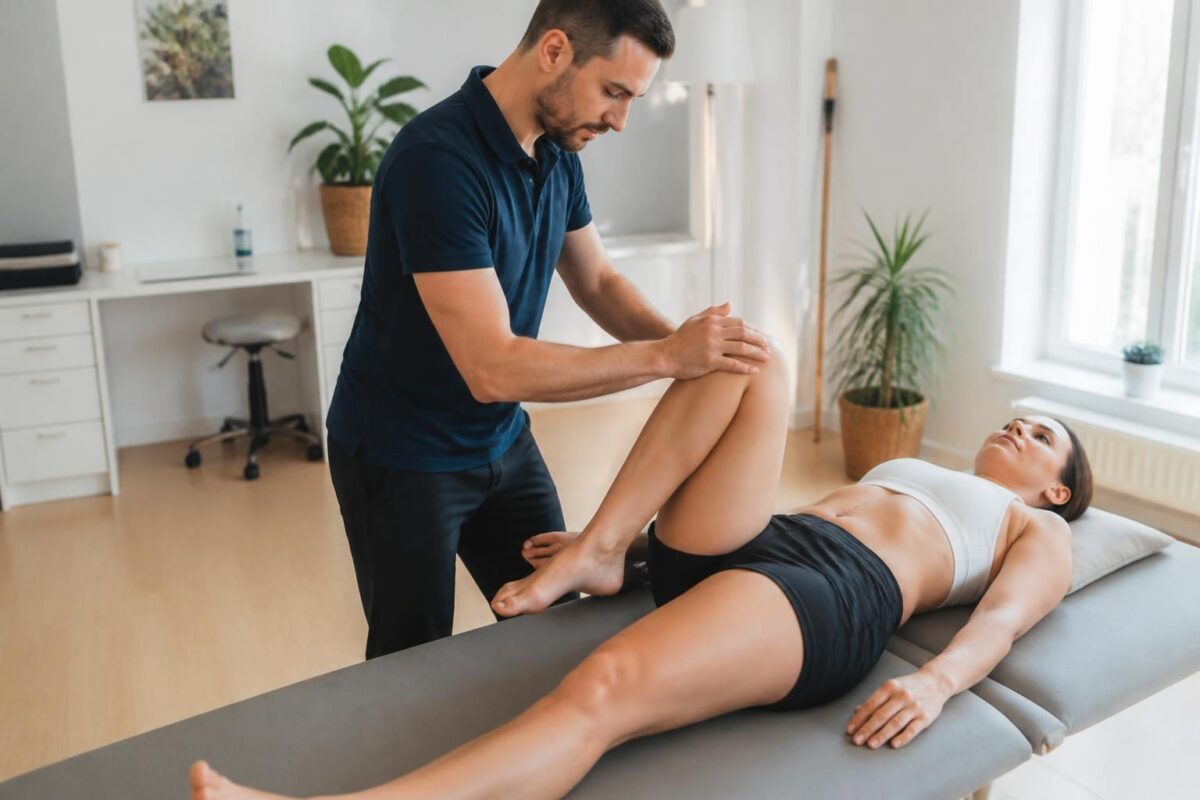
In practice, the osteopath assesses the body as a whole. It identifies areas that limit movement and musculoskeletal chains in play during repeated effort. Then he applies targeted techniques to release tense areas, restore amplitude and reduce reflex tensions. The work can also act on the diaphragm and the fascias, in order to improve breathing and circulation, two important elements to support a lasting physical effort.
This approach does not require a single treatment. It adapts to each person and to each context, whether it is a sports overwork, repetitive physical work or a mixture of the two. It is based on precise observation, a global diagnosis and a series of gestures adapted to the individual.
To learn more about the benefits of osteopathy in injury prevention in amateur athletes, see this topic: The benefits of osteopathy to prevent injuries in amateur athletes.
Exercise pain mechanisms
The pain can result from a nociceptive warning signal when the tissues suffer during exercise. It can also reflect a Central awareness, where the brain reacts more to usual signals. In some cases, pain nociplastic Occurs without detectable lesion, but with impaired pain modulation. The role of osteopathy is to help the body restore a Normal dimming signals and reduce hyperreactivity of the nervous system.
Effort-related pain can also be multifactorial. Stress, lack of sleep, inadequate posture, repeated activity, or musculotendina weakness can nourish the problem. The body can then compensate, which maintains tension and the risk of injury. The osteopathic approach aims to act on the causes as well as on the symptoms.
To understand the mechanisms, one can look at how osteopathy helps restore alignment and mobility. Resources on this topic are available here: Osteopathy and posture – Improve body alignment smoothly.

How osteopathy improves the quality of life of active people
In short In short, theosteopathy is a global approach that Optimizes mobility and the function of the body of ACTIVE PEOPLE, for a better quality of life. It helps prevent injury and reduce Musculoskeletal pain While promoting the Sports recovery.…
Specific actions of osteopathy in the face of repeated effort
Osteopathy acts on several levels. It improves the Joint mobility and fabrics, decreases reflex tensions and re-harmonizes the autonomic nervous system, which can promote a return to more effective rest and recovery after exercise. It can also help optimize the breathing and circulation, two elements that support endurance and recovery.
The treatment is based on techniques adapted and safe, chosen according to the patient’s history, symptoms and fitness level. The goal is to improve the Functional mobility and reduce the painful sensitivity in order to allow a more fluid repetition of repetitive activities.
For an overview of osteopathic techniques and their reasoning, see: Osteopathy and posture.

Osteopathy and sports recovery: prepare the body for lasting performance
In short In short, Osteopathy and Sports recovery is one Global manual approach that sustainably prepares the body for the effort by restoring mobility and circulation After the effort. It is a discipline that acts on the sinews, the joints,…
Prevention and management on a daily basis
Prevention requires regular evaluation and adaptation of habits. The body responds better when the movement is progressive, the loads are adapted and the periods of rest are respected. Practical advice includes a Adapted physical activity, a Conscious breathing and a good quality of sleep. The objective is to maintain a good effort tolerance Threshold and to limit the appearance of repeated tensions.
To deepen the effects of osteopathy on sports recovery and non-invasive approaches, you can consult: Osteopathy and sports recovery.
To understand why osteopathy is relevant to physically demanding professions, read: Essential osteopathy for physically demanding professions.
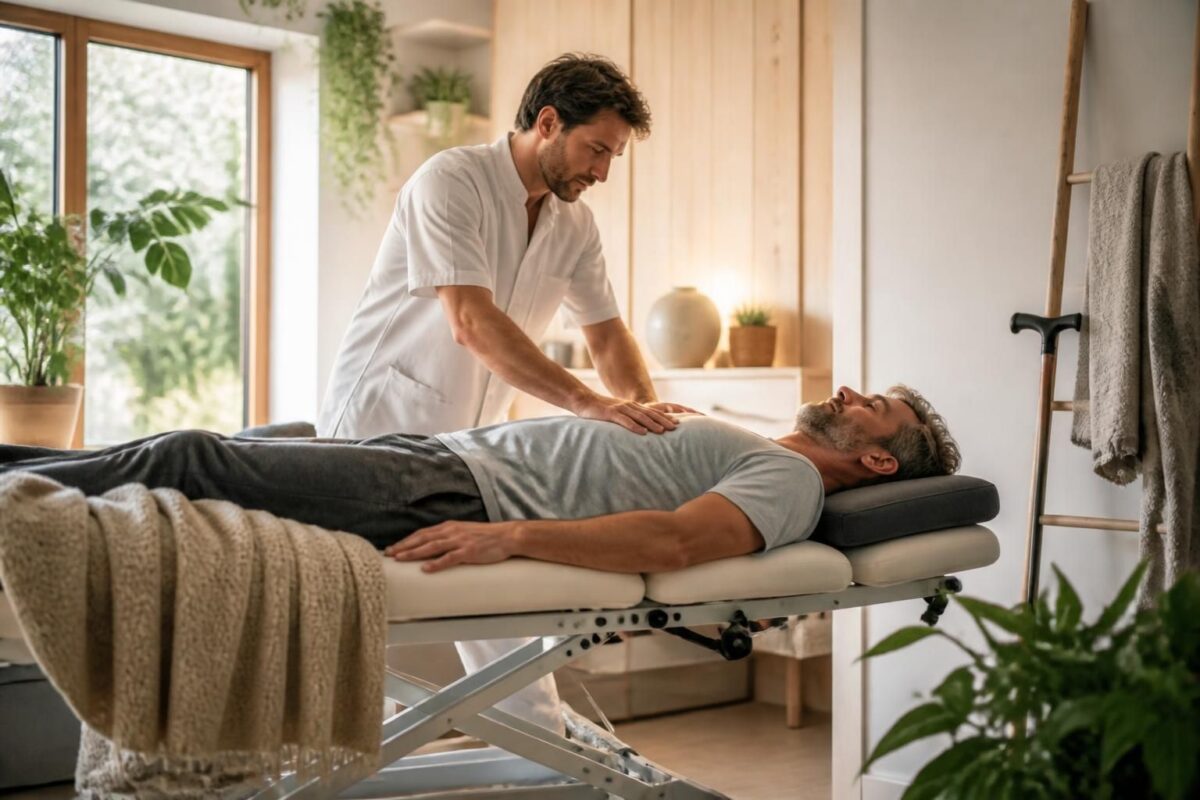
Why Osteopathy Is Essential For Recovery People
In short In short, Osteopathy in convalescence is an approach manual and holistic which helps to accelerate the recovery by restoring The balance, the mobility and a good circulation fabrics. it contributes to Reduce the pain, support the Back to…
Quick Comparison of Treatment Options
| Therapy | Main objectives | Relative Effectiveness on Repeated Effort Pain |
|---|---|---|
| osteopathy | Tissue relaxation, regained mobility, nervous regulation | High to moderate as appropriate |
| Physiotherapy | Reinforcement, stabilization, rehabilitation | moderate in some contexts; Variable efficiency |
| Educational approaches and sweet activities | Understanding, progressive movement, stress management | essential for prevention |
For more general information on the benefits of osteopathy and the prevention of stress-related pain, see: Osteopathy and posture and Benefits in amateur athletes.
TagMed Clinic is also one of the available options for assessment and appropriate care: Tagmed Clinic.
For information on non-surgical and specific conditions approaches, please refer to the following resources: Fracture recovery, Physically demanding professions.
Medical Disclaimer: The information and advice provided on this site does not replace the health professional’s diagnosis or treatment. Please note that Dr. Sylvain Desforges osteopath is neither a doctor of medicine nor a doctor, and is not a specialist in a medical specialty as defined by the Collège des Médecins du Québec. Manual medicine, functional medicine and sports medicine as described on this site exclude any medical treatment or diagnosis made by a doctor or specialist doctor. Always consult your doctor for any medical questions. For more details, please read our full legal notice.
- Overall assessment of Repeated loads and areas involved to target the intervention.
- release of tensions And some fascias To restore a Global mobility.
- Restoration of mobility Segments stressed (back, hips, shoulders) to reduce microtraumas.
- Improvement of proprioception and stability by working postural sensors (eyes, inner ear, feet).
- Nervous system regulation autonomous and reduction ofMuscle hypertonia Reflex.
- Nociception modulation to reduce pain associated with exertion.
- Diaphragmatic breathing and ventilatory work to optimize theoxygenation and recovery.
- Postural education and tips fromergonomy to prevent recurrences.
- Home Exercise Program To support gains and strengthen muscle chains.
- Therapeutic coordination with other practices for prevent Stress-related lesions.

This page shows how theosteopathy acts on the pain related to repeated physical exertion, by improving mobility, releasing tensions and regulating the the nervous system. She also offers practical advice to prevent and better manage these pains on a daily basis.

Osteopathic manipulations to strengthen post-traumatic muscles
In short In short, Osteopathic manipulations for Strengthen post-traumatic muscles constitute a gentle manual approach aimed at restoring the mobility, reduce the pain and facilitate the Functional rehabilitation After a injury. What is Is it? A series of precise gestures…
Understanding the framework of pain related to repeated efforts
The pain caused by repeated efforts often arises from an accumulation of microtraumas and an imbalance between the muscle chains and the fascias. They are not limited to a local lesion: they reflect the whole body and its level of tolerance. The pain can be sensorialized (burning sensations, throbbing pain), emotional and behavioral, and its intensity varies depending on the context, sleep, stress and posture.
In this context, there are several possible mechanisms that explain pain: pain harmful Who warns of a tissue threat, pain neuropathic related to nervous discomfort, or pain nociplastic where pain detection is impaired. The most frequent in repeated efforts is often a mixture of these mechanisms, hence the interest of a global and personalized approach.

Osteopathy and prevention of work-related musculoskeletal disorders
In short theosteopathy is one Manual approach that restores body balance and prevents MSD related to work. Its advantages: reduction of tension, improvement of mobility and prevention of chronic pain. She is preventive and healing, suitable for office and trades…
How osteopathy acts on these pains
Freeing tensions and restoring mobility
The osteopathic approach targets areas of tension and mobility restrictions that develop after repeated gestures. Through gentle and appropriate techniques, one aims to release muscle tension, release the fascias and restore the mobility of the key joints (column, pelvis, shoulders, hips). Work can also extend along the myofascial chains to restore normal force circulation and prevent compensation that aggravates pain.
Restore coordination and proprioception
After repeated efforts, the proprioceptive system may deteriorate. The osteopath rebalances postural landmarks and reactivates motor patterns, favoring progressive mobilizations and exercises targeted at areas of weakness. The goal is to re-educate the brain to coordinate body segments and accept painless movement.
Regulate the nervous system and pain perception
By acting on tissues and nerve bonds, osteopathy can decrease the excitability of the nervous system and promote a response parasympathetic, reinforcing rest and recovery. This regulation helps to reduce painful sensitivity and to regain better tolerance to mechanical stress.
Practical advice and prevention
To prevent relapses, osteopathy recommends simple adaptations: alternate loads during rehearsals, plan active rest periods, ensure good ergonomics of the workstation and integrate active breaks. Diaphragmatic breathing and gentle mobility exercises can reduce tension and promote restful sleep, key to recovery.

The benefits of osteopathy to treat muscle imbalances
In short theosteopathy is a manual approach to restore themuscle harmony and postural considering the body as a whole. Its main benefits include the reduction of aches and tensions, the improvement of the mobility and from the posture, and prevention…
Integrate osteopathy into a global approach
Osteopathy is part of a global approach: Adapted physical activity, work on the breathing, stress management and lifestyle. This synergy makes it possible to maintain a mobility sustainable, improve recovery and limit recurrences after repeated efforts.
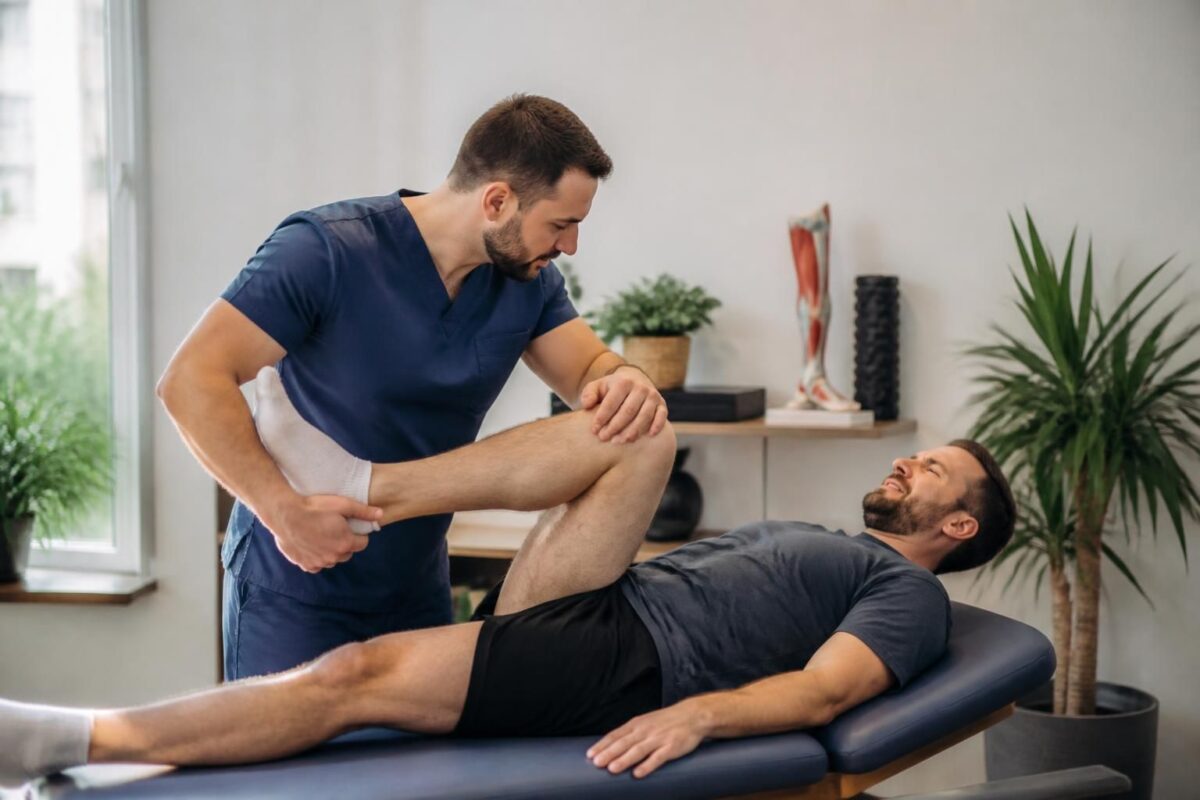
Osteopathy and chronic leg pain: regaining an optimal quality of life
In short In short, Osteopathy is one Global manual approach aimed at reducing Chronic leg pain and improve the quality of life. What is it? Non-drug therapy using the hands to identify restrictions and treat lesional chains. How does it…
Axes of action of osteopathy in the face of pain related to repeated efforts
| Axis of action | Concise impact |
|---|---|
| Prevention of microtrauma | Detects sensitive areas and well-defined fabrics to limit microtrauma during repeated efforts. |
| Mobility and fascias | Restore it mobility joints and fascias To facilitate repetitive gestures and reduce blockages. |
| Balance musculoskeletal | harmonizes muscle chains and postures to avoid painful compensation. |
| The nervous system and pain | Works on the the nervous system autonomous to reduce the painful sensitivity and spasms. |
| Diaphragm and breathing | relaxes it diaphragm and improves the breathing To optimize oxygenation and comfort. |
| Release tissue and fascias | techniques to undo the adhesions and tensions of the fascias. |
| Posture and alignment | Adjustments and tips to correct repetitive postures at work. |
| Recovery and sleep | Improved sleep and recovery After the effort by appropriate strategies. |
| Education and self-management | Education on Pain Mechanisms and Toolsself-management to prevent recurrences. |
How osteopathy supports recovery after complex surgery
In short In short, Post-operative osteopathy is an approach fresh which supports the recovery After a Complex surgery. It helps to reduce the pain and the fatigue, improves the mobility and accelerates the healing thanks to a better vascularization and…
Testimonials: how osteopathy acts on pain related to repeated physical exertion
before, with each repeated effort related to sport or work, my pain Lumbar came back, deaf and tenacious, limiting me in my activities.
Thanks to osteopathy, working on the muscle chains and the mobility of the pelvis, I found a mobility more fluid and a pain reduction, with a better proprioception and more effective effort management.
In my workshop, repetitive gestures and bad posture caused me aches in the shoulders and neck.
Osteopathy freed the fascias and restored mobility, with postural advice and simple exercises; I observe a prevention Effective pain and faster recovery.
As a sportsman, rehearsals caused me pain in the scapular and tension in the torso.
After the sessions, better chest mobility, freer diaphragm, and proprioception found; Less pain and better recovery.
In the professional environment, heavy loads and repetitive gestures gave me back pain and neck pain.
Osteopathy rebalanced my posture, released tensions and provided practical exercises to limit relapses; a Sustainable mobility and an prevention in my daily activities.
Dr. Sylvain Desforges, a recognized osteopath, expert in manual medicine and naturopathy, is the founding president of TagMed and the ACMA association. With a career focused on innovation in care, he is dedicated to Chronic pain management and the integration of advanced technologies such as spinal decompression, the laser and the Shockwave therapy. His approach is guided by clinical evidence and a holistic vision of the body, in order to offer tangible and measurable results for his patients. Discover an approach that combines expertise, rigor and personalized support.
pain related to Repeated efforts are born when loads accumulate on musculoskeletal structures: muscles, tendons, fascias and nerves. Over time, the microtraumas are linked, the tissue loses its ability to absorb the constraint and the nervous system can become more reactive. In this context, osteopathy aims not only to banish the pain, but above all to correct the root causes: biomechanical imbalances, functional fatigue and alteration of movement patterns that fuel pain.
Concretely, osteopathic action is based on a series of adapted interventions. The practitioner works to restore mobility to the segments involved, to relax the tensions of the myofascial chains and to restore a better Neuromuscular coordination. It is also about soothing nervous irritation and improving the circulation and the lymphatic, in order to promote tissue repair. At the same time, the osteopath seeks to rebalance the skeleton and the supports to prevent recurrences, while reinforcing the tolerance of the body to the load and rehabilitating motor control in the gestures of everyday life and sport.
This approach is based on a global vision of the body: each pain is examined in its context, considering lifestyle habits, professional or sporting origin and stress factors. The goal is to allow the patient to regain confidence in the movement, to reduce the fear of moving and to preserve the complementarity between the physical activity and the necessary rest. Personalized progression is proposed, with targeted exercises, postural adjustments and load management advice, in order to sustainably optimize results and avoid relapses.
In addition to manual techniques, Dr. Desforges integrates specific tools when relevant, in order to support repair and recovery more effectively. The objective remains clear: to offer an approach educational and effective which allows the patient to maintain an appropriate activity, to limit painful episodes and to regain an optimal quality of life. To begin this course, contact the TagMed clinic to benefit from a personalized protocol focused on your needs.
This article summarizes how Osteopathy acts on pain related to repeated efforts, favoring an approach overall and preventive, and focusing on identifying mechanisms and factors favoring in order to offer personalized and lasting care.
pain related to repeated efforts Often the result of a mixture of overloads, microtraumas and tensions accumulated in the muscle chains, fascias and joints. Osteopathy works first by reducing tension and restoring mobility, which frees up padlocked areas and improves range of motion. By working on the requested regions and on the structures that connect them, it can reharmonize tissue-neuron interactions and sound the return to a Normal function of the body.
This approach multifactorial Takes into account professional triggers and risk factors, such as repetitive postures, fatigue, stress and lack of recovery. The objective is not only to eliminate occasional pain, but to act on the Promoting factors and on the environment around the patient to prevent recurrences. To deepen this vision, discover the resources that illustrate thePhysical and mental balance and the importance of the approach preventive.
The techniques used by the osteopath in this context aim to Improve joint mobility and promote the Tissue recovery. They include appropriate manipulations and work on fascias, diaphragm and muscle chains to reduce tension and support the regeneration process muscle tissue. For a preventive perspective, see also the approach that focuses on Joint mobility as a basis for the prevention of sports and professional relapses.
At the same time, this approach emphasizes the prevention and strengthening of the motor and nervous system. a better one proprioception, appropriate breathing and healthy lifestyle habits (adapted physical activity, sleep and stress management) contribute to reducing nervous system hyperreactivity and pain sensitivity. You can explore resources dedicated to balance and overall well-being to complement this work and support your daily efforts.
To go further in understanding and management, you can consult specific sources on the effects of osteopathy on the mobility and the recovery, as well as on the role of osteopathy in the face of occupational disorders. Useful links include pages dealing with osteopathy and Overall well-being, from the Joint furniture and from the Sports recovery, which will help you contextualize these mechanisms and consider a coordinated approach with your care team.
If you want to start a concrete approach, do not hesitate to make an appointment to take stock of your pain and your journey. Together we will look for the keys to Reassure the nervous system, release tension and regain better exercise tolerance.
To learn more, you can consult the following resources:
Osteopathy and alternative medicine,
Osteopathy and joint mobility – preventive approach,
Fatigue, stress and muscle pain – Osteopathy and work,
and other useful resources on the SOS Sciatica site dedicated to sports recovery and stress management.

Dr Sylvain Desforges, B.Sc., D.O., N.D., osteopath, is the founding president of TAGMED and of the ACMA association. He dedicates his practice to chronic spinal pain, low back pain and symptoms compatible with sciatica, particularly when pain radiates toward the buttock, leg, calf, foot or toes.
Through SOS Sciatique, he publishes educational content on sciatica symptoms, possible causes such as disc herniation, disc narrowing, foraminal stenosis or irritation of a lumbar nerve root, as well as non-surgical approaches that may be considered according to the evaluation. At Clinique TAGMED, care may include, depending on the case, motorized neurovertebral decompression, specific osteopathic care or precision percussion.
For an evaluation related to sciatica treatment in Montreal / Mount Royal or sciatica treatment in Terrebonne, please consult the services available at Clinique TAGMED.
Medical disclaimer
The information published on SOS Sciatique is provided for educational purposes only and does not replace a consultation, diagnosis, opinion or treatment provided by a physician or another authorized healthcare professional. The author of this article is neither a medical doctor nor a specialist in a medical specialty recognized by the Collège des médecins du Québec. The osteopathic, manual medicine or functional support approaches described on this site do not constitute medical acts and are not intended to replace medical follow-up.
Consult a physician or emergency service in cases of loss of bladder or bowel control, anesthesia in the saddle area, significant or progressive weakness in the leg or foot, fever, recent trauma, severe pain or rapid worsening of symptoms. For more details, please read our Legal Notice.