Foot pain without back pain: should we think about the back?
10/07/2026
Sciatica and heel pain while sitting
10/07/2026
IN BRIEF
| In brief, sciatica is a pain that follows the path of the sciatic nerve, starting from the lower back and descending to the buttock and leg, sometimes reaching the foot. It can manifest as numbness, tingling, or muscle weakness. The diagnosis relies on clinical examination and symptom assessment, and the treatment aims to correct irritation through exercises, movement, and appropriate activity, rather than prolonged rest. The benefits include a reduction in pain, improved mobility, and prevention of recurrences. Available in Montreal, this service allows for rapid identification of the cause and proposes a personalized plan to relieve pain and restore function. |
Sciatica manifests as pain following the path of the sciatic nerve and may be accompanied by numbness in the leg.
To clarify the cause, the diagnosis relies on the medical history and clinical examination; the main causes include lumbar disc herniation, lumbar stenosis, and piriformis syndrome, as well as other inflammatory or degenerative factors.
In case of persistent numbness, weakness, or pain lasting several weeks, consult quickly to guide the treatment and avoid complications.
Article written by Dr. Sylvain Desforges, osteopath. This article explains why leg numbness may be related to sciatica and clarifies possible causes, signs to watch for, diagnosis, and management options. The text prioritizes clear and practical information while directing toward a professional evaluation when necessary.
Sciatica is a pain that follows the path of the sciatic nerve. It may be accompanied by numbness, tingling, or a burning sensation along the leg. The numbness may affect all or part of the path from the lower back to the foot, and it can be unilateral or bilateral depending on the cases.
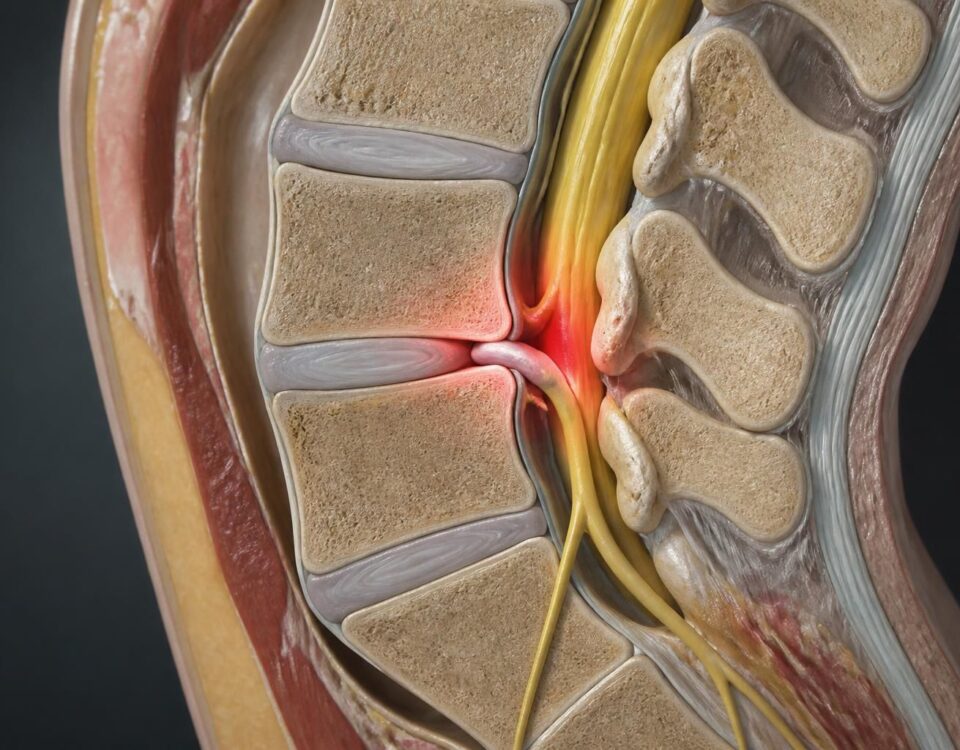
The symptom often occurs when the nerve is compressed or irritated somewhere along its path. This irritation may be associated with inflammatory factors, a disc herniation, foraminal stenosis, piriformis syndrome, or other conditions affecting the lumbar spine and nerve roots.
To understand how these mechanisms develop, it may be useful to consult specialized resources and discuss with a healthcare professional who can specify the exact cause and appropriate treatment options.
Signs and associated symptoms
Path and pain
Pain may start in the lower back, radiate to the buttock, and descend along the back of the thigh and leg. It may reach the foot or toes in some cases.
Electrical shocks or burning sensations may accompany numbness along the sciatic nerve.
Neurological aspects
The Lasègue sign may be positive, meaning that pain is triggered by raising the leg due to root compression.
A loss of sensation or muscle weakness may be observed, particularly in the calf or foot, which requires prompt medical evaluation if significant signs appear.
When to worry
If numbness is accompanied by a loss of urinary or anal control, significant or progressive weakness, or rapidly worsening pain, contact a doctor or emergency services immediately.
Herniated disc and disc bulge: do not confuse
IN BRIEF In brief, the Herniated disc and the disc bulge are two conditions of the spine that differ in their mechanism and prognosis. The disc bulge is a protrusion of the disc without rupture of the fibrous ring, often…
Possible causes
Common mechanical causes
Lumbar disc herniation (e.g., L5-S1) can compress a nerve root and cause numbness along the sciatic pathway. Foraminal stenosis and spinal stenosis narrow the canal or foramina, which can irritate nerve roots and generate radicular symptoms.
Other causes to consider
Piriformis syndrome can compress the sciatic nerve without associated back pain. Pregnancy can also promote symptoms through changes in posture and pressure on the nerves. Inflammatory and metabolic factors, such as diabetes or obesity, can worsen inflammation around the sciatic nerve.
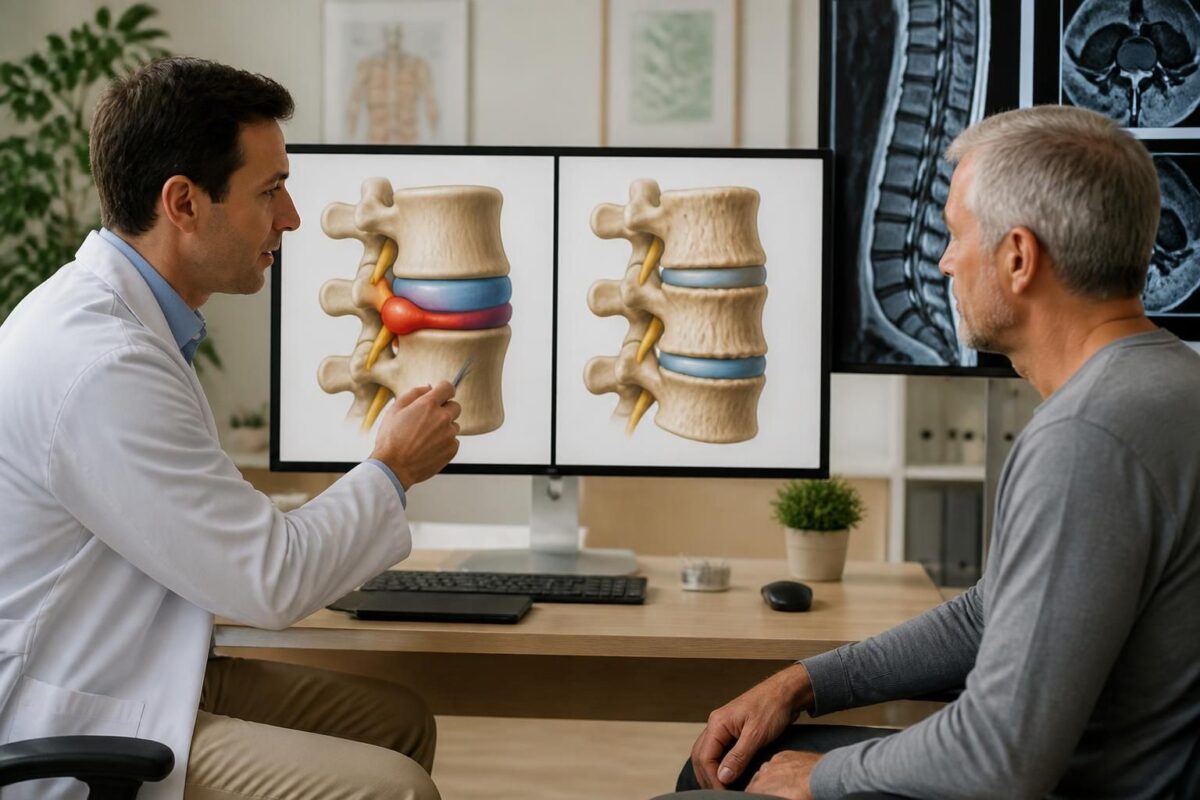
Herniated disc and disc disease: understanding the differences
IN BRIEF In brief, a herniated disc and discopathy are two distinct causes of spinal pain: wear of the intervertebral disc (discopathy) and the protrusion of the gelatinous nucleus that can compress a nerve (herniated disc). Understanding these differences helps…
Diagnosis and clinical approach
The diagnosis mainly relies on the medical history and clinical examination. The doctor evaluates painful areas, the distribution of symptoms, and muscle strength. Additional tests may be requested if necessary to clarify the cause, such as in cases where disc surgery is considered.
For a targeted and tailored approach, a professional evaluation is essential to distinguish mechanical causes, inflammation, and other contributing factors.

Herniated disc and annular tear: possible pain
IN BRIEF In short, Herniated disc and annular tear refer to issues with the intervertebral disc that can cause lower back pain and, at times, pain radiating down the leg. Symptoms vary and can mimic sciatic pain. Treatment favors conservative…
Management and therapeutic perspectives
At TAGMED Clinic, treatments may vary according to the precise diagnosis and overall patient assessment. Options may include specialized manual techniques and other clinical approaches tailored to each situation. In some cases, specific neurovertebral decompression technologies may be considered after a thorough evaluation.
To learn more about the mechanisms and available approaches, you can consult specialized resources on causes and management options, including dedicated content on decompression and associated conditions on sites like sossciatique.com and the information related to TAGMED Clinic.
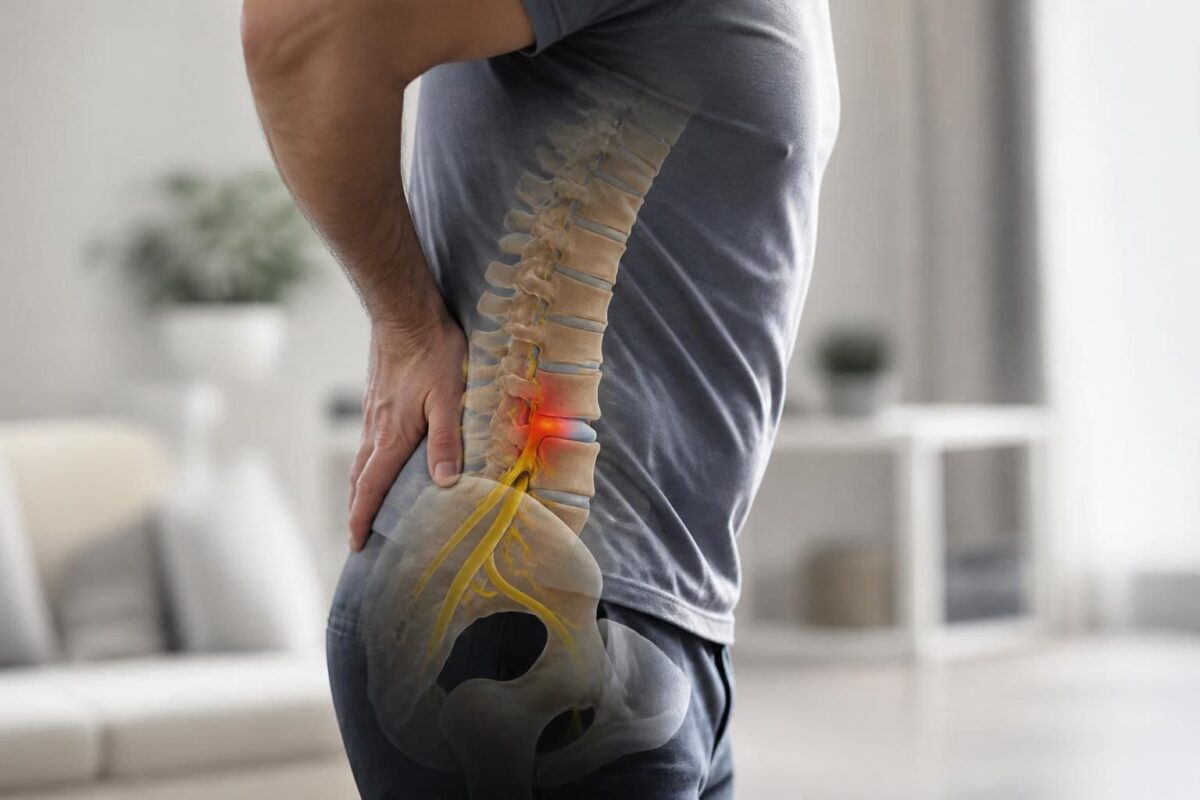
Herniated disc and chemical irritation of the nerve root
IN BRIEF In brief, Herniated disc and chemical irritation of the nerve root describe pain and dysfunction due to compression and inflammatory chemical exchanges affecting a spinal nerve root. This association explains radiating pain, abnormal sensations, and sometimes muscle weakness…
Prevention and practical advice
Maintaining an appropriate posture and avoiding positions that aggravate symptoms can help. An active approach and regular assessment by a professional will help clarify the cause and choose appropriate management. For additional information on prevention methods and treatment options, refer to specialized resources and professionals in your area.
Herniated disc and mechanical compression of the nerve
IN BRIEF In brief, a herniated disc is a prolapse of the intervertebral disc that can lead to mechanical compression of the nerve root, causing pain and numbness that often radiate down the leg. This compression explains radiculopathy and sensations…
Resources and useful links
To better understand the causes and symptoms, consult: Mechanical causes and symptoms of sciatica.
For general information on low back pain and sciatica, see MSD Manuals.
To directly access TAGMED resources, visit Clinique TAGMED.
For information on neurovertebral decompression and associated options, see Neurovertebral decompression.
For additional resources on herniated discs and non-surgical treatments, see Herniated disc and Herniated disc (additional).
Medical disclaimer: The information and advice provided on this site do not replace the opinion, diagnosis or treatment of a health professional. Please note that Dr. Sylvain Desforges, osteopath, is neither a medical doctor nor a physician, and is not specialized in a medical specialty as defined by the Collège des médecins du Québec. Manual medicine, functional medicine, and sports medicine as described on this site exclude any treatment or medical diagnosis made by a physician or specialist. Always consult your doctor with any medical questions. For more details, please read our full Legal Notice.
- Numbness in the leg: may reflect sciatica; locate it precisely and note the path.
- Typical pathway of the sciatic nerve: buttock → back of the thigh → leg → foot.
- Associated signs: tingling, burning, paresthesia; possible weakness.
- Alarm signs: significant loss of strength, perineal anesthesia, incontinence, fever.
- Common causes: lumbar herniated disc, lumbar stenosis, piriformis syndrome, degenerative disc disease.
- Quick diagnosis: history and clinical examination; MRI if in doubt or emergency signs.
- Early actions: stay active, targeted exercises, progressive rehabilitation; combined approach with osteopathy/physiotherapy.
- When to consult quickly: pain persists after a few weeks or emergency signs appear.

This recommendation addresses leg numbness related to sciatica, possible causes, and steps to clarify the origin in order to favor effective management. Numbness may reflect irritation or compression of the sciatic nerve along its pathway and deserves appropriate evaluation to target the cause and guide treatment.
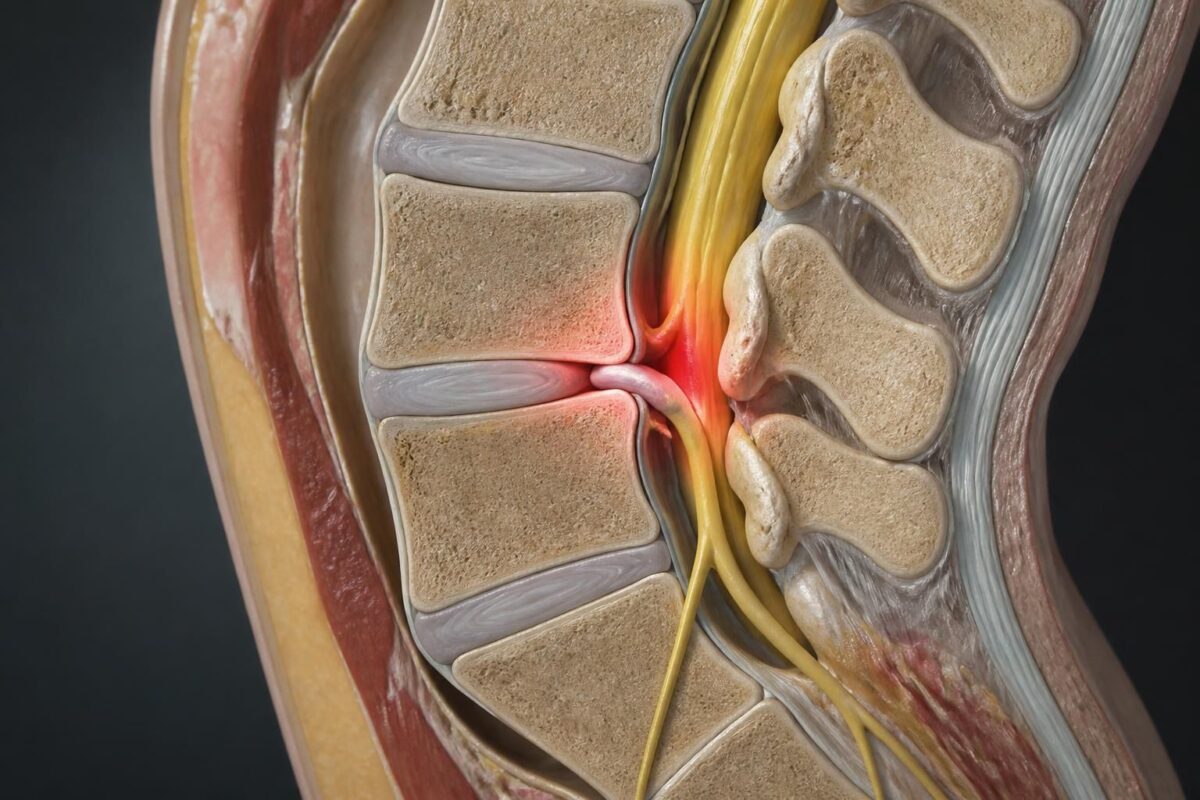
Herniated disc and nerve root inflammation
IN BRIEF In brief, lumbar disc herniation and nerve root inflammation refer to compression and irritation of a spinal root causing radiating pain, paresthesias, and sometimes muscle weakness. The mechanism combines disc protrusion and radicular inflammation, hence the importance of…
Understanding numbness and the pathway of the sciatic nerve
The sciatic nerve is the longest in the body and traces its path from the buttock to the foot. When it is irritated or compressed, numbness can follow this course and be accompanied by tingling, burning, or muscle weakness.
The symptom may appear without significant back pain, but it can also be accompanied by lower back pain. The key signal is pain or loss of sensation that persists and cannot be explained by a simple local injury. In some cases, numbness precedes or follows radiating pain.

Herniated disc and peripheral pain: sign to watch out for
IN BRIEF In brief, Herniated disc is the partial protrusion of the gelatinous nucleus of an intervertebral disc through the fibrous ring, which can compress a nerve root and trigger radiating pain in the limb. The key benefits of rapid…
Common causes to clarify
Lumbar herniated disc
The most common cause of radial numbness is a herniated disc in the L4-L5 or L5-S1 segments, which compresses a nerve root and triggers radiculopathy with numbness along the nerve.
Piriformis syndrome and other factors
The piriformis syndrome can compress the sciatic nerve without visible vertebral involvement. Other common causes include lumbar stenosis, degenerative disc disease, and lifestyle-related factors (sedentarism, overweight, smoking).
Other relevant causes
Diabetes or other peripheral neuropathies can also cause limb numbness. In pregnant women, biomechanical adaptations may promote temporary discomfort of the sciatic nerve.

Herniated disc and centralizing pain: sign to interpret
IN BRIEF In brief, a herniated disc is a protrusion of the intervertebral disc that can compress a nerve root, causing centralized pain and signs such as radiating pain, numbness, and weakness. The treatment is mostly conservative: guided activity, physical…
How to clarify the diagnosis
A detailed history and clinical examination help identify a radiculopathy and specify the affected root. Imaging studies are not systematic but may be useful if warning signs appear, or if surgery is being considered. The straight leg raise test can be used in consultation to confirm radicular pain and guide the diagnosis.
Practical approaches to treatment and prevention
The management favors an active approach rather than strict rest. Adopting suitable activity and progressive exercises, correcting postures, and managing pain through non-pharmacological and, if necessary, pharmacological methods often allow for lasting improvement. Sessions with a physiotherapist or osteopath can optimize rehabilitation and correct mechanical factors.
Exercises and posture to prioritize
Gentle stretches of the back and hamstrings, combined with light core strengthening, support the spine and reduce pressure on the nerve roots. The choice of exercises should be tailored to the specific cause and supervised to avoid aggravating movements.
When to consult quickly
Consult urgently if you present with loss of bladder or bowel control, saddle anesthesia, pronounced weakness, or rapidly worsening pain, or in the presence of fever after recent trauma.
Sciatica: leg numbness and causes to clarify
| Element | Concise clarification |
|---|---|
| Lumbar disc herniation (L4-L5 / L5-S1) | Affected root by extrusion or protrusion; numbness along the nerve pathway. |
| Lumbar stenosis | Narrowing of the spinal canal; numbness worsened with walking or standing. |
| Piriformis syndrome | Compression of the sciatic nerve by the gluteal muscle without necessarily having low back pain. |
| Diabetic neuropathy | Distal numbness, often bilateral, related to glycemic control. |
| Foraminal radiculopathy | Numbness corresponding to the affected root; sometimes mild pain. |
| Spondylolisthesis / lumbar instability | Slipping of a vertebra; worsening during movement and radicular numbness. |
| Peripheral nerve trauma | Injury due to a shock; localized numbness according to the affected nerve. |
| Spinal tumor or infection | Medical emergency: persistent pain, fever, neurological signs; imaging required. |
| Cruralgia (L1-L3) – pain different from the sciatic pathway | Anterior thigh numbness; distinguish from the sciatic pathway. |
Testimonials on Sciatica: leg numbness and clarifying the cause
“My leg numbness appeared suddenly and I was scared of a serious problem. Thanks to a clear diagnosis and evaluation of the sciatic nerve, a sciatica related to a disc herniation was identified.”
“The numbness persisted despite treatments, and the consultation helped clarify the cause: possible inflammation and compression of the sciatic nerve.”
“After several weeks, a personalized exercise program was put in place. The numbness reduced, and I got back to my activities thanks to a suitable diagnosis and treatment.”
“I came because the numbness sometimes went down to my foot. The professional distinguished between sciatica and other nerve pain and clarified the cause to propose the right plan.”
“Doubt disappeared after the examination and tests: it was indeed a sciatica with a clear nerve pathway. Understanding the cause facilitated the choice of exercises and follow-up.”
Dr Sylvain Desforges, expert in osteopathy, naturopathy and manual medicine, plays a central role in researching and optimizing the treatment of spine-related pain. As the founding president of the TAGMED clinics and the ACMA association, he advocates for an integrated approach aimed at clarifying the underlying causes of leg numbness and sciatica. His approach is based on scientific evidence, rigorous clinical evaluation, and the coordinated use of advanced technologies to improve the quality of life for patients facing neuro-musculoskeletal pain.
Sciatica presents as pain that follows the pathway of the sciatic nerve, starting from the lower back, crossing the buttock and the back of the thigh down to the leg, sometimes with feelings of numbness or tingling extending to the foot. When the nerve is irritated or compressed, symptoms can be unilateral and worsen with lumbar flexion, coughing, or exertion. The leg numbness is part of the neurological signs that can accompany the pain and require precise diagnostic clarification to determine the underlying cause.
The most common causes of sciatica include a lumbar disc herniation, spinal canal narrowing (narrow lumbar canal), piriformis syndrome, and in some situations, conditions related to pregnancy or metabolic issues. Other factors, such as chronic inflammation and wear of the intervertebral discs, can also play a role. The goal is to distinguish mechanical mechanisms from inflammatory processes to guide treatment in a targeted and effective manner.
Diagnosis relies on a detailed medical history and a thorough clinical examination. Tests such as the straight leg raise can help identify referred pain along the sciatic pathway. Additional examinations, such as imaging, are not routine and are considered when warning signs or suspicion of structural pathology persist despite initial treatment. The evaluation aims to differentiate sciatica from other nerve pains, like cruralgia, which follows a different pathway and requires a tailored approach.
As part of his approach, Dr Desforges offers management focused on clarifying the cause and a progressive and safe therapeutic method. He favors suitable osteopathic and manual techniques, combined with targeted exercises and daily rehabilitation advice. Additionally, he incorporates modalities such as motorized neurovertebral decompression, laser treatment and shockwave therapies when appropriate within the evaluation and desired outcomes. The objective is to reduce inflammation, restore function, and prevent recurrences, while avoiding passive and prolonged rest treatments.
For those suffering from leg numbness or sciatica with unclear causes, the path proposed by Dr Desforges emphasizes rigorous evaluation, evidence-based treatments, and a gradual return to activities. This approach aims to enable a sustainable return to mobility and daily life while minimizing the risks of complications or chronicity. Discover how this method can clarify your situation and guide a personalized care plan at the TAGMED Clinic.
This synthesis clarifies how sciatica can manifest as a leg numbness and outlines possible causes, evaluation elements, and approaches to quickly clarify the source and guide treatment towards active solutions rather than prolonged rest.
Diagnosis and causes to clarify
When numbness in the leg occurs, several mechanisms may be involved. It can be related to a sciatic nerve radiculopathy, a piriformis syndrome, lumbar stenosis, or other inflammatory or degenerative conditions around the spine. The trajectory of pain, paresthesias, and local neurological signs help guide the diagnosis towards a lumbar disc herniation, discopathy, or different nerve compression. To deepen the understanding of the painful trajectory and associated causes, you may refer to the following resources: trajectory of pain and orientation of the cause, sciatica or sacroiliac pain, and numbness of the foot while sitting.
For a general perspective on causes and symptoms, science presents the major causes and symptoms.
Practical approach and prevention
A precise diagnosis allows for the application of an effective conservative strategy and avoids inappropriate treatments. In most cases, the goal is to reduce inflammation and pain through a combination of appropriate exercises, mobilization, and lifestyle hygiene. Targeted stretching and core stability exercises for the back and hips support the spine and improve mobility. To understand the mechanisms underlying pain and associated trajectories, see Sciatica: causes.
Natural approaches and manual techniques, such as osteopathy or movement therapies, may be considered in addition to an exercise program. Practical resources and advice on the links between pain and posture, as well as non-drug treatments, are available in dedicated articles such as pain in one leg and pain that descends into the leg while sitting.
When to consult and warning signs
It is important to know when to consult quickly. In the presence of motor deficits, sphincter disturbances, rapidly worsening pain, fever, or unexplained weight loss, an emergency consultation is necessary. Signs such as progressive numbness or marked weakness while walking require rapid medical evaluation. To understand how to distinguish signs that need prompt management, you can refer to resources like pain that descends into the leg while sitting and pain that increases while sitting.
For an overview of warning signs and management options, also check sciatica and sacroiliac pain, and numbness of the leg: what to do.
Useful resources and additional links
- Numbness of the foot while sitting
- Trajectory of pain and orientation of the cause
- Sciatica or sacroiliac pain
- Pain that descends into the leg while sitting
- Pain in one leg: explanation
- Sciatica: causes, symptoms and treatments
- Causes of sciatica
- Pain that increases while sitting
- Numbness of the sciatic leg – what to do
This information does not replace a personalized medical consultation. If you experience concerning or persistent symptoms, contact your healthcare professional for appropriate evaluation.

Dr Sylvain Desforges, B.Sc., D.O., N.D., osteopath, is the founding president of TAGMED and of the ACMA association. He dedicates his practice to chronic spinal pain, low back pain and symptoms compatible with sciatica, particularly when pain radiates toward the buttock, leg, calf, foot or toes.
Through SOS Sciatique, he publishes educational content on sciatica symptoms, possible causes such as disc herniation, disc narrowing, foraminal stenosis or irritation of a lumbar nerve root, as well as non-surgical approaches that may be considered according to the evaluation. At Clinique TAGMED, care may include, depending on the case, motorized neurovertebral decompression, specific osteopathic care or precision percussion.
For an evaluation related to sciatica treatment in Montreal / Mount Royal or sciatica treatment in Terrebonne, please consult the services available at Clinique TAGMED.
Medical disclaimer
The information published on SOS Sciatique is provided for educational purposes only and does not replace a consultation, diagnosis, opinion or treatment provided by a physician or another authorized healthcare professional. The author of this article is neither a medical doctor nor a specialist in a medical specialty recognized by the Collège des médecins du Québec. The osteopathic, manual medicine or functional support approaches described on this site do not constitute medical acts and are not intended to replace medical follow-up.
Consult a physician or emergency service in cases of loss of bladder or bowel control, anesthesia in the saddle area, significant or progressive weakness in the leg or foot, fever, recent trauma, severe pain or rapid worsening of symptoms. For more details, please read our Legal Notice.