


Sciatica in Montreal: leg weakness and loss of confidence in walking
25/09/2026
Sciatica and pain when sneezing: why does it happen?
25/09/2026
IN BRIEF
| In short, sciatica is pain or a nerve sensation that can travel from the lower back down the leg. In Terrebonne, it can cause leg weakness and a loss of confidence when walking. The benefits of a non-surgical approach include better mobility, increased stability, and a gradual return to activity, without surgery. How does it work? Through a clinical evaluation, identification of the cause (disk, stenosis, or osteoarthritis), and implementation of a personalized program of movements, posture, and resuming activities to create space for the nerve and secure walking in the Terrebonne area. |
In Terrebonne, sciatica can manifest as leg weakness and a loss of confidence when walking. These signs often suggest irritation or compression of a lumbar nerve root and require professional assessment to target an appropriate management plan. A conservative approach with targeted exercises and mechanical corrections can help regain stability and walking ability, but consult a specialist quickly if weakness progresses or is accompanied by warning signs.
Written by Dr Sylvain Desforges, osteopath, this article describes sciatica as it can manifest in Terrebonne, with leg weakness and a loss of confidence when walking. It specifies what signs to watch for, potential causes in the lower back, and non-surgical management options. The goal is to help recognize alerts and guide toward rapid professional assessment when necessary.
Signs and Symptoms to Watch For
Pain often travels from the lower back or buttock to the back of the leg. Weakness or difficulty walking may accompany this pain. Tingling or numbness can affect the leg and foot. The pain pathway is generally on one side only, but it may extend in different ways depending on the individual.
Major Warning Signs
A loss of control over urine or stool, numbness around the genital area or anus, difficulties urinating, or progressive weakness of the leg or foot require medical attention. If a significant trauma occurs or if the pain becomes severe rapidly, consult immediately.
Sciatica in Terrebonne: pain that prevents driving for long periods
IN BRIEF In brief, sciatica in Terrebonne is pain that radiates along the sciatic nerve and can prevent long drives. In Terrebonne, non-invasive approaches like osteopathy and postural advice can improve mobility and reduce pain, allowing for more comfortable trips.…

Sciatica in Terrebonne: pain that prevents sitting down
IN BRIEF In brief, Sciatica in Terrebonne is pain that follows the path of the sciatic nerve and can prevent one from sitting. It manifests as lower back pain that radiates into one leg and may be accompanied by tingling…
Causes and Mechanisms
Lumbar Disk and Root Irritation
Local pain may reflect irritation of a nerve root at the lumbar level, often related to a bulging or herniated disk. This irritation can cause symptoms that radiate to the buttock, thigh, calf, and sometimes down to the foot. Sciatica does not describe a single cause but a set of signs to be assessed with the help of a professional.
Other Mechanisms to Consider
Changes in the space around the nerve roots, such as foraminal narrowing or joint constraints, can also contribute to irritation. The assessment relies on the history, examination, and evolution of symptoms, as imaging alone is not sufficient to establish a definitive cause.
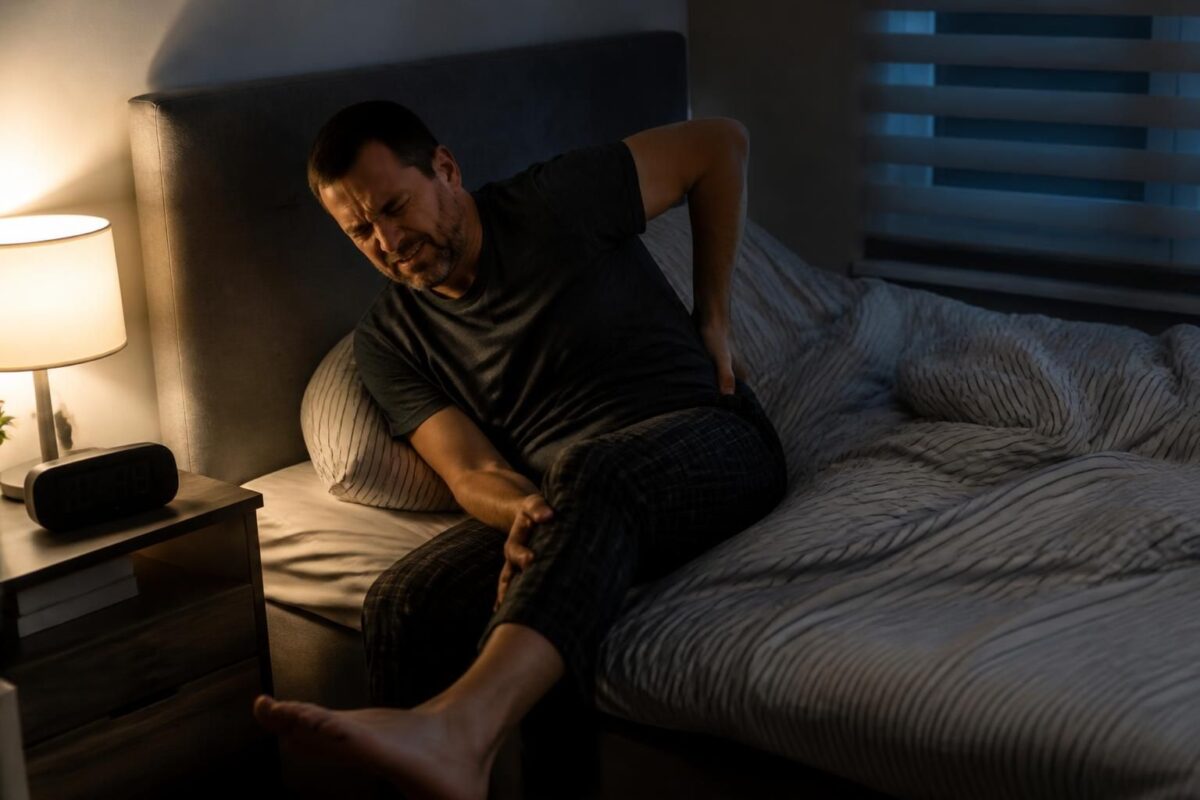
Sciatica in Terrebonne: pain that wakes you up at night
IN BRIEF In brief, nocturnal sciatica is pain from the sciatic nerve that occurs at rest and can wake you up at night. In Terrebonne, simple adjustments to posture and sleep environment allow for quick relief, notably by sleeping on…

Sciatica in Terrebonne: symptoms that worsen at the end of the day
IN BRIEF In brief, sciatica is pain associated with the sciatic nerve that starts in the lower back and can radiate down into the buttock and leg. In Terrebonne, it can worsen at the end of the day after prolonged…
When to Consult and What Options to Consider
Urgency and Situations Requiring Quick Consultation
Consult quickly if the weakness is significant or progressive, if new areas of numbness appear, or if genital signs appear. Pain associated with major trauma, fever, or unexplained weight loss may also indicate a situation requiring urgent medical evaluation.
Action Plan Without Surgery and What to Expect
In many cases, a conservative management approach may be considered, focused on reducing irritation and optimizing lumbar function. The role of a professional is to assess the precise origin and propose an adapted approach, without prioritizing imaging as the sole diagnostic element.

Sciatica in Terrebonne: intermittent pain or constant pain?
IN BRIEF Sciatica is pain that follows the path of the sciatic nerve, starting from the lower back to the buttock and leg. In this context, we distinguish between intermittent pain and constant pain, depending on the episodes and causes…

Sciatica in Terrebonne: burning pain behind the thigh
IN BRIEF In brief, sciatica in Terrebonne, pain described as a burning sensation behind the thigh, is a nerve irradiation due to irritation or compression of a lumbar root that follows the pathway of the sciatic nerve. Benefits: precise local…
What You Can Do in the Meantime and Cautious Measures
Stay active within your tolerance and avoid activities that significantly increase pain. Alternate periods of rest with gentle movements and short walks that do not cause lasting aggravation. Avoid positions that worsen the pain and avoid stretches or movements that awaken or intensify nerve symptoms.
Comfort and Safety Measures
Apply comfort modalities such as heat or cold with caution and under supervision. Seek advice for over-the-counter options and avoid treatments that may mask symptoms without addressing the cause.

Sciatica in Terrebonne: numbness of the big toe and lower back pain
IN BRIEF In brief, sciatica associated with numbness in the big toe and lower back pain is pain that radiates along the sciatic nerve, starting from the lower back and spreading to the buttock, the back of the thigh, and…

Sciatica in Terrebonne: loss of sensation in the toes
IN BRIEF In brief, Sciatica with loss of sensation in the toes describes a compression of the sciatic nerve that runs from the lower back to the feet, causing numbness and tingling. In Terrebonne, non-surgical approaches aim to identify the…
Management Options at TAGMED and in Specialized Clinics
At the TAGMED Clinic, non-surgical approaches may be considered based on the evaluation, including specific osteopathic techniques and interventions tailored to the lumbar spine. For certain situations, the concept of neurovertebral decompression may be considered as a complementary option when indicated by clinical evaluation.
To delve deeper into practical aspects and signs to watch for, you can consult the following resources:
Sciatica and pain when coughing – possible disk sign,
Numbness and lower back pain in Montreal,
Numbness in leg – what to do,
Pain in the leg after prolonged standing – Terrebonne,
Pain that wakes you at night – Terrebonne.
Additional resources and information on the mechanisms of sciatica can be consulted on specialized sites of SOS Sciatique and clinical publications associated with TAGMED.
Additional educational resources and associated training: professionals can rely on training recognized by relevant organizations such as NUMSS, NAO, National University of Medical Sciences, and National Academy of Osteopathy.
For cases requiring specialized assessment, deploying a structured approach allows for quick targeting of areas to treat and avoids delays in resuming activities. You can request a quick consultation at the TAGMED Clinic in Montreal or Terrebonne.
Complementary resources and useful information pages for conservative management and diagnostic procedures include content dedicated to sciatica and secure walking on authorized partner sites.
If in doubt, request a professional assessment. A coordinated approach helps maintain mobility and confidence while walking, while identifying triggering factors and underlying mechanical mechanisms.
Medical disclaimer: The information and advice provided on this site do not replace the opinion, diagnosis, or treatment of a healthcare professional. Please note that Dr. Sylvain Desforges, the osteopath, is neither a medical doctor nor a physician, and is not a specialist in any medical specialty as defined by the Collège des médecins du Québec. Manual medicine, functional medicine, and sports medicine as described on this site exclude any medical treatment or diagnosis made by a doctor or medical specialist. Always consult your doctor for any medical questions. For more details, please read our full Legal Notice.
.grid-two { display: grid; grid-template-columns: 1fr 1fr; gap: 24px; align-items: start; }
.grid-two ul { margin: 0; padding-left: 1.2em; }
.grid-two li { margin: 6px 0; }
Intervention Axis: Pragmatic Approach to Restoring Walking with Sciatica in Terrebonne

This article guides you on sciatica in Terrebonne when experiencing leg weakness and loss of confidence in walking. You will find key signs, possible causes, recommended measures at home, and situations that require rapid medical assessment, as well as a concrete action plan to regain stable and safe walking.
Signs and Symptoms to Watch for in Terrebonne
Sciatica can manifest as pain starting from the lower back or a buttock and radiating down the leg, but it can also primarily present as weakness in the leg and loss of confidence in walking. Numbness, tingling, or a sensation of heaviness may accompany these sensations. The most concerning signal is a rapid or progressive weakness that makes it difficult to advance, climb stairs, or walk short distances without stopping. In Terrebonne, a quick assessment helps determine if these symptoms stem from irritation of a nerve root or another musculoskeletal cause.
What These Signs Imply
The pain trajectory and the type of pain (sharp, burning, electrical) help guide the assessment, but they are not sufficient proof of a specific cause. Weakness and instability while walking require appropriate management and monitoring of mechanical factors that irritate the nerve. In some individuals, numbness or weakness may indicate that the nerve is more involved, and walking should be closely monitored to avoid falls or progression of functional limitations.
Common Causes and Mechanisms to Understand
The most common cause is irritation of a lumbar nerve root due to a bulging or herniated disc, which can disrupt nerve transmission and lead to intermittent or lasting weakness. Other mechanisms may reduce the space around the nerve roots, such as joint adjustments or lumbar osteoarthritis. In patients from Terrebonne, the origin may be multifactorial: prolonged posture, mechanical overload, or a minor injury that worsens over time. Understanding these mechanisms is essential for choosing an effective conservative strategy and reducing the risk of recurrence.
When to Consult and When to Head to the Emergency Room
Consult quickly if weakness appears and worsens, if the pain spreads significantly, or if you experience a progressive numbness that limits walking. Signs of urgency require immediate intervention: loss of urinary or bowel control, numbness around the genitals, severe pain after trauma, fever, or significant weakness in both legs. In Terrebonne, do not hesitate to go to the emergency services in case of these signs.
Practical Action Plan to Regain Reliable Walking in Terrebonne
For non-emergency situations, move cautiously and favor activities that decrease symptoms without worsening them. Alternate periods of light walking with breaks and avoid prolonged sitting positions. Apply either heat or cold depending on your comfort, protecting the skin and avoiding irritation. Consult a pharmacist for over-the-counter pain relief, especially if you have pre-existing medical conditions. Avoid stretches or exercises that aggravate nerve symptoms and favor gentle and progressive movements.
What Happens in Clinic in Terrebonne?
A specialized evaluation allows for the distinction between nerve irritation and other causes, and to design a personalized plan. The program may include gentle decompression techniques, targeted mechanical adjustments, and a progressive exercise protocol to give space back to the nerve and strengthen walking. You benefit from step-by-step support to gradually increase your walking distance and stability, in order to build lasting confidence in your daily movements.
| Element | Impact and management |
|---|---|
| Origin and location | Lumbar root irritated or compressed; confirm the path and extent of radiating pain and numbness. |
| Impact on walking and confidence | Loss of confidence and weakness weaken walking; cautious progression with a rehabilitation plan. |
| Signs of urgency | Urgency if there is a loss of control over urination/bowel movements or significant progressive weakness. |
| Quick assessment elements | Examination of strength, sensitivity, reflexes, and balance while walking. |
| Triggering factors | Prolonged sitting and activity exacerbating symptoms. |
| Non-surgical approaches | Targeted physiotherapy, decompression, and progressive return to activities. |
| Imaging | Imaging not necessary initially; helpful if there are neurological signs or concerning developments, contextual interpretation. |
| Evolution and recovery time | Gradual improvement with appropriate management; numbness may persist longer. |
| When to consult | Consult quickly if pain persists, worsens, or limits your activities; urgency if there are signs of major involvement. |
Testimonials on Sciatica in Terrebonne: leg weakness and loss of confidence in walking
“In Terrebonne, the weakness in my leg took me by surprise: each step required new energy and I was afraid of falling. I no longer felt capable of walking normally and my confidence in walking had disappeared.”
“After an evaluation process in Terrebonne, I noticed a significant reduction in my leg weakness and my confidence in walking gradually returned. I was able to resume my daily walks without fear.”
“The path to well-being has been clear: tailored sessions and dedicated support for my sciatica allowed me to regain control over my steps. In Terrebonne, I found a more stable and secure walk.”
“Today, my loss of confidence in walking belongs to the past. I can walk longer and resume my usual activities in my neighborhood of Terrebonne, without the sciatica holding me back.”
Dr. Sylvain Desforges, expert in osteopathy, naturopathy, and manual medicine, is the founding president of TAGMED clinics and the ACMA association. His career is dedicated to advancing healthcare, with a strong specialization in the management of chronic spinal pain and the integration of innovative approaches. In his practice in Terrebonne, he combines solid knowledge and advanced technologies to offer care based on the best available evidence and a personalized approach to sciatica cases.
In the Terrebonne area, many patients present with a clinical picture characterized by leg weakness and loss of confidence in walking, symptoms that suggest irritation or injury to a lumbar nerve root, typically associated with the sciatic nerve. This presentation is complex: pain may radiate from the lower back to the buttock and leg, but it does not automatically indicate the cause. His expertise relies on a thorough evaluation that distinguishes sciatica from other lower back pain and captures the functional implications on each patient’s daily life.
Care begins with attentive listening to the pain history and a structured clinical examination. The pain path, muscle strength, reflexes, and walking capacity are evaluated while observing how pain and instability affect posture and daily activities. The objective is to clarify why the leg falters and why walking may become a source of apprehension. This approach avoids superficial hypotheses and directs to an appropriate therapeutic strategy aimed at reducing pressure on the nerve and restoring function.
The therapeutic program in Terrebonne is based on a multimodal and evidence-based approach, combining techniques tailored to each profile, notably motorized neurovertebral decompression, specific osteopathy, and the use of a precision impactor. Depending on the cases, complementary therapies such as laser and shockwave therapy may be integrated to relieve nerve irritation. The goal is not only to reduce pain but also to restore a more stable and autonomous walk and to restore the confidence needed to resume normal activities without fear.
Results among patients in Terrebonne are measured in terms of functional progress and recovery of mobility. Many regain a more sustainable walking ability, a decrease in perceptions of weakness, and a gradual return to daily activities, accompanied by a renewed confidence in their movements and mobility. The process is personalized, adjusted according to treatment response and specific constraints of each active life. Through this structured approach, Dr. Desforges aims to transform a situation marked by pain and insecurity into a safer, more autonomous, and more serene walk.
For individuals affected by sciatica in Terrebonne with leg weakness and loss of confidence in walking, a specialized evaluation may be considered at the TAGMED Clinic, in order to propose an adapted and effective therapeutic plan. This journey remains centered on function, improving mobility, and enhancing quality of life.
This text presents a clear synthesis of sciatica in Terrebonne focused on leg weakness and loss of confidence in walking, describing the signs, possible mechanisms, recommended home measures, and situations requiring medical evaluation, as well as the resources available in the region.
For people experiencing leg weakness associated with symptoms radiating from the back or buttock, it is essential to quickly assess the origin and functional impact. Progressive motor weakness can indicate nerve damage that requires appropriate management, and it is crucial not to overlook these signs, especially when they affect walking and stability.
Sciatica can occur when the lumbar nerve roots are irritated or compressed by a disc, stenosis, or other mechanical mechanisms. However, the diagnosis cannot be made solely based on the description of the pain: the evaluation includes history, clinical examination, and observation of the evolution of symptoms. In Terrebonne, there are suitable treatment and diagnostic options available, particularly through the Treatment of sciatica in Terrebonne.
To deepen the understanding of the signs and mechanisms, resources such as the MSD Manuals and pages dedicated to sciatica in Terrebonne provide detailed explanations about possible causes, typical symptoms, and non-surgical management options. This information helps distinguish the symptoms of true sciatica from isolated lower back pain and guides towards specialized evaluation when necessary.
In the face of marked weakness or a progression of walking difficulties, it is advisable to seek specialized evaluation promptly. In the meantime, prioritize suitable activity, avoid prolonged immobility, and focus on comfort measures centered on movement and posture, without overdoing exercises that worsen symptoms.
To access local resources and services, you can check the treatment of sciatica in Terrebonne or advice dedicated to leg weakness on related sites, including:
Treatment of sciatica in Terrebonne
Sciatica in Terrebonne – pain while seated with tingling in the foot
For additional information and illustrated case studies, you can consult the following resources on Terrebonne and Montreal:
Sciatica in Montreal – pain in the leg after prolonged standing
Sciatica Terrebonne – numbness and weakness
For other perspectives and details, the following pages may also be useful:
Treatment of sciatica in Terrebonne
Numbness of the big toe and lower back pain in Terrebonne
Finally, useful clinical resources to understand the relationship between disc herniation and persistent sciatica are available on the dedicated pages:

Dr Sylvain Desforges, B.Sc., D.O., N.D., osteopath, is the founding president of TAGMED and of the ACMA association. He dedicates his practice to chronic spinal pain, low back pain and symptoms compatible with sciatica, particularly when pain radiates toward the buttock, leg, calf, foot or toes.
Through SOS Sciatique, he publishes educational content on sciatica symptoms, possible causes such as disc herniation, disc narrowing, foraminal stenosis or irritation of a lumbar nerve root, as well as non-surgical approaches that may be considered according to the evaluation. At Clinique TAGMED, care may include, depending on the case, motorized neurovertebral decompression, specific osteopathic care or precision percussion.
For an evaluation related to sciatica treatment in Montreal / Mount Royal or sciatica treatment in Terrebonne, please consult the services available at Clinique TAGMED.
Medical disclaimer
The information published on SOS Sciatique is provided for educational purposes only and does not replace a consultation, diagnosis, opinion or treatment provided by a physician or another authorized healthcare professional. The author of this article is neither a medical doctor nor a specialist in a medical specialty recognized by the Collège des médecins du Québec. The osteopathic, manual medicine or functional support approaches described on this site do not constitute medical acts and are not intended to replace medical follow-up.
Consult a physician or emergency service in cases of loss of bladder or bowel control, anesthesia in the saddle area, significant or progressive weakness in the leg or foot, fever, recent trauma, severe pain or rapid worsening of symptoms. For more details, please read our Legal Notice.