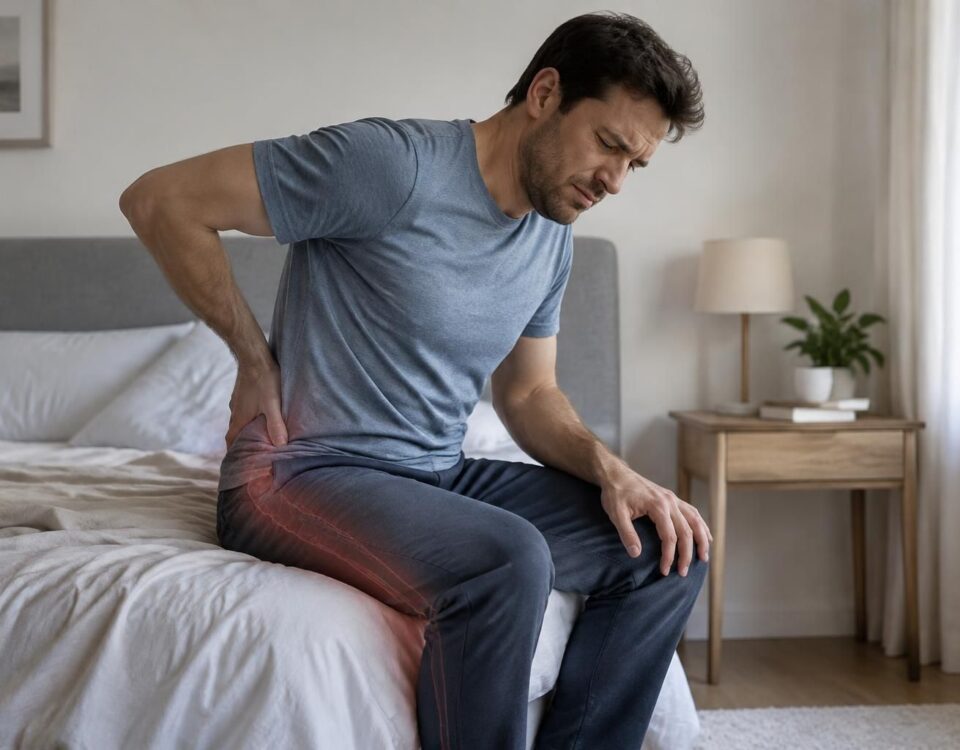
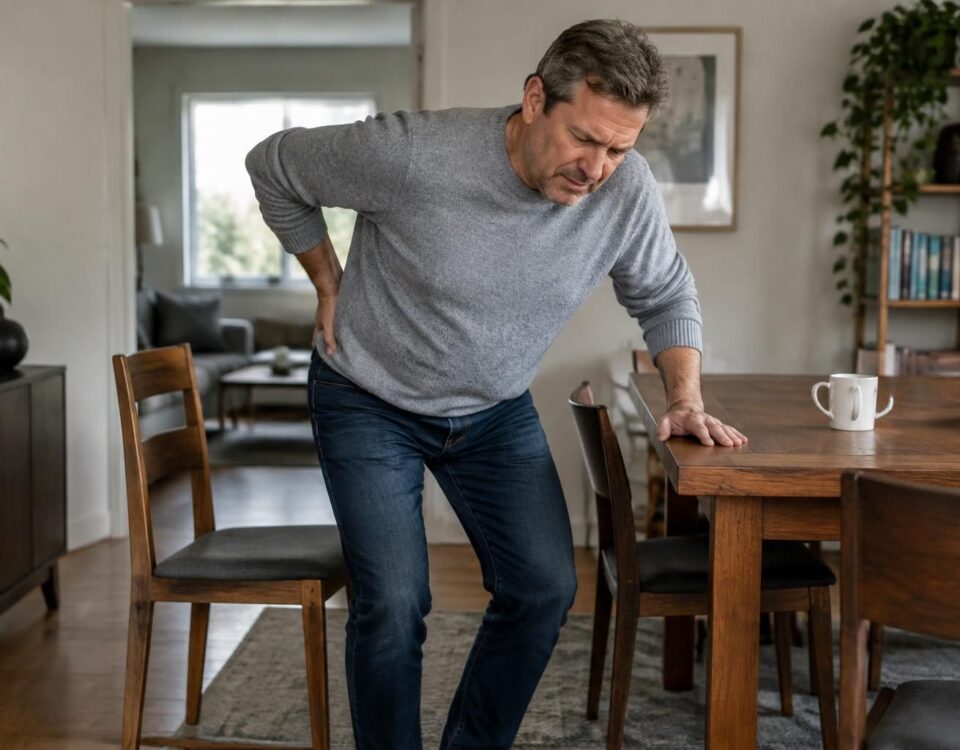
Sciatica in Terrebonne: painful journey according to roots L4, L5, and S1
12/10/2026
Disc herniation and tingling in the toes
12/10/2026
IN SHORT sciatica in lying position refers to pain that follows the path of the sciatic nerve and can disrupt sleep. Sleeping on your back with a cushion under your knees or on your side with a cushion between your legs can reduce tension and improve comfort. Test the position that relieves you the most; consult a professional if the pain persists or worsens. |
Sciatic pain can disrupt falling asleep or worsen in a lying position. Try sleeping on your back with a cushion under your knees, or on your side with a cushion between your legs, prioritizing the position that relieves you the most. Proper support and gentle movements before bed can also improve comfort. If the pain persists, worsens, or is accompanied by significant weakness, consult a healthcare professional.
Sciatic pain can increase when lying down and disrupt sleep. The position, leg support, and the cause of nerve irritation can play a role. This article presents positions to try, helpful precautions, and signs that warrant a consultation. A position may provide comfort, but it does not replace an assessment if the pain persists or worsens.
Why can sciatica hurt in a lying position?
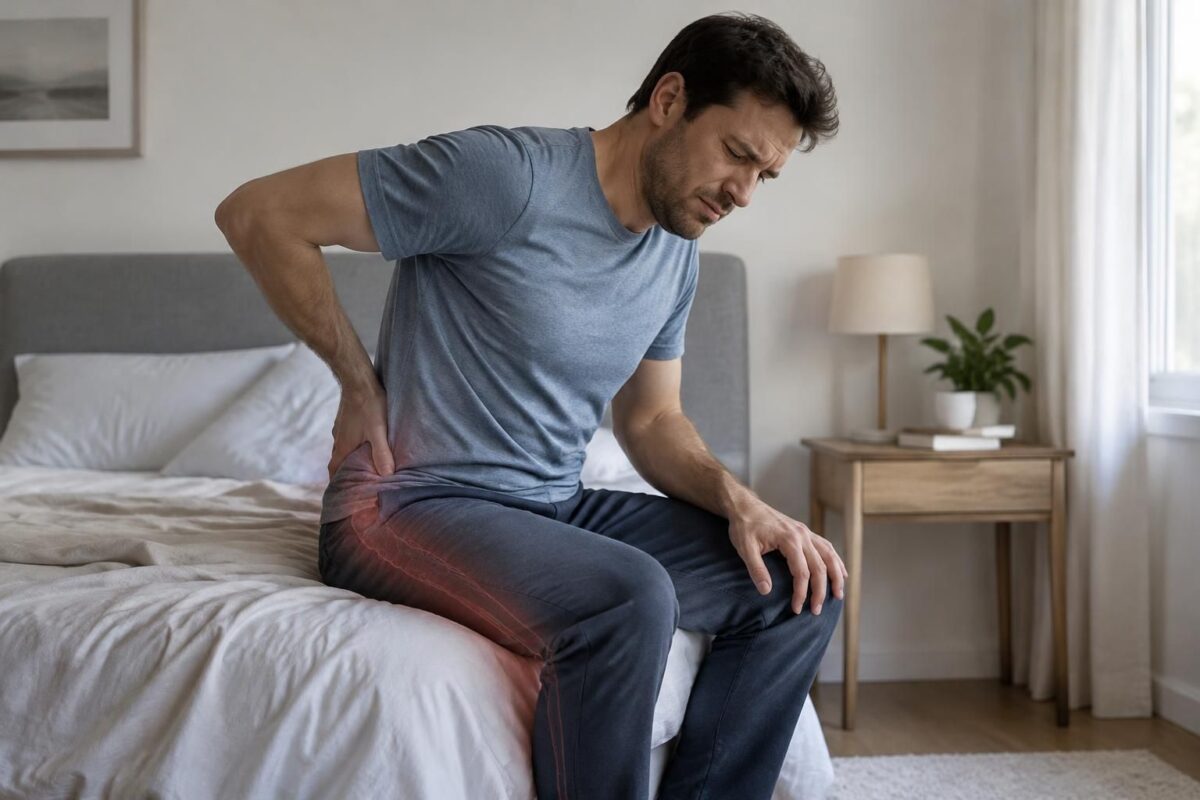
Sciatica refers to pain that follows the path of the sciatic nerve. It often starts in the lower back or buttock and can radiate down into the thigh, leg, or foot. Tingling, numbness, or weakness may also occur.
The pain can vary depending on posture, movements, and sensitivity in the affected area. Irritation of a lumbar nerve root, sometimes linked to a disc-root conflict, can contribute to the symptoms. However, nocturnal pain alone does not identify its cause.
A position that increases tension in the lower back or legs can be uncomfortable. Some people also feel their symptoms more intensely when they remain still for long periods. To better understand tingling at bedtime, consider their frequency, duration, and other accompanying symptoms.
Sciatica and pain with saddle numbness
IN BRIEF Cauda Equina Syndrome refers to pain radiating down the leg accompanied by a loss of sensation around the genitals, anus, or inner thighs. This symptom may indicate severe nerve compression: it is not discomfort to treat at home.…
What positions to try for sleeping with sciatica?
There is no ideal position for everyone. Try a posture that reduces pain without straining the back or leg. Change positions if symptoms increase. You can also read our tips on sleeping positions for sciatica.
On your back, with knees supported
Lie on your back and place a pillow under your knees. This support can reduce tension felt in the lower back. Adjust the height of the pillow to your comfort. If the pain increases or radiates down your leg, choose a different position.
On your side, with a pillow between the knees
Lie on the side that feels most comfortable. Place a pillow between your knees to support your legs and pelvis. Keep your back in a comfortable position, without trying to maintain a rigid posture. A body pillow may also help some people find stable support.
On your stomach: a position to evaluate with caution
Sleeping on your stomach is not suitable for everyone. It can increase discomfort for some, especially if the lower back arches more. If you try it, stop if the pain increases, radiates further down the leg, or is accompanied by new symptoms.
Sciatica and pain with progressive weakness
IN BRIEF Sciatica causes pain that radiates from the lower back down the leg; however, progressive muscle weakness is not a symptom to be taken lightly. It requires quick medical evaluation to search for the cause and determine the appropriate…
Adjusting the bed and supports
A very soft or very firm mattress does not necessarily relieve every person. The best choice is one that allows you to sleep with acceptable comfort and without a lasting increase in symptoms. Avoid changing your mattress solely based on a promise of relief.
You can test pillow placement for a few nights and note the effects on your pain upon waking. Keep adjustments that improve your comfort and discard those that worsen symptoms. These tips align with recommendations on sleep positions and supports, but your personal response remains important.

Sciatica and pain with general discomfort
IN BRIEF A sciatica causes pain that starts in the lower back or buttock and radiates down the leg. A general discomfort, especially if accompanied by fever or rapid worsening, should not be automatically attributed to sciatica: consult a healthcare…
What to do if the pain wakes you up?
Change positions slowly and choose a support that feels comfortable. A short period of rest may help, but remaining still all day can gradually decrease your comfort in typical movements. Resume daily activities according to your tolerance and avoid movements that trigger a significant worsening.
A warm bath or a heat source wrapped in a cloth may provide temporary comfort to some. Protect your skin and avoid heat if you have reduced skin sensitivity. Consult a pharmacist or doctor before taking a medication, especially if you have a chronic illness, are pregnant, or are already taking other treatments.
If pain in a lying position frequently returns, intensifies, or regularly disrupts your sleep, an evaluation can help clarify the situation and suitable options. Also, consult our page on sciatica that does not go away.

Sciatica and pain with a history of cancer: caution
IN BRIEF Sciatica causes pain that can radiate from the lower back down to the leg. With a history of cancer, new, persistent, or worsening pain should be quickly evaluated by a healthcare professional: its cause must be identified before…
When to seek help quickly?
Quickly consult a doctor or emergency service if you experience significant or progressive weakness in a leg or foot, loss of control over the bladder or bowels, or numbness in the saddle area. A fever, recent trauma, severe pain, or rapid worsening also justifies a medical assessment.
Pain that radiates down the leg can have multiple causes. To know possible steps when symptoms persist, consult the page on sciatica treatment in Terrebonne when pain radiates down the leg.
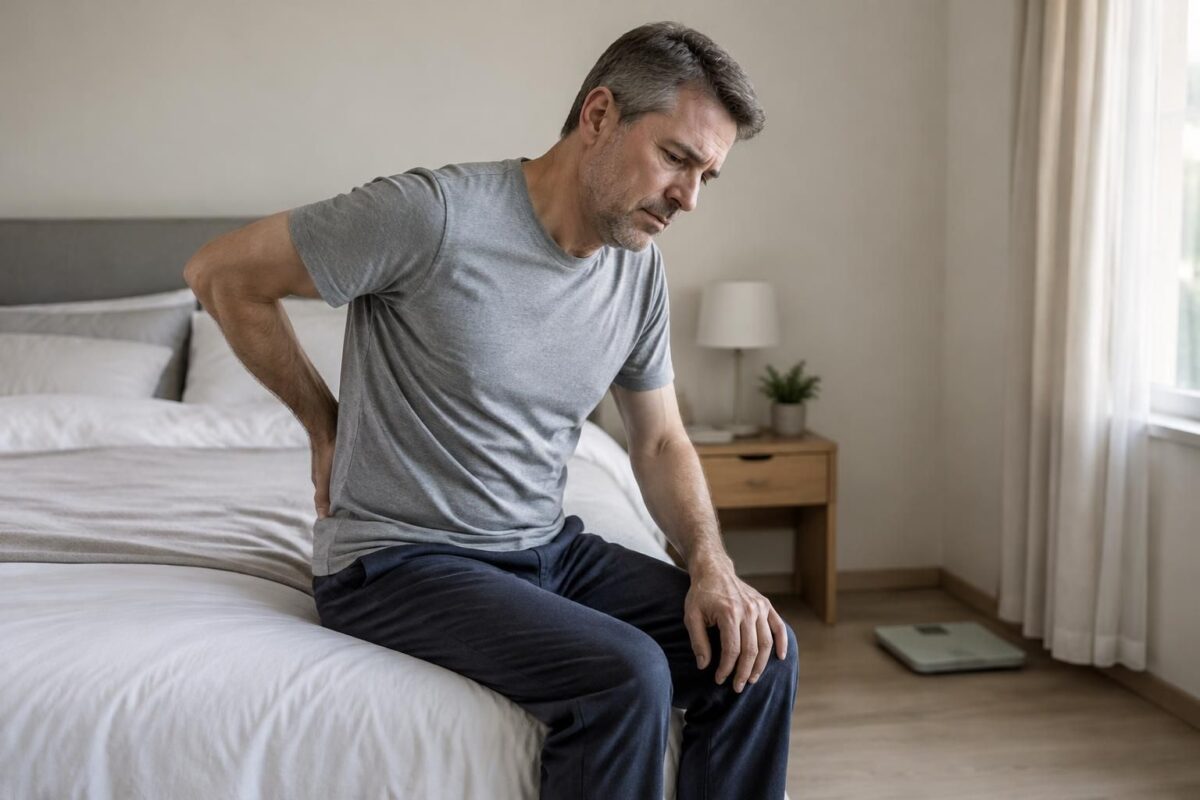
Sciatica and pain with unexplained weight loss
IN BRIEF Sciatica causes pain that can radiate from the lower back to the buttock and leg. Associated with unexplained weight loss, it requires medical evaluation to investigate the cause: this sign alone does not confirm a precise diagnosis. Consult…
Assessment and support options
At TAGMED Clinic, in Montreal and Terrebonne, an evaluation allows for discussing your symptoms and possible options based on your situation. Treatments may include specific osteopathy or motorized neurovertebral decompression when deemed appropriate. These approaches are not suitable for everyone and do not replace a medical diagnosis. To learn more, check the TAGMED Clinic.

Sciatica and pain with fever: why consult?
IN BRIEF Sciatica with pain and fever deserves a medical evaluation: fever is not usual in simple sciatica and may signal an infection or another problem requiring care. Consult promptly, especially if the pain is intense or worsening. In cases…
About the Author
Sylvain Desforges, B.Sc., D.O., N.D., Doctor of Osteopathy, is the founding president of TAGMED and the ACMA association. His practice is dedicated to chronic pain of the spine, lower back pain, and pain compatible with sciatica, especially when it radiates down the buttock, leg, calf, foot, or toes.
Through SOS Sciatique, he publishes educational content about the symptoms of sciatica and possible causes, such as a herniated disc, disc pinching, foraminal stenosis, or irritation of a lumbar nerve root. At TAGMED Clinic, treatments may include, depending on the evaluation, motorized neurovertebral decompression, specific osteopathy, or precision percussion.
For an evaluation related to sciatica treatment in Montreal or Mount Royal, or sciatica treatment in Terrebonne, check the services available at the TAGMED Clinic.

Sciatica and pain after trauma: warning sign
IN BRIEF A sciatica after trauma is pain that starts from the lower back or buttock and can radiate down the leg after a fall or impact. An assessment helps to investigate the cause and determine the appropriate course of…
Medical Disclaimer
The information and advice provided on this site do not replace the opinion, diagnosis, or treatment of a health professional. Please note that Sylvain Desforges, B.Sc., D.O., N.D., Doctor of Osteopathy, is neither a medical doctor nor a physician and is not a specialist in a medical specialty as defined by the Collège des médecins du Québec. Manual medicine, functional medicine, and sports medicine as described on this site exclude any medical treatment or diagnosis by a physician or specialist. Always consult your physician for any medical questions. For more details, please read our Complete legal notice.
Consult a doctor or emergency service in case of loss of bowel or bladder control, anesthesia in the saddle region, significant or progressive weakness in the leg or foot, fever, recent trauma, severe pain, or rapid worsening. The author of this article is neither a physician nor a specialist in a medical specialty recognized by the Collège des médecins du Québec. The osteopathy, manual medicine, or functional support approaches described on this site do not constitute medical acts and do not replace medical follow-up.
Positions to Try
- On your back: place a cushion under your knees.
- On your side: keep your knees slightly bent and place a cushion between them.
- Change positions if the pain increases; the most comfortable position varies from person to person.
Helpful Tips
- Avoid remaining still for long periods; move gently according to your tolerance.
- Consult if lying down pain persists, worsens, or regularly disrupts sleep.
- Emergency in case of progressive weakness, numbness in the saddle region, or loss of bladder or bowel control.

Sciatica can become more bothersome when lying down, at the time of falling asleep, or during position changes. A few simple adjustments—posture, pillows, and gentle movements—can improve comfort, without guaranteeing the same relief for everyone. If pain persists, worsens, or is accompanied by weakness, consult a health professional.
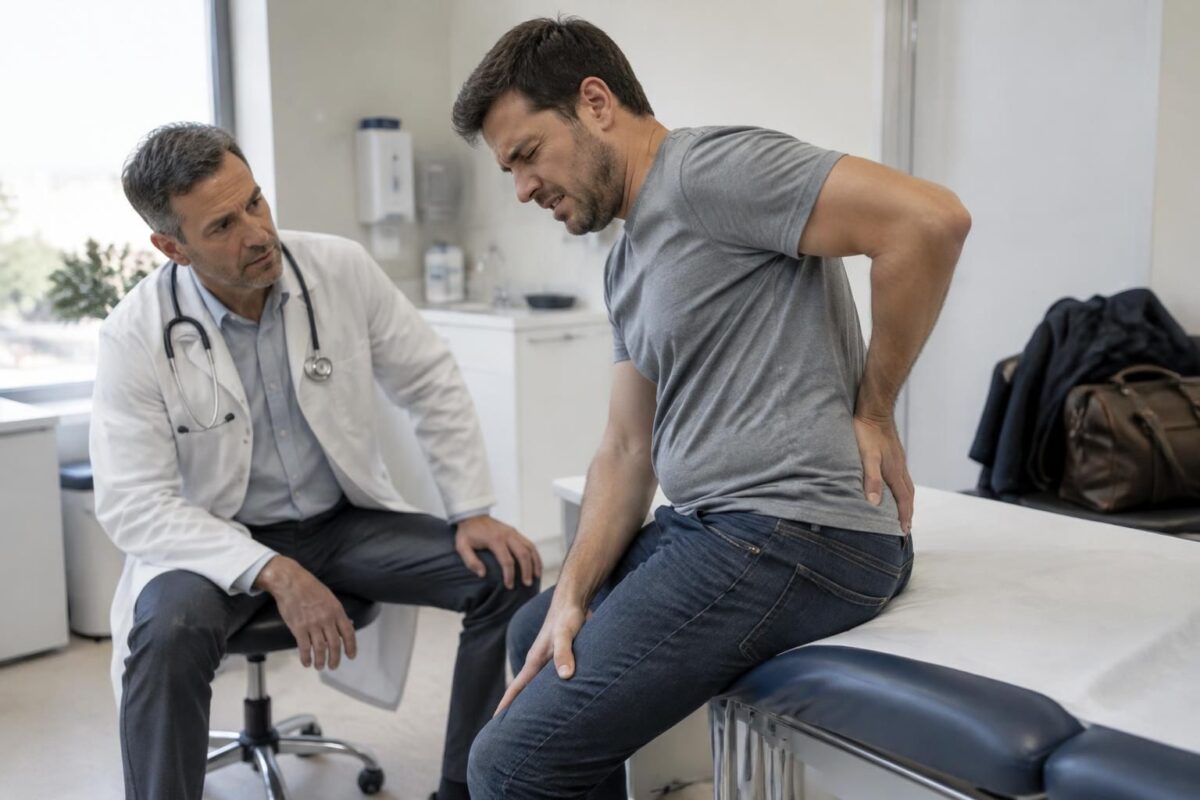
Sciatica and pain that appeared after an accident
IN BRIEF Sciatica after an accident is pain related to irritation or compression of the sciatic nerve, sometimes triggered or revealed by a fall or impact. It can start from the lower back or buttock and radiate down the leg.…
Why can pain increase when lying down?
Pain compatible with sciatica often follows a path from the lower back or buttock down the back of the thigh and sometimes to the foot. Tingling, numbness, or a feeling of weakness may also be present. Nighttime discomfort can be influenced by the maintained position, mattress support, or difficulty turning over.
There is no ideal posture for everyone. The best guide is your reaction: a position should be favored if it reduces pain and allows you to rest. Do not try to maintain a position that causes significant worsening.
Positions to Try for Sleeping
On your back with knees supported
Lie on your back and place one or two pillows under your knees. This support can help release the lower back. Adjust the height to remain comfortable and avoid excessively arching or rounding your back.
On your side with a pillow between your knees
If you sleep on your side, place a pillow between your knees to limit hip rotation. Keep your legs slightly bent, without curling up to the point of intensifying pain. A body pillow can provide additional support if this setup works for you.
The mattress does not need to be very firm for everyone. A stable support can be pleasant, but avoid an expensive change before observing what really improves your comfort. Test one modification at a time for a few nights.
Facilitating Bedtime and Waking Up
Before going to bed, try some gentle movements or a short walk around the house if it does not worsen your symptoms. Avoid forced stretching: stop if pain increases down the leg or if tingling worsens. Moderate heat may relax some people; protect the skin and limit application to a reasonable duration.
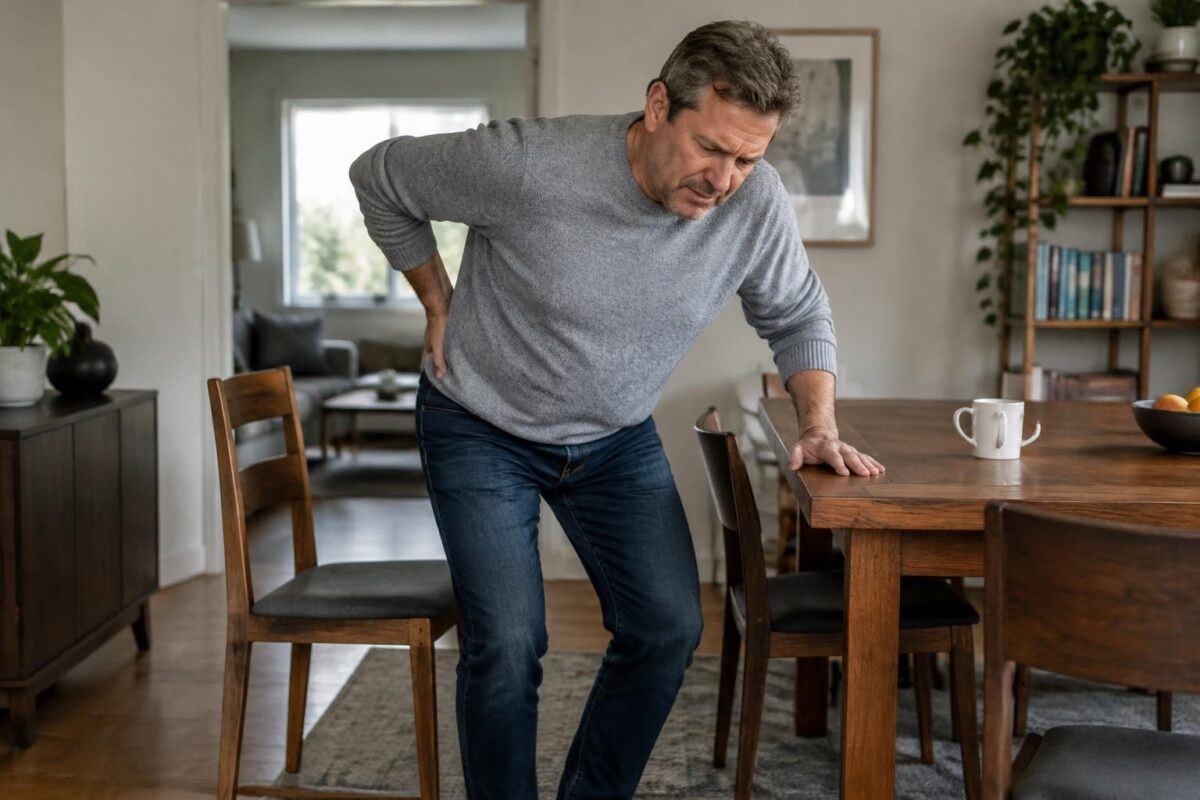
To get up, first turn to your side, bring your legs to the edge of the bed, then push with your arms to sit up. This method can make the movement more comfortable. During the day, it is generally better to gradually resume tolerated activities rather than staying in bed for long periods. It is not necessary to avoid all movement by principle: adapt it to your symptoms.
When to seek professional advice
Consult a healthcare professional if pain regularly disrupts your sleep, limits your activities, or does not improve. Before taking any medication, especially if you are pregnant, have a chronic illness, or are already on treatment, seek advice from a doctor or pharmacist.
A loss of urinary or bowel control, numbness in the saddle area, significant or progressive weakness, fever, recent trauma, or rapid deterioration warrant urgent medical evaluation.
About the author
Sylvain Desforges, B.Sc., D.O., N.D., Doctor of Osteopathy, is the founding president of TAGMED and the ACMA association. His practice focuses on chronic spinal pain, lower back pain, and pain compatible with sciatica. The care offered at the TAGMED Clinic may include, depending on the evaluation, motorized neurovertebral decompression, specific osteopathy, or precision impact therapy.
Medical warning
This content is provided for educational purposes and does not replace a consultation, diagnosis, or treatment by a licensed healthcare professional. The author is neither a physician nor a specialist in a medical field recognized by the Collège des médecins du Québec. Osteopathy and manual medicine approaches do not replace medical follow-up.
| Situation | Useful tip |
|---|---|
| Pain in lying position | Try a position that reduces discomfort without forcing. |
| On the back | A cushion under the knees can improve comfort. |
| On the side | Place a cushion between the knees to support the pelvis. |
| Legs elevated | This position may relieve some individuals. |
| Mattress and pillows | Choose comfortable support; needs vary. |
| Warmth before bed | A warm water bottle, protected by a fabric, can relax muscles. |
| Stretching | Prefer gentle movements and stop if they increase pain. |
| Persistent or worsening pain | Consult a healthcare professional for evaluation. |
| Signs of urgency | Progressive weakness, numbness in the saddle area, or loss of urinary or bowel control: consult promptly. |
Testimonials on sciatica and pain in lying position
Note: the testimonials below are fictional examples written for educational purposes. They do not correspond to real patients and do not replace an evaluation by a healthcare professional.
“The pain increased as soon as I lay on my back.” The pain started in the lower back and radiated down to the buttock and back of the thigh. I tried placing a pillow under my knees: this position was more comfortable some nights, without completely alleviating the symptoms. I also sought evaluation for the cause of the pain.
“Sleeping on my side was more bearable.” I experienced shooting pains in my leg when I stayed in the same position for too long. Placing a cushion between my knees helped me find a less uncomfortable posture. I would switch sides or positions if the pain increased, rather than forcing it.
“The pain woke me up several times a night.” I didn’t know how to position my legs and was afraid of every movement. Simple adjustments, such as supporting my knees with a pillow and turning gradually, allowed me to tolerate some nights better. Since the pain persisted, I discussed it with a healthcare professional.
“Lying down didn’t always relieve me.” At home, staying lying down for too long sometimes increased stiffness. I would gently get up and walk for a few minutes when I could. I learned that there is no single position suitable for everyone: comfort and the evolution of symptoms matter.
“I also felt tingling down to my foot.” The pain in a lying position was accompanied by tingling in the leg. Changing position could reduce discomfort, but these symptoms warranted evaluation to investigate the cause and determine appropriate management.
Pain that suggests sciatica can vary depending on posture, but persistent or worsening pain should not be ignored. Quickly consult a healthcare professional if there is significant or progressive weakness of the leg or foot, loss of urinary or bowel control, or numbness in the saddle area.
Sciatica and pain in lying position: understanding and sleeping better
Sciatica refers to pain that follows the path of the sciatic nerve, typically from the lower back or buttock to the thigh and leg. It can sometimes extend to the calf, foot, or toes. Depending on its cause and the sensitivity of the individual, it may also be accompanied by tingling, numbness, or a sense of weakness. When pain increases in a lying position or prevents sleep, it may be difficult to find a comfortable posture. This discomfort deserves attention, but it does not necessarily mean that a serious injury is present.
The lying position can alter the stresses placed on the lower back and the tissues surrounding the nerve roots. Some individuals experience more symptoms when remaining still for a long time; others are mainly bothered when turning in bed or getting up. The posture that relieves one person may be uncomfortable for another: there is no universal position for sleeping with sciatica. The goal is to find a support that calms symptoms without straining the back or leg.
On the back, try placing a pillow under your knees to keep them slightly bent. This setup may reduce tension in the lower back for some individuals. On the side, a cushion between the knees can help keep the pelvis and spine in a comfortable position. If a posture increases pain significantly, gently change position. Comfort is more important than seeking a supposedly perfect alignment.
The mattress and pillows can also influence rest, but there is no ideal firmness for everyone. A mattress that supports the body without creating uncomfortable pressure may be preferable to one that is too hard or too soft. Before investing in new equipment, test different pillow arrangements and observe their effect over a few nights. If you are pregnant, consult a healthcare professional to choose positions and cushions suitable for your situation.
A calm routine before bedtime can facilitate relaxation: light walking during the day, gentle movements that are tolerated, regular sleep schedules, and reducing stimulating activities in the evening. A warm water bottle may soothe some muscle tensions; protect the skin and limit the duration of application to avoid burns. Stretches should not cause significant pain or worsen symptoms. Medications, even those available without a prescription, should be used according to the advice of a doctor or pharmacist, particularly in cases of pregnancy, illness, or taking other treatments.
It is generally not necessary to systematically avoid all movements or positions. Conversely, do not force a movement that triggers sharp pain or persistent worsening. If nighttime pain persists, intensifies, or regularly disrupts your sleep, a healthcare professional can evaluate the symptoms, investigate their possible origin, and discuss suitable options. Pain that radiates down the leg can have several causes; only a proper examination can guide the assessment.
Quickly consult a doctor or an emergency service in case of loss of control over the bladder or bowels, numbness in the saddle area, significant or progressive weakness, fever, recent trauma, or rapid worsening. These signs require immediate evaluation.
About the author
Sylvain Desforges, B.Sc., D.O., N.D., Doctor of Osteopathy, is the founding president of TAGMED and the ACMA association. His practice focuses on chronic spinal pain, lower back pain, and symptoms compatible with sciatica. At the TAGMED Clinic, the proposed approaches may include, depending on the evaluation, motorized spinal decompression, specific osteopathy, or precision puncture.
Medical Disclaimer
This information is educational and does not replace a consultation, diagnosis, or treatment by a licensed healthcare professional. The author is neither a doctor nor a specialist in a medical specialty recognized by the Collège des médecins du Québec. The manual approaches described do not replace medical follow-up. Please refer to the Legal Notice for more details.
Sciatica pain may become more pronounced in a lying position and disrupt sleep, but a few adjustments can sometimes enhance comfort. The most suitable position varies from person to person: the goal is to reduce tension in the lower back and find support that does not lead to worsening.
Pain that starts in the lower back or buttock and radiates down the thigh, leg, or to the foot may be associated with irritation of the sciatic nerve. Tingling, numbness, or weakness may also occur. If the pain regularly wakes you up, you can consult this information about sciatica that wakes you at night. The presence of loss of sensation in the toes should also be evaluated, especially if it persists or worsens.
First, try lying on your back with your knees slightly bent and a cushion under them. This position may reduce tension in the lower back for some people. If you sleep on your side, a pillow between the knees can help keep the pelvis and spine in a more comfortable alignment. To compare different options, check the advice on sleep positions for sciatica, as well as recommendations for sleeping with sciatica.
However, there is no ideal position for everyone. Test adjustments gradually and keep those that provide relief, without imposing a posture that increases pain. Some people prefer to sleep on their sides, others on their backs; the support of the pillows can also be adapted based on sensations. You can find additional advice on positions and tips for better sleep despite sciatica and on gestures that may relieve.
Avoid thinking of a position as strictly prohibited. An uncomfortable posture can be temporarily set aside, but the fear of moving or prolonged avoidance of ordinary movements can also complicate the resumption of activities. Advice regarding positions that are sometimes poorly tolerated may help reflect on your own symptoms. If you are considering sleeping sitting up because you can’t find any comfortable position, seek advice from a professional; guidelines are available on positions for sleeping sitting up with sciatica.
A soothing routine before bedtime can also promote rest: moderate warmth, gentle movements, or light stretches if they do not trigger your symptoms. Do not apply a heat source directly to the skin and stop any activity that significantly exacerbates pain. For medications, seek advice from a doctor or pharmacist, especially if you are already taking other treatments or have a health issue.
If the pain remains significant, recurs frequently, or disrupts your sleep for an extended period, a professional evaluation may help search for possible causes and choose an appropriate management. A comfortable posture can be part of relief measures, but does not, on its own, identify the source of pain. To learn more about the link between certain herniated discs and neurovertebral decompression, consult the information dedicated to this approach. Advice on posture and osteopathy can also be explored as part of an individualized assessment.
Quickly consult a doctor or an emergency service in case of loss of bladder or bowel control, numbness in the saddle area, significant or progressing weakness in the leg or foot, or rapid deterioration. A fever, recent trauma, or severe pain also require medical advice.

Sylvain Desforges, B.Sc., D.O., N.D., docteur en ostéopathie
Dr Sylvain Desforges, B.Sc., D.O., N.D., osteopath, is the founding president of TAGMED and of the ACMA association. He dedicates his practice to chronic spinal pain, low back pain and symptoms compatible with sciatica, particularly when pain radiates toward the buttock, leg, calf, foot or toes.
Through SOS Sciatique, he publishes educational content on sciatica symptoms, possible causes such as disc herniation, disc narrowing, foraminal stenosis or irritation of a lumbar nerve root, as well as non-surgical approaches that may be considered according to the evaluation. At Clinique TAGMED, care may include, depending on the case, motorized neurovertebral decompression, specific osteopathic care or precision percussion.
For an evaluation related to sciatica treatment in Montreal / Mount Royal or sciatica treatment in Terrebonne, please consult the services available at Clinique TAGMED.
Medical disclaimer
The information published on SOS Sciatique is provided for educational purposes only and does not replace a consultation, diagnosis, opinion or treatment provided by a physician or another authorized healthcare professional. The author of this article is neither a medical doctor nor a specialist in a medical specialty recognized by the Collège des médecins du Québec. The osteopathic, manual medicine or functional support approaches described on this site do not constitute medical acts and are not intended to replace medical follow-up.
Consult a physician or emergency service in cases of loss of bladder or bowel control, anesthesia in the saddle area, significant or progressive weakness in the leg or foot, fever, recent trauma, severe pain or rapid worsening of symptoms. For more details, please read our Legal Notice.