

Sciatica and burning sensation in the calf
30/08/2026
Sciatica and public transport: prolonged sitting position
30/08/2026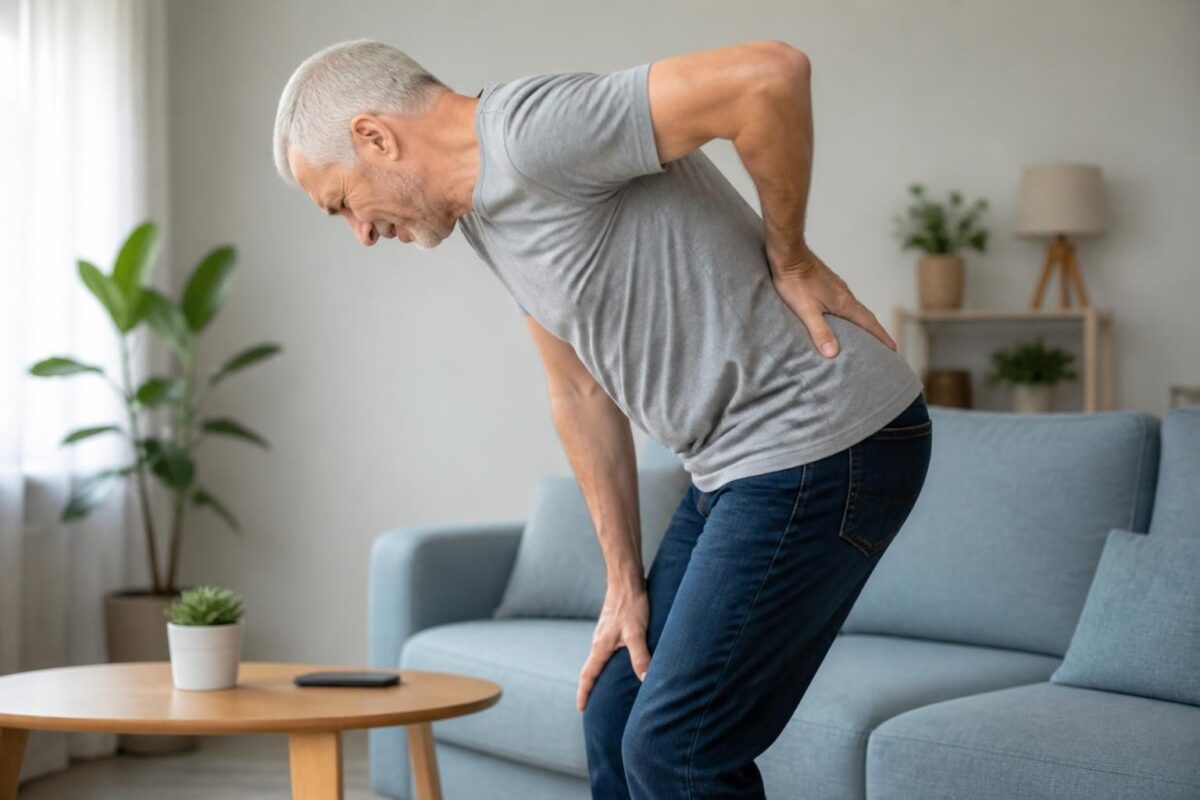
IN BRIEF
| In short, Herniated disc and trunk flexion describe a situation where bending the back can increase intradiscal pressure and worsen symptoms. This reality explains why it is essential to remain cautious in daily activities to limit risks and promote recovery. The benefits of a measured approach include a reduction in pain radiating down the leg, improved recovery, and the possibility of staying active with adapted movements (squatting, pivoting the feet, and carrying load close to the body). In practice, this translates to favoring controlled movements, avoiding sudden twists, and adopting simple techniques to protect the lumbar disc. In Montreal, this framework is particularly recommended for individuals looking to preserve their mobility while limiting the risk of recurrence. |
The combination of herniated disc and trunk flexion requires particular vigilance. In flexion, the intervertebral disc is subjected to increased pressure, and the nucleus may push against the nerve roots, causing pain and radiation. Rotation and sudden movements also increase shear and the risk of painful episodes.
To remain cautious, prefer movements without excessive flexion: bend your knees and keep your back straight when lifting, bring objects close to your body, and pivot with your feet rather than twisting your torso. Favor low-impact activities and avoid asymmetrical loads or significant twists. In case of persistent pain or weakness, consult promptly for an appropriate evaluation.
Written by Dr. Sylvain Desforges, osteopath
The herniated disc and trunk flexion require a cautious approach in daily life. This article explains why remaining careful during flexion is essential and offers clear guidelines to limit pressure on the disc and protect the nerve roots. You will find practical advice and reliable resources to better understand your situation and guide your care at TAGMED clinic.
What is trunk flexion and what is its impact on herniation?
Trunk flexion brings the torso closer to the thighs and can increase intradiscal pressure on the lumbar segment. In the presence of a herniated disc, this pressure can push the gelatinous nucleus backward and worsen pain, especially if the flexion is deep or repeated. The back should remain properly aligned during simple movements to limit shear and compression of nerve structures.
To delve deeper into the mechanisms and movements to avoid, you can consult specialized resources like these: Herniated disc and pain without backache – is it possible, Sciatica and lumbar herniated disc, or Signs not to trivialize in professional driving.
Posture and daily movements: simple guidelines to limit risks
To protect the disc, favor movements that reduce pressure on the discs and avoid motions that create excessive shear of the spine. Caution also applies to everyday activities and professional tasks. When in doubt, favor a complete body rotation rather than a twisted torso motion, and keep loads close to the body to limit axial loads.
For additional information on symptom management and underlying mechanisms, check the following resources: Herniated disc with numbness – sign of nerve irritation, Sciatica and lumbar herniated disc, and Signs not to trivialize in professional driving.
What care options to consider at TAGMED clinic
In practice, managing a herniated disc can involve non-invasive approaches supervised by professionals. At the TAGMED Clinic, care may include adapted osteopathic approaches and, depending on the evaluation, motorized spinal decompression. These options aim to relieve pressure and promote recovery within the framework of a personalized plan.
To better understand the mechanisms and current options, you can consult specialized resources on the topic, particularly Herniated disc with numbness and Resources on herniated disc.
Warning signs and when to consult quickly
Certain signals require urgent consultation. Marked weakness, sphincter disorders, rapidly worsening pain, or significant loss of sensitivity call for immediate medical evaluation. For information on signs to watch for, refer to specialized resources like Signs not to trivialize.
As part of prevention and non-surgical management, it is useful to relay that official resources and services available in your area can guide you to suitable approaches. For comprehensive support, consider the options offered by TAGMED and explore the information available on sites such as Sciatica and lumbar herniated disc and Herniated disc and pain without backache – is it possible.
For a summary of the implications related to professional conduct and other activities, consult Signs not to underestimate in professional conduct and Treatment of sciatica in Montreal — herniated disk, stenosis or nerve irritation.
For further details, the website decompressionneurovertebrale.com can provide additional information on non-surgical approaches associated with overall management, while remaining within the framework of clinical recommendations. Don’t forget to prioritize resources and advice from a spinal specialist to adjust your daily routine according to your condition.
Medical disclaimer: The information and advice provided on this site do not replace the opinion, diagnosis, or treatment of a healthcare professional. Please note that Dr. Sylvain Desforges, osteopath, is neither a medical doctor nor a physician and is not a specialist in a medical specialty as defined by the Collège des médecins du Québec. Manual medicine, functional medicine, and sports medicine as described on this site exclude any treatment or medical diagnosis made by a doctor or specialist. Always consult your physician for any medical questions. For more details, please read our full Legal Notice.
Axis: prevention of disc pressure during trunk flexion
- Trunk flexion: increased disc pressure and risk of worsening.
- Bent knees to pick up: straight back and reduced lumbar flexion.
- Trunk twisting: pivot on your feet, upper body still.
- Prolonged sitting: prioritize breaks and neutral positions to alleviate pressure.
- Carrying loads: object close to the body and lift with the legs.
- Load balancing: avoid asymmetric carrying; use both hands or a backpack.
- Risky activities: avoid twisting and heavy loads while bent.
- Lifting techniques: squats, straight back, load close to the chest.

This article reminds why it’s important to be cautious with trunk flexion in case of a herniated disk. It explains how the pressure on the disk changes during flexion, what movements to avoid, and which alternatives to prioritize to protect the spine while continuing daily activities.
Why trunk flexion can worsen a herniated disk
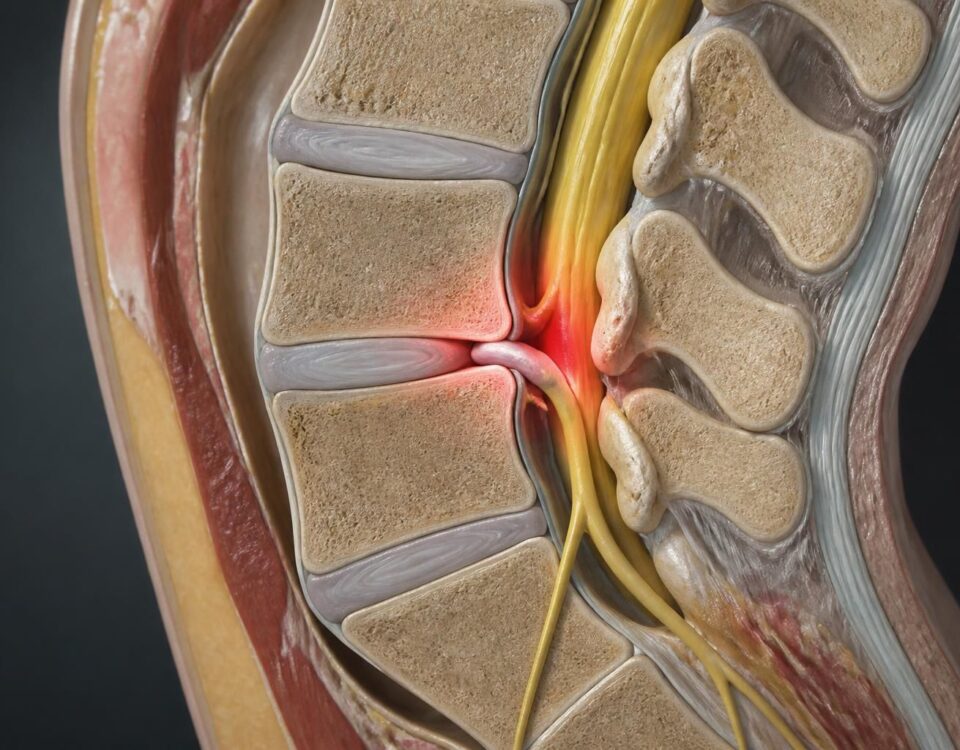
Trunk flexion alters the way forces are transmitted in the spine. In the presence of a herniated disk, the disk’s nucleus can shift backward and compress the nerve roots. When bending without properly flexing the knees, the pressure inside the disk increases and the tensions apply mostly to the lumbar region. This increase can trigger or amplify pain radiating down the leg and, at times, worsen nerve irritation. The movement should be thought of as a coordinated action between the trunk and the hips to limit this loading.
In other words, the spine acts like a structural filter. If this filter is weakened by a hernia, each flexion can reduce the available space around the roots and promote pain. Understanding this mechanism allows for adjustments in daily movements to preserve the integrity of the lumbar segment.
Movements to avoid and safe alternatives
To protect your back, certain movements should be avoided or modified. The golden rule is to limit intradiscal pressure and shear on the disk during trunk movements.
Flexion with straight knees: leaning forward without bending the knees greatly increases pressure on the lumbar disks and may push the nucleus of the disk backward. Alternative: bend the knees and keep the back straight when bending or picking up an object.
Sudden twists and rotations of the trunk: turning the upper body without moving the feet creates significant shear on annulus fibers. Alternative: pivot on the feet and move the body as a whole rather than twisting only the trunk.
Carrying loads far from the body: distancing an object from the center of gravity increases leverage and load on the lower back. Alternative: bring the object closer to your chest and use a squatting lifting technique with a straight back and the load close to the body.
Avoid also repetitive twisting movements during household tasks and when transferring heavy objects. If an activity requires some flexion, take a break, breathe, and adopt a more protective posture.
Lifting techniques and postural hygiene
Adopt the “hip hinge”: bend the hips and knees together, keep the back straight, and let the thighs do the lifting work. Keep the object close to the center of gravity and avoid movements combining bending and twisting. Use aids when possible (stool, adjustable seat, lumbar support) and distribute loads across both arms or on a balanced backpack.
Adapting daily life
In daily life, prioritize positions that limit pressure on the disks. When getting up/sitting down, move through a side-lying position and use your arms to push yourself up. Work with a firm-backed chair at an appropriate height; alternate postures and take micro-breaks every 20 to 30 minutes to walk or stretch the trunk lightly without forcing.
For household tasks, prefer movements that involve the hips and knees, and use long-handled tools to remain standing without twisting. When walking or engaging in physical activity, favor exercises without aggressive bending and without trunk twisting, such as slow walking or gentle activities.
When to seek medical help
Quickly consult in the presence of marked weakness, difficulty walking on tiptoes or heels, paresthesias in the genital area, sphincter disturbances, or persistent pain despite the measures taken. Significant nerve compression may require specialized evaluation to prevent complications.
| Movement or Posture | Impact and Advice |
|---|---|
| Lumbar flexion with straight knees | Increases intradiscal pressure and may push the nucleus backward; prefer bent knees and a straight back. |
| Lifting a load away from the body | Increases leverage and compression; bring the object closer to the torso and bend the knees. |
| Sudden trunk twisting | Risk of disc shear; pivot on the feet and move the body as a block. |
| Prolonged sitting posture | Increases disc pressure; alternate sitting/moving and use lumbar support. |
| Excessive lumbar extension | Can compress nerve roots; limit extension and avoid painful postures. |
| Asymmetrical load carrying | Risk of tilting and unilateral compression; balance loads or use a backpack. |
| Sporting activity with rotation/impact | Risk of shear and shocks; prefer swimming, walking, or cycling without pain. |
| Household chores with twisting | Risk of shear; turn the body with the feet and avoid isolated trunk twists. |
Testimonials: why be cautious with disc herniation and trunk flexion
“After the diagnosis of disc herniation, I realized that trunk flexion could trigger an acute episode. Whenever I bend to pick up an object, I prefer bent knees and a straight back. This simple adjustment has reduced my pain and helped me avoid movements that compress the nerves.”
“Working often on my feet and performing repetitive tasks, I tended to bend quickly. I learned to pivot on my feet and avoid trunk rotations; thus, my discs experience less shear and my recovery is progressing. Maintaining stable alignment has helped me resume my activities without fearing a relapse.”
“Carrying loads has always been necessary, but with a disc herniation, the slightest movement can trigger pain. I adopted a squatting position with a straight back and held the object close to my body, avoiding bending over. This squat allowed me to protect my lower back and avoid worsening my condition.”
“In sports, I had to rethink my habits. Instead of sudden twists and forced extensions, I prioritize controlled, low-impact movements. Caution has allowed me to stay active, particularly by choosing activities like swimming, which stress the trunk little while supporting disc recovery.”
“At the office, posture has become a priority. I no longer use overly soft chairs and have incorporated lumbar support. I ensure that my knees remain slightly bent and my shoulders aligned, taking breaks every 30 minutes to walk. This approach prevents excessive pressure on the discs and promotes better regeneration.”
Dr. Sylvain Desforges is an expert in osteopathy, manual medicine, and naturopathy, and he serves as the founding president of TAGMED clinics as well as the ACMA association. His journey is part of a commitment to health innovation and management of chronic pain of the spine. In his practice, he combines evidence-based approaches and the integration of advanced technologies such as motorized neurovertebral decompression, laser, and shockwaves to optimize patient well-being. His approach aims to educate and support individuals facing disc herniation and trunk flexion, prioritizing prevention and safer daily movements.
In the context of a disc herniation, certain everyday movements expose the spine to increased strain. Trunk flexion and sudden twists can increase pressure inside the disc and irritate the nerve roots emerging from the spinal cord. Dr. Desforges reminds us that the weakened disc prefers controlled amplitudes and positions that limit shear of the annulus fibers and tension on the roots. To protect the back, he recommends simple but effective gestures: bending the knees and keeping the back straight during flexions, and prioritizing pivoting on the feet rather than twisting the trunk.
In practice, this means avoiding deep flexions with straight legs, which push the jelly-like nucleus backward and increase the risk of protrusion against the responsible nerve. The goal is to adopt strategies that reduce intradiscal pressure and shear, allowing the disc to heal without compressing the nerve roots. Dr. Desforges emphasizes the importance of a balance between activity and protection: daily life can and should remain active, but with adapted postural discipline and support when needed.
For everyday gestures and physical efforts, the expert advises a logic of proximity and control. Lifting should be done in a squatting position, with the back perfectly aligned and the abdominals slightly engaged, keeping the object as close to the torso as possible. Carrying heavy or asymmetrical loads should be avoided or, if necessary, distributed evenly between the hands or performed with an ergonomic backpack to prevent lateral tilts that concentrate pressure on the disc on one side. This approach aims to limit shear and preserve lumbar stability.
Regarding physical activity, Dr. Desforges favors low-impact options suitable for the patient’s progression. Swimming, stationary cycling with an elevated handlebar, walking, and stability exercises can support conditioning without aggravating the disc herniation during recovery. Conversely, fast-rotation sports, repeated jumps, and twisting efforts do not fit into this period. The goal is to maintain supporting musculature while protecting the disc.
Through his leadership, Dr. Desforges demonstrates how an approach integrating osteopathy, postural advice, and adapted technologies can illuminate the care of patients suffering from disc herniation and trunk flexion. His commitment is to offer sustainable functional recovery and prevent recurrences through progressive education and an adapted daily environment. To learn more about his approach and the services offered, contact the TAGMED Clinic.
Quick summary: this article reminds us that disc herniation makes trunk flexion particularly risky. By being cautious and adapting your movements, you can limit intradiscal pressure and protect the nerve roots, while continuing to lead an active and functional life.
Summary and Recommendations
Trunk flexion increases pressure on the disc and can push the gelatinous nucleus backward, worsening a herniation and possibly compressing the nerves. Avoiding deep flexions and sudden twists helps prevent flare-ups and encourages gradual recovery. Replacing risky movements with less aggressive alternatives, such as bending the knees and pivoting the feet instead of the torso, is an effective approach to preserving the spine while remaining active.
To reduce stress, favor neutral postures and controlled movements. Carry loads close to the body, use the strength of your legs, and avoid movements that extend or twist the spine. Dedicated resources detail the prohibited movements and safe alternatives to adopt in daily life and sports.
In everyday life, adapt your habits: get out of bed from the side, sit on firm seats, and practice regular micro-breaks to preserve mobility without overloading the disc. Specialized guides and advice discuss the effects of prolonged sitting and strategies to minimize associated pain.
To delve deeper into key concepts and recommended alternatives, you can consult these resources: 7 prohibited movements, Prohibited movements, and Disc herniation and sitting position. For a gentler and more sustainable approach, see neurovertebral decompression and the associated information on functional recovery.
Finally, if you are looking for guidelines on symptoms that require urgent medical attention, prioritize resources that explain when the situation warrants a quick consultation, especially in cases of prolonged pain, loss of strength, or sensory changes.
Herniated disc and disc bulge: do not confuse
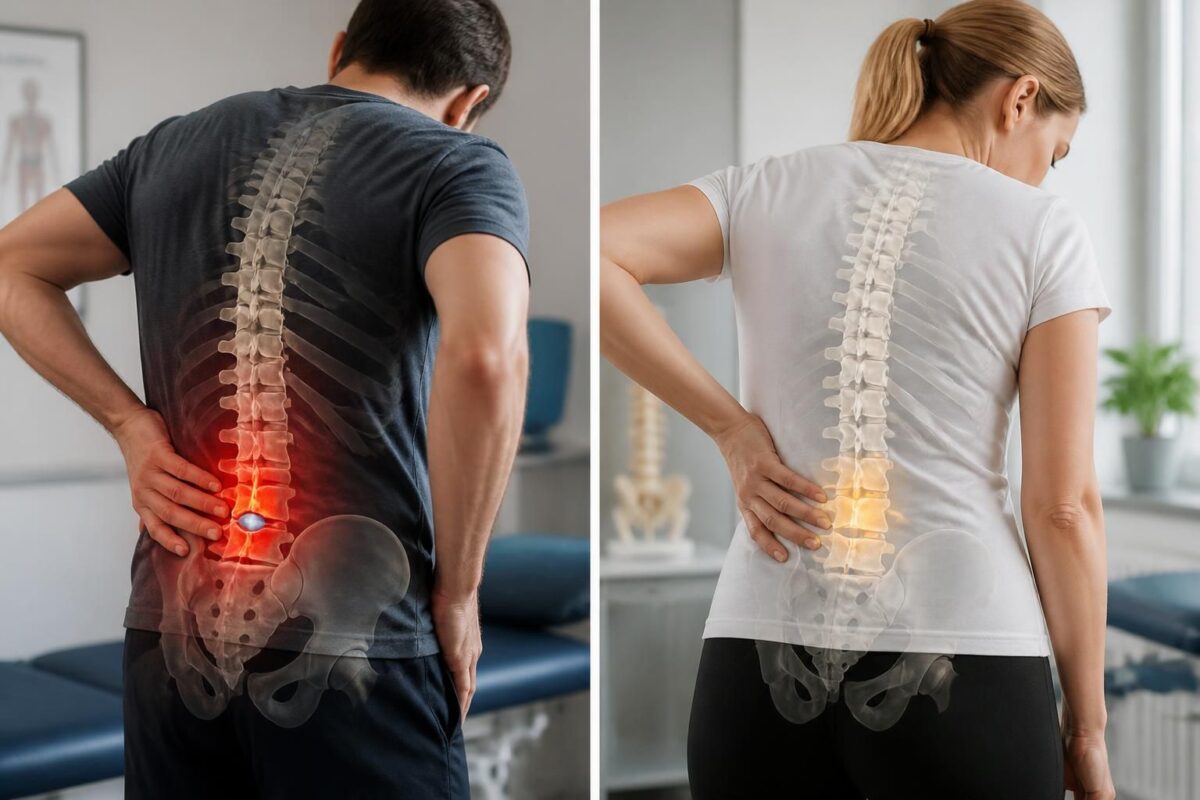
IN BRIEF In brief, the Herniated disc and the disc bulge are two conditions of the spine that differ in their mechanism and prognosis. The disc bulge is a protrusion of the disc without rupture of the fibrous ring, often…
Herniated disc and disc disease: understanding the differences
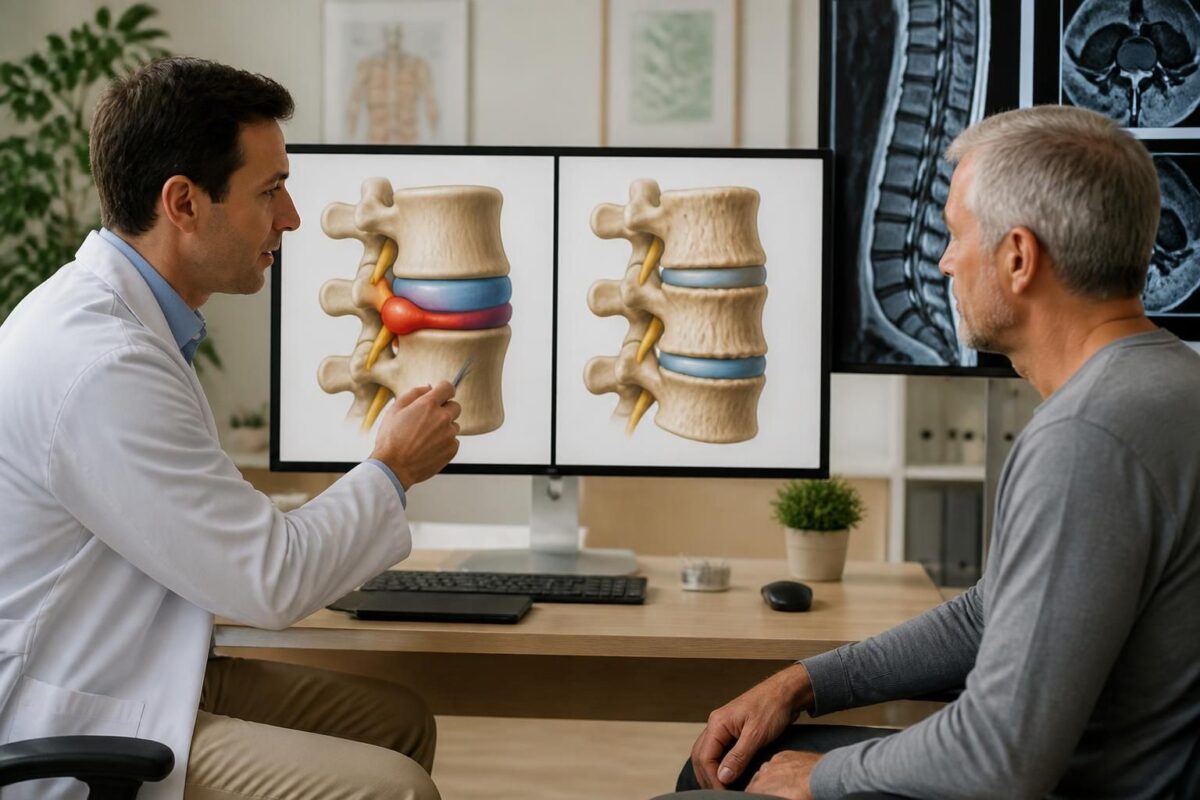
IN BRIEF In brief, a herniated disc and discopathy are two distinct causes of spinal pain: wear of the intervertebral disc (discopathy) and the protrusion of the gelatinous nucleus that can compress a nerve (herniated disc). Understanding these differences helps…
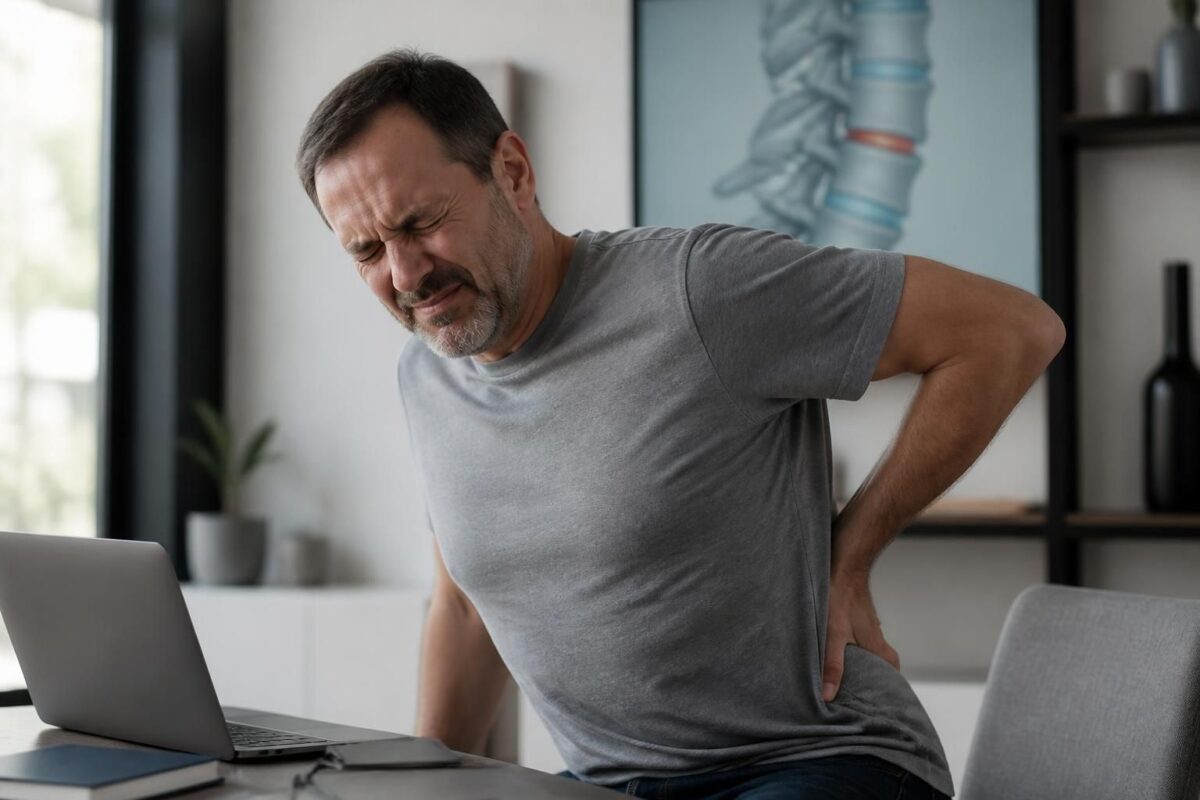
Herniated disc and annular tear: possible pain
IN BRIEF In short, Herniated disc and annular tear refer to issues with the intervertebral disc that can cause lower back pain and, at times, pain radiating down the leg. Symptoms vary and can mimic sciatic pain. Treatment favors conservative…
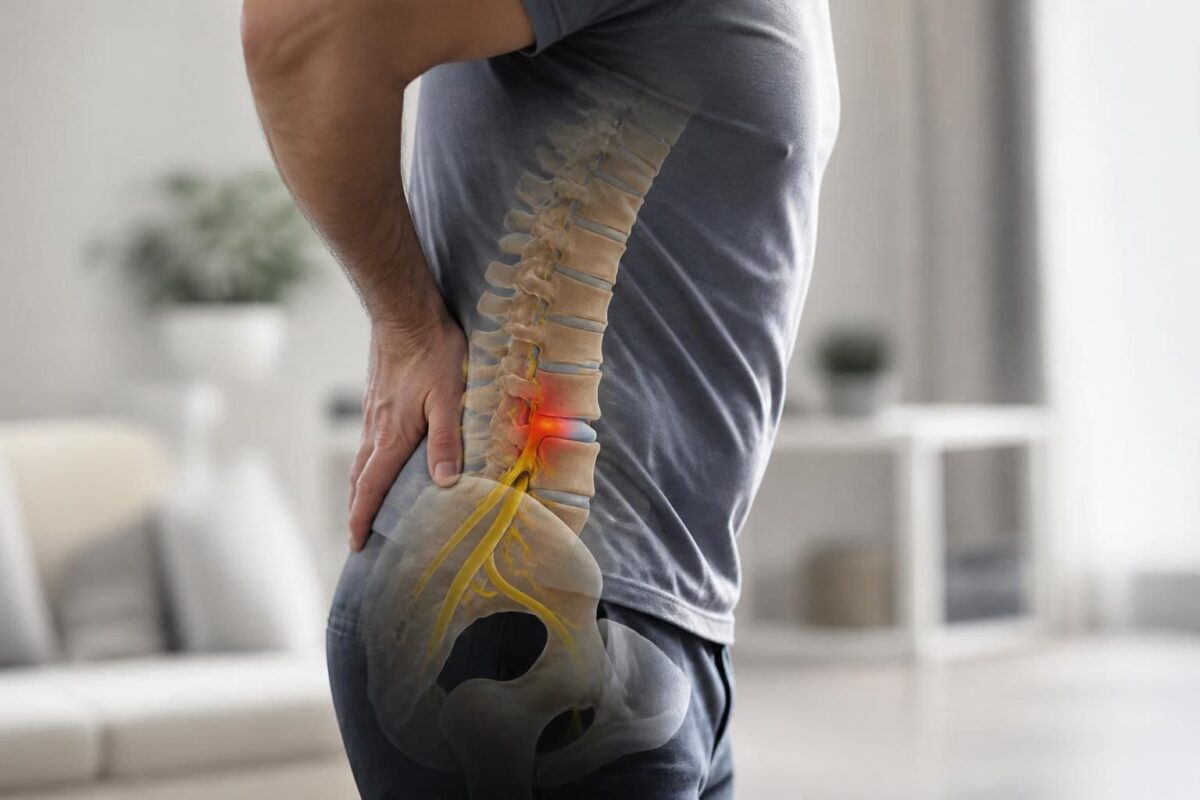
Herniated disc and chemical irritation of the nerve root
IN BRIEF In brief, Herniated disc and chemical irritation of the nerve root describe pain and dysfunction due to compression and inflammatory chemical exchanges affecting a spinal nerve root. This association explains radiating pain, abnormal sensations, and sometimes muscle weakness…
Herniated disc and mechanical compression of the nerve
IN BRIEF In brief, a herniated disc is a prolapse of the intervertebral disc that can lead to mechanical compression of the nerve root, causing pain and numbness that often radiate down the leg. This compression explains radiculopathy and sensations…
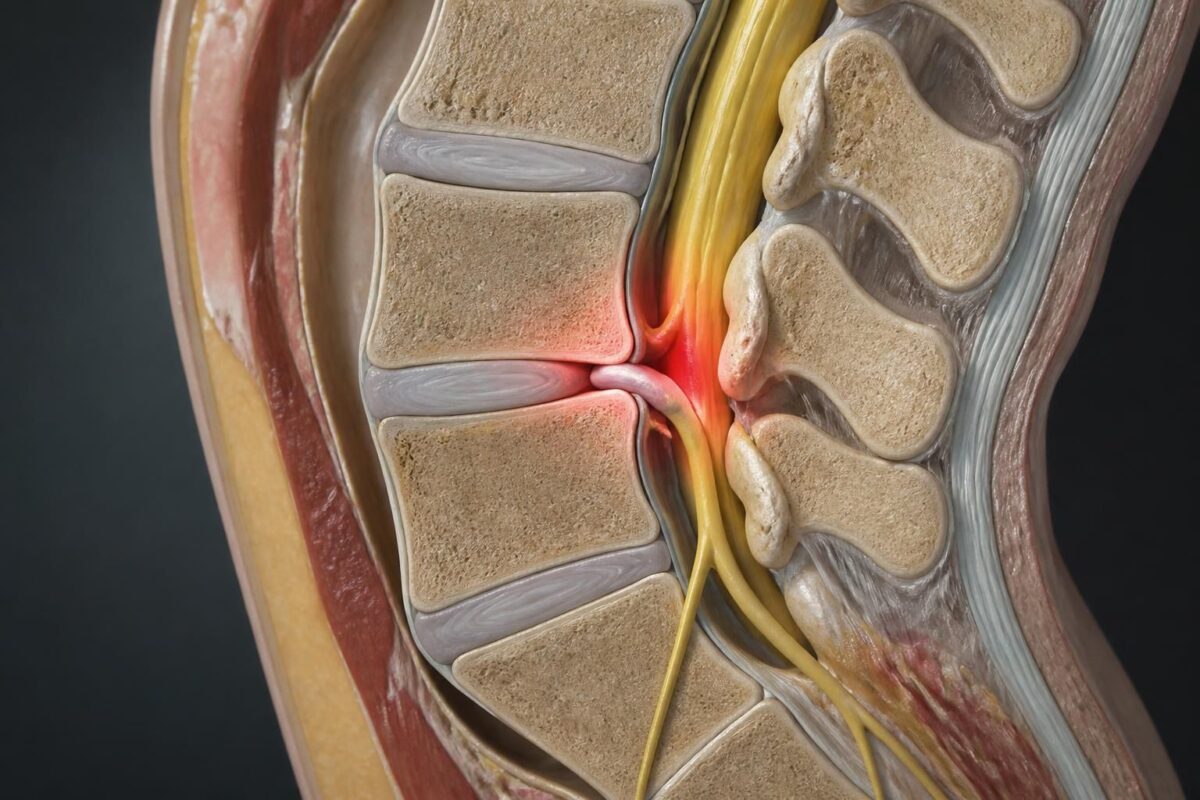
Herniated disc and nerve root inflammation
IN BRIEF In brief, lumbar disc herniation and nerve root inflammation refer to compression and irritation of a spinal root causing radiating pain, paresthesias, and sometimes muscle weakness. The mechanism combines disc protrusion and radicular inflammation, hence the importance of…
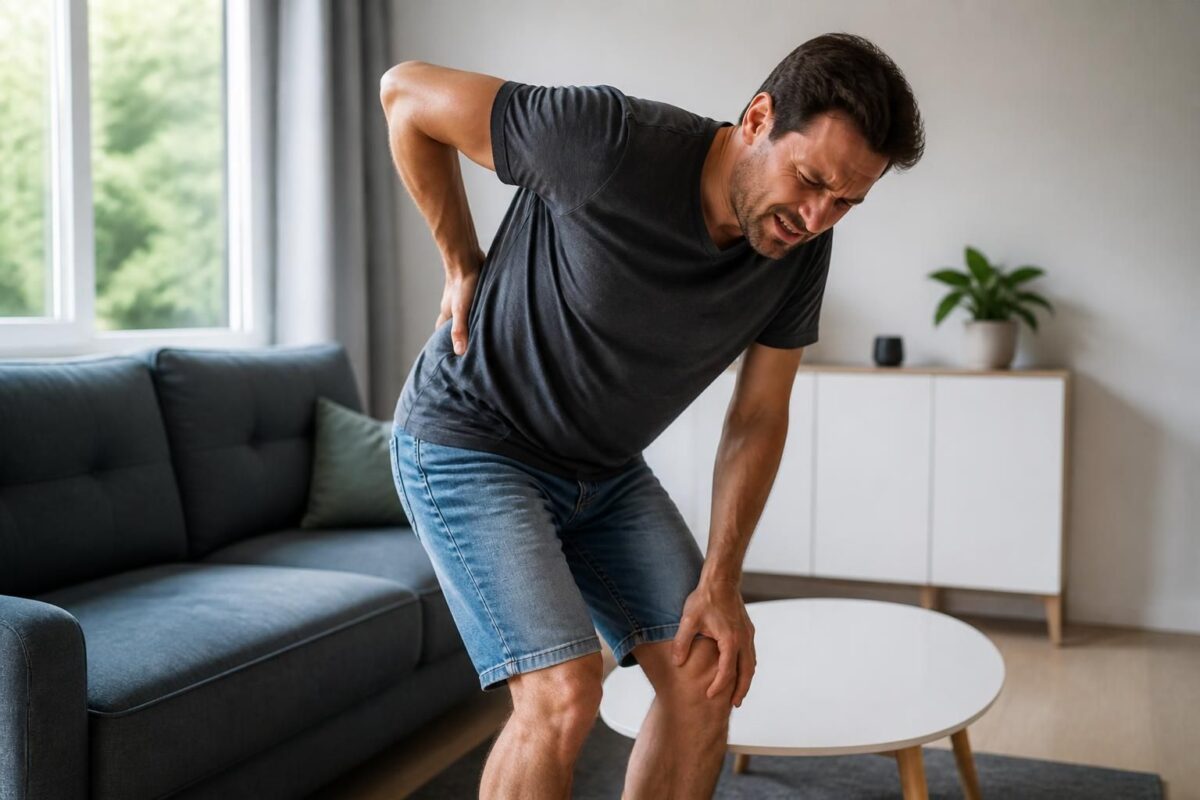
Herniated disc and peripheral pain: sign to watch out for
IN BRIEF In brief, Herniated disc is the partial protrusion of the gelatinous nucleus of an intervertebral disc through the fibrous ring, which can compress a nerve root and trigger radiating pain in the limb. The key benefits of rapid…

Herniated disc and centralizing pain: sign to interpret
IN BRIEF In brief, a herniated disc is a protrusion of the intervertebral disc that can compress a nerve root, causing centralized pain and signs such as radiating pain, numbness, and weakness. The treatment is mostly conservative: guided activity, physical…

Dr Sylvain Desforges, B.Sc., D.O., N.D., osteopath, is the founding president of TAGMED and of the ACMA association. He dedicates his practice to chronic spinal pain, low back pain and symptoms compatible with sciatica, particularly when pain radiates toward the buttock, leg, calf, foot or toes.
Through SOS Sciatique, he publishes educational content on sciatica symptoms, possible causes such as disc herniation, disc narrowing, foraminal stenosis or irritation of a lumbar nerve root, as well as non-surgical approaches that may be considered according to the evaluation. At Clinique TAGMED, care may include, depending on the case, motorized neurovertebral decompression, specific osteopathic care or precision percussion.
For an evaluation related to sciatica treatment in Montreal / Mount Royal or sciatica treatment in Terrebonne, please consult the services available at Clinique TAGMED.
Medical disclaimer
The information published on SOS Sciatique is provided for educational purposes only and does not replace a consultation, diagnosis, opinion or treatment provided by a physician or another authorized healthcare professional. The author of this article is neither a medical doctor nor a specialist in a medical specialty recognized by the Collège des médecins du Québec. The osteopathic, manual medicine or functional support approaches described on this site do not constitute medical acts and are not intended to replace medical follow-up.
Consult a physician or emergency service in cases of loss of bladder or bowel control, anesthesia in the saddle area, significant or progressive weakness in the leg or foot, fever, recent trauma, severe pain or rapid worsening of symptoms. For more details, please read our Legal Notice.