Neurovertebral decompression and prevention of invasive surgeries
25/06/2026
Quick results obtained with neurovertebral decompression
25/06/2026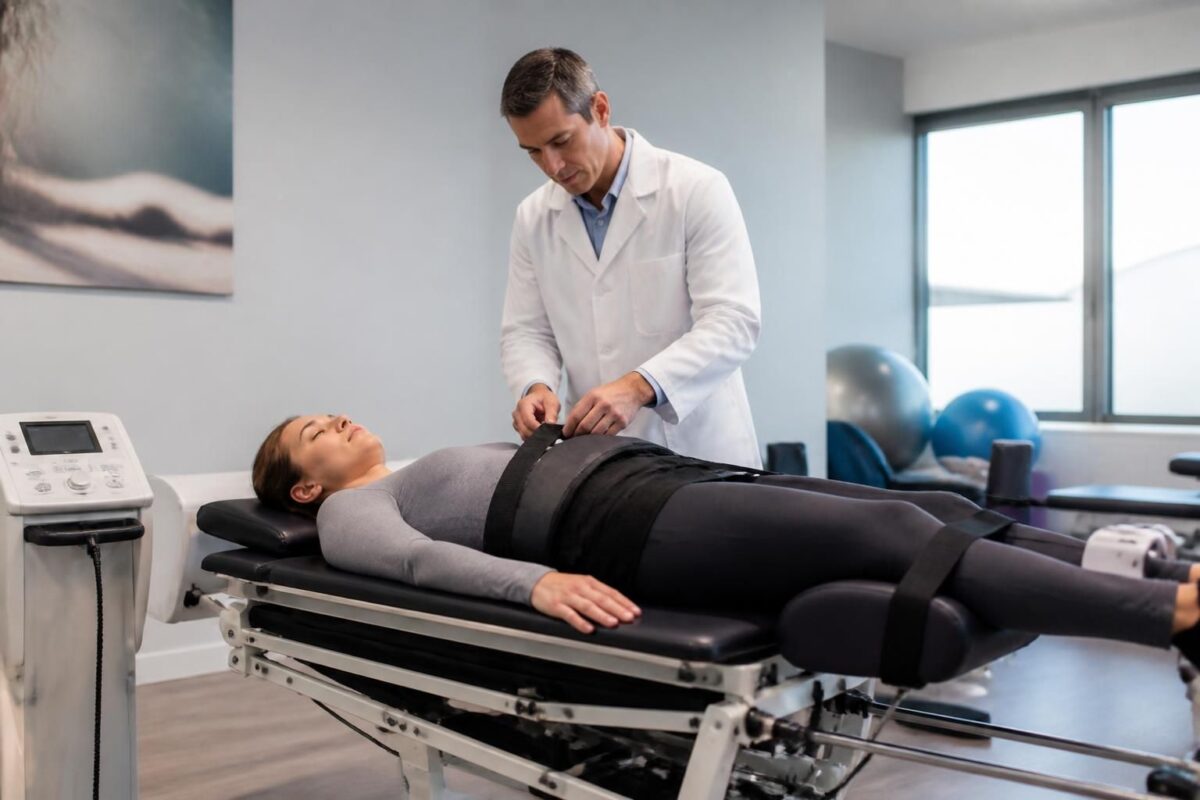
In short
| In short, neurovertebral decompression is an approach non-invasive To relieve the Radiant pain By reducing the nerve pressure and the Intervertebral discs. It improves the bloodstream local and promotes the Nervous tissue regeneration, often offering relief Fast and durable and better mobility, without surgery. At Montreal, this treatment is particularly indicated for patients suffering from radicular pain linked to protrusions or herniated discs and who are looking for an effective solution without surgery, to improve their quality of life durably. |
The neurovertebral decompression acts on the Radiant pain By reducing the Pressure on the intervertebral discs and the nerve roots.
by a Soft and controlled traction, she creates a intervertebral space, which decreases theNervous irritation and the pain signals which spread along the nervous path.
It improves the bloodstream local and theDisc hydration, favoring the Nervous tissue regeneration and the Inflammation reduction.
By targeting the Mechanical cause and not the only symptomatology, it contributes to improving the mobility and the quality of life, with a Quick and lasting relief.
This article explains how the neurovertebral decompression acts on the Radiant pain related to pathologies such as disc protrusion, disc bulge or foraminal stenosis. Decompression works by lowering the pressure exerted on the discs and nerve roots, which can decrease radiant symptoms and facilitate recovery. This approach is offered in the TagMed clinics in Montreal and Terrebonne, and is based on clear clinical protocols, without having to resort to surgery.
Mechanism of action
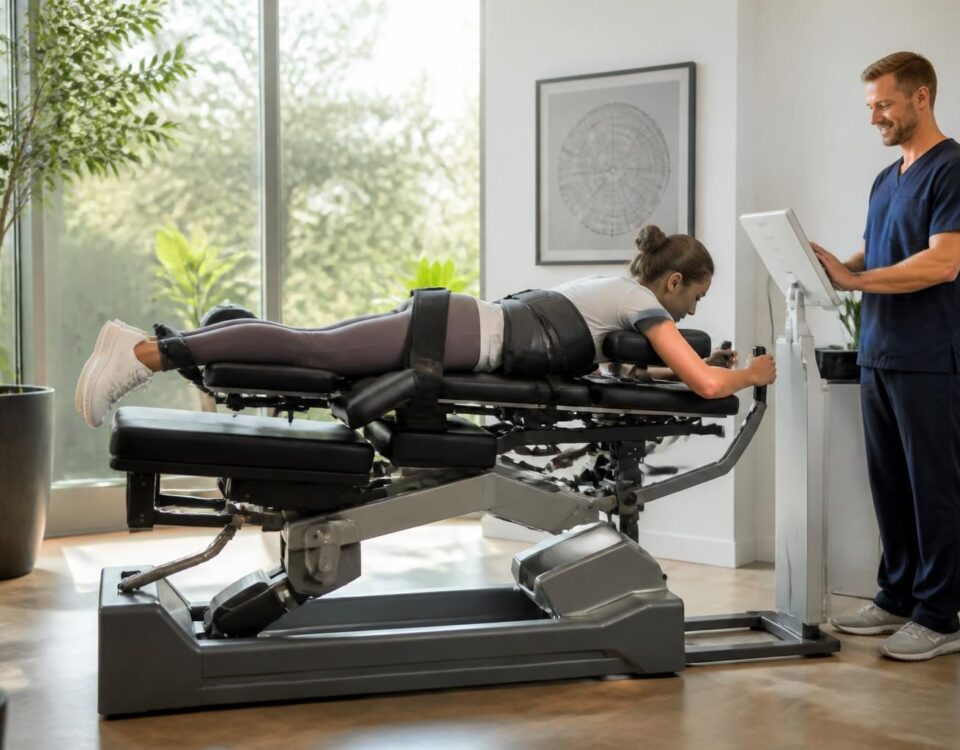
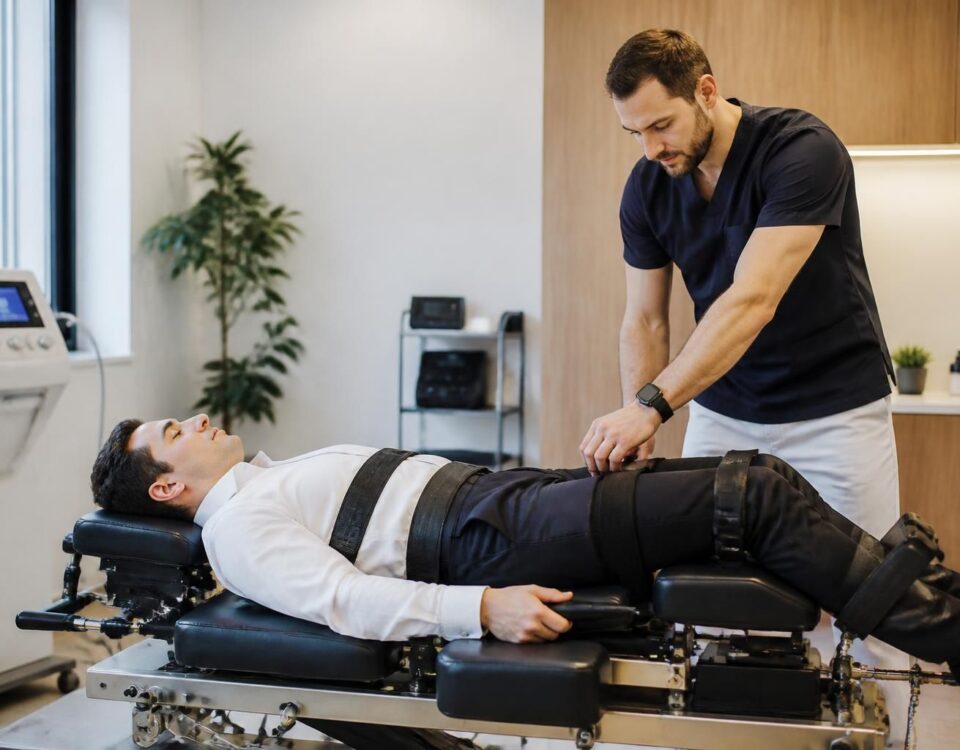
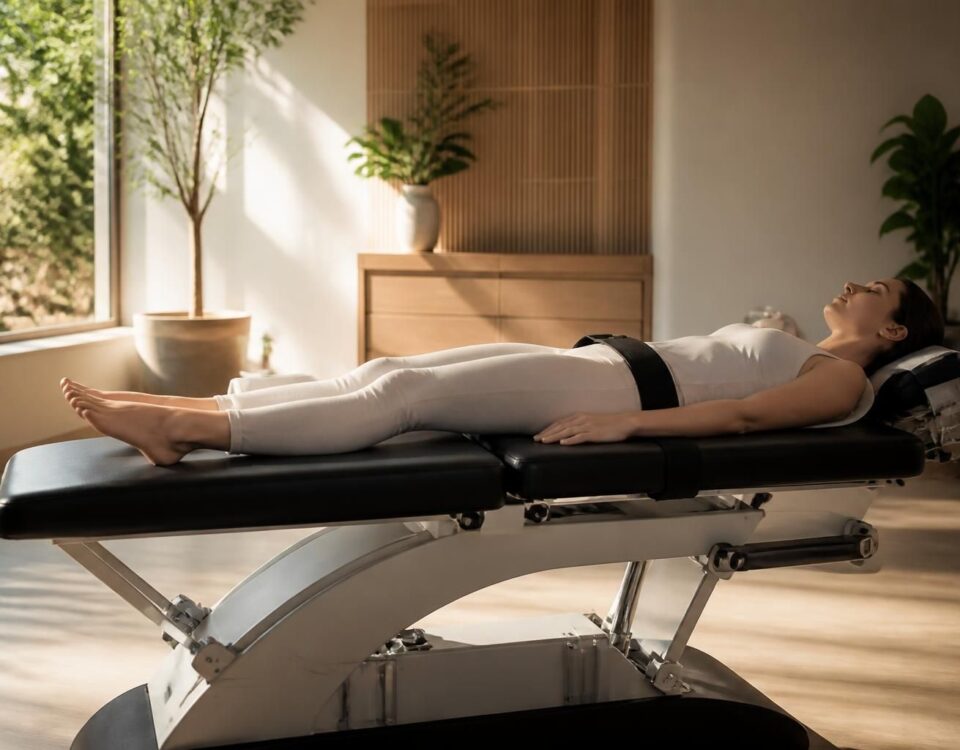
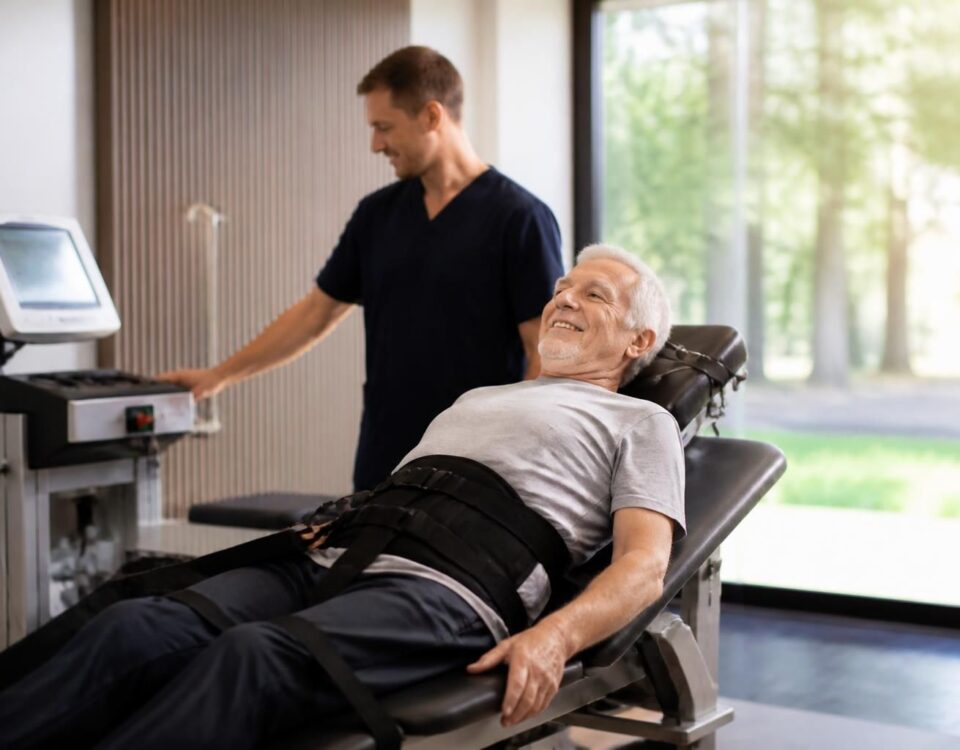
The technique consists of gentle and controlled traction on the spine. This action creates a space between the vertebrae and decreases the intra-discal pressure. Reduced pressure on the nerve roots leads to a relaxation of the irritated nerves and a decrease in radiant pain signals that follow the nervous path. This approach directly targets compression areas without requiring surgery.
By freeing up space around the nerves, decompression facilitates local circulation. Better blood flow nourishes the nerve tissue and helps to evacuate toxins, thus promoting the regeneration and repair of damaged areas. This improvement in circulation contributes to reducing irradiating symptoms and improving mobility.
Impact on inflammation and nerve regeneration
Reducing mechanical stress on nerve fibers helps reduce inflammatory signals associated with pain. Less nervous irritation means less irradiating pain and less muscle spasms around the spine. In addition, the improvement of disc hydration and local nutrient supply supports the regeneration of the nerve tissue concerned.
This approach is particularly useful when radiant pain comes from a nervous dysfunction related to established disc hernias, disc bulges or foraminal compressions. By acting on the mechanical cause, it can reduce the frequency and intensity of painful episodes and promote a return to normal activities.
Recovery and clinical results
Patients with radiant pain frequently report a gradual reduction in pain after several sessions. Improvement can be accompanied by a better range of motion and a decrease in radiating symptoms in the limbs. Results observed in patients with disc and foraminal causes support the interest of decompression as a non-invasive option.
To understand the benefits and mechanisms, you can consult the following resources:
Neurovertebral decompression and acute pain – when to consult,
How decompression improves posture.
Indications and safety
Neurovertebral decompression is indicated for back and cervical pain associated with disc bulges, protrusions and certain forms of stenosis. It is not suitable for all situations, and a medical evaluation is necessary to exclude contraindications. As part of our practice, we favor an evidence-based, patient-centric approach, with careful monitoring of progress.
To better understand indications and benefits, see the following resources:
Recovery after surgery and decompression,
Neurovertebral Decompression – Datasheet.
Practical integration and access to care
Neurovertebral decompression is part of a global approach to care and can be combined with other technologies used in TagMed clinics, while remaining non-invasive. Modern, computerized protocols allow a precise and personalized application adapted to each patient. Typically regular sessions are organized to ensure follow-up and adjust the treatment according to progression.
To learn more about the systems and results observed, you can consult:
- Tagmed Clinic
- Recovery after surgery
- Neurovertebral Decompression – Datasheet
- The benefits of neurovertebral decompression
This approach is taught and supported by recognized training such as Numss and NAO, and it is part of the practices of professional associations relevant to osteopathy and manual therapies. For people wishing to evaluate in a professional setting, the TagMed Clinic in Montreal or Terrebonne remains an accessible option.
To deepen on the effects on other conditions or to better understand the contexts of use, you can also consult:
Benefits and limitations are discussed clearly, to help each patient make an informed decision in collaboration with the care team.
“Medical disclaimer: The information and advice provided on this site does not replace the health professional’s benefit, diagnosis or treatment. Please note that Dr. Sylvain Desforges osteopath is neither a doctor of medicine nor a doctor, and is not a specialist in a medical specialty as defined by the Collège des Médecins du Québec. Manual medicine, functional medicine and sports medicine as described on this site exclude any medical treatment or diagnosis made by a doctor or specialist doctor. Always consult your doctor for any medical questions. For more details, please read our full legal notice. »
- Soft and controlled traction on the column, creating an intervertebral space that Discharges radiating nerves.
- pressure reduction on the Intervertebral discs and the nerve roots, decreasing painful signals.
- Release of compressed nerve roots, attenuating irradiation to the limbs.
- traffic improvement local blood to the nervous tissues, promoting nutrition and healing.
- Hydration and disc regeneration, contributing to lasting pain reduction.
- Reduction of inflammation around the nerves and decrease in spasms, relieves radiant pain.
- Prevention of recurrences By correcting misalignments and tensions that irritate the nerves.
- mobility recovery and increase inrange of motion.
- Back to activities Faster and lasting after treatment.
- Non-invasive approach Avoiding any surgery for radicular pain.

This article presents how the neurovertebral decompression acts on the Radiant pain related to the spine, describing key mechanisms and practical recommendations to optimize relief without surgical recourse.
Key Mechanism: Reduced pressure on nerve roots
The Soft and controlled traction Applied by decompression creates a space between the vertebrae. This space reduces the pressure exerted on the nerve roots and on the intervertebral discs, which reduces the irritation which causes the pain irradiated in the limbs. By releasing the compressed nerves, pain signals that rise along the nervous path are restricted and often cause irradiation along the arms or legs.
Controlled traction and intervertebral space
Precise traction acts as a mechanical unlocking: it slightly removes articular surfaces and allows nerve structures to “breathe there”. This placement contributes to the local reduction of intra-discal pressure, which contributes to preventing or mitigating irradiation episodes when the column is solicited by daily movements or efforts.
Release of irritated nerves and decreased irradiation
With the decrease in pressure around the nerves, the painful signals become less intense and less persistent. Radiant pain—following the path of the nerves—can decrease in frequency and intensity, improving function and exercise tolerance. This process supports a gradual resumption of daily activities and promotes the return to usual gestures without acute pain)
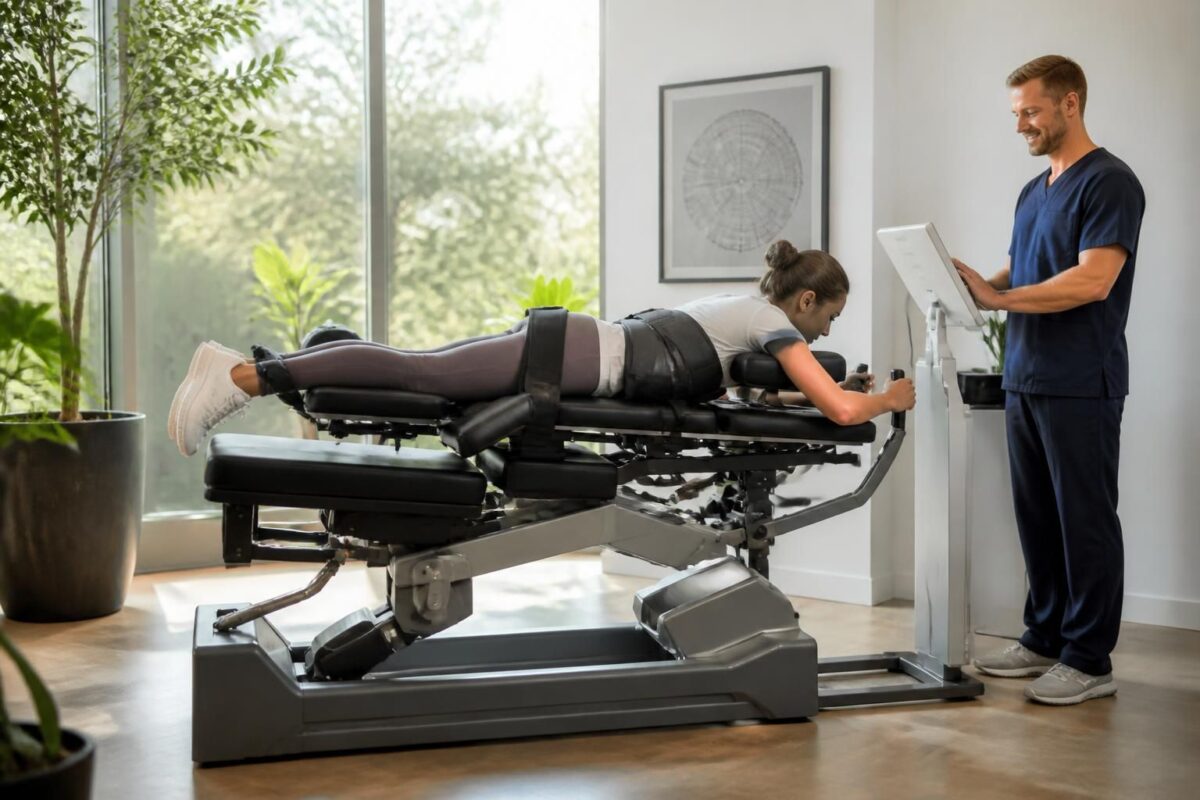
The long-term benefits of neurovertebral decompression for spinal health
In short In short, the neurovertebral decompression is a non-invasive approach that decreases the Pressure on intervertebral discs and nerves, favoring the Natural regeneration and tissue recovery. Its long-term benefits include Lasting pain reduction, Improving mobility and from the posture,…

Neurovertebral decompression and mobility: a return to an active life
In short In short, the neurovertebral decompression is therapy non-invasive who uses a gentle traction To create a space between the vertebrae and reduce the pressure on the Intervertebral discs and the nerves. It promotes a bloodstream improved, lowers tension…
Physiological process and symptoms: circulation, hydration and inflammation
Reducing pressure promotes better Local blood circulation. Improved blood flow provides the necessary nutrients for tissue repair, aids in waste disposal and can accelerate the healing of discs and nerve roots. In addition, the increase in blood passage contributes to absorbing toxins associated with inflammation and reducing radiant painful sensations.
Improved circulation and hydration of discs
By allowing better tissue nutrition and better hydration of the discs, decompression supports the rehydration of the elements and the restoration of the mechanical properties of the vertebral structures. This hydration promotes disc resilience and may decrease nervous sensitivity to irradiated pain during movement.
Anti-inflammatory effect and reduction of painful signals
Decreasing pressure and optimal blood supply reduce local inflammatory processes that fuel pain. Less inflammation means a reduction in painful mediators and attenuation of tingling or slenderness followed by the radiant nerve path.
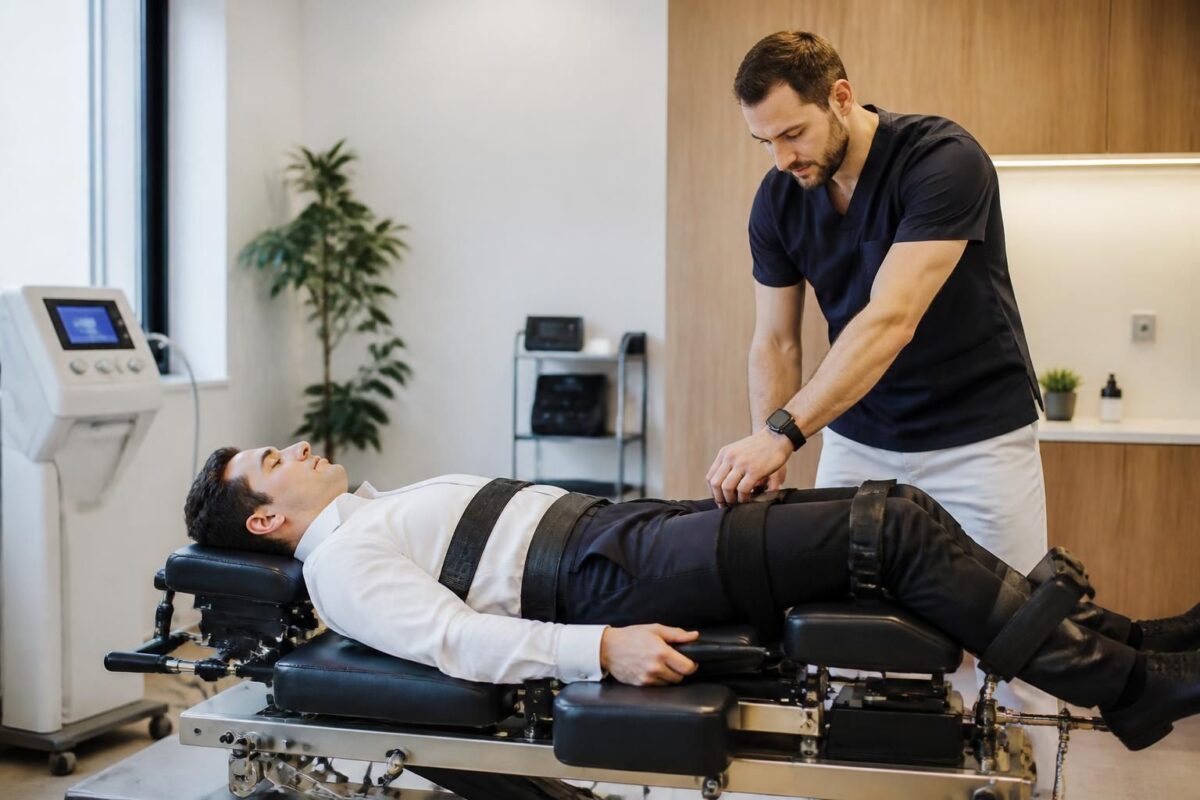
How Neurovertebral Decompression Prevents Diffuse Chronic Pain
In short decompression neurovertebral is one Non-invasive method aimed at reducing the Pressure on the intervertebral discs and the nerves, in order to prevent Diffuse chronic pain. It improves the circulation and thedisc hydration, decreases inflammation and promotes better mobility.…
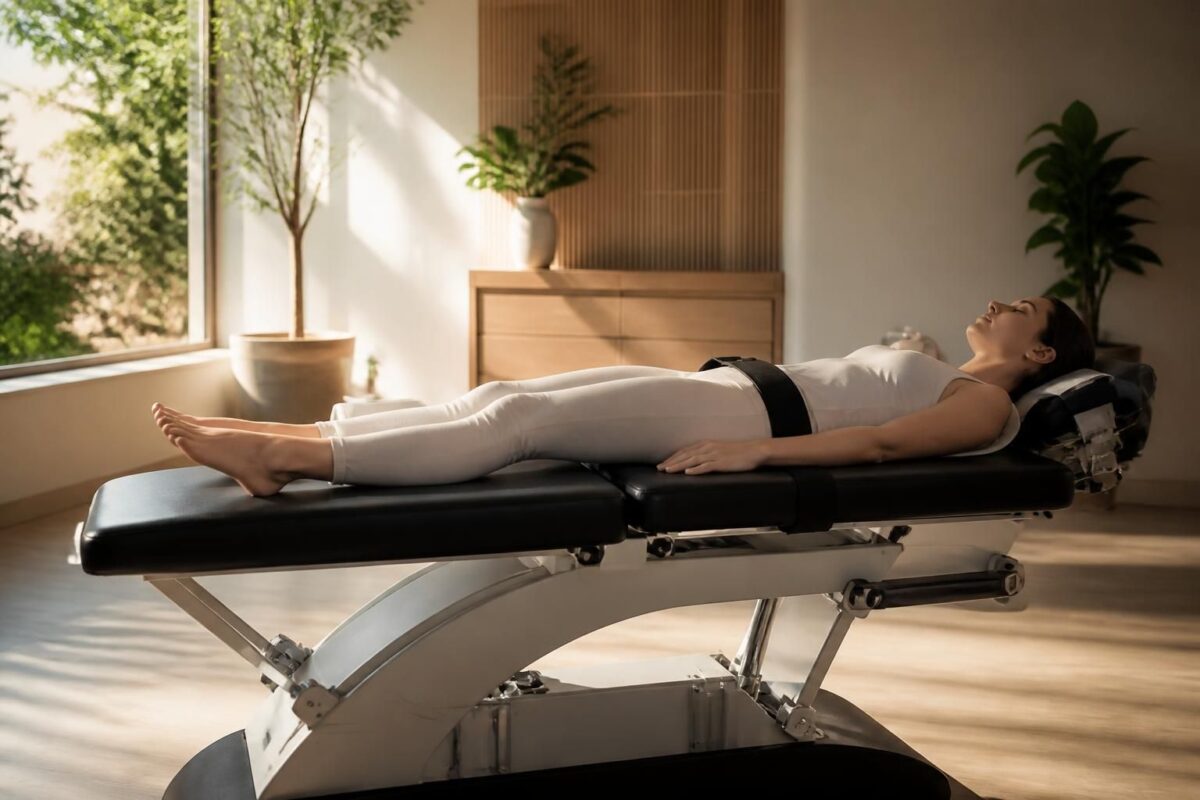
Neurovertebral Decompression and Body Alignment: Restoring Natural Balance
In short In short, neurovertebral decompression is one Non-invasive approach who restores theBody Alignment and thenatural balance back and neck. She acts by a Controlled traction of the spine to widen the intervertebral space and reduce the Pressure on discs…
Impact on mobility and everyday life
By reducing the stresses on the nerves and improving circulation, the mobility and the quality of life improve. Patients often find a new range of motion, better trunk stability and decreased muscle spasms around painful areas. This dynamic facilitates the gradual return to sports and professional activities without compromising comfort.
Functional improvement and return to activity
The reduction of irradiation makes it possible to carry out gestures which were previously limiting. With an adapted program, patients can resume daily and physical routines longer, while monitoring body signals and adapting effort.
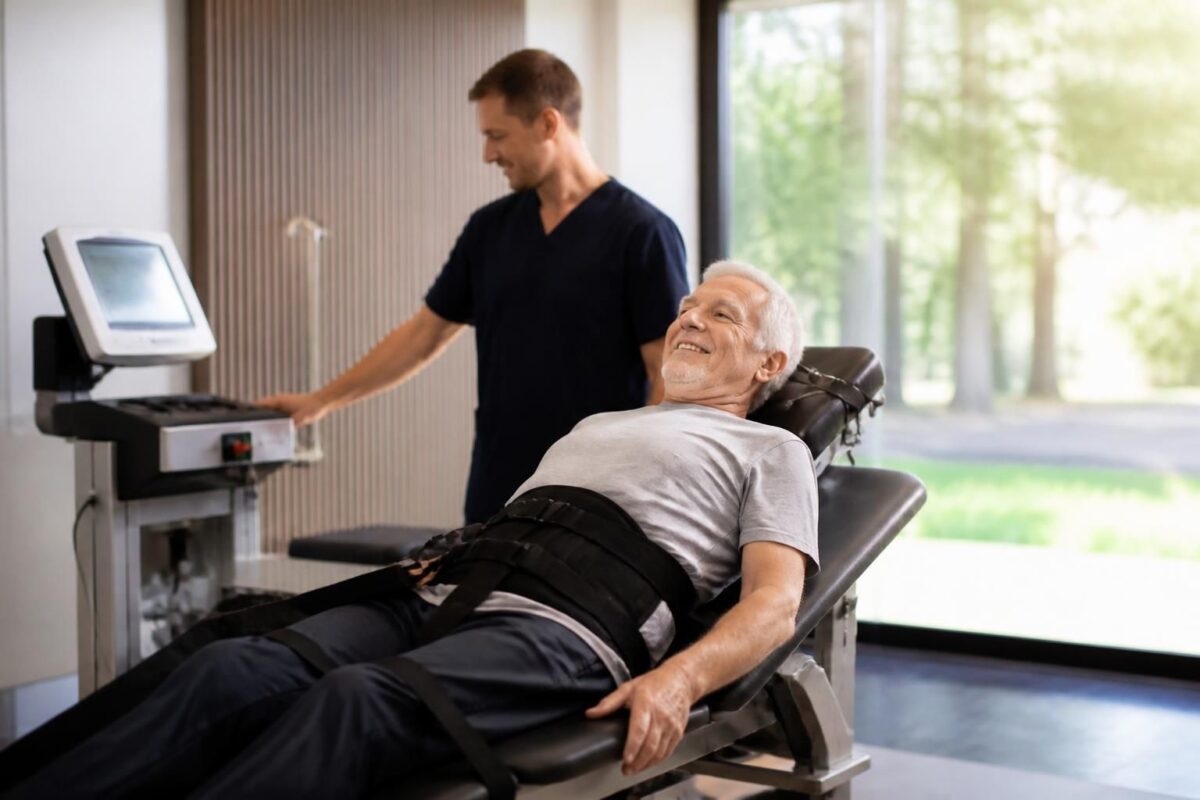
Why neurovertebral decompression is a lasting solution for active seniors
In short In short, the neurovertebral decompression is one Non-invasive therapy which sustainably relieves spinal pain in the spine active seniors By creating, by a Soft and controlled traction, a space between the vertebrae. At Montreal, it is recognized as…
Neurovertebral decompression and recovery after severe sports injury
In short In short, the neurovertebral decompression is one Non-invasive method to Relieve the pressure on the Intervertebral discs and the gristle Via a Controlled traction, to facilitate the recovery After a severe sports injury. It improves the bloodstream towards…
Practical recommendations and safety
To optimize the results, it is crucial to properly assess patients and follow an individualized protocol. Decompression may be indicated in patients with radiant pain related to bulges or disc protrusions, and sometimes to foraminal stenosis, after a specialized consultation. Contraindications, such as recent surgery or vertebral infections, should be taken into account. It is essential to combine this treatment with a global plan including specific exercises, appropriate posture and regular follow-up to adjust the protocol.
Tips to maximize efficiency and safety
Respect the pace of the sessions and do not anticipate the results. Maintain open communication with your practitioner and report any unusual changes. Integrate physico-showed activities and gentle stretching between sessions to support rehabilitation and prevent recurrences of radiant pain.
| Category | Effect on radiant pain |
|---|---|
| Principle | The gentle traction Create a intervertebral space and Lowers the pressure on discs and nerve roots. |
| nervous release | reduction of the pressure on irritated nerves, which tends to decrease the symptoms ofirradiation in the limbs. |
| Inflammation | decrease inLocal inflammation Around the nerves, reducing sensitivity and pain. |
| Circulation | improvement of Local blood flow, promoting nerve tissue feeding and elimination of toxins. |
| disc hydration | favor Disc hydration and supports the regeneration of neighboring tissues. |
| Mobility | Reduced tension and pain -> Improvement of amplitude movement and mobility. |
| Speed and durability | quickly and potentially noticeable effects durable without surgery. |
| Prevention of recurrences | misalignment and posture correction, helping to Prevent recurrences irradiation. |
| Evaluation needed | Prior examination to confirm eligibility and adapt the protocol to avoid contraindications. |
| Treatment plan | typical personalized program of 15 to 25 sessions, with durations of 15 to 45 minutes depending on the case. |
Recent innovations in neurovertebral decompression technologies
In short In short, the neurovertebral decompression is an approach non-invasive Aiming to reduce pressure on discs and nerves, and promote tissue regeneration. At Montreal, it is positioned as an effective option for lower back pain and herniated discs. The…
Neurovertebral decompression and diffuse pain: an appropriate solution
In short In short, the neurovertebral decompression is one Non-invasive solution For diffuse pain related to nerve irritation of the spine. She acts in Reducing pressure on intervertebral discs and nerves and improving the bloodstream, which promotes recovery and the…
Testimonials on neurovertebral decompression and radiant pain
Mary42 years old, suffered from radiant pain related to a disc protrusion that ran through the whole leg. After a few weeks of neurovertebral decompression, the pressure on the nerve roots decreased and the pain lost its painful journey, allowing you to walk and enjoy its daily activities again. She also points out a Better mobility And a more restful sleep.
John Peter56 years old, had severe radiating pain after an operation for herniated disc. He says that, from the first sessions, the pain that descended along the thigh decreased sharply and that the irradiations in the leg stopped disturbing his training, restoring his confidence and energy to resume the sport.
Chloe, 38 years old, experienced tingling and numbness in the arm due to cervical radiculopathy. After the treatment, she describes a relief from radiant pain and a noticeable improvement in the strength and accuracy of movement, which allowed her to resume her professional activities without discomfort.
David, 47 years old, suffered from Chronic pain with lumbar irradiation. He reports that decompression sessions have released nerve pressure, improving local blood circulation and reducing inflammation. As a result, his radiant pain subsided and he regained a better ability to walk and move without fear.
sophia, 49 years old, health professional, suffered from a recurring episode of radiant pain linked to disc disorders. It testifies to a clear benefit from the first sessions, with a decrease in radiant painful signals and a faster recovery of mobility, which allows him to advise his patients with more hindsight and confidence on this type of therapy.
Dr. Sylvain Desforges is a practitioner whose expertise combines osteopathy, naturopathy and manual medicine, and who works as founding president of the Tagmed clinics as well as the ACMA association. With a career dedicated to health innovation, he specializes in the management of chronic pain and in the integration of advanced technologies, in particular spinal decompression, laser and shockwave therapy. His approach aims to offer evidence-based care to optimize the health and well-being of his patients, with an approach centered on understanding the mechanisms responsible for irradiating pain and on appropriate non-invasive solutions.
Neurovertebral decompression is based on controlled and precise traction of the spine that promotes the creation of a space between the vertebrae. This redistribution of forces reduces the pressure exerted on the nerve roots that run near the intervertebral discs. By lowering this pressure, the irritated nerves can regain a natural path of conduction, which decreases the painful signals that radiate along the nerve paths. This dynamic is accompanied by an improved local blood supply, essential for nourishing nerve tissue and accelerating repair processes.
At the heart of the radiant pains are multifactorial mechanisms: nerve compression due to herniated discs or foraminal narrowings, local inflammation and muscular tone disruption around the spine. By releasing space around the nerves, decompression reduces irritating tension and contributes to a gradual reduction in painful sensitivity. In addition, improving perfusion in the affected area helps dispel inflammatory mediators and restore more stable nervous function, which can result in decreased irradiating painful episodes and better ability to perform painless movements referred.
Clinically, Dr. Desforges relies on a holistic vision that associates neurovertebral decompression with other convergent technologies. This synergy can accelerate the rehabilitation process and promote a faster return to daily and sporting activities without radical pain. The non-invasive approach has important advantages: reduction of operative risks, easier reintegration into daily life and potential to prevent recurrences by correcting structural imbalances that maintain radiant pain.
In his practice, the patient’s journey begins with an in-depth evaluation, followed by a personalized plan taking into account the precise origin of radiating pain and functional objectives. Dr. Desforges favors progressive and adapted protocols, with regular follow-up to adjust the sessions and maximize the results. By favoring scientific evidence and a personalized approach, it strives to offer a lasting solution that not only mitigates symptoms but also improves sustainable mobility and quality of life.
Through his leadership and commitment to data-based care, Dr. Desforges embodies a vision where neurovertebral decompression becomes a preferred option for patients with radiant pain related to vertebral problems. He continues to animate the TagMed and ACMA clinics, emphasizing the positive impact of integrated and reasoned care, so that everyone can find an active and painless life.
This detailed conclusion outlines how the neurovertebral decompression acts on the Radiant pain, describing the controlled traction mechanism, reducing pressure on discs and nerve roots, and concrete effects on circulation and tissue regeneration. It highlights the non-invasive advantages, the speed of the first benefits and the interest of integrating this approach into a global care program to regain mobility and quality of life.
The central principle is based on a Controlled traction who creates a intervertebral space and release the Compressed nerve roots, which significantly reduces the painful radiant signals that travel along the nervous path. This mechanical release decreases the pressure exerted on the nerves and discs, which results in a progressive and lasting relief of radiant pain and associated paresthesia.
In addition, the reduction in pressure stimulates a Local blood circulation More effective and better moistening of the discs, essential elements to nourish the nervous tissues and promote their repair. Improved blood flow helps to decrease local inflammation and accelerate recovery, which is manifested by a gradual decrease in irradiatory pain and better mobility.
This non-invasive approach can be combined with other technologies and techniques to optimize results. Technological innovations and advanced protocols enhance efficacy on acute and chronic pain, while reducing risk and discomfort. To explore these possibilities, you can consult resources on the Techniques#ATFP_CLOSE_TRANSLATE_SPAN# Advanced Neurovertebral Decompression and associated innovations.
In addition, the combined action on degenerative discs and nerve radicles can prevent recurrences and promote faster resumption of activities. To understand how this approach acts on pain associated with degenerative discs, you can consult syntheses and clinical examples available on specialized resources and practical guides.
To deepen the mechanisms and benefits, additional reading and testimonies present an overview of the impact on radiating pain and on functional recovery. For example, guides and articles explaining the effects of neurovertebral decompression on circulation and pain are available through several specialized sources, including comprehensive guides and clinical analyses.
To access a structured and comprehensive presentation on this topic, you can check out this comprehensive guide to neurovertebral decompression and come back to it regularly for updates and practical tips. In particular, you will find detailed information on mechanisms, indications and protocols from in-depth sources such as the complete guide to neurovertebral decompression and associated resources.
To go further, here are some relevant resources directly related to neurovertebral decompression and radiant pain: Comment#ATFP_CLOSE_TRANSLATE_SPAN# Neurovertebral decompression acts on diffuse pain, Decompression#ATFP_CLOSE_TRANSLATE_SPAN# Neurovertebral — Complete Guide, Decompression#ATFP_CLOSE_TRANSLATE_SPAN# Neurovertebral and Spinal Circulation Improvement, Decompression#ATFP_CLOSE_TRANSLATE_SPAN# Neurovertebral and rehabilitation after a back injury, and Techniques#ATFP_CLOSE_TRANSLATE_SPAN# Advanced for acute pain.

Dr Sylvain Desforges, B.Sc., D.O., N.D., osteopath, is the founding president of TAGMED and of the ACMA association. He dedicates his practice to chronic spinal pain, low back pain and symptoms compatible with sciatica, particularly when pain radiates toward the buttock, leg, calf, foot or toes.
Through SOS Sciatique, he publishes educational content on sciatica symptoms, possible causes such as disc herniation, disc narrowing, foraminal stenosis or irritation of a lumbar nerve root, as well as non-surgical approaches that may be considered according to the evaluation. At Clinique TAGMED, care may include, depending on the case, motorized neurovertebral decompression, specific osteopathic care or precision percussion.
For an evaluation related to sciatica treatment in Montreal / Mount Royal or sciatica treatment in Terrebonne, please consult the services available at Clinique TAGMED.
Medical disclaimer
The information published on SOS Sciatique is provided for educational purposes only and does not replace a consultation, diagnosis, opinion or treatment provided by a physician or another authorized healthcare professional. The author of this article is neither a medical doctor nor a specialist in a medical specialty recognized by the Collège des médecins du Québec. The osteopathic, manual medicine or functional support approaches described on this site do not constitute medical acts and are not intended to replace medical follow-up.
Consult a physician or emergency service in cases of loss of bladder or bowel control, anesthesia in the saddle area, significant or progressive weakness in the leg or foot, fever, recent trauma, severe pain or rapid worsening of symptoms. For more details, please read our Legal Notice.