Why Osteopathy is a Sustainable Solution for Global Health
28/06/2026
Osteopathic manipulations to improve blood circulation
28/06/2026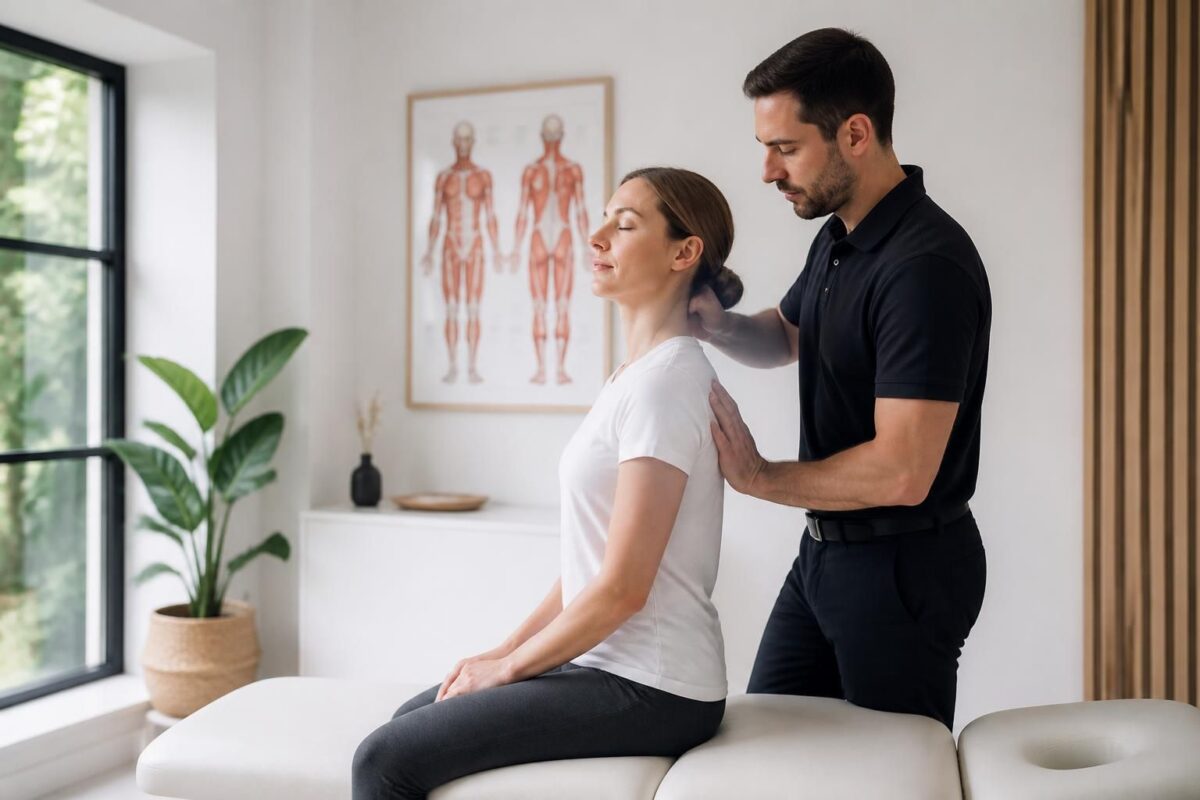
In short
In short, theosteopathy is one Manual approach which aims to restore Postural balance By freeing the strain and restoring the mobility fabrics. Its advantages include a best posture, less than aches and a greater flexibility, with a Sustainable prevention imbalances. How does it work? The practitioner performs a Overall assessment, applies Targeted manipulations and offers a Postural education to integrate the corrections on a daily basis. accessible to Montreal, this treatment is part of a well-being approach for a pain-free life and a more aligned posture. |
Osteopathy promotes a Balanced posture By restoring thealignment structures of the body and by releasing the Muscle tensions accumulated that disturb the spine and joints.
thanks to Precise manual techniques, it improves the mobility joints and rebalances the muscle chains, which reduces postural asymmetries and improves body consciousness.
It also relies on thePostural education and practical advice for adopting good habits on a daily basis, promoting a breathing effective and prevent pain related to poor postures.
This article, written by a health professional expert in osteopathy, explains how osteopathy promotes a Balanced posture. It describes the mechanisms, postural evaluation and techniques used, as well as practical advice to prevent imbalances and maintain effective mobility on a daily basis.
The foundations of posture and the role of osteopathy
The posture is the alignment of the body in space. It depends on bone structures, muscle tone, nervous system and breathing. Osteopathy aims to balance these elements. Tensions or blockages can disrupt alignment and cause pain. By restoring the mobility and harmony of muscle chains, osteopathy helps support a more natural and effective alignment.
Postural assessment and identification of imbalances
During a consultation, the osteopath observes the standing position and the movements. It evaluates ground support, joint mobility and areas of tension. It identifies areas that pull the rest of the body, such as the pelvis, spine, shoulders or diaphragm. This analysis makes it possible to identify the structural imbalances and the posture changes that persist.
Osteopathic techniques to restore alignment
The techniques used are grouped around large families. Structural manipulations aim to realign the joints and restore range of motion. Myotensive techniques release muscle tension through controlled stretching and contractions. Visceral and diaphragmatic approaches promote better organ mobility and respiratory synchronization, which can favorably influence the overall balance of the body. Each session is adapted to the morphology and habits of the patient to promote lasting alignment and without excessive constraint.
Postural education and prevention
Postural education is a key element. The professional gives practical advice to maintain correct posture throughout the day. This includes work habits, rest positions and simple mobility and breathing exercises that support osteopathic work. Ergonomic adjustments at work or at home can prevent the lasting installation of imbalances.
Practical integration and follow-up
Integrating osteopathy into a care routine can improve postural stability over the long term. Regular visits make it possible to prevent recurrences and to adapt approaches according to the evolution of constraints related to lifestyle, work and physical activity. The therapist can also offer ergonomic advice and strategies to strengthen the deep muscles that support the spine and pelvis.
Training and practice
The osteopathy training is based on courses recognized by institutions such as NUMSS and NAO, or by organizations such as National University of Medical Sciences and National Academy of osteopathy. Professionals can register with associations such as ACMA, the College of Canadian Osteopaths or the College of Canadian Osteopaths. To deepen, consult specialized resources on dedicated sites.
Resources and information points
To enrich your understanding of the articulation between osteopathy and posture, you can explore resources at the following sites:
Osteopathy and posture – Find optimal body alignment
The benefits of osteopathy on post-fracture recovery
How osteopathy promotes a balanced posture
Osteopathy and overall well-being – Restore body balance
Osteopathy and posture – Find a body alignment
For more general information, you can view the resources available on other professional and training sites.
Medical Disclaimer: The information and advice provided on this site does not replace the health professional’s diagnosis or treatment. Please note that Dr. Sylvain Desforges osteopath is neither a doctor of medicine nor a doctor, and is not a specialist in a medical specialty as defined by the Collège des Médecins du Québec. Manual medicine, functional medicine and sports medicine as described on this site exclude any medical treatment or diagnosis made by a doctor or specialist doctor. Always consult your doctor for any medical questions. For more details, please read our full legal notice.
- Release of muscle tension and fascias to restore alignment.
- Joint mobility Increased (column, hips, shoulders) for a smooth movement.
- Alignment Improved by targeted rebalancing basin and column balancing.
- Stability and activation of Deep stabilizers to support the back.
- proprioception and postural awareness reinforced by evaluation and sensory work.
- Postural education and advice ergonomic to adopt better habits.
- Breathing and work of diaphragm For a straighter posture.
- Balance of muscle chains and reduction of asymmetries.
- pain prevention and compensation by a Durable alignment.

This article presents how osteopathy contributes to a Balanced posture By acting on the whole body: joints, muscles, breathing and nervous system. thanks to Targeted manual techniques, she restores thealignment and develops a body consciousness which leads to better daily habits and improved mobility.
Assessment and identification of imbalances
It all starts with a Overall assessment Posture, performed standing and sitting, to observe muscle chains and areas of tension. The goal is to identify the Mechanical imbalances, joint blockages and compensations that set in over time. This step allows the practitioner to locate the areas to target and understand the relationship between the upper and lower body. The proprioception And the observation of postural schemes then guide the therapeutic choices.

How osteopathy improves the quality of life of active people
In short In short, theosteopathy is a global approach that Optimizes mobility and the function of the body of ACTIVE PEOPLE, for a better quality of life. It helps prevent injury and reduce Musculoskeletal pain While promoting the Sports recovery.…
Osteopathic Techniques for Alignment
The Osteopathic techniques used aim to release tensions and restore the Joint mobility. Structural manipulations restoreSpine alignment, pelvis and shoulders, while myotensive approaches release overworked muscle groups. Sometimes, visceral techniques can be considered to release tensions that hinder the overall equilibrium. Result: a Improving mobility and an Postural stability reinforced, without unnecessary pain.

Osteopathy and sports recovery: prepare the body for lasting performance
In short In short, Osteopathy and Sports recovery is one Global manual approach that sustainably prepares the body for the effort by restoring mobility and circulation After the effort. It is a discipline that acts on the sinews, the joints,…
Breathing and body awareness
The breathing And in particular the work around the diaphragm play a key role in the posture. In osteopathy, we seek to release diaphragmatic tensions and promote harmony between the thorax, the pelvis and the column. This approach improves the circulation and coordination between body segments. In addition, the support aims to develop the body consciousness So that the patient detects and corrects his postural habits on a daily basis.
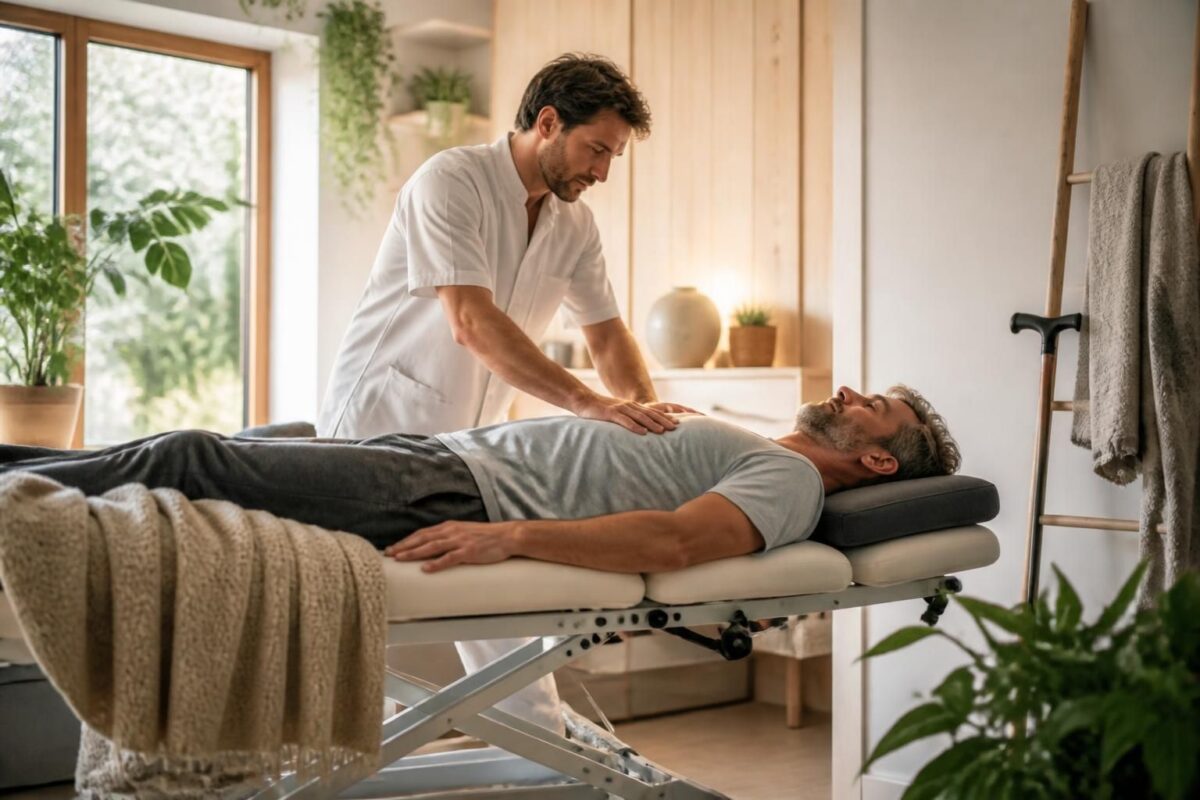
Why Osteopathy Is Essential For Recovery People
In short In short, Osteopathy in convalescence is an approach manual and holistic which helps to accelerate the recovery by restoring The balance, the mobility and a good circulation fabrics. it contributes to Reduce the pain, support the Back to…
Practical daily integration and prevention
Beyond the sessions, concrete advice is added: adapt your workstation, vary the positions and plan regular active breaks. Simple stretching and breathing exercises can be integrated into the daily routine to maintain the posture and prevent relapses. Regular support helps maintain thePostural balance in the long term and to limit chronic tensions.

Osteopathic manipulations to strengthen post-traumatic muscles
In short In short, Osteopathic manipulations for Strengthen post-traumatic muscles constitute a gentle manual approach aimed at restoring the mobility, reduce the pain and facilitate the Functional rehabilitation After a injury. What is Is it? A series of precise gestures…
Expected results and prospects
By integrating osteopathy into a care process, we observe A lasting improvement in postural balance, a reduction in muscle tension and a better mobility. Breathing becomes more fluid, the gait more stable and pain associated with postural imbalances decreases. This is support that aims not only for occasional relief, but also a lasting evolution of lifestyle and body habits.
Practical tips for maintaining posture
Vary positions throughout the day and decrease prolonged sitting periods.
Adjust the ergonomics of the workspace (height of the screens, folder, supports) to promote an aligned column.
Perform targeted stretching of the back and rib cage and practice a gentle activity such as walking or yoga.
Prioritize deep and regular diaphragmatic breathing to release tension and improve alignment.
Consult an osteopath regularly for preventive follow-up and personalized adjustments according to the evolution of the posture.
| Osteopathic aspect | Concise impact |
|---|---|
| Relaxation of muscle tension | Reduces the Muscle tensions and restores the mobility of key postural areas. |
| Joint mobility | restore theJoint amplitude and facilitates more natural alignment. |
| Balance of muscle chains | rebalances the Muscle chains To stabilize the trunk and pelvis. |
| Basin and column alignment | Correct Lalignment pelvis and column for a straight posture. |
| Breathing and diaphragm | Optimizes the breathing and coordination of the diaphragm with the rib cage. |
| Overall postural evaluation | targeted assessment identifying the areas strained or weak-willed and compensations. |
| Postural education | Accompany with exercises and advice postural to maintain corrections. |
| Prevention and daily habits | Prepare the body for the activity and warn Relapses with ergonomic advice. |
| Sweet and personalized approach | Approach fresh and personalized Promoting a lasting rebalancing. |
| Integration into the care routine | Incorporates osteopathy into your routine for a quality of life Improved. |

Osteopathy and prevention of work-related musculoskeletal disorders
In short theosteopathy is one Manual approach that restores body balance and prevents MSD related to work. Its advantages: reduction of tension, improvement of mobility and prevention of chronic pain. She is preventive and healing, suitable for office and trades…
Testimonials on the balanced posture thanks to osteopathy
Mary, 34 years old : after several weeks of sessionsosteopathy, I found a Balanced posture on a daily basis. The targeted manipulations released tension in the back and shoulders, and my body salignes naturally.
Thomas, 28 years old : working standing and in front of the screen, my posture was out of balance. thanks to theosteopathy, I found a Balanced posture and a better mobility neck and back, with more free breathing.
Sophie, 47 years old : the shoulders hold better, the back is aligned, and my daily gestures are more fluid. losteopathy favored a Balanced posture By working on muscle chains and joints, without pain.
Lucas, 15 years old : After years of bad postural habits at school, I stand up straight and more focused. the gentle and personalized approach of theosteopathy helped me develop a postural awareness and to improve my mobility.
Emilie, 52 years old : My work requires precision and stability. losteopathy my license to get a Balanced posture, to improve my breathing and increase my stability during complex gestures.
Romain, 39 : As a sportsman, the alignment of the body is key. After a few sessions, I noticed a better alignment hips and spine, a mobility increased and less post-workout pain. losteopathy Maiden to stay efficient while protecting my posture.
Dr. Sylvain Desforges, Expert in osteopathy, in naturopathy And in manual medicine, occupies the role of founding president of both TagMed and ACMA. His career is guided by a clear desire to innovate in the field of health and to offer care that sustainably improves the welfare patients. specialized in the management of Chronic pain And in the integration of advanced technologies, he places postural balance at the heart of his practice, convinced that preventing imbalances is as crucial as treating them.
For him, the Balanced posture Results from a body language that is written in the dynamic network of tissues, joints and nerves. Osteopathy considers the body as an interconnected whole where the head, thorax, pelvis and extremities continually dialogue. Postural assessment is not limited to the outward appearance of alignment; It analyzes the muscle and fascial chains, the diaphragm, the mobility of the joints and the patterns of movement which, day after day, sculpt the posture. The practitioner’s gaze seeks compensation, asymmetries and repeated habits that eventually influence spinal stability and load distribution.
The techniques used aim to release tensions and restore harmonious mobility. Thanks to gentle joint manipulation, soft tissue release and muscle chain rebalancing, the osteopath restores range of motion and optimizes skeleton alignment. Targeted diaphragmatic breathing and trunk stability exercises strengthen the deep muscles, true pillars of a lasting posture. This approach does not seek to force an alignment, but to release the obstacles that hinder the body in its natural arrangement and to increase the patient’s body awareness on his daily habits.
Beyond pain relief, osteopathy promotes an overall improvement in performance and quality of life. A Balanced posture Facilitates fluid movement, optimizes breathing, supports professional and sports activities, and reduces recurring tensions associated with a prolonged static position. By working on the areas that pull on the rest of the body, the osteopath allows the patient to move with less fatigue, less stiffness and greater ease in everyday gestures.
Dr. Desforges is pursuing an evidence-based approach and an integrative approach that combines manual osteopathy with innovative technologies such as spinal decompression, laser and shockwave therapy systems when their use is relevant. This combination aims to optimize the mobility, to restore thealignment and to support a breathing more effective, so that each patient can maintain a healthy posture throughout their life. Its commitment is declined in a care offer that favors personalized evaluation and postural education as pillars of prevention.
For a personalized evaluation and concrete advice on posture, do not hesitate to request Clinique TagMed. The objective is clear: to help you find a natural posture, without pain and perfectly adapted to your activities.
This structured article explores how theosteopathy promotes a Balanced posture By acting on the mechanisms of the body, releasing tension and strengthening postural muscle chains. By associating a Overall assessment, of Targeted manual techniques And postural education, it reduces mechanical imbalances and sustainably improves mobility.

The benefits of osteopathy to treat muscle imbalances
In short theosteopathy is a manual approach to restore themuscle harmony and postural considering the body as a whole. Its main benefits include the reduction of aches and tensions, the improvement of the mobility and from the posture, and prevention…
Mechanisms that support balanced posture
Osteopathy is based on an approach holistic of the body. A Static Analysis and movements helps identify areas that pull the entire body chain, such as the pelvis, spine, or shoulders. This understanding promotes built-in rebalancing, rather than treating the symptoms in isolation.
work on Postural muscle chains and the release of tensions In the deep muscles help restore a more natural alignment. By improving the synchronization between the upper and lower body, osteopathy allows for better stability during daily movements and physical efforts.
The Joint mobility and the spine mobility are optimized by precise manipulations which restore the amplitude of the gestures and reduce the compensation. Moreover, the breathing and the role of diaphragm are taken into account, because they influence the thoracic amplitude and the stability of the trunk, key elements of a balanced posture.
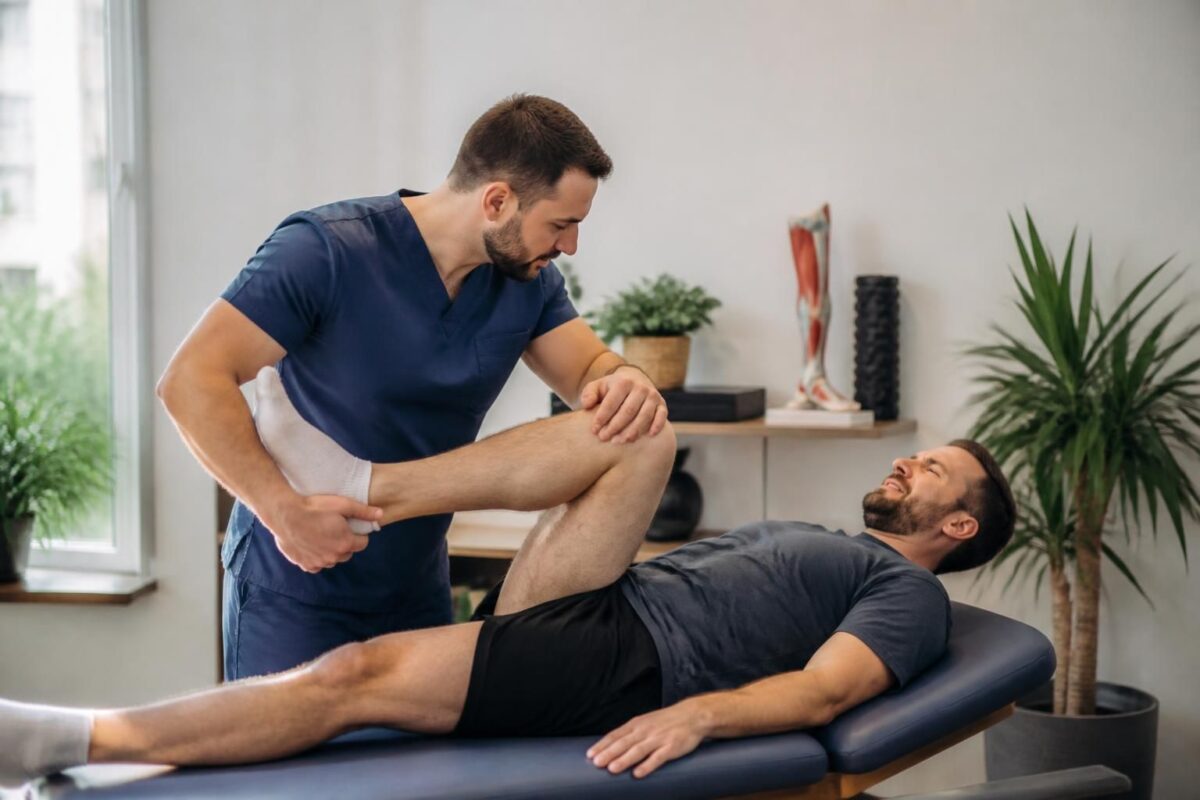
Osteopathy and chronic leg pain: regaining an optimal quality of life
In short In short, Osteopathy is one Global manual approach aimed at reducing Chronic leg pain and improve the quality of life. What is it? Non-drug therapy using the hands to identify restrictions and treat lesional chains. How does it…
Osteopathic techniques dedicated to posture
The Structural manipulations aim to realign the joints and restore thePostural alignment global. They make it possible to release subluxations and improve the coordination of body segments, particularly at the level of the column and the pelvis.
The Myotensive techniques Target accumulated muscle tension, providing controlled stretches and amplitudes that restore flexibility and stability. This approach helps prevent stiffness and promote a stronger posture on a daily basis.
approaches visceral and interventions related to diaphragm Complete the osteopathic arsenal to release internal tension and harmonize the respiratory mechanics with the overall posture, contributing to smoother breathing and better synchronization of movement.
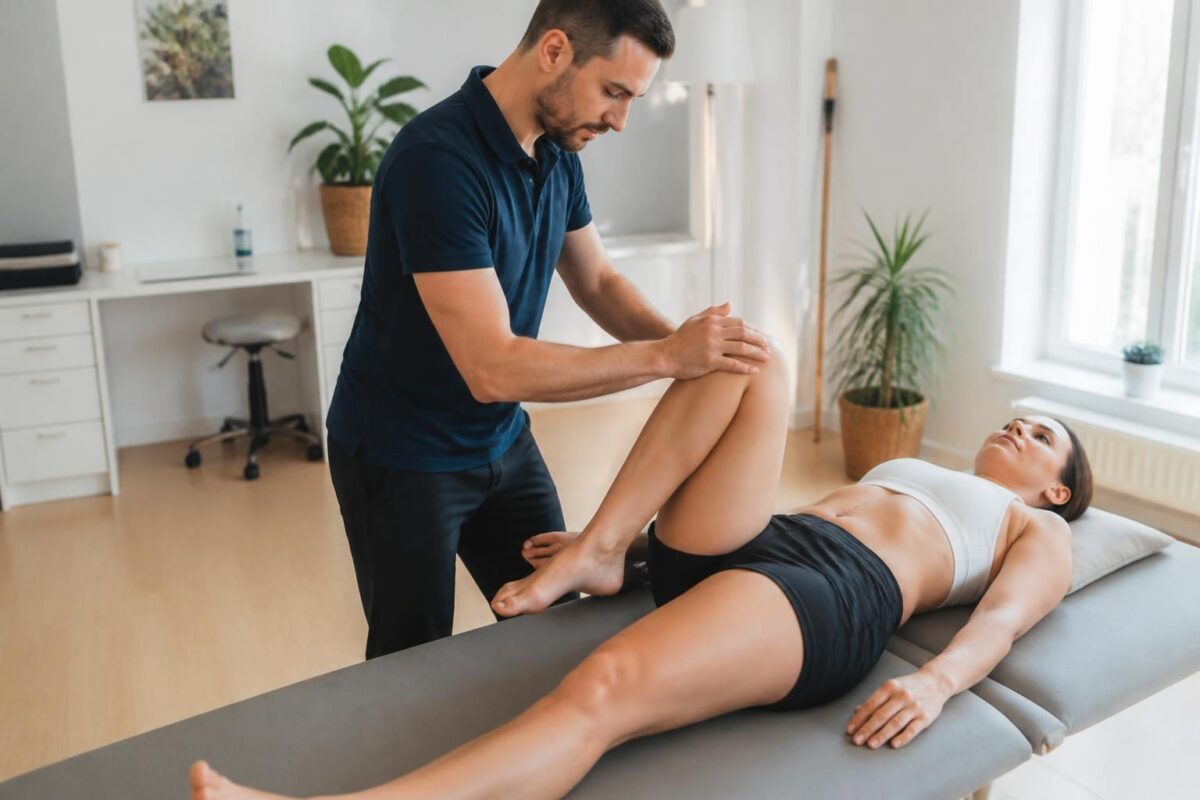
How osteopathy supports recovery after complex surgery
In short In short, Post-operative osteopathy is an approach fresh which supports the recovery After a Complex surgery. It helps to reduce the pain and the fatigue, improves the mobility and accelerates the healing thanks to a better vascularization and…
Postural education and daily habits
Beyond the sessions, thePostural education is a central element. The osteopath helps to become aware of his posture throughout the day and offers simple exercises to maintain theBody balance between sessions. Ergonomic advice adapted to work on screen, at home and during sports activities are an integral part of the treatment.
Variations of positions, active pauses and diaphragmatic breathing constitute habits that reinforce the gains obtained in the session. The objective is to integrate healthy postural habits durably to prevent tensions and pain linked to sedentary lifestyle or overwork.
To deepen, you can consult resources dedicated to posture and osteopathy such as the following links, which illustrate the importance of alignment and preventive practices:
Posture Improvement Link,
Recovery after physical exertion,
Prevention of overuse injuries.
Impact on mobility, breathing and prevention
A Balanced posture results in a Improving mobility and an More effective breathing, which optimizes tissue oxygenation and supports endurance. By reducing tensions and restoring harmonious movement patterns, osteopathy helps prevent future pain, nerve irritation and functional limitations associated with mechanical imbalances.
In the long term, postural rebalancing promotes better body consciousness and strengthening the deep muscles that stabilize the trunk. This creates a solid foundation for daily and sporting activities, while reducing the risk of painful recurrences and premature joint wear.
To deepen, you can explore resources on the importance of a released diaphragm and mobile chest, as well as integrating osteopathy into a global health routine:
Cervical and daily pain without medication,
Posture and prevention of chronic pain.

Dr Sylvain Desforges, B.Sc., D.O., N.D., osteopath, is the founding president of TAGMED and of the ACMA association. He dedicates his practice to chronic spinal pain, low back pain and symptoms compatible with sciatica, particularly when pain radiates toward the buttock, leg, calf, foot or toes.
Through SOS Sciatique, he publishes educational content on sciatica symptoms, possible causes such as disc herniation, disc narrowing, foraminal stenosis or irritation of a lumbar nerve root, as well as non-surgical approaches that may be considered according to the evaluation. At Clinique TAGMED, care may include, depending on the case, motorized neurovertebral decompression, specific osteopathic care or precision percussion.
For an evaluation related to sciatica treatment in Montreal / Mount Royal or sciatica treatment in Terrebonne, please consult the services available at Clinique TAGMED.
Medical disclaimer
The information published on SOS Sciatique is provided for educational purposes only and does not replace a consultation, diagnosis, opinion or treatment provided by a physician or another authorized healthcare professional. The author of this article is neither a medical doctor nor a specialist in a medical specialty recognized by the Collège des médecins du Québec. The osteopathic, manual medicine or functional support approaches described on this site do not constitute medical acts and are not intended to replace medical follow-up.
Consult a physician or emergency service in cases of loss of bladder or bowel control, anesthesia in the saddle area, significant or progressive weakness in the leg or foot, fever, recent trauma, severe pain or rapid worsening of symptoms. For more details, please read our Legal Notice.