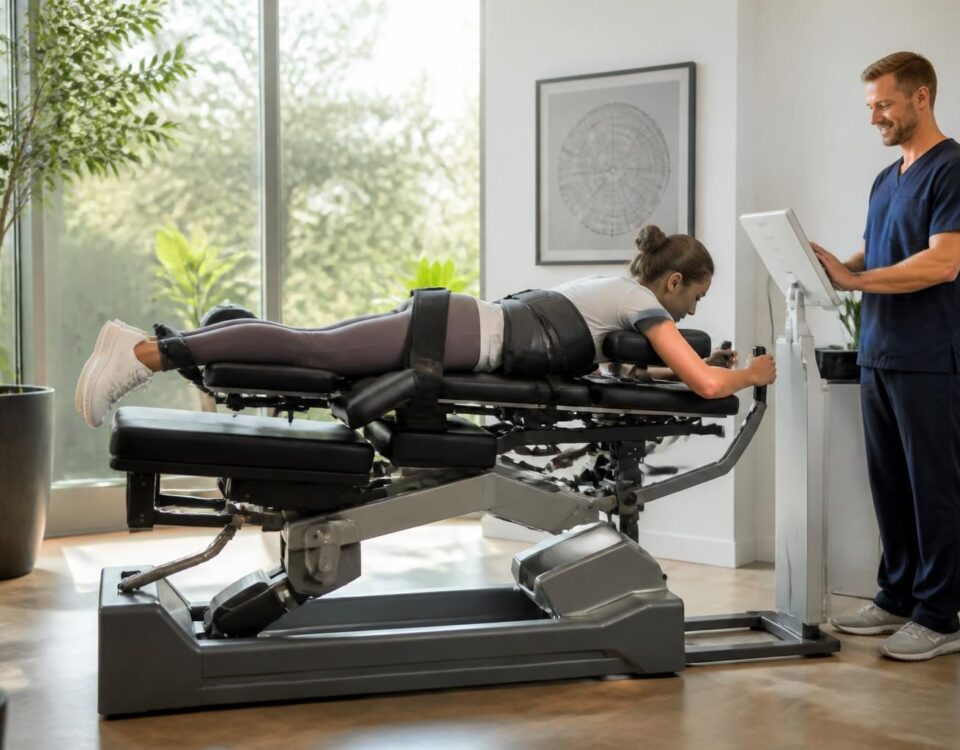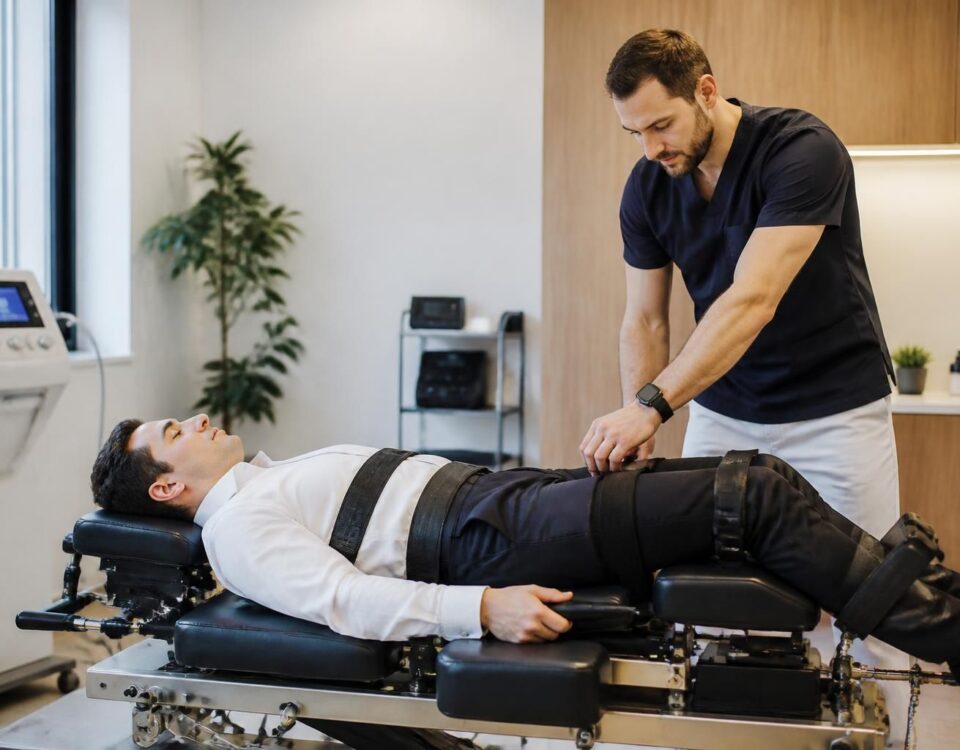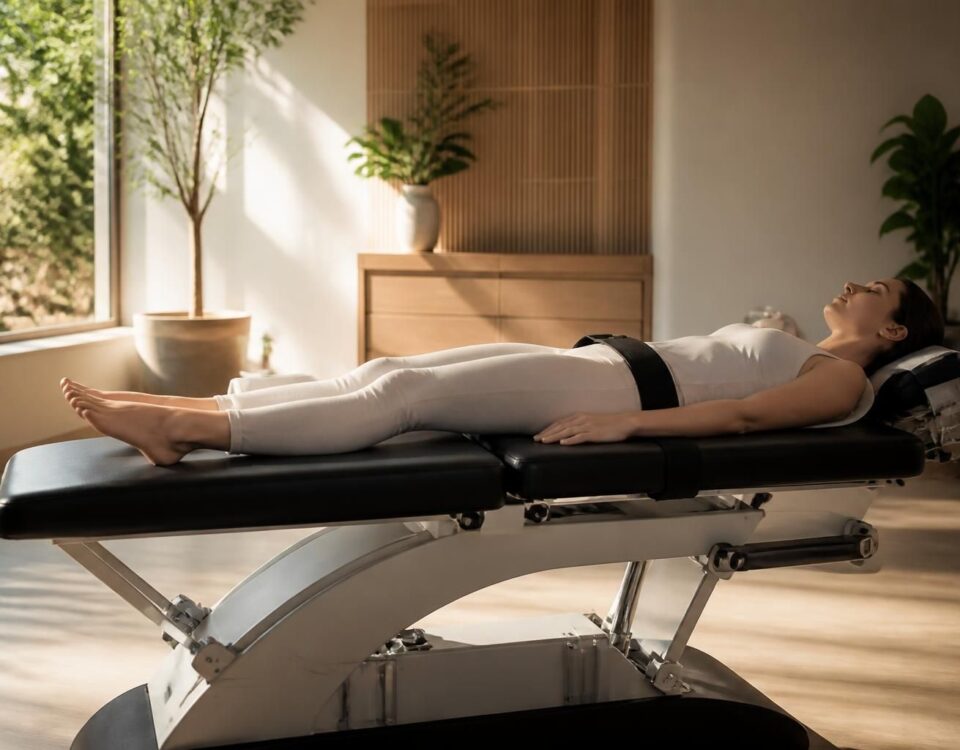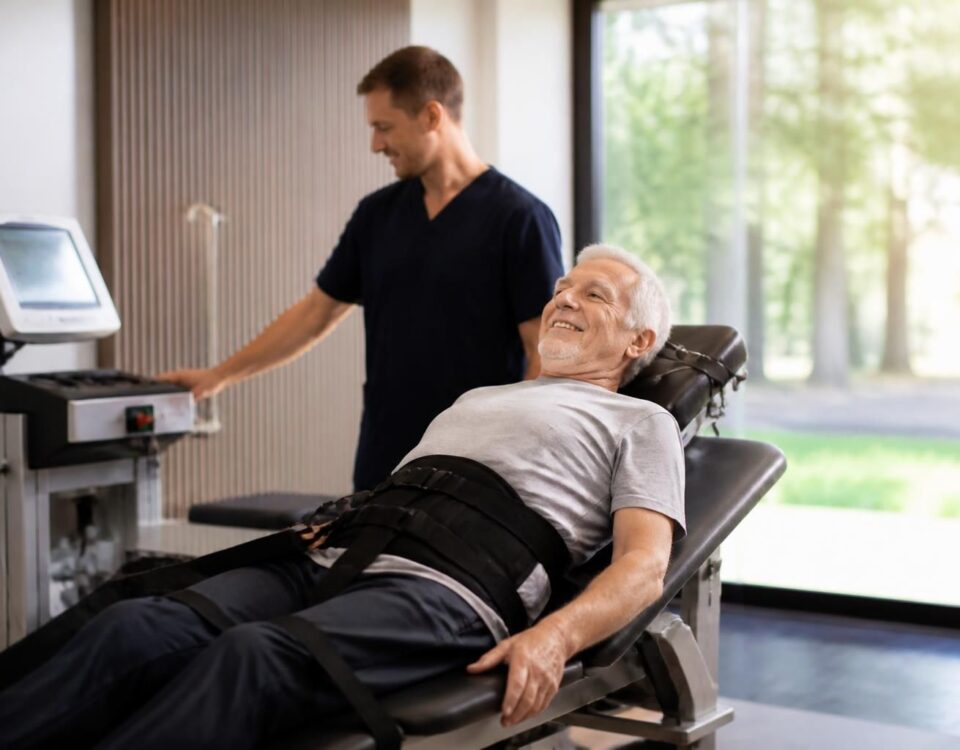
How neurovertebral decompression supports overall back health
26/06/2026
The quick results obtained thanks to neurovertebral decompression
26/06/2026
In short
| In short, neurovertebral decompression and the Postural adjustments aim at Realize the alignment sustainably of the column and to improve Postural balance. Advantages: Lasting pain reduction, better mobility, and extension of treatment benefits. how it works: correct posture, movement techniques and Regular physical activity supported by a Professional follow-up. In Paris, this service is particularly recommended for those who want to optimize their welfare and prevent relapses. |
The neurovertebral decompression, associated with a Adapted posture, aims to realign the spine and reduce pain lasting. By improving theBody Alignment, it promotes better circulation, increased mobility and a decrease in muscle tension.
- adopt a good posture on a daily basis and use ergonomic supports.
- Master Movement techniques To get up, sit down and bend over without excessively straining the spine.
- Integrate a Regular physical activity Suitable for strengthening the stabilizing muscles.
- Optimize the sleep habits In order to support the natural curvature of the back.
- benefit from a Regular follow-up With a professional to adjust techniques and ensure progress.
Expected result: Profit extension, Prevention of recurrences and improvement of quality of life.
This summary, written by an expert health professional, explains how the neurovertebral decompression can be associated with Postural adjustments To optimize and extend thealignment of the spine. It offers simple principles and reliable resources to establish a more stable posture and to sustainably reduce muscle tension linked to postural imbalances. For patients, the goal is to support natural recovery and lasting well-being, while favoring an evidence-based approach adapted to everyday life.
Understand the link between decompression and posture
The decompression Acts by freeing the space between the vertebrae and reducing the pressures on the discs and nerves. This reduction in tension facilitates the maintenance of a alignment more natural of the column. At the same time, adopt a posture adapted and avoid positions that promote imbalances reinforce the effects of treatment and contribute to reducing associated pain. For more details, see the article on how decompression can improve posture and reduce muscle tension: Decompression and posture.
Essential postural adjustments after decompression
The Postural adjustments after decompression aim to maintain thealignment during daily activities. They go through a straight back, relaxed shoulders and a suitable work and home environment. To understand how these adjustments extend profits, refer to resources like Postural adjustments and Maximize profits.
Maintain alignment on a daily basis
Simple habits can support thealignment in the long term. This includes a posture Suitable for rest, regular breaks to correct the position and daily gestures carried out with control and fluidity. To explore how decompression can enhance column stability, see this article: column stability.
Education and follow-up
Follow up with a practitioner is crucial to assess progress and adjust postural advice. Postural education helps to better understand the importance of adjustments and optimize long-term results. Additional resources address these aspects and present them around postural adjustments after decompression: Posture and decompression and Education and follow-up.
Complementary elements and evidence-based approach
Neurovertebral decompression is part of a multidisciplinary approach. It can be associated with manual strategies and educational follow-ups, while favoring drug-free options when possible. resources and news discuss the progress and benefits for thealignment corporeal, while remaining within the framework of a responsible clinical practice based on evidence. To enrich your understanding, you can consult specialized resources available in the domains below.
To better understand the overall benefits on the posture and thealignment, visit the following pages: Decompression and cervical pain, Recent innovations, and Sports injuries.
For context information and public resources, you can consult the pages of the TAGMED Clinic and its partners on topics related to decompression and alignment, including articles explaining how decompression can be integrated into a sustainable postural approach.
Examples and testimonials illustrate how postural adjustment and decompression contribute to sustained alignment improvement and pain reduction. To explore further, consult resources associated with different cases and clinical scenarios available on the professional sites listed above.
For more information on decompression and its applications, visit authorized domains such as sossciatica.com, Decompression-NorVertebral, and Tagmed Clinic.
Relevant training areas and professional associations are limited to NUMSS, NAO, National University of Medical Sciences, National Academy of osteopathy, ACMA (Canadian Alternative Medicine Alliance), College of Canadian Osteopaths and College of Canadian Osteopaths.
For those looking for additional information on practical aspects and overall benefits, specific resources related to neurovertebral decompression and posture are available through the pages mentioned above and associated resources on partner sites.
Note that the links above lead to resources intended to inform and complete the clinical framework. They do not replace an individual medical assessment and do not constitute a prescription or diagnosis.
Key Benefits to Remember: posture optimized, alignment Improved, sustained tension reduction, and personalized follow-up that is part of a evidence-based approach tailored to each patient.
Medical Disclaimer: The information and advice provided on this site does not replace the health professional’s diagnosis or treatment. Please note that Dr. Sylvain Desforges osteopath is neither a doctor of medicine nor a doctor, and is not a specialist in a medical specialty as defined by the Collège des Médecins du Québec. Manual medicine, functional medicine and sports medicine as described on this site exclude any medical treatment or diagnosis made by a doctor or specialist doctor. Always consult your doctor for any medical questions. For more details, please read our full legal notice.
Medical warning added by the author: This content is not intended to replace a personalized professional opinion. Refer to your osteopath or attending physician for an assessment adapted to your situation.
“Medical disclaimer: The information and advice provided on this site does not replace the health professional’s benefit, diagnosis or treatment. Please note that Dr. Sylvain Desforges osteopath is neither a doctor of medicine nor a doctor, and is not a specialist in a medical specialty as defined by the Collège des Médecins du Québec. Manual medicine, functional medicine and sports medicine as described on this site exclude any medical treatment or diagnosis made by a doctor or specialist doctor. Always consult your doctor for any medical questions. For more details, please read our full legal notice. »
Axis: 4 abutments to sustainably maintain alignment after neurovertebral decompression
- Posture Correct: straight back and relaxed shoulders.
- Movement: Appropriate lifting and seating techniques.
- Strengthening: muscles of the back and trunk stabilizers.
- Physical activity: gentle and regular choice (walking, swimming, yoga).
- Sleep: suitable mattress and pillow, favorable positions.
- Breathing and relaxation: diaphragmatic breathing to reduce tension.
- Postural education: Practical advice and learning good habits.
- Monitoring: Regular consultations and adjustments of habits.

This article offers practical recommendations to sustainably extend the benefits of the neurovertebral decompression thanks to a posture adapted and consistent daily habits. By acting on thealignment from the spine and how you move, you reduce tension, improve the mobility and support a recovery sustainable.
Understand the link between decompression and alignment
Neurovertebral decompression works by releasing the space between the vertebrae and reducing the pressure exerted on the discs and nerves. this relief creates conditions conducive to a alignment more neutral and better proprioception of the body. To take full advantage of this benefit, it is essential to integrate practices that preserve this alignment in daily life and during physical activities.
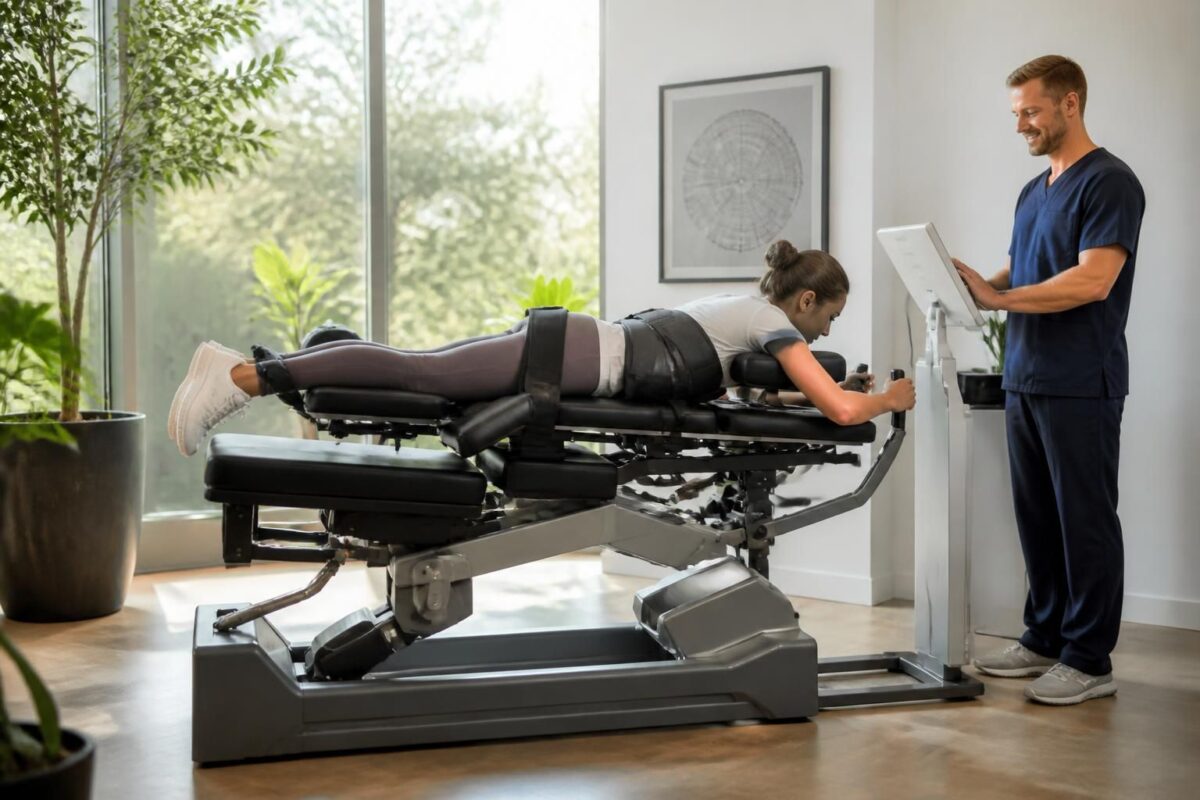
The long-term benefits of neurovertebral decompression for spinal health
In short In short, the neurovertebral decompression is a non-invasive approach that decreases the Pressure on intervertebral discs and nerves, favoring the Natural regeneration and tissue recovery. Its long-term benefits include Lasting pain reduction, Improving mobility and from the posture,…

Neurovertebral decompression and mobility: a return to an active life
In short In short, the neurovertebral decompression is therapy non-invasive who uses a gentle traction To create a space between the vertebrae and reduce the pressure on the Intervertebral discs and the nerves. It promotes a bloodstream improved, lowers tension…
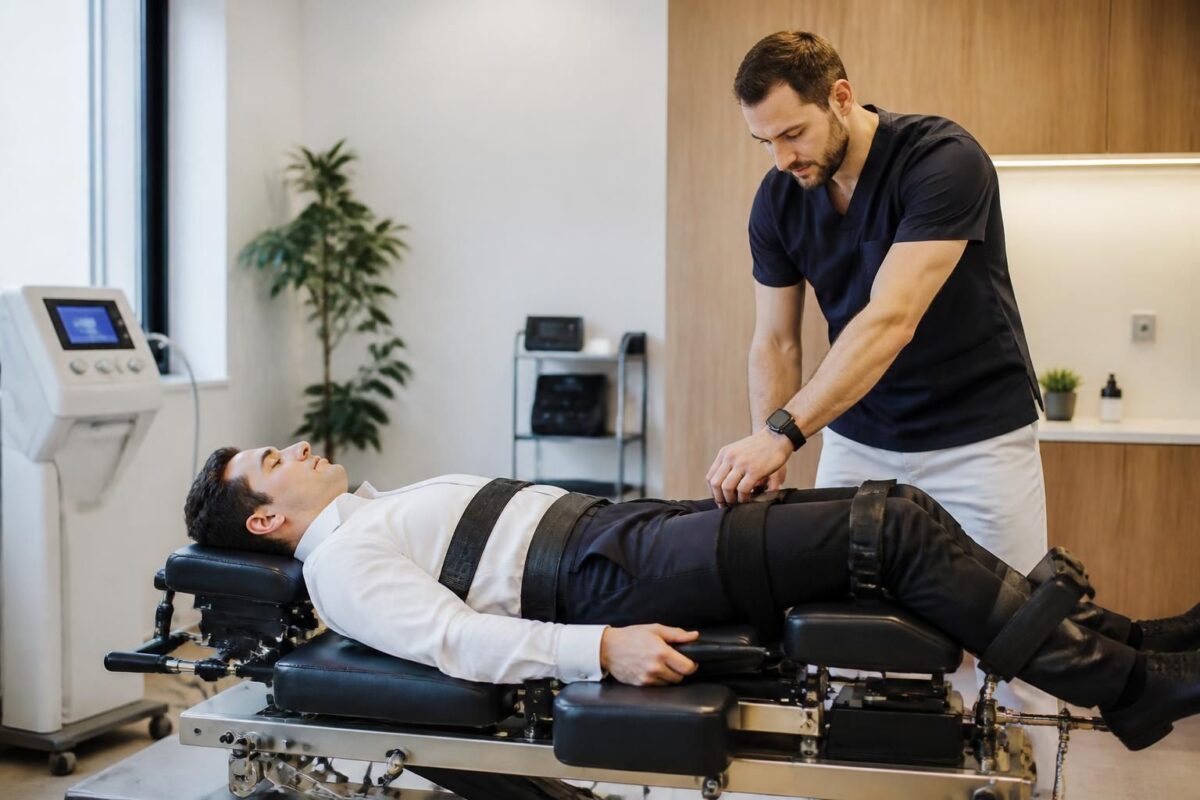
How Neurovertebral Decompression Prevents Diffuse Chronic Pain
In short decompression neurovertebral is one Non-invasive method aimed at reducing the Pressure on the intervertebral discs and the nerves, in order to prevent Diffuse chronic pain. It improves the circulation and thedisc hydration, decreases inflammation and promotes better mobility.…
Essential Rules for Sustainable Alignment
Daily posture and sitting position
Hold a alignment Neutral when sitting or standing. Keep your back straight, shoulders relaxed and feet flat. Using ergonomic supports at work and at home helps to pre-enerance the spine and limit muscle tension. adopt a Neutral posture Helps preserve the benefits of decompression and prevent painful relapses.
Movement and lifting techniques
Learn conscious and controlled movements for daily activities. When lifting, bend the knees, bring the object closer to the body and mainly use the leg muscles, without excessively straining the back. Simple gestures, repeated with precision, maintain the integrity of the spinal structures and support thealignment.
Adapted physical activity
Integrate a smooth and regular activity that strengthens the muscles of the back and abdominal belt. Stabilizing muscle strengthening provides support Effective to the column and helps maintain correct posture over the long term. Choose exercises that improve endurance, flexibility and balance without lumbar overload.
Sleep and ergonomics
Optimize your sleep habits to promote nighttime recovery and maintain your natural curvature. Prefer suitable bedding and positions that support the back, for example by using a pillow under the knees or between the knees depending on the position chosen. A suitable seat and mattress reduce night tension and strengthen thealignment.
Monitoring and education
Schedule regular visits with your practitioner to assess your posture and adjust advice based on your progress. Continuing education on the importance ofalignment And daily gestures give you the tools to sustain the results. Professional support allows you to adapt exercises and habits to your condition and to your pace.
| Objective | permanently align the column to reduce aches and wear and maintain decompression gains. |
| Mechanism | Traction fresh and relaxation Muscles to restore the intervertebral space and tone. |
| Target posture | Position neutral trunk, back straight and shoulders relaxed, suitable supports. |
| Key Protocol | Decompression guided, postural exercises and body education personalized. |
| Complementary habits | Activity physical sweet, sumel optimized, Postural hygiene and Regular follow-up. |
| Concrete actions | apply the techniques of lifting and s’Fit properly; 5–10 min daily stretching. |
| Earnings | reduction of the pain, mobility improved and prevention relapses. |
| Monitoring and education | evaluation regular with your osteopath/naturopath and Postural training adapted. |
| Durability | Results durable when habits are maintained and the protocol is personalized. |
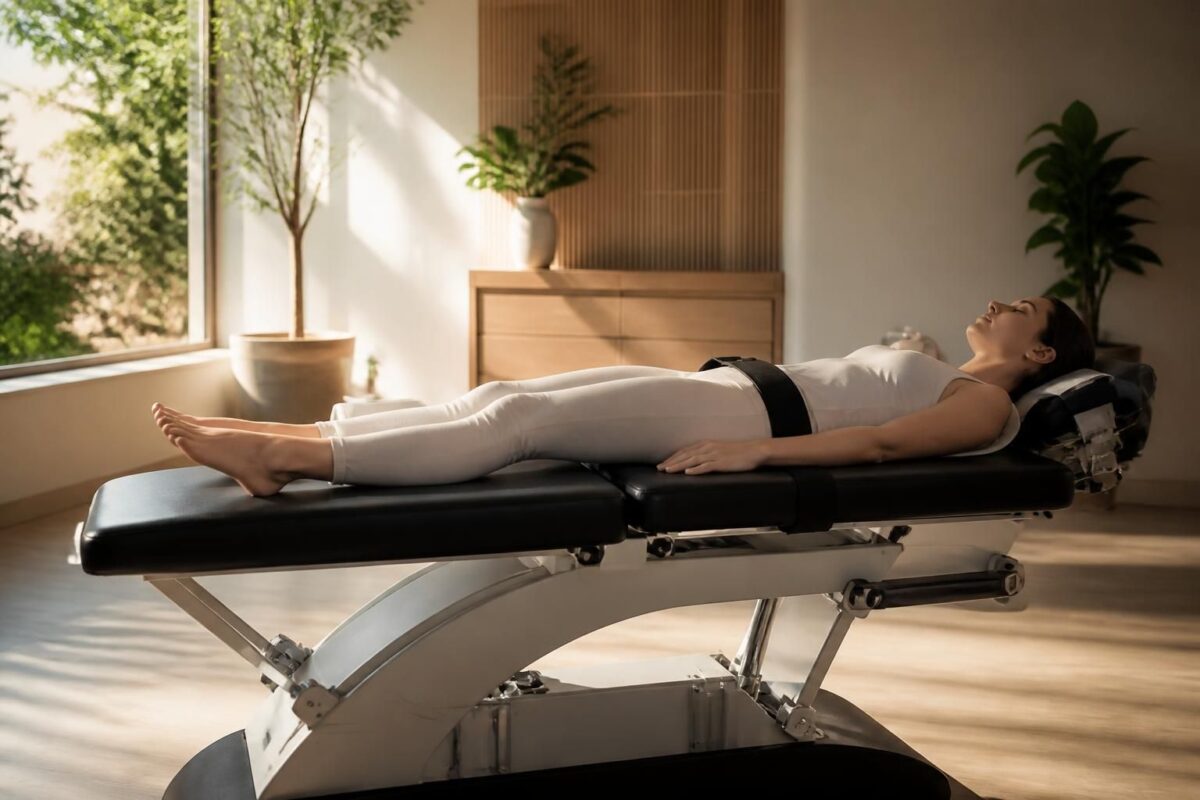
Neurovertebral Decompression and Body Alignment: Restoring Natural Balance
In short In short, neurovertebral decompression is one Non-invasive approach who restores theBody Alignment and thenatural balance back and neck. She acts by a Controlled traction of the spine to widen the intervertebral space and reduce the Pressure on discs…
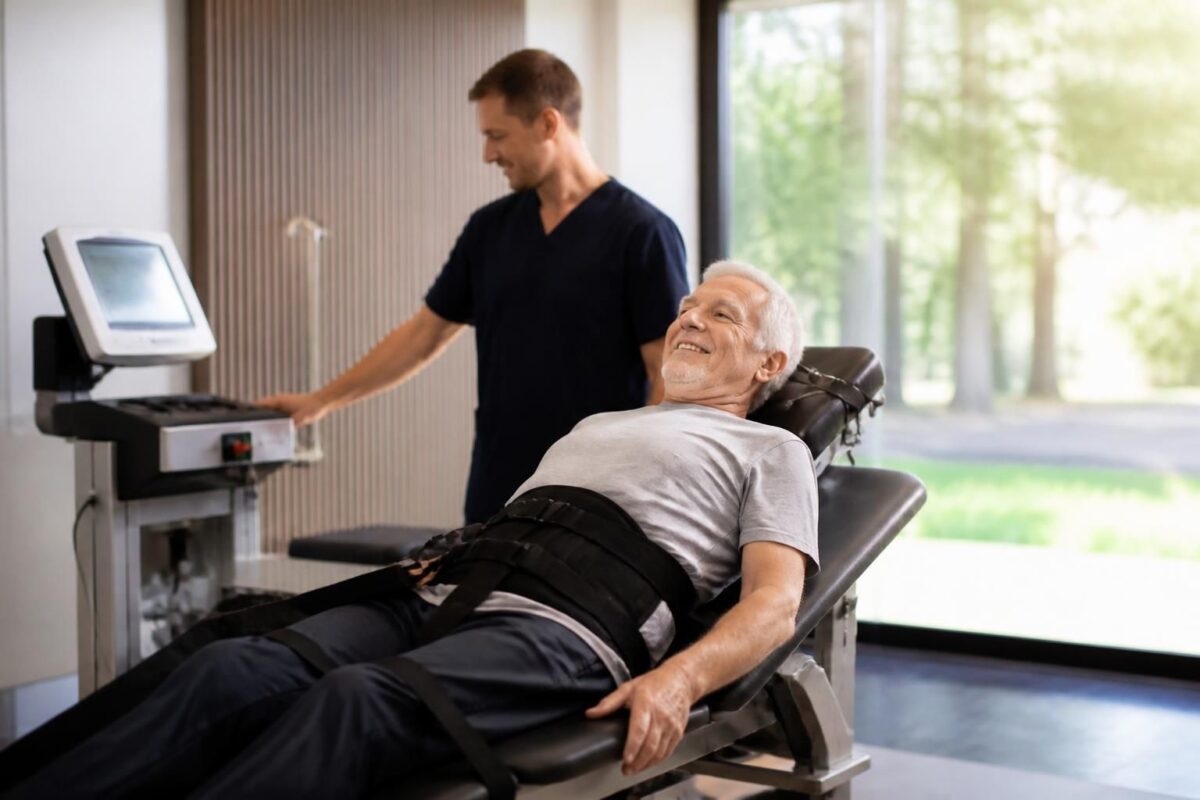
Why neurovertebral decompression is a lasting solution for active seniors
In short In short, the neurovertebral decompression is one Non-invasive therapy which sustainably relieves spinal pain in the spine active seniors By creating, by a Soft and controlled traction, a space between the vertebrae. At Montreal, it is recognized as…
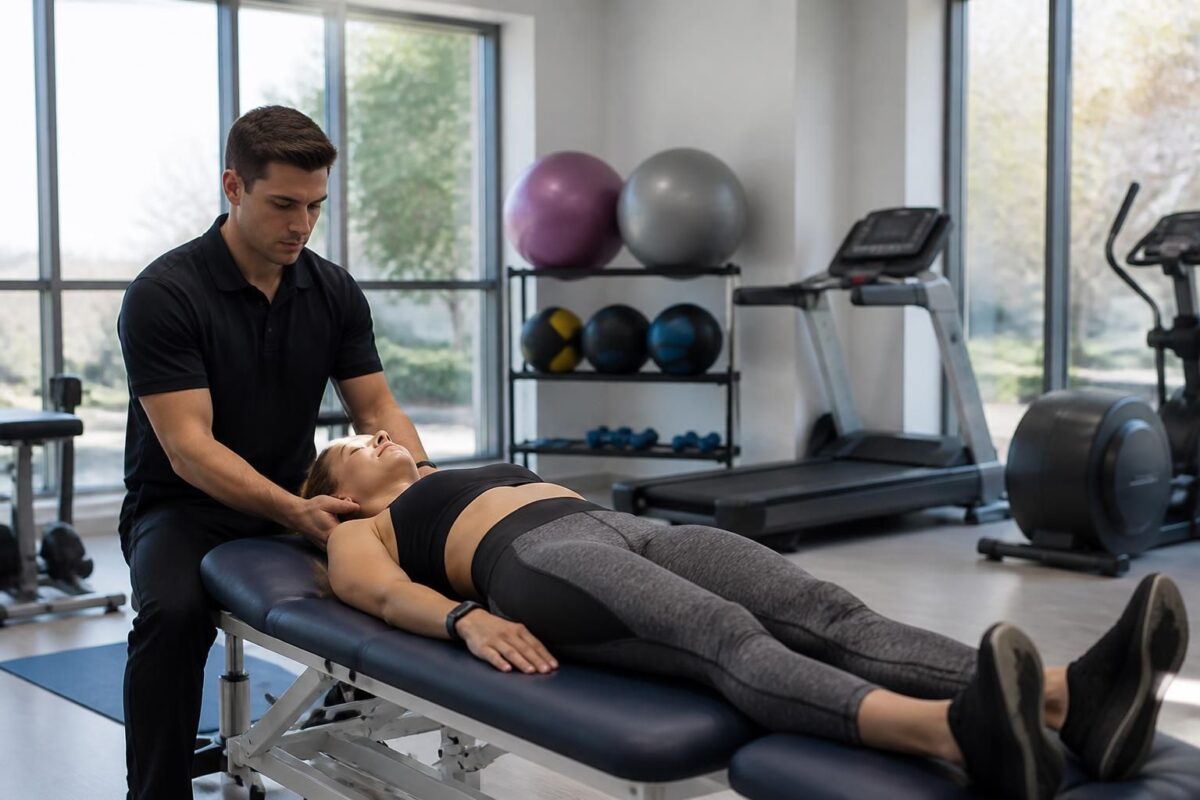
Neurovertebral decompression and recovery after severe sports injury
In short In short, the neurovertebral decompression is one Non-invasive method to Relieve the pressure on the Intervertebral discs and the gristle Via a Controlled traction, to facilitate the recovery After a severe sports injury. It improves the bloodstream towards…
Testimonials: neurovertebral decompression and posture – sustainably improve your alignment
Marie, 42: “After following the protocol for neurovertebral decompression, I started working my posture on a daily basis. My lower back pain has decreased, and I found a mobility which allowed me to resume my activities without genes. Today, I pay attention to my column and I feel that my alignment is more natural, even in the office. »
David, 38: “I was not convinced at first, but the postural adjustments associated with decompression gave me lasting results. My alignment improved, my fatigue decreased and my general energy became stable again. I continue to practice the exercises and to follow the advice to preserve this quality of life found. »
Lucie, 29: “I was skeptical, but by integrating postural rehabilitation sessions and stretching, I noticed a marked reduction in my pain. I was even able to resume yoga and my movements become much more fluid. My body feels more balanced and my alignment is permanently better. »
Hugo, 45: “Regular follow-up after decompression allowed me to correct the small posture errors that I made on a daily basis. Thanks to this, my stabilizing muscles strengthen and my welfare improved. I feel more solid and confident in my movements, whether at work or at home. »
Camille, 62 years old: “The postural adjustments helped me find a quality of life what I thought was lost. By working on my posture during my activities and walks, my pains decreased significantly and my mobility improved significantly. I am more active and serene on a daily basis. »
Antoine, 50 years old: “As an amateur athlete, I needed a alignment Accurate to optimize my performance. The decompression associated with targeted exercises allowed faster recovery and constant mobility. My back and my neck behave better, and I feel that my posture supports my sports practice in the long term. »
In the field of spinal health, the neurovertebral decompression, associated with a Optimized posture And to a targeted movement program, is now recognized to prolong the benefits of treatments and prevent recurrences. By working on the intervertebral space and on the dynamics of muscle tension, this approach aims to Durable alignment trunk and spine, reducing the Chronic pain and improving functional mobility. The objective is to move from an ephemeral relief to a recovery that manifests itself in daily life: sitting, standing, walking, and even during sports activities. The role of the posture then becomes central.
This expert, with an advanced training and a practice focused on evidence, conceives each treatment as an alliance with the patient. His approach combines neurovertebral decompression, Postural advice and Movement education, all supported by non-invasive tools and validated protocols. By focusing on safety and efficiency, it strives to turn ineffective habits into daily routines that support theSpinal alignment in the long term. The support also includes a reflection on sleep, work and leisure, in order to create an environment conducive to spinal stability.
At the heart of this method, the initial assessment is complete: observation of the posture Standing and sitting, mobility analysis, and identification of habits that contribute to misalignment. The therapeutic plan is based on three pillars: decompression itself to release tensions, Postural correction and muscle training which stabilizes the back and trunk. Practical advice applies to every daily gesture: how to get up without asking your back, how to sit and bend, or how to carry loads. Soft and progressive exercises improve balance and coordination, while respecting everyone’s abilities.
The lifestyle component occupies a major place. We favor Regular physical activities and adapted, such as walking, pilates or swimming, in order to strengthen the muscles that support the spine while preserving the joints. We are also working on theSleep optimization, with nocturnal positions compatible with the natural curvature of the back and suitable supports. Diaphragmatic breathing and daily stretching series complete this protocol to promote muscle relaxation and tissue recovery. Finally, a Regular follow-up Ensures continuous adaptation of techniques and objectives.
This approach is guided by a bio-psycho-social vision of pain and evidence-based expertise. by combining non-invasive technologies (decompression, laser, and shockwave therapy) to a rigorous postural education, she strives to restore balance between muscles and spinal structures. When patients adhere to the protocol and integrate the recommended habits durably, the benefits exceed the simple temporary relief: the alignment improves durably and the quality of life is strengthened. This course remains personalized, progressive and measurable, in order to accompany each patient to a more stable spine and a posture that supports the whole body.
This article explains how the neurovertebral decompression and the Postural adjustments come together to sustainably improve your alignment and your mobility. You will find simple gestures, lifestyle habits and technical resources that support continuous progression, while emphasizing pain prevention and improving quality of life.
After a session of neurovertebral decompression, maintaining a Correct alignment requires Postural adjustments continuous. It goes through a sitting posture adapted, ergonomic working positions and lifting habits that preserve the integrity of your spine. By integrating Movement techniques Simple and targeted strengthening exercises, you extend the benefits of treatment and limit muscle tension. To deepen these approaches, you can consult specialized resources on decompression technologies and protocols, such as the guides offered here: Advanced decompression technologies and Joint mobility and decompression.
The Movement control is crucial. Learning to get up, sit and bend over without excessively overlying your back can reduce tension and promote long-lasting recovery. of Optimized sleep habits and the use of a mattress and one suitable pillow Support the natural curvature of the spine and reduce nocturnal pain. resources like neurovertebral decompression provide useful theoretical benchmarks, while practical guides detail the steps to follow on a daily basis.
theRegular physical activity, adapted and progressive, strengthens the muscles that support the spine and improves the posture overall. gentle disciplines like walking, yoga or swimming make it easy flexibility and the resilience of the spine. For protocol tips and example exercises, refer to resources such as This rehabilitation protocol.
The sleep is a key recovery lever. Adopt positions that support normal back curvature and favor suitable supports. This approach is reinforced by a Regular follow-up With your practitioner who can correct imbalances and adjust your techniques. resources like This article on body alignment or Correct imbalances provide practical advice.
Posture is also a subject ofPatient education. Learn to spot habits that generate tension and correct them with the support of your osteopath. For a wider setting, discover how the neurovertebral decompression integrates into a global approach and how associated technologies can accelerate recovery. resources like Key steps for successful treatment describe the basics of the protocol.
Testimonials and case studies illustrate the long-term benefits when Postural adjustments and the decompression are integrated into a complete routine. You can consult various resources such as the pages dedicated to the Alignment and decompression and protocol analyses, to better understand the results observed in patients and athletes.
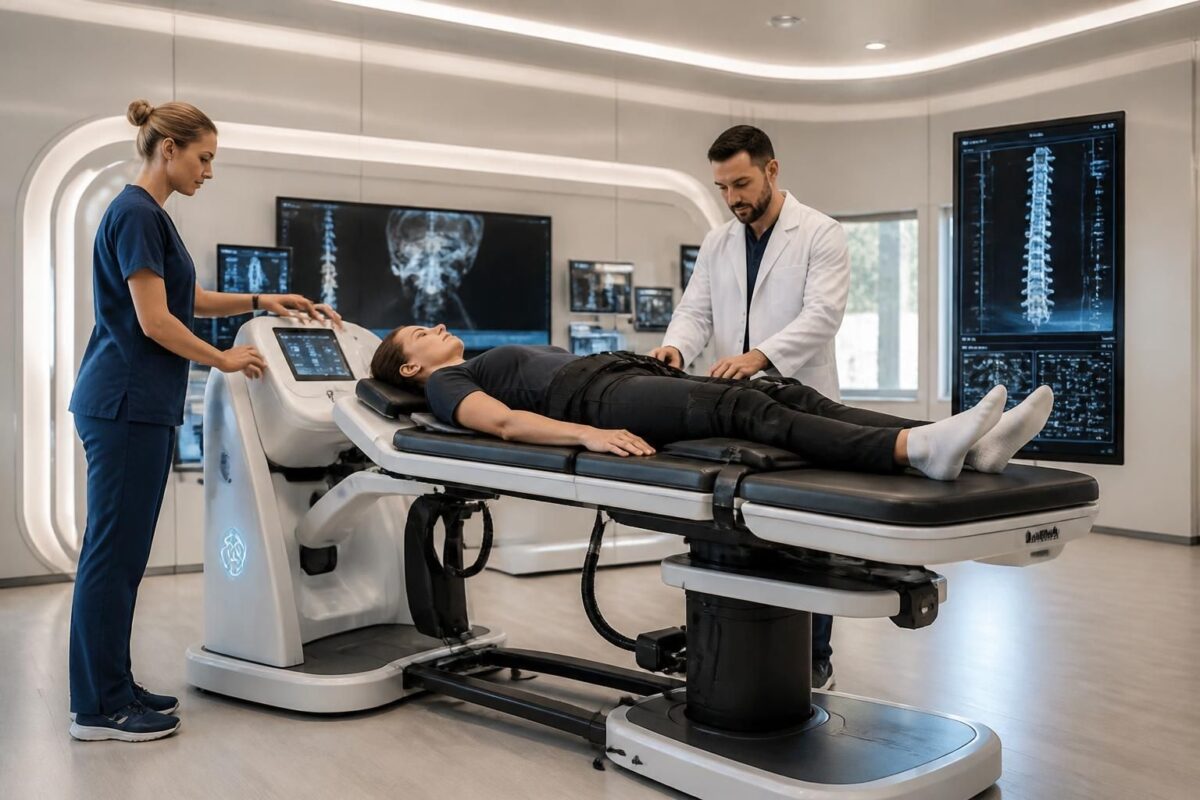
Recent innovations in neurovertebral decompression technologies
In short In short, the neurovertebral decompression is an approach non-invasive Aiming to reduce pressure on discs and nerves, and promote tissue regeneration. At Montreal, it is positioned as an effective option for lower back pain and herniated discs. The…
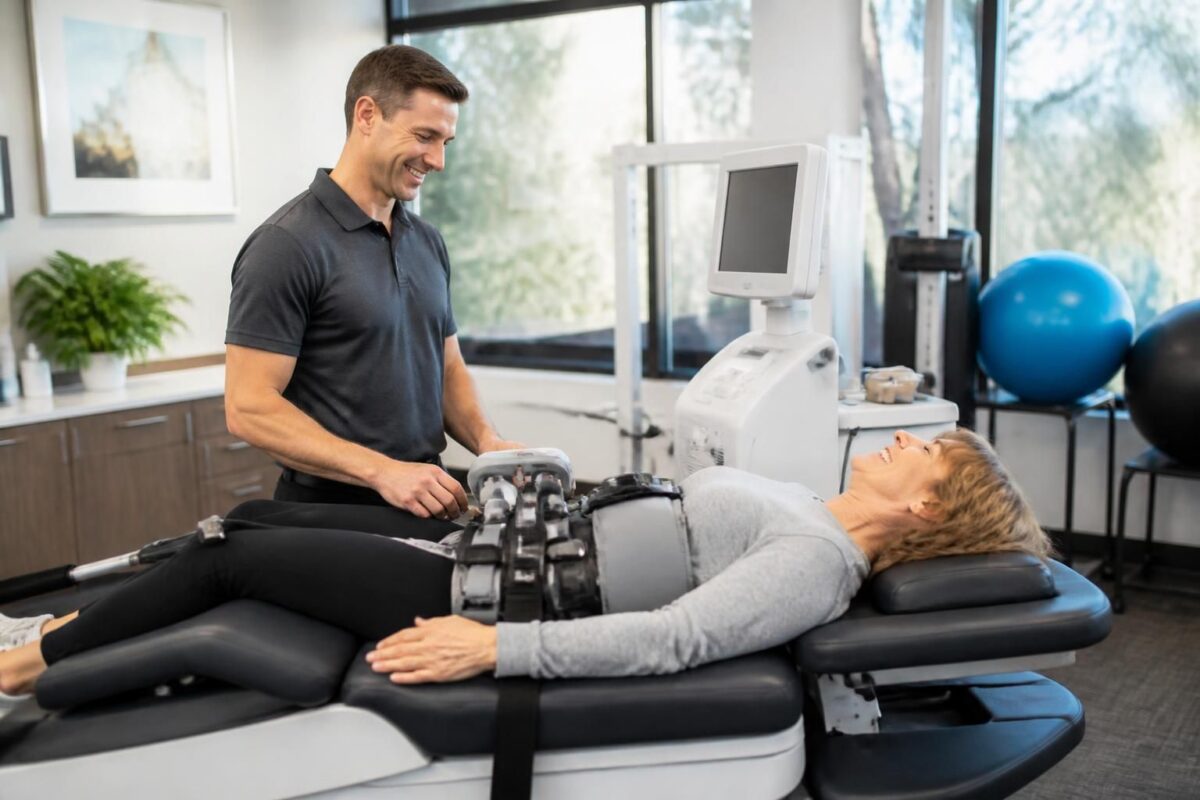
Neurovertebral decompression and diffuse pain: an appropriate solution
In short In short, the neurovertebral decompression is one Non-invasive solution For diffuse pain related to nerve irritation of the spine. She acts in Reducing pressure on intervertebral discs and nerves and improving the bloodstream, which promotes recovery and the…

Dr Sylvain Desforges
Dr Sylvain Desforges, B.Sc., D.O., N.D., osteopath, is the founding president of TAGMED and of the ACMA association. He dedicates his practice to chronic spinal pain, low back pain and symptoms compatible with sciatica, particularly when pain radiates toward the buttock, leg, calf, foot or toes.
Through SOS Sciatique, he publishes educational content on sciatica symptoms, possible causes such as disc herniation, disc narrowing, foraminal stenosis or irritation of a lumbar nerve root, as well as non-surgical approaches that may be considered according to the evaluation. At Clinique TAGMED, care may include, depending on the case, motorized neurovertebral decompression, specific osteopathic care or precision percussion.
For an evaluation related to sciatica treatment in Montreal / Mount Royal or sciatica treatment in Terrebonne, please consult the services available at Clinique TAGMED.
Medical disclaimer
The information published on SOS Sciatique is provided for educational purposes only and does not replace a consultation, diagnosis, opinion or treatment provided by a physician or another authorized healthcare professional. The author of this article is neither a medical doctor nor a specialist in a medical specialty recognized by the Collège des médecins du Québec. The osteopathic, manual medicine or functional support approaches described on this site do not constitute medical acts and are not intended to replace medical follow-up.
Consult a physician or emergency service in cases of loss of bladder or bowel control, anesthesia in the saddle area, significant or progressive weakness in the leg or foot, fever, recent trauma, severe pain or rapid worsening of symptoms. For more details, please read our Legal Notice.