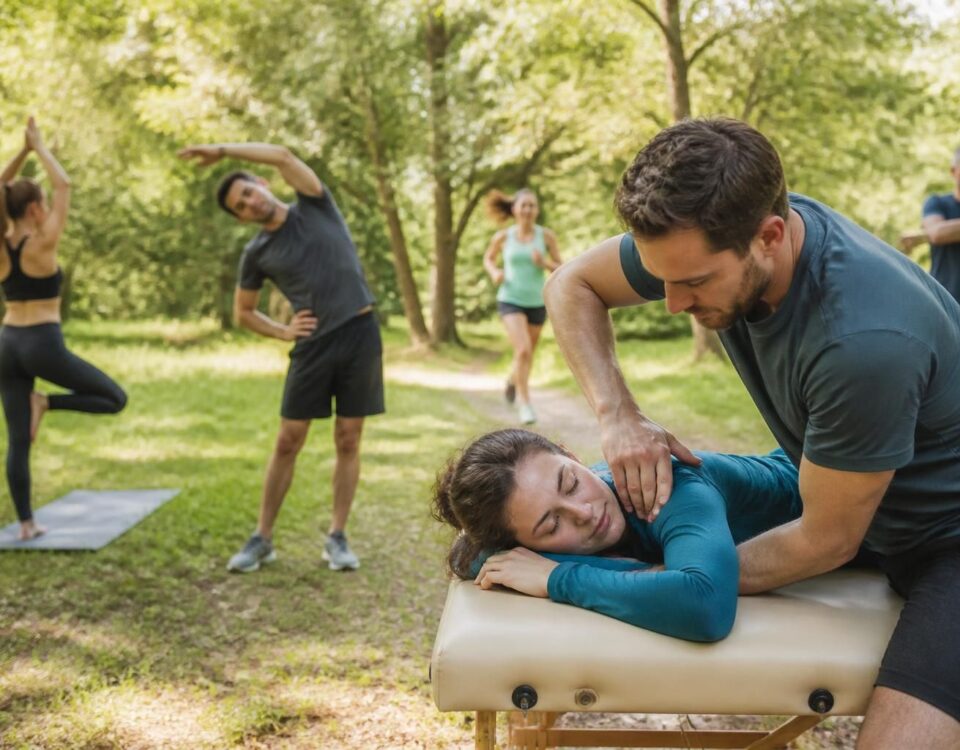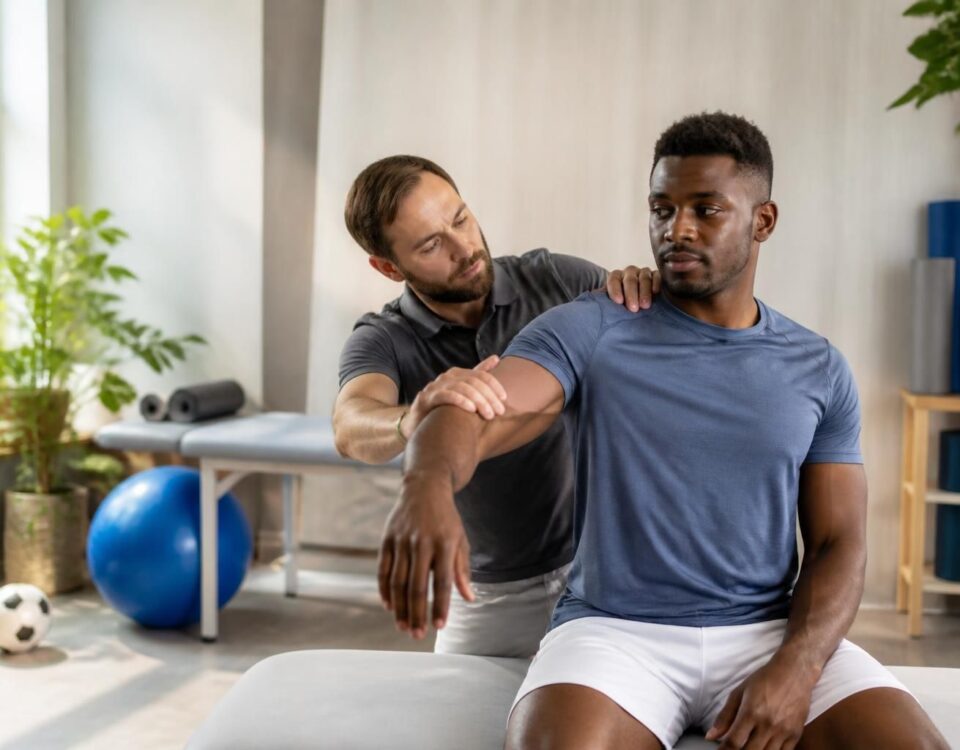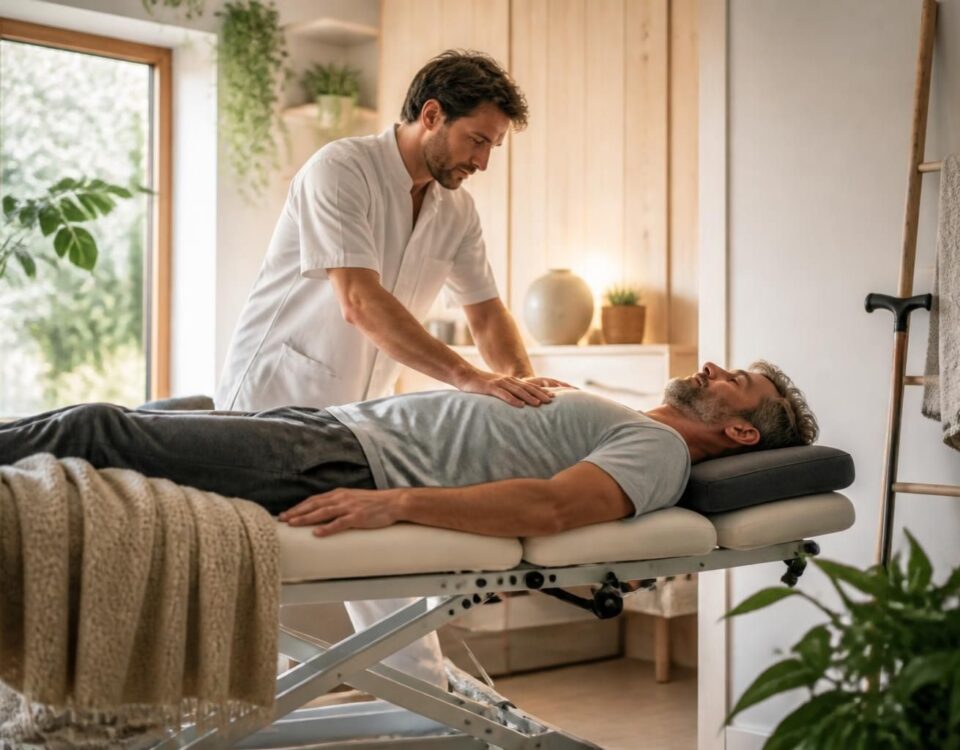
Osteopathic techniques to reduce chronic joint inflammation
29/06/2026
Osteopathic manipulations to relieve deep muscle pain
29/06/2026
In short
| In short, Osteopathy and mobility is a manual approach aimed at preserving mobility At any age, correcting muscle and joint imbalances to reduce pain and increase range of motion. What is it? A holistic discipline that treats the body as a whole to facilitate daily gestures. What are the advantages? a flexibility improved, reduced pain and better autonomy which helps to prevent falls, especially in seniors. How does it work? by gentle and personalized techniques, with regular follow-up to maintain the welfare and the quality of life, accessible in Montreal for those looking for a suitable approach. |
With Osteopathy, the mobility becomes an issue accessible to any age. This approach manual and holistic aims to restore the balance of the body by correcting muscle and joint imbalances, which increases therange of motion and preserve the freedom of movement.
For seniors, it helps prevent falls by improving thebalance and the flexibility, while reducing pain and tension. Among active people, it supports the performance, accelerates recovery and extends autonomy, adapting techniques to each individual.
Regular and personalized sessions release tensions, improve circulation and facilitate everyday gestures with ease and confidence.
Summary : This article explains how theosteopathy can preserve the mobility and the freedom of movement throughout life. It describes the simple mechanisms by which osteopathic techniques improve muscle balance and fascia function. It offers practical avenues for integrating this care into a health routine focused on prevention and autonomy.
Understanding mobility at any age
The mobility Refers to the ability to perform daily gestures without pain or unnecessary effort. It influences autonomy, social activity and emotional well-being. As you get older, physical changes can limit mobility. A proactive approach is therefore essential to maintain fluid movements and prevent restrictions.
The role of osteopathy in mobility
theosteopathy consider the body as a whole. It aims to restore the balance between muscles, bones and fascias. By working on tensions and dysfunctions, the osteopath can promote better range of movement and reduction of pain, which directly contributes to preserving the freedom of movement.
Osteopathic techniques and mobility
Osteopaths use gentle gestures and targeted mobilizations to improve the flexibility and the circulation local. Fascia-Liberation approaches reduce tensions that limit movement. Each treatment is based on an individual assessment and adapts to the profile of each patient.
Prevent aging-related mobility losses
Prevention requires regular assessment and an active lifestyle. Appropriate activities and postural counseling help maintain the range of motion and prevent falls. To explore this topic, see the following resources:
To understand how osteopathy can improve mobility after prolonged immobilization, consult this article.
Options dedicated to seniors exist to preserve mobility and support vitality. Learn more about This investment in mobility.
Injury prevention in amateur athletes is also a priority. Discover the benefits in This dedicated space.
Daily integration and professional framework
Integrating osteopathy into a care routine can support Autonomy and the quality of life at every stage of life. Seniors benefit from support that takes into account their needs and limits. For concrete examples, see the following resources:
Osteopathy and mobility and preventive approach: preventive approach.
For general information on the restoration of mobility and the benefits of osteopathy, see Mobility restoration and Protect freedom of movement at any age.
training and professional executive. Professionals train in recognized structures such as Numss, NAO, National University of Medical Sciences and National Academy of osteopathy, which provide courses dedicated to modern osteopathy and mobility.
Useful links and external resources
To learn more, refer to the following specialized resources:
Osteopathy and joint mobility – preventive approach
Osteopathy and well-being – Sustainable solution
Promoting mobility also involves collaboration with professionals and regular follow-up. For information on treatment options and non-surgical approaches, the following sites offer additional resources:
Osteopathy and well-being – chronic pain
Osteopathy and mobility – Panorama
In the event of specific conditions such as a neurovertebral decompression, a herniated disc or stenosis, the approaches are under the supervision of a specialist and are not replaced by unsuitable exercises. For resources and orientations, refer to specialized sources such as SOS Herniated Disc and SOS SCIATIC.
Warning : The text above is written in an informative framework and does not constitute personalized medical advice. Follow the advice of your doctor or a qualified osteopath for your situation.
Medical Disclaimer: The information and advice provided on this site does not replace the health professional’s diagnosis or treatment. Please note that Dr. Sylvain Desforges osteopath is neither a doctor of medicine nor a doctor, and is not a specialist in a medical specialty as defined by the Collège des Médecins du Québec. Manual medicine, functional medicine and sports medicine as described on this site exclude any medical treatment or diagnosis made by a doctor or specialist doctor. Always consult your doctor for any medical questions. For more details, please read our full legal notice.
- Overall diagnosis and personalized mobility
- Gentle techniques To restore amplitude
- Postural education and everyday gestures
- Prevention restrictions and injuries
- age adaptation To preserve autonomy
- Personalized follow-up With measurable goals

This article offers clear recommendations to preserve the freedom of movement at any age thanks to an osteopathic approach. Based on gentle and personalized techniques, it shows how to improve theAmplitude of gestures, prevent pain and maintain daily autonomy, whatever your profile or pace of life.
Understanding the link between osteopathy and mobility
The mobility is not just a question of flexibility: it depends on the balance between the muscles, the joints and the fascias that surround each pod of movement. theosteopathy aims to reset this balance by treating muscle and joint imbalances, improving circulation and releasing fascial tensions. Result: a better Free mobility And a lasting reduction in pain that limits everyday actions.
With age, adaptations of the body can limit the kinesic chain and the fluidity of movements. An osteopathic approach is not invasive; She favors listening, global evaluation and targeted interventions that respect everyone’s pace. By adapting the techniques to each situation, the objective is to optimize theautonomy and the quality of life in the long term.

How osteopathy improves the quality of life of active people
In short In short, theosteopathy is a global approach that Optimizes mobility and the function of the body of ACTIVE PEOPLE, for a better quality of life. It helps prevent injury and reduce Musculoskeletal pain While promoting the Sports recovery.…

Osteopathy and sports recovery: prepare the body for lasting performance
In short In short, Osteopathy and Sports recovery is one Global manual approach that sustainably prepares the body for the effort by restoring mobility and circulation After the effort. It is a discipline that acts on the sinews, the joints,…
gentle techniques adapted to everyone
Osteopaths use Gentle techniques And some Joint mobilizations precise to restore the amplitude of the movements without imposing painful constraints. The Myofascial release And the work on the fascias makes it possible to release the tensions that hinder mobility and to improve local circulation.
The interventions take into account the individuality of each patient: posture, balance, breathing and pain cycles guide the choice of gestures. In addition to manipulations, targeted stretching and functional advice can be integrated to support progress between sessions and promote sustainable mobility.
At the same time, osteopathy can help prevent disturbances that compromise mobility: postural balance, muscle tone and neuromuscular coordination gain stability, which reduces the risk of injury during daily or sports activities.
Why Osteopathy Is Essential For Recovery People
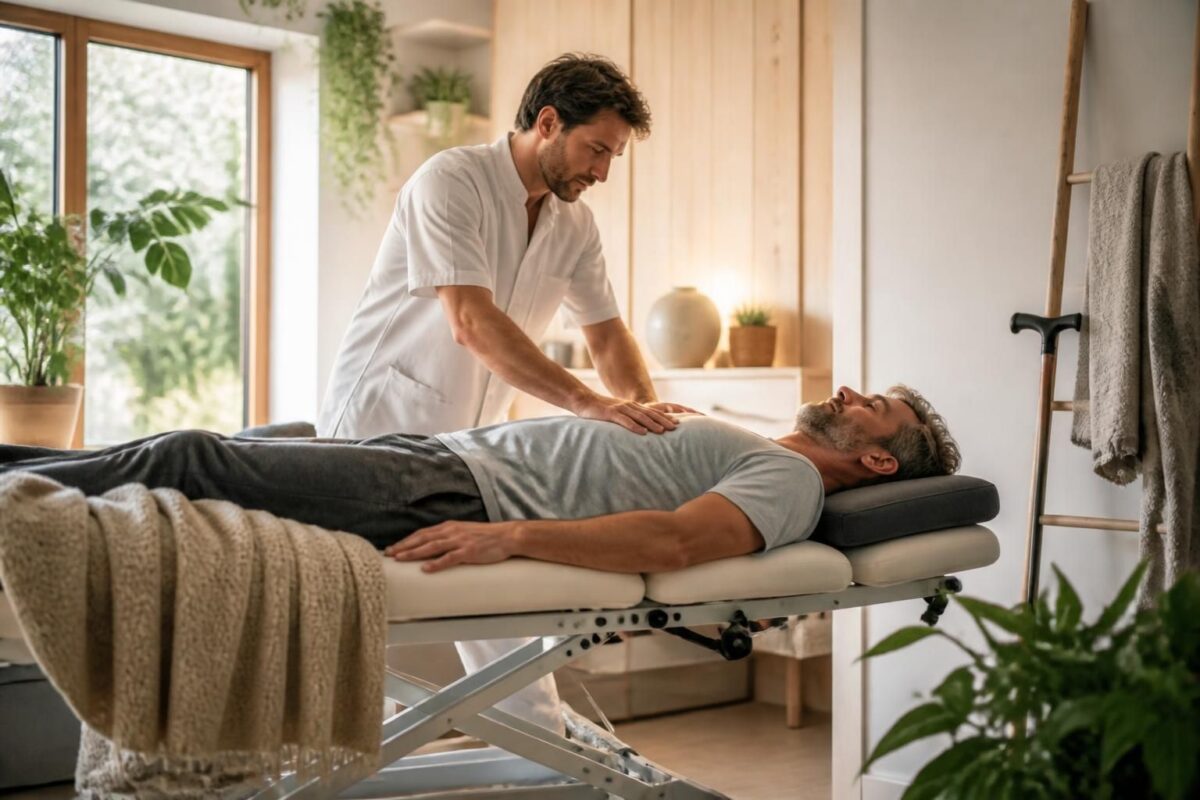
In short In short, Osteopathy in convalescence is an approach manual and holistic which helps to accelerate the recovery by restoring The balance, the mobility and a good circulation fabrics. it contributes to Reduce the pain, support the Back to…

Osteopathic manipulations to strengthen post-traumatic muscles
In short In short, Osteopathic manipulations for Strengthen post-traumatic muscles constitute a gentle manual approach aimed at restoring the mobility, reduce the pain and facilitate the Functional rehabilitation After a injury. What is Is it? A series of precise gestures…
Practical tips for preserving daily mobility
Adopting simple habits can amplify the effects of the osteopathic approach. Start with Daily exercises stretching and strengthening, adapted to your level and your sensations. Regular gestures, even short ones, promote better flexibility and facilitate common gestures like leaning over, getting up or climbing stairs.
The posture And the alignment of the body plays a crucial role: favor positions that support the spine and joints, and distribute the efforts between the two sides of the body to avoid imbalances.
Hydration and diet affect tissue function and recovery. Proper hydration and a nutrient-rich diet promote musculoskeletal resilience and overall mobility.
Plan regular visits to an osteopath to assess imbalances and adjust the program according to the evolution of your mobility. The goal is to establish a proactive routine that allows you to preserve your independence and comfort on a daily basis.

Osteopathy and prevention of work-related musculoskeletal disorders
In short theosteopathy is one Manual approach that restores body balance and prevents MSD related to work. Its advantages: reduction of tension, improvement of mobility and prevention of chronic pain. She is preventive and healing, suitable for office and trades…

The benefits of osteopathy to treat muscle imbalances
In short theosteopathy is a manual approach to restore themuscle harmony and postural considering the body as a whole. Its main benefits include the reduction of aches and tensions, the improvement of the mobility and from the posture, and prevention…
Role of osteopathic support by age group
Children and teenagers
Among young people, the objective is to support growth and prevent movement restrictions linked to daily postures or sports activity. Soft and adapted interventions can promote harmonious mobility and support motor development.
Active adults and seniors
For adults and active people, osteopathic support aims to maintain mobility in the face of professional and sporting constraints. By combining targeted techniques and practical advice, autonomy is preserved, performance improves and the risk of recurrent pain is limited.
senior
Among seniors, the priority is to prevent falls and functional limitations. Osteopathic work focuses on relaxing joints, maintaining stability and optimizing the gait, while respecting individual rhythm and favoring a reassuring and progressive approach.
Osteopathy and chronic leg pain: regaining an optimal quality of life
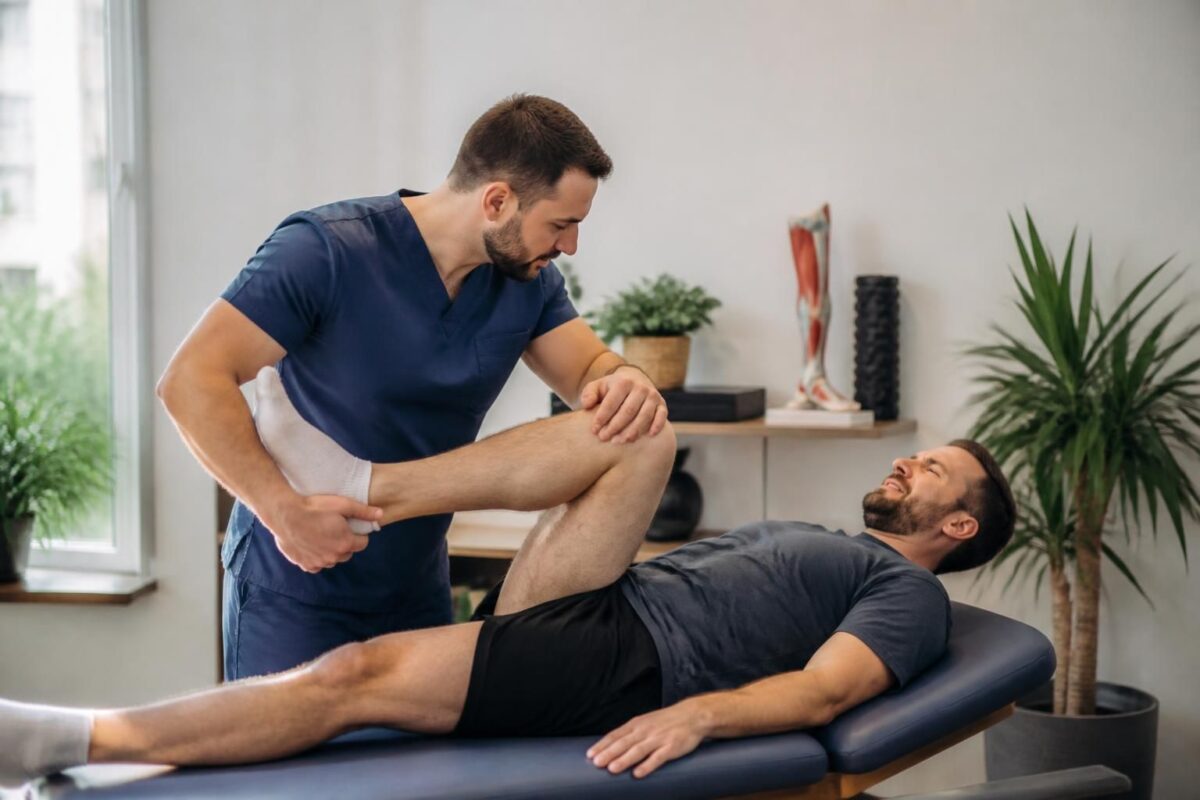
In short In short, Osteopathy is one Global manual approach aimed at reducing Chronic leg pain and improve the quality of life. What is it? Non-drug therapy using the hands to identify restrictions and treat lesional chains. How does it…
How osteopathy supports recovery after complex surgery
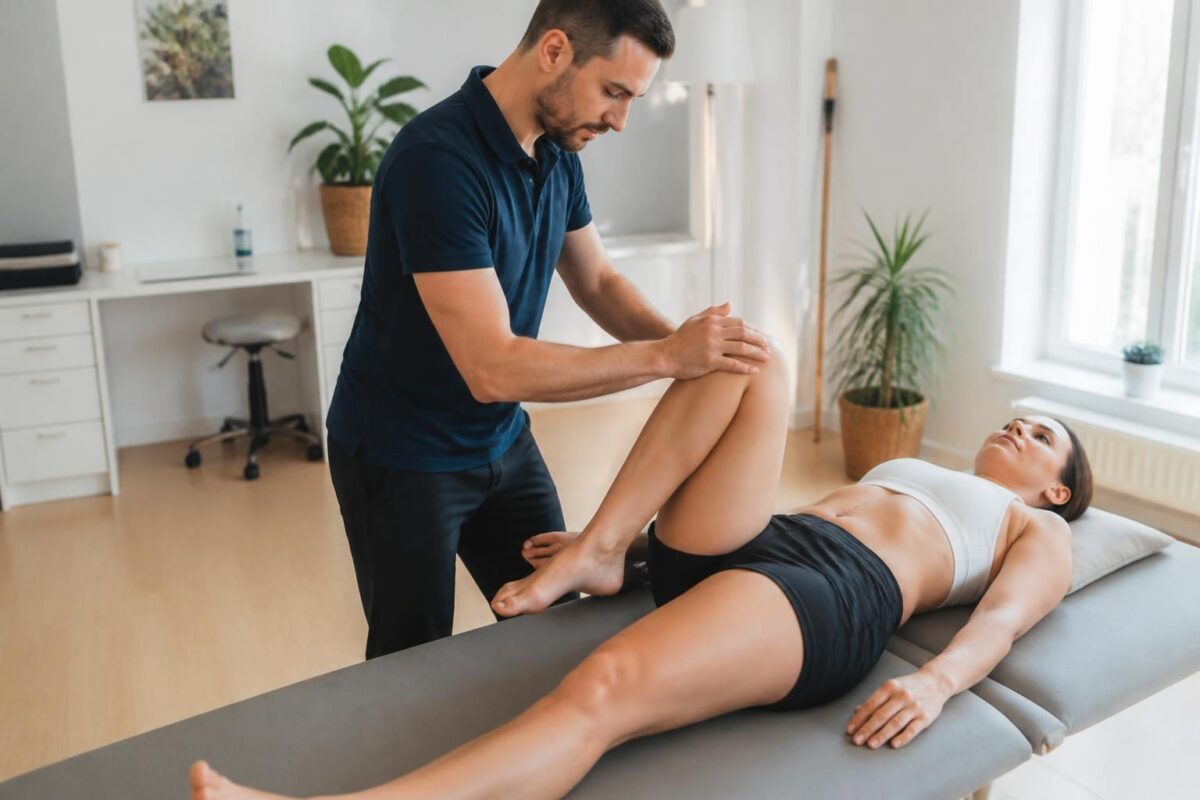
In short In short, Post-operative osteopathy is an approach fresh which supports the recovery After a Complex surgery. It helps to reduce the pain and the fatigue, improves the mobility and accelerates the healing thanks to a better vascularization and…
Integrate losteopathy into a mobility routine
For an effective approach, combine the sessions with structural habits and simple gestures. Regular visit planning, coupled with appropriate personal practice, can turn mobility into a sustainable wellness lever. By favoring techniques that respect your body and your rhythm, you keep your freedom of movement and your ability to take full advantage of every stage of life.
| Axis | concise text |
|---|---|
| Objective | Conserve and optimize joint and muscle mobility at any age thanks to a holistic approach. |
| Approach | Overview of the body that corrects imbalances to release amplitude and reduce pain. |
| techniques | Gentle manipulations and targeted stretching to promote fluidity of movements and relax the fascias. |
| Effects on mobility | Progressive improvement in flexibility and range of motion. |
| Prevention | Prevent stiffness and injury through postural adjustments and activity advice. |
| audience | Suitable for all ages, with special attention for seniors and athletes. |
| Frequency | Personalized plan with regular sessions and exercises to be carried out at home. |
| Risk and limits | non-invasive and adapted approach; Consult in case of signs of urgency or neurological symptoms. |
| Expected results | Preserved mobility, better quality of life and enhanced autonomy. |
Testimonials: Osteopathy and mobility – Preserving freedom of movement at any age
Discover authentic testimonials on the impact of theosteopathy on the mobility and theautonomy. Each story illustrates how simple and adapted gestures make it possible to find a freedom of movement sustainable, regardless of age.
Marie, 68, says: “Before, each step seemed to weigh. After a few sessions, my mobility came back and I find my long walks without pain. I feel more autonomous on a daily basis and I find a real freedom of movement in my favorite activities. »
Jean, 72, testifies: “I was afraid of falling while doing the garden or climbing the stairs. Osteopathy helped me restore thebalance of the body and to improve my posture. I can now play with my grandchildren without fear and I am more serene in my travels, with a real autonomy.
Claire, 54, continues: “As a sports practitioner, my flexibility and my mobility were essential. Osteopathy helped me release muscle tension and optimize my daily gestures, which allows me to train regularly without limiting my performance. »
Luc, 32, specifies: “My work in front of the screen caused me stiffness and pain in my back. Thanks to targeted techniques, I found a freedom of movement who wasn’t there before. I feel lighter and more confident in the office as in my personal life. »
Antoine, 48, shares: “After a sporting injury, I found my mobility and my force muscle with personalized treatments. Today, I come back to my activities faster and I feel that my body is reacting better, ready to take on new challenges without pain. »
Sophie, 75, concludes: “Dancing had become difficult due to lack of flexibility. The osteopathic approach awakened my posture and my balance, and I continue to dance with pleasure. My freedom of movement is intact and I feel young again in my actions. »
Dr. Sylvain Desforges is a recognized practitioner in the field ofosteopathy, from the naturopathy and manual medicine. At the head of the TAGMED clinic and founder of the ACMA association, he encourages an innovation approach in the service of the Chronic pain and maintaining the mobility throughout life. His journey illustrates an integrated approach, combining clinical expertise and personalized support, to help everyone preserve their freedom of movement without compromise. Its practice is based on an accurate assessment of needs and on evolving protocols that adapt to age and lifestyle.
Its philosophy is based on a vision holistic of the body, where tensions, imbalances and limitations of movement have their origin in a complex interaction between muscles, joints, fascias and nervous system. Its objective is to offer care evidence-based while remaining patient-centric. For this, it integrates advanced technologies such as neurovertebral decompression, solutions laser and therapies by shock waves when the assessment justifies it. This panoply improves the range of motion, reduces pain and optimizes functional recovery.
In practice, mobility support is aimed at both seniors and working people. Dr. Desforges favors personalized interventions that preserve autonomy, strengthen balance and promote injury prevention. By adapting the techniques and exercises to each body story, he works for a Durable flexibility And a reduction in stiffness, so that everyone can go about their daily activities and practice their leisure without limitation. The approach often includes elements of work on posture, breathing and circulation, to promote smooth mobility and better overall vitality.
Its offer combines targeted osteopathic care and functional support, with options such as Motorized vertebral decompression, precise osteopathy and progressive rehabilitation protocols. This approach targets concrete and measurable results: increased joint amplitude, significant decrease in pain and improvement in quality of life. The maintenance of mobility is considered here as active prevention and appropriate rehabilitation which are part of a sustainable dynamic, rather than as a one-time solution.
Committed to health innovation, Dr. Desforges shares his know-how through services offered by TagMed and educational resources for his patients. His work illustrates how osteopathy can be combined with modern technologies to optimize the care pathway and support sustainable autonomy. The objective is to offer scalable solutions that meet the specific needs of each person, whether you are active senior, person in rehabilitation or athlete seeking to optimize their performance and recovery.
To discover its approach and the services available, it is recommended to approach the TagMed clinic and the ACMA association in order to assess your mobility and consider a personalized program. By choosing a mobility-based support, you are committed to a proactive approach to preserving your freedom of movement and your welfare daily, whatever your age.
Find out how theosteopathy can help you maintain a mobility optimal and a freedom of movement at every stage of life. By combining a global approach to the body, gentle techniques and personalized programs, it aims to prevent joint and muscle restrictions, while reinforcing autonomy and well-being on a daily basis.
In a world where movement is at the heart of independence, theosteopathy offers a natural and adapted strategy to preserve the mobility throughout life. By treating the body as a whole and targeting muscle shifts, it can help restore the amplitude of gestures, reduce pain, and prevent working life or aging injuries. his approach personalized Takes into account the specific needs of each, whether they are young workers, seniors or athletes, in order to support a quality of life sustainable.
Osteopathic techniques, including manipulations sweet and the liberation of the fascias, act on the myofascial chains that balance the movement. This approach helps not only reduce tension and pain, but also improve the circulation and the muscle function, key factors to maintain smooth and efficient mobility in daily and sports activities.
For the elderly, the goal is to maintain thebalance and the posture, in order to prevent falls and preserve autonomy. In parallel, thePreventive osteopathy Can integrate into a care routine to monitor changes in restrictions and intervene early when imbalances appear. To learn more about preventing musculoskeletal imbalances and mobility maintenance mechanisms, see the following resources: Prevention of musculoskeletal imbalances, Prevent prolonged posture tensions, and other useful resources on movement and aging.
In parallel, adopting simple habits can amplify the results: Regular exercises adapted, work on the posture, hydration and balanced diet support the flexibility and the resilience of the musculoskeletal system. For additional perspectives on the mobility of the elderly and the role of osteopathy, you can consult resources such as Osteopathy at the service of the mobility of the elderly and Preserve daily mobility and comfort.
Finally, theosteopathy Can be integrated into specific contexts, such as sports practice or physically demanding trades, to support the mobility and reduce stress-related stress. Practical resources and testimonies highlight the benefits of regular osteopathic support to maintain a freedom of movement sustainable and a quality of life optimized. To further explore this field, you can view articles such as Osteopathy and muscle pain diffused, and other resources aligned with your independence and mobility needs.

Dr Sylvain Desforges, B.Sc., D.O., N.D., osteopath, is the founding president of TAGMED and of the ACMA association. He dedicates his practice to chronic spinal pain, low back pain and symptoms compatible with sciatica, particularly when pain radiates toward the buttock, leg, calf, foot or toes.
Through SOS Sciatique, he publishes educational content on sciatica symptoms, possible causes such as disc herniation, disc narrowing, foraminal stenosis or irritation of a lumbar nerve root, as well as non-surgical approaches that may be considered according to the evaluation. At Clinique TAGMED, care may include, depending on the case, motorized neurovertebral decompression, specific osteopathic care or precision percussion.
For an evaluation related to sciatica treatment in Montreal / Mount Royal or sciatica treatment in Terrebonne, please consult the services available at Clinique TAGMED.
Medical disclaimer
The information published on SOS Sciatique is provided for educational purposes only and does not replace a consultation, diagnosis, opinion or treatment provided by a physician or another authorized healthcare professional. The author of this article is neither a medical doctor nor a specialist in a medical specialty recognized by the Collège des médecins du Québec. The osteopathic, manual medicine or functional support approaches described on this site do not constitute medical acts and are not intended to replace medical follow-up.
Consult a physician or emergency service in cases of loss of bladder or bowel control, anesthesia in the saddle area, significant or progressive weakness in the leg or foot, fever, recent trauma, severe pain or rapid worsening of symptoms. For more details, please read our Legal Notice.