Osteopathy and general well-being: a global approach
27/06/2026
Osteopathy and cervical pain: a natural solution
27/06/2026
In short In short, theosteopathy is one Global approach which supports the rehabilitation After a accident by treating the body as a whole. Its soft manual techniques improve mobility, reduce the pain and promote faster functional recovery, while acting on circulation and inflammation. It complements other care such as physiotherapy and can help prevent Chronic pain and the Post-traumatic stress. In Montreal, this service is particularly suitable to accompany rehabilitation after a accident and support overall well-being. |
After a accident, theosteopathy offers a rehabilitation Soft and personalized that considers the body as a whole. thanks to Soft manual techniques And some Targeted mobilizations, it releases tensions, reactivates the mobility and helps the muscle and fascial chains to regain their coherence. The work aims to improve the circulation blood and lymphatic, to reduce theinflammation and the pain, and to prevent long-term sequelae. In addition to a rehabilitation program, it supports functional recovery, accelerates recovery and promotes welfare general and the resumption of daily and sporting activities.
After an accident, the path to rehabilitation can be long. theosteopathy Proposes a clear and global approach to support recovery. This practice aims to restore mobility, reduce pain and restore the balance of the body as a whole. It integrates with a re-education functional and can improve overall well-being during convalescence.
A global and personalized approach
The practitioner considers the body as an interconnected system. He evaluates the mobility fabrics and posture. He is looking for dysfunctions that slow down recovery. This approach makes it possible to target the areas that influence the entire movement and the balance of the body.
The role of the fascial system
The fascial system Wraps muscles and organs. It transmits voltages and can keep shocks in memory. Osteopathy acts on fascial restrictions through gentle mobilizations. This improves freedom of movement and decreases pain.
Pain management and inflammation
Osteopathic techniques promote circulation and reduce tension. They support tissue repair and can decrease inflammation. Quick support can prevent chronic pain and promote a more harmonious recovery.
Emotional support and stress
Trauma can generate stress and worry. Osteopathy acts on the nervous system to promote rest and relaxation. The patient can find a feeling of security and better sleep more quickly.
Integration into rehabilitation
Follow-up with other professionals makes it possible to adjust the rehabilitation plan. Osteopathy brings a global perspective that complements functional rehabilitation. This collaboration aims to optimize mobility and postural balance in the long term.
Training and Affiliation
Osteopaths are trained in recognized establishments such as NUMSS and nao. some professionals belong to acma, at College of Canadian Osteopaths or to College of Canadian Osteopaths.
Resources and links
To learn more, here are some appropriate and relevant resources:
- Why osteopathy is essential in a preventive approach
- How osteopathy supports recovery after an accident
- How Osteopathy Helps Enhance Mobility After Surgery
- How osteopathy helps treat neuropathic pain
- Why osteopathy is an effective alternative to drugs
- Tagmed Clinic
- SOS SCIATIC SITE
Additional resources can be envisaged with training and professional networking establishments such as NUMSS, NAO, ACMA or the College of Canadian Osteopaths, in order to ensure a compliant and evolving practice.
Medical Disclaimer: The information and advice provided on this site does not replace the health professional’s diagnosis or treatment. Please note that Dr. Sylvain Desforges osteopath is neither a doctor of medicine nor a doctor, and is not a specialist in a medical specialty as defined by the Collège des Médecins du Québec. Manual medicine, functional medicine and sports medicine as described on this site exclude any medical treatment or diagnosis made by a doctor or specialist doctor. Always consult your doctor for any medical questions. For more details, please read our full legal notice.
Areas of intervention in post-accident rehabilitation
- Mobility and alignment – Restore joint amplitude and posture
- pain reduction – gentle handling and muscle relaxation
- Inflammation management – Improved circulation and tissue repair
- fascial system – Release of restrictions and tissue mobility
- Balance and neuromuscular coordination – Prevent post-traumatic compensation
- Emotional support – Stress and wellness management
- Functional rehabilitation – Synergy with physiotherapy and other care
- Custom planning – Adapted objectives and follow-up

This article explains how theosteopathy Supports rehabilitation after an accident. By acting on the body as a whole, it facilitates healing, reduces pain and prepares a lasting return to activity. Its personalized approach combines assessment, fascial work, inflammation management and emotional support, while integrating into a coordinated rehabilitation program.
A global approach to rehabilitation
After an accident, rehabilitation is not limited to the affected area. theosteopathy offers a Global approach which takes into account the interactions between muscles, joints, fascia and nervous systems. By observing the mobility of tissues, posture and movement chains, the practitioner identifies compensations and somatic dysfunctions that hinder recovery and can promote repeated pain if left untreated.
Evaluation and personalized plan
During the consultation, tissue mobility, fascia elasticity and postural balance are assessed. This approach makes it possible to determine the areas to be released and to design a Custom Plan which respects the pace of healing and the patient’s objectives. Each intervention is adapted to evolution and aims to restore global mobility rather than treating isolation.

How osteopathy improves the quality of life of active people
In short In short, theosteopathy is a global approach that Optimizes mobility and the function of the body of ACTIVE PEOPLE, for a better quality of life. It helps prevent injury and reduce Musculoskeletal pain While promoting the Sports recovery.…

Osteopathy and sports recovery: prepare the body for lasting performance
In short In short, Osteopathy and Sports recovery is one Global manual approach that sustainably prepares the body for the effort by restoring mobility and circulation After the effort. It is a discipline that acts on the sinews, the joints,…
The role of the fascial system in rehabilitation
The fascial system connects the different elements of the body. After an accident, fascial restrictions can limit freedom of movement and maintain painful tensions. Osteopathy uses gentle mobilizations to free these constraints, improve circulation and promote neuromuscular coordination.
Liberation and gentle mobilization
Through targeted techniques, the practitioner helps to restore the elasticity of the fascias, which facilitates subsequent rehabilitation exercises and reduces the pain associated with healing and stiffness.
Why Osteopathy Is Essential For Recovery People
In short In short, Osteopathy in convalescence is an approach manual and holistic which helps to accelerate the recovery by restoring The balance, the mobility and a good circulation fabrics. it contributes to Reduce the pain, support the Back to…

Osteopathic manipulations to strengthen post-traumatic muscles
In short In short, Osteopathic manipulations for Strengthen post-traumatic muscles constitute a gentle manual approach aimed at restoring the mobility, reduce the pain and facilitate the Functional rehabilitation After a injury. What is Is it? A series of precise gestures…
Pain and inflammation management
Gentle manipulations and stimulation of blood and lymph circulation contribute to reducing tension and reducing inflammatory mediators. This approach can accelerate functional recovery and limit the excessive use of drugs in the post-accident period.

Osteopathy and prevention of work-related musculoskeletal disorders
In short theosteopathy is one Manual approach that restores body balance and prevents MSD related to work. Its advantages: reduction of tension, improvement of mobility and prevention of chronic pain. She is preventive and healing, suitable for office and trades…

The benefits of osteopathy to treat muscle imbalances
In short theosteopathy is a manual approach to restore themuscle harmony and postural considering the body as a whole. Its main benefits include the reduction of aches and tensions, the improvement of the mobility and from the posture, and prevention…
Emotional support and stress
The experience of an accident can lead to stress and sleep disorders. Osteopathy sessions promote nervous relaxation, improve sleep and strengthen the feeling of security, which supports the entire rehabilitation process.
Osteopathy and chronic leg pain: regaining an optimal quality of life
In short In short, Osteopathy is one Global manual approach aimed at reducing Chronic leg pain and improve the quality of life. What is it? Non-drug therapy using the hands to identify restrictions and treat lesional chains. How does it…
How osteopathy supports recovery after complex surgery
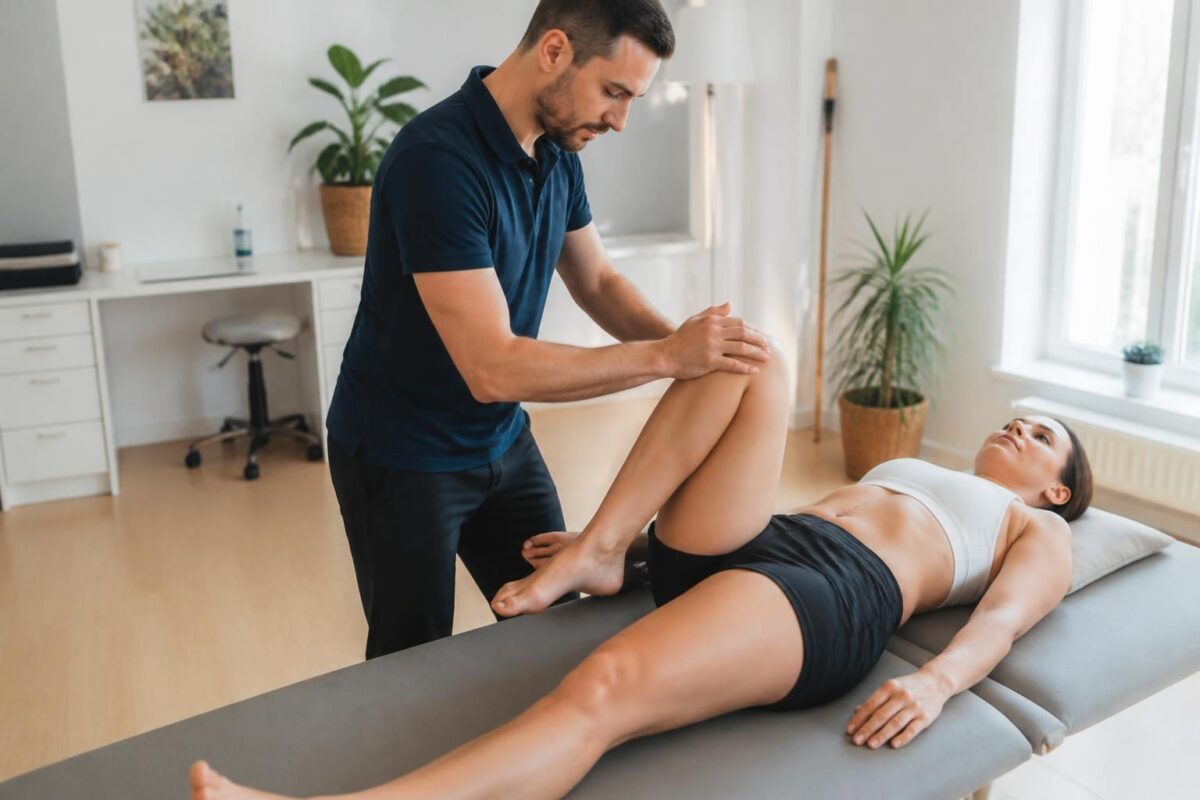
In short In short, Post-operative osteopathy is an approach fresh which supports the recovery After a Complex surgery. It helps to reduce the pain and the fatigue, improves the mobility and accelerates the healing thanks to a better vascularization and…
rehabilitation and gradual return to activities
Rehabilitation is more effective when osteopathy and physiotherapy work in synergy. The osteopath acts on the overall balance and mobility of the tissues, while the physiotherapist focuses his efforts on strengthening and joint amplitude. Together, they adjust the program and protect against harmful compensation.
Synergy with other disciplines
A coordinated follow-up makes it possible to adapt the sessions and integrate specific exercises at each stage of healing, guaranteeing safety and appropriate progression.
Integration into the care pathway
Integrate theosteopathy Early in the post-accident journey can promote faster recovery and better quality of life, in addition to medical treatments and specialized therapies, while promoting a lasting recovery in daily and professional activities.
| Aspect | Impact |
|---|---|
| detection of Somatic dysfunction | Identifies non-visible imbalances that hinder healing and adjust the treatment plan. |
| Work on the fascial system | Releases fascial restrictions to restore mobility and comfort. |
| Improvement of the mobility articular | Restores mobility and facilitates rehabilitation exercises. |
| Management of the pain and from theinflammation | Reduces pain and improves circulation to accelerate healing. |
| Support emotional and management of stress | Soothes the nervous system and promotes sleep and recovery. |
| Accompaniment of the re-education functional | Supports global rehabilitation by aligning movements and posture. |
| prevention of recurrences And some offsets | Prevents compensation and relapses thanks to postural balance. |
| coordination with Other professionals | Coordinates follow-up with care partners for consistent care. |
| Improvement of the quality of life | Reduces fatigue and pain, improves energy and well-being. |
Testimonials: how osteopathy supports rehabilitation after an accident
“After a accident, I discovered that the pain was not limited to the injured area. thanks to theosteopathy, the global approach has made it possible to release tensions throughout the body and to gradually restore my mobility. The work on the fascial system was decisive in reducing pain and avoiding painful compensation. »
“Shaping the weeks after a fall could seem long and frustrating. The support was personalized and fresh, with sessions that targeted not only pain but also stress andemotional balance. This approach allowed me to sleep better, to feel more serene and to resume my daily activities more quickly. »
“I am athletic and my accident disrupted my recovery. theosteopathy Completed my rehabilitation by rebalancing the muscle chains and releasing fascial restrictions. In a few weeks, my mobility came back and I was able to resume training by reducing the risk of recurring injury. »
“After an injury at work, I feared a long recovery. The work between osteopathy and physiotherapy brought a global perspective and better coordination of movements. The Post-accident rehabilitation was accelerated and the quality of life improved faster than expected. »
“What particularly convinced me was the importance of work on the fascial system and the Chronic pain prevention. With the regular sessions, I found a aligned posture and an resilience who accompany me beyond the active phase of rehabilitation. »
After an accident, rehabilitation may seem long, uncertain and painful. theosteopathy offers an approach overall and personalized which accompanies the healing process in all its dimensions. It is not limited to the injured area but seeks to restore the general balance of the body, to reduce the pain and to reactivate the self-regulation mechanisms. By considering the interrelations between muscles, joints and deep tissues, the osteopath aims to release tensions, correct post-traumatic imbalances and promote a gradual resumption of activities, with particular attention to the signals of limitation and pain.
During the evaluation, the osteopathic approach is systemic. The practitioner examines the mobility tissues, posture and muscle chains, to identify Somatic dysfunctions which can slow down rehabilitation. This approach makes it possible to identify areas that are not very visible during a local examination and to adapt the treatment plan according to the actual capacities of the patient. By working on the whole body, the osteopath restores the balance of forces, improves coordination and prepares the ground for a safe and lasting recovery of daily and sporting movements.
The fascial system occupies a central place in post-accident recovery. These connective tissue networks surround muscles and organs and can memorize shocks, creating restrictions that limit mobility. Through gentle mobilizations, the osteopath releases these adhesions, improves circulation and promotes better distribution of fluids. Result: less pain, more flexibility and a gradual reintroduction of gestures that require less compensatory effort. This fascial approach supports postural stability and long-term functional performance.
The management of pain and inflammation is another key dimension. Targeted manual techniques release tension, stimulate blood and lymph circulation, and encourage the evacuation of metabolic debris. As a result, inflammatory mediators decrease and tissue repair can progress more quickly. Early intervention can prevent chronicization and facilitate increased activities, while reducing drug use where possible and relevant.
Beyond the physical aspect, osteopathy takes into account the emotional state and the nervous system. Trauma can keep the autonomic nervous system on high alert, which interferes with sleep and stress management. Through gentle and reassuring gestures, osteopathy promotes relaxation, improves the circulation of fluids and can contribute to better regulation of post-traumatic stress. A relaxed body and more balanced breathing facilitate the assimilation of rehabilitation exercises and strengthen the patient’s motivation.
Dr Sylvain Desforges, expert in osteopathy, naturopathy and manual medicine, is the founding president of tagmed and theacma. His practice, anchored in innovation and evidence, is based on a careful integration of recent technologies such as vertebral decompression, the laser and the shock waves To support rehabilitation after an accident. Its goal is to provide data-driven care that optimizes the health and well-being of patients, promoting sustainable recovery and quality of life found.
After an accident, osteopathy offers a path of rehabilitation centered on the body as a whole. By focusing on a gentle and personalized approach, it aims to restore mobility, reduce pain and promote sustainable recovery by relying on coordination with other health professionals and strengthening the patient’s functional capacity.
Post-accident osteopathic management is based on a Global approach Who considers that each trauma can impact the whole body. By evaluating tissue mobility, posture and general balance, the practitioner identifies somatic dysfunctions that are often invisible during a classic examination and which hinder recovery. This holistic vision makes it possible to adapt the interventions to the specific needs of each person and to prevent recurrences by durably improving the mobility and alignment of the body.
The role of fascial system is central to rehabilitation. Fascias, connective networks that envelop muscles and organs, can memorize trauma and limit freedom of movement. the techniques of Fascial release and gentle mobilization make it possible to remove these restrictions, to reduce tensions and to improve the circulation of fluids, favoring a more fluid recovery and better coordination of movements.
The Pain and inflammation management benefits greatly from osteopathic work specifying local and systemic mechanisms. By stimulating blood and lymph circulation and releasing muscle tension, osteopathy contributes to the evacuation of metabolic waste and the reduction of inflammatory mediators. This approach can speed up the return to normal activities while reducing potential dependence on drug treatments.
One Emotional support and stress is also valuable after an accident. Trauma can trigger autonomic nervous system activation and disrupt sleep or emotion management. Thanks to targeted manual techniques, osteopathy helps restore a nervous balance, promote relaxation and help the patient to reconnect with feelings of safety, which supports long-term rehabilitation.
In terms of physical rehabilitation, osteopathy fits harmoniously with other disciplines such as physiotherapy. While the latter strengthens the muscles and restores the joint amplitudes, osteopathy acts on the overall balance and coherence of the muscle chains. This rapid synergy allows a safer and more sustainable resumption of activity, while reducing the risk of pathological compensation.
A prevention and coordination solid emerge from a multidisciplinary follow-up. By working with other health professionals, the osteopath adjusts the interventions in the face of the patient’s evolution and ensures that long-term functional repercussions are prevented. This integrated approach promotes more robust recovery and minimizes the limits of the traumatic event.
To deepen these notions and discover additional perspectives on supporting osteopathy for post-traumatic recovery, you can consult specialized resources on How Osteopathy Helps Prevent Chronic Disorders, or explore the links between osteopathy and rehabilitation after surgery and trauma available on Osteopathy and surgical recovery and Postoperative support. Other useful references address the relationship between osteopathy and osteoarthritis, athletic performance and daily well-being, for example Osteopathy and osteoarthritis, Benefits for athletes, or again Post-traumatic support.

Dr Sylvain Desforges, B.Sc., D.O., N.D., osteopath, is the founding president of TAGMED and of the ACMA association. He dedicates his practice to chronic spinal pain, low back pain and symptoms compatible with sciatica, particularly when pain radiates toward the buttock, leg, calf, foot or toes.
Through SOS Sciatique, he publishes educational content on sciatica symptoms, possible causes such as disc herniation, disc narrowing, foraminal stenosis or irritation of a lumbar nerve root, as well as non-surgical approaches that may be considered according to the evaluation. At Clinique TAGMED, care may include, depending on the case, motorized neurovertebral decompression, specific osteopathic care or precision percussion.
For an evaluation related to sciatica treatment in Montreal / Mount Royal or sciatica treatment in Terrebonne, please consult the services available at Clinique TAGMED.
Medical disclaimer
The information published on SOS Sciatique is provided for educational purposes only and does not replace a consultation, diagnosis, opinion or treatment provided by a physician or another authorized healthcare professional. The author of this article is neither a medical doctor nor a specialist in a medical specialty recognized by the Collège des médecins du Québec. The osteopathic, manual medicine or functional support approaches described on this site do not constitute medical acts and are not intended to replace medical follow-up.
Consult a physician or emergency service in cases of loss of bladder or bowel control, anesthesia in the saddle area, significant or progressive weakness in the leg or foot, fever, recent trauma, severe pain or rapid worsening of symptoms. For more details, please read our Legal Notice.