


Sciatica in Montreal: pain from the lower back to the calf
08/09/2026
Sciatica and calf weakness: what should be monitored?
08/09/2026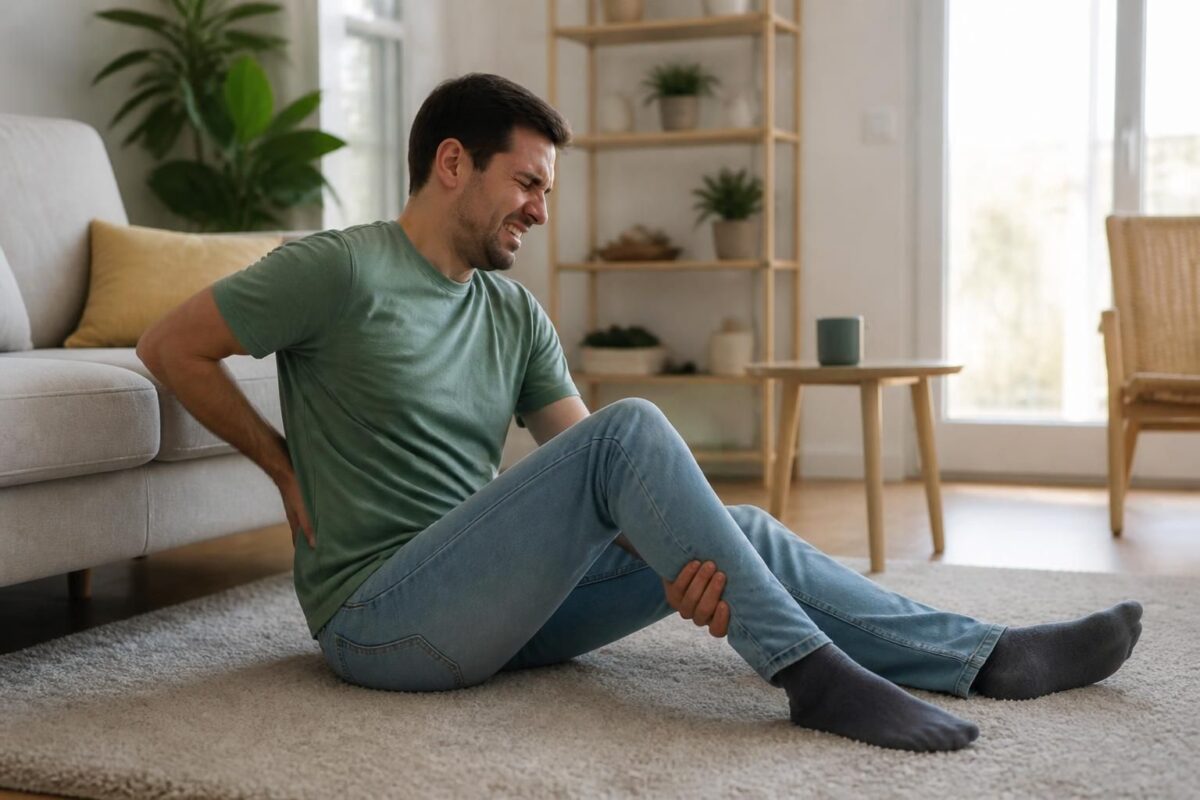
IN BRIEF
| Sciatica is pain that follows the path of the sciatic nerve, starting from the lower back and radiating down the leg to the calf or foot. In Terrebonne, local evaluation allows for quick identification of the causes and consideration of non-surgical solutions. The benefits of appropriate management include pain relief, improved mobility, and prevention of recurrences through a multidisciplinary approach. The process relies on a local assessment, a non-surgical treatment plan, targeted exercises, and postural advice to regain normal activity while staying within a safe framework. |
Sciatica in Terrebonne presents as pain that originates in the lower back and radiates down to the calf, sometimes as far as the foot. It is usually unilateral and can be described as burning or stabbing, accompanied by tingling or numbness.
The main cause is compression of the sciatic nerve, the longest nerve in the body, often linked to a herniated disc or other lumbar conditions. Factors such as posture, lack of activity, or improper exertion can also encourage lumbar sciatica.
The diagnosis is based on a clinical examination; imaging and additional tests may be performed if necessary. The treatment plan is personalized and may combine hands-on actions (manual therapy, physical therapy), postural advice, and medication options according to the severity.
For an evaluation tailored to your situation in Terrebonne, contact a specialized team in lumbar sciatica to quickly relieve pain and regain mobility.
This article, written by a healthcare professional expert in osteopathy, describes sciatica that starts in the lower back and can extend down to the calf. In Terrebonne, an accurate assessment identifies the exact cause and proposes appropriate management focused on non-surgical options available at the TAGMED Clinic. You will discover the causes, symptoms, diagnosis, treatment options, and warning signs, with reliable resources for further exploration.
Common Causes of Sciatica in Terrebonne
The primary cause remains the herniated disc, which can compress a nerve root and trigger pain that radiates from the lower back into the leg. Lumbar arthritis may also narrow the spinal canal and cause sciatica. Other factors include lumbar trauma, inflammation of the spine, or, more rarely, a tumor or infection. In pregnant women, postural issues can lead to lumbar sciatica that resolves after childbirth. To better understand the pathway and mechanisms, you can consult specialized resources such as Sciatica in Terrebonne.
For a general overview of symptoms and mechanisms, see information on Passeport Santé and related sciatica resources on SOS Sciatique.
Typical Symptoms and What They Mean
Sciatica most often manifests on one side. The pain is usually burning and may feel like an electric shock. It travels from the buttocks down the back of the leg and can extend to the calf or foot. Other signs may appear: tingling, numbness, muscle weakness, and sometimes difficulty walking. If the pain radiates or is accompanied by loss of urinary control or marked weakness, emergency consultation is necessary.
Complementary information on the pathway and symptoms can be found in the following resources: Sciatica in Terrebonne and Burning in the calf.
Diagnosis and Recommended Investigations
The diagnosis is based on a clinical examination. The doctor evaluates strength and reflexes and may perform the Lasègue test. If neurological signs appear or if symptoms persist beyond six weeks, additional exams may be considered, such as MRI or CT scans. Electrophysiological tests can help localize the affected nerve root and assess the severity of the involvement. To deepen your understanding of the diagnosis and mechanisms, you can consult general sources like Sciatica in Terrebonne – pain descending into the leg and Understanding the pathway of pain.
Treatment and Management in Terrebonne
The treatment of sciatica depends on the cause and severity of the symptoms. At the TAGMED Clinic in Terrebonne, the approach favors non-surgical options whenever possible. Care may include specific osteopathy, motorized neurovertebral decompression, and precision impactor, tailored to each case after evaluation. In cases of stubborn pain or neurological deficits, more specialized decisions may be considered in collaboration with your doctor and according to the circumstances.
To better understand treatment options, consult the dedicated pages for Terrebonne on the TAGMED website and associated resources: Treatment of sciatica in Terrebonne and the general TAGMED page. For additional information on decompression and other approaches, you can also consult Neurovertebral decompression.
To delve deeper into the link between pain and the nerve pathway, see also the following resources: Sciatica in Terrebonne – pathway and symptoms and Sciatica in Terrebonne – pain when coughing.
When to seek emergency care and warning signs
Seek emergency care if you experience: extreme sciatica pain not relieved by painkillers, significant loss of strength in the leg, loss of perineal sensation, difficulty urinating or loss of bowel control, fever, unexplained pain, or signs of neurological complications. These signals indicate a reaction requiring immediate evaluation.
For additional information on warning signs and pain pathways, you can consult resources such as Sciatica in Terrebonne – pain that travels down the leg and Difficulty walking on tiptoes.
Prevent and optimize care
Prevention involves regular tailored physical activity, maintaining a healthy weight, and good posture. In the case of widespread pain, prioritize mobility and avoid prolonged bed rest. Specialized evaluation helps determine if targeted intervention is necessary to prevent aggravation. For additional information on pathways and general strategies, refer to the resources listed above and the dedicated pages for Terrebonne.
For an overview and additional insights, particularly check out Sciatica in Terrebonne and Treatment in Terrebonne – TAGMED Clinic.
For contextual information on causes and symptoms, you can also consult the following resources: Sciatica – causes, symptoms, and treatments and Understanding the pain pathway – before acting.
Useful reference on practical aspects and available mechanisms: Sciatica – burning sensation in the calf and Sciatica – pain that travels down the leg when coughing.
Medical disclaimer: The information and advice provided on this site do not replace the opinion, diagnosis, or treatment of a healthcare professional. Please note that Dr. Sylvain Desforges, osteopath, is neither a medical doctor nor a physician, and is not a specialist in a medical specialty as defined by the Collège des médecins du Québec. Manual therapy, functional medicine, and sports medicine as described on this site exclude any treatment or medical diagnosis made by a physician or medical specialist. Always consult your doctor for any medical questions. For more details, please read our complete Legal Notice.
Medical disclaimer: The information and advice provided on this site do not replace the opinion, diagnosis, or treatment of a healthcare professional. Please note that Dr. Sylvain Desforges, osteopath, is neither a medical doctor nor a physician, and is not a specialist in a medical specialty as defined by the Collège des médecins du Québec. Manual therapy, functional medicine, and sports medicine as described on this site exclude any treatment or medical diagnosis made by a physician or medical specialist. Always consult your doctor for any medical questions. For more details, please read our complete Legal Notice.
- Location: pain from the lower back radiating to the calf in Terrebonne
- Typical signs: burning pain, tingling, and sometimes numbness
- Common causes: herniated disc, lumbar osteoarthritis, narrowing of the lumbar canal
- Characteristics: pain often unilateral and aggravated by prolonged sitting
- Evaluation: clinical examination; if persists >6 weeks, imaging (MRI/CT) as per doctor
- Non-surgical approaches: physiotherapy, osteopathy, muscle strengthening, and posture improvement
- When to seek emergency care: loss of urinary control, marked weakness, unexplained acute pain
- Prevention and simple actions: regular physical activity, stretching, suitable lifting techniques

This article provides a practical guide on sciatica that manifests as pain from the lower back to the calf in Terrebonne, presenting possible causes, diagnosis, non-surgical treatment options, and concrete advice for relief and prevention of episodes.
Understanding sciatic pain in Terrebonne
Sciatica is due to compression or inflammation of the sciatic nerve, the longest nerve in the body. It typically starts in the lower back and can radiate to the calf and foot. This pain can be described as burning, stabbing, or as electrical shocks, and it may be accompanied by numbness or tingling in one leg.
Common causes
The herniated disc is the most common cause of sciatica; lumbar osteoarthritis and lumbar canal stenosis can also cause pain along the path of the sciatic nerve. Other factors, such as trauma or prolonged poor posture, can trigger episodes, especially if one engages in little physical activity and favors uncomfortable positions.
Diagnosis and Assessment in Terrebonne
The diagnosis is based on a clinical examination where the doctor assesses strength and reflexes and may perform tests such as the Lasègue test. If symptoms persist beyond six weeks or are accompanied by weakness, imaging tests (MRI or CT scan) or electrodiagnostic tests may be requested to clarify the origin of the problem and tailor the treatment.
Treatment and Non-Surgical Recommendations
Useful Approaches
Initially, prioritize maintaining suitable activity rather than prolonged rest. Non-steroidal anti-inflammatory drugs and analgesics may be considered depending on contraindications. Physical therapy and targeted exercises that strengthen back muscles and improve posture play a key role. Epidural injections or more specific medications may be offered if necessary, but the goal is to reduce inflammation and restore mobility without surgery.
When to Consider Surgery?
Surgery is considered when motor deficit is significant or when medical treatment fails. The choice of intervention will depend on the cause (for example, resection of a hernia or decompression of the canal). In most cases, non-surgical approaches and a gradual resumption of activities are prioritized first.
Practical Tips for Terrebonne
Posture and Physical Activity
Adopt a neutral posture and avoid heavy loads or positions that worsen pain. Regular walking and gentle activities promote circulation and recovery. Strengthening trunk muscles, done under supervision, can reduce the risk of recurrence.
Safe Exercises and Safety
Here are some simple exercises that can be considered in the non-acute phase, to be adapted according to your tolerance and under professional advice. Perform them slowly and avoid any sharp pain. A professional in Terrebonne can customize a program suited to your situation and lifestyle.
For personalized support tailored to your daily life in Terrebonne, consider a consultation with a local osteopath or physiotherapist to establish a precise and effective plan for your sciatica.
| Evaluation Element | Concise Description |
|---|---|
| Painful Area | Pain starting from the lower back and radiating down to the calf, along the path of the sciatic nerve. |
| Probable Causes | Frequent herniated disc; lumbar osteoarthritis; lumbar canal stenosis. |
| Typical Symptoms | Burning pain, paresthesia, and sometimes foot weakness. |
| Urgency to Monitor | Loss of urinary control, marked weakness, or sharp pain requiring emergency attention. |
| Diagnosis | Clinical examination and reflex tests; Lasègue test; MRI/CT if persistence (>6 weeks) or deficit. |
| Initial Treatment | Anti-inflammatory and analgesics; physiotherapy after the acute phase; postural advice. |
| Non-Surgical Approaches | Strengthening and stretching; adapted manual therapies; improvement of posture and mobility. |
| Typical Duration | Often a few weeks to 2 months; variable progress depending on the case. |
| Prevention and Advice | Regular physical activity, walking, swimming; correct posture and safe lifting techniques. |
Testimonials on Sciatica in Terrebonne: Pain from the Lower Back to the Calf
In Terrebonne, Marie, 46, suffered from Sciatica pain radiating from the lower back to the calf. After a comprehensive assessment and a personalized osteopathic treatment, her pain diminished and she regained her mobility. She testifies: “Today, I can work and walk without that constant burning.” Book your consultation for an approach tailored to your case in Terrebonne.
Jean-Pierre, 58, in Terrebonne, lived with Sciatica that extended from the lower back to the calf for several months. Thanks to a program combining specific osteopathy and motorized neurovertebral decompression, he experienced significant pain reduction and improved walking. If you are suffering too, contact our office for a personalized assessment in Terrebonne.
Aurélie, 29, in Terrebonne, experienced painful episodes during her workouts: lumbar pain radiating to the calf. After treatment and postural advice, she can resume her sports routine without major pain and with better posture. Book your assessment and discover a tailored plan for your Sciatica in Terrebonne.
Luc, 62, suffered from pain radiating from the lower back to the calf without an acute injury. With osteopathy sessions and targeted exercises, he regained the ability to walk several kilometers and carry out his daily activities without fear. Our personalized approach can also help you in Terrebonne — schedule your appointment now.
Camille, 37, experienced an acute Sciatica episode that disrupted her work. After diagnosis and an action plan incorporating osteopathic techniques and adapted exercises, the symptoms calmed, and she was able to quickly resume her professional activities. If you are also suffering, contact our office in Terrebonne for a personalized assessment.
Sciatica in Terrebonne — Pain from the Lower Back to the Calf: Biography of Dr. Sylvain Desforges
Dr. Sylvain Desforges, an expert in osteopathy, naturopathy, and manual medicine, is the founding president of TAGMED clinics and the ACMA association. His career is guided by innovation in health and a patient-centered approach to chronic pain, particularly the manifestations of sciatica and low back pain. In Terrebonne, he deploys a practice aimed at reducing suffering and restoring mobility through non-invasive methods whenever possible. His philosophy is based on evidence-based care, listening to the patient, and integrating advanced technologies to optimize recovery and overall well-being.
As part of his practice in Terrebonne, Dr. Desforges works with patients suffering from sciatica that originates from the lower back and can extend down to the calf, with possible radiation into the buttock and leg. His work consists of identifying underlying causes and aggravating factors, whether it’s a herniated disc, spinal canal stenosis, or postural imbalance. He adopts a multidisciplinary and personalized approach, combining targeted osteopathic techniques and therapeutic technologies to relieve nerve irritation and promote gradual recovery without routinely resorting to surgery.
The therapeutic strategy implemented in Terrebonne is based on a comprehensive and structured assessment. Dr. Desforges explores the mechanical and inflammatory mechanisms that maintain pain, checking muscle strength, reflexes, and the mobility of the lumbar segments and lower limbs. He may integrate interventions such as motorized neurovertebral decompression, specific osteopathy, and complementary therapies such as laser and shockwave therapy when the evaluation indicates their relevance. This combination aims to relieve tension around the nerve roots, reduce inflammation, and speed up the healing process, while respecting the patient’s pace and limits.
The program proposed by Dr. Desforges focuses on a quick return to functional activity and the prevention of recurrences. After the evaluation, the patient receives a personalized plan, including mobility and strengthening exercises tailored to their daily life and environment in Terrebonne. Practical advice on posture, lifting, and carrying loads, as well as a supervised physical activity program, completes the treatment. The goal is clear: to enable the patient to resume daily, professional, and sports activities without debilitating pain, while avoiding prolonged rest and promoting gradual and sustainable rehabilitation.
This conclusion summarizes sciatica in Terrebonne, characterized by pain originating in the lower back and radiating down to the calf, often associated with tingling and possible weakness. It recalls the usual causes (notably herniated disc and lumbar osteoarthritis), the typical signs, diagnostic options, and available treatments, as well as practical advice and situations requiring prompt management.
Sciatica in Terrebonne predominantly manifests as unilateral pain that travels from the lower back along the leg to the calf, and sometimes to the foot. This pain may be accompanied by tingling, numbness, and muscle weakness. The path of the sciatic nerve reflects the affected lumbar roots (usually L5 or S1), and the most frequent causes remain a herniated disc or lumbar osteoarthritis. In many cases, non-surgical management allows for rapid and lasting improvement, which is particularly relevant for residents of Terrebonne seeking effective and personalized solutions.
The diagnosis is primarily based on a clinical examination and simple tests such as the Lasègue test; imaging exams (MRI or CT) and electrodiagnostic tests may be considered if symptoms persist or if neurological signs appear. To better understand the mechanisms and symptoms, you can consult resources such as Ameli – recognizing sciatica and MSD Manual.
Treatment depends on the cause and severity: it generally combines non-pharmacological measures with medical treatments. In the vast majority of cases, nonsteroidal anti-inflammatory drugs and analgesics constitute the first line, combined with a gradual resumption of activity. Physiotherapy is useful to strengthen lumbar support and improve posture, while epidural injections or more targeted interventions may be considered in case of resistant pain. Additional information on these approaches can be found particularly on Top Santé and Doctissimo. In case of particularly intense pain or neurological deficits, specialized evaluation and surgical options may be discussed.
For daily life in Terrebonne, practical advice on posture, position choices, and adapted physical activity can make a difference. Specific resources address issues of standing or sitting in urban environments and the associated nerve pathways, including Sciatica and subway – standing or sitting and pathway of the L5/S1 roots to the little toe. Other dedicated pages describe the painful journey and warning signals to watch for, such as sciatic pain – incomplete path and concerns and radiation to the outer edge of the foot.
In all cases, if the pain is severe, if you experience loss of bladder control, perineal sensory disturbances, or progressive weakness of the leg, you should seek emergency consultation. For a comprehensive and personalized approach, consulting a professional near Terrebonne can help establish an effective and tailored multimodal plan for your situation. To explore practical aspects and management options, you can refer to the resources available on Sciatique Montréal – pain and roots and pathway to the foot.

Sciatica in Terrebonne: nighttime pain in the leg
IN BRIEF In brief, nocturnal sciatica is a pain that starts from the lower back and radiates to the leg, sometimes waking you up at night. In Terrebonne, non-invasive management can reduce nighttime awakenings and improve sleep, while preserving mobility…

Sciatica in Terrebonne: hip pain or true nerve radiation?
IN BRIEF Sciatica is a pain that follows the path of the sciatic nerve, from the lower back to the foot. In Terrebonne, it can manifest as pain in the hip or as true nerve irradiation. Key benefits: pain reduction,…

Sciatica pain in Terrebonne: incomplete journey, should we be worried?
IN BRIEF The subject is sciatic pain in Terrebonne, which can follow the incomplete path of the sciatic nerve and project pain down to the foot. Key benefits: pain reduction, improved mobility, and prevention of recurrences through tailored exercises and…

Sciatica in Terrebonne: pain towards the little toe and S1 root
IN BRIEF In brief, sciatica associated with pain towards the little toe and the S1 root is a neuropathic pain that follows the path of the sciatic nerve and often results from compression or irritation of the affected lumbar root.…
Sciatica in Terrebonne: pain towards the top of the foot and L5 root
IN SHORT The Sciatica in Terrebonne with pain radiating to the top of the foot and probable involvement of the L5 root describes a radicular injury manifested by pain following the nerve path, sometimes accompanied by numbness or weakness. The…

Sciatica in Terrebonne: pain radiating to the outer edge of the foot
IN BRIEF Concise definition: Sciatic pain that reaches the outer edge of the foot follows the path of the sciatic nerve from the lower back to the foot. Benefits and applications: In Terrebonne, a conservative approach provides quick and safe…

Sciatica in Terrebonne: pain in the buttock after a long sitting position
IN BRIEF In brief, sciatica in Terrebonne with buttock pain after a long sitting position corresponds to a compression or irritation of the sciatic nerve. Main benefits: pain reduction, better mobility, and prevention of recurrences through postural education and simple…

Numbness in the leg and sciatica in Terrebonne: what should you check?
IN BRIEF In brief, leg numbness related to sciatica is a common but often benign alert. This quick guide describes what this phenomenon is, possible causes such as a compressed nerve or circulatory issues, and essential checks to perform. In…

Dr Sylvain Desforges, B.Sc., D.O., N.D., osteopath, is the founding president of TAGMED and of the ACMA association. He dedicates his practice to chronic spinal pain, low back pain and symptoms compatible with sciatica, particularly when pain radiates toward the buttock, leg, calf, foot or toes.
Through SOS Sciatique, he publishes educational content on sciatica symptoms, possible causes such as disc herniation, disc narrowing, foraminal stenosis or irritation of a lumbar nerve root, as well as non-surgical approaches that may be considered according to the evaluation. At Clinique TAGMED, care may include, depending on the case, motorized neurovertebral decompression, specific osteopathic care or precision percussion.
For an evaluation related to sciatica treatment in Montreal / Mount Royal or sciatica treatment in Terrebonne, please consult the services available at Clinique TAGMED.
Medical disclaimer
The information published on SOS Sciatique is provided for educational purposes only and does not replace a consultation, diagnosis, opinion or treatment provided by a physician or another authorized healthcare professional. The author of this article is neither a medical doctor nor a specialist in a medical specialty recognized by the Collège des médecins du Québec. The osteopathic, manual medicine or functional support approaches described on this site do not constitute medical acts and are not intended to replace medical follow-up.
Consult a physician or emergency service in cases of loss of bladder or bowel control, anesthesia in the saddle area, significant or progressive weakness in the leg or foot, fever, recent trauma, severe pain or rapid worsening of symptoms. For more details, please read our Legal Notice.