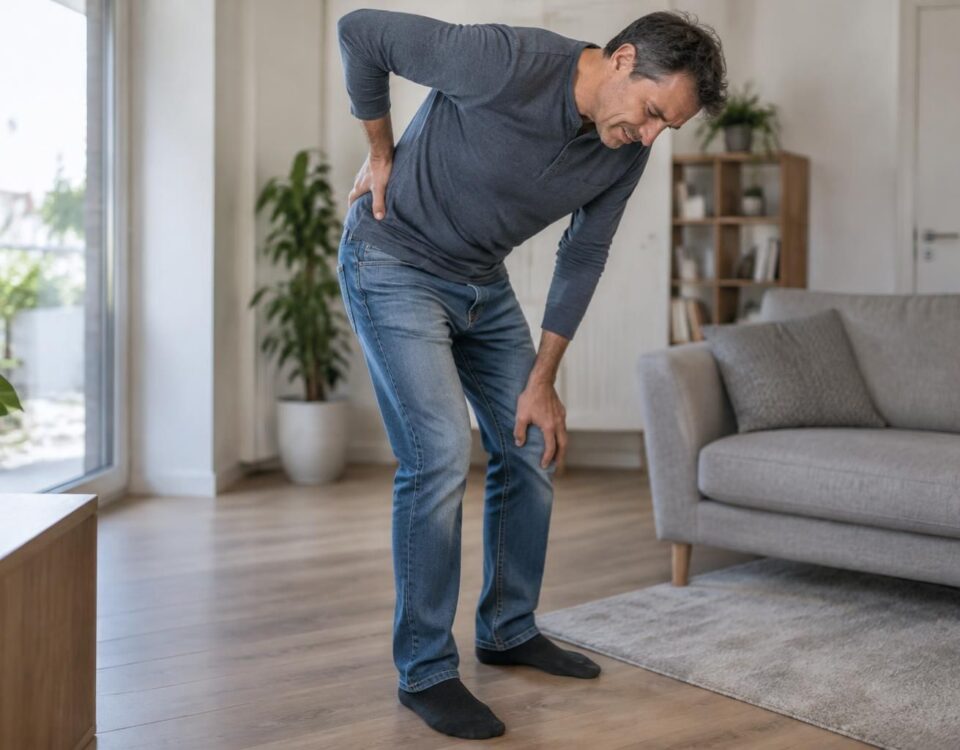
Sciatica in Terrebonne: L5 or S1 irritation, why the clinical examination matters
31/10/2026
Disc herniation and heel pain
31/10/2026
IN BRIEF Sciatica is pain related to irritation of a lumbar nerve root; it can vary with movements and activities. Gentle mobility, such as walking, and adapted exercises can help maintain flexibility and strength, while prolonged rest can increase stiffness. The choice of activities depends on the cause and symptoms: consult a professional if the pain persists or worsens. Significant weakness or urinary problems require urgent consultation. |
Sciatic pain can vary depending on activities and positions: walking, sitting, or lifting a load can accentuate or alleviate it. A gentle and adapted physical activity is often preferable to prolonged rest, but movements that worsen the pain should be avoided. If the pain persists or is accompanied by progressive weakness, consult a healthcare professional.
Sciatic pain may increase when sitting, decrease when walking, or return after exertion. These variations depend on the cause, irritation of a nerve root, and how the back responds to positions and activities. Observing what aggravates or soothes the pain can help a professional guide the assessment, without substituting a medical diagnosis.
Sciatica refers to pain that follows the path of a lumbar nerve root and may radiate down into the buttock, thigh, calf, or foot. It may be accompanied by tingling, numbness, or weakness. The term “sciatica” describes a set of symptoms; it does not specify their cause by itself.
Pain can change throughout the day or depending on the activity. One position may relieve one person while worsening symptoms in another. This difference makes individual assessment useful, especially if the pain persists, intensifies, or limits daily activities.
Why Does Pain Change with Movements and Positions?
Positions and movements modify the stresses on the lower back and surrounding tissues. An already irritated nerve root may react to these changes. Pain may then vary when you sit for long, bend, walk, or change position. However, the relationship between a movement and pain alone does not allow for identifying the cause.
Sitting Position and Periods Without Movement
A prolonged sitting position can increase discomfort in some people. Others may feel more pain after standing for long or when getting up. Varying positions and avoiding staying still for long periods can make the day more bearable. Also, consult our page on sciatica and pain when getting out of bed if symptoms are present upon waking.
Walking, Daily Tasks, and Efforts
Walking or performing a household task may sometimes reduce stiffness, but it can also increase pain if the activity exceeds your current tolerance. Pain that appears after exertion does not automatically mean that an injury has worsened. Instead, note the type of activity, its duration, and the time needed for symptoms to return to their usual level.
If your pain increases after an activity, temporarily reduce the intensity or duration of that task and gradually resume activities according to your tolerance. Avoid pushing through pain that significantly intensifies or is accompanied by new neurological symptoms.

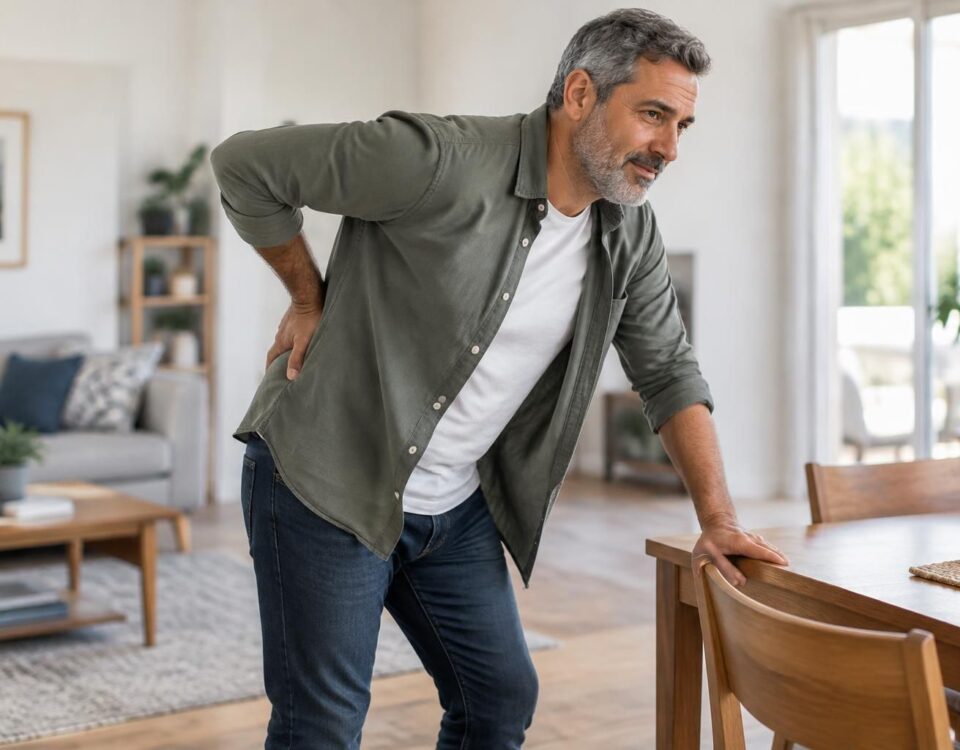
Sciatica and pain that varies with posture
IN BRIEF Sciatica can vary depending on posture, as certain positions or their duration increase sensitivity of the nerve. Alternating positions, moving regularly, and adjusting sitting or standing periods can help distribute strains better and gradually improve tolerance to movement.…
Possible Causes of Variable Sciatic Pain
Irritation of a nerve root may be associated with several situations, including a herniated disc, narrowing of a nerve exit space, age-related changes, or sometimes another cause. Posture and activity habits may influence symptoms, but they are not enough to determine their origin. An examination by a healthcare professional helps to choose the next steps.
The area where pain extends may provide clues, but it does not allow for conclusion alone. For example, pain that reaches the big toe can be assessed considering the L5 root, among other factors. To learn more, check our article on big toe pain and the L5 root.
Difficulty standing on tiptoe or weakness in the foot also deserves special attention. These signs can have several explanations and require assessment. Our page on S1 sciatica and difficulty standing on tiptoe provides additional information.
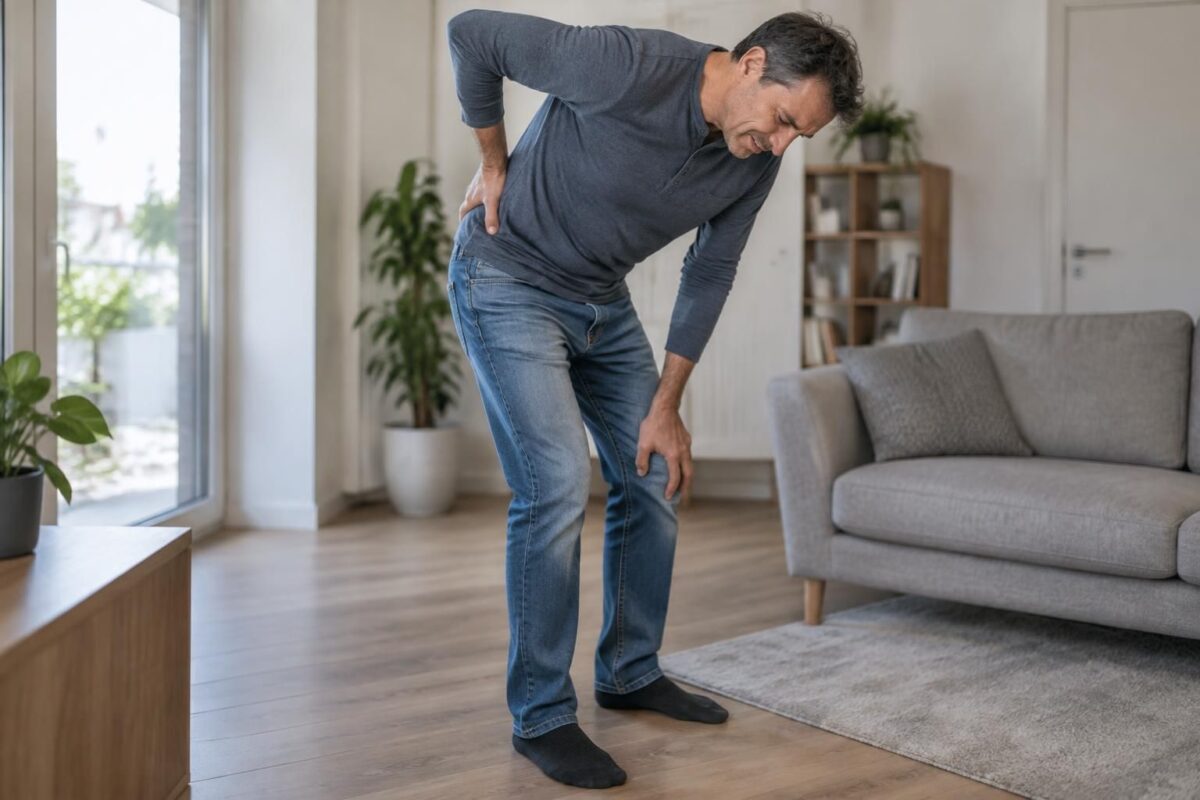
Sciatica and pain worsened in lumbar flexion
IN BRIEF Aggravated lumbar flexion sciatica refers to pain that increases when bending the lower back forward and can radiate from the buttock to the leg. This movement may exacerbate the irritation of a nerve root, for example, in the…
How to Track Variations in Pain
A simple log can help describe symptoms during a consultation. Note where the pain starts and how far it travels, activities performed, positions that modify it, and the presence of tingling or weakness. Also indicate if the pain disrupts sleep or intensifies at a specific time of day.
Pain that increases in the evening may be related to the accumulation of activities or other factors. This variation alone does not allow for determining the cause. Consult our page on sciatica and pain that increases in the evening for a better understanding of this situation.
Avoid relying solely on a list of movements found online. Some approaches may not suit your situation, especially if the pain is recent, intense, or associated with weakness. A professional can examine your symptoms and determine if a medical evaluation or further tests are needed.
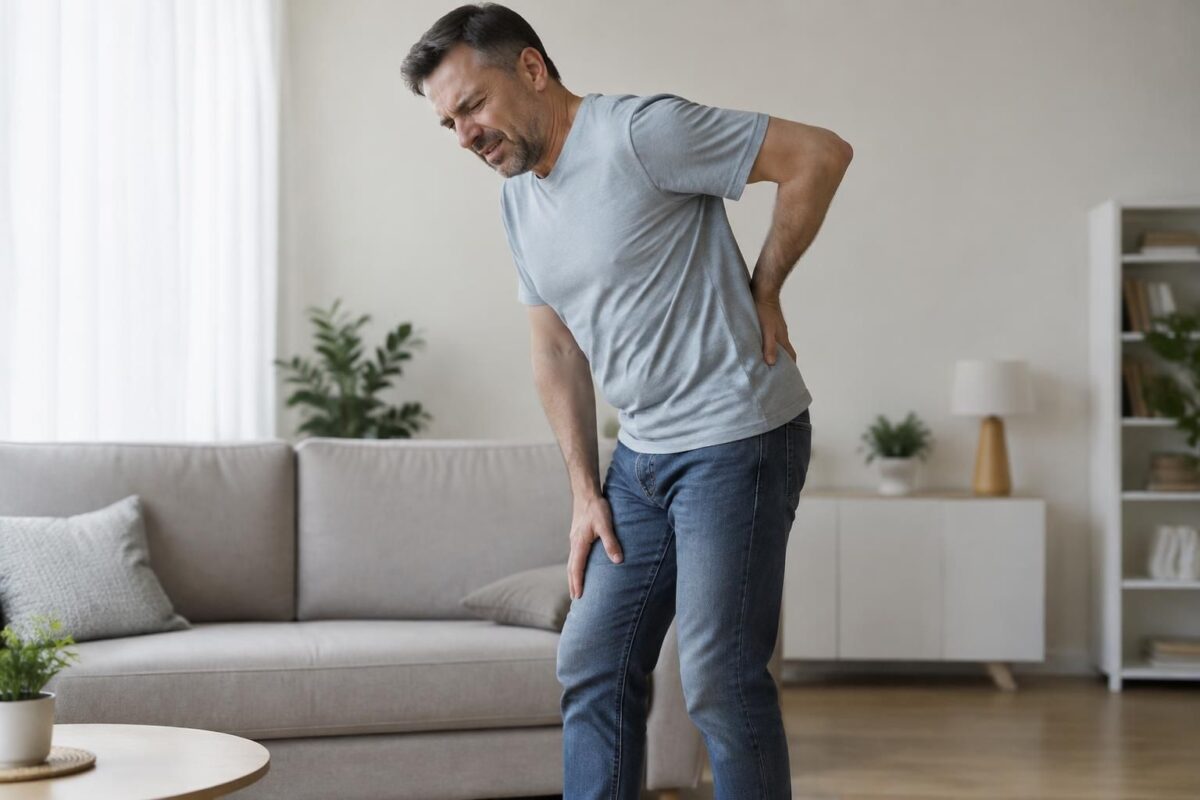
Sciatica and pain worsened in lumbar extension
IN BRIEF Lumbosacral sciatica aggravated in extension is a pain that radiates down the buttock or leg and increases when the lower back arches. This position can exacerbate irritation of a nerve root, particularly in cases of stenosis; however, it…
When to Seek Professional Evaluation?
Consult a healthcare professional if the pain persists, returns regularly, or limits your activities. An evaluation can help distinguish nerve pain from other causes and define an appropriate management plan. Variations depending on activity are useful information to share, but they do not replace examination.
Consult a doctor or emergency service promptly in cases of loss of bladder or bowel control, numbness in the saddle area, significant or progressive weakness of the leg or foot, fever, recent trauma, or rapid worsening. These signs require urgent medical evaluation.

Sciatica and pain relieved by bending: possible stenosis
IN BRIEF A sciatica-type pain relieved by leaning forward may be compatible with lumbar stenosis, a narrowing that can irritate or compress nerves. Flexion may temporarily decrease pressure, but does not confirm the diagnosis or treat the cause. A professional…
Evaluation Options at TAGMED Clinic
The TAGMED Clinic offers evaluations and non-surgical approaches based on the situation and examination results. Care may include, when appropriate, specific osteopathy, precision percussion, or motorized neurovertebral decompression. These approaches do not replace a medical diagnosis or urgent care required in the presence of warning signs.
To learn about the available services, visit the TAGMED Clinic, or the pages dedicated to sciatica treatment in Montreal and Mont-Royal and to sciatica treatment in Terrebonne.
To better understand the nerve pathway and possible causes, also consult our article on nerve root, disc, and foramen.

Sciatica and pain worsened while sitting: consider the disc?
IN BRIEF Sciatica aggravated in a seated position may be related to irritation of a nerve root, sometimes caused by a herniated disc. Remaining seated can exacerbate pain that radiates from the buttock down the leg, but this symptom alone…
About the Author
Sylvain Desforges, B.Sc., D.O., N.D., Doctor of Osteopathy and naturopath, is the founding president of TAGMED and the ACMA association. He dedicates his practice to chronic pain of the spine, lower back pain, and pain compatible with sciatica, particularly when the pain radiates to the buttock, leg, calf, foot, or toes.
Through SOS Sciatique, he publishes educational content on sciatica symptoms, possible causes such as herniated discs, disc pinching, foraminal stenosis or irritation of a lumbar nerve root, as well as on non-surgical approaches that may be considered based on the evaluation. At the TAGMED Clinic, care may include, depending on the case, motorized neurovertebral decompression, specific osteopathy, or precision percussion.
For an evaluation related to sciatica treatment in Montreal / Mont-Royal or sciatica treatment in Terrebonne, check the available services at the TAGMED Clinic.

Sciatica and pain relieved while seated: consider stenosis?
IN BRIEF A sciatica relieved in a seated position may suggest a lumbar stenosis and neurogenic claudication, but this sign alone is not sufficient for a diagnosis. Observing walking, weakness, and symptom evolution helps guide the evaluation and compare signs…
Medical Warning
The information published by SOS Sciatique is provided for educational purposes and does not replace a consultation, diagnosis, advice, or treatment performed by a doctor or another authorized healthcare professional. The author of this article is neither a doctor nor a specialist in a medical specialty recognized by the Collège des médecins du Québec. The approaches of osteopathy, manual medicine, or functional support described on this site do not constitute medical acts and are not intended to replace medical follow-up.
Consult a doctor or emergency service in case of loss of bladder or bowel control, anesthesia in the saddle region, significant or progressive weakness of the leg or foot, fever, recent trauma, severe pain, or rapid worsening. For more details, please read our Legal Notice.
Medical Disclaimer: The information and advice provided on this site do not replace the opinion, diagnosis, or treatment of a healthcare professional. Please note that Sylvain Desforges, B.Sc., D.O., N.D., doctor of osteopathy, is neither a medical doctor nor a physician and is not a specialist in a medical specialty as defined by the Collège des médecins du Québec. Manual medicine, functional medicine, and sports medicine as described on this site exclude any medical treatment or diagnosis made by a doctor or specialist. Always consult your doctor for any medical questions. For more details, please read our complete Legal Notice.
- Gentle walking: may be better tolerated than prolonged inactivity.
- Prolonged sitting: may exacerbate pain in some individuals.
- Flexion or load-bearing: may increase symptoms, especially during acute periods.
- Changing position: may modify the intensity or trajectory of pain.
- Prolonged rest: may promote stiffness and is generally not advised.
- Worsening pain: stop movement and seek advice from a healthcare professional.
To remember: the reaction to activity varies according to the cause and the person. Significant or progressive weakness, urinary or bowel issues, or numbness in the saddle area require urgent medical evaluation.

When sciatic pain varies with activity, certain movements or positions may further irritate a nerve root, while others remain well tolerated. Observing these variations helps to adapt daily life, but does not alone allow for identifying the cause. Gentle mobility is often preferable to prolonged rest; however, exercises should respect your symptoms and be adjusted with a professional if pain persists or worsens.
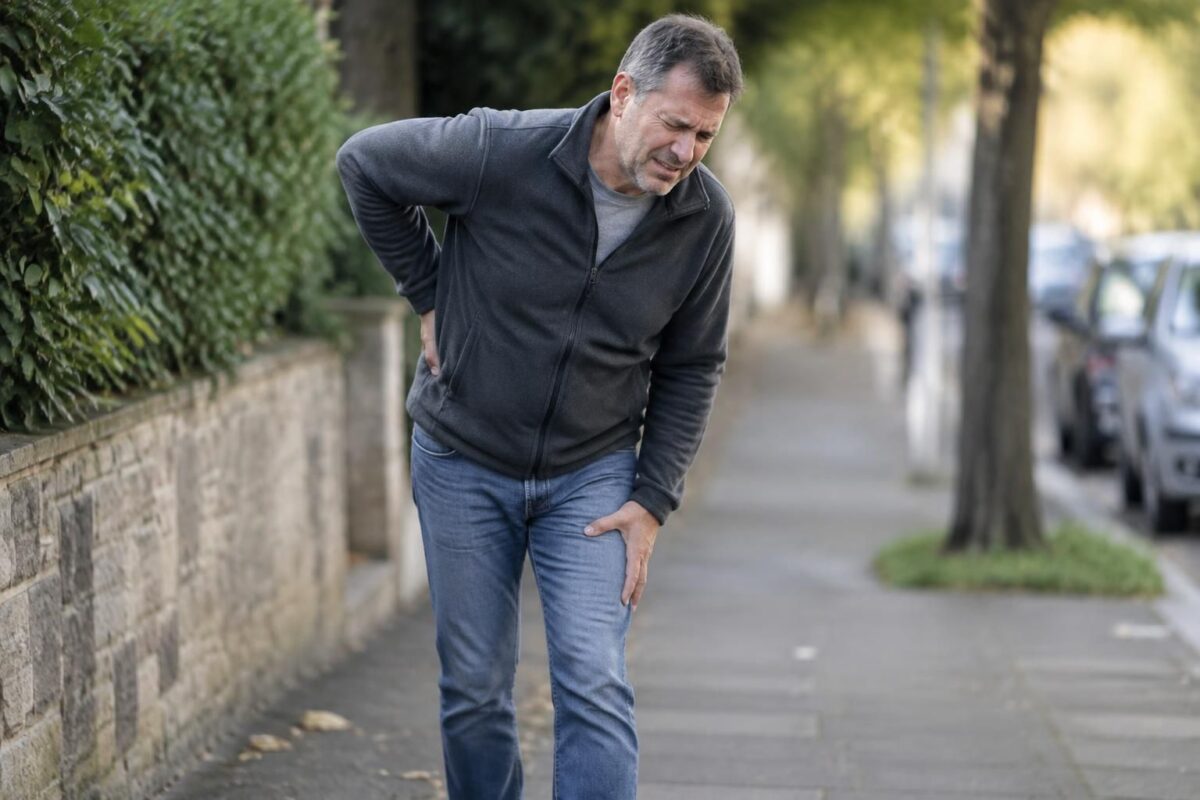
Sciatica and pain that worsens when walking
IN BRIEF A sciatica that worsens with walking is pain radiating from the buttock down the leg, exacerbated by walking. Several causes are possible: this symptom alone does not suffice for a diagnosis. Temporarily reduce walking duration, change positions, and…
Understanding Variations in Sciatic Pain
Sciatica refers to pain that follows the path of a lumbar nerve root, often from the lower back or buttock down into the leg. It may be accompanied by tingling, numbness, or a feeling of weakness. A herniated disc, joint irritation, or other factors may be involved; only a healthcare professional can assess your situation.
Pain may change according to activities: sitting for long periods, bending, walking, or lifting a load does not produce the same reactions in everyone. Note the movements that relieve or exacerbate symptoms, their duration, and intensity. These observations can help guide an evaluation, but do not replace a diagnosis.

Sciatica and pain that improves when walking
IN SUMMARY Sciatica is pain that radiates from the lower back or buttock down to the leg, sometimes all the way to the foot. If it decreases with walking, a gentle and regular walk can help limit stiffness and maintain…
Adapting Your Activities Without Immobilizing Yourself
Prioritize Tolerated Movement
In the absence of warning signs, generally avoid staying in bed for long periods. Instead, try to change positions regularly and take short walks if they are comfortable. Start slowly, then gradually increase the duration based on your tolerance. Reduce or stop an activity if the pain significantly increases, travels further down the leg, or persists more strongly after exertion.
Break Down Daily Tasks
If sitting aggravates your symptoms, get up regularly and alternate with short periods of standing or walking. To move an object, bring it closer to your body and avoid sudden movements or twisting under load. At home and at work, the goal is not to maintain a perfect posture, but to limit prolonged positions and vary movements.
Choose Exercises Carefully
There is no universal exercise for all sciatica cases. Depending on the cause and phase of recovery, one movement may be beneficial for one person and poorly tolerated by another. Gentle mobility exercises, moderate stretching, or progressive strengthening may be recommended after assessment. Do not force a stretch and do not try to “push through” sharp pain or a shooting sensation down the leg.
During periods of significant pain, temporarily set aside activities that clearly worsen your symptoms, including lifting heavy loads, repetitive bending, or impact sports if you tolerate them poorly. Resumption should be gradual, based on progression, and, if necessary, with guidance from a professional.
When to Seek an Evaluation
Consult a healthcare professional if pain persists, recurs frequently, limits your activities, or is accompanied by numbness. An evaluation can help determine suitable activities and establish an individualized management plan. Avoid self-diagnosis, as pain radiating down the leg does not always mean the same thing.
Seek prompt care in cases of significant or progressive weakness in the leg or foot, loss of bladder or bowel control, numbness in the saddle area, fever, recent trauma, or rapid deterioration. These signs require immediate medical evaluation.
About the Author
Sylvain Desforges, B.Sc., D.O., N.D., Doctor of Osteopathy and Naturopath, is the founding president of TAGMED and the ACMA association. His practice focuses in particular on chronic spinal pain and pain compatible with sciatica.
Medical Disclaimer
This content is provided for educational purposes. It does not replace a consultation, diagnosis, or treatment by a physician or another licensed healthcare professional. The author is neither a physician nor a specialist in a medical specialty recognized by the Collège des médecins du Québec. Osteopathy or manual medicine approaches do not replace medical follow-up.
| Activity or Situation | Possible Variation in Pain |
|---|---|
| Gentle Walking | May be better tolerated than prolonged immobility. |
| Prolonged Sitting | May exacerbate pain in the lower back or leg. |
| Trunk Flexion | May increase symptoms in some individuals. |
| Prolonged Standing | May cause discomfort or increased pain. |
| Prolonged Bed Rest | May promote stiffness and reduce mobility. |
| Gentle Adapted Movements | Can support maintaining activity, depending on tolerance. |
| Effort that Intensifies Pain | Reduce intensity and seek advice if symptoms persist. |
Illustrative Testimonials: Sciatic Pain Varies with Activity
Note: The stories below are fictional examples created for educational purposes. They do not represent real patient testimonials and do not allow for diagnosis.
“Walking helps me, but standing for long periods triggers the pain”
For several weeks, a pain starts from my lower back and travels down to my buttock and thigh. A few minutes of gentle walking sometimes seems to loosen me up. However, queuing or standing for a long time eventually leads to sharp pains. I now try to vary my positions and not push it when the pain increases.
“Sitting too long triggers my tingling”
At the office, I notice that the tingling in my leg becomes more pronounced after a long period of sitting. Getting up regularly and walking a bit sometimes brings relief, although it doesn’t completely eliminate symptoms. Long driving days are particularly uncomfortable.
“Some exercises feel good, others increase the pain”
I wanted to resume my training like before, but rapid movements and repetitive bending have increased the pain in my leg. Gentler movements seem to be better tolerated, as long as I stay within a comfortable range. I’ve realized that an exercise beneficial for one person may not necessarily suit another.
“Rest calms temporarily, but immobility stiffens me”
When the pain is strong, lying down for a while helps me find a more comfortable position. However, after several hours without moving, my back feels stiffer when I get up. Short periods of light movement suit me better than staying in bed all day.
“Carrying groceries on one side awakens my pain”
I’ve noticed that carrying a heavy bag in one hand can bring back pain in my lower back, then in my buttock. Distributing loads, lightening them, and avoiding sudden movements seem to limit discomfort. However, the pain varies depending on the day and my level of fatigue.
“Pain changes throughout the day”
Some mornings, I can walk without too much difficulty; other days, sitting or bending down to dress increases my symptoms. This variation sometimes makes me hesitant to move. A healthcare professional can help me determine which activities to modify and which movements are appropriate in my situation.
Symptoms compatible with sciatica can vary based on the cause, posture, duration of an activity, and sensitivity of the individual. It is generally best to avoid movements that clearly aggravate pain and to resume activities gradually, without trying to push through intense pain. These examples do not replace a personalized evaluation.
Quickly consult a doctor or an emergency service in case of significant or progressive weakness in a leg or foot, loss of urinary or bowel control, numbness in the saddle area, fever, recent trauma, or rapid worsening. This information is educational and does not replace advice, diagnosis, or treatment by a licensed health professional.
Sciatica: why pain varies with activity
Sciatica refers to pain associated with irritation or compression of a nerve root in the lower back. It can follow a path from the lumbar region to the buttock, thigh, calf, and sometimes the foot. Tingling, a sensation of numbness, or weakness may also occur. However, the pain does not behave the same way for everyone: its intensity can change depending on movements, positions, and activity levels.
One activity may relieve one person while aggravating symptoms in another. Walking, for example, is often better tolerated than sitting for extended periods, but it can become uncomfortable if the distance is too far or if the gait alters posture. Some people feel more pain when bending forward, lifting a load, or standing. Others are more bothered by back extension or prolonged sitting. These differences make individualized assessment useful.
Sciatica is a symptom, not a single cause. A herniated disc, lumbar stenosis, or other changes affecting the spine can irritate a nerve root. Tissues around the pelvis and movement habits can also contribute to discomfort, without necessarily fully explaining pain radiating down the leg. The origin cannot be definitively determined from the pain trajectory alone: a health professional can consider the history of symptoms and perform an examination.
Observing the effects of activities can help better understand the situation. Note the movements that increase pain, those that relieve it, and the time needed to recover after exertion. Worsening that spreads further down the leg or is accompanied by new symptoms deserves particular attention. It is not about provoking pain for testing, but about identifying daily trends and discussing them during a consultation.
In the absence of contraindication, staying gently active is often preferable to prolonged bed rest. Short periods of walking, regular position changes, and a gradual return to tasks can help maintain mobility. It is generally advisable to temporarily reduce movements that trigger marked pain, including repeated bends with a load, sudden twists, or high-impact activities. Exercises should be selected according to the suspected cause, the phase of symptoms, and the person’s tolerance.
An exercise is not automatically beneficial just because it is presented as a stretch or strengthening. If a movement significantly increases pain in the leg, causes weakness, or leaves symptoms worsened after activity, stop it and seek advice. An appropriate program may include gentle mobility, progressive strengthening, and adjustments to daily activities, but it does not replace assessment when symptoms persist or evolve.
Pain that varies with activity can also influence sleep, work, and travel. Alternating positions, taking regular breaks, and temporarily adapting certain tasks can make the day more tolerable. An evaluation by a health professional allows for discussion of relevant non-surgical options. At TAGMED Clinic, approaches may include specific osteopathy or motorized neurovertebral decompression, depending on the assessment and the individual’s situation.
Quickly consult a doctor or an emergency service in case of loss of urinary or bowel control, numbness in the saddle area, significant or progressive weakness in the leg or foot, fever, recent trauma, or rapid worsening. These signs require timely medical evaluation.
About the author
Sylvain Desforges, B.Sc., D.O., N.D., Doctor of Osteopathy and naturopath, is the founding president of TAGMED and the ACMA association. His practice focuses on chronic spinal pain, lower back pain, and symptoms compatible with sciatica. He is interested in integrating manual approaches and technologies, including neurovertebral decompression, laser, and shock waves, when appropriate after evaluation.
Medical warning
This content is provided for educational purposes and does not replace consultation, diagnosis, or treatment by a doctor or another licensed health professional. The author is neither a physician nor a specialist in a medical specialty recognized by the Collège des médecins du Québec. Approaches involving osteopathy, manual medicine, or functional support do not constitute medical acts and do not replace medical follow-up.
Sciatic pain can vary with activity, posture, and time of day. Walking, sitting, or performing an exercise can modify symptoms without allowing, by itself, identification of their cause. Evolution should therefore be observed carefully, favoring adapted movements and professional evaluation when pain persists or worsens.
Understanding variations in sciatic pain
Pain that fluctuates from day to day is possible: intensity can change based on effort, sleep, prolonged positions, or sensitivity of the lumbar region. These variations do not necessarily mean the situation has worsened, but they deserve consideration. To better interpret them, consult this article on how sciatic pain varies from day to day.
Walking may be tolerated by some people and worsen symptoms in others. If the pain increases while walking, temporarily reduce the duration or pace, and then observe if it subsides at rest. Pain that travels further down the leg, or that is accompanied by new numbness, calls for caution. To delve deeper, see the information on sciatica that worsens when walking and on pain that goes lower after stretching.
Exercises do not uniformly suit all situations. A stretch or a stability movement may be comfortable for one person and further irritate the symptoms in another. Therefore, stabilization in case of sciatica must be adjusted to the tolerance, phase of symptoms, and the advice of a professional. Guidelines on movements to favor or avoid are also presented in this guide on exercises for sciatica.
A disc protrusion or irritation of a nerve root may be among the possible causes of pain that follows the leg, but only a healthcare professional can assess the situation. Resources particularly describe L4-L5 protrusion and leg pain as well as the possible implication of L5-S1 in certain sciatic cases.
While awaiting evaluation, it may be helpful to maintain gentle activity as long as it remains tolerable, vary positions, and avoid sudden movements or loads that trigger severe pain. Advice on exercises and relief for sciatica, management of sciatica with physical activity, and cycling with sciatica can complement these guidelines, without replacing personalized advice.
Quickly consult a doctor or an emergency service in case of significant or progressive weakness of the leg or foot, loss of urinary or bowel control, numbness in the saddle area, fever, recent trauma, or rapid aggravation. These signs require medical evaluation and should not be managed solely by exercises or online advice.

Sylvain Desforges, B.Sc., D.O., N.D., docteur en ostéopathie
Dr Sylvain Desforges, B.Sc., D.O., N.D., osteopath, is the founding president of TAGMED and of the ACMA association. He dedicates his practice to chronic spinal pain, low back pain and symptoms compatible with sciatica, particularly when pain radiates toward the buttock, leg, calf, foot or toes.
Through SOS Sciatique, he publishes educational content on sciatica symptoms, possible causes such as disc herniation, disc narrowing, foraminal stenosis or irritation of a lumbar nerve root, as well as non-surgical approaches that may be considered according to the evaluation. At Clinique TAGMED, care may include, depending on the case, motorized neurovertebral decompression, specific osteopathic care or precision percussion.
For an evaluation related to sciatica treatment in Montreal / Mount Royal or sciatica treatment in Terrebonne, please consult the services available at Clinique TAGMED.
Medical disclaimer
The information published on SOS Sciatique is provided for educational purposes only and does not replace a consultation, diagnosis, opinion or treatment provided by a physician or another authorized healthcare professional. The author of this article is neither a medical doctor nor a specialist in a medical specialty recognized by the Collège des médecins du Québec. The osteopathic, manual medicine or functional support approaches described on this site do not constitute medical acts and are not intended to replace medical follow-up.
Consult a physician or emergency service in cases of loss of bladder or bowel control, anesthesia in the saddle area, significant or progressive weakness in the leg or foot, fever, recent trauma, severe pain or rapid worsening of symptoms. For more details, please read our Legal Notice.