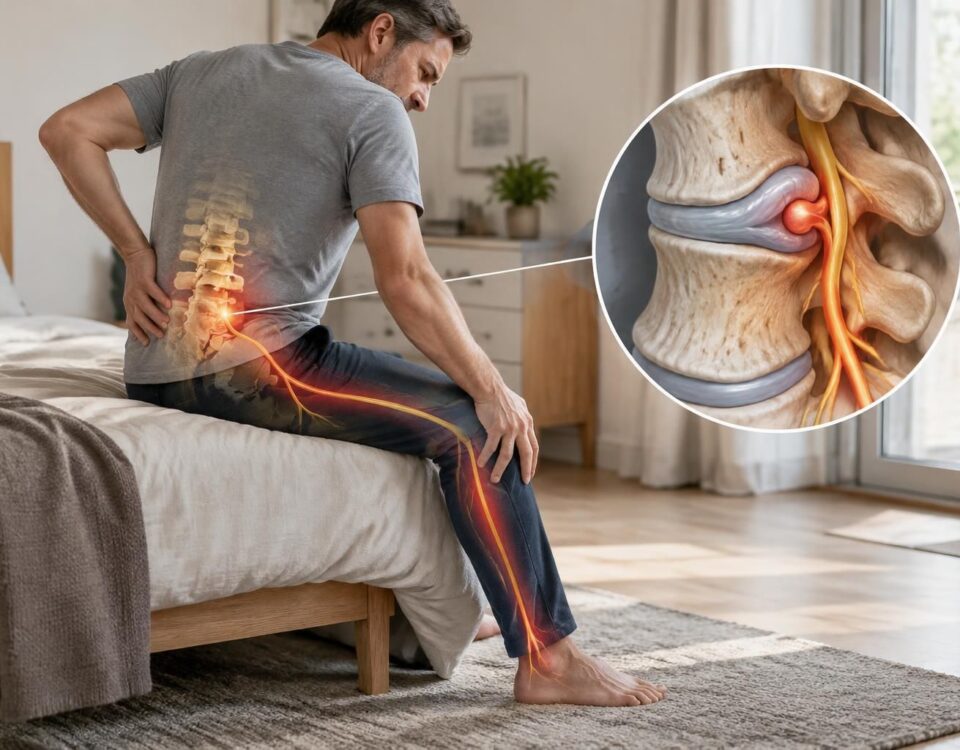
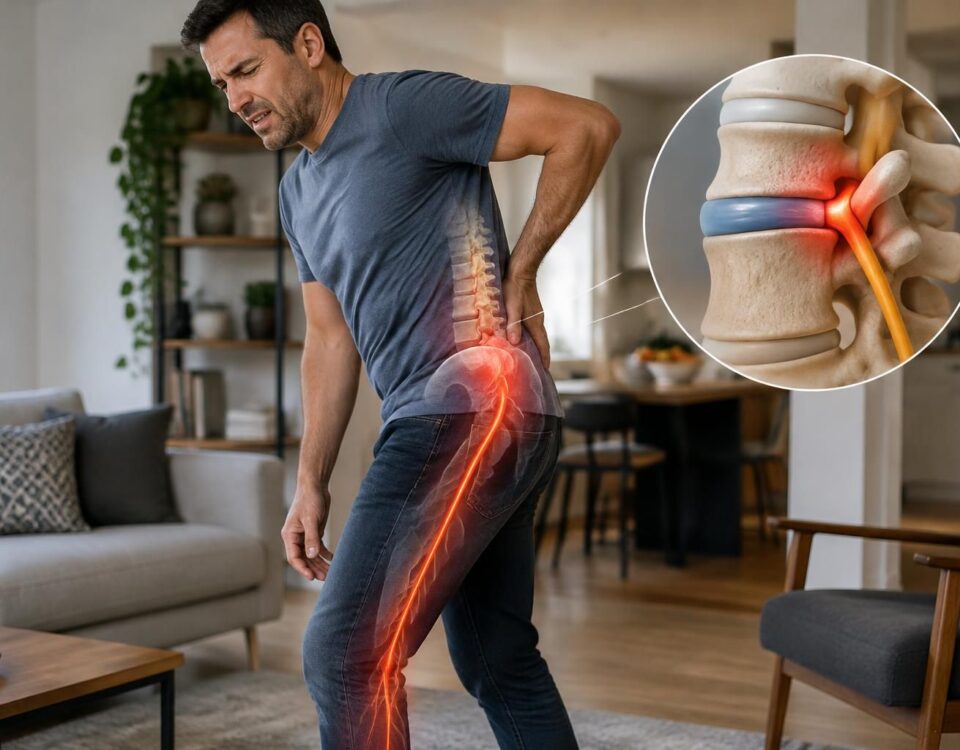
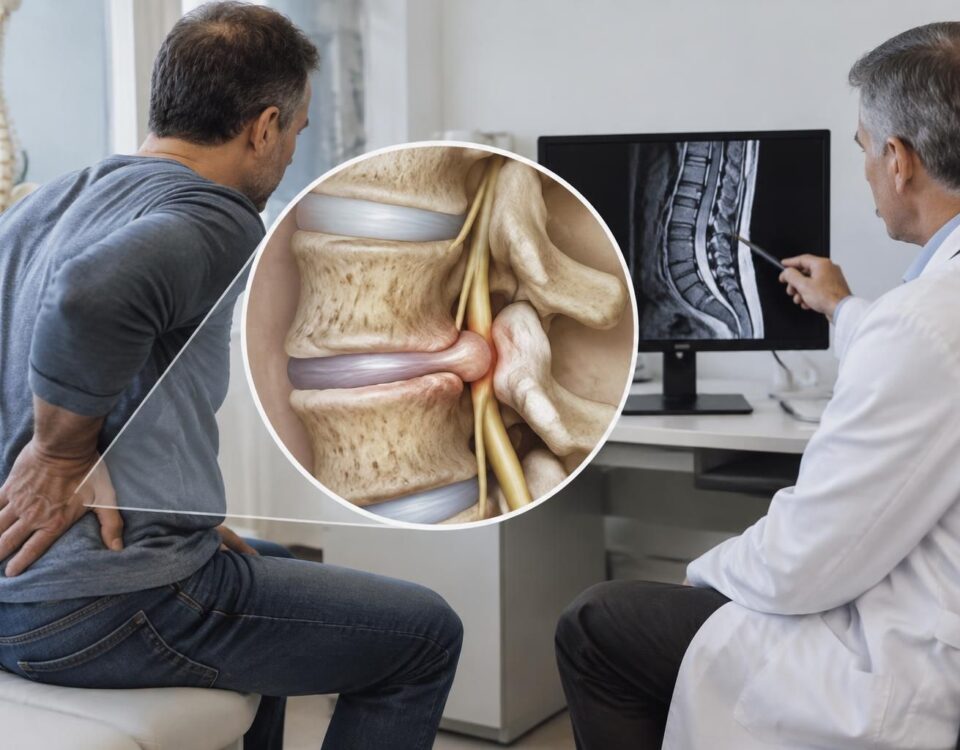
Sciatica and leg giving out: why consult quickly?
11/09/2026
Sciatica and pain that returns after walking
11/09/2026
IN BRIEF
| In brief, disc protrusion and herniated disc describe different degrees of the same problem of the intervertebral disc. Protrusion is a contained bulge; herniation is a rupture of the ring with extrusion of the nucleus. Pain primarily depends on conflict with a nerve root: a protrusion can be asymptomatic, while a herniation can cause irradiated pain, like sciatica or radicular pain. Benefits: helps interpret imaging reports and guide appropriate non-surgical management (physiotherapy/osteopathy). How it works: the disc acts as a cushion; with aging and repeated stress, it can deform and, in some cases, allow the nucleus to exit. The goal is to reduce nerve conflict and strengthen muscles, without systematic recourse to surgery. |
The terms disc protrusion and herniated disc describe two states of the intervertebral disc. Protrusion is a bulging of the fibrous ring without rupture, often asymptomatic; MRI may show a bulge without explaining the pain.
The herniated disc is a partial rupture of the ring, with extrusion of the <strong nucleus pulposus and the possibility of compression or irritation of a nerve root, causing radicular pain (lumbar or cervical). However, the pain primarily depends on location and nerve conflict, not solely on the size of the lesion.
In practice, the evaluation combines imaging, symptoms, and clinical examination.
This article, written by an expert health professional, clarifies the terms disc protrusion and herniated disc, their definitions, and their clinical implications. It explains how to read an imaging report and how to connect symptoms to disc injury, without overinterpreting MRI results. The goal is to provide simple and reliable guidelines to understand common situations associated with the spine.
Definition and distinctions
The disc protrusion corresponds to a bulge of the intervertebral disc. The fibrous ring generally remains intact, and the nucleus pulposus is confined. This is not necessarily a herniated disc. The term “disc protrusion” can describe an early or minimally expressed form.
The herniated disc implies a tear or rupture of the fibrous ring and a displacement of disc material outward. This extrusion can irritate or compress a nerve root, leading to more pronounced symptoms.
The intervertebral disc: function and composition
The disc acts as a shock absorber. It consists of a robust fibrous ring and a softer nucleus pulposus. Over time, the water in the disc may decrease, and its height may change, altering its cushioning capacity.
Imaging interpretation
An image shows an anatomical shape. It does not directly measure the pain experienced. The report must be interpreted alongside symptoms and clinical examination. MRI is a precise tool, but the link with pain depends on the clinical context.
To explore these concepts further, you can refer to resources such as difference between disc bulge and herniated disc.
Evolution and risk factors
The disc bulge (or protrusion) is common with age and repeated loads. The disc can sag and deform without necessarily causing pain. The gradual transition from a protrusion to a true herniated disc depends on mechanical factors and the integrity of the outer envelope.
Typical mechanisms include aging, repetitive strain, constraining postures, and minor trauma. To learn more, see detailed explanations on neuro-vertebral decompression and treatment of herniated discs without surgery.
Symptoms and locations
Pain primarily depends on conflict with a nerve root. A protrusion can be asymptomatic. It can also cause lumbar or cervical pain and, when roots are irritated, pain radiating to the buttock, leg, or arm. Manifestations vary by location:
- Lumbar: lumbar pain with possible radiation into the buttock, thigh, or leg.
- Cervical: pain in the neck with possible radiation to the shoulder, arm, or fingers.
Pain is influenced by position and movements that increase pressure on the spine. For additional explanations, see resources on differences between disc protrusion and herniated disc.
What to do when facing a diagnosis
Do not panic. A disc protrusion does not necessarily indicate significant pain. Nerve conflict, not the size of the deformation, determines the symptoms. Medical advice can confirm whether symptoms originate from a specific disc level and guide management. For information on non-surgical treatments, see resources on osteopathy and herniated discs – gentle approach and persistent pain.
Good habits to protect the discs
Regardless of the diagnosis, adopt postures that respect the spine and promote a balanced load on the back. Maintain overall mobility and avoid excessive loads on the spine. For more information, consult resources on preventing future hernias.
Resources and useful links
- Herniated disc and pain in the calf
- Difference between disc protrusion and herniated disc
- Neurovertebral decompression – without surgery
- Osteopathy – gentle approach
- Protrusive herniated disc vs hernia
- Protrusive herniated disc vs hernia
- Herniated disc and sciatica – persistence
- Preventing future hernias – decompression
- Difference between protrusion and herniated disc
- Protrusion and herniated disc – definitions
About The information provided here is for general information purposes only and is not a substitute for personalized medical advice.
Medical disclaimer: The information and advice provided on this site do not replace the opinion, diagnosis, or treatment of a healthcare professional. Please note that Dr. Sylvain Desforges, osteopath, is not a medical doctor and does not specialize in a medical specialty as defined by the Collège des médecins du Québec. Manual therapy, functional medicine, and sports medicine as described on this site do not include any treatment or medical diagnosis made by a physician or medical specialist. Always consult your doctor for any medical questions. For more details, please read our full Legal Notice.
Comparison axis: nature of the lesion and clinical implication

This article distinguishes between disc protrusion and herniated disc, two conditions of the intervertebral disc that are often confused. It reminds what each term implies, how imaging can be misleading, and why the location and potential involvement of a nerve root guide the severity of symptoms and management choices, favoring a symptom-centered and clinical examination rather than solely the word in the report.
Essential differences between protrusion and hernia
The disc protrusion corresponds to a bulging of the disc without a rupture of the outer envelope. The fibrous ring remains overall contained around a pulpy nucleus that remains in place; the disc can deform without releasing its content. This situation may be asymptomatic or associated with mild pain, but does not necessarily indicate significant nerve involvement.
The herniated disc, on the other hand, involves a partial or complete rupture of the envelope and extrusion of the pulpy nucleus outward. This deformation can exert direct pressure on a nerve root and provoke more marked pain, radiation, and sometimes neurological symptoms such as tingling or weakness. The location and contact with nerve structures guide the intensity and type of symptoms.
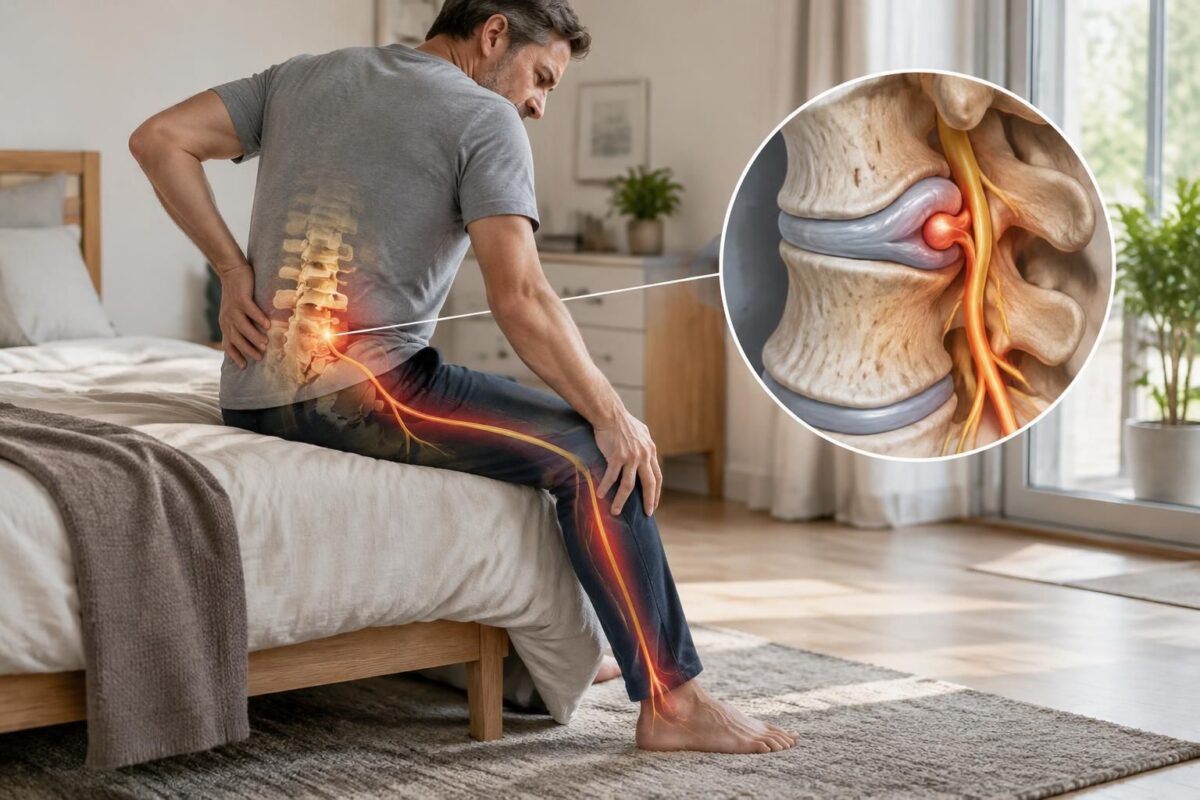
Intervertebral disc protrusion and neurological symptoms
IN BRIEF A disc protrusion is an intervertebral disc that bulges and can irritate a nerve root. It can cause pain, tingling, numbness, or weakness in an arm or leg, depending on its location. Clinical examination and, if necessary, imaging…
The intervertebral disc: anatomy and mechanisms
The disc is composed of a fibrous ring and a pulpy nucleus. In response to stress and aging, it may bulge and lose height. In a protrusion, the deformation remains contained and the integrity of the envelope is preserved; in a hernia, a weak point allows part of the nucleus to escape outside its usual space.
This structural difference changes the mechanical effect: a protrusion may create local conflict without directly affecting a nerve root, while a hernia may irritate or compress a root and trigger radiculopathy. It is essential to understand that radiological appearance is not sufficient to evaluate pain: the precise location and interaction with nerves determine symptoms.
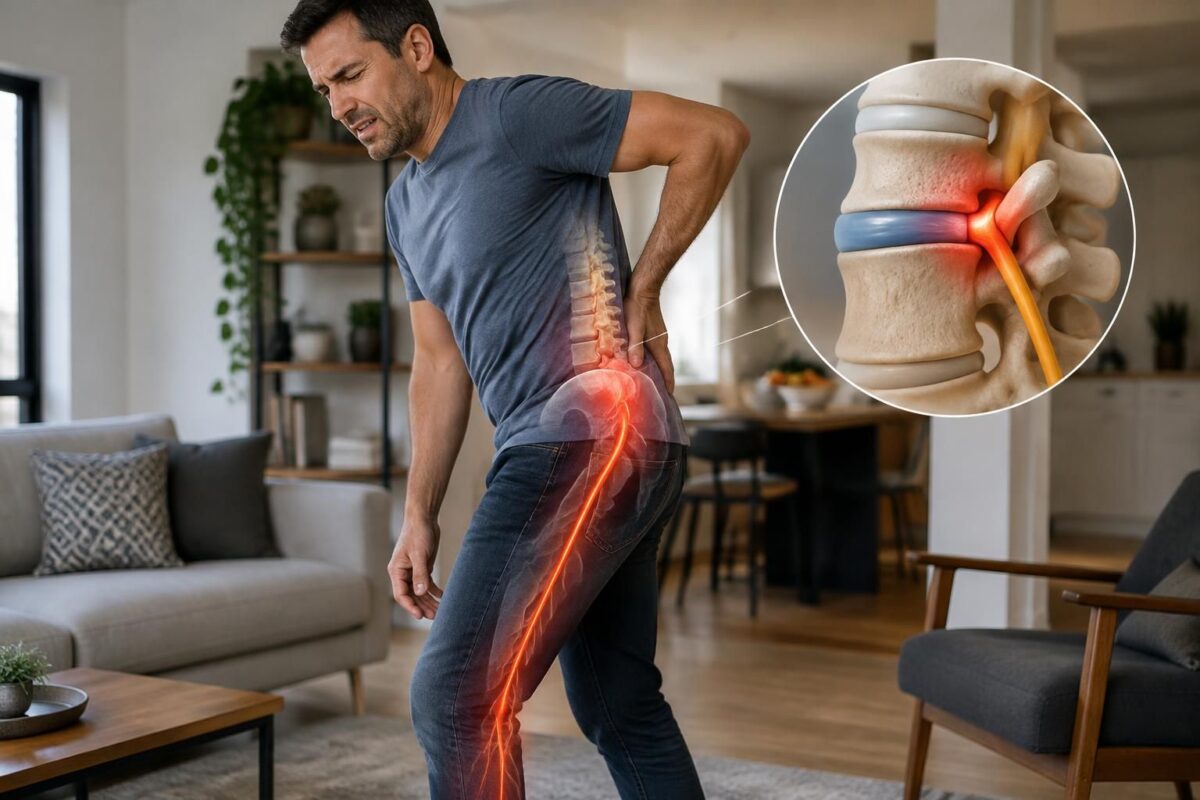
Disc herniation and recurrent sciatica
IN BRIEF A disc protrusion is a bulging of the disc that may be associated with recurring sciatica, without necessarily being the cause. The evaluation correlates symptoms, neurological examination, and imaging, if relevant. An appropriate plan can help improve function…
Clinical signs and interpretation of symptoms
The pain associated with a protrusion may remain local or become radicular if the bulge affects a root. A radiculopathy manifests as pain that follows the path of a specific nerve, sometimes accompanied by paresthesias, loss of sensation, or muscle weakness. In contrast, a herniated disc can be highly symptomatic when the herniated material irritates a root, but it can also be minimally painful if it does not interact with nerves.
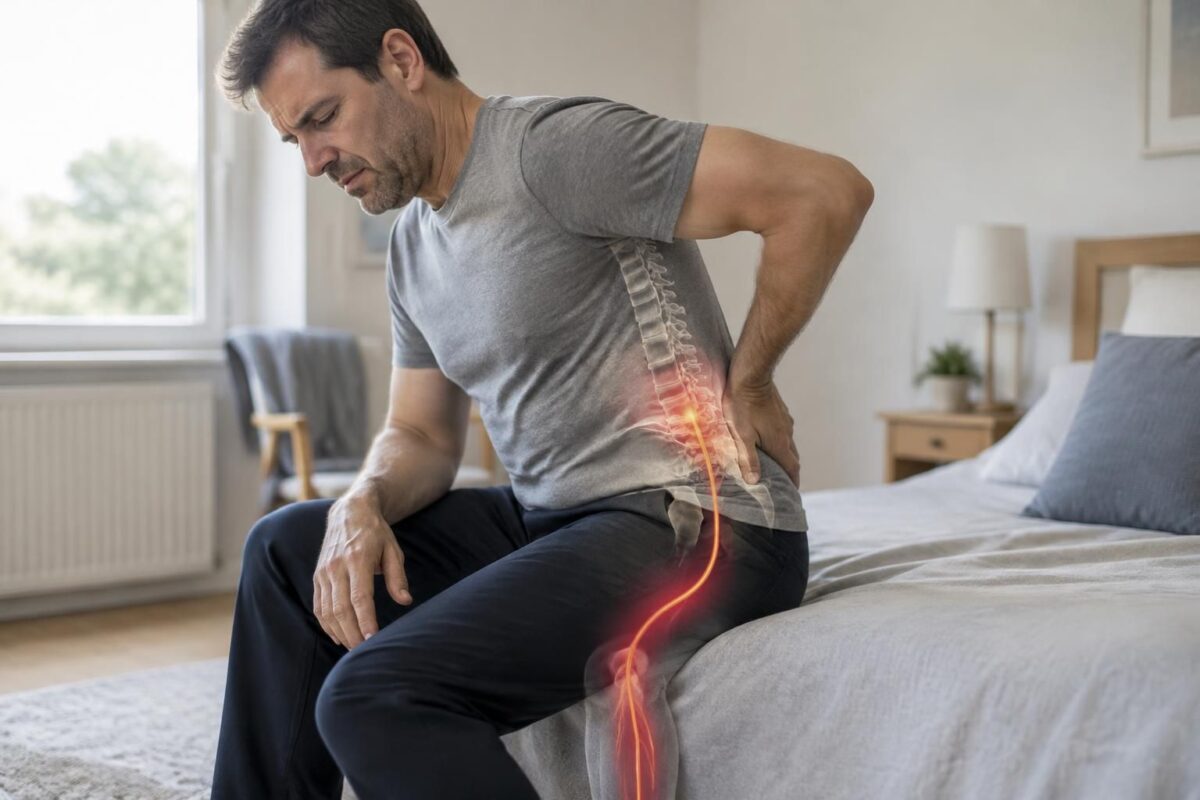
Disc herniation and persistent pain in the leg
IN BRIEF A disc protrusion is a bulging of a disc that can irritate a nerve and cause persistent pain in the leg, sometimes accompanied by tingling or numbness. Imaging alone does not confirm the origin of the symptoms: clinical…
What to do in the event of a diagnosis or suspicion?
In the event of a suspicion of protrusion or hernia, one should avoid hasty conclusions. Clinical reasoning must connect symptoms to physical examination and, if necessary, imaging, without relying solely on the title of the report. The first approach is often non-surgical, including physiotherapy, posture advice, and adapted physical activity, with monitoring of progress.
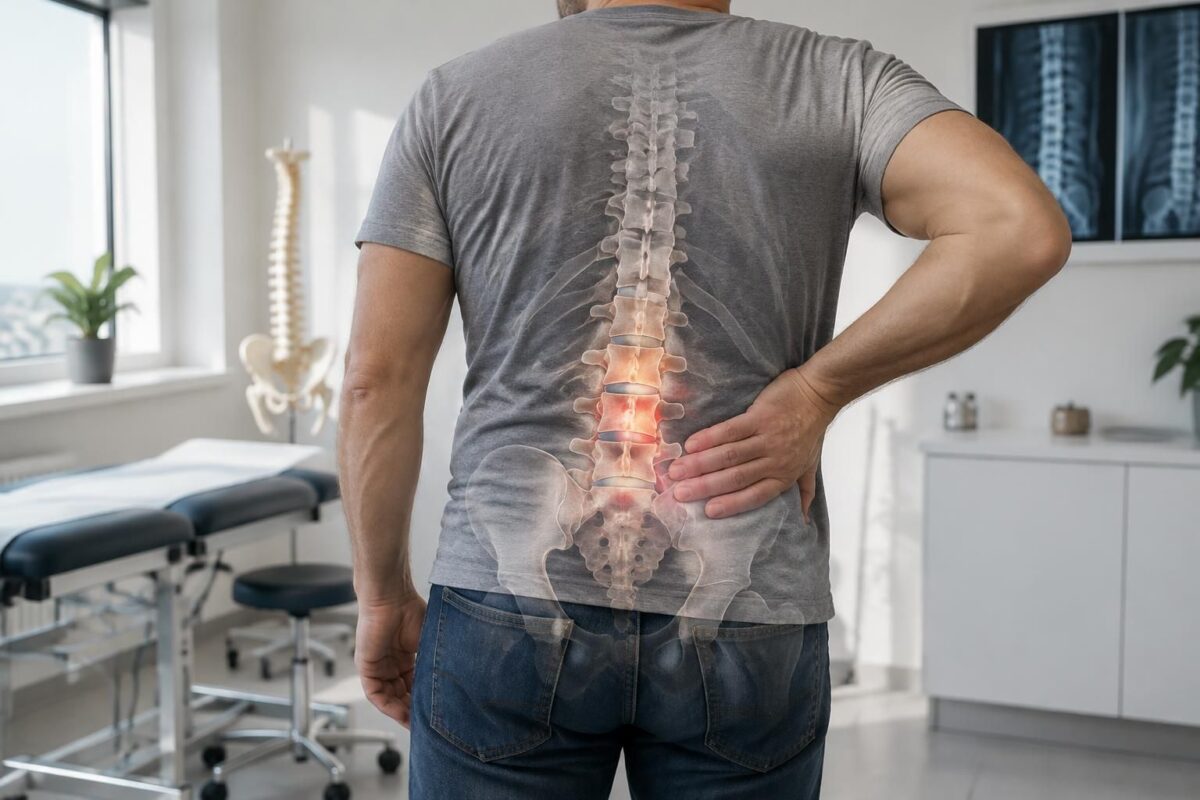
Disc herniation and lumbar degeneration
IN BRIEF A lumbar disc protrusion is a bulging of a disc often related to disc degeneration. It does not always cause symptoms but can contribute to lower back pain or pain radiating down the leg if a nerve is…
Make a useful reading of imaging
A disc bulge does not necessarily mean pain or neurological deficit, and a nucleus extrusion does not guarantee maximum pain. The important factor is the correlation between the location of the detachment, symptoms, and signs upon examination. Imaging may describe an anatomical abnormality without reflecting the patient’s functional or pain intensity.
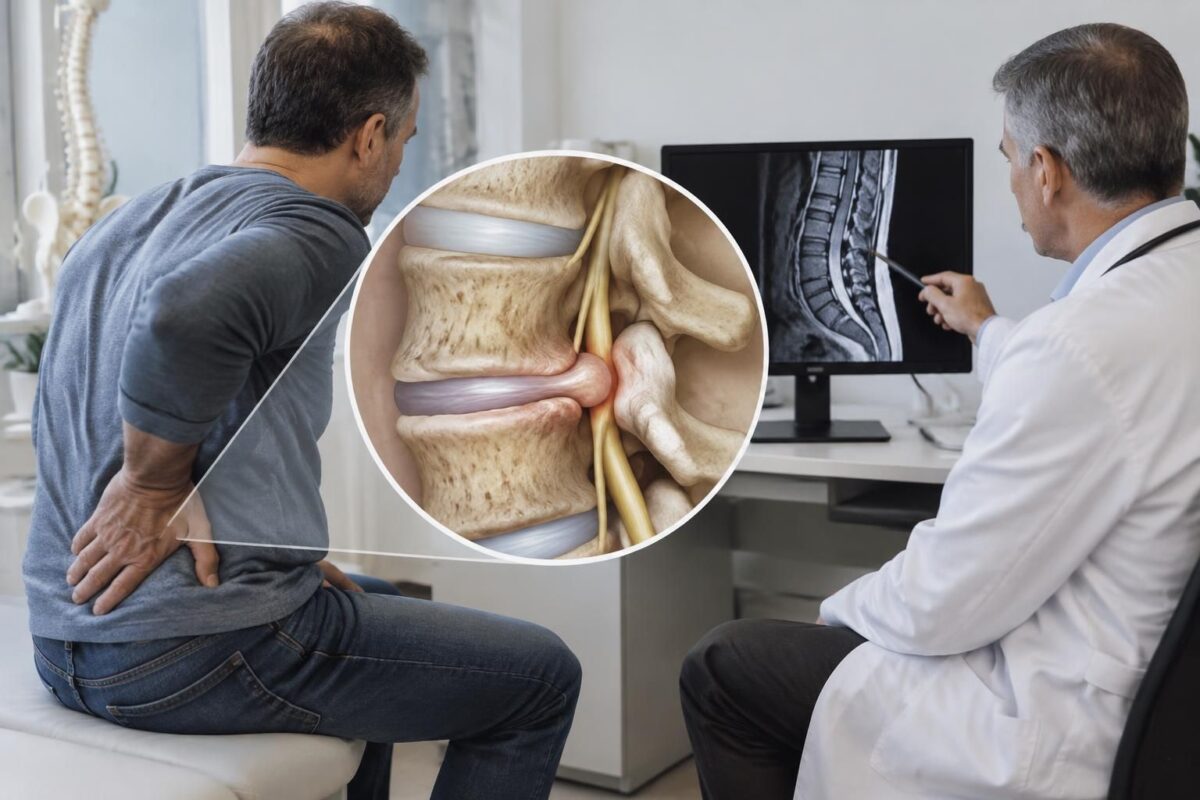
Disc protrusion and disc pinching: combined mechanisms
IN BRIEF A disc protrusion is a bulging of the disc, while a disc narrowing refers to a decrease in its height. These changes can coexist and sometimes irritate a nerve root, leading to pain or radiation, but they can…
Prevent and optimize management
Adopting protective back movements and strengthening trunk muscles helps preserve disc health. Maintaining regular physical activity, favoring appropriate exercises, and correcting professional postures reduce stress on the disc and may limit the worsening of a protrusion or herniation. In case of radiating pain or worsening symptoms, consult quickly to adjust the treatment plan and avoid complications.
| Term | Concise text |
|---|---|
| Disc herniation | Rupture or tear of the fibrous ring with extrusion of the nucleus beyond the disc; may compress a root and trigger radiculopathy. |
| Disc protrusion | Bulging of the disc without rupture of the envelope; the fibrous ring remains contained; often asymptomatic or painful depending on contact with a nerve. |

Disc herniation and associated foraminal stenosis
IN BRIEF A disc protrusion associated with foraminal stenosis occurs when a bulging disc coexists with a narrowing of the opening through which a nerve root passes. This association can lead to lower back pain radiating into the leg, tingling,…
Testimonials: understanding the terms disc protrusion and disc herniation (patient testimonials)
“Before my appointment, I thought my pain was due to a disc herniation. The evaluation helped me distinguish a contained disc protrusion and a potential conflict with a nerve root. This precision changed everything in my understanding of the MRI and the recommended treatment: not necessarily surgery, but an adapted therapy that reduced pain and inflammation.”
“I read my report and saw the words disc protrusion and disc herniation used without nuance. The doctor explained to me that the protrusion can be a mild stage where the bulging disc does not release material into the canal. Knowing this relieved me and allowed me to approach the physical therapy sessions with more confidence, focusing on exercises that relieve pressure on the nerve root.”
“My case was lumbar, and I had pain radiating into my buttock and leg. I was told about a disc protrusion that could become a disc herniation if it progressed and compressed a root. The professional insisted on a non-surgical approach and simple movements that improved my mobility without worsening the situation.”
“In my shoulder and arm, the pain came from strain near a cervical root. The term disc protrusion was used, then the explanation showed that the location and irritation of the root determine the pain, much more than the apparent size of the lesion on the MRI. I understood that two similar images can correspond to very different experiences and that clinical follow-up was essential.”
“I thought a small bulge was benign. Thanks to the clear discussion about disc protrusion and disc herniation, I realized that it all depends on where it presses on a nerve and the body’s response. Today, with an adapted routine and regular check-ups, I lead an active life with no major pain.”

Spinal disc protrusion and nerve inflammation
IN BRIEF A disc protrusion is a bulging of the disc that can irritate or compress a nerve, without necessarily causing symptoms. When it leads to nerve inflammation, it can cause pain in the back or neck, sometimes accompanied by…
Disc herniation and disc protrusion: understanding often mixed terms
In the field of back and spinal health, the terms disc protrusion and disc herniation are often used interchangeably. This confusion can complicate the interpretation of MRI reports and, especially, the understanding of the pains associated with these anomalies. Understanding the nuance between these two phenomena helps in reading symptoms, assessing the risk of nerve conflict, and choosing, with one’s practitioner, an appropriate approach.
A disc protrusion corresponds to a bulging of the intervertebral disc outward, without marked rupture of the fibrous ring. The nucleus pulposus remains contained, and the bulge may be localized or extensive but remains surrounded by the disc envelope. This form is often less symptomatic and can remain stable for months or even years without directly affecting a nerve root.
In contrast, disc herniation involves a partial or complete rupture of the fibrous ring, allowing the nucleus pulposus to extrude outside the disc. This extrusion can compress or irritate a nerve root, leading to radiating pain, radiculopathy, and sometimes motor symptoms such as muscle weakness or reduced reflexes, depending on the affected level.
In practice, what matters is not the size of the bulge or outgrowth, but the contact with the nerve and the extent of the symptom. A significant protrusion can generate marked pain if it aligns with the path of a root, while a large herniation can be asymptomatic if it does not encroach on a nerve structure.
The disc is a bi-component structure made up of a fibrous ring and a nucleus pulposus. The bulge results from a progressive weakening of the envelope and a displacement of the internal content, while the tear or rupture confines or releases the nucleus. Understanding this disjunction helps explain why some mundane movements trigger pain when a nerve is involved.
With aging and repeated stresses, the disc can thin and deform. The clinical file may show a protrusion that stagnates or, in some cases, progresses to a herniation. Mechanical factors like prolonged postures, abrupt movements, and lack of recovery promote this process, while imaging alone is insufficient to predict pain.
Management primarily relies on non-surgical approaches: adapted physical activity, physical therapy, and symptomatic treatments. Surgical intervention is considered only in severe cases or when neurological deficits progress despite conservative treatments.
Dr Sylvain Desforges, osteopath, naturopath, and manual physician, is the founder of TAGMED clinics and the ACMA association. His commitment to health innovation and chronic pain management leads him to integrate advanced technologies such as spinal decompression, laser, and shockwave therapy. His mission is to provide evidence-based care to optimize the health and well-being of his patients. To learn more about his approach and the services available at TAGMED Clinic, contact this clinic.
This text clarifies that disc protrusion and disc herniation do not describe the same thing, even though they concern the intervertebral disc. A protrusion is a bulging of the fibrous ring that remains contained, whereas a disc herniation corresponds to a rupture of the envelope and the extrusion of the gelatinous nucleus. Imaging can show similar forms for individuals whose pain differs significantly, which explains why symptoms and the clinical context must guide interpretation. In practice, understanding this nuance helps in reading an MRI, relativizing findings without symptoms, and grasping why low, cervical, or radiated pain may appear in some cases and not in others.
The disc bulge and the disc protrusion describe a deformation of the disc without major rupture of the envelope, while disc herniation involves a rupture of the fibrous ring and the passage of the nucleus outward. This distinction is essential, as it changes the mechanical analysis: a protrusion can be a simple deformation, a conflict with a nerve root, or a more marked injury, whereas a herniation can lead to direct nerve irritation and clearer radiating pain.
From a clinical perspective, pain primarily depends on the conflict with a nerve root and not solely on size or radiological appearance. Thus, an extensive protrusion may sometimes be more painful than a large herniation that is not in contact with a nerve. To better interpret these images and understand their significance, it may be helpful to consult specialized resources such as Central disc herniation and sciatic pain and Disc herniations protrusions.
Several factors explain the evolution between protrusion and herniation and their progression over time: disc aging, repeated loads, posture, and minor trauma. In most cases, non-surgical management—appropriate physiotherapy, work on posture and daily activities, and analgesics when necessary—allows for significant improvement, and some phenomena of spontaneous resorption may occur for extruded herniations (read more). For further insights, see also this supplement.
Supplementary resources address the nuances between protrusion and herniation and their implications for pain and recurrence, such as this resource on disc protrusion and this comparative article.
For an understanding supported by clinical experience, you can consult texts describing the clinical significance of the different types of herniation and their implications for pain and sciatica, such as these recurrence factors and link on root L5.
In practice, the goal is to clear up misunderstandings and rely on symptoms, clinical examination, and imaging in a cross-referenced manner to guide appropriate management, with a non-surgical approach prioritized when possible. Supplementary resources and additional viewpoints help illuminate this complex diagnosis and adapt daily actions and rehabilitation strategies.

Disc protrusion and irritation of L5
IN SHORT A disc protrusion is a bulging of the disc that can irritate the L5 root and cause lower back pain radiating to the buttock, leg, or foot, sometimes with tingling or weakness. MRI alone is not sufficient to…

Dr Sylvain Desforges, B.Sc., D.O., N.D., osteopath, is the founding president of TAGMED and of the ACMA association. He dedicates his practice to chronic spinal pain, low back pain and symptoms compatible with sciatica, particularly when pain radiates toward the buttock, leg, calf, foot or toes.
Through SOS Sciatique, he publishes educational content on sciatica symptoms, possible causes such as disc herniation, disc narrowing, foraminal stenosis or irritation of a lumbar nerve root, as well as non-surgical approaches that may be considered according to the evaluation. At Clinique TAGMED, care may include, depending on the case, motorized neurovertebral decompression, specific osteopathic care or precision percussion.
For an evaluation related to sciatica treatment in Montreal / Mount Royal or sciatica treatment in Terrebonne, please consult the services available at Clinique TAGMED.
Medical disclaimer
The information published on SOS Sciatique is provided for educational purposes only and does not replace a consultation, diagnosis, opinion or treatment provided by a physician or another authorized healthcare professional. The author of this article is neither a medical doctor nor a specialist in a medical specialty recognized by the Collège des médecins du Québec. The osteopathic, manual medicine or functional support approaches described on this site do not constitute medical acts and are not intended to replace medical follow-up.
Consult a physician or emergency service in cases of loss of bladder or bowel control, anesthesia in the saddle area, significant or progressive weakness in the leg or foot, fever, recent trauma, severe pain or rapid worsening of symptoms. For more details, please read our Legal Notice.