Why osteopathy is an effective alternative to drugs
27/06/2026
Osteopathy and tendonitis: a gentle and natural approach
27/06/2026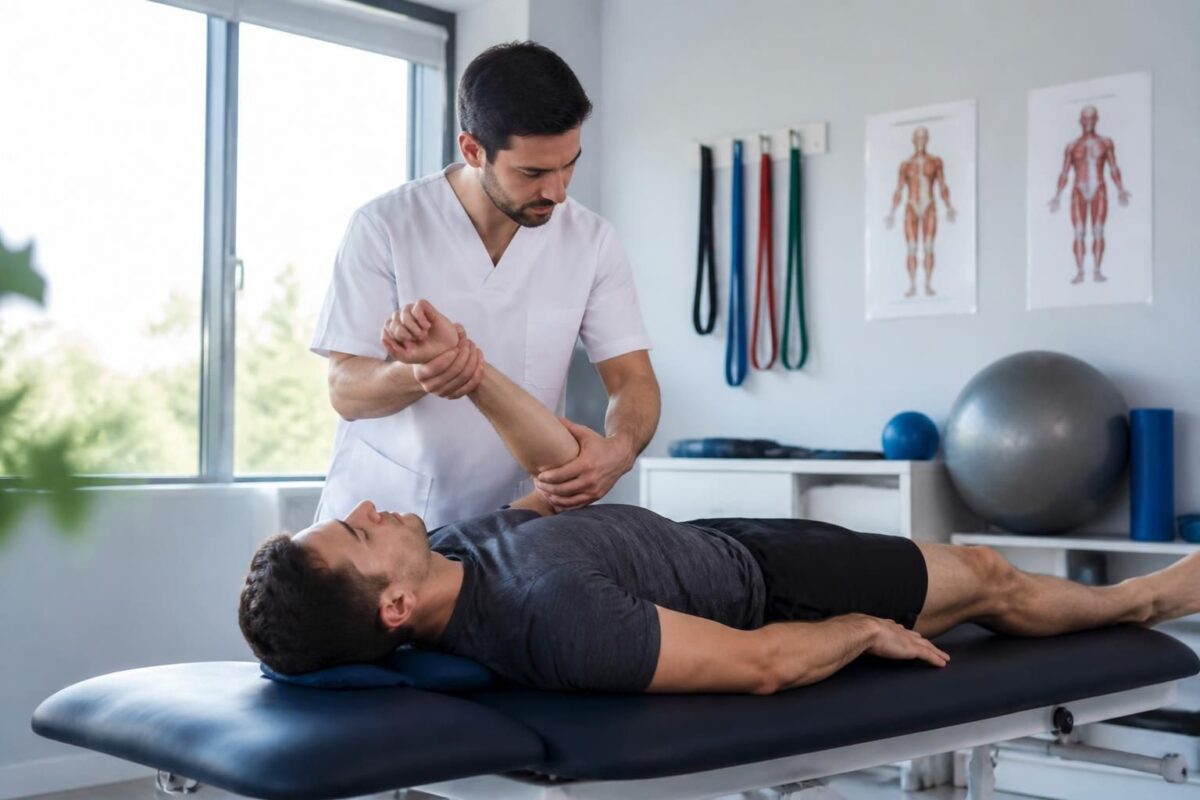
In short
| In short, theosteopathy is one Manual approach to Optimize physical abilities By restoring theBody balance, the mobility and the Neuromuscular coordination. What is it? It is a discipline that evaluates the body as a whole and uses Gentle techniques To remove tensions and movement restrictions to improve the performance and the welfare. What are the advantages? pain reduction, Improving mobility, Injury prevention and Optimized recovery, contributing to General well-being. How does it work? By Targeted manual techniques that promote theself-healing and a better circulation, supporting posture, coordination and Physical performance. In Montreal, this service is particularly useful for active people and athletes seeking to optimize their mobility and prevent injuries, while supporting general well-being. |
theosteopathy offers Manual approaches intended for Optimize physical abilities By working onFunctional balance of the body and the interactions between Structure and function. By Joint mobilizations, of Release techniques and other targeted gentle gestures, it improves the mobility, the Neuromuscular coordination and the flexibility. This approach promotes Injury prevention and the recovery After exercise, while stimulating the circulation, the nervous system and general well-being. For athletes as for any active person, it aims to Sustainable performance thanks to better body harmony.
Quick summary: This article presents the Osteopathic approaches for Optimize physical abilities. Osteopathy is an approach manual who is aiming forBody balance and theImproving mobility. It can support performance, prevent tension and help recovery. The text describes the principles, techniques and benefits for athletes and active people.
What is osteopathy and its principles
Osteopathy is a discipline manual who seeks the overall balance of the body. It is based on four simple principles. The body is a functional unit. Each part of the body influences the others. The structure governs the function. Tissue alignment and integrity supports proper functioning. theBody self-regulation is encouraged. The body can heal itself. The circulation blood and lymphatic is essential for general health.
How Osteopathy Can Optimize Physical Capacities
Osteopathy helps Improve mobility and limit musculoskeletal tensions. It promotes better neuromuscular coordination and an overall response of the body to exercise. Manual work aims to restore harmony between the circulatory, nervous and musculoskeletal systems. This approach can support performance and facilitate recovery after exercise.
Osteopathic techniques and performance effects
Osteopathic techniques cover several aspects. theStructural osteopathy Acts on joints and muscle chains to improve mobility and posture. theCranial osteopathy May help promote rest and recovery during sleep disorders or fatigue. theVisceral osteopathy Supports organ function and digestive comfort, which can influence endurance and overall energy. These approaches remain non-invasive and complement the training programs.
To deepen the links between osteopathy and performance, consult specialized resources on Why#ATFP_CLOSE_TRANSLATE_SPAN# Osteopathy is effective for recurrent pain and the prospects of Impact#ATFP_CLOSE_TRANSLATE_SPAN# on sports performance.
Indications and populations
Osteopathy is aimed at all ages and at various levels of activity. Athletes and active people can benefit from it to improve mobility, coordination and recovery. Osteopathy can be associated with appropriate practices, in addition to a balanced diet and a structured training program. Recognized training exists in institutions such as NUMSS and NAO, National University of Medical Sciences and National Academy of osteopathy, which provide rigorous and integrated training in clinical practice.
Holistic approach and prevention
posture and movement are analyzed as a whole. Osteopathy aims for the balance between the body, the mind and the environment. By working on tensions and patterns of movement, the osteopath helps prevent imbalances that can limit performance. This approach favors effective energy expenditure and the management of physical stress related to training.
Additional resources to your practice can be consulted, in particular via SOS#ATFP_CLOSE_TRANSLATE_SPAN# Sciatica and the pages of Clinic#ATFP_CLOSE_TRANSLATE_SPAN# TAGMED, which expose elements on the osteopathic approach and functional recovery. Other useful information relates to neurovertebral decompression and questions related to mobility after technical gestures, which can be consulted on Decompression#ATFP_CLOSE_TRANSLATE_SPAN# Neurovertebral and associated resources.
For those who wish to understand the practical aspects and the benchmarks in osteopathy sports, articles and practice guides present the principles and results observed in clinical contexts, including the areas of recovery and mobility.
As part of training and practice, relevant professional associations include ACMA (Canadian Alternative Medicine Alliance), College of Canadian Osteopaths and College of Canadian Osteopaths, who support the ethics and quality of osteopathic care. For patients and professionals, these resources ensure appropriate professional standards and supervision.
Additional tools and complementary approaches exist to understand the impact of osteopathy on performance. Exchanges between practitioners and associations make it possible to discuss the optimal methods and the results observed in real practice.
Useful links to resources and services include SOS#ATFP_CLOSE_TRANSLATE_SPAN# Sciatica and Clinic#ATFP_CLOSE_TRANSLATE_SPAN# TAGMED, which offer information on osteopathic approaches and support opportunities in a performance program.
Also, resources on osteopathic approaches and post-traumatic recovery can be viewed via SosherniaDiscal#ATFP_CLOSE_TRANSLATE_SPAN# and SostunnelCarpal#ATFP_CLOSE_TRANSLATE_SPAN# For specific pain and mobility contexts.
Advice for athletes and active people can be found in texts and guides available on SOS#ATFP_CLOSE_TRANSLATE_SPAN# Sciatica, which discuss the integration of osteopathic approaches into performance and recovery programs.
Resources and testimonials on osteopathic practice and performance can also be viewed from pages associated with manual medicine and sports recovery.
Training and technical questions related to sports osteopathy can be explored with recognized establishments. Recognized national training in the field, such as NUMSS and NAO, and professional organizations support the development of knowledge and skills necessary for practice.
To learn more about the mechanisms and results of osteopathy in sports contexts, you can consult journals and summaries, including the cited resources and practice guides available online.
Medical Disclaimer: The information and advice provided on this site does not replace the health professional’s diagnosis or treatment. Please note that Dr. Sylvain Desforges osteopath is neither a doctor of medicine nor a doctor, and is not a specialist in a medical specialty as defined by the Collège des Médecins du Québec. Manual medicine, functional medicine and sports medicine as described on this site exclude any medical treatment or diagnosis made by a doctor or specialist doctor. Always consult your doctor for any medical questions. For more details, please read our full legal notice.
Focus on action to optimize physical capabilities
- Evaluation Postural and Personalized report
- Mobility and flexibility Improved
- engagement and Targeted stretches
- Coordination and proprioception reinforced
- lymphatic drainage and circulation optimized
- Breathing and energy augmented
- Recovery post-effort and strain reduced
- Prevention injuries and Physical preparation
- Education and Self-support
- Integration with the Training program

Osteopathic approaches Offer a targeted and holistic approach to maximize physical capabilities. By evaluating the body as a whole and by intervening through appropriate manual techniques, they aim to improve mobility, prevent injuries, accelerate recovery and strengthen neuromuscular coordination. This article presents practical recommendations for leveraging these approaches in an active lifestyle.
Holistic vision and personalized evaluation
To optimize physical performance, it is essential to approach the person as a whole. The assessment should identify postural imbalances, mobility limitations, muscle tension and risk areas. By integrating aspects of breathing, sleep and stress, one can establish a personalized plan that adapts to the pace of training and individual goals. This approach favors the balance between body and mind and aims for sustainable self-regulation.
Targeted evaluation and personalized plan
Start with a Functional assessment Focused on large joint mobility, musculo-fascial tensions and movement patterns. Measure the joint amplitudes, observe the standing and moving posture, and analyze diaphragmatic breathing. Based on this, establish realistic goals and a progressive plan combining mobility, stability, and active recovery. Prioritize a collaborative approach: back the program to sports training, without seeking to replace medical care when necessary.

How osteopathy improves the quality of life of active people
In short In short, theosteopathy is a global approach that Optimizes mobility and the function of the body of ACTIVE PEOPLE, for a better quality of life. It helps prevent injury and reduce Musculoskeletal pain While promoting the Sports recovery.…
Techniques and interventions to optimize mobility
The osteopathic techniques used to stimulate mobility target the restriction zones and promote effective synchronization of body structures. Gentle mobilizations, joint adjustments and myofascial methods help to improve flexibility, reduce tension and rebalance muscle chains. In addition, gentle gestures on soft tissues support recovery and improve motor coordination.
Integration with sport
Integrate osteopathic sessions into the training schedule, favoring slots that do not disturb performance peaks. Use these interventions as a pre-preparation before intense sessions and as a recovery tool between workouts. The objective is to optimize the glide of gestures, to improve the stability of the spine and to promote better neuromuscular synchronization, without creating any therapeutic dependence.

Osteopathy and sports recovery: prepare the body for lasting performance
In short In short, Osteopathy and Sports recovery is one Global manual approach that sustainably prepares the body for the effort by restoring mobility and circulation After the effort. It is a discipline that acts on the sinews, the joints,…
Injury Prevention and Postural Adjustment
Prevention is based on identifying imbalances and improving postural alignment. Targeted work on the chest, lumbar and pelvic chains, as well as on diaphragmatic function, can reduce the risk of overload and micro-traumas during repetitive movements or intense efforts. Offer simple routines to perform on a daily basis and after exercise to maintain mobility gain and limit residual tensions.
Work diagrams and home routines
Establish micro-routines of mobility and of Soft stretches To be completed 5 to 10 minutes after workout or at bedtime. Include breathing and trunk stabilization exercises to maintain alignment. Adapt the load and complexity according to the evolution: slow progression, monitoring of overwork and adjustments in real time.
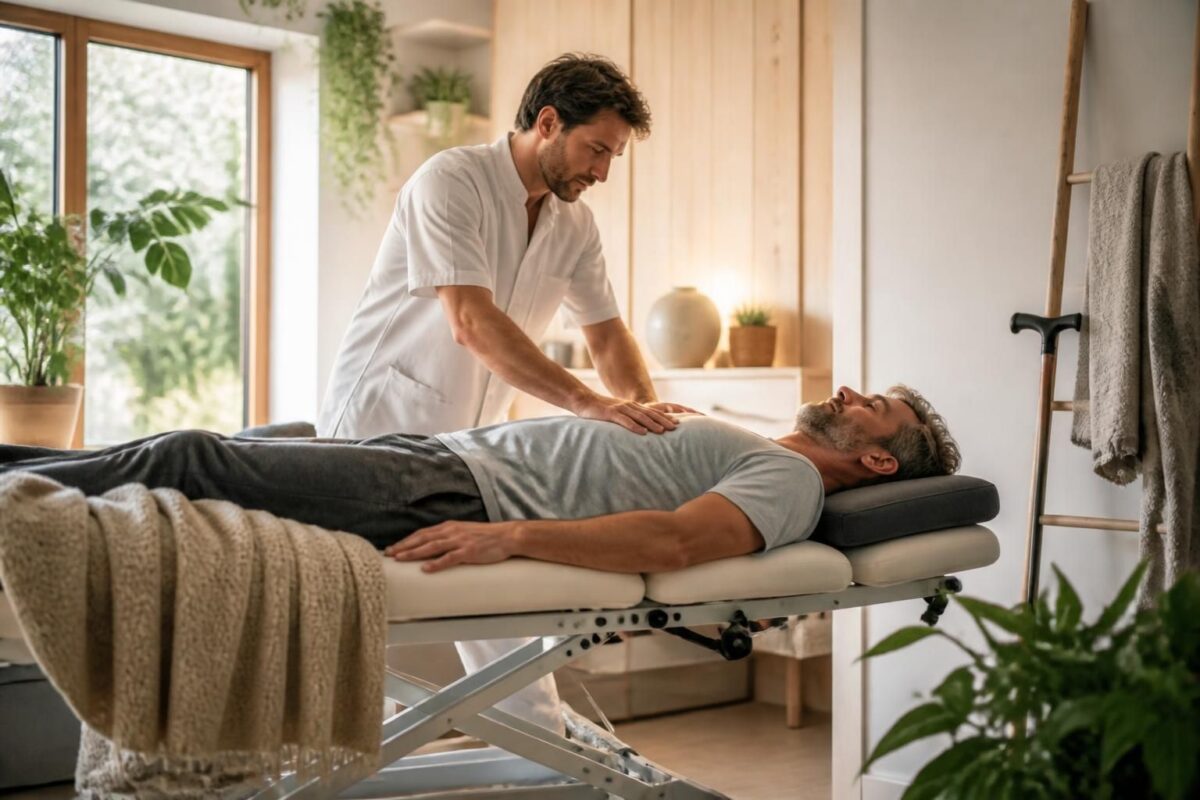
Why Osteopathy Is Essential For Recovery People
In short In short, Osteopathy in convalescence is an approach manual and holistic which helps to accelerate the recovery by restoring The balance, the mobility and a good circulation fabrics. it contributes to Reduce the pain, support the Back to…
Recovery and performance
Recovery is a key lever to sustainably improve performance. Osteopathic techniques contribute to better blood and lymphatic circulation, reduction of muscle tension and improvement of general relaxation. Combine these approaches with active practices such as guided mobility work and structured rest periods to promote a quick and effective recovery.
Optimization of coordination and technique
Beyond pain relief, osteopathic intervention can help optimize proprioceptive patterns and neuromuscular coordination. By targeting areas of functional weakness, we can improve the efficiency of technical gestures and the accuracy of movements, which is then reflected in overall performance and reducing the risk of injury.
In summary, for athletes and workers wishing to maximize their capabilities, a well-planned osteopathic approach is based on a global assessment, appropriate mobilizing techniques, proactive prevention and structured recovery strategies. Mobility, prevention and recovery are the pillars of a coherent program focused on functional excellence.

Osteopathic manipulations to strengthen post-traumatic muscles
In short In short, Osteopathic manipulations for Strengthen post-traumatic muscles constitute a gentle manual approach aimed at restoring the mobility, reduce the pain and facilitate the Functional rehabilitation After a injury. What is Is it? A series of precise gestures…
Axes to optimize physical capacities through osteopathy
| Axis | Concise impact |
|---|---|
| Joint mobilizations | Improve mobility and reduce restrictions, promoting smoother performance. |
| Cranial osteopathy | Soothe cranial tensions and improve sleep, supporting recovery. |
| Visceral osteopathy | Balances internal tensions and optimizes organ function, improving energy and comfort. |
| Structural osteopathy | Corrects postural imbalances and lumbar tensions, facilitating daily and sporting gestures. |
| Myofascial relaxation | Relaxes the fascias, releases tension and improves overall flexibility. |
| Postural and neuromuscular evaluation | Mapping imbalances and adjusting the engine diagrams for better coordination. |
| Neuromuscular coordination | Optimizes the sequence of movements and improves the efficiency of the physical gesture. |
| Injury prevention | Early detects and corrects imbalances to reduce injuries and prolong training. |
| Post-effort recovery | Promotes circulation and muscle recovery, accelerating the return to performance. |

Osteopathy and prevention of work-related musculoskeletal disorders
In short theosteopathy is one Manual approach that restores body balance and prevents MSD related to work. Its advantages: reduction of tension, improvement of mobility and prevention of chronic pain. She is preventive and healing, suitable for office and trades…
Testimonials on osteopathic approaches to optimize physical abilities
“Before working with an osteopathic approach, my tensions and musculoskeletal pains hindered my workouts and my performances. Today I see a Improving mobility and an Faster recovery After each session, which translates into Improved times on my races And a new confidence in my body. »
“As a cyclist, performance depends heavily on posture and breathing. The osteopathic approach made it possible to release the Muscle tensions and improve the bloodstream, which results in a Average power increase and an More stable endurance during long outings. »
“For my racesultra-marathon, the Injury prevention and the pain reduction are essential. I felt the benefit of a Better trunk stability and a Accelerated recovery which allow me to maintain a sustained pace over long distances. »
“In weightlifting, the Postural consistency and the Shoulder flexibility Make all the difference during heavy rehearsals. Osteopathy helped me perform the gestures with less pain and Better movement accuracy, which is felt directly on my loads and my performance. »
“In a multi-discipline practice (swimming, cycling, running), osteopathy acts on the Neuromuscular coordination and the Injury prevention, facilitating transitions between disciplines and making it possible to maintain a constant performance throughout the season. »
Dr. Sylvain Desforges, expert in osteopathy, naturopathy and manual medicine, is fully involved in supporting active people towards a Optimum performance and a lasting balance of the body. Leading the TagMed clinics and the ACMA association, he develops programs that combine osteopathic know-how and scientific approach to optimize physical capacities while protecting the overall health of patients.
In this discipline, the Fundamental principles guide each intervention. The body is considered as a Functional Unit, and the structure governs the function, which means that alignment and relationships between body segments directly influence performance. theself-regulation is encouraged, so that the body regains its self-healing capabilities, and Artery Rule Recalls the importance of effective blood and lymphatic circulation to nourish, oxygenate and revitalize tissues. This philosophy makes it possible to analyze the body as a whole and to adjust the supports, tensions and motor diagrams that condition the physical performance.
To optimize capacity, the osteopathic approach focuses on Manual techniques targeted and individualized. The Joint mobilizations soft release movement restrictions, techniques myofasciales dissipate voltages and trigger voltage zones, and Postural assessments make it possible to identify the imbalances that limit the effectiveness of sporting gestures. By working on the flexibility, coordination and efficiency of motor patterns, osteopathy contributes to a Better mobility and to a Improved muscle function.
The applications concern both the athletes than active people in search of well-being and sustainable performance. This approach helps Injury prevention by correcting postural imbalances and repetitive tensions, and it promotes Post-effort recovery Faster. At the same time, she supports the Functional breathing and chest alignment, elements that directly influence endurance, power and movement accuracy. The objective is to fluidify the gestures and reduce the pain that slows down training and daily practice.
The route proposed by Dr. Desforges is based on an approach evidence-based, while enriching itself with a range of cutting-edge technological tools. the integration of methods such as motorized spine decompression, approaches based on laser And shockwave therapies amplify muscle returns, improve circulation and support the nervous system in the regulation of tone. This synergy between osteopathic techniques and advanced technologies offers a holistic approach that restores balance and triggers natural healing and body optimization mechanisms.
In summary, the Osteopathic approaches To optimize the physical capacities are based on a global vision of the body and on mechanisms of prevention, of recovery and of performance integrated into personalized support. They aim to enable everyone to fully exploit their potential, while nurturing the mental and emotional well-being necessary for a healthy and lasting practice.
In this article, you will find out how Osteopathy may Prevent injury, optimize the recovery and amplify the performance Physical thanks to a holistic approach and soft manual techniques.

The benefits of osteopathy to treat muscle imbalances
In short theosteopathy is a manual approach to restore themuscle harmony and postural considering the body as a whole. Its main benefits include the reduction of aches and tensions, the improvement of the mobility and from the posture, and prevention…
The foundations and mechanisms of osteopathy
Discipline is based on the idea that the body is a dynamic unity. By evaluating the Postural balances, tissue tension and movement restrictions, the osteopath seeks to restore Functional harmony between the different structures of the body. The four key paradigms — body unit, structure influencing function, self-healing ability and maintaining optimal circulation — guide each treatment, to support overall health.
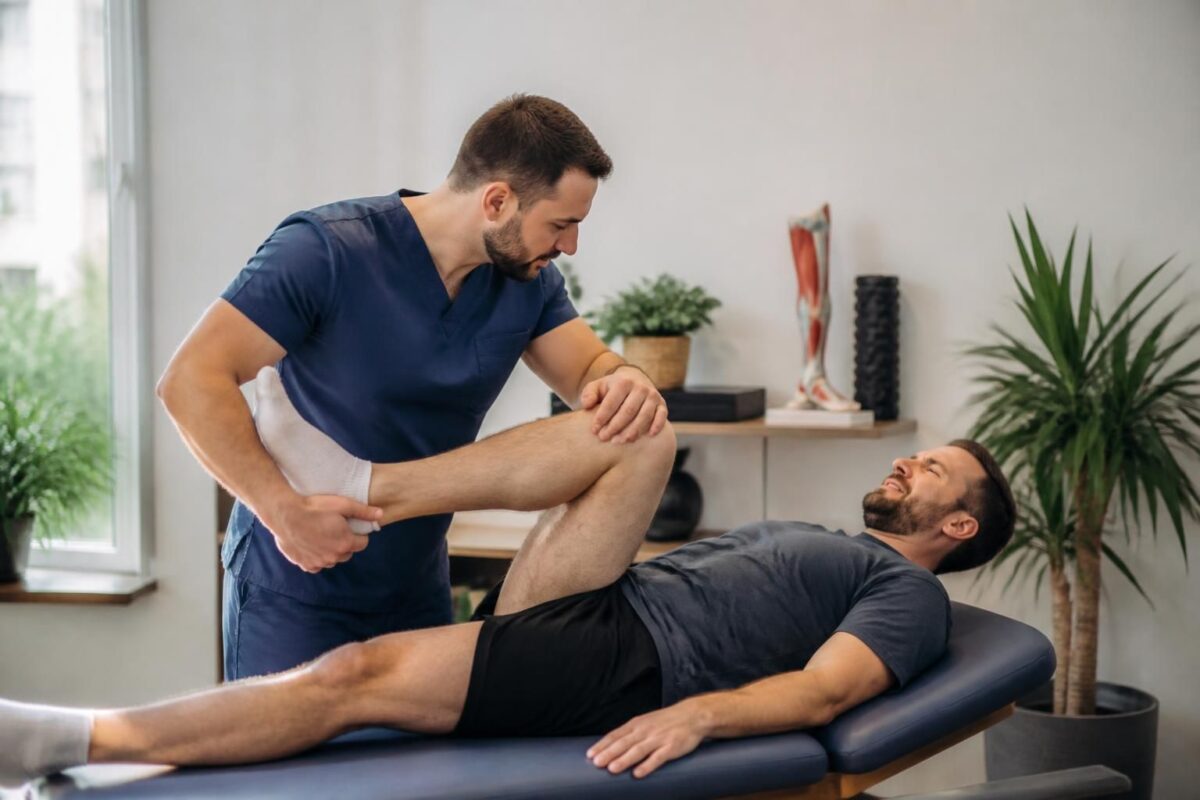
Osteopathy and chronic leg pain: regaining an optimal quality of life
In short In short, Osteopathy is one Global manual approach aimed at reducing Chronic leg pain and improve the quality of life. What is it? Non-drug therapy using the hands to identify restrictions and treat lesional chains. How does it…
Apps for training and performance
For athletes, theosteopathy Offers a proactive approach to reduce the risk of injury by targeting postural imbalances and muscle tension before they become painful. This discipline promotes better coordination and Joint mobility More fluid, sources of improvement in technique and endurance. To go further on preventive approaches in sport, consult the following resources:
Osteopathic approaches to prevent sports injuries,
and Osteopathy for athletes – Injury management and performance optimization.
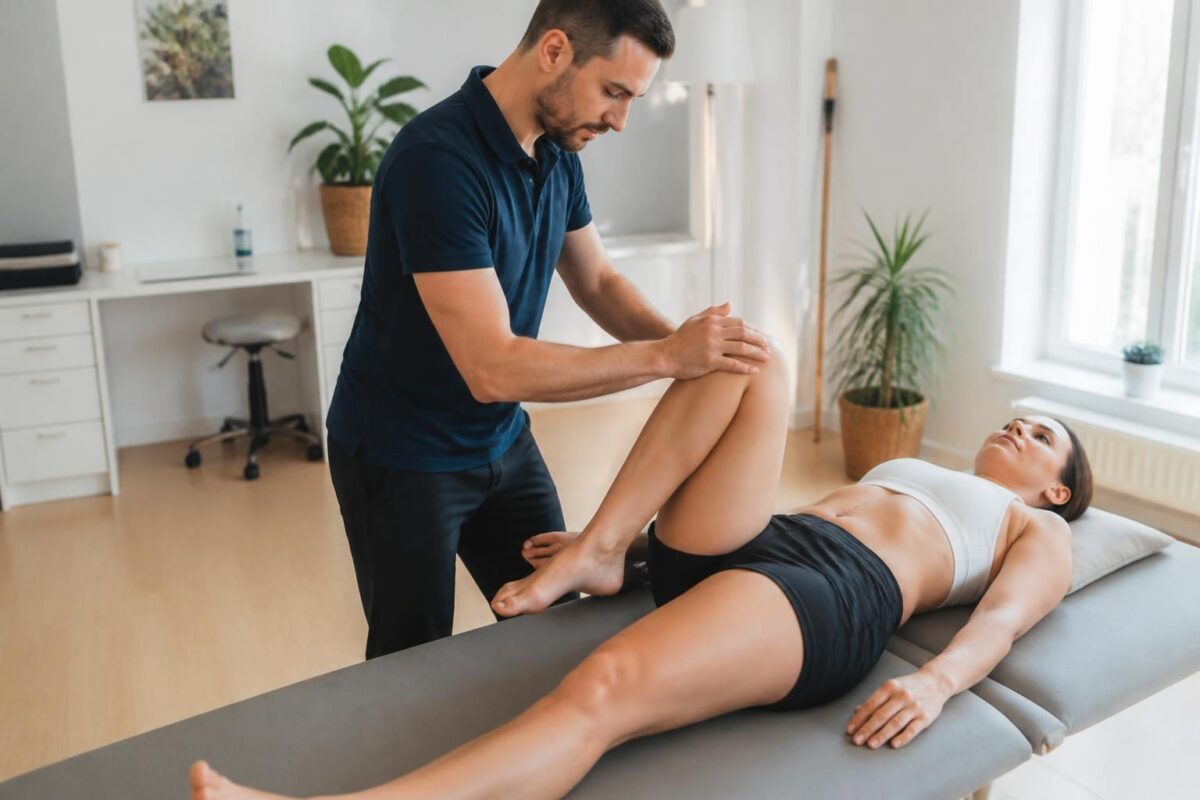
How osteopathy supports recovery after complex surgery
In short In short, Post-operative osteopathy is an approach fresh which supports the recovery After a Complex surgery. It helps to reduce the pain and the fatigue, improves the mobility and accelerates the healing thanks to a better vascularization and…
Recovery and prevention of injuries
theosteopathy acts as a lever for Post-effort recovery By improving the circulation and releasing muscle tension. Gentle techniques stimulate natural healing mechanisms and promote faster recovery, while reducing the risk of recurrence through better postural management and restitution of mobility. To explore the links between osteopathy and recovery after muscle injuries, see Osteopathy and recovery.
Additional resources are in this direction, in particular on preventive effects in the sports environment and the optimization of recovery: Santact – Osteopathy and Sport and IMSF – How Osteopathy Improves Sports Performance.
Practical integration and security
Osteopathic interventions are non-invasive and adapted to each individual, from the child to the elderly. A personalized assessment allows targeting of tension zones and a progressive plan that supports the Physical resilience, the mobility and general well-being. To better understand the impact on performance and recovery in athletes, you can consult analyzes and feedback such as The importance of osteopathy for athletes and Osteopathy and post-operative rehabilitation.
Resources and additional readings
To deepen, here are some relevant readings and resources that articulate prevention, recovery and performance:
• Osteopathy and lower back pain – Non-invasive approach
• Recovery from muscle injuries
• Osteopathy and stress – Relieve tension
• Recovery support after an accident
• Why osteopathy is essential for postoperative rehabilitation
• How Osteopathy Improves Sports Performance
• Osteopathy for athletes – Injury management and performance optimization
• Preventing sports injuries – Osteopathic approaches

Dr Sylvain Desforges, B.Sc., D.O., N.D., osteopath, is the founding president of TAGMED and of the ACMA association. He dedicates his practice to chronic spinal pain, low back pain and symptoms compatible with sciatica, particularly when pain radiates toward the buttock, leg, calf, foot or toes.
Through SOS Sciatique, he publishes educational content on sciatica symptoms, possible causes such as disc herniation, disc narrowing, foraminal stenosis or irritation of a lumbar nerve root, as well as non-surgical approaches that may be considered according to the evaluation. At Clinique TAGMED, care may include, depending on the case, motorized neurovertebral decompression, specific osteopathic care or precision percussion.
For an evaluation related to sciatica treatment in Montreal / Mount Royal or sciatica treatment in Terrebonne, please consult the services available at Clinique TAGMED.
Medical disclaimer
The information published on SOS Sciatique is provided for educational purposes only and does not replace a consultation, diagnosis, opinion or treatment provided by a physician or another authorized healthcare professional. The author of this article is neither a medical doctor nor a specialist in a medical specialty recognized by the Collège des médecins du Québec. The osteopathic, manual medicine or functional support approaches described on this site do not constitute medical acts and are not intended to replace medical follow-up.
Consult a physician or emergency service in cases of loss of bladder or bowel control, anesthesia in the saddle area, significant or progressive weakness in the leg or foot, fever, recent trauma, severe pain or rapid worsening of symptoms. For more details, please read our Legal Notice.