Osteopathy and recovery: an ally of amateur athletes
27/06/2026
How osteopathy improves joint function after injury
27/06/2026
In short
| In short, the Osteopathic approaches To soothe the Chronic hip pain constitute a solution non-drug Focused on movement and body balance. They aim to reduce the pain, improve the mobility and the walking, and prevent recurrences without surgery. The process combines a Overall assessment, of Structural techniques and myofasciales adapted, and a Exercise program and stretching. accessible to Montreal And in the region, this approach can complement conventional treatments and limit the use of analgesics. |
osteopathic approaches offer a solution non-drug for Soothe chronic hip pain By targeting the Mechanical locks, the Muscle tensions and the imbalances of the musculo-fascial chains that impact mobility and quality of life.
- Overall assessment (Anamnesis + Functional Tests) to identify mechanical, inflammatory or referred causes.
- Structural techniques (mobilizations and HVBA) aimed at restoring amplitude and reducing pain.
- Myofascial work and rebalancing of biomechanical chains to limit compensation and improve mobility.
- Treatment plan personalized and coordination with conventional treatments if necessary.
- Prevention and adapted activity, including stretching and reinforcement of stabilizers to limit recurrences.
In practice, a first consultation makes it possible to clarify the causes and to draw up a therapeutic course over a few sessions to find mobility and comfort.
This article presents osteopathic approaches to soothe chronic hip pain. He explains the possible causes, describes the mechanisms of action of osteopathy and offers a care course focused on mobility, stability and pain reduction, while remaining compatible with conventional treatments.
Understanding chronic hip pain
Hip pain can be mechanical, inflammatory, traumatic or projected. They affect people of all ages and alter mobility and quality of life. The hip is a load-bearing joint made up of the femur, the neck of the femur, the femoral head and the acetabulum bead on the pelvis. Pain can come from the adductors (pubalgia), the middle buttocks (tendinopathy), or from a contracted piriform. Disorders such as an inguinal hernia or a femur neck fracture may also be involved, although the latter is rare and linked to significant trauma or an advanced age context. The leg can also be a source of nerve pain, such as cruralgia or sciatica. Nocturnal pain may suggest an inflammatory origin or more specific attacks such as osteonecrosis. Knowing these causes helps guide treatment and treatment choices.
How osteopathy acts on the hip
Osteopathy aims to restore the mobility of joint structures and surrounding tissues. it acts on Joint mobility, muscle tension and fascial disorders, while improving the Local vascularization and modulating pain in the nervous system. By targeting musculoskeletal chains, osteopathy helps reduce hip stress and prevent compensation that may occur in the pelvis, back and knees. Nervous regulation and rebalancing mechanisms of biomechanical relationships underlie these effects, which can promote lasting improvement in function and exercise tolerance.
Specific osteopathic approaches for the hip
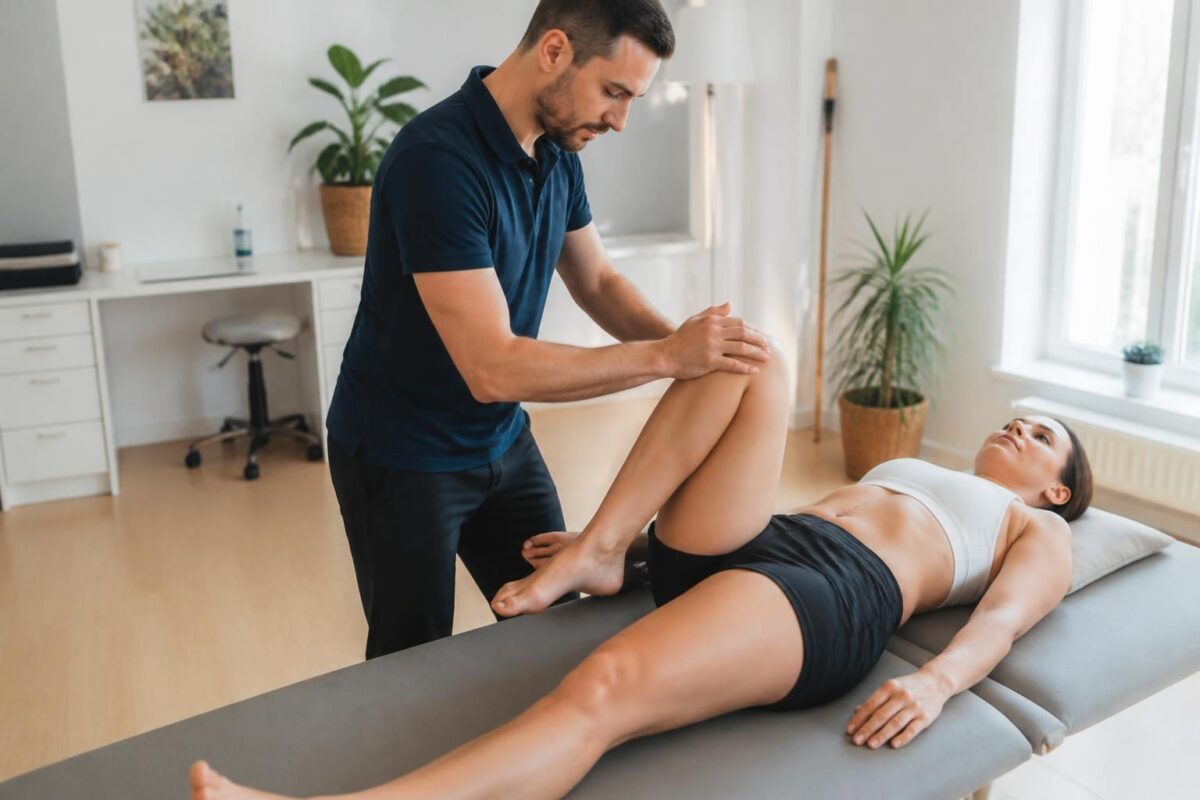
the techniques used in osteopathy For hip pain include gentle manipulations and controlled mobilizations to release joint restrictions. Myofascial approaches help release soft tissue tension around the joint and restore a harmonious glide between structures. Structural techniques can be used to retrieve range of motion and reduce blocking points. The objective is to improve rotation and flexion, to reduce walking pain and to improve overall stability of the pelvis. For pain related to postural adaptations, osteopathy can also intervene in the lumbosacral and pelvic segments in order to reduce the tension chains that impact the hip.
In the context of global care, osteopathy can be associated with other non-invasive approaches to maximize benefits. We favor patient-centered care, adapted to the origin of the pain and to the level of progression of the pathology. To deepen the benefits and mechanisms of osteopathy, consult the following resources:
The benefits of osteopathy,
Importance of regular osteopathy consultations,
Osteopathy and body balance.
Assessment and care pathway
An osteopathic assessment begins with the anamnesis and clinical examination to determine the origin of the pain and the dysfunctional areas. The assessment focuses on the precise location of the pain, the limitation of movements and the presence of specific tests. The osteopath looks for possible causes at a distance, such as blockages in the pelvis, sacrum or lumbar spine, which can influence the hip. The treatment is adapted to each patient and can include HVBA (High Velocity / Low Amplitude) techniques, gentle mobilizations and myofascial approaches. The number of sessions depends on the age and severity of the pain, and a personalized plan is established from the first consultation. For practical details, make an appointment online or by phone at 01.88.32.06.75.
Integration and prevention
Osteopathy is often part of a multimodal approach. It can be associated with professional-guided reinforcement and stretching programs to improve pelvis stability and hip function. The focus is on preventing recurrences and adapting lifestyles. Osteopathy can also play a key role in balancing and maintaining mobility during regular periods of activity, in addition to an active lifestyle and a suitable diet. To learn more about the links between osteopathy and body balance, see the following resources:
Osteopathy and body balance,
and find out how osteopathy can help prevent injuries related to repetitive activities on LOSTeopathy and prevention.
To learn more about training courses and guidelines in osteopathy, you can consult resources from recognized institutions such as NUMSS and NAO (National University of Medical Sciences, National Academy of osteopathy). For information specific to the professional framework, refer to the ACMA, College of Canadian Osteopaths and College of Canadian Osteopaths. In the context of practical advice and comparisons with other approaches, some resources offer syntheses and opinions on osteopathic action in the treatment of joint pain, including the hip.
Additional links useful for understanding the approaches and their benefits can be found on the following pages:
Osteopathy and lumbar,
Regular osteopathy consultations,
And for general resources on osteopathy and manual approaches, explore the official pages of the Sossciatic Network.
The resources above provide illustrations and explanations of the mechanisms and results of osteopathy for hip pain and associated chronic pain.
You can make an appointment online or directly by phone with an osteopath specializing in leg pain at 01.88.32.06.75.
Medical Disclaimer: The information and advice provided on this site does not replace the health professional’s diagnosis or treatment. Please note that Dr. Sylvain Desforges osteopath is neither a doctor of medicine nor a doctor, and is not a specialist in a medical specialty as defined by the Collège des Médecins du Québec. Manual medicine, functional medicine and sports medicine as described on this site exclude any medical treatment or diagnosis made by a doctor or specialist doctor. Always consult your doctor for any medical questions. For more details, please read our full legal notice.
Osteopathic approaches for chronic hip pain
- Structural techniques – hvba and gentle mobilizations
- Myofascial treatment – work of the fascias to release tensions
- Mobilization and release – reduction of Femoro-acetabular blockages
- Stability and mobility – Activation of stabilizers and proprioception
- Postural rebalancing – Work on muscle chains and posture
- Personalized approach – Adaptation to the type of chronic pain
- Cause and referral management – Evaluation of tracks such as pubalgia or piriformis
- Progressive treatment plan – Adapted progress and follow-up
- Self-stretching and self-rehabilitation – Coaching for continuous improvement
- Integration with physiotherapy – Strengthening and mobility in coordination
- Prevention and activity – Postural advice and low impact exercises
- Monitoring and adjustment – Regular reassessment and adaptation of the protocol

osteopathic approaches to soothe Chronic hip pain Based on a global assessment, targeted manual techniques and practical advice to improve mobility and quality of life. This article presents the possible origins, osteopathic diagnosis and action levers available to sustainably relieve the hip, while insisting on the importance of appropriate and personalized care.
Understanding pain and osteopathic diagnosis
Origins and presentation
Hip pain can be mechanics, inflammatory, traumatic or even projected. They can come from dysfunction of the adductors, middle-gluteal tendonitis, contracture of the piriformis muscle, inguinal hernia or even from a fracture of the neck of the femur in particular contexts. The seat and the nature of the pain guide the osteopathic approach and the functional advice to favor.
Diagnostic process
The osteopathic evaluation is based on anamnesis, postural observation and simple functional tests, including the Faber test. This approach makes it possible to differentiate the pain mechanics pains referred or inflammatory. The diagnosis can also be based on the clinical examination and, if necessary, on additional examinations carried out by other health professionals to specify osteoarthritis, bursitis or possible associated spinal pathology.

How osteopathy improves the quality of life of active people
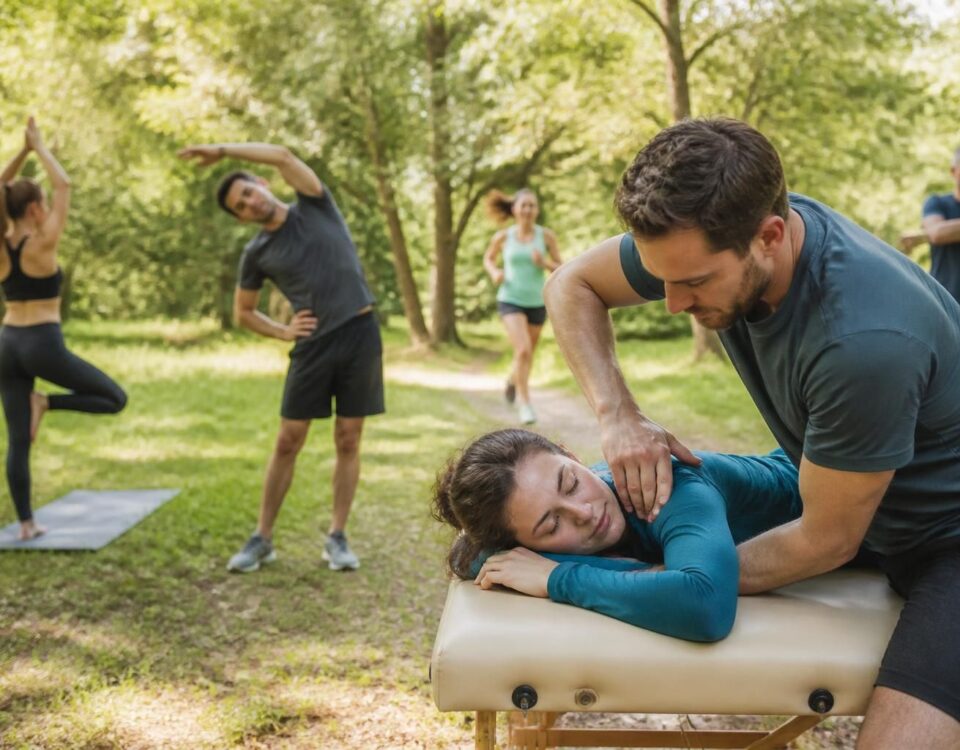
In short In short, theosteopathy is a global approach that Optimizes mobility and the function of the body of ACTIVE PEOPLE, for a better quality of life. It helps prevent injury and reduce Musculoskeletal pain While promoting the Sports recovery.…
Osteopathic approaches for the hip
Structural and myofascial techniques
Osteopathy mainly mobilizes techniques structural and myofasciales To restore mobility and reduce tension around the joint. The interventions aim to remove joint blockages, free fascia tensions and improve local vascularization, in order to promote functional recovery and pain reduction.
Management of associated structures
Hip pain may be related to the work of adjacent muscles, including psoas, the Medium Buttocks, and the piriform. The osteopath prepares the tissues to facilitate the movements, helps to relax the contractures and can prevent painful compensations that radiate to the knee or back.

Osteopathy and sports recovery: prepare the body for lasting performance
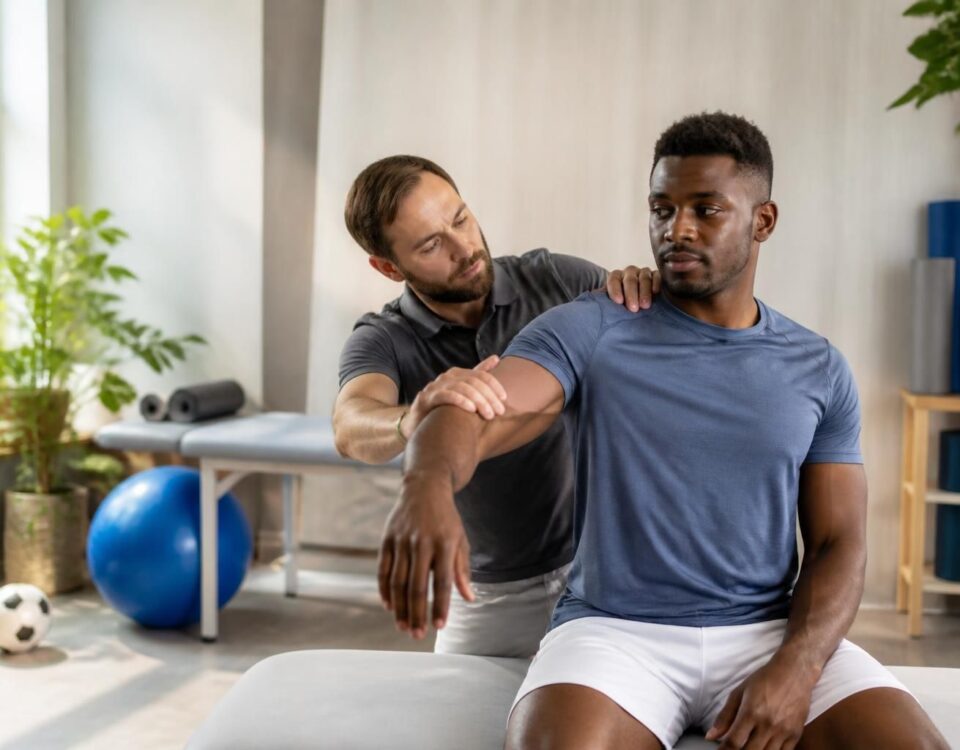
In short In short, Osteopathy and Sports recovery is one Global manual approach that sustainably prepares the body for the effort by restoring mobility and circulation After the effort. It is a discipline that acts on the sinews, the joints,…
Integration with other approaches and lifestyles
Rehabilitation and exercises
In addition to osteopathy, physiotherapy and programs ofstretches Targeted (hamstrings, adductors, psoas) strengthen hip stabilizing muscles and improve proprioception. The goal is to stabilize the joint and limit the movements likely to aggravate the pain.
Posture and adapted physical activity
Prevention involves an appropriate and regular physical activity, with a preference for low-impact activities such as swimming, cycling and walking. Progressive strengthening of the glutes and hip rotators helps to redistribute loads and delay the onset of chronic pain.
Why Osteopathy Is Essential For Recovery People
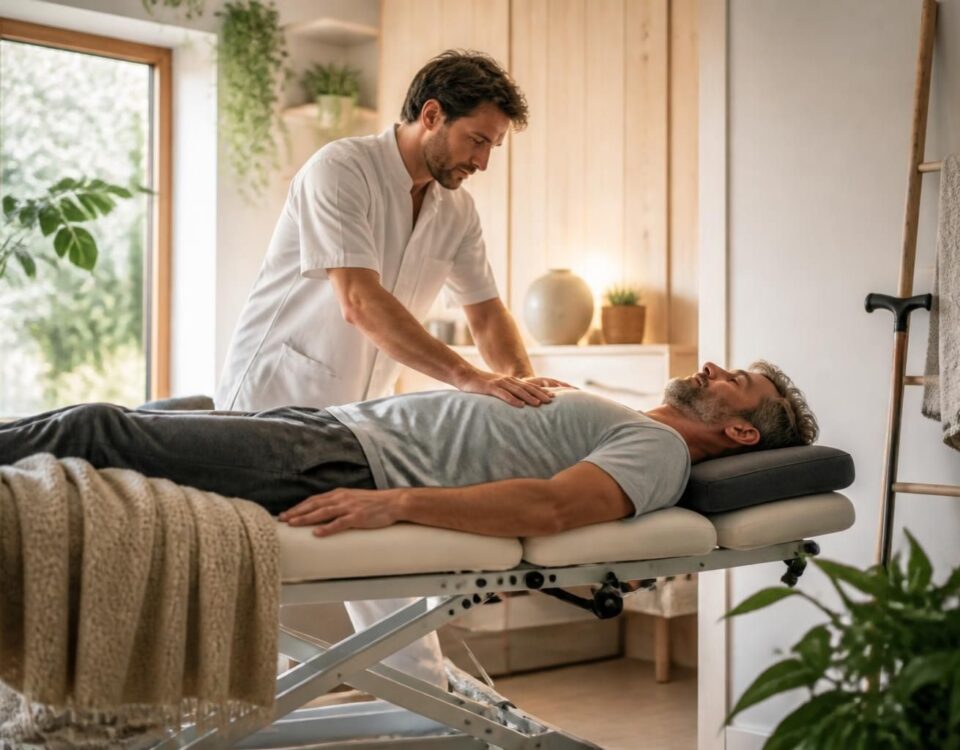
In short In short, Osteopathy in convalescence is an approach manual and holistic which helps to accelerate the recovery by restoring The balance, the mobility and a good circulation fabrics. it contributes to Reduce the pain, support the Back to…
Practical framework and pace of sessions
What a first consultation can bring
During a first session, the osteopath assesses the origin of the pain, identifies the contributing factors and offers a personalized protocol including techniques adapted to your situation and post-session advice to optimize recovery.
Frequency and tracking
The number of sessions depends on the chronicity and response to treatment. For a recent pain, a series of 3 to 6 sessions can be proposed, with a readjustment of the plan according to the evolution. In the event of advanced osteoarthritis or associated pathologies, the objective is often maintenance and functional improvement through spaced sessions and a home exercise strategy.

Osteopathic manipulations to strengthen post-traumatic muscles
In short In short, Osteopathic manipulations for Strengthen post-traumatic muscles constitute a gentle manual approach aimed at restoring the mobility, reduce the pain and facilitate the Functional rehabilitation After a injury. What is Is it? A series of precise gestures…
Practical advice and daily actions
To support osteopathic action, focus on Regular stretching, a Postural rebalancing and activities low-impact. Adopt appropriate joint hygiene and quickly consult if warning signs appear (persistent nocturnal pain, significant loss of force, fever or marked swelling).

Osteopathy and prevention of work-related musculoskeletal disorders
In short theosteopathy is one Manual approach that restores body balance and prevents MSD related to work. Its advantages: reduction of tension, improvement of mobility and prevention of chronic pain. She is preventive and healing, suitable for office and trades…
Osteopathic approaches to soothe chronic hip pain
| Osteopathic axis | Concise impact |
|---|---|
| HVBA structural techniques and mobilizations | restore Amplitude and decreases pain. |
| Targeted gentle mobilization | Liberation of freezing And back to walking smoothly. |
| Myofascial techniques | decrease in strain and better mobility. |
| Rebalancing of biomechanical chains | Reduces the offsets and improves the posture. |
| Energy Muscle Techniques (MET) | targeted release of key muscles (Psoas, Medium Buttocks). |
| Cranio-sacral techniques | Reduces the Neuromuscular stress and harmonize the tone. |
| Education and self-stretching | Autonomy and prevention relapses. |
| Global approach and coordination | coordination with physiotherapist and postural advice. |
| Identification of associated causes | targeting of psoas, of adductors, of piriform and triggering factors. |

The benefits of osteopathy to treat muscle imbalances
In short theosteopathy is a manual approach to restore themuscle harmony and postural considering the body as a whole. Its main benefits include the reduction of aches and tensions, the improvement of the mobility and from the posture, and prevention…
Testimonials on osteopathic approaches to soothe chronic hip pain
“Before undertaking the sessions, Chronic pain From my hip braked me in my daily activities and my walks. After a few meetings, osteopathy worked on the Joint blockages and on the muscle tension around the hip, which allowed me to find a mobility more fluid and durable. »
“As a sportswoman, my pain became disabling when walking and running. The osteopathic approach targeted the Medium Buttocks and the piriform, with gentle techniques and suitable stretches. Result: diminished pain, better stability and possibility of restarting my workouts smoothly. »
“Working all day on a computer caused me pain in the hip that disrupted my sleep. Osteopathy has rebalanced tensions and improved hip function, which greatly improved my quality of life and my nights. »
“At 70, I was apprehensive about surgery for my hip pain. The osteopathic approach favored Sweet mobilizations And myofascial work around the hip, with practical advice. The pain and the rigidity have decreased, and I can once again enjoy my daily activities without fear of pain. »
“As an amateur dancer, I was braked by groin pain associated with a pelvic blockage. Osteopathy made it possible to release tension and propose targeted exercises that allowed me to resume repetitions without feeling the discomfort. The return to movement is impressive thanks to a tailored and personalized approach. »
“What I appreciate the most is listening and explaining the causes. The osteopath analyzes the factors that can act remotely and offers simple gestures to perform at home, which gives real autonomy and a progressive reduction in pain. »
Osteopathy and chronic leg pain: regaining an optimal quality of life
In short In short, Osteopathy is one Global manual approach aimed at reducing Chronic leg pain and improve the quality of life. What is it? Non-drug therapy using the hands to identify restrictions and treat lesional chains. How does it…
Osteopathic approaches to soothe chronic hip pain
This Experienced osteopath offers a global way and Evidence-based to relieve chronic hip pain. His approach combines the traditional know-how of osteopathy with modern tools and complementary disciplines to optimize the function and quality of life of patients. At the heart of its practice, the integration of advanced technologies such as spinal decompression, the laser and the Shockwave therapy Amplifies the effects of manual techniques and adapts the treatment to each clinical profile.
Hip pain can be multifactorial and manifest according to mechanisms mechanics, inflammatory, traumatic or even Referred to. The practitioner recalls that the hip is a complex carrier joint, made up of the femur, of femoral neck, from the femoral head and of Cotyloid bead on the basin. frequent causes such as pubalgia, tendinopathy of Medium Buttocks, a Piriform contracture, a Inguinal hernia Or even rarer episodes of femur neck fracture can explain pain when walking, running or resting.
The role of osteopathic diagnosis is based on targeted interrogation and in-depth clinical examination. The assessment distinguishes between locations and types of pain (mechanical, inflammatory or projected), checks mobility limitations and uses functional tests such as Faber test to guide the analysis. additional examinations such as X-rays, theMRI, ultrasound and blood tests can be requested to confirm a mechanical, inflammatory or post-traumatic origin and guide therapeutic decisions.
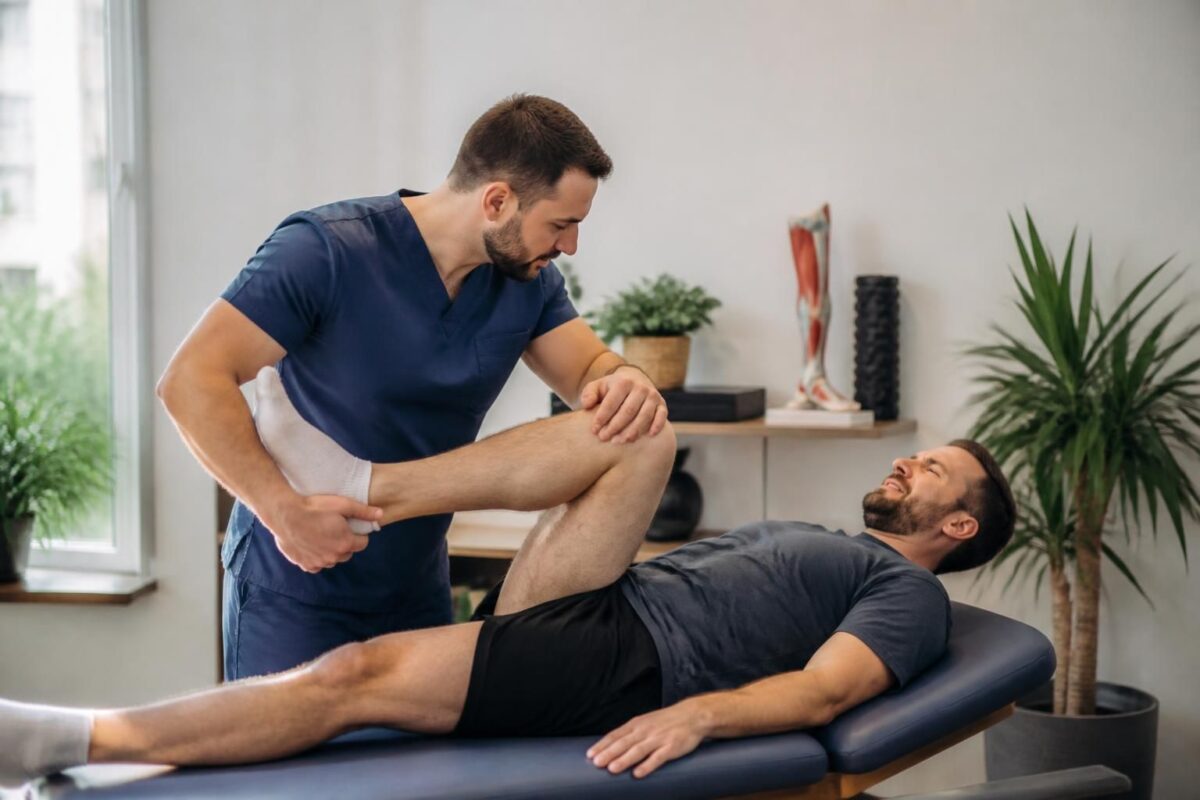
On a practical level, osteopathic techniques favor approaches structural and myofasciales adapted to each case. The HVBA Techniques (High velocity, low amplitude) aim to quickly restore joint mobility when mechanical blockages limit rotation and flexion. In parallel, the Sweet mobilizations and work on the fascias improve tissue elasticity and reduce regional tensions. The dish (Muscle to Energy Techniques) and Techniques myofasciales Relieve tension around the sore seat, improve local vascularization and attenuate painful signals in the muscle chains that feed the hip.
Beyond the manual gesture, the care is part of a multi-party strategy with partners such as physiotherapy for strengthening and functional rehabilitation, daily stretching and postural advice. Targeted hip and trunk exercise programs strengthen stabilizers, preventing recurrences and improving walking, climbing stairs and running dynamics. An anti-inflammatory diet and lifestyle can also complement the treatment, in a logic of overall well-being.
Clinical results support the effectiveness of osteopathic approaches for hip pain, with reduced pain and better mobility felt by patients when the protocols are adapted to each joint and its context. The practitioner undertakes to propose a personalized strategy, based on evidence and adjustable according to the evolution, so that each patient finds a mobile and functional hip without compromise on his daily life.
This article presents the Osteopathic approaches To soothe the Chronic hip pain, describing possible origins, diagnosis, techniques used and practical advice to improve mobility and quality of life.
The Osteopathic techniques used for the hip are mainly aimed at restoring the mobility and reduce the Muscle tensions around the joint, favoring gentle and adapted approaches. Work can combine hvba, progressive mobilizations and techniques myofasciales To release blockages and improve the amplitude of movements, especially in flexion and rotation.
The osteopathic diagnosis is centered on a Overall assessment including lanamnesis, postural observation and functional tests, supplemented when necessary by Imaging Reviews and inflammatory or infectious assessments. theexamination And the examination target the mechanical, inflammatory or referred origins of hip pain, in order to personalize the treatment.
Beyond manual techniques, the osteopath can propose interventions that promote the Functional rehabilitation and maintaining mobility: programs of physiotherapy Targeted, daily stretching and pelvic stability exercises, while adjusting posture and lumbo-pelvic alignment. The objective is to reduce the constraints on the joint and to prevent recurrences.
Evidence emerges on the efficacy of osteopathy for joint pain, with Meta-analysis indicating a pain reduction and an improvement in function in various joints, including the hip. These results support the integration of osteopathy as Non-medicated supplement in a multidisciplinary care.
For patients with hip pain, a personalized approach may involve a variable number of sessions (e.g. multiple sessions 2-4 weeks apart), with clear goals and self-care advice; The osteopath can also refer to other professionals if necessary, while remaining available to adjust the protocol according to the response to treatment.
Additional resources and readings on osteopathy, posture and chronic muscle pain can be viewed through information such as
Correct postural imbalances or
Chronic muscle pain. For a global look at preventive benefits and joint health, see also Preventive benefits, and specialized resources like Hip pain and osteopathy.
To deepen, also consult the resources on osteopathic techniques and their practical application such as
The osteopathic techniques used, and specialized texts describing osteopathy as a complementary approach for hip problems via Osteopathy and hip.
You can also find resources dedicated to pain and osteoarthritis like Osteoarthritis and drug-free relief and tips on practical applications for shoulders and chronic muscle pain on shoulder pain.
To make an appointment with an osteopath specializing in hip pain, you can contact number 01.88.32.06.75.
How osteopathy supports recovery after complex surgery
In short In short, Post-operative osteopathy is an approach fresh which supports the recovery After a Complex surgery. It helps to reduce the pain and the fatigue, improves the mobility and accelerates the healing thanks to a better vascularization and…

Dr Sylvain Desforges, B.Sc., D.O., N.D., osteopath, is the founding president of TAGMED and of the ACMA association. He dedicates his practice to chronic spinal pain, low back pain and symptoms compatible with sciatica, particularly when pain radiates toward the buttock, leg, calf, foot or toes.
Through SOS Sciatique, he publishes educational content on sciatica symptoms, possible causes such as disc herniation, disc narrowing, foraminal stenosis or irritation of a lumbar nerve root, as well as non-surgical approaches that may be considered according to the evaluation. At Clinique TAGMED, care may include, depending on the case, motorized neurovertebral decompression, specific osteopathic care or precision percussion.
For an evaluation related to sciatica treatment in Montreal / Mount Royal or sciatica treatment in Terrebonne, please consult the services available at Clinique TAGMED.
Medical disclaimer
The information published on SOS Sciatique is provided for educational purposes only and does not replace a consultation, diagnosis, opinion or treatment provided by a physician or another authorized healthcare professional. The author of this article is neither a medical doctor nor a specialist in a medical specialty recognized by the Collège des médecins du Québec. The osteopathic, manual medicine or functional support approaches described on this site do not constitute medical acts and are not intended to replace medical follow-up.
Consult a physician or emergency service in cases of loss of bladder or bowel control, anesthesia in the saddle area, significant or progressive weakness in the leg or foot, fever, recent trauma, severe pain or rapid worsening of symptoms. For more details, please read our Legal Notice.